Tuesday, March 31, 2026
14.8 C
Srinagar
Home Blog Page 114

Biggest Crypto Heist in History: Hacker Steals $1.5 Billion from Bybit Exchange

0

In what is being described as the largest cryptocurrency heist in history, a hacker hasuccessfully stolen $1.5 billion worth of digital assets from Bybit, one of the world’s leading crypto exchanges.

The Dubai-based platform has now called upon the brightest minds in cybersecurity to help recover the stolen Ethereum, which was illicitly transferred from a company wallet to an unknown address.

Bybit Assures User Funds Are Safe

Despite the massive breach, Bybit has reassured its users that their funds remain secure. The company has pledged to fully compensate any losses incurred by affected customers.

Bybit’s co-founder and CEO, Ben Zhou, took to X (formerly Twitter) to address the situation, emphasizing that even if the stolen funds cannot be recovered, the exchange has the financial strength to cover all affected users.

“Bybit currently manages over $20 billion in user assets, and we have the full capability to absorb this loss,” Zhou stated.

Massive Surge in Withdrawal Requests

The security breach has triggered a panic among users, with over 350,000 withdrawal requests flooding the exchange. Bybit is now working through the overwhelming volume of requests, which has led to delays in processing withdrawals.

How the Hack Happened?

According to Bybit, the attack occurred during a routine transfer of cryptocurrency from an offline cold wallet to a warm wallet—a standard security practice in the industry. However, the hacker exploited a vulnerability in the platform’s security controls, enabling them to gain access and siphon the funds.

$140 Million Bounty for Cybersecurity Experts

In an urgent effort to recover the stolen assets, Bybit has announced a 10% bounty for cybersecurity professionals who successfully retrieve the funds. If the entire amount is recovered, the reward could reach a staggering $140 million.

Bybit remains the second-largest cryptocurrency exchange in the world, with over 60 million users globally. This breach marks one of the most significant incidents in the history of digital finance, raising critical concerns about security vulnerabilities in crypto exchanges.

Stay tuned for further updates as Bybit works to track down the stolen funds and enhance its security infrastructure.

Protests Escalate in Azad Kashmir Demanding Release of Student Leader

    0
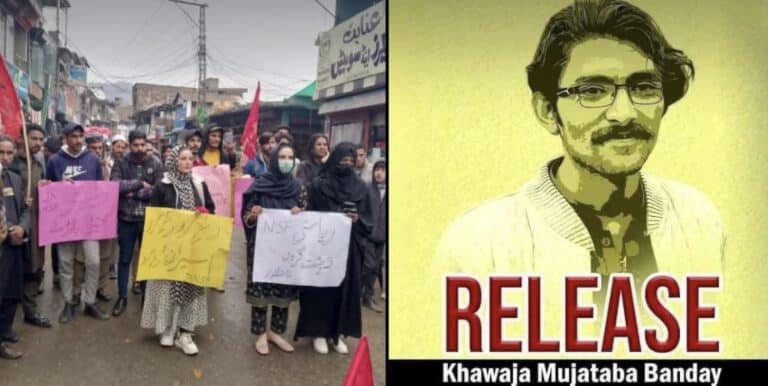
    MUZAFFARABAD: Sustained protests have erupted across Azad Kashmir, with activists and political groups demanding the immediate release of Khawaja Mujtaba Banday, a prominent student and youth leader arrested twice within a week in Muzaffarabad the capital of Pakistan administrated Kashmir. Pandey’s initial detention followed his participation in events commemorating the death anniversary of Maqbool Butt, a contentious Kashmiri nationalist figure, sparking accusations of political repression by local authorities.

    Details of the Arrests

    Khwaja Mujtaba Bandah, a vocal advocate for Kashmiri self-determination, was first arrested on May 13, 2025 by Muzaffarabad police after organizing a gathering to mark the 40th anniversary of Maqbool Butt’s execution. Butt, co-founder of the Jammu Kashmir Liberation Front (JKLF), was hanged in India’s Tihar Jail in 1984 and remains a polarizing symbol of resistance in Kashmir. Though briefly released, Banday was rearrested shortly afterward under undisclosed charges, igniting outrage among civil society groups. Protesters allege his detention is part of a broader crackdown on dissent in Pakistani-administered Jammu and Kashmir.

    Protests and Political Backlash

    The Jammu Kashmir National Students Federation (JK NSF) and Jammu Kashmir National Awami Party (JKNAP) have spearheaded demonstrations, branding Banday’s arrest as an attack on “the voice of Kashmiri youth.” In Muzaffarabad, rallies have drawn hundreds, with protesters chanting slogans like “Release Mujtaba Banday!” and “Stop silencing dissent!” Social media platforms are flooded with hashtags such as #ReleaseMujatabaBanday, where users accuse the state of fearing his influence. “A young student leader’s vision threatens those in power,” read one viral post.

    Context and Reactions

    Pandey’s case underscores rising tensions over political expression in Azad Kashmir. While public commemorations of Maqbool Butt are not uncommon, authorities often view such events through a lens of security sensitivity, given Butt’s legacy in the Kashmir conflict. JKNAP leader Sardar Liaqat Hayat condemned the arrests, stating, “Mujataba’s only crime is demanding rights guaranteed under international law. This repression exposes the state’s insecurity.” Meanwhile, Muzaffarabad police have yet to issue an official statement, despite repeated requests for clarification.

    Broader Implications

    Analysts note a pattern of targeting youth activists in the region, where calls for autonomy or criticism of governance are frequently met with scrutiny. Pandey’s dual arrests highlight the precarious space for political activism, even in areas nominally under Kashmiri administrative control. The Human Rights Commission of Pakistan (HRCP) has called for transparency, urging authorities to “either charge Pandey legally or release him unconditionally.”

    What’s Next?

    Protest organizers vow to intensify demonstrations until Pandey is freed, with plans for a sit-in outside the Azad Kashmir Legislative Assembly. International human rights groups are being urged to monitor the situation, as fears grow over escalating state responses. As nightfall descends on Muzaffarabad, the chants for justice grow louder. Khawaj Mujtaba Banday,s case has become a rallying cry for Kashmiri youth, symbolizing both their aspirations and the systemic challenges they face. In a region where political voices are often stifled, his detention tests the boundaries of dissent and democracy.

    Azad Kashmir: Heavy Snowfall in Upper Areas, Key Roads Blocked, Rain and Snow Expected for Three More Days

    0

    Muzaffarabad (Weather Desk): The departing winter has returned to Azad Kashmir, bringing intense snowfall to upper regions, severely disrupting daily life.

    For the past two days, Leepa Valley has been experiencing continuous rain and snowfall, resulting in the closure of roads connecting the valley to Muzaffarabad and other cities. Reports of avalanches have also emerged, making travel increasingly difficult.

    Due to the hazardous conditions, district authorities have advised travelers to avoid using the Leepa-Reshian road until it is fully restored.

    According to the Meteorological Department, the current spell of rain and snowfall is expected to continue for three more days.

    Meanwhile, the Neelum Valley, including Kel, Grace, and surrounding areas, has also been experiencing heavy snowfall since last night.

    Snowfall Report in Different Areas:

    • Sharda: 4-5 inches
    • Sargan: 12 inches
    • Kel: 10 inches
    • Grace Valley: More than 12 inches

    While the Muzaffarabad to Kel road remains open for traffic, the Kel to Taobat road remains blocked due to glaciers. Authorities are working to restore connectivity, but residents are advised to take precautions.

    Editorial: The Lucrative World of Social Media Stardom How Top American Female Celebrities Monetize Their Influence

    0

    In an era where social media has become a global stage for fame and fortune, American female celebrities are redefining wealth creation through platforms like TikTok, Instagram, and YouTube. While artists and influencers worldwide leverage their online presence, the earnings of U.S.-based stars stand in a league of their own. For audiences in regions like Kashmir, where digital connectivity is rising, this phenomenon offers insights into the power of content creation and brand partnerships.

    The Titans of TikTok: Earnings That Defy Imagination

    From music icons to reality TV stars, here’s a breakdown of how America’s top female celebrities monetize their social media clout:

    Cardi B

    The hip-hop sensation reportedly 7M offers for my vitamins line. I don’t need TikTok to shut down your burger business.” Her confidence underscores how diversifying income streams brand deals, merchandise, and investments fuels celebrity wealth.

    Doja Cat

    With over 20 million TikTok followers, the “Barbie Girl” rapper allegedly earns 100,000–300,000 per live stream. Her $150M net worth, built on music royalties and viral trends, highlights the synergy between social media virality and mainstream success.

    Kylie Jenner

    The makeup mogul, with 60 million TikTok followers, reportedly earns 2.38M per sponsored post, making her one of the highest-paid influencers globally.

    Kim Kardashian

    The reality TV queen, with 350 million Instagram followers, started her career earning $2.5 Lkahs1.7M–$2.1M per sponsored ad—a testament to her enduring influence.

    Jeffree Star

    The drag artist-turned-mogul claims to earn $50,000 before breakfast through live streams. “I cook, chat, and make bank—all before noon,” Star quipped, emphasizing how authenticity drives engagement.

    Music Meets Memes: Ice Spice and Miley Cyrus

    • Ice Spice: The TikTok-famous rapper gained fame in 2021 and earned $2M from her viral hit “Fell In U.”
    • Miley Cyrus: The Grammy winner pockets 19,000–29,800 monthly from TikTok royalties and $1.5M per Instagram ad.

    The Authenticity Advantage: Bethany Frankel and Selena Gomez

    • Bethany Frankel: The “Real Housewives” star stays tight-lipped about exact figures but admits to earning “seven figures annually” by staying “true to her passions.”
    • Selena Gomez: Instagram’s most-followed woman earns $250,000 per post, proving that cross-platform stardom (acting, music, and advocacy) amplifies earning potential.

    The Bigger Picture: What Does This Mean for Global Creators?

    While American stars dominate earnings, the digital economy offers opportunities for creators worldwide. Factors like audience demographics, platform algorithms, and geopolitical barriers (e.g., TikTok bans) shape income disparities. For instance, creators in developing regions often earn less due to lower ad rates and currency valuation gaps.

    In Kashmir, where youth increasingly embrace platforms like Instagram and YouTube, understanding these dynamics is crucial. Local creators can learn from U.S. strategies: diversifying content, collaborating with brands, and leveraging cultural authenticity to build loyal audiences.

    Fame in the Digital Age

    The staggering earnings of American celebrities underscore social media’s transformative power. Yet, their success hinges on more than follower counts—it’s about innovation, adaptability, and connecting deeply with audiences. As digital landscapes evolve, creators everywhere, including Kashmir, have the tools to turn passion into profit. The key lies in staying authentic, persistent, and unafraid to disrupt the status quo.

    Note: This editorial highlights global trends in social media monetization and does not reflect country-specific political stances. It aims to inform and inspire discussions on digital entrepreneurship in Kashmir and beyond.

    Editorial: Pakistan’s Ambitious Water Pipeline Proposal from Tajikistan Visionary or Impractical?

    0

    Editorial: The recent announcement by Pakistan’s President Asif Ali Zardari regarding a proposed water pipeline from Tajikistan to Gwadar has ignited a heated debate about the country’s water security and the feasibility of transboundary mega-projects. While the plan aims to address Gwadar’s acute water shortages, experts and analysts are questioning its practicality, cost, and geopolitical implications.

    Gwadar’s Water Crisis: A Ticking Time Bomb

    Gwadar, a coastal city pivotal to the China-Pakistan Economic Corridor (CPEC), faces an escalating water crisis. With a current population of 100,000, the city requires 4 million gallons of water daily a demand projected to skyrocket to 20 million gallons as its population grows fivefold in the next decade. Existing solutions, such as a desalination plant (producing 1.2 million gallons daily) and planned dams (Shadi Kaur and Swad), fall short of meeting future needs. This shortfall has driven the government to explore unconventional solutions, including importing water from Tajikistan, a Central Asian nation over 1,700 kilometers away.

    The Tajikistan Pipeline Proposal: High Stakes, Higher Costs

    Pakistan President Zardari revealed that a feasibility study, backed by the UAE, has been conducted for a pipeline stretching from Tajikistan to Gwadar. However, the plan faces immediate skepticism. Dr. Hasan Abbas, a water resources expert, calls it “bewildering,” citing exorbitant costs and logistical nightmares. Pumping water over such a distance would require billions of dollars in infrastructure, with operational costs further straining Pakistan’s fragile economy. For context, Pakistan’s ongoing 61-kilometer water pipeline in Thar Pakistan.

    Geopolitical Hurdles and Security Risks

    The pipeline’s route through Afghanistan adds layers of complexity. Security challenges in Taliban-controlled territories, coupled with potential transit fees and political instability, cast doubt on the project’s viability. Moreover, energy demands for pumping water across mountainous terrain could negate any benefits, making the end cost per gallon prohibitive for Gwadar’s residents.

    Experts Advocate Local Solutions Over Mega-Projects

    Critics argue that Pakistan’s water crisis stems from mismanagement, not scarcity. The country receives ample monsoon rains but lacks storage capacity. Zafar Iqbal Wattoo, another water expert, emphasizes that expanding dams like Mangla and Tarbela could resolve seasonal shortages. “With 1.4 million acre-feet of storage, we’re barely meeting winter crop demands. Doubling this capacity would eliminate water stress,” he says. Additionally, restoring the Indus River’s flow to Gwadar a cheaper, domestic alternative—has been overlooked.

    Tajikistan’s Water Wealth: A Regional Game Changer?

    Tajikistan, endowed with 8,000 glaciers and 80% of the Amu River’s flow, is Central Asia’s water powerhouse. Its leaders have long pitched water exports to arid Gulf states, leveraging initiatives like the proposed Sarez Lake pipeline. The CASA-1000 electricity project (exporting 1,300 MW to Pakistan and Afghanistan) sets a precedent for regional cooperation. However, exporting water a far bulkier commodity—poses unprecedented technical and financial challenges.

    Silence from Islamabad Raises Eyebrows

    Despite the fanfare, Pakistan’s Ministry of Water Resources claims no knowledge of the pipeline proposal. Federal Minister Dr. Musadik Malik, overseeing the ministry, has yet to clarify the government’s stance. This ambiguity fuels suspicions that the project may be more symbolic than substantive—a diplomatic gesture to engage Central Asian and Gulf partners rather than a concrete plan.

    The Bigger Picture: Water as a Geopolitical Tool

    The proposal underscores a global trend: water scarcity driving unconventional alliances. For Gulf states, investing in Tajikistan’s water could hedge against future droughts. For Pakistan, however, the priority should be fixing chronic inefficiencies—corrupt irrigation practices, crumbling infrastructure, and unchecked urbanization—that waste 60% of its water.

    Vision or Mirage?

    While transboundary water projects reflect ambitious diplomacy, Pakistan’s immediate crisis demands pragmatic local solutions. Mega-projects like the Tajikistan pipeline risk diverting resources from urgent reforms. As climate change intensifies, Pakistan must prioritize storage, conservation, and equitable distribution. Without addressing these fundamentals, even the most grandiose schemes will remain drops in an empty bucket.

    Note: This editorial presents a critical analysis of Pakistan’s proposed water pipeline and does not necessarily reflect the views of the Kashmir-based news outlet. It aims to provoke informed discussion on regional water security and sustainable development.

    Jammu Kashmir Set to Launch Its First Space Rocket “Buraq-1” on March 5

    0

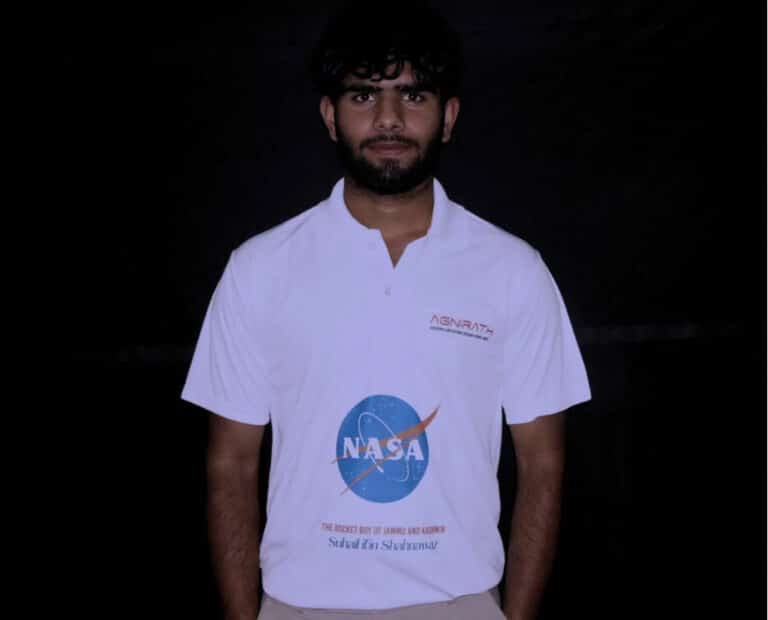
    Srinagar, Jammu & Kashmir: In a groundbreaking achievement that has captured global attention, a group of young innovators from Kashmir has successfully developed Buraq-1, a small-scale indigenous rocket, marking the region’s bold entry into the realm of space technology. Spearheaded by the SIS Universe Jammu Kashmir’s first Private Space Organization, headquartered in Srinagar, this project symbolizes hope, resilience, and the untapped potential of Kashmir’s youth in science and innovation. The much-anticipated launch of Buraq-1 is scheduled for March 5, marking a historic moment in the region’s scientific journey.

    The Vision Behind Buraq-1

    Named after the mythical winged creature “Buraq” from Islamic tradition, symbolizing speed and ascension, the Buraq-1 rocket represents Kashmir’s aspirations to rise above challenges and embrace cutting-edge technology. The project is the brainchild of Suhaial Ibn Shahnawaz, CEO of SIS Universe, who envisioned empowering local youth to bridge the gap between Kashmir and global advancements in STEM (Science, Technology, Engineering, and Mathematics). Shahnawaz stated:

    “Buraq-1 is not just a rocket; it’s a message to the world that Kashmir’s youth are capable of shaping the future. Despite limited resources, we’ve proven that passion and innovation can overcome any obstacle.”

    Technical Milestones
    While details about the rocket’s specifications remain under wraps, sources confirm that Buraq-1 is a suborbital prototype designed for low-altitude atmospheric research. Built using locally sourced materials and open-source technology, the project emphasizes cost-effectiveness and sustainability. The team aims to conduct its first test launch in the coming months, pending regulatory approvals.

    A Symbol of Hope
    The initiative has sparked widespread enthusiasm across Kashmir, particularly among students and tech enthusiasts. Social media platforms are flooded with hashtags like Buraq1Mission and #KashmirToSpace, celebrating the project as a beacon of regional pride.

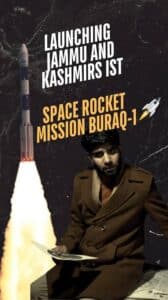
    The photo related to Suhail's mission is trending on social media.
    The photo related to Suhail’s mission is trending on social media.

    Dr. Ayesha Khan, a Srinagar-based STEM educator, remarked, “This is a watershed moment. For decades, Kashmir’s narrative has been dominated by conflict. Buraq-1 shifts the focus to our youth’s brilliance and their ability to contribute to humanity’s progress.”

    Challenges and Global Context
    While the project is still in its early stages, experts caution that scaling up will require significant investment, infrastructure, and collaboration with national and international space agencies. However, the SIS team remains undeterred. “We’re in talks with mentors from ISRO and private aerospace firms to refine our model,” revealed a team member.

    Kashmir’s foray into rocketry mirrors similar grassroots space efforts worldwide, such as Colombia’s Libertad-1 and Indonesia’s Rukmini Satellite, proving that innovation thrives even in resource-constrained environments.

    International Reactions

    The Buraq-1 project has attracted significant attention from the global technology community. A prominent tech CEO shared a post about Buraq-1, describing it as “a reminder that the next big breakthrough can come from anywhere.” Additionally, an international space organization commended the initiative for supporting its mission to make space exploration accessible to all.

    The Road Ahead
    SIS plans to establish Kashmir’s first aerospace research center and collaborate with universities to nurture a new generation of engineers. The team also aims to launch educational programs to inspire schoolchildren to pursue careers in STEM.

    Shahnawaz concluded, “Buraq-1 is just the beginning. We dream of a day when a Kashmiri astronaut will represent humanity in space.”

    Why This Matters
    In a region often overshadowed by geopolitical tensions, Buraq-1 redefines Kashmir’s identity as a hub of innovation. It challenges stereotypes and offers a blueprint for other conflict-affected regions to harness youth potential through science and technology.

    Stay tuned for updates on Buraq-1’s maiden launch!

    Azad Kashmir Announces Interest-Free Agri Loans to Boost Farming and Youth Employment

    0

    Muzaffarabad, Azad Jammu & Kashmir: In a significant move to revitalize agriculture and empower local farmers, Azad Kashmir’s Minister for Small Industries, Trade, and Tourism, Prof. Taqdees Gillani, announced the launch of an interest-free loan scheme under the Agri Loan Program. The initiative, aimed at boosting agricultural productivity and creating employment opportunities, was unveiled during the inauguration of the spring tree plantation campaign organized by the Agriculture Department.

    Key Announcements

    1. Interest-Free Loans for Farmers:
      The government will provide interest-free loans to landowners, enabling them to invest in high-value crops such as olives, saffron, and fruit orchards. “This initiative will not only improve farmers’ livelihoods but also strengthen the region’s economy,” said Gillani.
    2. Focus on Agri-Tourism:
      The minister emphasized the potential of agri-tourism as a game-changer for Azad Kashmir’s economy. By integrating agriculture with tourism, the region can attract visitors while promoting local produce.
    3. Women and Youth Empowerment:
      Special training programs will be introduced to equip women with skills in value addition for agricultural products. Additionally, youth will be encouraged to engage in farming through awareness campaigns and financial support.
    4. Fruit Production Self-Sufficiency:
      Under the directives of the Prime Minister of Azad Kashmir, efforts will be made to make the region self-sufficient in fruit production. “Kashmir was once renowned for its fruit orchards. We must reclaim that legacy,” Gillani stated.

    Spring Tree Plantation Campaign

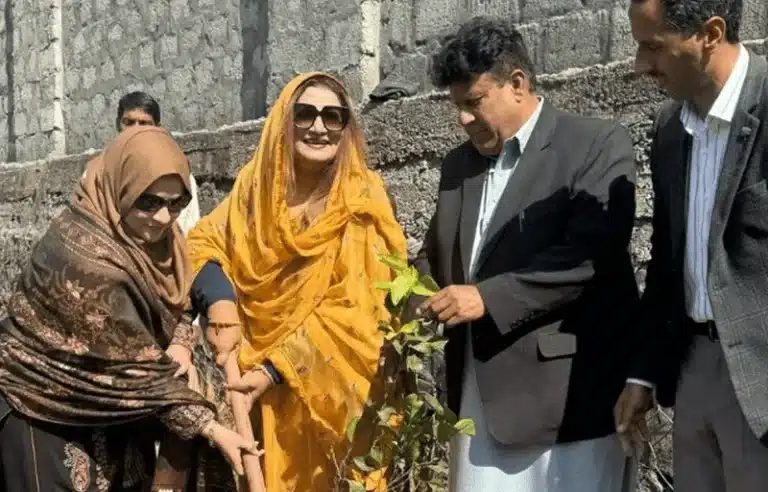
    The minister kicked off the plantation drive by planting a sapling in Muzaffarabad, joined by Director of Agriculture Extension Amina Rafiq, Deputy Director Raja Zahir Iqbal, and other officials. The campaign aims to expand fruit orchards and promote sustainable farming practices across the region.

    Broader Vision for Agriculture

    Gillani highlighted agriculture as the backbone of Azad Kashmir’s economy, stressing the need for modern techniques and value addition. “Even a single kanal of land can yield significant returns if managed properly,” he said, urging the younger generation to embrace farming as a viable career.

    Next Steps

    The Small Industries Corporation will collaborate with the Agriculture Department to implement the Agri Loan Program. Training sessions on value addition and agri-tourism will be rolled out in the coming months, with a focus on empowering women and youth.

    Jammu Kashmir Joint Awami Action Committee Warns Telecom Companies in Azad Kashmir

    0

    Muzaffarabad, Azad Jammu & Kashmir: The Joint Awami (Public) Action Committee (JPAC) has issued a stern warning to mobile service providers in Azad Kashmir (Pakistan-administered Kashmir), threatening large-scale protests if the region’s persistent connectivity issues are not resolved immediately. Speaking at a public gathering, JPAC member Shaukat Nawaz Mir accused telecom companies of delivering subpar services, causing severe hardships for residents.

    Key Concerns Raised

    Mir highlighted the abysmal performance of mobile networks, citing frequent call drops, slow internet speeds, and poor coverage in remote areas. “The people of Azad Kashmir are suffering due to the negligence of telecom companies. We have repeatedly raised these issues with the Pakistan Telecommunication Authority (PTA), but no concrete action has been taken,” he stated.

    Mir warned that if service quality does not improve, JPAC will organize a complete wheel-jam strike and shutdown across the region. “Our next protest will target the telecom companies directly. We will not remain silent while our people endure such poor services,” he declared.

    Call for PTA Intervention

    The JPAC has urged the PTA to hold telecom companies accountable and enforce stricter regulations. Mir emphasized that the authority must ensure service providers meet their obligations to consumers in Azad Kashmir. “If the PTA fails to act, we will take our grievances to Kohala Bridge and beyond,” he added, referencing the symbolic gateway between Azad Kashmir and Pakistan.

    Public Frustration and Broader Implications

    Residents of Azad Kashmir have long complained about inadequate mobile services, which hinder communication, education, and business activities. The region’s challenging terrain exacerbates connectivity issues, but locals argue that telecom companies have not invested sufficiently in infrastructure.

    The JPAC’s warning reflects growing public frustration and underscores the need for immediate action. Analysts warn that prolonged neglect could lead to widespread unrest, further straining the region’s socio-economic fabric.

    Next Steps

    JPAC plans to escalate its campaign by mobilizing communities across Azad Kashmir. The committee has also called on opposition leaders and civil society to join the movement, emphasizing that improved telecom services are a fundamental right, not a privilege.

    Avalanche in Neelum Valley Buries 4; Rescue Operations Underway, One Miraculously Survives

    0

    Neelum Valley, Azad Jammu & Kashmir: A devastating avalanche struck the scenic Dudgaiyan village near Taobut in upper Neelum Valley on Tuesday morning, burying four individuals under heavy snow while one survivor escaped miraculously. The incident highlights the perilous conditions in Kashmir’s mountainous regions during winter and has triggered a joint rescue operation involving local communities, police, and the Pakistan Army.

    Details of the Tragedy

    The victims, identified as Munir Alamgir, Tahseel Syed Miran, Waheed Mushtaq, and Shahzad Shiraz (all residents of Phulawai village), were reportedly hunting in the forest near Grace Valley when the avalanche struck. Shahzad Shiraz survived against all odds, while the others remain trapped under 10 feet of snow. Rescue teams face significant challenges due to ongoing heavy snowfall, sub-zero temperatures, and the remote location at 10,000 feet above sea level.

    Rescue Operations and Challenges

    Local volunteers, alongside Pakistani Army engineers and Neelum District Police, are leading efforts to retrieve the bodies. “The area is extremely treacherous, with fresh snowfall compounding risks,” said Neelum SP Khawaja Sadiq Ahmed. Nomardar (local representative) Ashfaq Ahmed Khan emphasized that narrow pathways and unstable terrain are slowing progress.

    Weather Warnings and Regional Impact

    Upper Neelum continues to experience heavy snowfall, while lower areas face torrential rains, raising fears of landslides. Deputy Commissioner Neelum and Chairman DDMA have issued a high alert, urging caution in vulnerable zones like Jagran, Karkalehri, Shonthar Nala, and Upper Lahore Grace. The Neelum Highway, though open, is deemed unsafe for travel due to icy conditions.

    Community and Official Response

    Residents of Phulawai described the victims as young, adventurous locals familiar with the terrain. The miraculous survival of Shahzad Shiraz has been hailed as “divine intervention” by grieving families. Authorities have advised communities in avalanche-prone areas to avoid unnecessary travel and remain vigilant.

    Broader Implications

    This tragedy underscores the urgent need for improved disaster preparedness in Kashmir’s remote regions. Limited infrastructure and communication gaps often delay rescue missions, exacerbating risks during harsh winters.

    Mirpur: SHO Suspended Over Harassment Allegations by British-Kashmiri Woman; High-Level Inquiry Initiated

      0

      Mirpur, Azad Jammu & Kashmir: In a case that has sparked widespread condemnation, a Station House Officer (SHO) in Mirpur has been suspended following serious allegations of harassment by a British-Kashmiri woman. The incident, which underscores concerns over police accountability and women’s safety, has prompted a high-level inquiry and renewed calls for systemic reforms.

      Key Details of the Incident

      The complainant, a British national of Kashmiri origin, had been residing in Mirpur to resolve a property dispute involving tenants accused of illegally occupying her parents’ home. After exhausting legal avenues, she sought assistance from the British Embassy, which directed her to the Mirpur Commissioner. The Commissioner reportedly advised her to contact SHO Imran Chaudhry of Thothal Police Station for resolution.

      Instead of addressing the matter at the police station, Chaudhry allegedly escorted the woman to a private location. According to the victim’s account, the SHO consumed alcohol, made inappropriate advances, and pressured her to remove her hijab. Demonstrating remarkable presence of mind, the woman recorded the interaction and attempted to escape, though locked gates thwarted her initial efforts.

      Escalation and Aftermath

      After the encounter, the intoxicated officer purportedly drove the woman home, continuing to harass her en route and crashing the vehicle into a wall near her residence. The victim immediately alerted the Mirpur Commissioner, triggering an investigation.

      SSP Mirpur Khaver Ali Shaukat confirmed that an FIR has been registered against SHO Imran Chaudhry, and a formal inquiry is underway. “The police department believes in self-accountability. No officer is above the law,” Shaukat stated, emphasizing privacy concerns as the reason for limited public disclosure.

      Public and Institutional Response

      The case has ignited public outrage, with civil society groups demanding an impartial probe and stringent penalties to deter future misconduct. Local activists highlight systemic issues, noting that the incident reflects broader vulnerabilities faced by women seeking justice in patriarchal structures.

      Broader Implications

      This scandal raises critical questions about police integrity in Mirpur and the efficacy of oversight mechanisms. Advocacy groups are urging institutional reforms, including gender sensitivity training and robust whistleblower protections for victims of harassment.

      Ongoing Developments

      While the suspended SHO remains under investigation, authorities assure the public that legal protocols will be strictly followed. The victim’s evidence, including audio recordings, is expected to play a pivotal role in the proceedings.