Monday, March 30, 2026
12.4 C
Srinagar
Home Blog Page 134

The Meaning of Kashmir Day: A Reflection on the History, Struggles, and Deceptive Strategies of the Kashmir Conflict

0

By: Samina Raja, Jammu and Kashmir

Kashmir Day, observed annually on February 5th, is an important day in the political calendars of both Pakistan and Kashmir. For decades, it has been symbolized as a day of solidarity with the Kashmiri people, commemorating their struggle for self-determination. However, the true essence of this day is often clouded by political interests and misleading narratives that fail to address the deep-rooted aspirations of the Kashmiri people, especially those in Jammu, Kashmir, and Gilgit-Baltistan. While Pakistan initially aimed to use the day to showcase support for Kashmir’s political and human rights, its actions over the years have distorted this solidarity into a geopolitical tool that benefits Pakistan’s strategic ambitions more than it does the Kashmiri cause.

The concept of “solidarity” is typically understood as supporting another group in the achievement of shared goals and objectives. In the context of Kashmir Day, however, this support has been hijacked by Pakistan for political maneuvering. For over seven decades, Pakistan has utilized the Kashmir dispute to serve its own interests, distorting the original meaning of solidarity. Instead of offering genuine support to the Kashmiri people’s desire for freedom, Pakistan has instead used the issue to justify its military presence in the region and create a narrative that benefits its own geopolitical and national interests.

Kashmir Day’s Origins and Pakistan’s Role: A Historical Overview

Kashmir Day first emerged in 1990, a time when the people of Kashmir, especially in Indian-administered Jammu and Kashmir, were intensifying their struggle for autonomy and independence. This period marked a significant shift in Kashmir’s political landscape after the martyrdom of Maqbool Bhat in 1984. Bhat’s death symbolized the growing call for independence in the region, and his martyrdom fueled a renewed demand for self-determination.

In response to this rising movement, Pakistan’s military establishment found it necessary to launch Kashmir Day as a political tool to defuse the escalating nationalist sentiment in Kashmir and shift the narrative toward Pakistan’s political agenda. Instead of focusing on the true aspirations of the Kashmiri people, the day became a platform to promote Pakistan’s geopolitical goals, primarily focusing on creating an image of support for the Kashmiris, while neglecting the fundamental issue of self-determination.

The Role of Pakistan in Kashmir Day: A Deceptive Strategy for Geopolitical Gains

The ongoing observance of Kashmir Day on February 5th highlights Pakistan’s repeated claims of solidarity with the people of Kashmir. However, year after year, this display of solidarity has been more symbolic than substantive. Rather than addressing the real issues faced by Kashmiris, Pakistan has turned Kashmir Day into a political spectacle that aligns with its strategic interests in the region.

One of the most glaring contradictions lies in Pakistan’s military presence in Azad Jammu and Kashmir (AJK) and Gilgit-Baltistan, which directly contradicts Pakistan’s professed commitment to the UN Resolutions of 1948, which called for a plebiscite and a subsequent withdrawal of Pakistani military forces. By failing to withdraw its forces, Pakistan is not only in violation of international law but also contributes to the prolonged conflict that has led to the deaths and suffering of thousands of innocent Kashmiris.

The current situation in Kashmir, characterized by ongoing military tensions, human rights violations, and political turmoil, continues to reflect Pakistan’s failure to implement the promises made to the international community. Kashmir Day, instead of being a genuine call for the freedom and rights of Kashmiris, has instead become a tool for political manipulation, failing to address the core issue of Kashmiri autonomy.

The Disconnect: Kashmir’s Voices and Pakistan’s Manipulation of the Narrative

While Pakistan claims to champion the cause of Kashmiris, the people of Jammu, Kashmir, and Gilgit-Baltistan are conspicuously absent from the conversation. Despite the fact that these regions remain under Pakistan’s control, their political, civil, and human rights have been severely restricted. This disconnect is evident in the lack of representation, rights, and freedoms granted to the people of Gilgit-Baltistan and Azad Kashmir, who are not even included in the “solidarity” Pakistan claims to express on Kashmir Day.

Pakistan’s failure to address the distinct political, cultural, and human rights issues of the people of Gilgit-Baltistan and Azad Kashmir undermines its own claims of solidarity. For decades, the people of these regions have been denied basic rights, including political autonomy, freedom of expression, and access to justice. The Pakistani government has failed to implement the UN’s 1949 resolutions, which called for a peaceful resolution to the Kashmir dispute and the establishment of a fair plebiscite to determine the future of the region.

Moreover, the internal governance of Azad Kashmir and Gilgit-Baltistan has been marked by a lack of genuine democratic processes, with Pakistan continuing to hold control over key political decisions. The people of these regions are still subjected to Pakistani military oversight and political restrictions, which further complicates the legitimacy of Pakistan’s claims to support Kashmiris’ rights.

Reasserting Kashmir’s True Struggle: A Call for Justice and Self-Determination

The true purpose of Kashmir Day should be to reflect on and address the real aspirations of the Kashmiri people, not just in the Indian-administered region, but also in the Pakistani-administered areas of Azad Kashmir and Gilgit-Baltistan. For Kashmiris to truly be free, they need the space to voice their demands for self-determination, free from external interference and manipulation.

The call for justice and freedom in Kashmir is not just about ending the military occupation by India, but also about ensuring that Kashmiris are given the opportunity to determine their future without interference from Pakistan. This requires genuine efforts to respect the rights of Kashmiris, both in Indian-administered and Pakistani-administered regions. Kashmir Day, as it is currently observed, should evolve into a day that calls for meaningful change, focusing on Kashmiris’ right to choose their future in a democratic and peaceful manner.

It is essential to go beyond mere symbolic gestures of solidarity and take concrete actions to ensure that the voices of the people of Kashmir are heard. This can only be achieved through dialogue, diplomacy, and a commitment to uphold the principles of self-determination as enshrined in international law.

The Need for a Shift in Narrative: Empowering Kashmiris

In recent years, Kashmir Day has been increasingly perceived as a political ritual that serves Pakistan’s interests rather than a platform for empowering Kashmiris. The day has been used to promote political slogans and narratives that often ignore the voices of the people who live in Kashmir. Instead of focusing on the political agendas of Pakistan, it is crucial to shift the narrative toward empowering the people of Kashmir to make their own decisions about their future.

The real question to ask on Kashmir Day is not whether Pakistan has shown solidarity with Kashmiris, but whether it has truly allowed Kashmiris the freedom to make their own choices. It is time to move beyond empty rhetoric and address the legitimate concerns and demands of the Kashmiri people. A true demonstration of solidarity would be to support the Kashmiris in their rightful pursuit of self-determination, autonomy, and a peaceful future.

Conclusion: A Call to Action for Kashmiris and Global Allies

In conclusion, while Kashmir Day has been observed for decades, it is clear that the current format of the day fails to serve the true purpose of supporting Kashmiris in their struggle for freedom. Kashmir Day has been co-opted for political purposes, sidelining the actual issue of Kashmiri self-determination. As we observe this day, it is essential to challenge the narrative presented by both India and Pakistan and to consider what true solidarity means.

True solidarity with the Kashmiri people involves standing with their aspirations for a peaceful, self-determined future. It means acknowledging their rights and giving them the space to choose their own destiny. Only then can Kashmir Day evolve into a day that truly honors the sacrifices and struggles of the people of Jammu, Kashmir, and Gilgit-Baltistan.
District Haveli: A Historical and Cultural Gem of Poonch

0

Until the revolution of 1947, the land of Haveli was a cradle of knowledge and learning, with its intellectual legacy recognized throughout history. Its fertile soil gave birth to eminent literary figures like Chiragh Hassan Hasrat, a towering figure in literature. Along with his literary contributions, his brothers were also poets in their own right. In addition to them, renowned authors such as Krishan Chander emerged from Haveli, becoming world-famous storytellers.

The land also nurtured other significant writers such as Mahinder Nath and Thakur Panchhi. While Chiragh Hassan Hasrat reached international recognition through his writing and journalism, many other poets such as Abdul Qadir Khazein, Farzand Ali Yas Bukhari, Tahseen Jafari, Sayed Ahmad Dard, Imam Din Hudhud, Sarwan Nath Aftab, Zia ul Hassan Zia, and Sajjad ul Hassan Sajjad also contributed to keeping the intellectual spirit of Haveli alive.

Many friends and acquaintances often inquire about the origin of the name “Haveli.” As per our knowledge, Poonch city had four tehsils: Haveli, Mendhar, Bagh, and Sudhnuti. Haveli was the central tehsil, which also included the area of Degwar Malyalian—a region that lies across the Line of Control.

The name “Haveli” is tied to the legacy of a Muslim minister named Mian Nizam Din from the region of Degwar Malyalian, who was associated with the Dogra court. A grand and magnificent building was constructed in his name, alongside a beautiful mosque. The name of this historic building was later used to name the central tehsil of Poonch as “Haveli.” In earlier times, large buildings were referred to as “Haveli,” and after Mian Nizam Din’s death, the Dogra rulers established the Vijay State High School in this very historic structure.

Haveli’s most picturesque regions lie on the side of the Line of Control, though there are numerous tourist destinations on this side as well, such as Lsdhna, Mahmood Gali, Sheero Dhara, Manji Shaheed, Aliabad, Neelfari, Main Sir, Khatanar, Sari, Gzan, Halan, Kacharban, and Sankh—all of which boast breathtaking scenic beauty. These areas, with their endless emerald fields and vibrant natural landscapes, mesmerize visitors with their allure.

Apart from its fame for various minerals and crops, Haveli is renowned worldwide due to the Haji Pir Pass. This pass is one of the largest and most famous mountain passes in the world, having been used for centuries for trade, migration, warfare, and other forms of travel. During the British era, a road was constructed through this famous historical pass, which holds particular significance. The road, built in 1920, connects the occupied region of Poonch to the town of Uri and Srinagar. The Haji Pir Pass was also traversed by the Daraoar, Koru, and Pandou caravans. The Buddhist caravans left their mark here, and Emperor Ashoka’s flags fluttered across this route. In the 16th century, the Mughal Emperor Akbar’s forces passed through this pass as well.

This road, which connects Poonch city to Srinagar, is a shorter route compared to the Jammu road. Built a century ago, it was an engineering marvel of its time. The road’s grading and surveying were done in such a way that even horse-drawn carriages could easily navigate it. Despite being a rough road, buses operated on it until 1947.

The historical road stretches from the city of Poonch, through the villages of Degwar Tirwaan (in Pakistan-administered Kashmir), alongside the Nullah Betar, and passing through Kahota, Halan North, Aliabad, and the Haji Pir Pass, finally entering Uri in occupied Kashmir. The road is lined with winding streams, lush valleys, fields, forests, and mountains, providing a breathtaking view.

The surroundings of this road are home to various historical landmarks, each with its own unique significance. Among these are the Saraye Aliabad, Rani Bagh, Shikar Gah Loi Dandi, and Aliabad’s Rakh, Haji Pir Pass, and Noori Chham. Several springs and wells were built in these places, which, although weathered by time, still echo the Mughal and Sikh periods. These types of wells and springs can be found all over Haveli, particularly at Kahota (Chinar), Panj Pir, Hotar, Solai, Kala Mula, and Aliabad.

For centuries, various caravans have passed through the Haji Pir Pass. One popular tradition suggests that when Emperor Jalaluddin Akbar’s army stopped at the Saraye Aliabad, they used about two and a half maunds (unit of weight) of hing for the army’s food. Some records even mention up to nine maunds of hing, highlighting the large size of the army and the vastness of the Saraye.

The history of Akbar’s army and its stay is still etched into a large stone nearby, known as Lakhi Trar, where a plaque carved in Persian still remains, albeit with faded writing. Near the Saraye, Maharaja Hari Singh of Jammu and Kashmir built a beautiful garden for his beloved wife in the 19th century. The garden, known as Rani Bagh, is still partially intact and draws visitors from far and wide.

Later, during the British period, a large, beautiful rest house (Dak Bungalow) was built in Aliabad, but unfortunately, little trace of it remains today.

This historic road from Poonch to Uri and Srinagar encapsulates centuries of history. Numerous saints, scholars, Sikhs, kings, and leaders have traveled this path. Even Indira Gandhi visited the Haji Pir Pass during her time, and it is here that she withdrew her forces as per the Tashkent Agreement. Leaders like Sheikh Abdullah and Syed Ataullah Shah Bukhari also made their way here.

At the Haji Pir point lies the tomb of a revered saint, Haji Syed Abdullah Shah Bukhari. His original name was Syed Abdullah Shah, and his father’s name was Alhaj Imam Din Bukhari. He hailed from the Naqshbandi Sufi order, and his family migrated from Bukhara to Kashmir. His father’s tomb is in the town of Ziarat near Kabul. A local legend mentions that the saint had four brothers and a sister, all of whom lived in the region. Today, the marks of these spiritual figures remain, with places like Baba Haji Pir, Sar Pir, Neza Pir, Toli Pir, and Hamshera Pir Kanti bearing their names.

Haveli’s natural beauty attracted many spiritual personalities. The mystic Makhdoom Jahaniyan held several sittings in Haveli, and many poets, writers, and short-story authors have traveled to the far-off villages and glens of Haveli to create their masterpieces. Krishan Chander wrote several famous short stories based on the places such as Chanjal, Aliabad, Haji Pir, Main Sir, and Gzan Dhoke. The remains of the ancient Buddhist university at Bathan Halan can still be seen today.

However, the 1947 revolution plunged Haveli into a state of backwardness, pushing it to the fringes of history. The Line of Control greatly diminished the importance and beauty of this historic road. The once bustling and vibrant route, which had witnessed the grandeur of emperors and famous personalities, now lies abandoned and deteriorating for the past fifty years. Though in recent years efforts have been made to make the road usable again, the stretch beyond Sundar Mar towards Khawja Bandi is in a terrible condition. Many other historical sites in Haveli (except Rani Bagh) are rapidly vanishing. The Haji Pir Pass has almost faded from public consciousness. Rich forests, precious herbs, rare wildlife, and valuable timber are also disappearing at an alarming rate.

If this trend continues, future generations will be unable to witness these historical landmarks, and the memories of our ancestors will fade into mere fairy tales.

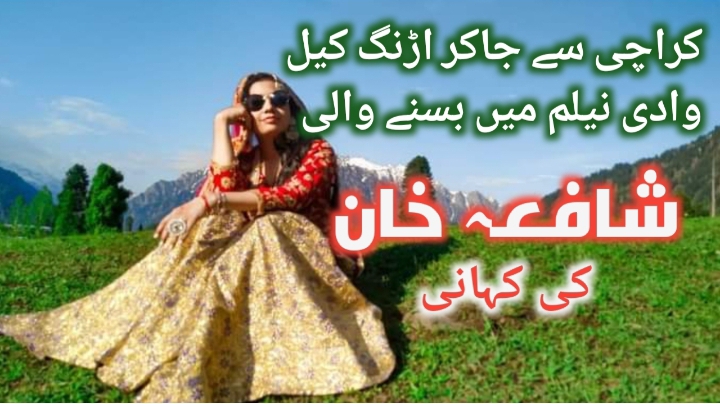
The girl, Shafia Khan, who moved from Karachi to settle in Neelum Valley

After leaving the bustling city of Karachi and settling in the village of Arang Kel, Neelum Valley, many people have asked me what changes I experienced in my life. Until now, I had no concrete answer, but after living here for two and a half years, I can finally compare the life in the city to that in the village.

During my career, I had grown tired of city life. I felt that people in the city were only concerned with increasing their status. Relationships had become shallow, and people’s priorities seemed limited to buying the best brands. It felt as though materialism had taken over, and dishonesty had become a part of people’s habits.

I made a life-changing decision when I told my family that I didn’t want to marry in Karachi; I wanted to live in a hilly area. My family dismissed it as a joke, saying “Your desire will fade in a few days.” My father said that if I spent a month there and had no issues, he would let me stay. But I knew they were just teasing; they would never truly let me go.

Every year, I spent the bonus from my salary traveling, and many relatives would ask me how I could afford to travel so much. I would laugh it off. The reality, though, was that I wasn’t spending money on material things; I was using it to explore, because since childhood, I never had a desire to buy things. My one true love was the sea, but as I grew older, the mountains and forests became my new passion. When I wrote my book, I never imagined that one day I would settle in Kashmir, and on my wedding day, I was so happy that I could barely contain myself. It wasn’t about love for my husband, but rather the joy that I would be living in Urang Keel forever.

After moving to Urang Keel, I realized that living as a tourist and living as a local are completely different experiences. My family thought I wouldn’t last long, but I had no difficulty adapting. Everything was available except gas. In the beginning, it was hard to cook with firewood; I burnt my hands a few times, but eventually, my husband started helping with it, and I cooked. Now, I can manage firewood like a pro.

The environment and climate suited me well. The local food, like desi beans, vegetables, and milk, was very healthy and delicious. But the water was so cold that I could barely wash my face, let alone bathe.

Living in the mountains as a local is a very different experience compared to being a tourist. The challenges in both places—city and village—are unique. In the mountains, the physical labor is more, while in the city, it’s mental. However, I was mistaken in thinking that mountain or village people are simple and modest. Wealth still dictates how people treat you, and once someone has money, their attitude changes. However, the people of Karachi are not easily impressed by wealth or social status. They don’t judge based on money or lineage. Surprisingly, in villages, people often imitate others and are more inquisitive, which shows that curiosity and mimicry are part of human nature. If city dwellers had more time, they would likely behave the same way.

Now, I will answer two common questions that often arise in the minds of tourists:

  1. “What’s behind that mountain?” I’ve heard many tourists ask about what’s beyond the mountains. I used to think the same, but after reaching the top of many mountains, I realized that behind every mountain, there is another, and then another. The mountains are never solitary, except for the isolated mountain near Karachi. The mountain ranges connect with beautiful valleys, rivers, and grazing grounds.
  2. “I wish we could die or get lost in these mountains.” I used to hear tourists express this thought, but I now know firsthand that the reality of the mountains is far more daunting than the beauty they show. The most terrifying experience is when you’re alone, vulnerable in the mountains, facing the threat of death. Natural disasters aside, the struggles women in these areas face during childbirth, far from any hospital, is something urban women can never imagine. Only the women living in the mountains can truly understand this. The courage of these women is unparalleled and would be beyond the endurance of even the strongest climbers or adventurers.

Many people think I’m tired of mountain life or that I will eventually return to the city, but that’s not true. I chose this life, and I have no regrets. If I ever decide to leave, I will have no regrets then either. I’ve always made my own decisions, and even if I make a mistake, I know how to correct it. I will never regret my decisions.

If anyone ever asks me whether I would choose city comfort or mountain life, I would choose the mountains without hesitation.

I die in silence, this is my only wish,
To have a small hut in the lap of the mountains,
Living freely, spending my days in solitude,
With the sorrow of the world no longer piercing my heart.

Sopore: Asia’s Second-Largest Fruit Market, A Symbol of Modernization

0

Sopore, Kashmir – Azadi Times
(Manzoor Zahoor)

Kashmir, with its stunning natural beauty, pleasant climate, and rich agricultural heritage, is known worldwide for its fruit production. Among these, apples stand out, especially varieties like Delicious and Golden Delicious, which are highly regarded in both domestic and international markets. The northern region of Kashmir, particularly, has earned a reputation for apple cultivation, contributing significantly to the region’s economy.

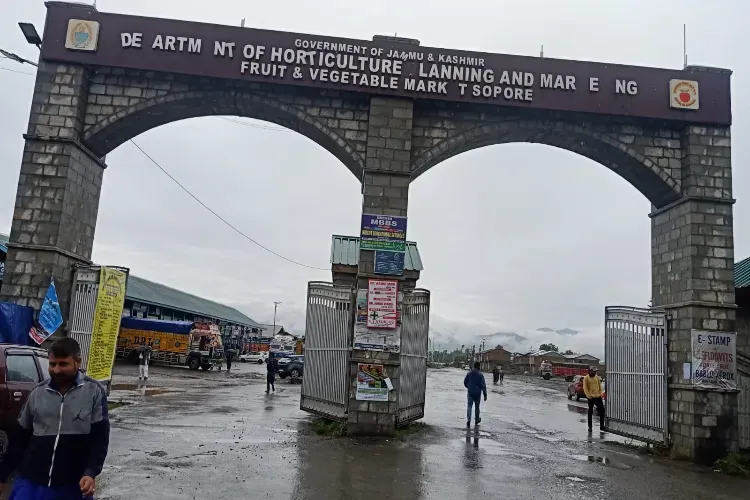
In the heart of northern Kashmir lies Sopore, often referred to as “Apple Town,” which is home to Jammu and Kashmir’s largest fruit market and Asia’s second-largest fruit market after Azadpur in Delhi. Established in 1988 by a prominent businessman, Ghulam Mustafa, the market started on a modest scale and has since expanded to cover around 400 kanals of land. Today, it is a bustling hub where fruits like apples are sold, and the annual turnover reaches a staggering 30,000 crore rupees. The market serves as a crucial distribution point, connecting to more than 450 other markets across India. Every day, around 400 trucks transport apples and other fruits to cities throughout the country.

A Thriving Hub for Trade and Business
The Sopore fruit market is not just about its size or trade volume. It is known for its impeccable cleanliness and modern infrastructure, which has made it a model of how a large agricultural market should function. The market spans several hundred acres of land, with a well-maintained office and conference hall. The Fruit Growers Association has also built a guesthouse, providing accommodation and meals for traders visiting the market from across the country. This focus on modern amenities and cleanliness ensures that the market remains attractive to traders and businesspeople.

The market’s importance is further underlined by the economic activity it generates. Thousands of traders, both large and small, are connected to the market. In fact, a significant portion of Jammu and Kashmir’s population is linked to this market in one way or another, whether through direct trade or secondary businesses. The market is a vital part of the local economy, with an estimated 70% of the region’s population dependent on it for their livelihood.

Business Boom During Festival Season
The period between August and November sees a significant surge in business in the Sopore market, owing to the numerous festivals during this time. During these months, the demand for fruits, especially apples, reaches its peak. Traders from all over the country come to the market, taking advantage of the influx of quality produce.

South Kashmir’s Growing Role in the Market
The Sopore market is not only significant for traders in northern Kashmir but also for those in southern Kashmir. Farmers and traders from regions like Pulwama and Shopian, known for their high-quality apples, increasingly rely on this market to sell their produce. Apples from these areas are either sent directly or packaged in Sopore, where they are distributed to other parts of India. This growing dependence highlights the market’s central role in the fruit trade.

Emphasis on Modernization and Technological Advancements
One of the key aspects of the Sopore market’s success is its continuous focus on modernization and the adoption of new technologies. Recently, a workshop was organized by Aero Agri India Ltd., a well-known agricultural company, to help local fruit growers and traders upgrade their knowledge of modern techniques, machinery, and technology in the agriculture and business sectors. The workshop aimed to enhance the business and production capacities of the local fruit industry.

The Future of the Sopore Market
As the market continues to evolve, it will likely see even more growth and technological advancements. The strong foundation laid by the early pioneers of the market, like Ghulam Mustafa, and the ongoing efforts to improve infrastructure, cleanliness, and business practices have established the Sopore fruit market as a model of success. The market’s expansion, its role in the economy, and its ability to serve as a major distribution center for fruits and vegetables make it an essential part of not just Kashmir’s economy but also the broader Indian agricultural trade.

The Sopore fruit market is a shining example of how local agricultural markets can thrive with a focus on modernization, technology, and cleanliness. Its role in the economy, the growing importance of apple trade, and its connection to other parts of India make it a key player in the country’s agricultural sector. As the market continues to grow and evolve, it is sure to remain a symbol of modernization and a major force in Kashmir’s economic landscape.

Kashmir Breaks 38-Year Cold Record, Rivers and Lakes Freeze

0

Muzaffarabad: Both Indian-administered and Pakistan-administered Kashmir, along with Gilgit-Baltistan, are currently experiencing a severe cold wave, with temperatures plunging below freezing point during both day and night. In Indian-administered Kashmir, a 38-year-old cold weather record has been broken, while in Pakistan-administered Kashmir, rivers and lakes are beginning to freeze due to the extreme cold.

The most severe cold is being experienced in the Neelum Valley of Pakistan-administered Kashmir, where the temperature in the village of Taobat, located near the Line of Control, has reached a record low of minus 22°C. Other areas of the Neelum Valley, including Kel, Sharda, and Athmaqam, have seen temperatures drop to between minus 2°C and minus 10°C. The intense cold has caused a thick layer of ice to form over large portions of the Neelum River near Shrougi in the Kel area.

The capital of Pakistan-administered Kashmir, Muzaffarabad, is also experiencing extreme cold, with temperatures dropping below minus 1°C. Additionally, the city is currently engulfed in smog, with dust particles in the air significantly reducing sunlight, which has led to concerns about seasonal illnesses.

According to the Meteorological Department, there is no forecast for rain in December, which will exacerbate the cold conditions. The temperatures in the upper areas of the Neelum Valley, as well as in the districts of Bagh, Rawalakot, and Haveli, have remained below freezing, even during the day.

In Indian-administered Kashmir, a 38-year-old cold weather record was broken when the temperature in Srinagar reached minus 9°C in December. The previous record was set in 1986, when the temperature dropped to minus 8°C on December 31. The temperature in areas like Pahalgam and Qazigund also dropped to minus 8.2°C. With this extreme cold, the “Chilla Kalaan,” or 40 days of harsh winter, has begun in the region.

Gilgit-Baltistan is also under the grip of severe cold, with temperatures in almost all areas dropping below freezing. In Gilgit, the temperature has reached minus 8°C, while in Skardu, it has dropped to minus 11°C.

The areas of Kargil and Ladakh in Indian-administered Kashmir are also facing extreme cold, which has severely disrupted daily life.

Editorial: Challenges Confronting Azad Kashmir in the Digital Age

0

In the rapidly evolving digital landscape, Azad Kashmir, like many regions, finds itself at a crossroads. A recent BBC report has shed light on the devastating impact of internet disruptions, highlighting that just one hour of internet outage costs businesses approximately one million dollars. A significant portion of this loss comes from the youth population, whose livelihoods are increasingly tied to the digital economy. The report further revealed that Pakistan ranks 96th out of 111 countries in terms of mobile internet speed, a ranking that paints a bleak picture for a region striving to keep up with global technological advancements.

This is not just a matter of statistics—it is a reflection of the broader struggles faced by the youth and businesses in Azad Kashmir. The digital divide, slow internet speeds, and frequent service disruptions are hampering the growth of IT industries. In fact, around 4,000 IT companies have moved their operations to Dubai this year, a stark indication of the challenges within Pakistan’s digital infrastructure. Experts in the field of IT export contend that Pakistan has a $15 billion market waiting to be tapped, but only if the internet connectivity issues are resolved.

The rapid advancement of technology, from Artificial Intelligence to Artificial General Intelligence and even Artificial Super Intelligence, has the world on the brink of a new era. However, in Azad Kashmir, these advancements are still a distant dream. While the world is preparing for the future with new laws and budgets for AI, the region continues to grapple with outdated infrastructure that hampers its ability to compete globally.

Furthermore, the impact of Pakistan’s economic conditions, policies, and the changing laws in Gulf countries have directly affected the livelihoods of people in Azad Kashmir. Every year, between 15,000 to 20,000 graduates from universities in Azad Kashmir and Pakistan enter the job market, seeking employment opportunities. Sadly, there is no concrete plan from the government to accommodate them. The absence of proper job creation strategies, combined with the deteriorating environmental conditions and the rising unemployment rate, is leading to a growing sense of disillusionment among the youth.

The year 2024 marked a turning point, with widespread protests across Azad Kashmir. Young people, alongside traders and other segments of society, took to the streets to voice their frustrations with government policies. The participation of youth in these protests is a clear indication of the weakening social contract between the state and its citizens. The government’s failure to address the employment crisis and environmental degradation has left many young people feeling abandoned, with no future prospects in sight.

The environmental crisis is another critical issue that cannot be overlooked. From deforestation to the dwindling agricultural resources, Azad Kashmir is facing the brunt of climate change. The population has grown exponentially since the region’s partition, and yet the local infrastructure has not kept pace. There are no significant local production sources, and the region has become heavily reliant on external consumption. The consequences are dire—according to a global survey, nearly 60% of children in the region suffer from malnutrition, and the unemployment rate continues to rise.

The rapid growth of the consumer society in Azad Kashmir has come at the expense of its social and economic fabric. A lack of proper planning and infrastructure, combined with rampant corruption and misuse of government resources, has created a chasm between the elite and the common man. The public education system, rather than fostering innovation, is churning out graduates who are ill-prepared for the modern job market. At the same time, administrative units based on tribal and regional affiliations have only served to exacerbate the region’s challenges. The result is a bureaucratic system that is both inefficient and burdensome to the common citizen.

As we look at the youth’s involvement in the protests, it becomes clear that their frustration stems not just from a lack of job opportunities but from a broader sense of injustice. In a region where the elite enjoy modern amenities while the common people struggle to make ends meet, questions must be raised. The gap between the privileged and the disadvantaged is widening, and the youth, who are increasingly aware of this disparity, are expressing their anger through demonstrations and activism.

The path forward for Azad Kashmir lies in addressing these pressing issues head-on. The digital infrastructure must be upgraded to provide the youth with the tools they need to succeed in the modern economy. Moreover, job creation strategies must be developed, not just for the sake of economic growth but for the future stability of the region. The government must act quickly to reverse the environmental damage, safeguard natural resources, and ensure that the future generations inherit a livable, sustainable region.

While the challenges are formidable, they are not insurmountable. However, they require political will, strategic planning, and most importantly, the involvement of the youth, who are the driving force behind any meaningful change. The government must heed their concerns, invest in their potential, and create an environment where they can thrive, rather than just survive.

The future of Azad Kashmir depends on the decisions made today, and it is time for the authorities to take action before it is too late.

Traffic Advisory Issued for Tourists and Locals in Neelum Valley to Prevent Accidents

0

Neelum Valley: Traffic Advisory Issued for Tourists and Locals in Neelum Valley to Prevent Accidents”zTo curb the increasing number of traffic accidents in hilly areas, the State Disaster Management Authority (SDMA) of Pakistan-administered Kashmir has issued a travel advisory for both tourists and local travelers. The advisory includes important guidelines on traveling through mountainous and icy regions during the severe cold weather.

The SDMA has warned that the dense fog and frost that develop during early mornings and evenings in the upper hilly areas create extremely slippery roads, making travel dangerous. As a result, tourists and local commuters are advised to avoid traveling in the early morning and evening hours, particularly after sunset.

The advisory emphasizes that traveling in areas such as Upper Neelum, Haveli, Leepa, Peer Chanasi, Toli Pir, Ganga Choti, and other hilly regions during these times could lead to serious accidents. Tourists are urged to check with local authorities for updated road conditions before heading to these areas and to ensure they are traveling in four-wheel-drive vehicles, which are better suited to the tough terrain.

For public convenience, the SDMA has provided contact numbers for travelers to inquire about the weather and road conditions before setting out.

In the Neelum Valley, which attracts millions of tourists annually, many accidents have occurred due to inexperience in driving on mountain roads and the poor condition of the roads. In the past 12 days alone, three separate accidents in the Neelum Valley have claimed the lives of 11 people, most of whom were non-local tourists.

The SDMA urges everyone to adhere to these guidelines to ensure their safety and avoid further accidents in the challenging conditions of the region.

Severe Cold Wave Hits Pakistan-administered Kashmir: Temperatures Drop to -24°C

0

Pakistan-administered Kashmir is currently experiencing an intense cold wave, with temperatures dropping to alarming lows. The coldest spot has been recorded in Neelum Valley’s Grace Valley, where the village of Taobutt saw the temperature plummet to -24°C on Thursday, December 26, at 7 AM.

Other areas in the Neelum Valley also faced extreme cold, with temperatures recorded at -11°C in Kel, -10°C in Sharda, and -3°C in Athmuqam. The capital city, Muzaffarabad, recorded a chilling -2°C, while the famous tourist destination of Peer Chanasi saw temperatures drop to -16°C. Leepa Valley recorded a temperature of -2°C.

Across the Line of Control, in Indian-administered Kashmir, the temperature in Srinagar dropped to -6°C, while in Ladakh, it reached a severe -18°C.

In Gilgit-Baltistan, the temperature in Skardu reached -16°C, and in Gilgit, it dropped to -11°C.

Meteorologists predict that the cold wave will intensify in the coming days, with dry, freezing conditions expected to continue across the region. The ongoing extreme weather is raising concerns for both residents and travelers alike.

Controversy Erupts Over Army Training of College Students in Neelum: Journalist and Activist Arrested

0

Neelum Valley (The Azadi Times) – A storm of controversy has erupted in Azad Jammu and Kashmir after students from Government Girls Degree College Athmuqam were reportedly taken to an army camp for firing practice as part of the Kashmir Youth Skills Development Program (Phase 3). The incident has sparked intense debate, leading to the arrest of a journalist and a social activist who criticized the move.

According to reports, female students were transported to an army camp as part of their training program, where they participated in military firing tests. This development has drawn sharp criticism on social media, with many questioning the appropriateness of involving college students in such activities. Social media users have also heavily criticized the college administration and staff for sending students to a military camp, citing concerns over the nature and necessity of this training.

In response to the backlash, authorities filed an FIR and arrested both a journalist and a social activist for raising concerns over the issue. The detentions have ignited outrage across Azad Kashmir, with journalists and members of civil society strongly condemning the arrests and calling for the immediate release of the detainees.

The Azad Kashmir Journalists’ Association and other civic organizations have expressed solidarity with the arrested individuals, highlighting the importance of freedom of speech and the press. They argue that questioning government and institutional decisions is a fundamental right in any democratic society.

Critics of the move have raised several pressing questions:

  • Was military training essential under the educational program?
  • Why were female students taken to an army camp without public disclosure or parental consent?
  • Is the arrest of those questioning such decisions a violation of fundamental rights?

The issue has also drawn attention internationally, as rights groups and media watchdogs monitor the developments closely. Many argue that the arrests represent a troubling crackdown on dissent and accountability in the region.

As of now, neither the college administration nor the army officials involved in the program have issued any official statements clarifying the intent or objectives of this military training. Calls for transparency and accountability in this matter continue to grow louder, both locally and internationally.

This controversy raises broader concerns about the balance between education and militarization, freedom of expression, and the role of public institutions in addressing criticism constructively rather than suppressing it.

The Azadi Times will continue to closely follow this unfolding story and provide updates as more information becomes available.

Job Opportunities Announced for Diamer Bhasha Dam Project

0

Chilas (The Azadi Times): Contractors of the Diamer Bhasha Dam Project, Power China, and FWO, have announced new employment opportunities for local residents in the project area. According to the project spokesperson, the Power China-FWO Joint Venture has opened 128 vacancies across various trades to support ongoing construction work.

The announced positions include:

  • 60 Dumper Truck Drivers
  • 24 Heavy Machinery Mechanics
  • 20 Excavator Operators
  • 10 Bulldozer Operators
  • 8 Loader Operators
  • 6 Roller Operators

Experienced and qualified candidates from the project area are encouraged to submit their applications, along with required documents, by January 3, 2025. Applications can be submitted during office hours at the WAPDA Diamer Bhasha Dam Project Office in Chilas or the WAPDA Office in Thor under the supervision of the Joint Employment Committee.

Candidates who have already submitted their documents for these positions do not need to reapply.

This initiative has been launched under the directives of WAPDA Chairman Lt. Gen. (R) Sajjad Ghani, with guidance from CEO Diamer Bhasha Dam Project Amir Bashir Chaudhry and General Manager WAPDA Nuzakat Hussain. Through the Joint Employment Committee, special priority is being given to the youth of the project area to provide them with employment opportunities, promoting economic growth and skill development in the region.