
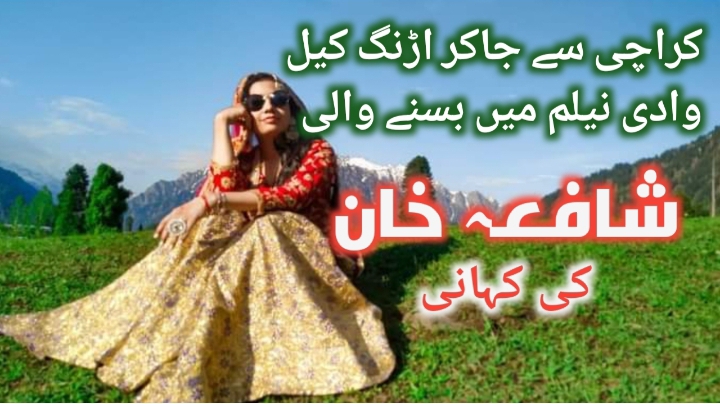

During my career, I had grown tired of city life. I felt that people in the city were only concerned with increasing their status. Relationships had become shallow, and people’s priorities seemed limited to buying the best brands. It felt as though materialism had taken over, and dishonesty had become a part of people’s habits.
I made a life-changing decision when I told my family that I didn’t want to marry in Karachi; I wanted to live in a hilly area. My family dismissed it as a joke, saying “Your desire will fade in a few days.” My father said that if I spent a month there and had no issues, he would let me stay. But I knew they were just teasing; they would never truly let me go.
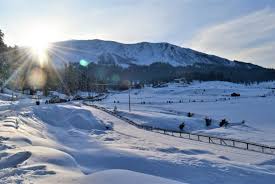
Every year, I spent the bonus from my salary traveling, and many relatives would ask me how I could afford to travel so much. I would laugh it off. The reality, though, was that I wasn’t spending money on material things; I was using it to explore, because since childhood, I never had a desire to buy things. My one true love was the sea, but as I grew older, the mountains and forests became my new passion. When I wrote my book, I never imagined that one day I would settle in Kashmir, and on my wedding day, I was so happy that I could barely contain myself. It wasn’t about love for my husband, but rather the joy that I would be living in Urang Keel forever.
After moving to Urang Keel, I realized that living as a tourist and living as a local are completely different experiences. My family thought I wouldn’t last long, but I had no difficulty adapting. Everything was available except gas. In the beginning, it was hard to cook with firewood; I burnt my hands a few times, but eventually, my husband started helping with it, and I cooked. Now, I can manage firewood like a pro.
The environment and climate suited me well. The local food, like desi beans, vegetables, and milk, was very healthy and delicious. But the water was so cold that I could barely wash my face, let alone bathe.

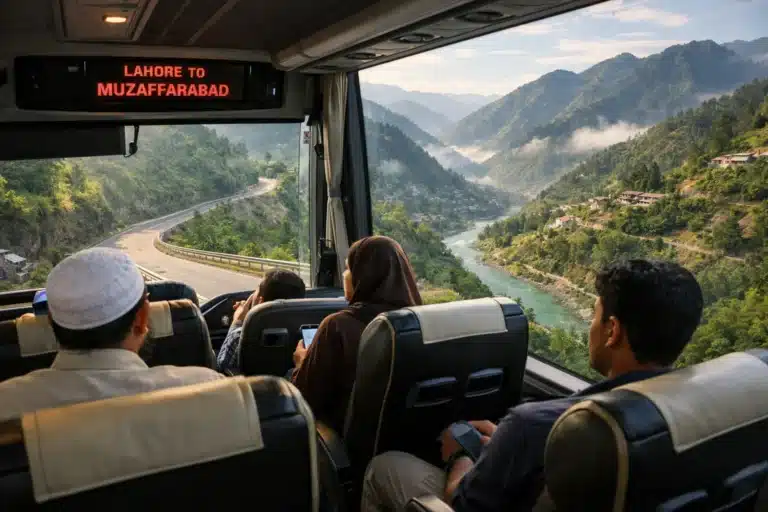
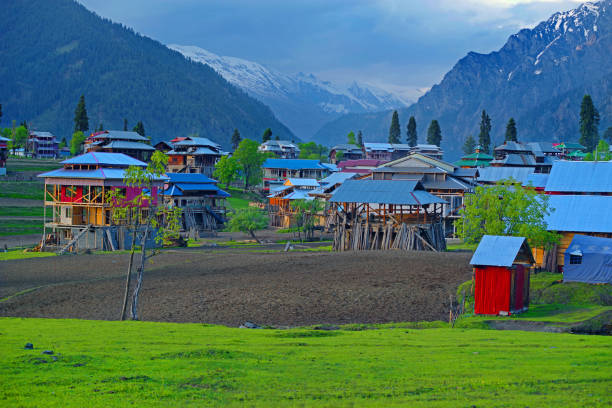
Living in the mountains as a local is a very different experience compared to being a tourist. The challenges in both places—city and village—are unique. In the mountains, the physical labor is more, while in the city, it’s mental. However, I was mistaken in thinking that mountain or village people are simple and modest. Wealth still dictates how people treat you, and once someone has money, their attitude changes. However, the people of Karachi are not easily impressed by wealth or social status. They don’t judge based on money or lineage. Surprisingly, in villages, people often imitate others and are more inquisitive, which shows that curiosity and mimicry are part of human nature. If city dwellers had more time, they would likely behave the same way.
Now, I will answer two common questions that often arise in the minds of tourists:
- “What’s behind that mountain?” I’ve heard many tourists ask about what’s beyond the mountains. I used to think the same, but after reaching the top of many mountains, I realized that behind every mountain, there is another, and then another. The mountains are never solitary, except for the isolated mountain near Karachi. The mountain ranges connect with beautiful valleys, rivers, and grazing grounds.
- “I wish we could die or get lost in these mountains.” I used to hear tourists express this thought, but I now know firsthand that the reality of the mountains is far more daunting than the beauty they show. The most terrifying experience is when you’re alone, vulnerable in the mountains, facing the threat of death. Natural disasters aside, the struggles women in these areas face during childbirth, far from any hospital, is something urban women can never imagine. Only the women living in the mountains can truly understand this. The courage of these women is unparalleled and would be beyond the endurance of even the strongest climbers or adventurers.
Many people think I’m tired of mountain life or that I will eventually return to the city, but that’s not true. I chose this life, and I have no regrets. If I ever decide to leave, I will have no regrets then either. I’ve always made my own decisions, and even if I make a mistake, I know how to correct it. I will never regret my decisions.

If anyone ever asks me whether I would choose city comfort or mountain life, I would choose the mountains without hesitation.
I die in silence, this is my only wish,
To have a small hut in the lap of the mountains,
Living freely, spending my days in solitude,
With the sorrow of the world no longer piercing my heart.