Sunday, March 29, 2026
17.7 C
Srinagar
Home Blog Page 138

Kashmir Ki Azadi

0

Barf se dhaki hui wadiyon ka manzar,
Khoon se bheegi hui mitti ka safar.
Har chehra yahan udaasi ka aaina,
Azadi ka khwab hai, jo hai hamesha apna.

Shaheedon ke lahoo ne zameen rang di,
Zanjeeron ne khushiyon ki raah band ki.
Lahu ka har qatra pukar raha hai,
“Azadi chahiye, bas azadi chahiye!”

Gharon se uthe the jin ke hosle jawan,
Woh sab kuch luta kar bhi hain qaim o daman.
Chiragh bujha nahi, andheron ke darmiyan,
Chamak raha hai har dil ka yaqeen-e-jahan.

Darya ke pani bhi gunguna rahe hain,
Azadi ke geet humein suna rahe hain.
Woh din door nahi jab roshan hoga sama,
Kashmir banega ek azad dastaan!

Khawabon ko sajana hai haqeeqat ke noor se,
Mitti ko mehkaana hai pyar ke shoor se.
Azadi ka suraj ufaq par uga do,
Kashmir ke phoolon ko khushbu mein basa do.

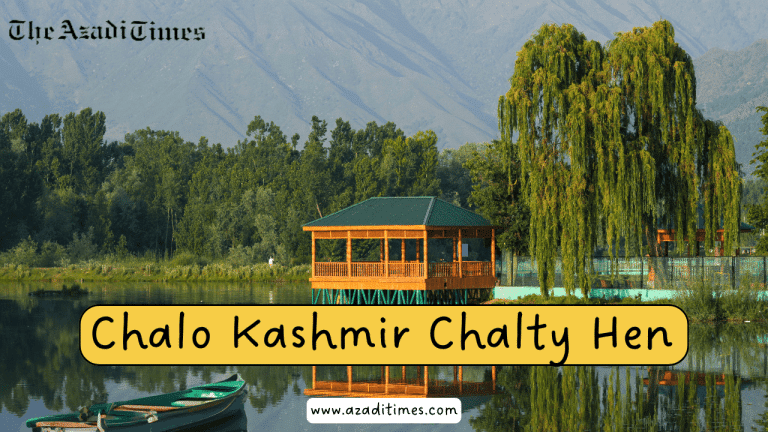
Chalo Kashmir Chalty Hen

0

Jaha Pr Barf Girti Ha
Jaha Pathar K Nechy
Phool Khilty Hen

Jahan Chasmy Ubalty Hen
Jahan Barish Barasti Ha

Barasti Barishon Me B
Jahan Kohsar Jalty Hen
Chalo Kashmir Chalty Hen

Kashmir ki wadiyon mein hai jadoo sa koi

0

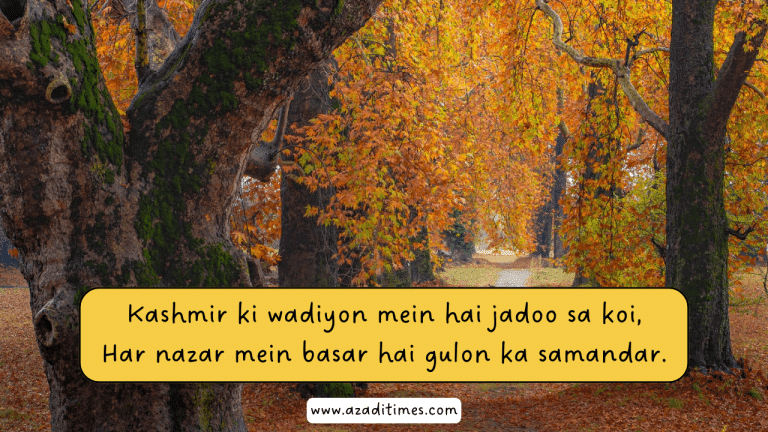
Kashmir ki wadiyon mein hai jadoo sa koi,
Har nazar mein basar hai gulon ka samandar.

Pahar jo barf mein lapeta hai apni chadar,
Gawah hai yeh khuda ki qudrat ka manzar.

Chalti hawayein hain yahan khushboo ke saath,
Jheelon ke aansoon mein hai chaand ka asar.

Baghon mein gulabon ka hota hai basera,
Har shaakh ke niche hai panchi ka ghar.

Kashmir ki zameen jannat se kam nahi,
Har kone mein chhupa hai mohabbat ka asar.

Kashmir Beauty Poetry: 20 Beautiful 2-Line Poetry in Roman Urdu

0

1.

Kashmir ki waadiyon mein hai rangon ka jahan,
Jahan har phool khilta hai, apni khushbu ke saath.

2.

Kashmir ki raaton mein chandni ka rang hai,
Har nazar mein ek nayi kahani ka ang hai.

3.

Daryaon ki lehron mein hai sukoon ka paigham,
Kashmir ki vaadiyon mein hai, har rang ka salaam.

4.

Kashmir ke chhote se gaon mein hai ek baat,
Wahan ki khushboo hai, har dil ko apna saath.

5.

Jab bhi dil ho udaas, Kashmir ki yaad aaye,
Wahan ka har nazara dil ko sukoon de jaye.

6.

Kashmir ki wadiyon mein hai ek raaz ka rang,
Har phool mein bas chahti hai, zindagi ka sang.

7.

Kashmir ki saavan ki raaton mein mehkaata hai khushboo,
Jahan har lamha hai ek nayi zindagi ki kahani ka jadoo.

8.

Kashmir ki zameen pe hai, sukoon ka asal hai,
Wahan ke rangon mein hai, dard ka ek jazbaat.

9.

Kashmir ki hawa mein, hai ek shaayari ka safar,
Wahan ke daryaon ki aawaz mein hai ek pyaar ka safar.

10.

Kashmir ki raaton mein, chaand ke saath roshni hai,
Har raah pe khushi ka paigham hai.

11.

Kashmir ke pahadon mein hai, har pal ka ek rang,
Jahan har phool ke saath hai, ek geet ka ang.

12.

Jahan saawan ki raat ho, Kashmir ki yaad aaye,
Har dil mein sukoon ho, jab wahaan ka rang aaye.

13.

Kashmir ke rangon mein hai ek khudai nasha,
Jahan har manzil hai, ek khudai dasha.

14.

Kashmir ki chaandni raat mein kuch aur baat hai,
Har ek raat ka rang, kuch aur saath hai.

15.

Kashmir ke phoolon mein, hai zindagi ka rang,
Jahan har gulsher mein, ek khushbu ka sang.

16.

Kashmir ki vaadiyon mein hai ek chhupi hui shaayari,
Har pal mein hai, khushi ki nayi kahani ki yaari.

17.

Kashmir ki daryaon mein hai, ek shayari ka safar,
Wahan ke lamhon mein, hai ek pyaar ka safar.

18.

Kashmir ke raat bhar ka rang hai sukoon bhara,
Har chaandni ki raah mein, hai khushi ka kara.

19.

Kashmir ki khoobsurti mein hai kuch alag baat,
Jahan har phool ka hai, apna ek rang ka saath.

20.

Kashmir ki safedi mein hai ek dard ka raaz,
Jahan har zindagi mein hai, apni ek khaas baat.

Editorial: A Tough Test for Liberal Politics and Leadership by Dr. Sagheer Khan

0

Don’t take it easy, let us know that the sky has been moving for years… Then humans emerge from the veil of dust. For a long time, intellectuals have considered Azad Kashmir as a political school, where the environment and its developed characters are familiar with the subtleties of politics and ideas.

However, for the last one or two years, politics and movements have become so prominent that even political thinkers would be wary of these two years. One such movement is the Public Action Committee, which was launched to address public problems and rights.

The demand for cheap electricity and subsidies on flour has been raised for a long period of time. Recently, nationalist parties like NSF and NEP, under the platform of the People’s Forum, have been part of this movement. The Jammu and Kashmir Liberation Front, led by Sagheer Khan Advocate, has also gained significant public support and has achieved some initial success.

The Public Action Committee called upon all sections of the people with their voice. The movement of the Public Action Committee was related to people’s needs and rights, but during this time, the idea of restoring their identity among the Kashmiri people emerged so strongly that it gained popularity everywhere. Upon closer inspection, we can see that the idea of Kashmirism, i.e., identity, was not the goal of this movement, but rather a by-product of the Awami Action Committee’s struggle and the Awami Movement.

The accomplishments and matters related to these movements can be easily found. Similarly, some actions of the leadership of the Action Committee may be questioned. However, overall, it must be acknowledged that the people did get some economic relief from this movement, while the element of Kashmirism was born in them with full intensity.

It must be remembered that the Public Action Committee is merely an expression of public needs and rights, not a promoter of a singular viewpoint. Therefore, it should work within its own limits, keeping in mind the expectations and criticisms of its supporters. Action Committee should seriously consider its limitations and capacity.

It is crucial now that the Action Committee, by maintaining its existence, receives public trust, which may provide them with new morale and ideas. The leaders must realize their responsibilities and understand the situation, showing more wisdom and understanding than before in order to achieve both temporary and lasting success. Politics and time change quickly.

The leaders of the Action Committee must adopt extremely responsible behavior; otherwise, they will realize that there is no permanent place for them in politics. Members from different political ideologies and parties are included in this movement. The generous support and tireless efforts of freedom-loving organizations and their affiliates are also significant factor in this regard.

In fact, there is serious concern regarding both sides that should be addressed. The Public Action Committee, born out of the strong wave of self-identification, has a responsibility. Liberal politics and leadership have the duty to use their influence positively for ideology and movement. Surely, they will be attracted to it.

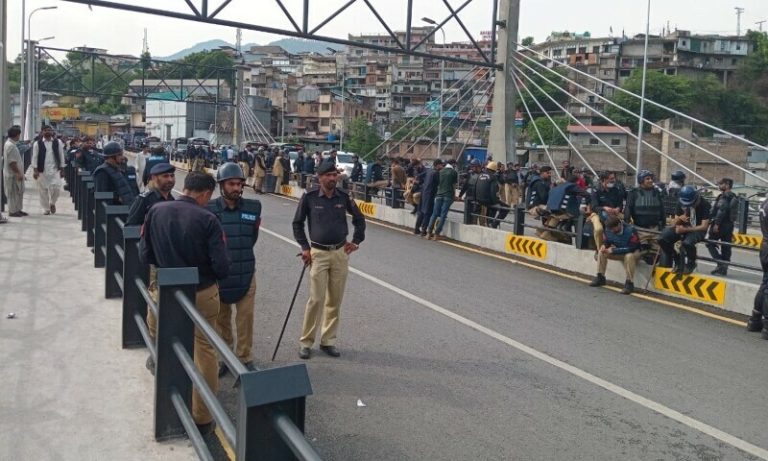
The government’s infamous and black law has given birth to a new movement, which started from Rawalakot. The government tried to suppress the protest through force, but failed. Initially, police were unable to stop the protest, then arrests were made, but to no effect. The government pulled out all the stops, but the protest continued.

On November 22, Rawalakot, Muzaffarabad, Hajira, and Thorar saw thousands of people participating in protests. Despite the police brutality, people protested with fervor. The situation tests liberal leadership and politics. They must appreciate the trust of the people and remain in tune with their passions and courage. Differences and debates must be set aside, and they must avoid selfishness, ego, and unnecessary divisions. At the same time, they should avoid engaging in false philosophies or adventurism, and instead focus on the ground realities and the public’s beliefs.

Liberal politics and leadership should follow the path of moral peace and dignity. This is the path that will lead them to their destination. If the Public Action Committee and the libertarian leadership come to a mutual understanding and support each other for their goals, much can be facilitated. A “natural unity among the oppressed” could emerge. If past mistakes are acknowledged and corrected through practical thought and forgiveness, it could lead to a unified front, which would definitely prove beneficial.

The ongoing public action committee should reject the “everything is fine” mindset and engage in the process of “improvement through consultation.” It would be commendable to witness libertarian politics and leadership adopting a prudent approach, understanding that the recognition they’ve received is a severe test for them. They must build the movement on the foundation of wise thinking and a broad vision.

When people’s dreams are crushed, the consequences are painful. Leaders must be aware of the time, and the intervention methods of powerful circles, which makes their responsibility relatively higher. The space created for their thinking should not be wasted.

They should proceed prudently and the leaders of both movements must realize that they are not in competition under the influence of some unseen process. Such a race has a deep chasm.

Main Road from Chakothi to Khilana Valley on the Line of Control Turns to Ruins Due to Government Neglect

0

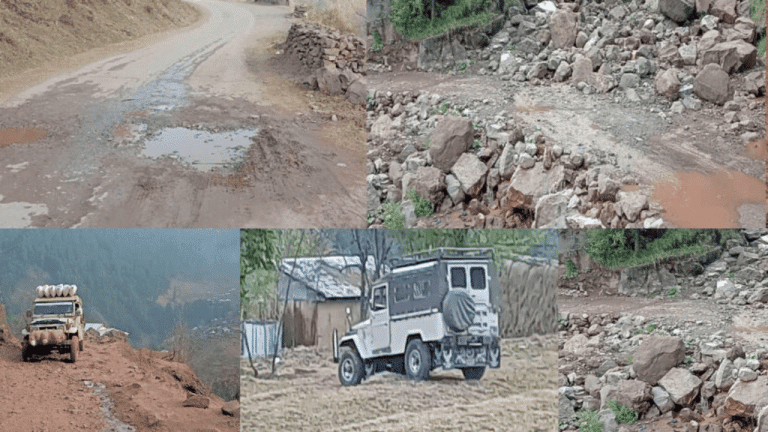
Hattian Bala (TAT Daily): The main road connecting Chakothi to Khilana Valley along the Line of Control has deteriorated into a state of disrepair due to prolonged government neglect. The road, a critical lifeline for the local population, is now riddled with potholes, collapsed drainage systems, and broken retaining walls. Despite repeated appeals from the residents for its upgradation, successive governments have turned a blind eye to their plight.

Locals have reported that the Public Works Department (PWD) has resorted to short-term fixes, with workers filling the potholes using soil. However, these temporary measures fail to withstand even light rain, rendering the road unusable again. The condition of the road has become a stark representation of governmental apathy, with vehicles struggling to navigate the uneven terrain.

The residents argue that unless serious attention is paid to upgrading and improving the main road’s infrastructure, other developmental projects in the region will fail to achieve meaningful results. Roads connecting the valley’s villages to the main artery have been paved, but their utility remains limited due to the poor condition of the central route. The lack of proper maintenance and upgrading of the main road has made travel difficult and unsafe, with vehicles shaking violently while traversing the pothole-ridden path. In several areas, the road has deteriorated so severely that it is challenging for vehicles to cross each other.

Adding to the frustration, locals revealed that during previous attempts at road construction, contractors left many sections incomplete, leaving stretches of the road in their original unpaved condition. This neglect has left the main road riddled with craters, disrupting the daily lives of commuters and the transportation of goods.

Residents have repeatedly urged the government, particularly the Member of Assembly for Constituency VI and former Prime Minister Raja Muhammad Farooq Haider Khan, to address their grievances. They demand that the upgradation and widening of the Khilana Valley main road be prioritized in development plans for Line of Control regions. The project should include proper restoration, carpeting, and widening of the road to ensure that residents can access safe and reliable travel facilities.

While bus- and truck-level roads are being constructed in some areas of Khilana Valley, the main road remains in such poor condition that even small vehicles like taxis and cars face significant challenges. The situation has made it virtually impossible for buses or trucks to operate on this route.

Residents remain hopeful that Raja Farooq Haider Khan will recognize the importance of this project and work towards its inclusion in priority development plans. Addressing this pressing issue would alleviate the hardships faced by the local population and pave the way for broader regional development.

Consultation Begins for Imposing Emergency in Azad Kashmir

0

Muzaffarabd: Following the 13th Amendment to the Azad Kashmir Interim Act of 1974, the Prime Minister of Pakistan holds the authority to impose an emergency in Azad Kashmir. In consultation with constitutional experts and the Chairman of the Kashmir Council, the Prime Minister can impose a limited-term emergency and issue orders for new elections in the region.

In the event of an emergency, the cabinet of Prime Minister Choudhry Anwar Haq will become inactive. The National Security Committee of Pakistan, led by Ishaq Dar, has expressed concerns regarding the situation in Azad Kashmir, leading to the formation of a committee to address these issues.

The frequent strikes, political apathy from political parties, and the weak policies of the coalition government in Azad Kashmir have prompted consultations on the potential imposition of an emergency. According to reliable sources, the government of Pakistan, upon the concerns raised by national security officials, has begun consulting with constitutional experts regarding the ongoing activities and the role of the coalition government in Azad Kashmir.

After the 13th Amendment to the Azad Kashmir Interim Act of 1974, the Prime Minister of Pakistan, in consultation with the Chairman of the Kashmir Council, has the authority to impose an emergency in Azad Kashmir.

Following this consultation, the Prime Minister can impose a limited-term emergency to restore peace and resolve the political crisis, issuing orders for new elections. In such a case, the cabinet of Prime Minister Choudhry Anwar Haq will become inactive, and the Supreme Court of Azad Jammu and Kashmir may be entrusted with overseeing the administration of the region’s affairs.

Jammu Kashmir Joint Awami Action Committee Declares Indefinite Lockdown From December 5 Amid Public Rights Movement

    0

    Rawalakot, Azad Kashmir: In a decisive move to intensify the ongoing public rights movement, the Jammu Kashmir Joint Aawmi Action Committee (JKJAAC) has announced an indefinite statewide lockdown starting December 5, 2024. This decision was made during an emergency meeting of the committee’s core members held on November 19-20 in Rawalakot.

    The meeting brought together representatives from all three divisions of the region and focused on analyzing the state of the 18-month-long struggle, the controversial presidential ordinance, and its implications.

    The gathering began with a detailed review of the public rights movement, which has been characterized by widespread peaceful protests demanding justice, fairness, and fundamental rights for the people of Azad Jammu and Kashmir. The session also took stock of recommendations submitted during consultative meetings held across various divisions. After hours of deliberations, the committee made significant decisions to shape the future course of action.

    Key Decisions and Announcements

    1. Reaffirmation of Peaceful Struggle:
    The Jammu Kashmir Joint Awami Action Committee (JKJAAC) underscored its unwavering commitment to pursuing its Charter of Demands through a peaceful and political framework. The committee reassured the public that its mission remains focused on achieving justice and preserving the dignity of the people of Azad Kashmir.

    2. Rejection of the Presidential Ordinance:
    The committee reiterated its outright rejection of the controversial presidential ordinance, describing it as a “draconian law” aimed at stifling dissent and silencing the voices of the people. “From the very beginning, we have opposed this black law, and we will continue our struggle until it is repealed,” a spokesperson stated.

    3. Condemnation of State Repression:
    The JKJPAC strongly condemned the wave of arrests, fabricated cases, and police violence unleashed on peaceful protesters, particularly in Rawalakot, Mirpur, and Hajira. The committee expressed grave concern over these measures, which it described as an assault on basic democratic rights. The government was sternly warned to abandon such repressive tactics and immediately release all detainees unconditionally.

    4. Indefinite Lockdown Announcement:
    Citing the ordinance as a blatant violation of human rights, the committee declared a statewide indefinite shutter-down, wheel-jam, and complete lockdown starting December 5. Citizens were urged to prepare for a prolonged movement by stocking up on essential supplies. The committee called upon all sections of society, including traders, transporters, students, lawyers, religious leaders, and government employees, to suspend their daily activities in solidarity with the cause.

    “During the lockdown, we appeal to philanthropists to support daily wage earners who will be affected by the suspension of business and work,” the committee added, emphasizing the need for community support during this critical phase.

    5. Global Call to Action:
    The committee appealed to overseas Kashmiris to take the movement global by organizing protests worldwide. It urged expatriates to highlight the human rights violations resulting from the presidential ordinance and amplify the voice of the people of Azad Kashmir on international platforms.

    6. Solidarity With Ongoing Protests:
    The JKJAAC expressed unwavering support for all ongoing protests across the region. The committee particularly condemned the government’s heavy-handed response to demonstrations in Rawalakot, calling it a form of state-sponsored terrorism.

    7. Expansion of the Charter of Demands:
    Based on input gathered from all three divisions, the committee decided to expand its Charter of Demands. The revised demands now include:

    • Free healthcare and education for all citizens.
    • Creation of employment opportunities to address rising joblessness.
    • Establishment of an international airport in Azad Kashmir to enhance connectivity and economic growth.
    • Protection of the right to peaceful protest for government employees, as guaranteed under the Interim Constitution Act 74.

    A Movement Rooted in Public Interest

    The JKJAAC emphasized that its struggle is not a political rivalry but a fight for the basic rights and welfare of the people of Azad Kashmir. Speaking after the meeting, a committee representative said, “We are fighting for justice, equality, and the dignity of our people. The ordinance is a direct attack on our freedoms, and we will not rest until it is repealed.”

    Public Preparations and Next Steps

    The committee advised the public to prepare for the lockdown by securing essential supplies. It also called on various professional groups to support the movement by suspending their operations. The upcoming lockdown is expected to bring significant disruptions to daily life, but the committee remains hopeful that widespread participation will strengthen the collective demand for justice.

    Through this announcement, the JKJPAC aims to bring attention to the plight of the people of Azad Kashmir and ensure that their voices resonate both locally and globally.


    Issued by: Jammu Kashmir Joint Awami Action Committee

    Hong Kong Spectrum Innovation Group Launches the First Asian Young Designers Competetion, Driving Innovation in the Design Industry

    0

    In a groundbreaking initiative, Hong Kong Spectrum Innovation Group has launched the first-ever Asian Young Designers competition committing a whopping 10 million RMB to support 100 young designers in transforming their creative ideas into market-ready products.

    This initiative marks a significant step toward empowering youth innovation, particularly in regions like South Asia, where young talent often struggles to find platforms to showcase their skills.

    Hong Kong Spectrum Innovation: A Game-Changing Opportunity for Young Designers

    The competition has partnered with 20 leading universities and design schools across Asia, ensuring diverse participation and nurturing cross-cultural creativity. With over 1,000 design proposals already submitted, this program directly addresses the high costs and lengthy timelines that usually hinder young designers. The aim is clear: to streamline the journey from concept to product, opening doors for faster market entry.

    Why This Matters for Kashmir and South Asia

    While the initiative is rooted in Hong Kong, it sends a powerful message across Asia, including regions like Kashmir, where young designers face similar challenges. Access to funding, mentorship, and advanced manufacturing processes remains limited in our region. Programs like this can inspire governments and private organizations in Kashmir to invest in local talent and create platforms for innovation.

    Imagine how such a program could empower young designers in Kashmir, helping them bring traditional Kashmiri art and modern innovation to global markets. From Pashmina-inspired fashion to eco-friendly innovations, local creativity has the potential to shine on international platforms, provided the right support is in place.

    CUTOMEX: Bridging Creativity and Markets

    One of the unique aspects of this challenge is the use of CUTOMEX, an innovative platform for testing and showcasing products. This digital-first approach not only increases the visibility of successful designs but also connects designers with a global audience. Platforms like this could revolutionize how products from regions like Jammu Kashmir are marketed, reducing dependence on traditional, slower methods of production and distribution.

    A Call to Action for Local Stakeholders

    The Asian Young Designers Challenge is not just an isolated event; it represents a shift in how we approach innovation and youth empowerment. It’s a reminder that with the right investment in creativity and technology, Kashmir’s youth can become global leaders in design and innovation.

    This initiative should encourage Kashmiri universities, businesses, and government bodies to launch similar programs, ensuring that the region’s creative talent is not left behind. Can we envision a “Kashmir Designers Challenge” in the near future?

    A Step Toward Empowerment

    As young designers across Asia begin to see their dreams materialize, this challenge sets an example for fostering talent and promoting economic development through innovation. For Kashmir, this story is a glimpse of what could be a future where local creativity meets global recognition.

    Let’s draw inspiration from this initiative and work toward building a similar ecosystem in our region. After all, the youth of today are the innovators of tomorrow.

    Nakyal: Lawyers of Bar Association Nakyal Launch Protest Against Controversial Presidential Ordinance

    0

    The lawyers of the Bar Association Nakyal have initiated a protest campaign against the newly introduced controversial presidential ordinance, terming it illegal and a violation of human rights.

    The campaign began with lawyers symbolically covering their mouths with cloths and chaining their hands to protest against the ordinance.

    Following yesterday’s press conference, today a protest walk was organized from Padawa Chowk to Milad Chowk in Nakyal city against the “black law.” A large number of people participated in the walk and pledged their support for the campaign.

    The Bar Association described this campaign as a timely necessity and demand of the people. The public assured their full participation in the ongoing protest movement.

    Speaking on the occasion, the protesters, including General Secretary Bar Association Nakyal Fatahpur Thakiyala Shah Nawaz Ali Sher Advocate, Secretary Information Sardar Ali Afzal Advocate, Bar Association member Sardar Jawad Anwar Khan Advocate, and others, expressed their concerns.

    They stated that the presidential ordinance is in direct conflict with human rights, international laws, and the United Nations Human Rights Charter. They emphasized that this ordinance imposes restrictions on freedom of expression and vowed to continue their uncompromising struggle against it until it is repealed.

    The speakers announced that after the current phase of the campaign, the second phase of the protest movement would begin. They reaffirmed that lawyers, as defenders of the constitution, law, and human rights, cannot tolerate any violations of fundamental human rights.

    They further lamented the deteriorating state of human rights in Azad Jammu and Kashmir, asserting that freedom of thought and speech have effectively been criminalized in what was once a base camp for freedom.

    The protesters accused the Anwar-ul-Haq government of resorting to oppressive tactics, declaring the ordinance as the final nail in the coffin for such actions. They urged the public to stand against this ordinance, join the campaign, and protest vigorously.

    Additionally, they clarified that they will not seek permission for their protests, as doing so would equate to legitimizing the unlawful authority that enacted this ordinance. Their struggle, they assured, would remain peaceful and democratic.

    The protesters called upon the public to engage in a peaceful and democratic struggle against this “black law,” ensuring a collective effort to uphold human rights and justice.