Wednesday, March 25, 2026
16.2 C
Srinagar
Home Blog Page 146

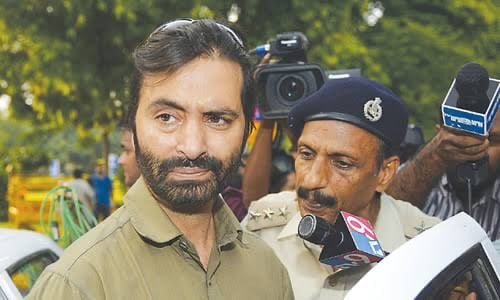
Yasin Malik to Defend Himself in Court, Delhi High Court Accepts Plea

0

Yasin Malik, the leader of the Jammu Kashmir Liberation Front (JKLF), has refused to hire a lawyer and will defend himself in court. Malik has denied all charges brought against him by the Indian National Investigation Agency (NIA).

The Delhi High Court has accepted Malik’s plea to defend himself and has given him time until September 19 to prepare his case. The next hearing is scheduled for September 19 at 3 pm.

Malik, who is currently in Tihar Jail, will present his case himself. This development comes as a surprise, as Malik is not a trained lawyer. However, he has chosen to represent himself in this high-profile case.

Malik, a prominent Kashmiri separatist leader, has been in Indian custody for several years. His case has garnered significant attention, and many are watching to see how it unfolds.

Jinjahell: The First Capital of Azad Kashmir (AJK)

0

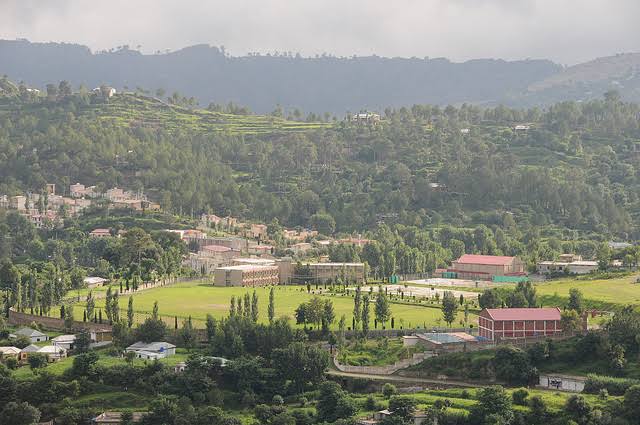
Jinjahell: a historically significant town, holds the distinction of being the first capital of Azad Jammu and Kashmir (AJK).

Located about 20 kilometers from Pallandri, Jinjahell sits at an elevation of 1,372 meters, surrounded by the breathtaking landscapes of the region.

This town, though small, played a pivotal role during the early days of Azad Kashmir’s formation. In this article, we explore the historical importance of Jinjahell, its role as the first capital of Azad Kashmir, and its connection to the region’s geography.

The Establishment of Azad Kashmir and Jinjahell’s Role

Following the partition of British India in 1947, the region of Jammu and Kashmir became a hotbed of conflict, eventually leading to the creation of Azad Jammu and Kashmir. During this tumultuous period, Jinjahell was chosen as the first capital of the newly formed Azad Kashmir. Its strategic location, accessibility, and elevation made it an ideal choice for establishing the administrative headquarters of the fledgling autonomous region.


Jinjahell’s status as the first capital of Azad Kashmir marked the beginning of the region’s governance and self-administration. The town became the center of political activity, where the early administrative frameworks were established. Although its tenure as the capital was brief, Jinjahell’s role was crucial in laying the foundation for the future development of Azad Kashmir.

Geographical Significance of Jinjahell

Jinjahell is located approximately 97 kilometers (60 miles) from Rawalpindi, accessible via the Azad Pattan route. The town’s elevation of 1,372 meters offers stunning views of the surrounding valleys and mountains, making it not only a place of historical importance but also of natural beauty.

The district is well-connected to other parts of Azad Kashmir, with a 64-kilometer (40-mile) metaled road linking it to Rawalakot. This connectivity was essential during its time as the capital, facilitating communication and transportation in a region that was still developing its infrastructure.

Transition from Jinjahell to Muzaffarabad

As Azad Kashmir grew and stabilized, the need for a more central and developed location for the capital became apparent. Muzaffarabad, with its larger infrastructure and strategic position, was chosen to replace Jinjahell as the capital. The move to Muzaffarabad allowed the government of Azad Kashmir to operate more efficiently, leading to better administration and development of the region.

While Jinjahell may no longer be the capital, its historical significance remains intact. The town’s role in the early days of Azad Kashmir’s governance is a testament to its importance in the region’s history.

Jinjahell Today: A Quiet Reminder of the Past

Today, Jinjahell is a peaceful town, far removed from its days as the political heart of Azad Kashmir. However, it continues to hold historical value, especially for those interested in the early history of AJK. The town’s proximity to Pallandri and its connection to major routes make it accessible for visitors who wish to explore this lesser-known chapter of Azad Kashmir’s history.

The natural beauty of Jinjahell, coupled with its historical significance, offers a unique experience for those looking to delve into the roots of Azad Kashmir’s independence movement.

Jinjahell’s role as the first capital of Azad Kashmir is a significant yet often overlooked part of the region’s history. Though it was eventually replaced by Muzaffarabad, Jinjahell’s contribution to the establishment of Azad Kashmir’s governance remains a vital chapter in the story of AJK. Today, Jinjahell stands as a quiet, yet enduring symbol of the early struggles and triumphs that shaped Azad Kashmir.

For history enthusiasts and those interested in the region’s heritage, a visit to Jinjahell offers a rare glimpse into the formative days of Azad Kashmir, preserving the legacy of this small but important town.

PEACEFUL PROTESTERS IN NEELUM VALLEY FACE GOVERNMENT WRAT

0

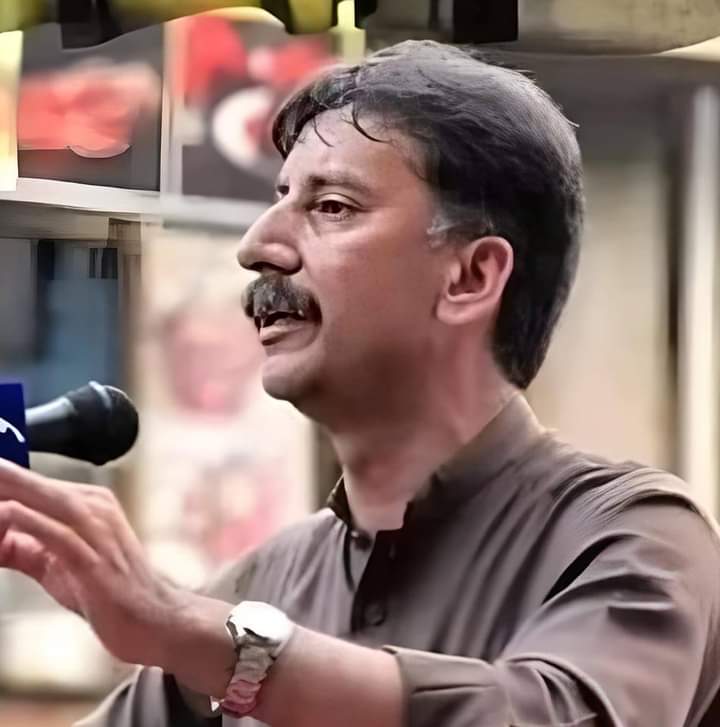
Muzaffarabad, August 8, 2024: The Jammu Kashmir Joint Action Committee has strongly condemned the district administration of Neelum Valley for registering a First Information Report (FIR) against peaceful protesters demanding road restoration.

According to sources, the protesters were exercising their democratic right to peaceful assembly, demanding the restoration of a vital road in the area. However, the district administration responded by filing an FIR against the protesters, sparking widespread outrage.

Shaukat Nawaz Mir, a member of the Jammu Kashmir Joint Action Committee, denounced the move, saying, “The government’s actions are a clear attempt to silence the voices of the people. We will not stand idly by while our rights are trampled upon.”

Mir warned the government that if force is used against peaceful protesters, the people of Kashmir will not leave the people of Neelum Valley alone. He demanded that the government immediately withdraw the FIR, otherwise, they should be prepared for severe public backlash.

The incident has sparked fears of escalating tensions in the region, with many calling for the government to respect the democratic rights of the people.

11-Year-Old Rawalakot Girl’s Book on Universe Stuns Everyone, Goes Viral on Social Media

0

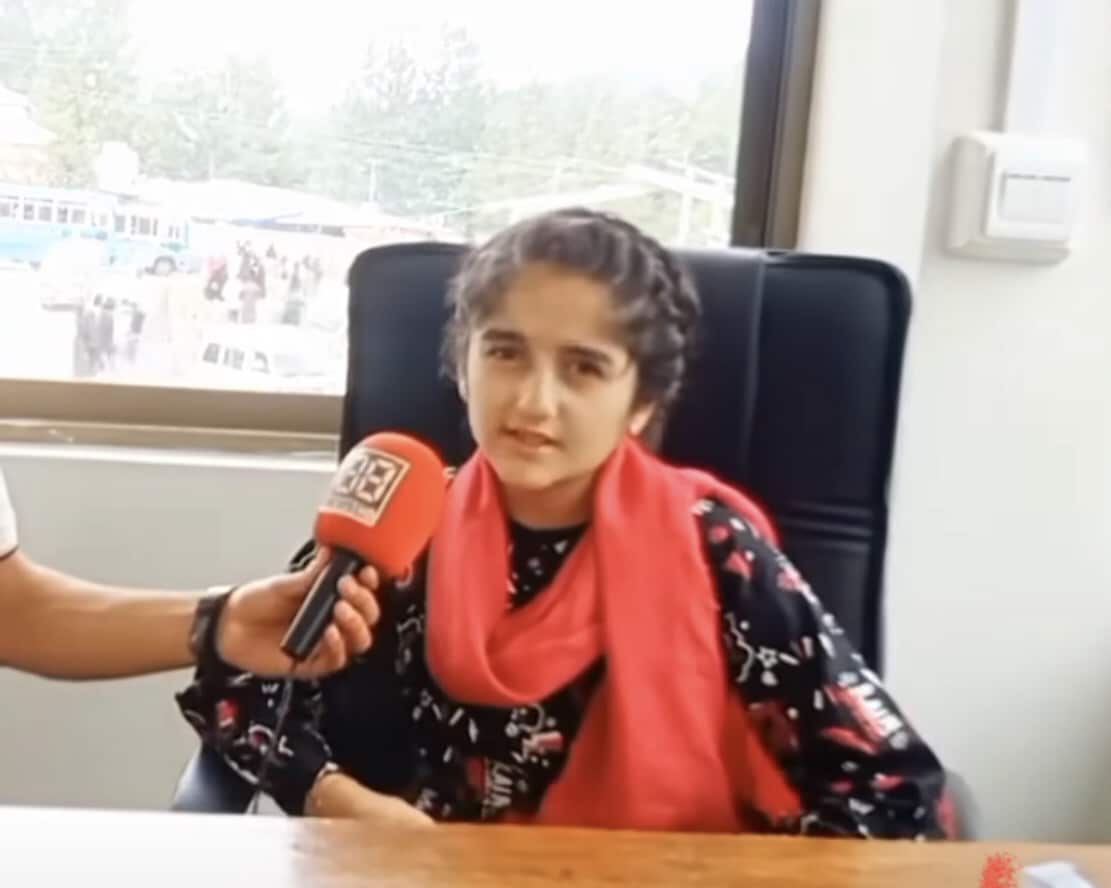
Rawalakot: In a remarkable achievement, an 11-year-old girl from Rawalakot (Pak-administered Kashmir) has written a book on the universe that has left everyone in awe.

The young prodigy’s book has gone viral on social media, with celebrities, media houses, and prominent figures from Pakistan and Azad Kashmir sharing her post and showering her with praise and blessings.

Speaking to the media, the girl said that reading and learning are her passions, and she has been interested in reading since childhood. She added that she wants to continue pursuing her interests and obtain more certificates in the future.

Her parents expressed their pride and surprise at their daughter’s achievement.

The girl’s interview has been shared widely on social media, with many hailing her as a prodigy and an inspiration to others. Her achievement is a testament to the fact that with hard work and dedication, anything is possible, regardless of age.

https://www.facebook.com/share/r/mMzpgLFB9btxBfvX/?mibextid=Ev0aEO

“I want to continue learning and achieving more,” said the young girl, who has become an overnight sensation in Pakistan and Azad Kashmir. Her book on the universe is being hailed as a remarkable achievement, and her name is on everyone’s lips.

A Look into the Life of Nahid Islam: The Man Who Shook the Nation

0

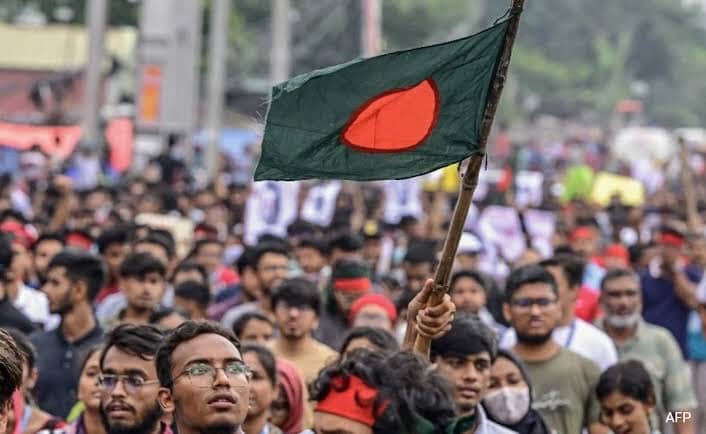
Dhaka (Azadi Times Online) – Details have emerged about Nahid Islam, the student leader who led protests against former Prime Minister Sheikh Hasina, who fled Bangladesh after resigning.

According to foreign media reports, Sheikh Hasina’s resignation came after nationwide protests led by student leader Nahid Islam. The reports state that the 26-year-old Nahid Islam is currently a student in the Sociology Department at Dhaka University and is also known for his work as a human rights activist. Nahid Islam raised his voice against Sheikh Hasina’s party, the Awami League, leading to him being labeled as a terrorist deployed on the streets.

Indian media reported that on July 19, 2024, Nahid Islam was abducted by at least 25 plainclothes individuals from a house in Sabujbagh. His eyes were blindfolded, and he was interrogated about his involvement in the protests, handcuffed, and subjected to torture. According to Indian media, Nahid Islam was found unconscious under a bridge two days later and was abducted again by government officials on July 26, 2024.

Nahid Islam, born in Dhaka in 1998, is married, has a younger brother, a teacher father, and a housewife mother. Naqeeb Islam, a geography student, said in an interview, “Nahid has incredible potential and always said the country needs to change. He was picked up by the police, tortured until he was unconscious, and then thrown on the street. Despite all this, he keeps fighting. We believe he will not give up, and we are proud of him.”

It is worth noting that Bangladeshi Prime Minister Hasina Wajid fled the country yesterday after a month of public protests, following which the military took power and announced the formation of an interim government.

The Silent Betrayal: How August 5 Redefined Jammu Kashmir

By: Malik Abdul Hakim Kashmiri – The powerful circles in Pakistan had already devised a strategy for Jammu and Kashmir long before August 5, 2019. Simply put, what belongs to India remains with India, and what belongs to Pakistan remains with Pakistan. Before August 2019, the establishment and its government were discreetly maneuvering to absolve themselves of responsibility for relinquishing the “jugular vein.”

The Pakistan People’s Party (PPP) and the Pakistan Muslim League-Nawaz (PML-N), despite their limitations, were mature enough regarding the issue of Jammu and Kashmir not to include any unpopular decision in their political profiles. Hence, the Pakistan Tehreek-e-Insaf (PTI) became the preferred option.

Imran Khan was brought to power in 2018. To free his government from military pressure, Khan engaged Bajwa’s team in back-channel negotiations with India. Let’s review the sequence of events that unfolded as per the script:

To appease the Punjabi Sikhs strategically, the foundation stone of the Kartarpur Corridor was laid in November 2018. On February 14, 2019, a suicide attack in Pulwama resulted in the death of 40 Indian soldiers. On February 26, 2019, the Indian Air Force conducted a surgical strike inside Pakistan. On February 27, 2019, Pakistan shot down an Indian aircraft in Azad Kashmir’s Samahni area, capturing the pilot, who was returned to India within 48 hours.

On August 5, 2019, India imposed martial law in its administered Jammu and Kashmir to establish permanent control. In an extraordinary situation, Prime Minister Imran Khan addressed the nation, reiterating the traditional stance and warning that any action taken across the Line of Control would be considered against the ideology of Pakistan and the Kashmir freedom movement. Meanwhile, the Prime Minister of Azad Kashmir was on an extended foreign tour. Members of both the opposition and the government remained silent. In private gatherings, Azad Kashmir politicians spoke the full truth but feared public discussion.

The PML-N and PPP joined forces with Imran Khan to grant an extension to Bajwa on August 19, 2019. In November 2019, the Kartarpur Corridor was inaugurated, accelerating back-channel negotiations to improve relations with India.

During this period, a ceasefire on the Line of Control was agreed upon in February 2021. Journalist Hamid Mir writes that “suddenly, on March 23, 2021, on Pakistan Day, a letter from Indian Prime Minister Narendra Modi to Imran Khan arrived, raising concerns within the Ministry of Foreign Affairs. The news broke through UAE Ambassador to the US Yousef Al Otaiba that secret talks between ISI Chief Faiz Hameed and Ajit Doval in Dubai had progressed significantly. One day, Bajwa approached Prime Minister Imran Khan and informed him that Indian Prime Minister Narendra Modi would visit Pakistan on April 9, 2021. Modi would first attend the annual Hindu festival at the Hinglaj Mata temple in the Lasbela hills of Balochistan before meeting with Imran Khan in Islamabad to announce the resumption of Pak-India trade and cricket matches. Imran Khan asked about the Kashmir issue, to which Faiz Hameed replied that the Kashmir issue would remain unresolved for twenty years, after which a solution would be sought. This was when Foreign Minister Shah Mahmood Qureshi warned Imran Khan that Pakistan had a parliament, and they would have to answer to it. They also had elections to contest, and they would be accused of selling out on Kashmir. The general elections in Azad Kashmir were due in July 2021. There was a concern that if Modi visited in April, PTI would be wiped out in the July elections in Azad Kashmir.”

August 5, 2019, and August 5, 2024 — 1,825 days later, the situation remains unchanged. Over these five years, much has been done to erase the identity and control the resources of this region, and much more is yet to be done. The story of the golden bond of La ilaha illallah is being written amidst the chaos.

The policy remains the same, as do the policymakers, in the world of Bajwa and his subordinates.

Prime Minister of Bangladesh Sheikh Hasina Resigns, Flees to India; Indefinite Curfew Imposed

0

Dhaka: In a dramatic turn of events, the public protests in Bangladesh have culminated in Prime Minister Sheikh Hasina’s resignation. She has reportedly left Dhaka for India.

According to British media, the Bangladeshi Army Chief gave Prime Minister Hasina a 45-minute deadline to step down. Army Chief Waqar Uz Zaman is expected to address the nation shortly to explain the situation and provide assurances.

Currently, the Army Chief is engaged in negotiations with various political parties, including the Bangladesh Nationalist Party (BNP). Discussions are ongoing with major political factions to stabilize the political landscape.

Reports indicate that Sheikh Hasina and her sister were flown to India in a military helicopter from the Prime Minister’s official residence, Ganabhaban. Although Hasina intended to record a farewell speech, she was unable to do so due to the urgency of the situation.

In response to the unrest, demonstrators stormed Prime Minister Hasina’s residence, prompting a significant deployment of police and military forces to maintain order on the streets.

As a result of the escalating situation, an indefinite curfew has been imposed across Bangladesh to restore peace and prevent further violence.

Securing Your Riasat Bashinda Certificate: Detailed Process and Guidelines to Get State Subject Certificate J&K

0

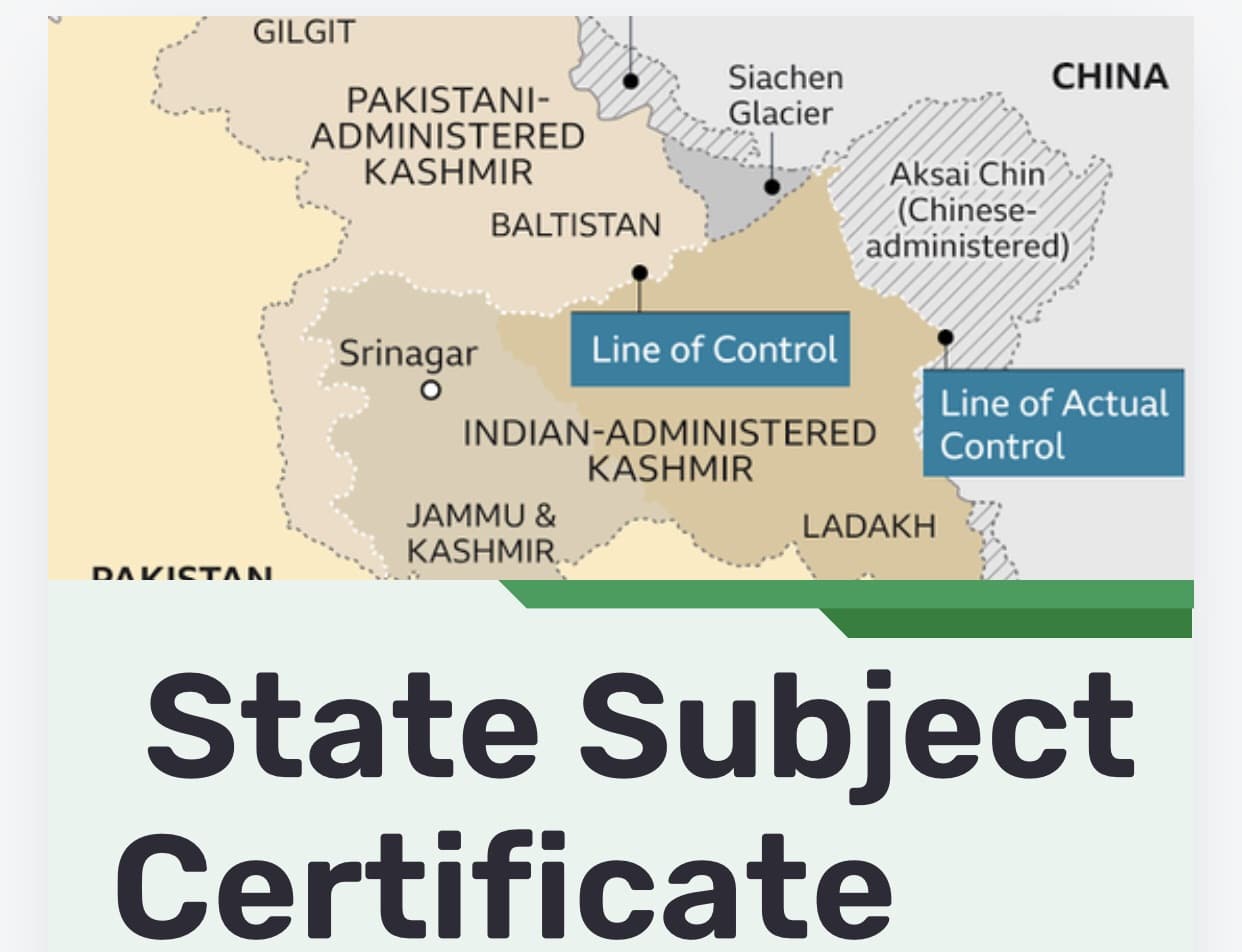
If you intend to buy or sell property in Pakistan-administered Jammu & Kashmir or Indian Administered Jammu Kashmir, securing a Riasat Bashinda (State Subject) certificate is imperative. This document, akin to a citizenship certificate, is crucial for land transactions within the state.

Who Qualifies?

The certificate can only be obtained by individuals ancestrally belonging to Jammu & Kashmir, implying a lineage of forefathers who lived and owned land in the state.

Required Documents:

  1. Your NICOP (ID card) copy
  2. Your father’s NICOP copy
  3. Proof of land ownership (naqal jamabandi) from Patwari
  4. Copy of misal haqiqi (from Tehsildar’s office)
  5. Patwari’s ownership confirmation report
  6. Four passport-sized photographs
  7. Passport copy (if available)
  8. Birth certificate copy
  9. Copies of children’s passports and birth certificates
  10. Educational certificates copies
  11. Personal presence for thumb impressions
  12. Statement (bayan halfy)
  13. Two witnesses from your village

Procedure:

  1. Documentation: Gather all required documents.
  2. Application Writing: Visit an Arzi Nawees (application writer) to prepare your application, complete with stamps and your statement.
  3. Tehsildar’s Approval: Get the application signed by the Tehsildar.
  4. Patwari’s Verification: The Patwari will provide the naqal jamabandi and write a brief report on the application.
  5. Tehsildar’s Office: Obtain a stamped copy of misal-e-haqiqi.
  6. Verification: Have the documents checked by the application writer.
  7. Oath Commissioner: Certify the application with an oath commissioner (Advocate).
  8. SDM Approval: Present the application with two local witnesses to the SDM for signing.
  9. DC Issuance: Finally, submit the complete file to the DC, who will issue the Riasat Bashinda certificate the same day.

Additional Notes:

  • Consider obtaining a Domicile certificate simultaneously, as it is necessary for job applications or land/house purchases in Pakistan. The process is similar but requires extra document copies.

Fees and Bribes:

Official fees:

  • Patwari: Rs. 300
  • Tehsildar’s office: Rs. 300
  • SDM office: Rs. 300
  • Arzi Nawees: Rs. 300
  • DC office: Rs. 300

However, due to the prevalent bribery culture, expect to pay around Rs. 1,000 each. The Patwari, in particular, might demand more. Bribery is rampant, making the process cumbersome without additional payments.

Alternate Approach:

Hiring a local advocate or paying extra to an Arzi Nawees can save you from the bureaucratic maze and expedite the process. Although engaging in such practices might seem unethical, it is often the only practical solution given the current system.

Conclusion:

While the process of obtaining a Riasat Bashinda certificate can be daunting, understanding the requirements and procedures can significantly ease the journey. Whether you decide to navigate the process yourself or enlist help, being well-prepared is key.

The Sacred Relic of Hazrat Bal: History, Reverence, and Legacy

0

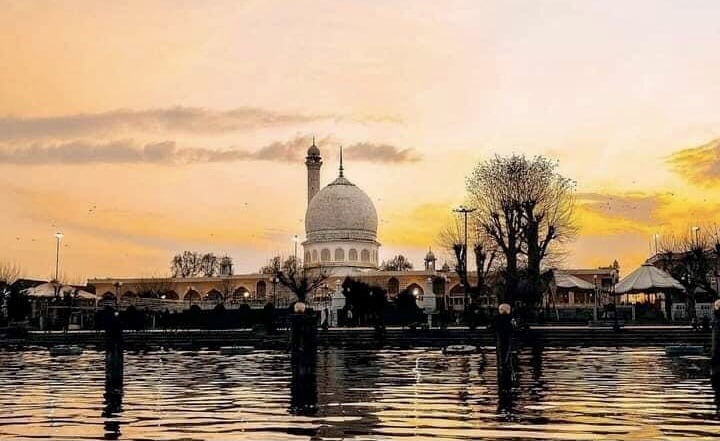
Hazrat Bal is a revered site for Muslims located in the globally renowned city of Srinagar. This sacred place is about 10 kilometers from the central city. It is considered the holiest site in the entire state of Jammu and Kashmir.

In Urdu, “Hazrat” means “respectable/revered/sacred,” and in the Kashmiri language, “Bal” means “place/location.” Thus, Hazrat Bal translates to “a place that is highly revered by people.” The unique feature of this mosque is that it houses a sacred relic, a hair strand of the Prophet Muhammad (PBUH).

According to traditions, it is said that in 1635, Syed Abdullah, a member of the Sayyid family from Medina, moved to Bijapur near Hyderabad in India. He brought the sacred hair with him. After Syed Abdullah’s passing, the sacred relic was inherited by his son, Syed Hamid. During the Mughal invasion of India, Syed Hamid’s properties were confiscated. Realizing that he could no longer protect the relic and fearing it would be taken from him, he had a dream or divine indication to entrust the relic to a trustworthy individual, Khwaja Noor-ud-Din Eishai, instead of giving it to the authorities, who, despite being Muslims, might not show proper reverence.

When the Mughal emperor Aurangzeb learned of the relic, he forcibly took it from Noor-ud-Din Eishai and sent it to the Ajmer Sharif shrine. Noor-ud-Din Eishai was imprisoned in Delhi for unofficially possessing sacred relics. Later, realizing his mistake, Aurangzeb ordered the relic to be returned to Noor-ud-Din Eishai and sent him to Kashmir. However, by then, Noor-ud-Din Eishai had passed away in prison. Consequently, the relic was returned to his family, who brought it, along with his body, to Srinagar.

Initially, the relic was kept at the Khanqah Naqshbandia in Srinagar for public viewing. However, due to space constraints at the Khanqah, the Mughal ruler Fazil Khan ordered the relic to be moved to Bagh Sadiqabad, and this location was dedicated as a shrine for the relic. Thus, this place became known as “Hazrat Bal.” The original structure, known as Sadiqabad, was built in 1700 by Noor-ud-Din Eishai’s daughter, Inayat Begum, with the help of architects from India and Kashmir. When the relic was brought here, the structure was expanded, and a mosque was built to the west and a large Khanqah to the east.

Since then, Noor-ud-Din Eishai’s family has been the custodians of the shrine, serving not as spiritual leaders but as guardians of the relic. In 1943, during Maharaja Hari Singh’s reign, Hazrat Bal came under the supervision of the Islamic Auqaf. During the 1947 partition, the relic remained in the Indian-administered region, leaving those on the other side deprived of visiting this sacred place.

On December 26, 1963, the relic was stolen in a conspiracy, sparking widespread protests across the state. A committee was formed by the government, and the protests intensified to the extent that on December 31, 1963, Indian Prime Minister Jawaharlal Nehru expressed concern over the missing relic on All India Radio and promised to find it. A few days later, on January 4, 1964, the relic was recovered. The details of who stole it and why remain unknown, but it was likely a political plot or conspiracy.

In 1968, under Sheikh Abdullah’s order, the Islamic Auqaf began constructing a new building in place of the old structure. The current building is entirely made of white marble, designed in the style of the Prophet’s Mosque in Medina. This sacred site is also known as “Second Medina.” The sacred hair of Prophet Muhammad (PBUH) is kept in a glass box. Every year, on occasions like the Prophet’s birth anniversary, Miraj, and other significant events, it is displayed for public viewing, drawing people from all over the Kashmir Valley.

Hazrat Bal is a densely populated area, and Sheikh Mohammad Abdullah is also buried here.

References:

  • “Tarikh-e-Hasan” (History of Hassan)
  • “Aatish-e-Chinar” (Flame of the Chinar)
  • “History of the City of Srinagar”
Female PTI Social Media Activist from Azad Kashmir Reportedly Abducted in Islamabad

0

Muzaffarabad: In a significant development, Syeda Arooba Komal, the social media manager for Pakistan Tehreek-e-Insaf (PTI), has allegedly been detained from her residence in Islamabad. The incident has sparked widespread condemnation among PTI supporters and human rights activists.

PTI social media activist Wahab Khan took to Twitter to report the incident, stating, “Syeda Arooba Komal, who manages PTI’s Facebook page, was abducted from her home. Her supposed crime is her support for Imran Khan. It is alarming that individuals who abduct women seem to disregard the sanctity of familial bonds. Our nation’s mothers, sisters, and daughters deserve protection, not persecution.”

https://t.co/cSjkEB2ZMo

The PTI has demanded the immediate release of Syeda Arooba Komal, highlighting the ongoing concerns about the suppression of dissenting voices in Pakistan. The party claims that the arrest is part of a broader crackdown on social media activists who support PTI’s ideology and leadership.

Syeda Arooba Komal, a native of Muzaffarabad, the capital of Pakistan-administered Kashmir, has been an active member of PTI’s digital media team. The incident has raised questions about the state of free speech and the protection of political activists in the region.

The PTI leadership and supporters are calling for an end to what they describe as “state fascism” and are urging the government to respect democratic norms and the rights of individuals to express their political beliefs freely. The party has also appealed to human rights organizations to take note of this incident and advocate for her immediate release.