Home Blog Page 166

Types of Life Insurance | Endowment Plan & Policies | You Need to Know

A life insurance policy provides financial coverage and a sense of reassurance for you and your family during times of crisis.

Each life insurance policy covers specific aspects and offers different benefits. Life insurance plans cover your basic financial needs and assets. Let’s take a detailed look at each type of life insurance policy.

Types of Life Insurance Policies

Term Insurance

Term insurance is one of the most basic types of life insurance policies. In a term plan, the policyholder gets life coverage for a specific period and pays premiums for it. In case of untimely death, the beneficiary receives the insured amount. However, if the policyholder survives the term insurance period, there are no savings or profits from the policy. Online term insurance plans offer pure risk coverage, which is why the premiums for such plans are relatively low.

Whole Life Insurance

As the name suggests, this type of life insurance policy is for the entire lifetime. The coverage lasts throughout the policyholder’s life. Premiums are paid at regular intervals, and upon the insured’s death, the final payment is made to the family. Naturally, since the insurance coverage is for a lifetime, the premium amounts for whole-life plans are higher.

Endowment Plan

An endowment plan is a special type of life insurance policy. It offers a maturity benefit, meaning if the policyholder survives the insurance plan’s duration, they receive the insured amount.

In case the policyholder dies during the term, the beneficiary is entitled to the basic death benefits. Endowment plans have higher premiums to cover the insured amount along with the benefits for the possibility of death or survival.

Unit Linked Insurance Plan (ULIP)

Unit Linked Insurance Plans are slightly different from regular endowment plans. ULIP pays the insured amount upon death or maturity. Additionally, it invests in the currency markets. The policyholder can choose to invest in stocks or debt markets. Profits depend on the market performance of the investments. In short, ULIPs are a combination of insurance coverage and investment options.

Money Back Policy

Money-back policies are also a type of endowment plan. In this, the policyholder receives regular payments during the policy term. These payments are made from the insured amount. If they survive the term, the remaining insured amount is paid out, and in case of death, the beneficiary receives the full insured amount.

Child Plan

This helps in creating long-term savings for the child’s future. Funds are a great source for the child’s education and marriage. Most insurers provide annual installments or a one-time payment after the child reaches 18 years of age.

All efforts have been made to ensure the accuracy of the information provided here. However, no guarantees are given regarding the accuracy of the data.

What is Insurance? – A Complete Guide to Life Insurance and General Insurance

We have all heard a lot about insurance. Generally, insurance is something that helps you or the things you have insured to bear a heavy financial loss. But there is much more to it than just something you think is worth covering for potential loss. Let’s take a detailed look at it.

What is insurance?

In technical terms, it is a form of risk management where the insured entity transfers the cost of potential loss to another entity in exchange for a small financial compensation. This compensation is called the premium.

Simply put, it is akin to paying a lump sum amount to an entity to protect yourself from future potential loss. Thus, when an unfortunate event occurs, the insurer helps you get through the situation.

Why do we need insurance?

This is a question on everyone’s mind. Do I really need protection? Life is full of surprises, some good, some bad. You need to be prepared for the worst situation that might befall you. This helps you gain a sense of security and peace of mind.

There can be many situations where you might need help, such as a serious illness, a natural disaster, the unexpected death of a loved one, etc. In such situations, having adequate insurance provides significant support to your financial condition. Therefore, one should choose the right kind of protection according to their needs.

Types of Insurance

1. Life Insurance: Life insurance is one of the traditional forms of insurance designed to protect you and your loved ones from an unexpected calamity or disaster. Initially, it was designed for income protection for families.

But since then, it has transformed from merely a protective measure to an option for wealth protection and tax planning. The need for life cover is calculated based on various factors such as the number of dependents on a person, current savings, financial goals, etc.

2. General Insurance: Any type of coverage other than life insurance falls into this category. There are many different types of insurance that cover almost every aspect of your life according to your needs:

a. Health Insurance: This covers your medical and surgical expenses that might arise during your life. Generally, health insurance provides cashless facilities in listed hospitals.

b. Motor Insurance: This covers the damages and liabilities associated with a vehicle (two-wheeler or four-wheeler) against different scenarios. It protects against damage to the vehicle and covers third-party liability as mandated by law.

c. Travel Insurance: This protects you against emergencies or losses that may occur during your travel. It covers unforeseen medical emergencies, theft, loss of luggage, etc.

d. Home Insurance: Depending on the policy’s scope, it covers the home and/or the contents inside. It protects the home against natural and man-made disasters.

e. Marine Insurance: This covers the goods, cargo, etc., against potential damage or loss during transit.

f. Commercial Insurance: This provides solutions for all sectors of industry like construction, automotive, food, power, technology, etc.

The risk protection needs can vary for each person, but the basic function of an insurance policy remains more or less the same.

How does insurance work?

The most fundamental principle behind the concept of insurance is ‘risk pooling.’ A large number of people are willing to get insured against a particular loss or damage, and for this, they are ready to pay the required premium.

This group of people can be called the insurance pool. Now, the company knows that the number of interested people is very high, and the likelihood of all of them needing the insurance cover at the same time is almost impossible.

Thus, it allows companies to collect money at regular intervals and also settle claims if and when such a situation arises. The most common example of this is auto insurance. We all have car insurance, but how many of us have claimed it? Thus, you pay for the possibility of damage and get insured, and if the given event occurs, you will be compensated.

Therefore, when you purchase an insurance policy, you pay the company a regular amount as the policy premium. If and when you decide to claim, the insurer will pay for the damages that are covered under the policy. Companies use risk data to calculate the probability of the event for which they want insurance to happen.

The higher the probability, the higher the premium for the policy. This process is called underwriting, i.e., the process of assessing the risk to be insured. The company only considers the actual value of the entity being insured as per the insurance contract agreed upon between the parties.

For example, if you insured your home for 5 million, the company will only consider the actual value of the house, and the house will not have any emotional value to you, as pricing emotions is almost impossible.

Different policies have different terms and conditions, but three basic general principles remain the same for all types:

1. The cover provided for a property or item is for its actual value and does not consider any emotional value.
2. The probability of a claim should be spread among all policyholders so that insurers can calculate the chances of risk to set the premium for the policy.
3. Losses should not be intentional.

We have covered the first two points above. The third part is a bit important to understand. An insurance policy is a special kind of contract between the insurer and the insured. It is a contract of ‘utmost good faith.’ This means there is an unspoken but very important understanding between the insurer and the insured, which is generally not present in regular contracts.

This understanding involves full disclosure and not making any false or deliberate claims. This duty of ‘good faith’ is one of the reasons why a company can refuse to settle your claim if you fail to provide all the required information. And this is a two-way street. The company has ‘good faith’ obligations towards the client, and failing to adhere to them can cause significant trouble for the insurer.

Read Also: Finding the Right Insurance in Jammu and Kashmir, Azad Kashmir, Ladakh, and Gilgit-Baltistan

Conclusion: Every sound financial plan is backed by risk protection. The cover suitable for you is determined by your needs and current financial situation.

You should review and reassess the exclusions included in your policy and evaluate their impact on your current financial health. There are many ifs and buts involved, but the basic working principles remain consistent for all types of insurance.

You should be clear about the type of risk protection you are buying, why you are buying it, and what is included in the contract. Both parties must act with ‘utmost good faith’ to make the entire process of insurance clear and less troublesome. As with every financial product, you should be well aware and informed about the product you are buying and seek proper advice from your end.

Frequently Asked Questions

1. What does “risk pooling” mean?
A: Risk pooling refers to a small group within a larger pool that has funds for better insurance rates and coverage plans. The purchasing power is better because, instead of approaching an insurance company as an individual, you are approaching it as part of a group. This can be done by companies or cooperative societies on behalf of employees. Insurance companies also practice risk pooling, coming together to protect each other with insurance coverage.

2. Why should I buy insurance?
A: With a policy, you can effectively transfer the potential loss to the insurance company in exchange for a fee called the ‘insurance premium.’ The benefit of insurance is that it protects your savings in case of unexpected expenses.

3. Who benefits if I buy insurance?
A: When you buy an insurance policy, both the insurer and the insured benefit. As the insured, you are secure in the knowledge that you will be protected from potential loss. Similarly, the insurance company uses the money you pay as premiums to create better business models and assets.

4. What should I look for when buying insurance?
A: When purchasing an insurance policy, you should check the premium and coverage. They should align with your needs.

5. What is ‘underwriting’?
A: Underwriting is a service provided by insurance companies where firms act as guarantors for the insured. However, insurance companies may ask individuals seeking underwriting services to provide shares or prosperity as a security deposit.

6. Do the terms and conditions vary based on the policies I buy?
A: Yes, the terms and conditions of the policy will vary depending on the type of insurance policy you purchase. The two main types of insurance are life insurance and home insurance. Under general insurance, there is health, travel, home, corporate, and vehicle insurance. Depending on the policy you buy, the terms, conditions, and payable premiums will differ.

7. Can I buy multiple insurance policies?
A: Yes, an individual can purchase different types of policies. There is no restriction on the number of life insurance policies one can buy. However, for a vehicle, you only need to purchase one vehicle insurance policy.

8. Is there any mandatory insurance?
A: Yes, it is mandatory for vehicle owners to purchase a vehicle insurance policy. Otherwise, you will face legal issues.

9. What is the importance of health insurance?
A: A health insurance policy or medical insurance will protect you from unparalleled medical or hospitalization expenses. If you buy medical insurance, your savings will be safe if you suddenly need to be hospitalized. All expenses, such as doctor’s fees, hospital admission costs, ambulance fees, OT charges, and medications, will be covered under the insurance policy. Thus, your savings will remain protected.

10. What is an insurance premium?
A: The insurance premium is the amount the insured person has to pay periodically to the insurance company to purchase a policy. When you buy an insurance policy, the risk is transferred to the company. Therefore, the company charges a fee, known as the insurance premium.

11. How is the premium calculated?
A: Insurance companies use mathematical calculations and statistics to estimate the price of the insurance premium they will charge their customers. Different parameters are used to calculate the premium for different insurance policies. For example, when calculating the premium for a medical insurance policy, factors such as age, health, medical history, and similar factors are considered. Similarly, for other insurance policies, life history and credit score are taken into account.

12. If I do not make a claim, can I get my premium back?
A: If you cancel your life insurance policy after regularly paying premiums, you may be able to claim at least a partial refund of the premium. However, this will depend on the terms and conditions of the insurance policy. But you cannot claim the premium upon policy expiration.

Disclaimer: Every effort has been made to ensure the accuracy of the information provided here. However, no guarantees are given regarding the accuracy of the data. Please verify with the scheme’s information document before making any investment.

Press Release: JKAAC to Launch Nationwide Protests if Demands are Not Met

    0

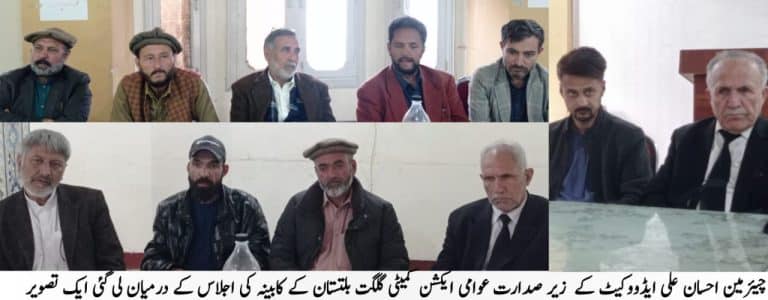
    Muzaffarabad, May 20, 2024 – A significant meeting of the Jammu and Kashmir Joint Awami Action Committee (JKAAC) was held today in Muzaffarabad. The following points were clarified during the meeting:

    1. Agenda and Conduct: The JKJAAC’s agenda, its charter of demands, and code of conduct have been clearly defined since day one. This charter represents the Committee’s ideology, and no individual or group was permitted to join the Committee’s protests for any other purpose.
    2. Government’s Unlawful Actions: The Azad Kashmir government has continuously employed illegal and violent tactics to suppress the Committee’s peaceful protests. Specifically, to crush the peaceful long march on May 11, from May 8 onwards, members of the Committee were abducted, violating the sanctity of their homes. Paramilitary forces, including the FC, PC, and Rangers, were called in to conduct flag marches in various cities, inciting public anger. The resulting public outrage and breaches of the Committee’s code of conduct are entirely the government’s responsibility.
    3. Baseless Allegations: Baseless and vile accusations were made against the JKJAAC, drawing India’s attention to the public protests. Subsequently, India used these protests for its propaganda. It is necessary to investigate those who accused the Committee of being influenced by India. The JKJPAC demands an investigation into the assets of all high-ranking officials in Azad Kashmir, including those who accused the Committee of Indian funding.
    4. Failure to Implement Agreements: The announcement of the long march on May 11 was a result of the government’s refusal to implement the Committee’s recognized demands and agreements, including the notifications issued on February 4, 2024. In the interest of peace and broader public interest, the JKJAAC agreed to immediately end the long march if at least three points of the notifications were issued immediately. However, delays in issuing the notifications and the shutdown of the internet, following inconsistent responses from federal government representatives, worsened the situation. After negotiations in Rawalakot, there were no further dialogues, only phone contacts regarding the issuance of the agreed notifications. The arrival of Rangers in Muzaffarabad and the resulting deaths of three innocent youths are entirely the responsibility of the Azad Kashmir government, particularly the Prime Minister and the Interior Minister.

    Jammu Kaahmir Joint Awami Action committee (JKAAC) Demands:

    1. Judicial Commission: Establish a judicial commission to fully investigate all actions taken by the Azad Kashmir government to incite violence from May 8 to 13, 2024, which resulted in the loss of innocent lives. This includes the incidents in Dadyal, the police officer’s actions, and the deaths of the youths in Muzaffarabad.
    2. Unresolved Issues: Address all unresolved issues raised by the Pakistani government representatives during negotiations.
    • Establish a national grid in Azad Kashmir and declare it a load-shedding-free zone. Fully implement the High Court’s decision on hydel projects dated November 15, 2019.
    • Investigate corruption and irregularities in the Electricity and Food Departments through a commission comprising judges of the Azad Kashmir High Court.
    • Eliminate the privileges of the ruling classes and legislate accordingly.
    • Implement the remaining eight points of the notifications issued by the Azad Kashmir government on February 4, 2024.
    • Allocate flour based on the population ratio.
    • Drop all cases against JKAAC workers from 2022 onwards as promised, and immediately release all detainees, including the seven prisoners in Mirpur. Address the grievances of the hundreds of peaceful protesters injured during the long march and take legal action against the responsible authorities.

    If the above demands are not met, the JKJAAC will hold protest demonstrations across Azad Kashmir, Pakistan, overseas, and in Gilgit-Baltistan on May 27, 2024, and announce a stricter course of action.

    The JKJPAC congratulates the public across the state for their historic participation in the long march on May 11-13, 2024, and their unprecedented hospitality in welcoming the march in all three divisions.

    Tehran: Iranian President Ebrahim Raisi’s Body Recovered in Helicopter Crash

    The Iranian Red Crescent has confirmed the recovery of the bodies of Iranian President Ebrahim Raisi and Foreign Minister Hossein Amir from the wreckage of the helicopter.

    The Iranian Red Crescent has announced that the bodies will be transferred to Tabriz.

    According to Iranian officials, some bodies were burned beyond recognition.

    Helicopter Crash Details

    Iranian President Ebrahim Raisi was returning to Tabriz after inaugurating a dam. The Azerbaijani president also attended the dam’s inauguration ceremony.

    The helicopter, which was carrying President Raisi, Iranian Foreign Minister Hossein Amir-Abdollahian, the governor of East Azerbaijan, Malek Rahmati, and a spokesperson for the Iranian Supreme Leader, crashed in the Dizmar forest due to adverse weather conditions.

    The accident occurred in the area between the Uzi district and the town of Pir Davood.

    Media reports indicate that heavy fog and rain were the causes of the helicopter crash.

    The presidential helicopter lost contact with the other two helicopters half an hour into the flight.

    Former Azad Kashmir PM Sardar Tanveer Ilyas Arrested on Vandalism Charges in

    0

    Muzaffarabad: Former Prime Minister of Azad Kashmir, Sardar Tanveer Ilyas, has been arrested. According to police in Islamabad, a case has been registered against Sardar Tanveer Ilyas at Margalla Police Station.

    Sources report that Margalla police arrested Tanveer Ilyas from his residence.

    Sources also indicate that Sardar Tanveer Ilyas is accused of attacking a company’s office.

    According to sources, a case was registered against Tanveer Ilyas on April 30 for vandalism in a private mall.

    Iran’s Supreme Leader Ayatollah Khamenei Chairs Emergency Meeting of Supreme Council

    Prayers for President Ebrahim Raisi’s Safety

    Supreme Leader Ayatollah Ali Khamenei has chaired an emergency meeting of the Iranian Supreme Council, where he prayed for the safety of President Ebrahim Raisi and reassured that the country’s administration will not be affected by this incident.

    It is reported by Iran’s official news agency that there are indications of an accident involving President Ebrahim Raisi’s helicopter.

    Search Operation Near Julfa Amidst Adverse Weather

    Iranian Interior Minister Ahmad Vahidi has stated that a search operation is underway near Julfa in East Azerbaijan province, but adverse weather conditions are posing challenges to the operation.

    Reports of an Accident Involving President Ebrahim Raisi’s Helicopter

    According to the news agency, President Raisi was returning from inaugurating a dam in the border area between Iran and Azerbaijan. Azerbaijan’s President Ilham Aliyev was also present at the inauguration.

    State media reports that the helicopter carried Foreign Minister Hossein Amir-Abdollahian, East Azerbaijan Governor Malek Rahmati, and Ayatollah Mohammad Ali, the President’s representative in the province.

    Officials Remain Hopeful Despite Alarming News from the Crash Site

    Iranian officials remain hopeful regarding the President’s safety, although news from the crash site is concerning.

    In the meantime, Iranian Chief of Staff Major General Mohammad Bagheri has ordered the Revolutionary Guard, military, and police to utilize all their capabilities in the search for the President’s helicopter.

    Search Teams Locate Iranian President Ebrahim Raisi’s Helicopter

    Important Statement from Iran’s Vice President

    According to Iranian media, rescue authorities have reestablished contact with the helicopter crew. Iran’s Vice President and head of the rescue operation, Mohsen Mansouri, stated in an interview that multiple contacts have been made with the two passengers accompanying the President, and it appears the accident was not severe.

    Interview with Iran’s Vice President Mohsen Mansouri

    Mansouri further explained that three helicopters were en route when the helicopter carrying the President lost contact with the other two. The remaining helicopters attempted to locate the President’s helicopter and successfully made contact with one of the passengers and the pilot, indicating the accident’s severity was minimal.

    Immediately following the incident, the Red Crescent Rescue Committee, police, military, and Islamic Revolutionary Guard Corps were deployed to the area to organize emergency activities and distribute tasks.

    Special Prayer from the Supreme Leader

    Meanwhile, the Supreme Leader Ayatollah Ali Khamenei offered prayers for the President and the others accompanying him, hoping for their safe return.

    Supreme Leader Ayatollah Ali Khamenei

    During a meeting with the soldiers of the Islamic Revolutionary Guard Corps and their families, the Supreme Leader expressed concern over the accident and prayed for the safe return of the President and his companions to the nation’s embrace. He urged everyone to pray for the safety of this dedicated group.

    The Supreme Leader reassured the Iranian public not to worry and emphasized that the country’s activities would not be disrupted. He assured that all government functions continue as usual.

    Initial Details of the Accident

    It is noteworthy that the helicopter carrying Iranian President Ebrahim Raisi had to make an emergency landing, posing risks to the lives of the President and the Foreign Minister.

    According to the Iranian news agency, President Raisi’s helicopter made an emergency landing in Iran’s East Azerbaijan province. Besides the President, the helicopter carried the Iranian Foreign Minister and the Governor of East Azerbaijan province.

    Last Image of the Helicopter Before the Accident

    Iranian Prediction Helicopter

    According to Iran’s state television, the incident occurred near the city of Jolfa, approximately 600 kilometers northwest of the capital Tehran, near the Azerbaijan border.

    President Raisi was returning from inaugurating a dam in Azerbaijan when his helicopter faced an emergency landing.

    Scientists Develop New Photocatalyst to Convert Greenhouse Gases into Valuable Chemicals

    0

    Shanghai Scientists Develop New Photocatalyst to Convert Greenhouse Gases into Valuable Chemicals

    Shanghai: Scientists at Shanghai Jiao Tong University in China have developed a new photocatalyst that offers an eco-friendly and efficient method to convert greenhouse gases into valuable chemicals.

    This new photocatalyst, named Rh/InGaN1-xOx, is a nano-architecture comprising rhodium nanoparticles. These rhodium nanoparticles are attached to oxygen-modified indium gallium nitride nanowires layered on silicon.

    In the presence of intense sunlight, this material demonstrated outstanding performance in the dry reforming of methane (DRM) process. This process combines two greenhouse gases (carbon dioxide and methane) to produce syngas (a mixture of carbon monoxide and hydrogen).

    Professor Bowen Zhu, the lead researcher from the university, stated that this research is a significant step towards solving both greenhouse gas emissions and sustainable energy production.

    The results of the research, published in the journal Science Bulletin, pave the way for developing advanced photocatalytic systems that can help in the sustainable production of fuels and chemicals from renewable sources.

    Experts believe that this method could be extended to other important chemical reactions, offering new opportunities to make the chemical industry more environmentally friendly.

    The Common Habit That Leads to Obesity Despite Eating Less and Exercising

    Gaining weight despite eating less or exercising? It might be the result of a common habit of yours.

    Most people know that the quantity of food plays an important role in health and body weight, but a new study has found that the timing of meals is also crucial.

    The study from Ewha Womans University in South Korea examined the relationship between meal timings and body weight.

    The research explored how meal timings and sleep affect body weight as people age.

    Data from 9,474 individuals was analyzed for this purpose.

    These individuals provided details about their food intake, meal timings, and other factors, and their sleep duration was also recorded. This data was then compared with changes in body weight.

    The participants’ body weights were monitored for three and a half years, during which nearly 10% of them became obese.

    The study found that individuals who habitually ate after 9 PM had a 20% higher risk of obesity compared to others.

    Eating late at night increased the risk of obesity by up to 34%, especially in men.

    In contrast, women who ate late at night had a higher risk of developing belly fat, particularly when their sleep duration was less than six hours.

    The findings of this research were recently published in the Journal of Nutrition, Health & Aging.

    This is not the first time a link between late-night eating and obesity has been discovered.

    A previous study published in the journal Cell Metabolism in October 2022 found that the habit of eating late at night increases the risk of obesity and body weight gain.

    That study involved 16 obese individuals, each of whom was assigned specific meal timings and asked to eat the same type of food.

    The effects of meal timings on the body were also examined, including how the body stores fat.

    The results showed that the habit of eating late negatively affects the hormones that regulate hunger and appetite, increasing the desire to eat more.

    The study found that individuals who ate late burned calories more slowly and accumulated more body fat.

    Other research reports have shown similar results.

    A study from Johns Hopkins University found that young people who ate at 10 PM burned less body fat compared to those who ate at 6 PM. Additionally, their blood sugar levels were 20% higher, increasing the risk of developing type 2 diabetes over time.

    According to researchers, this highlights that not only what you eat but also when you eat is important.

    How Much Exercise is Needed Weekly to Get Rid of Belly Fat?

    Worried about gaining belly fat and finding it hard to resist food?

    To melt body fat, simply make it a routine to exercise for 5 hours every week.

    This was revealed in a medical study conducted in the Netherlands.

    Research from Aberdeen University indicated how it is possible to burn body fat for energy instead of accumulating it. The study found that consistently exercising for 5 hours each week helps the body burn internal fat for energy.

    The study included two groups: healthy athletes and type 2 diabetes patients.

    The diabetes patients did not enjoy exercising, while the athletes exercised for 9.5 hours each week. Researchers instructed both groups to swap their routines with each other.

    At the start of the study and after changing their lifestyle routines, the researchers collected physical samples from both groups to analyze the amount of fat in their bodies.

    The results showed that when the diabetes patients adopted the habit of exercising for 5 hours each week, their insulin sensitivity improved, and their cholesterol and glucose levels decreased. The study also discovered that exercise caused the body to burn fat for energy.

    The researchers noted that the results prove that making exercise a routine changes the body’s fat storage system, prompting the body to burn fat for energy.

    They stated that by staying physically active, we can enhance our body’s ability to burn fat.

    The findings of this study were published in the journal Nature Communications.