
In a region where silence is enforced, independent voices are an act of resistance. The Azadi Times operates without state backing or corporate influence—powered entirely by readers like you.
Fund our Muzaffarabad and Gilgit newsrooms where local reporters document ground reality without fear.
🛡️
Reporter Safety
Provide legal protection, secure communication tools, and emergency support for field journalists.
🎓
Training Labs
Equip Kashmiri youth with investigative journalism skills, creating the next generation of truth-tellers.
Choose Your Support
Join the Circle of Guardians
Select a tier that reflects your commitment to independent Kashmir journalism
100% secure via SSL encryption. We never store your full card details.
Radical Transparency
We believe you deserve to know exactly how your money is spent. Every quarter, we publish detailed financial reports showing the breakdown between operational costs, reporter fees, and safety funds.
In a region where silence is enforced, independent voices are an act of resistance. The Azadi Times operates without state backing or corporate influence—powered entirely by readers like you.
Fund our Muzaffarabad and Gilgit newsrooms where local reporters document ground reality without fear.
🛡️
Reporter Safety
Provide legal protection, secure communication tools, and emergency support for field journalists.
🎓
Training Labs
Equip Kashmiri youth with investigative journalism skills, creating the next generation of truth-tellers.
Choose Your Support
Join the Circle of Guardians
Select a tier that reflects your commitment to independent Kashmir journalism
100% secure via SSL encryption. We never store your full card details.
Radical Transparency
We believe you deserve to know exactly how your money is spent. Every quarter, we publish detailed financial reports showing the breakdown between operational costs, reporter fees, and safety funds.
In a region where silence is enforced, independent voices are an act of resistance. The Azadi Times operates without state backing or corporate influence—powered entirely by readers like you.
Fund our Muzaffarabad and Gilgit newsrooms where local reporters document ground reality without fear.
🛡️
Reporter Safety
Provide legal protection, secure communication tools, and emergency support for field journalists.
🎓
Training Labs
Equip Kashmiri youth with investigative journalism skills, creating the next generation of truth-tellers.
Choose Your Support
Join the Circle of Guardians
Select a tier that reflects your commitment to independent Kashmir journalism
100% secure via SSL encryption. We never store your full card details.
Radical Transparency
We believe you deserve to know exactly how your money is spent. Every quarter, we publish detailed financial reports showing the breakdown between operational costs, reporter fees, and safety funds.
Hunza, Gilgit-Baltistan (Azadi Times): Nooerima Rehan, a singer from Hunza who had recently gained significant popularity on social media, attempted suicide following the leak of an explicit video.
According to sources, a video call recording from last night, showing Noorima engaging in inappropriate behavior and exposing herself, went viral.
In distress, Noorima consumed poison in a suicide attempt but is currently out of danger and receiving treatment at the hospital.
Friends and the public are urged to think twice before compromising the honor of someone’s daughter or sister through such actions, as a single mistake can have grave consequences. Additionally, a special plea is made to all women to refrain from compromising their dignity for fleeting fame.
We all face anger at one point or another in our lives, be it during work hours, family challenges, or personal struggles. Keeping calm can seem like a difficult task. But what if I told you that the secret to dealing with life’s storms is not to control the events, but to control our response to them?
This is the true essence of resilience, a concept with which I have developed a deep bond after navigating the complexities of being a widower, a single mother, and caring for an ailing parent.
It’s a journey that has revealed a profound truth: things that seem monumental today often become trivial tomorrow. The day-to-day problems that trigger our anger are often insignificant in the grand scheme of life.
Let me share a personal story. In my household, Thursdays are usually meticulously planned, with recordings scheduled and guests expected. The tables are adorned with delicious home-cooked dishes. Generally, my hospitality is well-regarded.
However, one day, I found myself on the brink of turmoil when, due to unforeseen circumstances, my cook had to leave. Getting everything ready a few hours before the recording seemed impossible.
Then, in a moment of clarity, I realized: is this change worth sacrificing my inner peace? The resounding answer was “no.” This event became a turning point – while life’s difficulties are inevitable, our response to them can be our greatest means of coping.
Think of a close friend experiencing a romantic breakup. They may feel deeply frustrated and burdened by societal gender biases, perpetuating a cycle of frustration and self-blame. However, indulging in victim mentality only exacerbates our anxiety. True resilience lies in recognizing that not every difficulty is within our control. The key is to shift our focus from self-pity to empowerment, acknowledging our limitations while disregarding distractions.
Therefore, mindfulness practices such as meditation provide a refuge from life’s chaos. Through impartial observation, we gain valuable insights into our inner world, understanding the interconnectedness of thoughts, feelings, and behaviors.
Through meditation, we tap into hidden reservoirs of inner peace, fortifying ourselves against external storms. Peace is an attainable goal – a guiding light that leads us through life’s challenges and illuminates the path to inner tranquility.
As author Tan Tuan Ang beautifully expressed, amidst the vastness of the universe, we find solace in the transient nature of our existence. So, the next time life throws you a curveball, remember: you have the power to choose your response. Cultivate resilience, embrace mindfulness, and above all, take comfort in the knowledge that calmness awaits, even in the midst of life’s storms.
Written by Muntazir Ayoub: After leaving the office at night, while friends were sitting together, one of them put his hand on Dakhti’s shoulder and said:
“Office work is tiring, why not go on a tour of Gilgit Baltistan?”
The three of us looked at each other’s faces and decided to give ourselves some time. What happened next was that we finalized the plan, and after a few days, we reached the bus station and booked the tickets for the next day to go to Rawalpindi. We quickly packed our things at home, and thus we three friends went on a trip to Gilgit-Baltistan, the most beautiful place in Pakistan. They say that impromptu plans are always the best, and that’s exactly what happened to us.
We started our journey by bus from Karachi to Rawalpindi. After a long journey of 18 hours, we reached Pir Wadhai, the biggest bus station in Rawalpindi. This is the base from where vehicles leave for different areas of the country, including Gilgit-Baltistan. We also booked our vehicle from here to Skardu in Gilgit-Baltistan. We felt hungry and saw that there was still some time before the bus left, so we sat in a hotel near the bus stand.
When we looked at the menu pasted on the wall of the hotel, our appetite grew. Even before reaching Skardu, local salted tea called ‘Piocha’ in the Balti language and Balti paratha ‘Azooq’ were available at this hotel in Rawalpindi.
Piocha is made like Kashmiri tea but with added salt and desi ghee. This tea can be drunk on its own, but most people of Baltistan eat kulcha, roti, or azooq with it. Local people of Baltistan also call it proverbially ‘Balti Sharaab’ because after drinking it, you might like it so much that you could get addicted to it.
Balti salted tea and azooq
Azooq is also considered one of the foods deeply associated with Balti culture. This paratha is made in a traditional desi style. Yogurt, desi ghee, and eggs are added to the flour, which is then kneaded into dough. It is then shaped and fried in oil until it becomes slightly crispy.
Balti Paratha Azooq
After a few minutes of waiting, our order arrived. We ate pieces of azooq dipped in tea in the local style. Well-fed, we boarded the car for our departure to Skardu.
Let us tell you one thing: due to security reasons, most public transport heading to Skardu and Gilgit leaves Rawalpindi at 4 PM together. These measures were implemented after past incidents of terrorism. Although these routes are now safe and peaceful, the government still exercises caution. At certain places, vehicles are allowed to pass only at specific times, and during these times, the police, army, FC, and GB scouts patrol the various routes to prevent any untoward incidents.
As soon as the car reached Hazara Motorway, we suddenly felt a change in the weather, and cold winds began to blow. Although the distance from Rawalpindi to Skardu is 638 km, the journey takes a long time due to bad roads. Tourists mostly take the route through Naran Kaghan to enjoy the beautiful views of the valley.
From Naran Kaghan Valley to Skardu, the Babusar Top route is usually taken. However, Babusar Top is closed for several months in winter, forcing vehicles to take the Diamer Bhasha Dam route. Of these two routes, the Babusar Top route is relatively shorter, reducing the journey by 4 to 5 hours. Our bus also took the Babusar Top route.
After covering a long distance, we reached the Jaglot Skardu Road, where the sight of distant waterfalls gave us distinct pleasure. After a little more journey, we arrived at Sattak Nala, where the Skardu range begins. This area is also known as ‘Ronda’. The water of Sattak Nala flows rapidly from the mountains and joins the Indus River. There are hotels on both sides of Sattak Nala, and one of the special features of these hotels is a unique type of broth and bread that attracts many people to stop and eat.
We also asked our driver to stop the car and sat down to eat soup and bread. This broth is served in a large steel bowl with warm roti. It was delightful to break the whole bread into the broth and then eat it.
After eating, we continued our journey, but shortly after, we were stopped at a police checkpoint. The purpose of stopping the vehicle was to check it thoroughly and take down the information of the people in the vehicle. This ensures that if there is an unfortunate accident during the excursion in the hilly areas, the police will know how many tourists have entered the city.
After the police check, we traveled for a few more minutes and entered Skardu city. Upon reaching there, some friends warmly welcomed us. We went with them to their house where we were staying. Exhausted from the journey, we ate and then immediately went to sleep.
We woke up early in the morning, had our breakfast, and left for Kachura as per our schedule. About 19 km from Skardu city, Kachura is easily accessible by public transport and other rides, including private vehicles. After about half an hour, we entered the Kachura precincts, and our first stop was the Shangri-La Resort located in Kachura, also known as Lower Kachura Lake.
The Shangri-La Resort was built in 1983 and was founded by Brigadier (Retired) Muhammad Aslam Khan. Speaking of the beauty of this area, there is a heart-shaped lake at the center of the resort, surrounded by hotels, lush gardens, and beautiful mountains.
Attractive view of Shangri-La Resort
Shangri-La in Skardu was the first resort built specifically for tourists, attracting a large number of domestic and foreign visitors. One of its unique features is the presence of a ship on the premises, which has been converted into a hotel. This ship has an interesting history—it was originally an Orient Skyliner plane DC-3 that made an emergency landing on the sandy banks of the Indus River in Skardu due to technical issues. Fortunately, all passengers on board were safe, but the plane remained in the same spot for a long time.
Brigadier Aslam, recognizing the potential of the plane, contacted Civil Aviation authorities about purchasing it. Initially hesitant, they eventually agreed to sell the ship to Brigadier Aslam. With the help of local people, the ship was transported and docked near Shangri-La Lake. Initially, before the establishment of Shangri-La Resort, Brigadier Aslam used it as his private residence for family vacations. However, as the resort was developed, the ship was incorporated into it, offering a unique accommodation option for tourists to enjoy.
We also arrived at Shangri-La Resort and then visited the lake. After spending some time there, we headed towards the upper lake of Kachura and boarded our vehicle. Unfortunately, the bridge leading to the upper reaches of Kachura was under repair. So, we parked our car and decided to walk. We strolled through Kachora village until we reached the lake.
It’s known that water accumulates in this lake through various springs. During winter, the lake freezes, while in summer, its water becomes warm. Despite the risks—local stories tell of people losing their lives while bathing in this lake—visitors still don’t miss an opportunity to take a dip.
There is also a speedboat booking facility available for tourists, allowing them to take a tour of the lake. The reflection of the mountains is prominently visible in the blue water of this lake. The water is so transparent that the surface of the earth can be seen beneath it. Despite its calm appearance, locals say that the quieter the water, the more dangerous it can be.
Fishing is also an option in this lake, and the restaurant offers various dishes featuring trout fish for food lovers. We enjoyed the lovely weather and the beauty of the place while indulging in tea and biscuits. Afterward, we made our way back, cherishing the memories of our time spent at the serene Kachura Lake.
After returning, we planned to visit Sadpara Dam and Deosai Lake the next day, which is located at a height of about 14 thousand feet above the ground. This place is often referred to as the “roof of the world.” In the next episode, we’ll take you to Sadpara and Deosai, where the stunning views of nature will captivate your heart. Stay tuned for the next adventure!
Muzaffarabad (Azadi Times): Despite a significant reduction in flour prices from 6,000 to 2,000 rupees per 40 kg, the price of roti remains unchanged at 20 rupees. The administration has failed to reduce the prices of roti, kulcha, and naan.
Instead of imposing fines from their office, municipal magistrates are urged to personally check rate lists in the market.
In areas such as Bela Noor Shah, Neelum Bridge, Neelum Park, and Abbottabad Road, hotel and tandoor owners continue to sell roti and naan at the old prices, exploiting consumers without any intervention from the price control committee or administration.
Residents of Bela Noor Shah, Bala Peer, and Bandi Saman have demanded immediate action from the Prime Minister and Deputy Commissioner. They urge municipal magistrates to check the prices of roti, naan, and other food items in the market rather than imposing fines from their office.
Hattian Bala (Azadi Times): The Jhelum Valley administration has officially set the price of a single roti at 16 rupees across all markets, including Hattian Bala, Chinari, and Chakothi. Strict action will be taken against tandoor and hotel owners who violate this pricing directive.
Assistant Commissioner Hattian Bala, Kamran Khan, addressed journalists, stating that the administration will strictly enforce the 16-rupee price for roti.
He urged the presidents of Hattian Bala, Chinari, and Chakothi markets to ensure compliance. Any complaints of roti being sold above 16 rupees in any market or hotel will result in severe penalties.
Kamran Khan also called on local journalists in Jhelum Valley to play their part in raising public awareness about the new pricing. He further warned that hotels or tandoors found using government-subsidized flour from Azad Kashmir will face strict action, along with the flour dealers involved.
The public has praised the decision to set the roti price at 16 rupees, noting significant drops in the prices of flour and refined flour (maida) in recent weeks.
They suggested that the administration should also standardize the weight of roti and reduce prices for naan, baqarkhani, and bakery items, as bakery owners continue to sell products at old rates despite the decrease in oil and flour prices.
Claim: Two Kashmiri men in Sadiqabad, Rawalpindi were shot for raising a Kashmiri flag and lowering the Pakistani flag.
Truth: This claim is false and fabricated. The incident was actually a robbery attempt, and the FIR copy is attached.
Details:
On May 17, 2024, social media reports surfaced about two Kashmiri men being shot in Sadiqabad, Rawalpindi for raising a Kashmiri flag and lowering the Pakistani flag. These reports also claimed that the incident was causing sectarian tension between local Kashmiris and Pakistanis.
However, these claims are false. The police have confirmed that the incident was an attempted robbery. Two armed men stormed into a shop and shot the owner and his employee, injuring them. The injured were taken to a local hospital and are in stable condition.
The police have launched an operation to apprehend the culprits.
Conclusion:
The firing incident in Sadiqabad, Rawalpindi was a robbery attempt, not a sectarian conflict between Kashmiris and Pakistanis. It is important to refrain from spreading misinformation and fabricated stories that can incite sectarian hatred and violence.
Tinted windows have become synonymous with modern automotive aesthetics, offering more than just a stylish upgrade. They provide a range of benefits, from UV protection to enhanced privacy.
However, for many car owners, the decision to tint their windows often hinges on one crucial question: How much does it cost? In this in-depth exploration, we delve into the intricacies of tinting car windows, deciphering the factors that influence costs and weighing them against the array of advantages.
How much does it cost to tint car windows?
The cost of tinting car windows is not set in stone; it’s a variable influenced by several key factors. Primarily, the size and type of vehicle play a significant role. Sedans typically entail lower costs compared to larger vehicles like SUVs or trucks due to the differing amounts of window material required.
Additionally, the quality of the tint film is a pivotal determinant. Higher-grade films, renowned for superior heat rejection and UV protection, inevitably command a higher price tag than their basic counterparts. Local regulations concerning window tint darkness also factor into the equation, potentially shaping the type of film chosen and consequently affecting overall costs.
Benefits of tint car windows
Despite the financial investment, tinting car windows offers a multitude of benefits that often outweigh the initial expense: Sun Protection: Shielding occupants from harmful UV rays, tinted windows safeguard against sunburns and premature aging while preserving the interior from fading. Heat Rejection: By repelling solar heat, tinted windows maintain a cooler cabin temperature, reducing reliance on air conditioning and potentially improving fuel efficiency.
Privacy Enhancement: The added tint provides a veil of privacy for passengers and valuables, enhancing security and peace of mind. Safety Amplification: In the unfortunate event of an accident, tinted windows can mitigate risks by adding an extra layer of shatter resistance. Aesthetic Appeal: Beyond functional benefits, tinted windows contribute to the overall aesthetics of a vehicle, lending it a sleek and sophisticated look.
The Drawbacks and Considerations
While the advantages are compelling, it’s crucial to acknowledge the potential drawbacks and considerations: Reduced Visibility: Darker tints may impede visibility, particularly at night or in low-light conditions, necessitating adherence to local regulations on tint darkness. Legal Compliance: Window tint laws vary by jurisdiction, necessitating thorough research to ensure compliance and avoid penalties or removal mandates.
Quality Assurance: Opting for cheaper tinting options may result in premature fading, bubbling, or peeling, underscoring the importance of investing in professional installation and premium-grade materials. Maintenance Commitment: Sustaining the pristine condition of tinted windows requires regular maintenance to prevent deterioration and preserve their effectiveness.
Conclusion:
In conclusion, the decision to tint car windows involves a careful balancing act between costs and benefits. While the initial outlay may seem significant, the long-term advantages in terms of protection, comfort, and aesthetics often justify the expense.
By understanding the cost dynamics, evaluating the benefits, and navigating potential drawbacks, car owners can make an informed decision that aligns with their preferences and budget.
Consulting reputable professionals for personalized advice and adhering to local regulations ensures a seamless tinting experience, transforming your vehicle into a sanctuary of style and functionality.
MUZAFFARABAD: Ahmad Farhad, a Kashmiri journalist hailing from Bagh, Azad Kashmir, residing in Rawalpindi, has been abducted from his residence.
The abduction, marked by the destruction of CCTV cameras, reflects a disturbing trend of targeting voices of dissent in Pakistan-administered Kashmir.
Ahmad Farhad’s journalistic endeavors centered on shedding light on the prevailing unrest in Azad Kashmir, particularly the violent suppression of protests by state authorities, resulting in numerous casualties.
His courageous reporting had earned him recognition as a prominent advocate for human rights and press freedom in the region.
This incident underscores a broader pattern of intimidation and coercion against journalists and activists critical of the government. Enforced disappearances and custodial torture have become commonplace, signaling a grave threat to freedom of expression and democracy in Pakistan-administered Kashmir.
Amidst growing concerns over press freedom in Pakistan and Pakistan administered Kashmir, Ahmad Farhad’s abduction is a stark reminder of the risks faced by journalists, especially those from marginalized communities such as Kashmir. The targeting of individuals like Farhad not only silences dissent but also perpetuates a culture of fear and oppression.
As calls for accountability reverberate, it is imperative for the authorities to swiftly investigate Farhad’s abduction and ensure the safe return of all unlawfully detained individuals. The international community must stand in solidarity with Kashmiri journalists and activists, advocating for their rights and condemning all forms of repression and violence perpetrated against them.
A year ago, a Jammu Kashmir Joint Awami Action Committee (JKAAC) public movement that originated from Pakistan-administered Kashmir’s cities Kotli, Mirpur, and Rawalakot has now ended, yet its momentum continues unabated.
The evidence of this is in the last speech by Shoukat Nawaz Mir, a senior member of the Jammu Kashmir Joint Awami Action Committee, where he declared that their next step is the recognition of statehood, a message both for the populace and the authorities.
The Joint Awami Action Committee traces its roots back to Independent Jammu and Kashmir, where it emerged as the first national movement in Pakistani-administered Kashmir, championing the cause of the people from all over the region.
Initially fueled by nationalist sentiments, with contributions from organizations like Jammu Kashmir Liberation Front (JKLF), traders union, and Jammu Kashmir National Student Federation (JKNSF), it gradually evolved into a national movement, encompassing diverse ideologies.
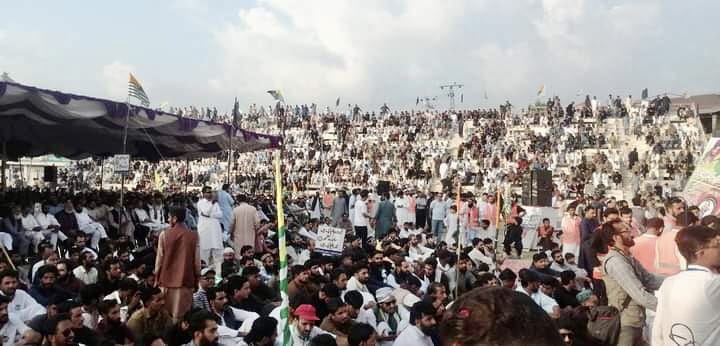
Notably, it became a platform where Kashmiris rallied under the singular banner of Kashmir’s flag, distinct from any Pakistani flag, a sight unseen since the 1947 division of Kashmir.
The pinnacle of the Jammu Kashmir Joint Awami Action Committee’s efforts came with their long march, a culmination of a year-long protest against injustices, particularly focusing on electricity production costs and subsidized flour prices in the region.
Despite government attempts to thwart the march, including road closures and seeking assistance from Pakistani forces, the public movement persevered, reaching Muzaffarabad on May 11. However, the peaceful protest turned tragic when on May 13, authorities resorted to open fire, resulting in three deaths and 180 injuries.
Leadership Of Jammu Kashmir Joint Awami Action Committee long march
The leadership during this long march was diverse, with Dr. Toqeer Gilani leading the caravans from Kotli and Mirpur, Qari Naseer from Rawalakot, and Shoukat Nawaz Mir at the forefront in Muzaffarabad.
The actions of protestors during the march, such as removing Pakistani flags and signs indicating Kashmir’s affiliation with Pakistan, gained traction on social media, resonating with many who supported their cause.
Following the fulfillment of the demands by the Awami Action Committee, including concessions on electricity costs and flour prices, a black day was observed on May 14 across Pakistan-controlled Kashmir, commemorating the sacrifices made during the protest.
As the public movement transitions into its next phase, as articulated by senior members, the focus shifts towards achieving statehood recognition.
This marks a significant development in the ongoing struggle for the rights and autonomy of the people of Azad Kashmir.
Muzaffarabad: A man lost his life in Barkot, Muzaffarabad, as Pakistani Rangers opened fire during a confrontation with local residents.
The incident transpired as Pakistani Rangers attempted to breach into Azad Jammu and Kashmir early in the morning. However, the resilient community of Barkot, Muzaffarabad rallied together, blocking the road and staunchly refusing entry to the Rangers.
Despite the determined efforts of the protesters, Pakistani Rangers resorted to force, firing upon the peaceful demonstrators.
Tragically, amidst the chaos, one Kashmiri lost his life, succumbing to the violence unleashed by the Rangers.
This unfortunate event unfolded following the issuance of a notification by the Azad Jammu and Kashmir Government, aiming to address the demands put forth by the Jammu Kashmir Joint Awami Action Committee.
The community’s peaceful demonstration turned into a scene of horror as gunfire echoed through the streets, leaving a trail of devastation and mourning in its wake.
The incident serves as a stark reminder of the volatile tensions surrounding the region and the precarious situation faced by the residents of Azad Jammu and Kashmir.
As investigations into the matter unfold, the community mourns the loss of a fellow Kashmiri and stands united in demanding justice for the victim and accountability for those responsible for the tragic events that unfolded in Barkot, Muzaffarabad.