Sunday, March 22, 2026
14 C
Srinagar
Home Blog Page 27

Best Cloud Hosting Services for Small Businesses in 2025 | Top Providers Reviewed

0

LONDON/DUBAI/NEW YORK – For small and medium-sized enterprises (SMEs) navigating the digital economy, the choice of a web hosting provider is no longer a mere technical decision; it is a fundamental strategic one. In 2025, the consensus among industry analysts is clear: cloud hosting has transitioned from a luxury to an indispensable utility for business resilience and growth.

Unlike the static, single-server constraints of traditional hosting, cloud hosting distributes a website’s load across a network of interconnected virtual servers. This architecture offers a level of flexibility, redundancy, and power that was once the exclusive domain of large corporations. For the ambitious small business, this means an ability to compete on a global stage, with the agility to scale resources in real-time to meet customer demand.

“The paradigm has shifted entirely,” says Eleanor Vance, a cloud infrastructure analyst at TechVision Group. “Small businesses are no longer asking if they should move to the cloud, but which cloud solution provides the optimal balance of performance, security, and cost-effectiveness for their specific operational model. The right choice in 2025 can be a significant competitive advantage.”

The Unavoidable Case for Cloud Hosting: Beyond Basic Uptime

The advantages of cloud hosting for SMEs are multifaceted, extending far beyond the promise of keeping a website online.

Elastic Scalability: The defining feature of cloud infrastructure is its elasticity. During a product launch, a seasonal surge, or a viral marketing campaign, website traffic can spike unpredictably. Cloud hosting allows businesses to seamlessly increase computing power, memory, and storage with a few clicks, preventing site crashes and lost revenue. Conversely, resources can be scaled down during quieter periods, aligning costs directly with usage.

Enhanced Reliability and Uptime: Traditional hosting relies on a single physical server—a single point of failure. Cloud hosting’s distributed nature means that if one server experiences an issue, another in the network instantly takes over. This redundancy guarantees uptime figures consistently above 99.9%, ensuring that a business’s digital storefront is always open.

Robust Security Posture: Leading cloud hosting providers invest heavily in security measures that would be prohibitively expensive for individual SMEs to implement. This includes enterprise-grade firewalls, distributed denial-of-service (DDoS) protection, automated malware scanning, and regular, encrypted backups stored in geographically disparate locations.

Cost-Efficiency and Predictable Budgeting: The pay-as-you-go model eliminates large upfront investments in physical hardware. Businesses pay only for the resources they consume, transforming a capital expenditure (CapEx) into a predictable operational expenditure (OpEx). Many providers now offer transparent, all-inclusive pricing models, helping SMEs avoid hidden fees.

An In-Depth Analysis of the Top Cloud Hosting Providers for 2025

After thorough testing, customer feedback, and analysis of technical specifications, several cloud hosting providers have stood out in 2025 for their performance, reliability, and value for small businesses. Here’s a closer look:

1. SiteGround: The Gold Standard in Customer Support

Analysis:
SiteGround remains a leader not because it is the cheapest, but due to its exceptional customer support. Available 24/7 via phone, live chat, and ticketing, its support team is widely regarded as one of the most knowledgeable and responsive in the industry. For business owners who value expert guidance without diving deep into technical details, SiteGround is an excellent choice.

Key Features:

  • Proprietary SuperCacher server-speed technology

  • Free daily backups

  • Integrated Cloudflare CDN

  • Intuitive custom dashboard

Considerations:
Premium support comes at a slightly higher price point, particularly upon renewal.

Pricing:
Plans start at $6.99 per month.

2. Bluehost Cloud: The WordPress Specialist

Analysis:
Bluehost is officially recommended by WordPress.org and offers a cloud infrastructure optimized for the world’s most popular CMS. With automated WordPress installation and easy management tools, it’s perfect for non-technical users looking for a seamless setup.

Key Features:

  • Integrated staging environment for testing

  • Free domain and SSL certificate for the first year

  • Scalable resources for growing WordPress sites

Considerations:
Initial low pricing increases significantly upon renewal, so budget planning is advised.

Pricing:
Cloud plans start at $9.95 per month.

3. Hostinger Cloud: Unmatched Value for Money

Analysis:
Hostinger offers strong performance at a highly competitive price, making it ideal for startups and small businesses. Its hPanel control panel is user-friendly, allowing easy management even for beginners.

Key Features:

  • Free dedicated IP address

  • Guaranteed CPU & RAM resources

  • 99.9% uptime guarantee

  • Global server network for low-latency access

Considerations:
Advanced developers may find configuration options limited compared to platforms like Cloudways.

Pricing:
Plans start at $9.99 per month, often with attractive introductory discounts.

4. A2 Hosting: The Performance Powerhouse

Analysis:
A2 Hosting excels where speed is crucial—such as e-commerce and media-heavy websites. Its “Turbo Servers” offer up to 20x faster performance than standard hosting, thanks to advanced caching and optimized software stacks.

Key Features:

  • Developer-friendly with Node.js, Python, and more

  • Free site migration

  • Proactive server security measures

Considerations:
While support is competent, response times may be slower during peak hours compared to leaders like SiteGround.

Pricing:
Cloud VPS plans start at $11.99 per month.

5. Cloudways: The Flexible Managed Cloud

Analysis:
Cloudways operates as a managed cloud hosting platform over top providers like DigitalOcean, AWS, Google Cloud, and Vultr. It provides small and medium businesses with enterprise-grade performance without the complexity of managing servers directly. The pay-as-you-go model offers granular billing flexibility.

Key Features:

  • Choose your preferred cloud provider

  • One-click scaling

  • Free SSL and site migration

  • Powerful custom server management dashboard

Considerations:
No domain registration or native email hosting is provided; third-party solutions are required.

Pricing:
Plans start around $10 per month, depending on the chosen cloud provider.

A Strategic Framework for Choosing the Right Cloud Hosting Provider

Selecting a cloud hosting provider is not about identifying the “best” in absolute terms, but about finding the one that aligns perfectly with your business needs. Here’s a strategic framework to guide your decision:

Technical Expertise

Assess your team’s technical capabilities. If you have the skills and resources to manage servers directly, platforms like Cloudways offer flexibility and granular control. However, if you prefer a fully managed experience with hands-on support, providers like SiteGround or Bluehost Cloud are better suited.

Traffic Profile

Consider the nature of your website traffic. Is it steady, or do you anticipate significant spikes and troughs? High traffic volatility requires a provider with strong scalability options to maintain performance during peak periods.

Application Stack

Identify the type of application or website you are running. Standard WordPress sites may perform best on Bluehost Cloud, while custom applications with advanced features might benefit from A2 Hosting or Cloudways, which support multiple programming languages and frameworks.

Total Cost of Ownership

Don’t focus solely on the introductory price. Calculate the long-term cost over 2–3 years, including renewal fees, additional resources, SSL certificates, and other add-ons. This ensures that your hosting choice remains cost-effective over time.

The Bottom Line

In the fast-evolving digital landscape of 2025, a small business’s online presence is its lifeline. Choosing a reliable cloud hosting solution is more than a technical decision—it’s an investment in operational stability, security, and scalable growth. From the user-friendly, fully managed experience of SiteGround to the flexible, enterprise-grade power of Cloudways, the market offers solutions to suit a wide range of business needs.

The most successful businesses will approach this choice strategically, treating it not as a mere IT task, but as a core element of their digital strategy. By doing so, they ensure that their online foundation is as robust, dynamic, and ambitious as their business goals.


Parallel Chains: How Schedule IV and PSA Tighten the Grip on Kashmir

On opposite sides of the Line of Control, Kashmiris live under the shadow of two strikingly similar laws that shape their daily existence. In Gilgit-Baltistan, administered by Pakistan, political activists, student leaders, and dissenting voices are routinely placed under Schedule IV of the Anti-Terrorism Act, restricting their movement, freezing their accounts, and subjecting them to constant surveillance. Across the divide, in Indian-administered Jammu and Kashmir, the Public Safety Act (PSA) continues to be enforced as a blunt instrument, allowing authorities to detain individuals for extended periods without trial, often on vague or politically motivated charges.

For the ordinary Kashmiri, these laws are not abstract legal instruments; they are lived realities that define fear, uncertainty, and the constant negotiation of personal freedom. Families are separated, journalists face repeated arrests, and students are silenced for voicing their opinions. Despite the international recognition of both regions as disputed territories, neither state has allowed the promises of self-determination or political participation to take shape. Instead, both India and Pakistan maintain a parallel regime of surveillance, detention, and intimidation. The result is a shared narrative of repression, where the hopes and aspirations of everyday Kashmiris are caught between two governments and an international community that largely remains silent.

Schedule IV in Gilgit-Baltistan

Introduced as part of Pakistan’s Anti-Terrorism Act of 1997, Schedule IV allows the state to designate individuals as “proscribed persons.” Once listed, they face travel bans, restrictions on movement, frozen bank accounts, and relentless police monitoring. In Gilgit-Baltistan, a region with no representation in Pakistan’s national parliament and no constitutional protections, Schedule IV has become a tool not just against extremists but also against political activists, student leaders, and human rights defenders.

Rights organizations and local activists estimate that around 30 to 40 people are currently listed under Schedule IV in Gilgit-Baltistan, though the number fluctuates depending on political unrest and protests. Since the law’s introduction, hundreds of people have been temporarily detained or monitored, often without transparent judicial proceedings. Families often discover their relatives’ names on the list only when police summon them for questioning or when they are stopped at checkpoints. Critics argue that the vague criteria allow authorities to target voices of dissent, especially those calling for constitutional rights and economic justice in the region.

Public Safety Act (PSA) in Jammu and Kashmir

Passed in 1978, the PSA empowers authorities to detain any individual without trial for up to two years on vague grounds of threatening “public order” or “state security.” Amnesty International has long called the PSA a “lawless law.” Its implementation accelerated after the abrogation of Article 370 in 2019, with thousands detained—politicians, journalists, students, and ordinary civilians.

According to human rights groups and media reports, over 20,000 people have been booked under the PSA since the 1990s, making it one of the most widely used preventive detention laws in South Asia. Following 2019, at least 5,000 detentions were reported in the first year alone, many of them political leaders and teenagers accused of stone pelting. Detainees are frequently shifted to prisons outside Jammu and Kashmir, often hundreds of kilometers away, making family visits nearly impossible. Legal experts point out that the PSA bypasses normal criminal procedures, enabling authorities to re-arrest individuals immediately after courts order their release.

Detentions Under Schedule IV and PSA

In Kashmir, preventive detention laws are used to control dissent, targeting political activists, journalists, and community leaders. Below is a list of some prominent individuals detained under Schedule IV in Gilgit-Baltistan and PSA in Jammu & Kashmir. These names are verified from credible news and human rights sources.

RegionNamePosition / RoleDetention LawDetails
Jammu & KashmirMehraj MalikAAP MLA, DodaPSADetained for allegedly disturbing public order.
Jammu & KashmirJaffer Hussain ButtResident, KishtwarPSABooked as Over Ground Worker (OGW).
Jammu & KashmirLiyaqat AliResident, KathuaPSADetained under multiple FIRs.
Jammu & KashmirTahir Ahmad KumarPakerpora, BudgamPSAListed as “terror associate”.
Jammu & KashmirShabir Ahmad GanaiKarpora, BudgamPSADetained under PSA for terror association.
Jammu & KashmirAsif SultanJournalistPSADetained multiple times; court later quashed detention.
Gilgit-BaltistanEhsan AliChairman, Awami Action CommitteeSchedule IVListed as proscribed person.
Gilgit-BaltistanMasoodur RehmanVice Chairman, ACCSchedule IVTargeted for political activism.
Gilgit-BaltistanJaved NajiSenior Member, ACCSchedule IVIncluded for activism.
Gilgit-BaltistanKausar HussainSpokesperson, ACCSchedule IVNamed in proscribed list.
Gilgit-BaltistanIssa Khan DanishJournalistSchedule IVListed for dissent reporting.
Gilgit-BaltistanMir Nisar Hasnain RammalActivist, HunzaSchedule IVProscribed due to activism.

This table highlights the scale and human impact of preventive detention in disputed Kashmir, showing how both Pakistani and Indian-administered regions use such laws to suppress dissent and control political expression.

The Human Cost

In Gilgit’s narrow valleys and highland towns, names quietly enter the Schedule IV list. Many activists discover their status only when denied access to their bank accounts or stopped at checkpoints. In Jammu and Kashmir, families awaken to midnight raids, their loved ones disappeared into jails hundreds of miles away in Uttar Pradesh or Haryana.

“I was never charged with a crime,” said Shabbir, a young activist from Gilgit who was listed under Schedule IV after organizing a student protest. “They told me I was a security risk. My only crime was raising my voice about unemployment.”

“We live with constant fear,” explained Aamina, a school teacher from Srinagar whose brother has been detained thrice under PSA. “Each time he comes out, he is more broken. They don’t need evidence, just suspicion. And suspicion never ends.”

The testimonies echo across borders, stitched together by a common thread: a systematic erosion of dignity.

A Disputed Land Without Protection

Kashmir’s unresolved political status continues to leave its people vulnerable. United Nations resolutions of 1948 and 1949 clearly recognized the right of Kashmiris to decide their political future through a plebiscite. Decades later, that commitment remains unfulfilled, as both India and Pakistan have instead tightened their administrative control over the region. Laws such as Schedule IV in Pakistan-administered Kashmir and the Public Safety Act (PSA) in Indian-administered Kashmir are used as instruments to monitor, restrict, and criminalize dissent.

What makes the situation more precarious is the absence of a strong international legal framework. Unlike Palestine, where the Geneva Conventions are often invoked in debates on occupation, Kashmir exists in a legal vacuum. This lack of global accountability allows unilateral state laws to dominate, leaving local populations without effective protection against political repression.

Parallel Narratives, Shared Repression

For decades, India and Pakistan have weaponized the narrative of terrorism to delegitimize Kashmiri resistance. In New Delhi’s lexicon, stone-pelting teenagers are “terror sympathizers.” In Islamabad’s discourse, demands for autonomy in Gilgit-Baltistan are “anti-state conspiracies.” The laws—PSA and Schedule IV—translate these narratives into lived realities.

“When my son demanded better electricity for our village, he was branded anti-national,” said Karimullah, a farmer from Skardu. “We are loyal to our land, not to slogans of Islamabad or Delhi. But the state only sees traitors.”

“Under PSA, even poets are a threat,” noted a Kashmiri journalist in exile. “If you write about freedom, they say you are disturbing public order. If you remain silent, they will still knock on your door.”

Resistance Amid Chains

Yet, repression has not silenced the people. Across Gilgit, Skardu, Srinagar, and Sopore, acts of resistance—small and large—continue. Students gather in whispered circles, documenting stories of those detained. Mothers march with photographs of missing sons. Writers embed dissent into poetry and prose.

Civil society networks attempt to challenge the legality of these laws. Lawyers in Gilgit-Baltistan argue that applying Schedule IV in a region outside Pakistan’s constitutional domain violates basic principles of justice. In Jammu and Kashmir, petitions against PSA reach the Indian Supreme Court, though outcomes remain bleak.

The struggle is not just political—it is existential. To resist is to assert humanity against a machinery that seeks erasure.

International Silence

Despite decades of human rights reports, the international community has largely remained silent. Geopolitical interests—whether China’s stakes in Gilgit-Baltistan through the China-Pakistan Economic Corridor, or India’s growing global alliances—have overshadowed Kashmir’s cries.

The United Nations issues statements of “concern” but has failed to establish monitoring mechanisms comparable to those in other conflict zones. Western capitals that champion democracy are reluctant to confront either India or Pakistan on their human rights record in Kashmir.

“We are not pawns in your great game,” said Yasmeen, a Kashmiri student now studying abroad. “We are people, families, communities. Why is our pain negotiable?”

Schedule IV and the PSA are not just laws—they are symbols of a deeper tragedy. They reveal how disputed territories, left unresolved by the international system, become laboratories of repression. They highlight how states, in the absence of accountability, craft their own rules of control. And they show how ordinary Kashmiris live in a permanent state of exception.

For now, the valleys remain under watch, the mountains echo with silenced voices, and the rivers carry stories of resilience. The chains are parallel, but so is the resistance.

Until the world listens, until justice is restored, the people of Kashmir will continue to remind us: freedom is not a crime.

This report is part of The Azadi Times’ ongoing series on law, resistance, and human rights in disputed Kashmir.

Jacqueline Fernandez Moves Supreme Court to Quash $24 Million Money Laundering Case Linked to Sukesh Chandrashekhar

0

New Delhi (Web Desk) – Bollywood actress Jacqueline Fernandez has approached the Supreme Court of India seeking to quash a $24 million money laundering case filed against her.

According to Indian media reports, the 44-year-old actress filed the plea after the Delhi High Court dismissed her earlier request in July to terminate proceedings initiated by the Enforcement Directorate (ED).

Background of the Case

The case is linked to alleged conman Sukesh Chandrashekhar, who faces charges of running a massive financial fraud. Investigators claim Chandrashekhar used the laundered money to build relationships with celebrities, including Jacqueline.

In July, Jacqueline had filed a petition arguing that she was merely a victim of Chandrashekhar’s deception, not a participant in any illegal financial activity.

Jacqueline’s Stand

In her latest appeal, Jacqueline has reiterated that:

  • She never engaged in laundering illicit funds.

  • No proceeds of crime or illegal assets were ever found in her possession.

  • She became entangled in the case only because of her association with Sukesh Chandrashekhar, whom she claims manipulated and misled her.

Court Proceedings So Far

The Delhi High Court had earlier rejected her plea, observing that there was sufficient ground to continue proceedings under the Prevention of Money Laundering Act (PMLA). Following that setback, the actress has now sought relief from the Supreme Court, requesting the First Information Report (FIR) against her be cancelled.

Impact on Career

The ongoing legal battle has significantly impacted Jacqueline’s professional life. While she continues to appear in Bollywood projects and public events, the cloud of the money laundering case has repeatedly overshadowed her career and endorsements.

Legal experts suggest that the Supreme Court’s decision will be crucial not only for Jacqueline’s reputation but also for how courts treat cases where celebrities are allegedly linked to high-profile financial scams. If the FIR is quashed, it could provide the actress major relief and clear her path in Bollywood.

Taylor Swift Tightens Security Amid Serious Stalker Threat

0

Los Angeles (Web Desk) – Global pop superstar Taylor Swift has reportedly increased her personal security after facing what insiders describe as “a real and immediate threat,” not just another publicity stunt.

According to U.S. media, the most pressing danger comes from Brian Jason Wagner, an alleged stalker against whom Swift has already obtained a temporary restraining order.

Bulletproof Entry at Arrowhead Stadium

Recently, during her appearance at Arrowhead Stadium, Swift entered behind a bulletproof screen, a move that initially sparked speculation among fans that it was part of a new album rollout or promotional stunt. However, close sources confirmed the measure was purely for safety reasons due to escalating threats.

A Pattern of Security Risks

Swift has faced similar security concerns in the past, but this case is considered particularly dangerous. Reports allege that Wagner has been following her since mid-2024 and even attempted to break into her Los Angeles residence, falsely claiming that he and Swift had a child together.

The disturbing behavior has forced Swift’s security team to remain on high alert, adjusting or even canceling promotional plans whenever a potential risk is identified.

Fans and Public Response

The incident has reignited debates around celebrity safety, stalker laws in the U.S., and the challenges faced by high-profile women in maintaining personal security. Swift’s massive global fan base, known as Swifties, has expressed concern over social media, urging stronger legal protections for the singer.

Swift’s Legacy Amid Challenges

Despite the threats, Taylor Swift continues to dominate the global music industry with her record-breaking Eras Tour and multiple chart-topping albums. The recent unveiling of 13 wax figures in her honor highlights her enduring influence on pop culture.

Yet, behind the scenes, the risks underscore the harsh reality of stardom: while Swift’s music unites millions, her personal safety requires extraordinary precautions.

Dua Malik Opens Up on Harassment, Career Struggles, and Why She Doesn’t Want Her Children in Showbiz

Islamabad (Web Desk) – Pakistani actress Humaima Malik’s sister, Dua Malik, who is a former singer and television host, has made candid revelations about her personal experiences in the entertainment industry. Speaking on a recent podcast, Dua shared her views on showbiz, harassment, and her concerns about the industry’s environment for young talent.

During the conversation, Dua revealed that she does not want her children to join showbiz. “I don’t want my kids to work in this industry, but my daughter is very fond of making videos and often uploads them on social media. When I scold her, she deletes them,” she said.

When asked if her reluctance was due to the infamous issue of casting couch in Pakistan’s entertainment sector, Dua clarified that her decision was not based on any such experience. “This isn’t the reason, and it never happened to me. But I have heard that many girls face such situations because they are very sensitive. Humaima and I, however, are not delicate—we both have a man hidden inside us,” she stated boldly.

Dua went on to explain that she and her sister are not the type to remain silent in the face of misconduct. “If someone ever tried anything inappropriate, our inner strength would wake up, and we would never spare them,” she said.

However, she did admit that at one point in her career, she faced harassment from a powerful figure in the industry. The incident, according to her, severely damaged her career. “I cannot reveal the name because I live abroad, but my family is in Pakistan. I left the matter to God,” Dua remarked.

Her revelations shed light on the darker side of the Pakistani entertainment industry, where issues such as harassment and power politics continue to affect careers and reputations.

Background on Dua Malik

Dua Malik began her career as a singer and later transitioned into television hosting. Known for her outspoken nature, she stepped away from mainstream showbiz in recent years but remains a notable personality due to her family’s association with the entertainment world. Her sister, Humaima Malik, is one of Pakistan’s most recognized actresses, known for her roles in both Lollywood and Bollywood productions.

Dua’s statements add to the ongoing debate about workplace harassment and the safety of women in South Asia’s entertainment industries. Her perspective as both an insider and now an observer from abroad provides a rare insight into the struggles female artists face in balancing their careers with dignity and personal safety.

China Launches K Visa to Attract Young STEM Talent as U.S. H-1B Fees Soar

    0

    Beijing (Web Desk) — In a bold move to lure global science and technology professionals, China has introduced a new “K visa” visa category, effective October 1, 2025, aimed at young talent in STEM (Science, Technology, Engineering, Mathematics). The timing coincides with dramatic changes in U.S. visa policy — notably, the new $100,000 fee for H-1B visa applications. Analysts say China’s strategy could shift global talent flows, with important consequences for aspiring professionals worldwide.

    What is the K Visa, and What It Offers

    According to official announcements and press releases:

    The K visa is a newly added category under China’s ordinary visa types (previously 12 in number), introduced through amendments to the country’s Regulations on the Administration of the Entry and Exit of Foreigners.

    The policy was approved by the State Council, codified in August 2025, and will go into force on October 1, 2025.

    It targets young science & technology talent — foreign nationals who satisfy certain criteria such as having at least a bachelor’s degree from recognized universities (domestic or international), or holding research/education positions in STEM fields.

    Key Features of the K Visa

    • No invitation or sponsorship required from a Chinese employer or local entity.

    • Broader permitted activities: education, cultural exchange, scientific & technological work, business research, entrepreneurship.

    • More flexible terms compared to other visa types: multiple entries, longer validity, extended stays.

    Why China Is Introducing It Now

    Experts see several motivations:

    1. Global Competition for Talent
      With many countries tightening their visa regimes, China appears to want a competitive advantage. The U.S., for example, has recently increased costs and barriers for foreign skilled workers under the H-1B program.

    2. Vision for Innovation & Talent Strategy
      China’s “Talent Power Strategy” and other national-level policy documents emphasize fostering innovation, increasing international cooperation, and treating talent as a critical resource. This visa aligns with those goals.

    3. Alternative for Global Professionals
      As U.S. visa costs rise (e.g., the $100,000 fee for new H-1B visa petitions) and the process becomes more restrictive, China’s K visa provides an attractive alternative for young scientists, researchers, and tech entrepreneurs.

    What’s Going On With U.S. H-1B Visa Changes

    Recent U.S. policy changes are reshaping the landscape:

    • From September 21, 2025, a new fee of $100,000 will be required for new H-1B visa petitions (for foreign nationals outside the U.S.).

    • This fee will not apply to existing H-1B visa holders, or renewals, under current clarifications.

    These changes have stirred concern in tech, education, and research sectors — especially in countries from where many professionals seek U.S. visas (e.g., India, Pakistan, etc.). There’s talk of disruption for individuals, families, companies, and universities dependent on cross-border academic and professional mobility.

    Implications — Who Gains, Who Might Lose

    StakeholderPotential GainPotential Challenge
    Young STEM professionals worldwideEasier access to China for research, education, startups. No need for employer sponsorship; more flexible stay.Must meet China’s eligibility criteria. Uncertainty still about exact visa conditions (duration, renewal, path to residence).
    Countries losing talent under U.S. restrictionsChina could attract global and diaspora STEM talent, increasing scientific exchange.Risk of talent brain drain for countries already struggling with retention.
    ChinaBoost to innovation ecosystems, global collaboration, strengthening of academic & business R&D sectors.Need to ensure supporting infrastructure, IP protection, and integration of foreign talent.
    Employers, universities globallyMore competitive options for placements, joint research, cross-border labs and partnerships.Adjusting to shifting talent flows; possibly stronger competition from institutions in China.

    Critical Questions and Unknowns

    While the K visa offers promise, certain details are yet to be clarified:

    • What is the exact definition of “young” in terms of age? (e.g., upper age limit)

    • How long will the visa be valid, and what are the limits on stay per visit? Will renewal and extension rules be favorable?

    • Whether long-term residency or work permits will follow for K visa holders contributing significantly.

    • How China handles visa processing speed, language barriers, local integration, housing, taxation, and regulatory compliance for foreign STEM workers.

    What It Means for Aspirants: How to Position Yourself

    If you are a young professional or researcher interested in this visa, here are practical steps:

    1. Ensure your academic credentials are strong — bachelor’s or higher in STEM, from recognized institutions.

    2. Gather documentation of research, publications, or relevant professional experience.

    3. Watch for guidelines from Chinese embassies/consulates where you are — they will publish exact procedures.

    4. Keep track of policy updates. As China rolls this out, there may be pilot relaxations or special programs.

    5. Compare this option with other visas (U.S., Europe, etc.), considering costs, ease, living standards, and long-term career goals.

    Conclusion

    China’s new K visa represents a strategic pivot in global talent competition. At a moment when the United States is making H-1B more expensive and restrictive, China is taking the opposite tack: offering opportunity, flexibility, and fewer bureaucratic hoops for young science and technology talent.

    For many, especially in South Asia and other regions where skilled STEM professionals are seeking pathways abroad, China’s K visa could emerge as a serious alternative — not just for work or research, but for building careers in a global, interconnected tech ecosystem.

    As the rollout begins on October 1, all eyes will be on implementation — how fast, how fair, and how welcoming the system proves to be. For aspirants and industry watchers alike, this may mark a turning point in how talent travels in our increasingly competitive world.

    From Abandonment in Pakistan to Stardom in China: Social Media Star Fan Zihe Marries Devoted Follower

    0

    Beijing (News Desk) — A young woman who was once found abandoned in Pakistan has become a celebrated social media star in China — and has now married one of her devoted fans.

    Fan Zihe, a 20-year-old influencer of Pakistani origin, was discovered as a baby in Pakistan inside a cardboard box. At the time, a Chinese couple working in the country, unable to have children of their own, adopted her and brought her to a rural village in Henan province, central China.

    The couple named her Fan Zihe — symbolizing longevity — and raised her with love despite their modest means.

    Viral Moment and Rise to Fame

    Fan’s life took a dramatic turn in late 2023 when a short video of her went viral. In the clip, she praised local noodles in Henan’s thick regional accent while enjoying a meal. The video gained more than 1.4 million likes, with viewers captivated by her striking beauty and the warmth of her bond with her adoptive parents.

    Since then, Fan has built an online following of over 1.8 million fans, sharing glimpses of her rural life. Her content not only provides her with income but also helps promote and sell local agricultural products, benefiting her wider community.

    Love Story with a Follower

    Fan’s new husband, Lyu Xiaoshuai, was among her earliest followers. He recalls being deeply moved by her “unconventional but captivating beauty” in that first viral video. The pair eventually met during a dinner with friends, and their friendship gradually blossomed into love.

    Lyu later left his job to support Fan’s growing online career. He now helps manage her accounts, carries equipment during shoots, edits videos, and handles fan interactions. Over the past three years, he has also accompanied Fan and her parents on trips and frequently assisted with farm work.

    A Marriage Without Dowry

    In a recent livestream, the couple revealed that their union did not involve any dowry or traditional bride price, with both families instead contributing to building the couple’s new home.

    The announcement sparked an outpouring of online blessings. One fan wrote, “I wish you both a lifetime of happiness.” Another added, “Fan looks like a fairytale princess, and Lyu is her protector. May your life only get better from here.”

    From being abandoned in Pakistan to becoming a beloved face in China, Fan’s journey is nothing short of extraordinary. Her story continues to inspire millions across borders — a tale of resilience, love, and the unexpected paths life can take.

    Saudi Arabia Unveils Major Gold Discovery in Mecca’s Mansoura Mine

    0

    Mecca, Saudi Arabia — Saudi Arabia has announced the discovery of a massive gold reserve in the Mansoura mine, located in the holy city of Mecca. Stretching across more than 125 kilometers, the deposit is being described as one of the largest in the region’s history, marking a significant milestone in the Kingdom’s efforts to diversify its economy under Vision 2030.

    A Strategic Find Under Vision 2030

    The newly discovered gold reserve is expected to transform Saudi Arabia’s mining and mineral sector, which has become a central pillar of Crown Prince Mohammed bin Salman’s Vision 2030 plan. The initiative aims to reduce the country’s reliance on oil by expanding industries such as mining, renewable energy, and tourism.

    According to officials, the Mansoura mine could potentially boost domestic production, generate thousands of jobs, and attract major foreign investment — strengthening Saudi Arabia’s role in the global precious metals market.

    Global Impact and Market Value

    The timing of the discovery comes as global gold prices soar. In India, for instance, the price of gold has recently crossed $9per 10 grams, underlining the immense financial value of Saudi Arabia’s new reserves. Analysts believe this announcement could not only stabilize the local economy but also influence international gold markets, increasing Saudi Arabia’s bargaining power in the global commodities trade.

    Job Creation and Foreign Investment

    Industry experts suggest the Mansoura discovery could create new mining towns, infrastructure projects, and employment opportunities for Saudi citizens while inviting foreign companies to invest in state-of-the-art exploration and refining technologies.

    “Saudi Arabia is positioning itself to become a regional leader in the mining industry,” one analyst told The Azadi Times. “This discovery could fundamentally shift the dynamics of the global gold trade.”

    A Step Toward Economic Independence

    While the Kingdom’s economy has long been tied to oil exports, this discovery is a strong signal of Saudi Arabia’s intention to build sustainable and diversified revenue sources. By unlocking its mineral wealth, the country is not only securing its economic future but also reshaping its role on the global stage.

    Kashmir’s Top 5 Mountaineers Who Are Conquering Peaks and Breaking Records Stories from AJK, Gilgit, Ladakh & Jammu

    0

    The Himalayas in the greater Kashmir region are more than just a breathtaking backdrop; they are a training ground, a challenge, and a source of profound inspiration. From the high-altitude deserts of Ladakh to the lush valleys and formidable ranges of Gilgit-Baltistan, a new generation of climbers is emerging. Their stories are not just of personal triumph but of a collective spirit reshaping how the world sees this part of the world—through the lens of resilience, adventure, and human achievement.

    Here are five mountaineers who are forging a new legacy on these iconic slopes.

    1. Nawab Moazam Khan: The Record-Breaker from Srinagar

    In a feat that captured the attention of the global climbing community, Nawab Moazam Khan led a three-member expedition to a historic victory. His team successfully scaled the elusive Eastern Summit of Mount Harmukh, a peak whose summit had remained untouched for 126 years since the last recorded ascent in 1899.

    What makes the achievement even more remarkable is the speed and efficiency of the climb, completed in a grueling 46-hour round trip. Khan, a 30-year-old travel entrepreneur, demonstrated that world-class mountaineering talent is thriving in the region.

    In His Words: “Climbing Mount Harmukh was not just about reaching the summit; it was about reconnecting with our heritage and proving that we can achieve greatness on our own terms,” Khan reflected after the expedition.

    (Suggested Image: A headshot of Nawab Moazam Khan in climbing gear, with a mountain backdrop.)
    Caption: Nawab Moazam Khan led the first successful ascent of Mount Harmukh’s Eastern Summit in over a century.
    ALT Text: Mountaineer Nawab Moazam Khan in climbing gear in Kashmir.**

    2. Sania Bhat: Pioneering Women’s Mountaineering

    Sania Bhat is a pioneering force for women in adventure sports. In a field often dominated by men, her journey is one of breaking barriers and challenging stereotypes. Through her challenging expeditions and public advocacy, she has become a role model, inspiring many young women to see the mountains as a place of empowerment and possibility.

    Bhat’s story is a vital part of the region’s narrative, highlighting a shift towards greater inclusion and the untapped potential of its female athletes.

    3. Tsering Dorjay

    Hailing from Ladakh, Tsering Dorjay uses mountaineering as a powerful tool for cultural connection. His expeditions across the Karakoram and other ranges are journeys of shared experience. Dorjay emphasizes the importance of preserving indigenous mountain knowledge and fostering understanding between different communities through a shared love for the peaks.

    His work goes beyond climbing; it’s about building bridges and showcasing the rich cultural tapestry of the Himalayan people.

    4. Adil Rafiq

    With a lifetime of experience on the region’s most challenging slopes, Adil Rafiq is the seasoned veteran who guides the next generation. His extensive record of successful climbs is matched only by his commitment to mentoring aspiring young mountaineers from the Kashmir Valley.

    Rafiq’s deep knowledge of local terrain and weather patterns, combined with his passion for teaching, makes him an invaluable pillar of the climbing community, ensuring that hard-won expertise is passed down.

    5. Farooq Mir

    At just 29 years old, Farooq Mir has a visionary goal: to use mountaineering as a force for unity. He is pioneering the development of transboundary climbing routes that conceptually link the various areas of the Kashmir Himalayas. His expeditions are designed to foster collaboration among climbers, promoting a shared identity rooted in a common landscape rather than political divisions.

    Mir’s work demonstrates how adventure can be a powerful platform for dialogue and peaceful collaboration.

    Overcoming Adversity

    The path for these climbers is not without significant challenges. They contend with some of the most unpredictable weather and rugged terrain on Earth, often with limited access to the advanced gear and formal training facilities available elsewhere. Yet, their deep local knowledge, profound resilience, and unwavering passion allow them to overcome these obstacles, turning the mountains themselves into their greatest teacher.

    Conclusion: A Legacy Written on the Peaks

    The stories of Nawab Moazam Khan, Sania Bhat, Tsering Dorjay, Adil Rafiq, and Farooq Mir are more than individual success stories. Together, they paint a picture of a vibrant, dynamic, and resilient mountaineering culture. They are redefining the identity of the Kashmir Himalayas, one summit at a time, proving that the region’s greatest resource is its people.

    Their achievements remind us that even the highest peaks can be scaled with determination, and that true legacy is built not by conquering mountains, but by the respect we show them and the inspiration we share with others.

    Inspired by these stories? Explore our dedicated Adventure & Sports section to read more about the explorers, athletes, and conservationists shaping the future of the Kashmir Himalayas. Do you know a trailblazer we should feature? Get in touch with our editorial team to share your story suggestions.

    The Ultimate Mountain Bike Buying Guide 2025: Trails, Tech, and Tips for Every Rider

    0

    The scent of pine, the crunch of gravel under your tires, and the sudden, breathtaking vista that appears after a hard climb—this is the magic of mountain biking. It’s a sport that has exploded in popularity, becoming a global language of adventure. But for anyone standing in a bike shop or scrolling through endless online options, the sheer variety can be overwhelming. What type of bike is right for you? How much should you invest? And where can you take it?

    This guide is designed to be your trusted companion. We’ll walk you through the different types of bikes, from practical electric mountain bike models to the astonishing the house of solid gold 24k gold extreme mountain bike, with a neutral look at brands and prices. We’ll also explore the essential gear you need and touch on the kind of breathtaking landscapes, like the high-altitude trails in Kashmir, that make all the research worthwhile.

    A Guide to Mountain Bike Types

    Your first decision is the most important: what kind of riding will you primarily be doing? The right bike transforms the experience from a struggle into a joy.

    Traditional Mountain Bike Cycles

    For many, the classic, human-powered bicycle is the heart of the sport. These are categorized mainly by their suspension, which dictates how they handle rough ground.

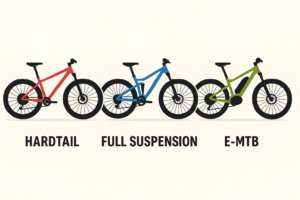
    The Hardy Hardtail: A mountain bike cycle with suspension only on the front fork is known as a hardtail. These bikes are lighter, more efficient for climbing hills, and generally more affordable. They’re a fantastic choice for beginners, riders on a budget, or those who mainly enjoy smooth, flowing trails. If your goal is fitness and exploring gentle forest paths, a hardtail is often the best mountain bike to start with.

    The All-Terrain Champion: Full Suspension Mountain Bikes: When the trail gets rough, a full suspension mountain bike comes into its own. With shock absorbers at both the front and rear, these bikes offer unparalleled control, comfort, and traction. They allow you to ride more aggressively over roots and rocks, making them the top choice for technical trail riding and the preferred weapon for downhill mountain bike enthusiasts. The trade-off is added weight, complexity, and a higher mountain bike price.

     Diagram comparing hardtail vs full suspension vs electric mountain bike frames.
    Choosing between a hardtail, a full suspension, and an e-MTB is the most critical decision for a new rider.

    Electric Mountain Bikes (e-MTBs)

    The electric mountain bike has democratized the sport. With a quiet motor that provides pedal assistance, e-MTBs flatten hills, shorten long distances, and make the sport accessible to riders of different fitness levels or those returning from injury. They are perfect for explorers who want to see more without being completely exhausted. While purists initially scoffed, the technology has proven itself, and today’s e-MTBs are robust, capable machines opening up new possibilities.

    Mountain Bike Motorcycles

    It’s crucial to distinguish these from pedal bikes. A mountain bike motorcycle, often called a trail or dirt bike, is powered by a petrol engine. Built for extreme offroad use, they feature high ground clearance and heavy-duty suspension. Brands like Kawasaki mountain bike motorcycles (e.g., the KLX series) and Honda mountain bike motorcycles (e.g., the CRF range) are legends in this field. However, their use is often restricted on non-motorized trails shared with hikers and cyclists, so it’s important to know local regulations.

    Popular Mountain Bike Brands & Models in 2025

    The market offers everything from dependable entry-level bikes to exotic collector’s items.

    Brand/ModelTypeHighlightsPrice (USD)
    BMW Mountain BikeElectric / HybridGerman engineering, sleek design$3,000 – $6,500
    Royal Enfield Mountain BikePetrol / HybridRetro design meets offroad power$4,500 – $8,000
    Hero Mountain BikeAffordable MTB RangeGreat entry-level option$500 – $1,500
    Honda Mountain BikePetrol / E-MTBHonda reliability for long rides$3,000 – $12,000
    Kawasaki Mountain BikeExtreme OffroadRugged motocross-inspired MTB$4,000 – $10,000
    MX Offroad Mountain BikeDownhill SpecialistBuilt for jumps & stunts$1,000 – $5,000
    The House of Solid Gold 24KLuxury24K gold plated, diamond detailing$500,000

    Mountain Bike Helmets & Gear

    Trek, Specialized, Giant: These are the “big three” of the cycling world. They offer a complete range of high-quality bikes, from entry-level hardtails to world-cup-winning downhill mountain bike machines. You pay for extensive research, development, and a global dealer network for support.

    Direct-to-Consumer Brands (Canyon, YT Industries): By selling online directly to customers, these brands often provide higher-level components for a more competitive mountain bike price. They are a great option for informed buyers who know their size and what they want.

    Value-Focused Brands (MX Offroad): Brands like MX Offroad mountain bike target the affordable segment of the offroad market, providing solid options for those taking their first steps into the sport.

    The High-End and the Exotic

    • BMW Mountain Bike: The BMW mountain bike name signifies engineering excellence. While BMW Motorrad produces premium adventure motorcycles, the brand has also collaborated on limited-edition, high-performance pedal bikes that embody cutting-edge design and a premium price tag. They are statements of technical ambition.

    • Royal Enfield Mountain Bike: The idea of a Royal Enfield mountain bike pedal cycle is not a standard production model, but the brand’s iconic, rugged image inspires custom builders and enthusiasts. For motorized exploration, the Royal Enfield Himalayan is a capable offroad tourer.

    • The Pinnacle of Luxury: The House of Solid Gold 24K Gold Extreme Mountain Bike: This is where function meets unimaginable opulence. The house of solid gold 24k gold extreme mountain bike is a bespoke creation plated in 24-karat gold and adorned with precious materials. With a price tag approaching half a million dollars, it is less a vehicle for trails and more a piece of moving art, highlighting the farthest extremes of the market.

    Mountain Bike Prices in 2025

    mountain bike price can range from the cost of a weekend getaway to that of a small car. Here’s a realistic breakdown in USD to help you set a budget. Remember to factor in the cost of essential safety gear like a mountain bike helmet and accessories.

    CategoryPrice Range (USD)What to Expect
    Entry-Level$500 – $1,200Reliable aluminum hardtails or basic full-suspension bikes with dependable components. Perfect for beginners.
    Mid-Range$1,200 – $3,500High-quality aluminum or entry-level carbon frames with significant upgrades to drivetrain and suspension. The sweet spot for serious enthusiasts.
    High-End$3,500 – $10,000+Top-tier carbon fiber frames, the latest wireless electronic shifting, and premium suspension for expert riders demanding peak performance.
    Electric Mountain Bike$2,500 – $12,000+Pricing depends on motor power, battery range, and the overall bike specification.

    Your Non-Negotiable Mountain Bike Helmet and Gear

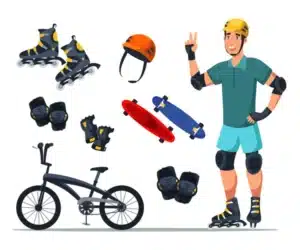
    Your bike is an investment, but your safety is priceless. A mountain bike helmet is the single most important piece of equipment you will buy. It should fit snugly, be well-ventilated, and meet rigorous safety standards (look for CPSC, CE, or MIPS labels).

    • Half-Shell Helmets: The most common type, offering great ventilation and protection for general trail riding.

    • Full-Face Helmets: Provide crucial protection for your chin and face. Essential for downhill mountain bike racing, bike park riding, or any high-risk terrain.

    Beyond the helmet, investing in a few key items dramatically increases your safety and comfort:

    • Padded Gloves: Improve grip and protect your hands in a fall.

    • Knee and Elbow Pads: These can prevent serious injuries on technical trails. Start with knee pads—you’ll be glad you did.

    • Eyewear: Protects your eyes from dirt, bugs, and branches.

    • Appropriate Footwear: Stiff-soled shoes provide better power transfer and grip on the pedals.

    Essential mountain bike safety gear including helmet, gloves, and pads laid out neatly.
    A complete set of protective gear significantly reduces the risk of injury on the trail.

    Epic Mountain Bike Trails Around the World

    The right bike unlocks landscapes you might otherwise never see. From the legendary routes of Moab, USA, to the alpine passes of the European Alps, the world is full of incredible mountain bike trails.

    For the international adventurer, the Himalayan region offers some of the most dramatic and emerging riding destinations on earth. The trails that weave through the landscapes of Kashmir, for instance, are gaining recognition for their raw beauty and challenging terrain.

    • High-Altitude Challenges: The ski fields of areas like Gulmarg present incredible downhill mountain bike potential during the summer months, with riders using lift infrastructure to access vast, high-altitude descents.

    • Valley Explorations: The Sindh Valley offers routes that combine moderate technical challenge with breathtaking scenery, perfect for intermediate riders on a full suspension mountain bike or a capable electric mountain bike to help with the altitude.

    • A Note for Travelers: These trails are often remote and require careful planning, a guide, and respect for the local environment and culture. The reward is an unforgettable adventure in one of the world’s most majestic mountain ranges.

    How to Choose the Best Mountain Bike

    1. Honestly Assess Your Terrain and Ambition
    Where will you ride most? Smooth, rolling hills? Then a hardtail may suffice. Rocky, root-strewn paths? You’ll want a full suspension mountain bike. Your local terrain is your best guide.

    2. Set a Realistic Total Budget
    Remember to allocate funds for essential safety gear like a mountain bike helmet, pedals (which are often sold separately), and basic maintenance tools. A good rule of thumb is to spend 20% of your bike’s cost on gear and accessories.

    3. Get the Right Size – It’s Everything
    A bike that is too large or too small is uncomfortable, inefficient, and dangerous. Use manufacturer size charts based on your height and, if possible, visit a local shop for a professional fitting.

    4. Test Ride if You Can
    The “feel” of a bike is subjective. How does it handle? Is it comfortable? Demo days at local trails or visits to bike shops are invaluable for finding a bike that feels like an extension of yourself.

    Comparing Mountain Bike Options

    FeatureElectric MTBPetrol MTBFull SuspensionDownhill MTB
    PowerBattery poweredPetrol engineManualManual
    Best ForLong climbs, enduranceAdventure touringAll-terrain comfortStunts & steep rides
    Cost$1,500 – $7,000$2,000 – $12,000$1,200 – $6,500$1,000 – $5,000
    Eco ImpactLowModerateNeutralNeutral

    Love Your Bike: Essential Maintenance

    A well-maintained bike is safer, more reliable, and more fun to ride. You don’t need to be a mechanic, but a little care goes a long way.

    • Cleanliness is Key: Regularly clean your bike with biodegradable soap and water. Mud and grime accelerate wear on drivetrain components.

    • Lubricate the Chain: A clean, properly lubricated chain is vital for smooth, quiet shifting and efficient power transfer. Wipe off excess lube to avoid attracting dirt.

    • Tyre Pressure is Critical: Correct pressure affects traction, rolling resistance, and puncture protection. Experiment to find what works best for your weight and the trail conditions.

    • The ABC Quick Check: Before every ride, check Air (tyres), Brakes, and Chain/gears.

    • Learn to Fix a Flat: Knowing how to repair a punctured tube trail-side is the most important repair skill any rider can have.

    Person maintaining and cleaning a mountain bike at home.
    Regular, simple maintenance like cleaning and lubricating the chain will keep your bike running smoothly for years.

    The Future on Two Wheels

    The industry never stands still. We’re seeing wider adoption of wireless electronic shifting for flawless, maintenance-free gear changes, and advanced suspension designs that offer unparalleled control. The electric mountain bike segment is seeing rapid improvements in battery life and motor power, making them more capable than ever. The pursuit of the ultimate extreme mountain bike continues to push the boundaries of materials science and aerodynamic design.

    Conclusion: The Trail Awaits Your Story

    Choosing a mountain bike is a deeply personal journey that opens the door to adventure, fitness, and a connected global community. It’s not about having the most expensive bike, but the right bike for you—one that calls you to explore, to challenge yourself, and to discover quiet moments of beauty in nature.

    By understanding your needs, investing wisely in your equipment and safety, and respecting the trails, you are set for a lifetime of reward on two wheels. The world is filled with incredible paths, from the well-known bike parks to the emerging, high-altitude routes in majestic mountain regions like Kashmir. Your story on the trails is just beginning.

    Feeling inspired? Dive deeper into our detailed reviews of the latest mountain bikes and gear, and discover more guides to the world’s most unforgettable riding destinations. Where will your next adventure be?