Home Blog Page 3

Nighttime Demolition by Explosives in Pulwama Sparks Outcry, Allegations of Collective Punishment

0
Preliminary estimates by residents point to property losses running into crores of rupees.

PULWAMA, Indian Administered Kashmir – A pre-dawn operation carried out by Indian authorities in Pulwama district has triggered widespread condemnation and humanitarian concerns after controlled explosions were used to demolish a house, severely damaging a residential neighborhood and leaving dozens homeless in the bitter winter cold.

The operation, which lasted nearly two hours between midnight and 2 AM on Friday, targeted the two-story family home of Dr. Umar Nabi, a physician accused by Indian security agencies of involvement in a previous car-blast case in Delhi. The area was heavily cordoned off by security forces, and neighboring families were evacuated before the demolition began.

However, residents and rights groups allege the action amounted to “collective punishment,” citing the extensive collateral damage to surrounding civilian properties.

“The Whole Village Shook”: Residents Describe the Blasts

Local inhabitants described being jolted awake by two massive explosions that ripped through the silence of the night. The force of the blasts caused panic, particularly among children and the elderly.

“The entire village shook. We thought an attack had taken place. No one imagined a demolition would involve blasts of this scale,” one shaken resident told our correspondent, requesting anonymity due to fear of reprisal.

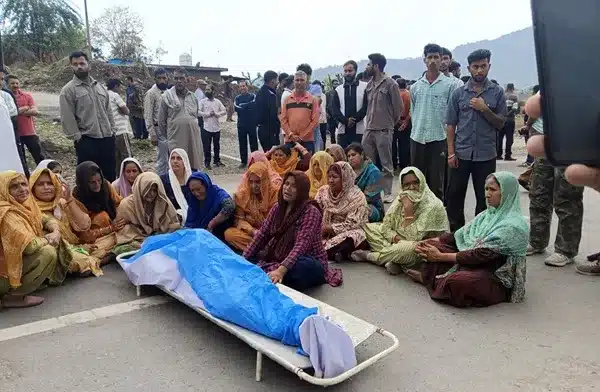
By daylight, the full scale of the destruction became clear. While Dr. Nabi’s house was completely reduced to rubble, the shockwaves had inflicted severe damage on at least six adjacent homes. The window panes of over twenty other houses and a nearby mosque were shattered.

Preliminary estimates by residents point to property losses running into crores of rupees. With night-time temperatures plunging, the immediate need for shelter for the displaced families has turned into a pressing humanitarian crisis.

Legal and Ethical Questions Over Proportionality

Human rights advocates and legal experts have sharply criticized the method of demolition, questioning its proportionality and legality.

“A ‘controlled demolition’ in a civilian area does not typically involve explosions that destroy half a neighborhood,” stated a retired civil engineer from Srinagar. “The use of such force, regardless of the allegations against one individual, raises serious ethical and legal concerns about the protection of non-combatants and their property.”

Many in the local community and international human rights circles view the practice of demolishing the family homes of accused individuals as a form of collective punishment, which is prohibited under international humanitarian law.

Condemnation from Across the Ceasefire Line

The incident has also drawn criticism from civil society groups in Pakistan-Administered Kashmir, highlighting the cross-regional concern over the tactic.

“Demolishing homes, displacing families, and destroying civilian property is unacceptable. Whether in Srinagar or Muzaffarabad—such measures cannot be justified under any modern democratic framework,” several activists stated in a joint comment to our publication.

They called on international human rights watchdogs to take notice of what they described as an escalating pattern of punitive actions in the region.

A Region on Edge

The controversial demolition follows a series of recent security incidents, including a major blast at a police station in Srinagar and intensified counter-insurgency operations in South Kashmir. These events have contributed to a heightened sense of tension and public anger, particularly over damage to civilian infrastructure.

While local community volunteers have begun organizing temporary shelter and aid for the affected families, long-term rehabilitation is expected to be a lengthy and costly process.

Calls for Accountability

In the aftermath, independent journalists, legal observers, and human rights defenders are demanding:

  • A transparent investigation into the scale of explosives used.

  • An official assessment of the structural damage to all affected civilian homes.

  • Adequate and immediate compensation for all displaced and affected families.

As the region navigates a volatile security landscape, incidents like the Pulwama demolition risk deepening the chasm of mistrust between the civilian population and the authorities, raising urgent questions about due process, proportionality, and the rules of engagement in conflict-affected areas.

This is a developing story and will be updated as more information becomes available.

After Blasts in Regional Capitals, Srinagar Shaken by Powerful Explosion Inside Police Station

0
First India, Then Pakistan — Now a Major Explosion Rocks Kashmir’s Capital Srinagar

Srinagar — Kashmir’s summer capital was shaken late Friday night after a powerful explosion tore through the Nowgam Police Station, killing nine people and injuring more than thirty others, most of them police personnel. The blast occurred inside the station during the examination of highly sensitive explosive material that had been seized in an earlier investigation.

Local officials confirmed that the incident was the result of an accidental detonation while forensic teams were handling the material. No armed group has claimed responsibility, and authorities have stated that there is no indication of any external attack.

A Sudden Blast That Shocked the City

According to officials present at the site, the explosion took place around 11:20 p.m. when a team from the Forensic Science Laboratory (FSL) and a local revenue officer were inspecting several bags of ammonium nitrate that had been transported to the police station for analysis.

Residents living around the station reported hearing a deafening blast that shattered windows and cracked walls in nearby homes. Many said they rushed into the streets in panic as the ground shook beneath their feet.

“We have never heard anything like this,” said one resident. “The whole neighborhood trembled.”

Sensitive Material Under Examination

The explosive material had been recovered earlier from different locations outside Kashmir during an investigation into an inter-state militant network. Large quantities of ammonium nitrate—an industrial chemical that can be used to manufacture improvised explosive devices (IEDs)—had been transported to the Nowgam Police Station for forensic testing.

Preliminary reports indicate that the substance was extremely unstable and may have required specialized storage and handling conditions that were not available at the location.

Officials familiar with the case said that even minor friction or pressure could have triggered a chain reaction.

Casualties and Emergency Response

Ambulances rushed the injured to multiple hospitals across Srinagar, including SMHS Hospital, Soura Institute of Medical Sciences, Bone & Joint Hospital, and Badami Bagh military hospital. Doctors have indicated that several victims are in critical condition, and the death toll may rise.

Six of the bodies recovered from the site were reported to be severely damaged, prompting authorities to conduct DNA sampling to confirm identification.

Police: ‘A Technical Accident, Not an Attack’

Senior police officials briefed media outlets late in the night, reiterating that the blast was accidental.

A senior officer, speaking on condition of anonymity because he was not authorised to speak publicly, said:

“This was a technical accident during forensic examination of seized material. There is no evidence of a planned attack, sabotage, or any militant involvement.”

However, independent observers say that the incident raises important questions about adherence to safety protocols and whether such hazardous materials should have been stored in a heavily populated civilian locality.

Massive Structural Damage

The force of the explosion destroyed a major section of the police station, including the record room and investigation wing. The blaze that followed engulfed files, evidence, and administrative documents.

Fire and emergency services battled the flames for hours as smoke rose over the area.

Nearby homes also suffered damage, with residents reporting cracks in roofs and walls.

Investigation Ordered

Authorities have ordered an independent inquiry into the circumstances leading to the blast. The investigation will examine:

  • Why highly explosive material was stored inside a civilian-area police station

  • Whether standard operating procedures for hazardous material were followed

  • Whether the forensic examination team had the necessary protective equipment and facilities

  • If lapses in supervision contributed to the accident

Human rights groups and independent safety experts say the incident highlights longstanding concerns about the handling of dangerous materials in conflict-affected regions.

Background of the Seized Material

The explosive material had been recovered during an investigation into an inter-state network accused of transporting industrial chemicals for illegal purposes. Several arrests had been made, including individuals with professional backgrounds.

Authorities had described the network as a “white-collar operation” involving educated individuals — a description that has sparked debate among analysts who question official narratives and the framing of such cases in the region.

A City on Edge

Friday night’s explosion has deepened anxiety in Srinagar, where years of political uncertainty and heavy militarization have already created an environment of high tension.

For many residents, the incident also reinforces long-standing concerns about security practices in urban Kashmir and the risks faced by civilians living near police or paramilitary installations.

Pulwama Home Demolition Sparks Outcry: Aga Ruhullah Condemns Collective Punishment in Indian-Administered Kashmir

0

 Srinagar, Indian-administered Kashmir: In a dramatic escalation that has sent shockwaves through Pulwama, the family home of Dr. Umar Nabi, accused in the Red Fort blast, was demolished by security forces earlier today. The demolition has drawn sharp criticism from Aga Ruhullah Mehdi, senior Kashmiri leader and Member of the Jammu & Kashmir National Conference, who described the action as “collective punishment carried out without evidence, judicial oversight, or legal justification.”

Issuing a statement on X, Mehdi emphasized that the destruction of homes in such operations does not deliver justice to victims of terrorism and instead amplifies the suffering of ordinary Kashmiri families.

“Destroying homes does not establish peace or justice. Only transparent investigations and holding the real perpetrators accountable can achieve justice,” he said.

According to multiple local sources, security forces entered Pulwama in the early hours and carried out the demolition using explosives. Photographs from the site show Dr. Umar Nabi’s father standing amid the rubble, surveying what remains of his family home. The demolition has reignited debates over pre-trial punitive measures against entire families, a practice increasingly criticized by local leaders and human rights observers.

Voices From the Ground

Residents in Pulwama expressed shock, grief, and anger at the demolition:

Aslam, 45, a neighbor, said:

“We heard a loud explosion in the morning. When we came out, the house was gone. Innocent families shouldn’t suffer for alleged crimes. This does not solve the problem of terrorism—it only deepens our pain.”

Shabana, 38, another local, added:

“It destroys more than homes—it destroys trust and hope in our communities. How can there be peace when families are punished for the actions of one individual?”

Abdul, 52, a shopkeeper living nearby, said:

“Even if someone is accused, entire families should not pay the price. This sends fear into every household here.”

These accounts underscore the human cost of demolitions, highlighting the emotional and psychological impact on families caught in the crossfire of security operations.

Aga Ruhullah Mehdi is a senior Kashmiri political leader and Member of the Jammu & Kashmir National Conference, recognized for advocating civil rights, due process, and accountability in Indian-administered Kashmir. Over the years, Mehdi has consistently criticized actions that target innocent families under security pretexts, emphasizing the need for evidence-based justice and transparent investigations.

His comments reflect the perspective of many Kashmiris who argue that such demolitions erode trust, inflame grievances, and deepen the sense of injustice in communities already struggling under decades of conflict.

Legal experts and human rights activists have questioned the legality and ethics of pre-trial demolitions.

Advocate Zahid, a local legal expert, told Azadi Times:

“There is no legal or ethical justification for demolishing a family home before any conviction. Such pre-trial punishment undermines justice and causes irreversible harm to innocent people.”

A Kashmiri human rights activist, requesting anonymity, added:

“Collective punishment erodes the social fabric of Kashmir. Families are being held accountable for crimes they may not have committed. Independent and transparent investigations are essential to uphold justice.”

International observers have repeatedly criticized such practices, highlighting the risk of perpetuating cycles of resentment and insecurity in the region.

Security Agencies’ Position

Security sources stated that the demolition was carried out due to “operational necessity,” claiming the house was allegedly used in terrorist activities. No official independent verification has been made public. The lack of transparency around such operations has intensified skepticism among local communities.

Local residents condemned the demolition as unjust and counterproductive:

Ashfaq Khande, a Pulwama shopkeeper, said:

“We are against terrorism, but punishment must target the guilty alone. Families should not suffer.”

Nasreen Jan, another resident, added:

“Every time a house is destroyed, a whole family’s life is shattered. Innocent lives shouldn’t be collateral damage.”

Aga Ruhullah Mehdi warned that illegal demolitions, mass detentions, and coercive interrogations risk pushing Kashmir “decades backward” rather than fostering sustainable peace.

“Justice must be grounded in evidence, not intimidation or collective punishment,” he emphasized.

Pre-trial demolitions in Kashmir have long been criticized by independent human rights organizations. Experts argue that such actions violate human rights norms, undermine the social and legal fabric of the region, and risk inflaming existing tensions. Analysts stress that punitive measures targeting families, rather than individuals responsible, deeply damage trust and perpetuate cycles of conflict.

The Pulwama demolition underscores the growing tension between security operations and the protection of Kashmiri civil rights. The destruction of Dr. Umar Nabi’s family home, before any conviction, raises urgent questions about legality, accountability, and the broader human impact of collective punishment.

Aga Ruhullah Mehdi and other Kashmiri leaders continue to call for transparent investigations and evidence-based justice, warning that continued disregard for due process risks destabilizing communities and deepening resentment across the region.

CIK Raids Across Kashmir After Delhi Blast: 13 Sites Searched, Doctors and Officials Detained

0
CIK Raids and Arrests Across Kashmir Raise Questions Over Delhi Blast Probe and Widening Crackdown

SRINAGAR: A fresh wave of raids and arrests across Jammu and Kashmir has raised questions about the scope and intent of ongoing counter-intelligence operations, after the Counter Intelligence Kashmir (CIK) detained multiple government employees — including doctors, teachers, and other civil servants — in connection with the recent Delhi Red Fort blast and alleged Jaish-e-Muhammad network.

According to credible reports from Kashmir Uzma and Kashmir News Corner (KNC), the CIK has launched simultaneous raids at 13 locations across the Kashmir Valley, targeting individuals accused of having links with the banned outfit Jaish-e-Muhammad.

Officials confirmed that during the latest raids in Pulwama, Koil, and Trich, three government employees — Prince Nabi Bhat (teacher, Education Department), Zia-ul-Haq (Finance Department), and Fida Hussain Sofi (Health Department) — were taken into custody. In a separate operation at Government Medical College (GMC) Anantnag, the CIK detained two doctors and two paramedical staff members as part of the expanding probe.

Authorities have not yet released official statements linking these individuals directly to the Red Fort explosion, which occurred earlier this week in the Indian capital. However, sources say the raids are being conducted based on “intelligence inputs” gathered by the Jammu and Kashmir CID suggesting possible inter-regional coordination.

“These operations are part of broader efforts to dismantle terror modules operating between Kashmir and other parts of the country,” an unnamed security source told KNC.

Yet, the widening crackdown has stirred unease among locals, who view the raids as part of a pattern of arbitrary actions often justified under national security narratives.

Speaking on condition of anonymity, a Srinagar-based political analyst told The Azadi Times:

“Whether it’s the Delhi blast or any other incident, these forces only need a pretext to storm into our homes. It’s tragic that our own local politicians have become their puppets, enabling this climate of fear and silence.”

The statement reflects growing discontent within Kashmiri civil society, where voices of dissent and demands for accountability are increasingly suppressed amid recurring raids and arrests.

While Indian security agencies frame these operations as “preventive counter-terror measures,” independent observers argue that the lack of transparency and the absence of clear charges fuel public distrust and deepen the alienation between civilians and state institutions.

The latest developments underscore the region’s tense balance between security imperatives and civil rights, with Kashmir once again at the center of competing narratives — between security enforcement and the demand for justice and due process.

As investigations continue, the human cost of these operations remains a growing concern in a region already burdened by decades of conflict and militarization.

Madina Hosts Second Edition of ‘Top Chef’ Following UNESCO Recognition

0

MADINA: The holy city of Madina has marked another milestone in its growing culinary reputation as it hosted the second edition of the ‘Madina Top Chef’ competition, following UNESCO’s announcement recognizing the city as part of its Creative Cities Network in the field of gastronomy.

According to the Saudi Press Agency (SPA), more than 100 male and female culinary experts are participating in the two-day competition, which aims to highlight local and international talent in the art of cooking. The event is being held at the College of Tourism and Hospitality Technology, running until January 13, and is designed to showcase the creativity, innovation, and professional skills of the participants.

Dr. Abdul Qadir Al-Saadi, Dean of the College of Tourism and Hospitality Technology, emphasized that the competition is part of a series of initiatives supported by the Technical and Vocational Training Corporation’s Trainees Fund. He noted that this year’s event holds “exceptional significance” following Madina’s inclusion in UNESCO’s global network for creative culinary cities.

“Through this competition, we aim to highlight Madina’s unique identity — a city that blends creativity, culture, and heritage in its culinary traditions,” said Al-Saadi.

The recognition by UNESCO not only cements Madina’s place as a center of cultural and gastronomic creativity but also reflects Saudi Arabia’s broader efforts to promote local talent and tourism under Vision 2030.

As the aroma of diverse dishes fills the air, the Madina Top Chef competition continues to serve as a platform for innovation, collaboration, and the celebration of a city where tradition meets modern creativity.

Heavy Snowfall in Kashmir: Remembering the Historic Winters and What Lies Ahead

0
When snow arrives on time, it brings a tourism boom — hotels in Gulmarg, Neelum Valley, and Astore fill up overnight, and local economies flourish.

For centuries, the word Kashmir has been synonymous with snow-covered peaks, frozen lakes, and postcard-perfect winters. Each year, as December approaches, people from both sides of the Line of Control — from Gulmarg to Neelum Valley eagerly await the heavy snowfall in Kashmir that transforms the valley into a white wonderland.

But this winter, the question many are asking is different: When will it snow again like before?

Current meteorological data from both Azad Kashmir and Indian-administered Jammu & Kashmir suggest relatively dry conditions through mid-November 2025.
Forecasts from weather services show clear skies and mild temperatures in major valleys including Muzaffarabad, Srinagar, and Pahalgam, with no immediate sign of heavy snow.

In contrast, high-altitude regions such as Gurez, Neelum, Shounter, Baboon Valley, and Gulmarg may begin receiving light to moderate snowfall later this month as Western Disturbances strengthen.

Experts note that “the first major spell of heavy snow in Kashmir is now shifting deeper into winter — often arriving in late December or even January.

When Kashmir Witnessed Its Heaviest Snowfall

Throughout history, Kashmir has seen multiple historic snowfalls that reshaped life, economy, and memory across the region.

The Winter of 1967 – Gulmarg Buried Under Eight Meters

In February 1967, Gulmarg recorded nearly 8.4 meters of snow — one of the heaviest in South Asia’s modern history. Roads were buried, electricity was cut for days, and traditional Kashmiri houses crumbled under the weight of the snow.

The 1996 Banihal Storm

In February 1996, a powerful Western Disturbance dumped around 4.5 meters of snow in the Pir Panjal region, paralyzing road connectivity between Srinagar and Jammu for weeks.

The 2017 Gurez Avalanche Tragedy

In January 2017, back-to-back snowstorms triggered massive avalanches in Gurez Valley, claiming the lives of 24 people — both civilians and Indian soldiers. It was one of the deadliest snow disasters in recent memory, reminding locals of the dangers heavy snow can bring.

The 2020 Neelum Valley Avalanche

Across the border in Pakistan-administered Kashmir, a wave of avalanches following heavy snowfall in January 2020 devastated parts of Neelum Valley. More than 70 people lost their lives, homes were destroyed, and entire villages were buried under snow.

The Great Snow of 1877–78

Historical chronicles speak of an extraordinary winter between October 1877 and May 1878, when continuous snowfall for more than ten days crippled trade and movement in the valley — still remembered by elders as “the winter when the sky fell to the earth.”

The Climate Question

While heavy snowfall remains a romantic and economic symbol of Kashmir’s identity, scientists warn that climate change is reshaping its rhythm.

Over the last two decades, snowfall patterns have grown erratic — late starts, shorter durations, and less accumulation in the lower valleys. The result:

  • Ski resorts like Gulmarg open later and close sooner.

  • Apple orchards receive less “winter chill” required for quality yield.

  • Glacial melt and water-supply timings are shifting.

Environmentalists say this transformation should concern everyone, as Kashmir’s snowmelt sustains the rivers of both Pakistan and northern India.

Economic and Human Impact of Heavy Snowfall

Heavy snowfall in Kashmir is both a blessing and a challenge.

When snow arrives on time, it brings a tourism boom — hotels in Gulmarg, Neelum Valley, and Astore fill up overnight, and local economies flourish. However, when snow is delayed or lighter than usual, tourism-dependent businesses face severe financial losses, leading to a temporary economic slump.

For mountain communities in regions like Leepa, Gurez, and Kel, heavy snowfall often results in long periods of isolation. Roads remain blocked for weeks, cutting off essential supplies and emergency access. This isolation not only disrupts daily life but also highlights the urgent need for better winter infrastructure.

The weight of snow also puts immense pressure on fragile infrastructure. Avalanches, roof collapses, and power outages are common during intense snow spells, especially in unplanned settlements where buildings lack proper structural safety.

Amid these challenges, snowfall remains deeply tied to Kashmiri culture and emotions. Snow festivals, winter weddings, and poetry often celebrate what locals call “the white silence” — a symbol of both beauty and resilience that defines life in the valley.

Authorities across Azad Kashmir and Indian-administered territories are now investing in better early-warning systems and road-clearing equipment.
Residents in upper valleys are advised to stock food, medicine, and fuel before the deep winter months begin.

Climate experts urge communities to view heavy snowfall as a natural cycle demanding adaptation, not fear — by building stronger homes, preserving forest cover, and monitoring glacial health.

What Lies Ahead

The coming months will decide whether this winter joins Kashmir’s long list of historic snowfalls or marks yet another dry spell in a changing climate.
For now, the plains remain calm, the mountains wait, and Kashmir’s people — farmers, hoteliers, shepherds, and storytellers — look skyward for that first, timeless flake.

“When the snow finally falls,” says an old man in Neelum Valley, “it brings not just cold, but memory. It reminds us who we are.”

Winter’s Magic: 10 Unforgettable Destinations in Kashmir During Snow Season

0
Top Winter Destinations in Kashmir: A Complete Guide for Travelers

MUZAFFARABAD — As the first winter winds sweep down from the Himalayan peaks, a profound transformation begins across the mountains and valleys of Kashmir. The summer’s emerald green landscapes gradually surrender to a blanket of pristine white, creating what many describe as heaven on earth.

For the discerning traveler, winter unveils Kashmir’s most authentic face – where the silence of snow-covered pines is broken only by the cheerful greetings of local residents, and where the warmth of Kashmiri hospitality shines brightest against the cold mountain backdrop.

This comprehensive guide, compiled through months of ground reporting across the region, brings you the 10 essential winter experiences in Kashmir for 2024.

1. Gulmarg: The Crown Jewel of Winter Sports

Location: Indian-administered Jammu and Kashmir


No winter journey through Kashmir is truly complete without experiencing Gulmarg, internationally celebrated as South Asia’s premier winter sports destination, where pristine snow-covered landscapes, world-class ski slopes, and panoramic views of the majestic Himalayas offer travelers an unforgettable combination of adventure, natural beauty, and serene winter tranquility.

What Awaits You:

  • The Gulmarg Gondola, operating in two phases, takes visitors from 2,650m to 3,980m, offering breathtaking panoramic views of snow-capped peaks

  • Professional skiing slopes that host international competitions

  • Opportunities for snowboarding, snow tubing, and snowmobile rides

Ground Reality: “The queues for the gondola can be long during peak season,” advises Ahmed Khan, a local ski instructor with 15 years of experience. “Early mornings or weekdays offer better access. For intermediate skiers, the Kongdori phase provides perfect slopes.”

Essential Tips:

  • Book gondola tickets online in advance

  • Hire equipment from certified vendors only

  • Acclimatize properly to avoid altitude sickness

2. Pahalgam: The Peaceful Valley Retreat

Location: Indian-administered Jammu and Kashmir

Known as the ‘Valley of Shepherds,’ Pahalgam provides travelers with a serene and tranquil winter retreat, offering a stark contrast to Gulmarg’s adrenaline-filled slopes. Nestled along the banks of the snow-kissed Lidder River and surrounded by dense pine forests and snow-covered meadows, Pahalgam invites visitors to enjoy leisurely walks, horse riding, and immersive photography opportunities, making it a perfect destination for those seeking peace, natural beauty, and an authentic Kashmiri winter experience.

Winter Highlights:

  • The Lidder River partially freezing, creating spectacular ice formations

  • Snow-covered pine forests perfect for peaceful walks

  • Traditional wooden houses with smoke curling from chimneys

Local Experience: “Winter here is about serenity,” shares Mohammed Rafiq, whose family has run a guesthouse here for three generations. “The tourists who come in winter are different – they want to experience the real Kashmir, not just take photos.”

3. Sonamarg: The Golden Meadow Under Snow

Location: Indian-administered Jammu and Kashmir

True to its name, the ‘Meadow of Gold,’ Sonamarg’s vast expanses are transformed into a dazzling white wonderland during winter, with snow-blanketed valleys, frozen streams, and majestic Himalayan peaks creating a breathtaking backdrop. This serene and pristine landscape offers travelers not only spectacular photography opportunities but also a peaceful retreat for snow trekking, camping, and immersive encounters with Kashmir’s untouched natural beauty.

Must-Experience Activities:

  • Snow trekking to Thajiwas Glacier

  • Ice climbing for adventure enthusiasts

  • Photography sessions at dawn when the light is magical

Traveler’s Note: The road to Sonamarg often closes due to heavy snowfall, making advance planning essential.

4. Neelum Valley: Azad Kashmir’s Winter Paradise

Location: Pakistan-administered Azad Kashmir

For travelers from Pakistan, the Neelum Valley presents a convenient yet breathtaking winter escape, allowing visitors to experience snow-covered landscapes, frozen rivers, and picturesque high-altitude villages without the need to cross international borders. With its serene meadows, traditional wooden homes, and panoramic views of the surrounding Himalayas, Neelum Valley provides an authentic Kashmiri winter experience that combines natural beauty, cultural immersion, and peaceful tranquility.

Key Destinations:

  • Kel: Serving as the gateway to upper Neelum Valley

  • Arang Kel: Requiring a scenic hike through snow-laden forests

  • Sharda: Known for its ancient university ruins and spiritual significance

Local Insight: “The road conditions can change rapidly,” warns Asif Mahmood, a driver with 20 years of experience on the Neelum Valley route. “Always travel with experienced local drivers who understand winter mountain driving.”

5. Muzaffarabad: The Capital’s Winter Charm

Location: Pakistan-administered Azad Kashmir

The capital city of Azad Kashmir, Muzaffarabad, offers visitors a unique blend of urban convenience and stunning natural beauty during the winter months. Surrounded by snow-dusted hills and overlooking the partially frozen Neelum and Jhelum Rivers, the city provides travelers with comfortable accommodations, local markets, and traditional Kashmiri cuisine, all set against the backdrop of a serene winter landscape that showcases the region’s charm and cultural richness.

Winter Attractions:

  • The confluence of Neelum and Jhelum rivers surrounded by snow-dusted mountains

  • Red Fort Muzaffarabad standing majestic against winter skies

  • Local markets offering warm Kashmiri shawls and handicrafts

6. Leepa Valley: The Hidden Treasure

Location: Pakistan-administered Azad Kashmir

Often referred to as Kashmir’s best-kept secret, Leepa Valley remains largely inaccessible during the peak winter months due to heavy snowfall, making early or late winter visits essential for travelers. Nestled amidst towering snow-covered peaks, with terraced fields and traditional wooden villages, Leepa Valley offers an authentic and tranquil Kashmiri experience, where visitors can immerse themselves in local culture, capture breathtaking photography, and enjoy the serene beauty of untouched winter landscapes.

Unique Features:

  • Traditional wooden Kashmiri houses under thick snow blankets

  • Terraced fields frozen in time

  • Complete escape from tourist crowds

7. Rawalakot: The Mini-Kashmir

Location: Pakistan-administered Azad Kashmir

Known for its pleasant climate during the warmer months, Rawalakot in Pakistan-administered Kashmir transforms into a captivating winter wonderland as temperatures drop and snow blankets its hills and valleys. Often overlooked by mainstream tourists, this charming town offers panoramic views, peaceful snow-covered landscapes, and an authentic Kashmiri winter experience that rivals more famous destinations, making it ideal for travelers seeking tranquility, scenic beauty, and cultural immersion.

Winter Activities:

  • Banjosa Lake offering frozen landscape views

  • Snow photography in pine forests

  • Local cuisine at hillside restaurants

8. Baboon Valley: The Adventurer’s Choice

Location: Pakistan-administered Azad Kashmir

For travelers seeking off-the-beaten-path adventures, Bangus Valley in Pakistan-administered Kashmir presents a raw and untouched winter landscape, where expansive snowfields, dense forests, and remote villages create a serene and immersive experience. Far from crowded tourist hubs, the valley offers opportunities for trekking, camping, and photography, allowing visitors to connect with nature and experience the authentic, unspoiled beauty of Kashmir in winter.

Adventure Opportunities:

  • Backcountry skiing

  • Winter camping (for experienced campers only)

  • Wildlife spotting in snow conditions

9. Keran Sector: The Borderland Experience

Location: Pakistan-administered Azad Kashmir

This unique destination offers not just natural beauty but a glimpse into the region’s geopolitical reality.

Distinctive Features:

  • Views across the Line of Control

  • Interaction with local communities living in border areas

  • Unique photography opportunities

10. Shounter Valley: The Ultimate Wilderness

Location: Pakistan-administered Azad Kashmir

For the truly adventurous, Shounter Valley in Pakistan-administered Kashmir provides one of the most remote and pristine winter experiences in the entire region. Surrounded by towering snow-clad peaks, frozen streams, and untouched forests, this secluded valley allows travelers to immerse themselves in nature, enjoy off-the-grid trekking, and witness the raw, unspoiled beauty of Kashmir during winter—far from the crowds of more popular tourist destinations.

Preparation Required:

  • Requires 4×4 vehicles with experienced drivers

  • Basic accommodation options

  • Essential to hire local guides

Essential Winter Travel Guide 2024

When to Visit

  • December to February: Peak winter season

  • January: Heaviest snowfall period

  • Early March: Ideal for those wanting snow with slightly warmer temperatures

What to Pack

  • Multiple thermal layers

  • Waterproof snow boots with grip

  • Hand and foot warmers

  • Quality sunglasses for snow glare

  • Portable power banks (electricity can be unreliable)

Travel Protocols

For Indian-administered Kashmir:

  • Special permits required for foreign nationals

  • Domestic tourists need inner line permits for certain areas

  • Winter-specific travel insurance recommended

For Pakistan-administered Kashmir:

  • No permit required for Pakistani nationals

  • Foreign nationals need NOC from Ministry of Interior

  • Restricted areas require additional permissions

Local Wisdom

“Don’t fight the cold, embrace it,” suggests Sameena Begum, who has hosted winter tourists in Muzaffarabad for decades. “The secret to enjoying Kashmir in winter is to dress properly, keep moving, and accept that some plans might change due to weather. The most beautiful moments often come from these unplanned experiences.”

Safety First

  • Always check weather forecasts before traveling

  • Inform accommodation providers of your travel plans

  • Carry emergency contact numbers

  • Understand symptoms of hypothermia and altitude sickness

The Deeper Journey

Beyond the stunning landscapes, winter in Kashmir offers a chance to connect with the region’s soul. The season forces a slower pace of life, encouraging deeper interactions with local communities and a more profound appreciation of the natural world.

As the snow isolates villages and reduces modern distractions, visitors often find themselves engaging in the simple pleasures – sharing kahwa (traditional Kashmiri tea) with hosts, listening to ancient stories, and understanding the resilience required to thrive in this beautiful but challenging environment.

This report was compiled through extensive travel across Kashmir regions. Additional reporting by The Azadi Times correspondents in Srinagar and Muzaffarabad. Travel advisories current as of November 2025.

Winter’s Return: Heavy Snowfall Blankets Kashmir’s High Peaks, Drawing Tourists to Mountain Villages

0
Local children enjoy a game of cricket amid recent heavy snowfall in Kashmir, blending winter fun with their favorite sport.

NEELUM VALLEY — The high-altitude regions of Kashmir have awakened to their winter glory in recent days, as heavy snowfall has transformed mountain villages and valleys into pristine white landscapes. From the remote Leepa Valley to the towering peaks of Kupwara and Karnah, the season’s most significant snowfall has brought both relief and renewed economic activity to communities that had waited months for this transformation.

The change is most dramatic in villages like Leepa, where wooden houses now stand under thick blankets of snow, and pine trees bow under the weight of fresh powder. For local residents, the snowfall represents more than just scenic beauty—it marks the return of normal weather patterns after an unusually dry period.

“It has been a long, anxious wait,” said Mohammad Amin, a tea shop owner in Neelum Valley. “The mountains had become brown and barren. This snowfall has brought life back to our valley—both for nature and for our livelihoods.”

Tourist Influx Brings Economic Relief

The timing of the snowfall has proven fortuitous for Kashmir’s tourism sector, which depends heavily on winter visitors. In recent days, convoys of vehicles have been seen snaking up mountain roads toward snow-covered destinations, with tourists from urban centers across Pakistan eager to experience Kashmir’s legendary winter beauty.

“The moment we saw pictures of the snowfall on social media, we booked our tickets,” said Sameera Khan, a university student from Lahore who was experiencing snow for the first time. “To see these mountains covered in white, to feel the crunch of snow underfoot—it’s magical.”

Local businesses report a significant uptick in activity. Guest house owners in areas like Kel and Keran say occupancy rates have jumped from 20% to over 80% in the past week. Snow gear rentals, local eateries, and transport services are all experiencing renewed demand.

“This snowfall came just in time,” said Gulzar Ahmed, who operates a small guesthouse in Kupwara. “January and February were difficult months with few visitors. Now we have families, student groups, and foreign tourists all arriving to experience the snow.”

Environmental Significance and Concerns

Beyond tourism, the snowfall carries crucial environmental importance for the region. Environmental scientists note that winter precipitation in Kashmir’s high mountains serves as a natural water reservoir for the entire region.

“These snowpacks are essentially frozen reservoirs,” explained Dr. Faisal Abbas, an environmental researcher at the University of Azad Jammu and Kashmir. “As they melt gradually through spring and summer, they feed our rivers, sustain our agriculture, and recharge our groundwater. A good snow season means better water security for the coming year.”

However, climate patterns have become increasingly unpredictable in recent years. Data from the Kashmir Meteorological Department shows a 15% decrease in winter precipitation over the past decade compared to historical averages, raising concerns among environmental experts.

“We’re seeing later snowfall and earlier melting cycles,” Dr. Abbas noted. “While this current snowfall is encouraging, the long-term trend remains concerning for the region’s hydrological cycle.”

Safety Measures and Infrastructure Challenges

The heavy snowfall has also presented challenges for local authorities. Several key mountain passes have experienced temporary closures due to snow accumulation, and road clearance operations are underway across affected districts.

“The priority is ensuring safe travel for both tourists and local residents,” said Deputy Commissioner Aamir Ali, who oversees disaster management in the region. “We have snow clearance teams working round the clock on major routes, and we’re coordinating with local communities to address any emergencies.”

Authorities have issued advisories for travelers, recommending four-wheel drive vehicles, snow chains, and emergency supplies when venturing into high-altitude areas. Several popular tourist spots have established temporary assistance centers with hot drinks and first aid facilities.

Cultural Resilience in Mountain Communities

For indigenous communities in these high valleys, the snowfall represents both challenge and opportunity. While transportation becomes more difficult, the snow season has always been an integral part of mountain life in Kashmir.

“In our tradition, heavy snowfall is seen as a blessing,” said elderly resident Ghulam Mohammad in the village of Karnah. “Our grandparents taught us that a good snow season means healthy crops, full springs, and prosperous times ahead. These traditions have guided our relationship with these mountains for generations.”

Local festivals and snow-related activities are being organized in several villages, offering tourists glimpses into traditional Kashmiri winter culture alongside more conventional snow sports.

The Road Ahead

As climate patterns continue to shift, the future of Kashmir’s winter seasons remains uncertain. But for now, the sight of children building snowmen, tourists sledding down gentle slopes, and shopkeepers welcoming visitors has brought a sense of normalcy and hope to these mountain communities.

The snow continues to fall intermittently across the higher peaks, with weather forecasts predicting additional precipitation in the coming days. For hotel owners, tour guides, and local artisans, each new snowfall represents not just frozen precipitation, but the lifeblood of their communities—and a reminder of the enduring appeal of Kashmir’s winter magic.

Reporting contributed by our correspondents in Muzaffarabad and Srinagar. Weather data provided by the Kashmir Meteorological Department.

Pakistani Engineer Kanwal Cheema Goes Viral for Resemblance to Bollywood Star Aishwarya Rai

0
Educated in Australia, Cheema is also recognized as the first female engineer in several regions of the Middle East and Africa within her field.

Kanwal Cheema, a Pakistani woman often compared to Bollywood superstar Aishwarya Rai, has recently become the center of attention on social media. Videos and posts featuring Cheema have gone viral, with viewers noting her striking resemblance to the former Miss Universe and popular actress.

But Kanwal Cheema is far more than her social media persona. She is the founder of My Impact Meter, an online platform leveraging technology to ensure transparent, reliable, and equitable charitable donations across the Middle East and Africa.

A Trailblazer in Technology

Educated in Australia, Cheema is also recognized as the first female engineer in several regions of the Middle East and Africa within her field. She has held the position of sole female engineer and director at a computer information systems company, breaking barriers in a male-dominated industry.

Despite her professional achievements, social media attention has largely focused on her appearance. In a recent interview, a reporter asked Cheema how it felt to be compared to Aishwarya Rai. She acknowledged the comparison but expressed discomfort with being defined by it.

“I am often compared to Aishwarya Rai, but I do not appreciate being reduced to this resemblance,” she said.

Why the Resemblance Sparks Attention

Cheema shares certain physical traits with the Bollywood icon, including fair skin and distinctive eye shape, often accentuated with dark eyeliner in a style similar to Rai’s signature look. Social media users have been quick to highlight these similarities, propelling Cheema’s videos to viral status.

While comparisons to a celebrity have captured public attention, Cheema’s work with My Impact Meter reflects her commitment to social change. The platform utilizes technology to make charitable donations transparent, trustworthy, and equitable, marking a significant contribution to philanthropy in regions where accountability and access have been longstanding challenges.

Cheema’s story serves as a reminder that recognition in the digital age can be double-edged: viral fame may focus on appearance, but real impact lies in innovation, leadership, and tangible contributions to society.

How to Earn Money Online for Students: A Realistic Guide to Freelancing, Tutoring & More | The Azadi Times

0

SRINAGAR / LONDON / MANILA — For a generation growing up online, the internet is no longer just a source of entertainment and information; it is a bustling marketplace. As tuition fees rise and living costs soar, students from Islamabad to Indiana are turning to the digital economy to supplement their income, gain professional experience, and achieve a measure of financial independence.

The allure is undeniable: flexible online jobs for students that fit around lecture schedules, the potential to earn in stronger currencies, and the chance to build a portfolio before graduation. But this new frontier is also fraught with questions: Which opportunities are legitimate? How can one balance work and studies? And is it truly possible to build a sustainable income?

This investigative guide cuts through the hype, offering a clear-eyed view of the practical ways for students to make money from home, detailing the pros, cons, and pathways for each.

Part 1: The Actionable Methods – Turning Time into Income

1. Freelancing: Selling Your Skills

The global freelance market is a vast arena for students with marketable skills. Platforms like Upwork, Fiverr, and PeoplePerHour connect talent with clients worldwide.

  • In-Demand Skills: Graphic design (Canva, Adobe Suite), writing and editing, video editing, social media management, web development (HTML, CSS, JavaScript), and data entry.

  • Realistic Example: Aisha, a computer science student in Lahore, takes on small website debugging projects on Upwork. She charges $15-$20 per hour, working 10 hours a week around her classes, earning a significant supplementary income.

  • Pros: Flexible hours, high earning potential, builds a professional portfolio.

  • Cons: High competition, irregular income initially, requires self-discipline and time management.

  • How to Start: Identify one skill you excel at. Create a compelling profile on a platform. Start with smaller, lower-paying jobs to build reviews and credibility.

2. Online Tutoring: Sharing Knowledge

If you excel in a particular subject, you can monetize that knowledge by teaching others. This is one of the most direct online jobs for students.

  • Platforms: For international students: Tutor.com, Chegg Tutors. For regional subjects: local platforms or independent marketing via social media.

  • Subjects in Demand: STEM subjects (Math, Physics, Chemistry), English language, programming, and even exam preparation (SAT, IELTS).

  • Pros: Reinforces your own learning, fixed timings can be easier to manage, highly rewarding.

  • Cons: Requires deep subject knowledge and patience, may involve working in different time zones.

  • How to Start: List the subjects you can teach at a high school or university level. Create simple tutorial videos to showcase your teaching style and share them on YouTube or social media.

3. Content Creation: Building an Audience

For the creative student, platforms like YouTube, TikTok, and blogs offer a path to turn a passion into revenue through ads, sponsorships, and affiliate marketing.

  • Popular Niches: Tech reviews, study-with-me vlogs, book summaries, coding tutorials, and personal finance tips for students.

  • Realistic Expectation: This is a long-term game. It can take 6-12 months of consistent posting before significant revenue starts. A YouTube channel with 10,000 subscribers might earn $100-$500 per month from ads, depending on the audience’s location.

  • Pros: Creative freedom, potential for viral growth and high income, builds a personal brand.

  • Cons: Slow to generate income, requires consistency, success is never guaranteed.

  • How to Start: Choose a niche you are passionate about. Create a content calendar and stick to it. Focus on providing value before thinking about monetization.

4. Affiliate Marketing: Earning Through Recommendation

Affiliate marketing for students is a form of passive income where you promote a company’s products and earn a commission on every sale made through your unique referral link.

  • How it Works: You write a blog post reviewing a textbook or create a TikTok video about your favorite tech gadget. You include your affiliate link. If someone buys through your link, you earn a percentage.

  • Platforms: Amazon Associates is the most popular, but many companies (like Hostinger for web hosting, or Coursera for courses) have their own affiliate programs.

  • Pros: Can generate income 24/7, low startup cost.

  • Cons: Requires trust and a platform (blog, social media) to promote links; commissions can be low.

  • How to Start: Join a reputable affiliate network. Integrate genuine product recommendations into your existing content.

5. Micro-Tasks and Surveys: Small Efforts, Small Rewards

For students with limited time, micro-task platforms offer small payments for completing simple tasks.

  • Platforms: Swagbucks, Amazon Mechanical Turk, Respondent (for higher-paying surveys and studies).

  • Types of Tasks: Filling out surveys, data categorization, transcribing short audio clips, testing websites.

  • Pros: Extremely flexible, no specific skills required, immediate payment for some tasks.

  • Cons: Very low pay, can be tedious, not a scalable income source.

  • How to Start: Sign up for 2-3 reputable platforms. Use spare time (like during commutes) to complete tasks. Treat it as pocket money, not a primary income.

6. Selling Online: From Old Textbooks to Handmade Crafts

Leverage e-commerce platforms to sell physical or digital goods.

  • What to Sell:

    • Physical: Old textbooks, handmade crafts (Etsy), vintage clothing (Depop).

    • Digital: Notion templates, custom resume designs, photography presets, and—most relevant—your own study notes on platforms like Stuvia or Studocu.

  • Pros: Can be very profitable, especially for digital goods (high margin, no inventory).

  • Cons: For physical goods, requires handling shipping and customer service.

  • How to Start: Take high-quality notes for your next exam. Format them professionally and upload them to a notes-selling platform. Promote them to your junior classmates.

Part 2: Essential Tips for Success

  1. Start with One Thing: Avoid spreading yourself too thin. Master one method before adding another.

  2. Time Management is Non-Negotiable: Use a planner. Schedule your work sessions as you would your lectures. Your primary job is still being a student.

  3. Build a Digital Portfolio: Even if you’re just starting, create a simple website or a PDF showcasing your best work (e.g., writing samples, design projects).

  4. Prioritize Learning Over Earning: The skills you build now—client communication, project management, digital literacy—are often more valuable long-term than the immediate cash.

  5. Open a Separate Bank Account: Keep your finances organized from the start. This is crucial for tracking income and managing taxes, if applicable.

Part 3: A Word of Caution: Avoiding the Pitfalls

The online world, while full of opportunity, is also rife with scams. As you explore ways for students to make money from home, be vigilant.

  • The “No Experience, High Pay” Trap: If it sounds too good to be true, it is. Legitimate data entry jobs don’t pay $50/hour.

  • The “Pay-to-Start” Scam: Never pay money to get a job. Legitimate clients and platforms will not ask for an “activation fee.”

  • Protect Your Information: Do not share bank details or send copies of your ID on unsecured platforms.

  • Understand the Platform’s Fees: Freelance sites and e-commerce platforms take a commission. Factor this into your pricing.

Conclusion: Empowerment in a Connected World

The ability to earn money online for students represents a significant shift in economic empowerment. It demystifies the world of work, provides a safety net, and allows students to graduate not just with a degree, but with a proven track record.

The path requires diligence, resilience, and smart time management. It is not a get-rich-quick scheme, but a practical, skill-based economy. For the savvy student willing to invest the effort, the digital world is no longer just a library or a social hub—it is a launchpad.