







MUZAFFARABAD — What began as a simple question at the first ever Overseas Kashmir Conference in Muzaffarabad has quickly rippled across social media and political circles, spotlighting long-standing disputes over customs duty, resource royalties, and the fiscal relationship between Azad Jammu and Kashmir (AJK) and the federal government of Pakistan.
In a session meant to encourage diaspora investment and economic engagement, an overseas Kashmiri entrepreneur pointedly asked why AJK residents face customs duties on imported vehicles — while similar exemptions once existed in other regions such as the former Malakand Division. He then asked why AJK, which generates significant wealth from hydropower and remittances, does not enjoy the sort of fiscal privileges seen in other areas. The response came from Pakistan’s Chief Secretary — not AJK’s Prime Minister — prompting fresh scrutiny about authority, autonomy, and accountability.
Customs Duties, Exemptions, and AJK’s Status
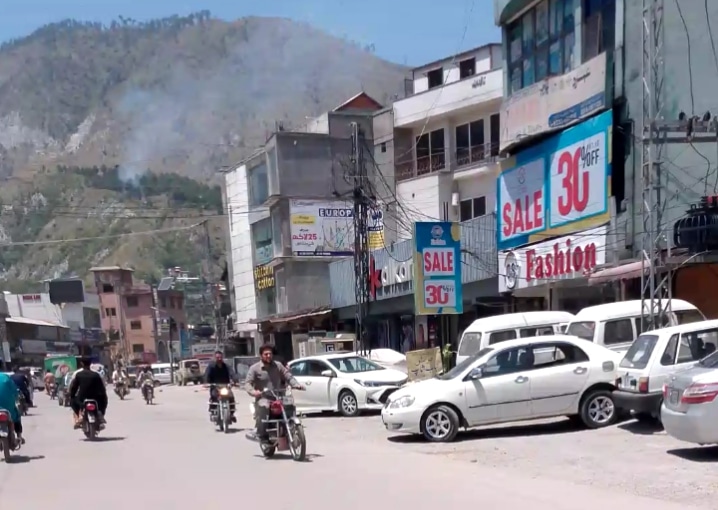
Pakistan no longer offers widespread customs exemptions anywhere, including the former non-customs zones of the Malakand Division and neighboring regions. Those concessions were removed following constitutional reforms and the merger of formerly separate administrations. The Chief Secretary explained that because these exemptions no longer exist nationwide, AJK too cannot unilaterally extend them. Supporters of the businessman’s position argue this overlooks AJK’s unique status and economic contributions.
Help us expose the truth
The Azadi Times is funded by readers like you. No corporate sponsors. No government influence. Just fearless reporting.
The core grievance is simple: Overseas Kashmiris feel that, unlike other regions with special customs provisions, AJK’s residents — both home and abroad — face full customs levies without comparable fiscal benefits.
Variable Grants vs. Royalties: Understanding the Financial Record
At the heart of the debate lies how AJK is funded. Unlike Pakistan’s provinces, which receive constitutional revenue shares under the National Finance Commission (NFC) Award, AJK does not formally participate in that formula. Instead, it receives budgetary allocations and variable grants in lieu of federal taxes, which include customs and income tax components. These grants form a large portion of AJK’s annual budget — often exceeding Rs. 100 billion — highlighting the territory’s dependence on federal transfers.

Critics argue that the “grant” narrative obscures an unequal exchange. They point out that AJK is home to major hydropower projects — such as the Mangla Dam and Neelum–Jhelum Hydropower Plant — and contributes significantly to Pakistan’s electricity grid and revenue streams. Despite this, AJK does not receive royalty payments on par with what provinces like Khyber Pakhtunkhwa receive from similar projects, a point of contention repeatedly raised by commentators and public figures. Historically, this lack of royalty has been linked to AJK’s different constitutional status.
“Why Treat Us Like Aid Recipients?”
Several social media respondents reframed the debate in stronger terms, asking: If AJK’s contributions are so significant, why is its fiscal treatment that of a dependent region rather than an economic partner? Many echoed a growing sentiment that the prevailing narrative — that “Pakistan feeds AJK from its own resources” — is misleading and undermines justice and transparency. Instead, they argue the question should focus on how revenue from natural resources, taxation, and overseas remittances is accounted for and shared.
One commentator pointedly questioned why hydropower income and foreign remittances — both major revenue generators — are not equitably reflected in AJK’s budgetary entitlements. Another criticized what they see as an institutional reluctance to fully explain resource allocation, describing it as “a deliberate omission from public discourse.”

Authority, Accountability, and Public Trust
The optics of the Chief Secretary answering a politically charged question intended for AJK’s Prime Minister has itself become symbolic. For many observers, it underscored perceptions about where real authority and fiscal decision-making power resides. Whether intentional or not, this moment sparked debate about accountability at the highest levels of governance within AJK.
Some analysts argue this points to structural issues in how AJK’s government interacts with federal authorities. Others see it as a politicized incident that unintentionally amplified long-held public frustrations about transparency, resource rights, and economic dignity.
A Broader Narrative: Economics Meets Identity
This debate is not occurring in isolation. It intersects with broader questions about AJK’s political identity, economic autonomy, and public expectations of fairness. The Overseas Kashmir Conference aimed to build confidence, attract investment, and signal economic modernization. Instead, it became the stage for a critical conversation that may shape future fiscal discourse and demands for structural reform.
Whether policymakers respond with detailed transparency or maintain existing narratives, this moment reflects a growing public appetite for accountability — and for narratives that reflect both economic data and lived realities.
The conversation ignited in Muzaffarabad is more than an isolated policy argument. It represents a deeper national and regional dialogue about equity, representation, and the fiscal future of Azad Jammu and Kashmir. As Kashmiris both at home and abroad engage with these questions, the implications could resonate far beyond a single conference hall.


