Wednesday, March 25, 2026
12.3 C
Srinagar
Home Blog Page 35

Azad Kashmir in Pakistan: History, Politics, and the Struggle for Rights

0

A search for “Azad Kashmir in Pakistan” often leads to a maze of political claims and historical complexity. For the millions living there, it’s simply home—a place of breathtaking beauty intertwined with daily challenges and a persistent question of identity.

Azad Jammu and Kashmir (AJK) is not a province of Pakistan but a self-governing administrative territory. Its very name, meaning “Free Kashmir,” is a declaration in a seven-decade-old dispute with India. Yet, for its residents, “freedom” is a nuanced concept, defined as much by its special relationship with Islamabad as by the limitations of that arrangement.

This is a journey into the heart of a region caught between a conflict of nations and the aspirations of its people.

A Unique and Contested Political Identity

Azad Kashmir’s origins are rooted in the partition of 1947. As the princely state of Jammu and Kashmir controversial accession to India under controversial circumstances, a rebellion in the western part led to the formation of a government-in-exile, which Pakistan administers as AJK.

Today, the region has its own elected President, Prime Minister, and a Legislative Assembly that passes laws on local matters. It has a distinct flag and a national anthem. However, this veneer of self-rule is thin. Critical portfolios like defense, foreign policy, currency, and communications are controlled directly by the Pakistani federal government in Islamabad.

This hybrid model creates a fundamental tension. Pakistan views AJK as a provisional entity, its final status to be determined by a future UN-sponsored plebiscite. For many Kashmiris, however, this “provisional” state has become permanent, fueling debates about the authenticity of their self-governance.

The Tightrope of Governance and Dissent

The political space in Azad Kashmir is carefully managed. Mainstream politics is dominated by parties mirroring those in Pakistan, but any discourse advocating for integration with India or complete independence is strictly criminalized.

This has led critics and local activists to accuse Islamabad of engineering a political process that offers a semblance of democracy without its substantive power. The real struggle for rights, they argue, is not just against India but also for greater autonomy from Pakistan.

This frustration often boils over. Recently, movements like the Joint Awami Action Committee have gained traction, organizing powerful protests and conferences demanding the “Right to Ownership and Self-Governance.” Their core grievances are economic: control over local resources, land rights, and an end to what they see as exploitative practices.

Daily Life: Scenery and Struggle

Behind the political curtain are everyday realities. While the region’s natural beauty drives tourism, residents face significant hurdles:

  • Economic Discontent: Limited job opportunities force a large number of young people to seek work in Pakistan or the Gulf states. There is a pervasive sense that the region’s resources, particularly its vast hydropower potential, benefit mainland Pakistan more than local communities, who often face power shortages themselves.

  • Infrastructure and Services: Despite promises, development in rural areas lags. Many complain that healthcare and education facilities do not meet the standards found in major Pakistani cities.

  • A Controlled Narrative: Freedom of expression is a contested space. While some media operates, journalists and activists reporting on sensitive issues—particularly Pakistan’s security apparatus or calls for greater autonomy—report facing pressure, intimidation, and legal repercussions. Independent outlets like The Azadi Times work to document these challenges, often operating under constrained circumstances.

Why Azad Kashmir Matters on the World Stage

The phrase “Azad Kashmir in Pakistan” is a geopolitical flashpoint. The region is the Pakistani-administered part of one of the world’s most intractable conflicts, a dispute between two nuclear-armed neighbours, India and Pakistan, with China also a party in the broader Kashmir region.

For the international community, it represents a persistent threat to regional stability. For observers of conflict and self-determination, it is a critical case study in how territories are managed amidst unresolved disputes, and how populations navigate life within those liminal spaces.

Conclusion

Azad Kashmir is a land of paradoxes. It is “free” yet constrained, self-governing yet closely managed, rich in resources yet struggling with development. The people here are not merely subjects of a geopolitical dispute; they are active agents in their own story, continuously negotiating their rights and their future.

Understanding Azad Kashmir requires looking beyond the headlines of the Kashmir conflict and into the nuanced history, politics, and everyday struggles of its people—a community seeking dignity, agency, and a true definition of the freedom embedded in its name.

Kohala Road Blocked in Protest Over Police Station Suspensions in Liquor Case

0

Kohala, Muzaffarabad, Pakistan administered Kashmir: Angry residents have blocked the Kohala–Muzaffarabad road for over two hours in protest against the suspension of police personnel at the Kohala checkpost implicated in a liquor and narcotics case.

According to the demonstrators, officers were initially suspended after seizing liquor and drugs, but were later suspended under political pressure. Locals contend that powerful elites and their patrons are shielding traffickers, highlighting the deeply flawed and biased nature of the system.

“Over the past 77 years, this double-standard system has oppressed the poor. There is no justice or accountability—only favoritism and gangsterism,” a protester said.

The crowd demanded the immediate reinstatement of the suspended police staff and severe punishment for the culprits, warning that public anger could escalate if urgent action is not taken.

The Incident and Its Fallout

Two days prior, law enforcement at the Kohala checkpost intercepted a vehicle transporting a large cache of liquor. However, allegations quickly emerged that influential individuals intervened—either through political clout or bribery—to release both the liquor and the accused. Witnesses who confronted the police were met with silence.

Subsequently, the police chose to suspend their personnel rather than pursue the real offenders. The protesters sharply criticized this move, arguing it rewarded wrongdoing instead of punishing it, and is indicative of institutional decay.

During the crackdown, the Kohala police arrested former Muslim Conference candidate Yasir Kazmi and an associate along with the contraband. The accused were also allegedly involved in aggressive behavior toward the police—attempting to run them over, flee, offer bribes, and exert pressure. A case was registered including the bribe as evidence.

Despite this, the authorities opted to suspend the officers on duty, rather than pursue action against the suspects and their influential backers.

Local voices condemned the decision:

“The wrong people have been penalized. The system protects the powerful, crushing ordinary citizens.”

Broader Implications

This protest is emblematic of long-standing frustrations among Kashmiris regarding institutional corruption, impunity, and the erosion of transparency. The selective enforcement of law—especially targeting those who fall out of favor politically—undermines public trust and fuels social unrest.

As the residents of Kohala maintain their blockade, calls for accountability have intensified. They insist that reinstating the suspended officers and prosecuting the responsible elites is not just a local demand—but a matter of restoring basic rule of law and justice.

Kotli Hosts Historic Conference on ‘Right to Governance and Ownership’ by Jammu Kashmir Joint Awami Action Committee

0

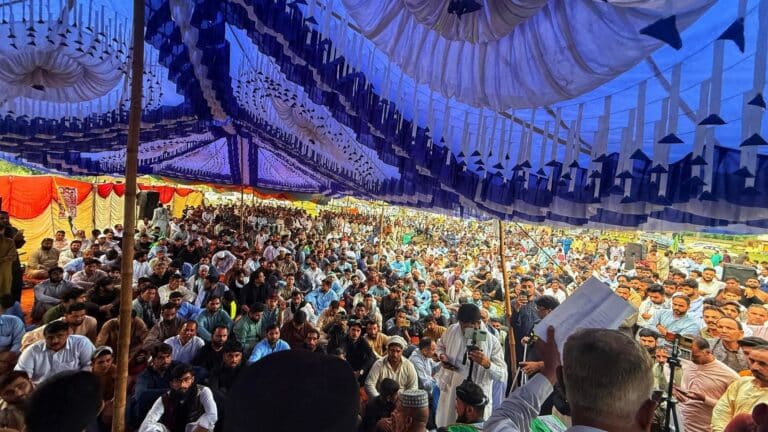
Kotli, Pakistan-administered Jammu and Kashmir : The Jammu Kashmir Joint Awami Action Committee (JK-JAAC) organized a large-scale “Right to Governance and Ownership Conference” in Charhoi, Kotli district, drawing thousands of participants in what many described as a historic moment for the region.

According to details received by The Azadi Times, the gathering was part of a series of conferences held across different areas of Pakistan-administered Jammu and Kashmir since last year. These conferences aim to raise awareness among the people of Jammu and Kashmir about their basic rights, including governance of their homeland and ownership of local resources.

First Major Gathering in Kotli

This was the first conference of its kind in Charhoi, Kotli, and observers say it could be remembered as a “game changer” in the political history of the region. Thousands of men, women, and youth participated, signaling a growing public interest in issues of governance and ownership.

Speakers at the conference emphasized that the people of Jammu and Kashmir must have a decisive role in shaping the political, social, and economic future of their region. They called on authorities to recognize the voice of the masses and ensure that local communities are empowered through democratic governance and control over their natural resources.

Growing Movement for Rights

The Jammu Kashmir Joint Awami Action Committee has been actively mobilizing communities across the region since last year, organizing similar conferences in various towns and districts. These events have highlighted the importance of self-governance, political participation, and ownership rights, resonating strongly with ordinary citizens who feel disconnected from decision-making processes.

Many analysts believe that the Kotli conference reflects a broader trend of grassroots political awakening in Pakistan-administered Jammu and Kashmir. With increasing participation from diverse segments of society, the movement appears to be gaining momentum.

Conclusion

The Charhoi gathering is being hailed as one of the most significant political developments in recent years. As thousands filled the grounds in Kotli, the message was clear: the people of Jammu and Kashmir are determined to assert their right to governance and ownership, shaping their own destiny within the complex political landscape of the region.

Kashmir MLA Mehraj Malik Arrested Under PSA, Sparks Political Storm

0

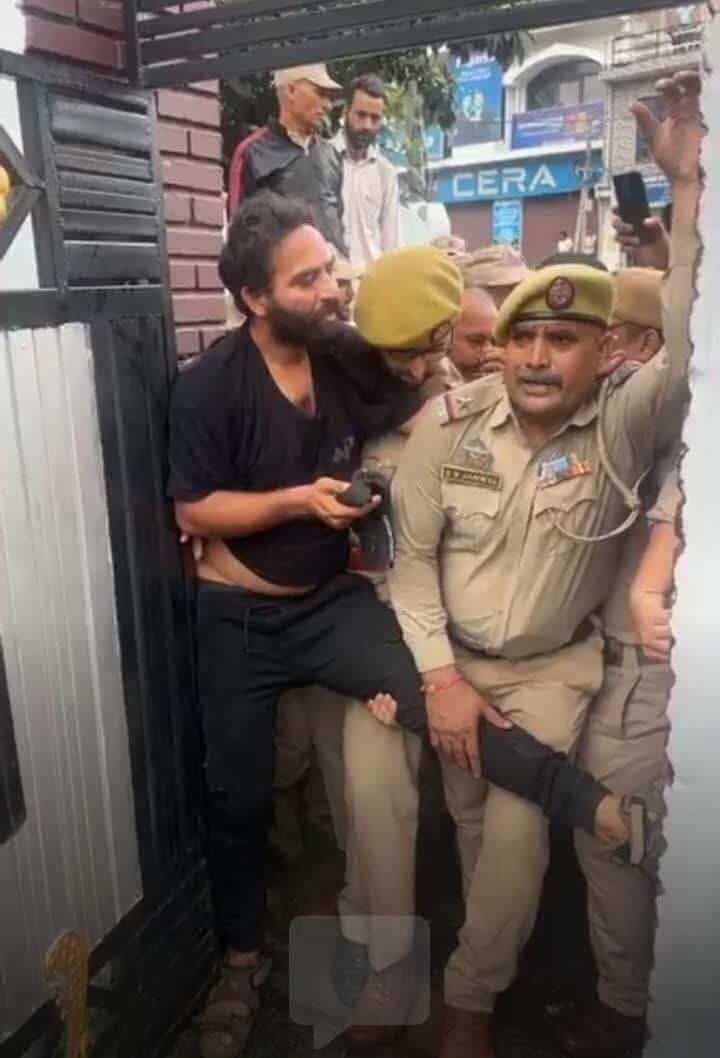
Srinagar, Jammu & Kashmir — The arrest of Aam Aadmi Party (AAP) legislator Mehraj Malik under the controversial Public Safety Act (PSA) has ignited fierce debate across Jammu and Kashmir’s political spectrum, raising questions about democracy, dissent, and representation in the region.

Malik, who represents the Doda-52 constituency, was detained after authorities claimed his activities posed a “serious threat to public order and peace.” According to official communication from Doda District Magistrate Harvinder Singh to the Speaker of the Jammu and Kashmir Legislative Assembly, Malik was booked under the Jammu and Kashmir Public Safety Act, 1978, after a “thorough review of materials, reports, and circumstances.”

This marks the first time since 2019 that a sitting legislator has been placed under PSA detention — a move widely described by political parties and observers as a watershed moment in the territory’s fraught political landscape.

Opposition Leaders Condemn the Arrest

The arrest has been strongly criticized by a cross-section of Kashmiri political leaders.

PDP senior leader and Pulwama MLA Waheed-ur-Rehman Parra denounced the move, calling it “blatant authoritarianism.”

“To detain an elected representative merely for raising public grievances is open tyranny,” Parra said. “Black laws like PSA are being weaponized to silence political voices and crush dissent. This is not the way to resolve differences in a democracy.”

Peoples Conference Chairman and Handwara MLA Sajad Gani Lone echoed similar concerns, arguing that the arrest undermines the very purpose of elections.

“If an elected representative cannot express the concerns and emotions of his people, then what is the point of holding elections at all?” Lone asked. “This is yet another blow to the democratic structure of Jammu and Kashmir.”

From Srinagar, Dargah Hazratbal MLA Salman Sagar noted that Malik’s detention was unprecedented in the post-2019 political scenario.

“This is the first time since 2019 that any legislator has been booked under PSA,” Sagar wrote on X (formerly Twitter). “It sets a dangerous precedent and has triggered a new debate in J&K politics.”

CPI(M) veteran and Kulgam MLA Mohammad Yousuf Tarigami also condemned the government’s decision.

“It is deeply unfortunate and absolutely unjustified to impose such a draconian law on an elected representative,” Tarigami said. “This harsh and unwarranted step must be revoked immediately.”

Government’s Stand

Officials defending the move maintain that Malik’s “actions were detrimental to maintaining public order.” Government sources argue the arrest was necessary to preserve peace and prevent unrest in Doda district.

“The decision was taken in the interest of maintaining law and order,” one official said, insisting that Malik’s activities had “become a serious threat to peace.”

A Divisive Debate

Malik’s arrest has not only polarized political parties in Jammu and Kashmir but has also sparked heated discussions on social media, including across Pakistan-administered Kashmir (PaK).

Supporters have launched online campaigns calling for Malik’s immediate release, portraying him as a symbol of resistance against political suppression. However, others in PaK have criticized him, alleging complicity with the Indian state — reflecting the complex and fractured nature of Kashmiri political identity and allegiances.

Broader Implications

The detention of a sitting legislator under the PSA — long criticized by human rights organizations for enabling arbitrary detentions — highlights the growing tensions between governance and dissent in Jammu and Kashmir.

For many political observers, Malik’s arrest represents more than just an isolated incident. It touches on deeper questions: What space, if any, remains for elected representatives to voice grievances in Kashmir’s altered political framework? And how will such moves impact the already fragile relationship between the people and democratic institutions?

As calls grow for Malik’s release, the episode is likely to remain a flashpoint in Kashmir’s politics — symbolizing both the limits of political expression and the uncertainty of representative democracy in the region.

Sost Protest in Gilgit-Baltistan: Mounting Tensions Over Taxes Amid Grassroots and Kashmir Support

0

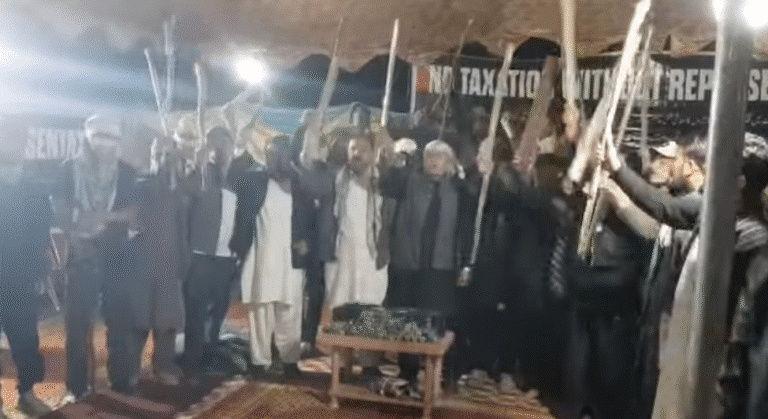
Gilgit-Baltistan (Pakistan-administered Kashmir) – September 2025: The ongoing protest in Sost, near the China border, has entered its 48th day, with growing fears of a government crackdown. What began as a demonstration by the local traders’ community against federal taxation policies in Gilgit-Baltistan has now transformed into a broader movement, attracting political, religious, and youth participation at the grassroots level.

Despite the tense standoff, the protest has also drawn significant support from Kashmir, where civil society groups and political voices have expressed solidarity with the demands of Gilgit-Baltistan’s traders, insisting that the region’s disputed status requires a tax-free zone.

Protest Gains Momentum Amid Crackdown Fears

Local sources report that large numbers of young people from Nagar and surrounding areas are joining the sit-in at Sost in convoys, with mosque announcements mobilizing further participation. Fears of a police crackdown grew after reports of a heavy security presence in Phandar and other strategic points.

A dramatic moment occurred when a youth from Nagar postponed his own wedding celebrations to join the protest in Sost, symbolizing the intensity and emotional weight of the movement.

The traders and their supporters warn that if authorities attempt to disperse the sit-in by force, “the fire will engulf all of Gilgit-Baltistan.”

Government Response and Political Reactions

Speaking at a press conference in Gilgit, Gilgit-Baltistan’s Interior Minister Shams Lone stated:

“We are not planning any crackdown on the Sost protest. However, speeches against state institutions are unacceptable. If the law is taken into anyone’s hands, strict action will follow.”

He added that the taxation issue lies with the federal government, but provincial authorities are working to find a solution. The minister stressed that the protesters are “our brothers” and assured that peaceful sit-ins would not face baton charges.

At the same time, he accused “certain mafias and political elements” of hijacking the Sost Port issue for their own agendas.

Former Finance Minister and sitting assembly member Javed Manwa issued a video statement warning that the provincial government would bear responsibility for any violence:

“If a crackdown is attempted, the consequences will be disastrous. The fire will spread across Gilgit-Baltistan, and the government will be held accountable.”

A Wider Struggle: Taxes and Identity in a Disputed Region

Protesters argue that Gilgit-Baltistan’s unresolved constitutional status under international law makes federal taxation unjust. Calls are intensifying for Gilgit-Baltistan to be declared a tax-free zone, a demand rooted in decades of political ambiguity and economic marginalization.

Observers note that the protest has grown beyond trade concerns to represent a wider grassroots struggle for recognition, autonomy, and livelihood security. Its resonance across the Line of Control, particularly among Kashmiris, highlights the shared grievances of regions tied together by disputed status and demands for self-determination.

Uncertain Road Ahead

While the government maintains that it seeks a negotiated settlement, the growing mobilization and heightened emotions on the ground risk escalating into a larger regional crisis if mishandled. Analysts warn that any attempt at repression could fuel deeper resentment and widen the gulf between the people of Gilgit-Baltistan and Islamabad.

For now, the streets of Sost remain occupied by protesters determined to stay put until their demands are addressed, with the outcome likely to shape the future of governance and public trust in the disputed mountain territory.

Gaza War Toll Surpasses 64,000 as Israel Intensifies Operations in Gaza City

0

Deir al-Balah, Gaza – Local health authorities in Gaza report that more than 64,000 Palestinians have been killed during nearly two years of war in the Gaza Strip, as Israel and Hamas continue to reiterate conflicting demands to end the devastating conflict that began with the October 2023 attacks.

Israel has intensified its offensive in famine-stricken Gaza City, where 28 Palestinians — mostly women and children — were killed in airstrikes on Thursday. Israeli military spokesperson General Efi Dferen stated that Israeli forces now control about 40 percent of Gaza City and that the operation “will expand in the coming days.”

In the occupied West Bank, an anti-settlement monitoring group reported that Israeli settlers have established a new settlement in a Palestinian town, adding further tensions to the already volatile region.

Gaza City, home to nearly one million residents, has borne the brunt of the latest assaults. According to hospital records, 25 bodies were brought to Gaza’s Shifa Hospital following the strikes, including nine children and six women. Among the victims was a 10-day-old infant. In southern Gaza, Nasser Hospital in Khan Younis confirmed the deaths of three more people.

The Gaza Ministry of Health reported that since the war began, 64,231 Palestinians have been killed, including nearly 400 individuals who were previously missing but whose deaths have now been confirmed.

Hamas issued a statement late Wednesday, declaring its readiness to return all 48 hostages, though Israel believes only 20 remain alive. The group said hostages would be released in exchange for:

  • The release of Palestinian prisoners,

  • A permanent ceasefire,

  • The full withdrawal of Israeli forces from Gaza,

  • The reopening of border crossings, and

  • The initiation of Gaza’s long-term reconstruction.

Israeli Prime Minister Benjamin Netanyahu’s office dismissed the offer as “spin,” vowing to continue the war until all hostages are returned and Hamas is disarmed.

Meanwhile, Israel and the United States have recently signaled openness to a comprehensive agreement that would secure the release of all remaining hostages simultaneously and implement a full ceasefire across Gaza.

Kashmir Industry Body Urges 10% Environmental Cess on Imports to Safeguard Local Sector

0

Srinagar, September 2025 – The Federation Chamber of Industries Kashmir (FCIK) has urged the Jammu and Kashmir administration to impose a 10% “environmental cess” on all imported goods entering the Union Territory. According to the organization, such a measure would not only safeguard local industries but also help compensate for revenue losses caused by recent reductions in the Goods and Services Tax (GST).

The demand was raised during a consultative committee meeting chaired by Shahid Kamal, where participants argued that the proposed cess would give the government fiscal space, restrict unnecessary imports, promote local production, generate jobs, and sustain the livelihoods of artisans.

While the GST Council’s decision to cut rates and simplify compliance has been hailed as a positive national-level reform, the FCIK cautioned that these changes hold little meaning for Jammu and Kashmir unless accompanied by bold local policy measures.

The body warned that although GST cuts appear to provide relief to consumers, they have placed micro and small industries in Kashmir under further strain, with many already fighting for survival.

FCIK emphasized that without urgent government action — including priority for local industries in state procurement, rehabilitation programs for sick and stressed units, and renewed access to easy bank credit — thousands of MSME units and hundreds of thousands of artisans could face collapse.

The federation welcomed the uniform 5% GST rate on handicraft products and simpler compliance procedures, but stressed that such limited reforms are “insufficient to rescue Kashmir’s struggling industrial sector.”

US Tariffs Deal Heavy Blow to Indian Administered Kashmir’s Handicrafts Industry

0

Srinagar, September 2025 – The decision by the United States to impose a 50% tariff on Indian exports from August 27 has sent shockwaves through Kashmir’s fragile handicrafts sector, an industry that sustains the livelihood of over 400,000 artisans.

Exporters say the new trade measures have made it nearly impossible to send Kashmiri products to the American market, leaving warehouses piled high with unsold goods and forcing cutbacks in employment. Families that depend entirely on this centuries-old craft are now staring at an uncertain future.

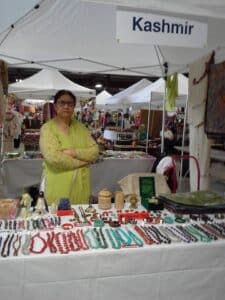
Kashmiri handicrafts stall at an international exhibition, displaying pashmina shawls, carpets, and papier-mâché art alongside exhibits from Russia, India, and Pakistan. The booth attracts thousands of visitors and global media attention, symbolizing Kashmir’s distinct cultural identity and the diaspora’s role in advocating for recognition and self-determination.

Among the hardest hit are pashmina shawls, woollen blankets, embroidered furniture covers, and silk carpets – traditional products that are shipped annually to the US for the autumn and winter sales season. Traders note that the timing of the tariff has multiplied losses: with the festive and winter markets approaching, consignments have stalled and an entire sales cycle has collapsed.

For decades, the US has been a leading buyer of Kashmiri handicrafts. In the financial year 2023–24, America accounted for nearly 30% of Jammu & Kashmir’s total handicraft exports, valued at ₹1,116 crore. For many exporters, US orders formed the backbone of their annual revenue. With those orders frozen, the sector is scrambling to find alternative markets – but global demand for high-value handmade items like silk carpets and embroidered shawls remains limited.

This crisis comes at a time when the industry is still recovering from the aftershocks of the COVID-19 pandemic. Traders who recently attended exhibitions in Delhi said American buyers have completely withdrawn, leaving unsold stock to pile up.

Artisans from Srinagar to smaller craft hubs report a sharp decline in new orders. Carpet weavers, papier-mâché artists, and crewel embroidery workers are among the worst affected, with many workshops operating at less than half their usual capacity.

Facing mounting distress, industry associations are calling for immediate support measures: interest subsidies, GST reductions, and a special financial relief package to cushion the blow. Exporters warn that if swift action is not taken, the crisis could result in permanent damage – not only to livelihoods but also to the preservation of Kashmir’s unique handicraft heritage, which has endured for centuries despite adversity.

With the festive season in Western markets drawing near, the outlook remains grim. Traders fear that without urgent intervention or access to new international markets, the losses could cripple the sector for years to come.

Relentless Rains Devastate Mahore: Hundreds of Homes Collapse in Reasi, Families Displaced

0

Reasi/Mahore, September 2025 – Continuous torrential and stormy rains over the past several days have wreaked havoc across Jammu and Kashmir, leaving behind a trail of destruction in multiple districts. Among the worst-affected regions is the Mahore sub-division of Reasi, where the fury of adverse weather conditions has devastated villages, destroyed homes, displaced families, and claimed lives.

Residents describe the disaster as one that turned lives upside down within minutes — homes built over generations were reduced to rubble, families found themselves under the open sky, and livelihoods disappeared in the blink of an eye.

According to local sources, the worst-hit areas include Bagga Jamsalan and its adjoining localities, around 22 kilometers from Mahore town. Reports confirm that more than 35 residential houses have been severely damaged, while vast tracts of agricultural land have been destroyed. The Morha Chachi area of Jamsalan, already known for past land sinking incidents, has once again collapsed under heavy rains. A similar tragedy years ago had forced dozens of families to abandon their homes when the ground caved in. Despite repeated surveys and visits by officials and expert teams, locals say no substantial rehabilitation measures were ever undertaken.

Today, as history repeats itself, residents accuse authorities of negligence, saying that had adequate relocation and resettlement plans been implemented earlier, hundreds of families would not have been forced into another cycle of displacement. “We are living in fear and despair because the land here is no longer habitable. Every new rainfall threatens our existence,” a local villager told The Azadi Times.

The situation has also affected key infrastructure. A portion of the Mahore–Gool–Ramban highway has been damaged due to land subsidence, disrupting transport and cutting off essential supplies.

Destruction in Saardh Village

The tragedy is not confined to Jamsalan alone. In Saardh village, situated about 7 kilometers from Mahore, thousands of kanals of land have sunk, displacing dozens of families and leaving them under makeshift shelters. Many are reported to be living under the open sky with little access to food, water, or medical aid.

A nearly 400-meter stretch of the Mahore–Chasana–Gulabgarh–Rajouri road has also been washed away, and officials admit that restoring the link may take weeks.

Relief and Official Response

Local administration claims to be on the ground, reaching out to victims with immediate relief. Sub-Divisional Magistrate (SDM) Mahore, Shafqat Majeed Butt, accompanied by Tehsildar Mahore, Javed Iqbal, visited the affected villages to assess the situation. Following local complaints of inadequate aid, the SDM announced the appointment of nodal officers for relief operations — B.D. Mahesh Chander in Bagga Jamsalan and T.S.O. Amit Mangotra in Saardh.

Meanwhile, Engineer Khurshid, MLA Gulabgarh, also toured the devastated areas and met survivors. However, many affected families dismissed these visits as “symbolic” and accused both officials and political leaders of making promises without ensuring long-term rehabilitation.

According to SDM Mahore, as many as 323 houses have collapsed across the sub-division. At least 88 families have been shifted to safer locations, while others have taken temporary refuge with relatives or in nearby villages.

Despite these efforts, survivors remain unconvinced, pointing to past disasters where official assurances of resettlement never materialized. “We are tired of visits and empty words. What we need is secure housing and permanent rehabilitation, not temporary tents and promises,” said another displaced villager.

Who Brought Islam to Kashmir? The Story of Faith, Sufism, and Identity

0

Kashmir, the valley known as Paradise on Earth, has always been more than a picturesque landscape of mountains and rivers. It is a cultural crossroads, a place where civilizations met and identities evolved. One of the most transformative shifts in Kashmiri history came in the 14th century, when Islam began to take root in the valley.

But who brought Islam to Kashmir? The question continues to spark debates — some argue that traders and Sufi saints introduced the faith through peace and spirituality, while others emphasize the role of political rulers and dynasties. What is clear, however, is that Islam’s arrival in Kashmir was unlike its spread in many other regions of the world: it was largely shaped by mysticism, tolerance, and cultural synthesis.

Today, when Kashmir’s identity is contested in political and religious narratives, revisiting the story of Islam’s origins in the valley helps us understand not only its past but also its present struggles.

Before Islam: Kashmir’s Religious Landscape

For centuries before the arrival of Islam, Kashmir stood as a vibrant crossroads of culture, faith, and philosophy. The valley’s earliest history is rooted in Hindu traditions, with texts like the Rajatarangini — the 12th-century chronicle penned by Kalhana — recording dynasties that built temples, patronized Sanskrit learning, and upheld Vedic rituals. Many ancient shrines, some still standing today, testify to this long Hindu heritage.

Equally significant was the Buddhist presence. Under Emperor Ashoka in the 3rd century BCE, Buddhism found fertile ground in Kashmir. Monasteries were established, stupas were raised, and the region became an intellectual hub for Buddhist scholars. Later, during the Kushan period, Kashmir maintained close ties with Central Asia, further strengthening its role in shaping Buddhist thought. Monks and pilgrims traveling along the Silk Road often paused in the valley, carrying with them Kashmir’s ideas to lands as far as Tibet and China.

By the 12th century, Kashmir had earned renown as a seat of Shaivism — particularly the esoteric philosophy of Kashmir Shaivism, which blended metaphysical depth with spiritual practice. Alongside this, Hindu temples and Buddhist monasteries coexisted, making the valley a living museum of South Asian spirituality.

Yet this rich spiritual tapestry also bore the weight of rigid social structures. The caste system was deeply entrenched, with social and economic hierarchies limiting mobility for large segments of the population. Many communities — artisans, peasants, and marginalized groups — found themselves excluded from the privileges of temple-centered life. This inequality created a yearning for more accessible and compassionate forms of spirituality.

It was into this environment that Islam entered Kashmir — not through the sword or conquest, but through the gentle persuasion of Sufi saints, traders, and travelers. Their message of equality, simplicity, and devotion resonated with ordinary Kashmiris, offering an alternative to rigid hierarchies and opening the door to a profound cultural transformation.

The Early Footsteps of Islam in Kashmir

The earliest traces of Islam in Kashmir appeared through the great arteries of trade and travel that connected Central Asia, Persia, and South Asia. Caravans moving along the Silk Road carried not only silk, spices, and gemstones but also languages, ideas, and spiritual traditions. By the 13th century, merchants, travelers, and mystics had begun sowing the seeds of Islamic thought in the valley, introducing a faith that promised equality and simplicity in contrast to the rigid social hierarchies of the time.

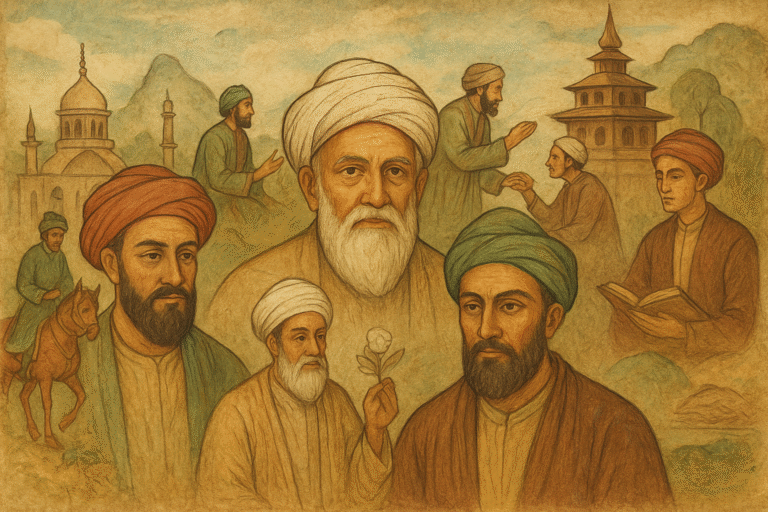
Among these early torchbearers was Syed Sharfuddin Abdul Rehman, better known as Bulbul Shah, a Sufi mystic from Turkistan. His arrival marked a decisive turning point in Kashmir’s spiritual history. Unlike political envoys or conquerors, Bulbul Shah carried no armies — only the power of his teachings. His message was deeply spiritual, centered on compassion, humility, and universal brotherhood. This resonated with the common people of Kashmir, many of whom felt suffocated under caste-based restrictions and inequalities.

Bulbul Shah’s influence reached the highest levels of Kashmiri society. Historical chronicles recount that Rinchan, a Buddhist prince from Ladakh who rose to power in Kashmir, was profoundly moved by Bulbul Shah’s message. Seeking a faith that aligned with his vision of justice and inclusivity, Rinchan embraced Islam under Bulbul Shah’s guidance and took the name Sultan Sadruddin. This royal conversion in the 14th century was more than symbolic — it laid the political and cultural foundation for Islam’s gradual acceptance across the valley.

Sultan Sadruddin’s embrace of Islam did not trigger forced conversions but rather encouraged voluntary adoption, as people found in Islam’s teachings an accessible path to spirituality. With Bulbul Shah’s influence, Islam began to take root not as an imposed faith but as a moral and spiritual alternative that welcomed all, regardless of birth or social standing.

The Legacy of Shah-i-Hamadan

If Bulbul Shah was the first spark, then Mir Syed Ali Hamadani (1314–1384) — revered as Shah-i-Hamadan — was the guiding flame who gave Islam its lasting foundation in Kashmir. A towering Sufi scholar and missionary from Hamadan in present-day Iran, Shah-i-Hamadan arrived in Kashmir during the mid-14th century, accompanied by hundreds of disciples, artisans, and scholars. His presence marked a new chapter in the valley’s religious, cultural, and economic transformation.

Shah-i-Hamadan’s mission was not confined to spiritual preaching. He envisioned a holistic society where faith, culture, and livelihood were interwoven. He introduced Islamic practices of governance, encouraged the construction of mosques and khanqahs (Sufi lodges), and promoted education. Yet perhaps his most enduring contribution was cultural: he brought with him highly skilled artisans from Persia and Central Asia, who laid the foundations of Kashmir’s world-renowned arts and crafts.

Carpet weaving, papier-mâché, wood carving, calligraphy, and shawl-making — all hallmarks of Kashmiri identity today — trace their origins to Shah-i-Hamadan’s efforts. By merging spiritual devotion with economic empowerment, he ensured that Islam in Kashmir was not just a matter of personal faith but a civilizational force shaping the valley’s identity.

Unlike conquerors who spread faith through power, Shah-i-Hamadan relied on persuasion through knowledge, compassion, and example. His writings, most notably Zakhirat-ul-Muluk (Treasure for Kings), blended spiritual guidance with practical advice on governance, emphasizing justice, humility, and welfare of the people. This synthesis of faith and pragmatism resonated deeply in a land yearning for both spiritual nourishment and social justice.

Over time, Shah-i-Hamadan became more than a saint — he became a cultural architect of Kashmir. Mosques and shrines associated with him remain vital centers of faith, while the crafts he introduced continue to sustain thousands of Kashmiri families centuries later. His legacy ensured that Islam in Kashmir would be firmly rooted in spirituality, culture, and community life.

Sheikh Noor-ud-Din Noorani: The Native Saint

If Shah-i-Hamadan symbolized the Persian influence that brought Islam to Kashmir, then Sheikh Noor-ud-Din Noorani (1377–1440) — affectionately called Nund Rishi — represented the very soul of Kashmiri Islam. Born in Kulgam district, Noorani grew up witnessing the social transformations of a valley in transition. Over time, he became not just a religious figure but the most celebrated native saint of Kashmir.

Sheikh Noorani’s teachings were rooted in simplicity and compassion. He rejected materialism, spoke out against social oppression, and emphasized harmony across communities. Unlike scholarly Persian texts, his verses were written in Kashmiri language, using the everyday idioms of the people. This made his message accessible to farmers, artisans, and common villagers, who found in his poetry both comfort and inspiration.

Through his teachings, Sheikh Noorani championed a spiritual philosophy that blended Islamic Sufism with indigenous Kashmiri traditions. He advocated love for God, service to humanity, and respect for nature. This unique synthesis gave rise to the celebrated idea of Kashmiriyat — a cultural ethos that prized tolerance, coexistence, and unity beyond religious boundaries.

Even today, his shrine at Charar-e-Sharif stands as a beacon of interfaith harmony. Both Muslims and non-Muslims visit the site, paying respect to a saint whose message transcends narrow divisions. For Kashmiris, Noorani remains not only a spiritual guide but also a symbol of their cultural resilience.

From Saints to Sultanates: Islam and Politics

The story of Islam in Kashmir was not confined to shrines and spiritual gatherings. It also found expression in the political sphere. After the decline of Hindu ruler Suhadeva in the early 14th century, Kashmir entered a new era under the Shah Mir dynasty (1339–1561) — the first Muslim dynasty of the valley. Founded by Shah Mir, a noble of Swati origin, the dynasty institutionalized Islam in Kashmir while consolidating political power.

One of the most remarkable rulers of this period was Sultan Zain-ul-Abidin (1420–1470), remembered in Kashmiri history as Budshah — the Great King. Unlike many rulers of his time, Zain-ul-Abidin is celebrated for his policies of religious tolerance and cultural inclusivity. He patronized both Muslim and Hindu scholars, rebuilt temples destroyed during earlier conflicts, and encouraged intellectual and artistic exchange.

Under his reign, Kashmir flourished as a hub of art, architecture, and scholarship. The crafts introduced by Shah-i-Hamadan found royal support, while the spirit of pluralism fostered by saints like Noorani gained official recognition. Thus, Islam’s presence in Kashmir grew through a dual process: saints who touched the hearts of the people, and rulers who provided the political framework to sustain and expand the faith.

Sufism and the Making of Kashmiriyat

What truly distinguished the arrival of Islam in Kashmir from other regions of the subcontinent was its Sufi character. Sufis emphasized love, humility, and devotion rather than rigid legalism. Their khanqahs (spiritual lodges) and shrines became more than places of prayer — they were centers of charity, education, and social life.

For Kashmiris, Sufi saints were not distant scholars but approachable guides. They healed, mediated conflicts, and offered counsel in times of hardship. Over time, these spiritual networks created a shared cultural identity that transcended religious lines.

This identity — Kashmiriyat — became the hallmark of the valley. It celebrated diversity, weaving together the spiritual depth of Islam with the cultural richness of Kashmir’s Hindu and Buddhist past. In poetry, music, and folklore, echoes of this fusion can still be heard. The verses of Noorani, the artistic traditions introduced by Shah-i-Hamadan, and the pluralist governance of rulers like Budshah all combined to create a society where faith and culture flourished side by side.

Kashmir thus became not just a region where Islam arrived, but a place where Islam was reinterpreted through the lens of Kashmiri values, giving birth to a spiritual and cultural renaissance that remains central to the valley’s identity.

Islam in the Global Context

As Islam deepened its roots in Kashmir, the valley became increasingly tied to the wider Muslim world. Persian — the language of poetry, scholarship, and governance — replaced Sanskrit in administration, reflecting Kashmir’s cultural integration into the Islamic civilization of Central Asia and Persia.

Trade routes reinforced this connection. Caravans traveling from Samarkand, Bukhara, and Kabul brought not only goods but also ideas. In turn, Kashmiri artisans and scholars journeyed outward, enriching courts and communities far beyond the Himalayas. Carpet weaving, papier-mâché, and woodcrafts from Kashmir became symbols of refinement across the Islamic world, while Kashmiri poets and theologians added to the spiritual and intellectual traditions of the broader Ummah.

This exchange of knowledge and culture meant that Kashmir was not merely a recipient of Islamic influence — it became a contributor. The valley’s unique blend of Sufi spirituality, local traditions, and artistic innovation entered the bloodstream of global Islam, making Kashmir both a frontier and a bridge between civilizations.

Contemporary Relevance: History and Politics

In today’s contested Kashmir, the story of how Islam arrived is not just a matter of history — it is also a matter of politics and identity. Competing narratives attempt to frame the past in service of present-day agendas.

Indian accounts often present Islam’s spread in Kashmir as a byproduct of foreign conquest and political consolidation, suggesting that it disrupted an existing cultural order. Pakistani narratives, by contrast, emphasize Kashmir’s “natural affinity” with Islam, framing the valley’s conversion as an inevitable expression of its religious and cultural alignment with Pakistan.

Both, however, risk missing the essential truth: Islam did not take root in Kashmir through the sword, but through the teachings of saints, mystics, and spiritual reformers. It was a faith embraced from below, not imposed from above.

For Kashmiris themselves, this history carries a deeper resonance. It is not about conquest or geopolitics but about identity, dignity, and continuity. The legacy of figures like Bulbul Shah, Shah-i-Hamadan, and Sheikh Noor-ud-Din Noorani reminds them of a tradition of Sufism, pluralism, and resistance to oppression. This legacy also intersects with their contemporary struggle for self-determination, where faith, culture, and politics remain tightly woven together.

Islam came to Kashmir not with armies, but with the pen, the prayer, and the poetry of saints. Through the quiet but powerful influence of Sufi mystics, the valley was transformed into a space where faith intertwined with art, culture, and governance.

Figures such as Bulbul Shah, who inspired the first royal conversion; Shah-i-Hamadan, who introduced Persian art and craftsmanship; and Sheikh Noor-ud-Din Noorani, who embodied the Kashmiri soul of Islam, collectively defined the character of the region’s religious and cultural identity. Their legacy is one of spirituality over force, tolerance over sectarianism, and culture over conquest.

This is why Kashmir remains unique in South Asia. Its Islam is inseparable from its ethos of Kashmiriyat — an identity that celebrates coexistence while nurturing a centuries-old yearning for freedom.

To ask who brought Islam to Kashmir is to ask not only about history, but also about the present and future of a people. It is a reminder that the valley’s story is not simply about geopolitics between India and Pakistan, but about a community shaped by saints, artisans, and poets — and their continuing quest to preserve dignity in a contested land.