Friday, March 27, 2026
21.6 C
Srinagar
Home Blog Page 41

Facilities Exist, But No Donors: Chronic Kidney Disease Doubles in Jammu & Kashmir Over a Decade

The Azadi Times | Srinagar | Indian administered Kashmir: While healthcare facilities and even free transplant surgeries are available, Jammu & Kashmir faces a severe shortage of kidney donors — even as cases of Chronic Kidney Disease (CKD) have doubled over the past decade.

According to health experts, CKD is rising rapidly in the region, mainly due to non-communicable diseases such as diabetes, high blood pressure, and cardiovascular problems. Nationwide, India sees between 100,000 and 150,000 deaths annually from kidney-related illnesses.

Doctors warn that CKD is increasingly affecting young people, damaging their kidneys at an early age. Under the Ayushman Bharat health scheme, kidney transplants are free of cost in Kashmir. However, the lack of willing donors remains a major hurdle.

In India, an estimated 4 million people are currently affected by CKD, with nearly 1 million requiring a transplant. In Jammu & Kashmir alone, over 175,000 people are believed to suffer from CKD, and around 9,000 patients need a kidney transplant. Despite the demand, only 650 transplants have been performed so far in the region.

Major Causes of CKD

The rise in kidney disease is closely linked to increasing rates of non-communicable diseases in the population. According to the World Health Organization, the leading causes include high blood sugar, hypertension, and cardiovascular diseases.
Doctors point out that increased food availability combined with reduced physical activity has led to rising diabetes rates, which, in turn, damage kidneys.
Consuming fried foods cooked in cheap oils and fats also raises blood lipid levels, contributing to hypertension and subsequent kidney failure.

Dialysis Patients

The exact number of dialysis patients in Kashmir remains unclear. However, a 2019 study identified 459 patients undergoing hemodialysis in Kashmir, and more recent surveys suggest the number has now surpassed 500.
The National Dialysis Program provides free or subsidized dialysis services at district hospitals under the National Health Mission. Dedicated dialysis units also operate at SMHS Hospital and SKIMS Soura.

Experts’ Opinions

Dr. Sajjad Nazir, head of the Nephrology Department at Government Medical College Srinagar, told Kashmir Uzma that kidney disease is growing alarmingly fast in Kashmir, particularly among the youth.
He stressed that transplantation is the only definitive treatment for end-stage renal disease, but finding donors remains the biggest challenge.

“Most kidney donors are women — mothers, sisters, daughters, and in many cases, wives,” Dr. Sajjad said.
He advocated for cadaver (deceased) transplants, noting that organs from accident victims or brain-dead patients could save lives.

“Under the Ayushman Bharat scheme, kidney transplants are free, but our biggest problem is the lack of donors,” he concluded.

IMD Warns of Flash Floods in 12 Districts of Jammu & Kashmir Amid Heavy Rainfall

Srinagar | Indian administered Kashmir: The India Meteorological Department (IMD) has issued a flash flood warning for the next 24 hours in twelve districts of Jammu and Kashmir due to heavy rainfall.

According to the IMD, the districts likely to be affected include Kathua, Samba, Udhampur, Doda, Kishtwar, Ramban, Reasi, Jammu, Rajouri, Poonch, Baramulla, and Anantnag.

The department cautioned that incessant rains could lead to a rapid rise in water levels in rivers and streams, potentially triggering flash floods. District administrations and the District Disaster Management Authorities (DDMAs) in the affected areas have been directed to take all necessary precautionary measures.

The IMD has advised all relevant district authorities to implement safety protocols to ensure the protection of lives and property.

It is worth mentioning that several parts of Jammu and Kashmir have already been witnessing heavy rainfall over the past few days, resulting in swollen rivers and streams as well as landslides in mountainous regions.

Authorities have urged residents, especially those living near water bodies and in hilly areas, to remain vigilant and avoid unnecessary travel during this period of heightened risk.

Afghan Government Unveils Locally-Made Bus and Car at Industrial Complex Inauguration

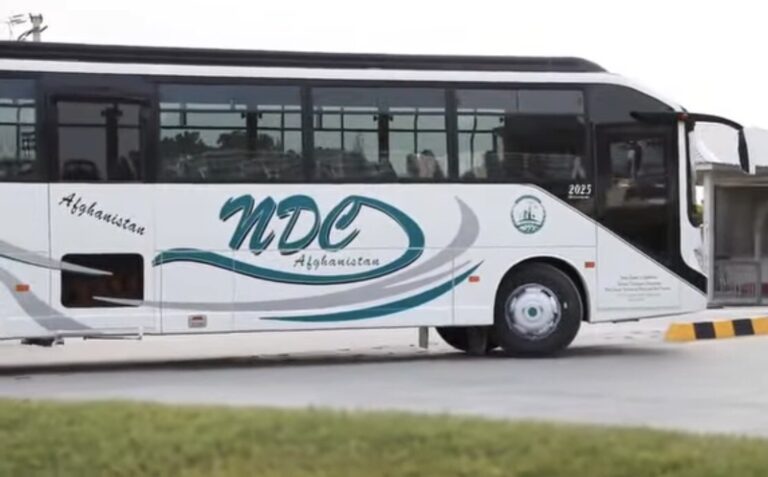
World | July 22, 2025 | Kabul (The Azadi Times) — The Afghan Taliban government has showcased a locally manufactured bus and car during the inauguration of an industrial complex in Kabul.

On Monday, Afghanistan’s Deputy Prime Minister for Economic Affairs, Mullah Abdul Ghani Baradar, and Deputy Prime Minister for Administrative Affairs, Maulvi Abdul Salam Hanafi, formally inaugurated the industrial factories complex.

According to the Afghan government, the complex is currently producing 105 different types of products, including agricultural machinery, equipment, parts for small industrial factories, transport vehicles, and other goods.

During the opening ceremony, several products manufactured by the National Development Corporation Complex were displayed, among them the locally-produced bus and car. Members of the Afghan cabinet also took a ride in the newly-built bus.

Posting pictures of the bus on social media platform X (formerly Twitter), Afghan government and Taliban spokesperson Zabihullah Mujahid wrote:

“A few days ago I announced that Afghanistan had built its first national bus. Many commented — some claimed the image belonged to another company, others called it propaganda, and some accepted it positively. Last night I rode in the same national bus and thank the National Development Corporation for fulfilling its promise.”

His post also included photographs of himself inside the bus, acknowledging the efforts of the factory workers and management.

This development marks a notable step in Afghanistan’s attempt to revive and promote domestic industrial production under the current administration.

Landslide Risk in Jhelum Valley: Deputy Commissioner Urges Citizens to Avoid Unnecessary Travel

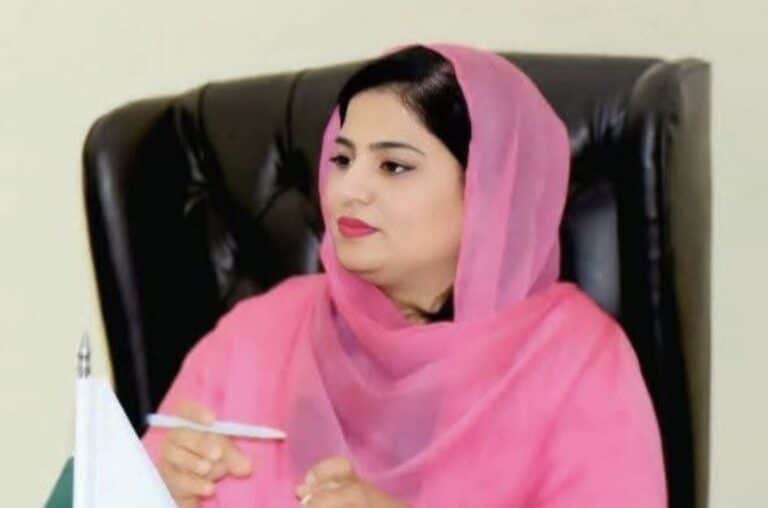
Pakistan administered Kashmir | The Deputy Commissioner of Jhelum Valley, Ms. Benish Jarral, has issued an alert over the heightened risk of landslides on roads and other areas due to ongoing monsoon rains. She has instructed all relevant departments to remain on high alert and to keep machinery and resources ready to tackle any emergency situation.

Speaking to officials, Ms. Jarral stated that landslides on the roads of Jhelum Valley are a common occurrence during monsoon rains, and citizens should therefore avoid unnecessary travel. She highlighted that areas including Chakar, Chinari, Chakothi, Reshiyan, Lamnian, and Leepa Valley have become particularly dangerous for traffic due to heavy rainfall. Transporters have also been advised to exercise caution and to avoid travel until weather conditions improve.

The Deputy Commissioner also urged tourists to refrain from visiting tourist spots during rainfall. Municipal staff have been directed to stay prepared to handle any emergency that may arise during the expected heavy rains. Citizens have been warned not to approach rivers and streams, and residents living near water bodies have been instructed to move to safer locations as a precaution.

“Ensure the safety of citizens’ lives and property at all costs, and keep the drainage and sanitation systems operational to allow rainwater to flow properly,” Ms. Jarral emphasized, instructing officials to take all necessary measures to minimize risks.

Baloch Women Continue Sit-in in Islamabad for Seventh Day Despite Rain and Police Harassment

0

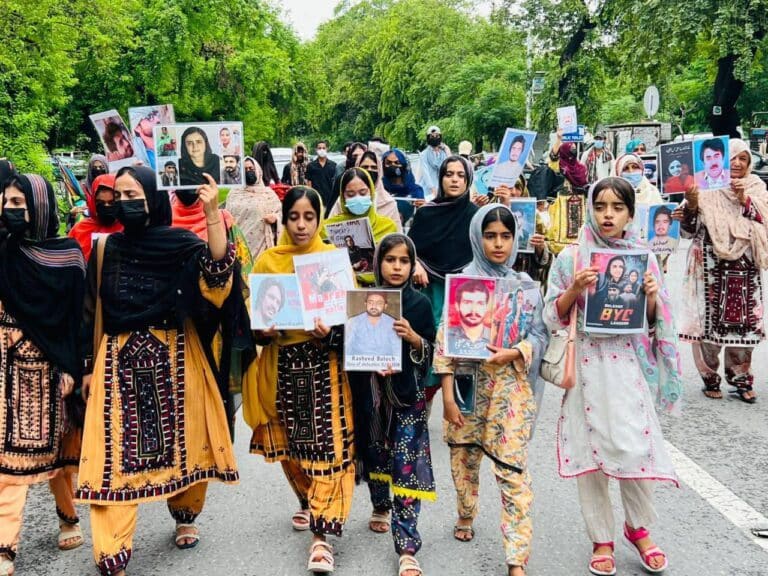
Islamabad, Pakistan — July 21, 2025: The families of Baloch missing persons and relatives of detained Baloch Yakjehti Committee (BYC) leaders continued their sit-in in Islamabad for the sixth consecutive day, braving heavy rain, threats, and police harassment.

For the third day in a row, Islamabad police barred the protesters from reaching the Press Club and denied them permission to pitch tents, forcing the Baloch women to carry on their protest under the open sky despite unrelenting rain.

In a statement, the Baloch Yakjehti Committee said: “Despite the nonstop rain and road closures, the families remain steadfast in their peaceful protest, demanding the release of BYC leaders and an end to enforced disappearances in Balochistan.”

A heavy police contingent arrived at the protest site today. According to BYC, the police and local administration harassed protesters under the pretext of identity verification and carried out profiling of participants, which the group strongly condemned. The committee warned that if any harm came to the protesters, the responsibility would lie with Islamabad police and Pakistani authorities.

The families reiterated their two core demands:

  • The withdrawal of false charges and release of BYC leaders.

  • An end to enforced disappearances and the recovery of missing persons in Balochistan.

Late at night, police evicted the protesters from their residential flats, forcing them to spend the night in various locations across the city. BYC called on international human rights organizations and media outlets to take notice of the grave situation and help restore the protesters’ basic rights.

Senior Journalist and Political Leader Booked in Kashmir for Alleged Anti-Army Social Media Posts

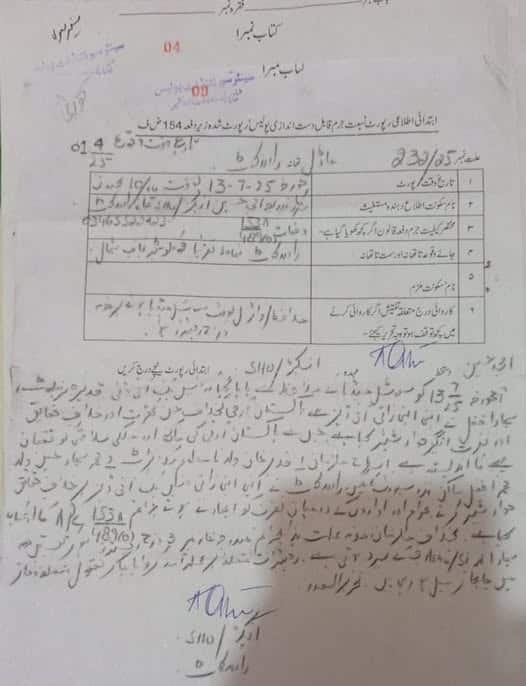
Special Correspondent | Rawalakot, Pakistan-administered Jammu and Kashmir — July 2025: In a move that has sparked fresh concerns about freedom of speech and political repression, Rawalakot police have registered a controversial case against senior journalist and Jammu Kashmir Liberation Front chief organizer Sardar Qadeer Khan and Sarwarajiya Inqilabi Party president Sardar Sajjad Afzal.

According to FIR No. 232/25 filed at Model Police Station Rawalakot, the alleged incident occurred on April 1, 2025, when the two accused allegedly shared “fabricated, factually incorrect, and hate-filled” content on social media targeting the Pakistan Army. The FIR claims this act endangered the Army’s reputation and posed a threat to national security.

What makes this case particularly striking is that the FIR was lodged more than three months later, on July 13, 2025 — a gap of 3 months and 13 days after the alleged incident. Police invoked sections 153-A (promoting enmity) and 489-Y, among others, in the complaint.

In recent years, similar cases have been filed against journalists, social media activists, and political workers across Pakistan-administered Kashmir, with several arrests made and many young activists seeing their careers and livelihoods disrupted by these legal actions.

Activists and observers have condemned what they describe as “bogus and fabricated” FIRs aimed at silencing dissent and curbing free expression. They call for an immediate end to such practices and for those orchestrating these cases to be held accountable.

Police Initiate Disciplinary Action as Strike Persists in Kashmir

Special Correspondent | Rawalakot, Pakistan-administered Jammu and Kashmir — July 2025: The ongoing protest by police personnel shows no sign of abating as officers continue their sit-in late into the night at Rawalakot’s District Complex. Meanwhile, senior police officials have begun initiating disciplinary proceedings against striking constables, with the Inspector General (IG) suggesting the strike is being instigated at someone’s behest.

As part of the crackdown, five members of the Muzaffarabad Anti-Riot Force were issued show-cause notices. Addressing officers, the IG accused “a few individuals” of orchestrating the protest and assured that notification addressing grievances would be issued within two weeks. He also implicitly warned of further disciplinary measures if the protest continued.

Azad Kashmir Inspector General (IG) suggesting the strike is being instigated at someone’s behest.

However, sources within the police say the striking officers have rejected the two-week timeline, insisting that their protest will continue until demands are met.

Fearing reprisals, the protesting officers have not appointed an official spokesperson and avoid appearing on media, forcing their position to be communicated only through unnamed sources.

Courts Begin Secretly Charging Kashmiri Activists as State Escalates Crackdown on Rights Movement

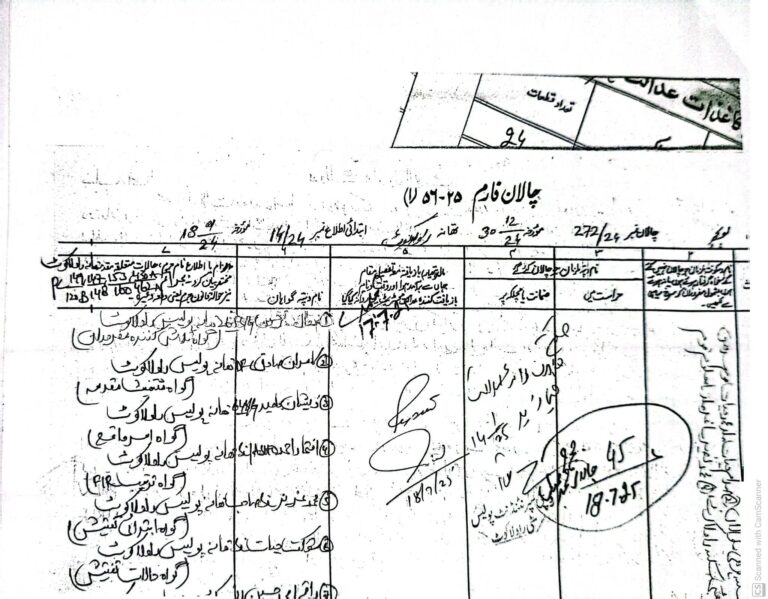
Special Correspondent | Rawalakot, Pakistan-administered Jammu and Kashmir — July 2025: In Pakistan-administered Jammu and Kashmir, authorities have quietly begun presenting court charges (chalans) in cases filed during the ongoing public rights movement over the past several years, marking a new phase in the state’s campaign to suppress dissent.

The details of these cases remain confidential, with police completing and submitting charge sheets in courts while declaring the named political activists as fugitives — despite their visible and continued political activity in public spaces, including daily appearances in the same courts that now list them as absconders.

Court files reveal that in several police stations, cases have been registered without the knowledge of the accused and without providing them with any information. Police have avoided sending copies of the FIRs to the courts at the time of registration, or even attaching them with the challan files — a blatant violation of due process.

In Rawalakot, at least seven such cases have surfaced over the past two months, with indications of many more being processed. A police official, speaking on condition of anonymity, disclosed that dozens of similar cases have been secretly registered against political workers in Rawalakot alone over the past two years. The official described the practice as a “mockery of justice,” noting that the accused were not informed, nor were they served any legal notices.

The court-submitted documents also confirm that the FIRs were not filed with the court when registered nor later included in the case files, raising serious questions about the legal integrity of the proceedings.

Among the recently charged cases:

  • Case No. 364/23, dated October 31, 2023, charged on June 14, 2025.

  • Case No. 419/23, dated December 28, 2023, charged on June 16, 2025.

  • Case No. 14/24, dated January 18, 2024, charged on July 18, 2025.

  • Case No. 19/24, dated January 27, 2024, charged on June 14, 2025.

  • Case No. 57/24, dated February 29, 2024, charged on June 14, 2025.

  • Case No. 91/24, dated April 3, 2024, charged on June 3, 2025.

  • Case No. 297/24, dated November 22, 2024, charged on June 14, 2025.

The list of named individuals includes dozens of prominent activists, such as Sardar Muhammad Sagheer Khan, Sardar Muhammad Qadeer Khan, Sardar Rashid Hanif, Sardar Iftikhar Feroz, Azhar Kashar, Tauseef Khaliq, Basharat Ali Khan, Khalil Babar, Saddam Hayat, Ejaz Hanif, Farhan Mushtaq, Haris Qadeer, Hanan Butt, Zahid Hussain, Naseer Sagar, Azhar Murshid, Zahid Hassan, Zahid Aziz, Muhammad Naseem Shaukat, Manzoor Ahmed, Owais Arshad, Sagheer Ashraf, Mohsin Aziz, Mahmood Jaleel, Samad Shakeel, Usman Mumtaz, Adnan Razaq, Lala Nawaz, Zahid Rafiq, Inshad Khan, Syab Sharif, Amjad Yaqoob, Rashid Khan, Wajid Zubair, Ejaz Ahmed Qureshi, Javed Khan, Waseem Nisar, Nasir Javed, Tauqeer Khan, Ahmad Sagheer, Nazar Kaleem, among others.

Some of these names appear in nearly all the cases, while others are named in one or more cases. Notably, six of these cases were filed over activists burning electricity bills during protests, while one case was filed for protesting against the controversial presidential ordinance — an ordinance which even the ruling authorities later described as a “black law.”

The government had repeatedly announced that these politically motivated cases would be dropped. However, the current move to present challans in courts and declare the named activists as absconders contradicts those assurances.

Significantly, more than 90% of the charged individuals are affiliated with nationalist and progressive political groups. Interestingly, none of the prominent leaders of the Joint Awami Action leadership — which had engaged in negotiations with the government — appear to be named in these cases, raising concerns about selective prosecution.

The very presidential ordinance under which protesters were booked was itself denounced by state officials as unjust and oppressive. Nonetheless, those who resisted it now face legal harassment, with hundreds of activists quietly declared absconders in secret proceedings.

Observers say the state appears determined to exact revenge on the very individuals who organized and led the rights movement, while protecting and rewarding those more amenable to government interests. It is feared that the nationalist and progressive activists who served as the backbone of the movement will bear the brunt of these punitive measures, while some opportunistic traders and mainstream political figures, who leveraged the movement’s popularity to elevate their own standing, will be spared in exchange for their cooperation with the state.

Adding to the pressure, workers attempting to travel abroad for employment have reportedly been stopped and humiliated at airports. In recent months, dozens of young workers have been barred from leaving the country, with many losing thousands of rupees in wasted tickets and visas as a result.

Activists are calling for the immediate withdrawal of all such politically motivated cases, an end to the misuse of police character certificates as a tool of revenge, and a halt to the harassment of workers at airports.

Despite compromises and the co-opting of some movement leaders, the deeper societal anger and the demand for rights remain potent — and observers believe that a courageous, ideologically grounded leadership could still emerge to channel this discontent.

Whether confronting the presidential ordinance, burning electricity bills, resisting police brutality, or organizing public protests, the true leadership of the movement has consistently stood alongside the people. Many insist that the capacity and determination to resist state repression remain intact.

As one activist put it: “This is not just about court files or charges. It is about the future of an entire generation — and their refusal to submit.”


Police Strike Challenges State Machinery in Kashmir as Authorities Scramble to Maintain Order

Special Correspondent | Rawalakot (AJK), Pakistan-administered Kashmir — July 22, 2025: An ongoing strike by police constables across Kashmir has severely tested the state’s ability to maintain public order, as authorities deploy alternative personnel to keep basic services running. While the government claims partial success in breaking the strike in Bhimber, Mirpur, Kotli, and Muzaffarabad, the protest remains strongest in the Poonch division.

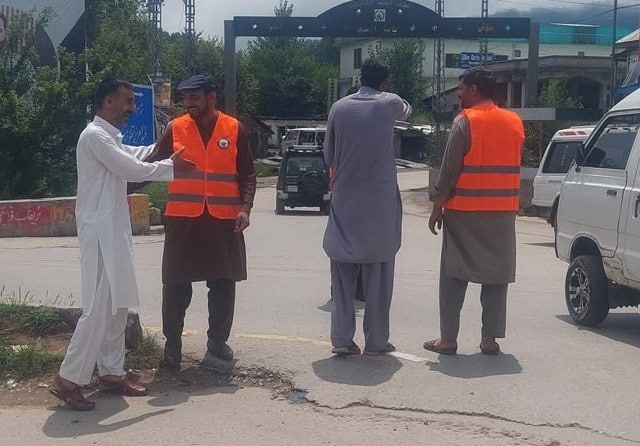
In Poonch, where the strike has paralyzed policing, the government has reassigned duties to civil defense volunteers and magistrates. According to posts from the AJK Public Relations Department, these personnel are now managing traffic flow and maintaining a semblance of normalcy on the streets.

Meanwhile, the Rawalakot Awami Action Committee has stepped in voluntarily to assist with traffic management, stationing volunteers at key junctions. The committee’s efforts and the state’s alternative arrangements have been widely publicized on social media — a move seen by critics as an attempt to downplay the impact of the strike.

Strikes, historically, aim to disrupt essential state functions, which in turn pressures authorities to meet the protesters’ demands. Whether it’s sanitation workers refusing to collect garbage, shopkeepers staging shutter-down protests, or transporters calling for wheel-jam strikes — the underlying tactic remains the same: expose the state’s inability to fulfill its obligations to citizens’ safety, dignity, mobility, and commerce.

When such disruptions occur, the state often responds by either conceding to demands, offering token negotiations, or deploying alternative mechanisms to undercut the strike. In this case, critics argue that mobilizing civil defense and volunteers as substitutes amounts to enabling the state to avoid addressing police grievances — and risks weakening the strikers’ position.

Observers note the irony in public reactions: leaders who publicly support the striking police are simultaneously volunteering to perform the very duties left undone by the strike, effectively helping the state undermine the protest. This duality, some argue, could psychologically wear down the striking officers and lead to the eventual failure of their movement.

Questions have also arisen about the consistency of this response. If the aim is simply to maintain public convenience, critics ask whether similar voluntary efforts will appear during upcoming general strikes — such as the planned September 29 lockdown — where shop closures and transport paralysis are expected to disrupt daily life even more profoundly.

For now, the state continues to rely on stopgap measures while maintaining its stance against the strikers. The coming days will determine whether these tactics succeed in ending the protest — or merely postpone a reckoning over the deep-rooted grievances of the police force.

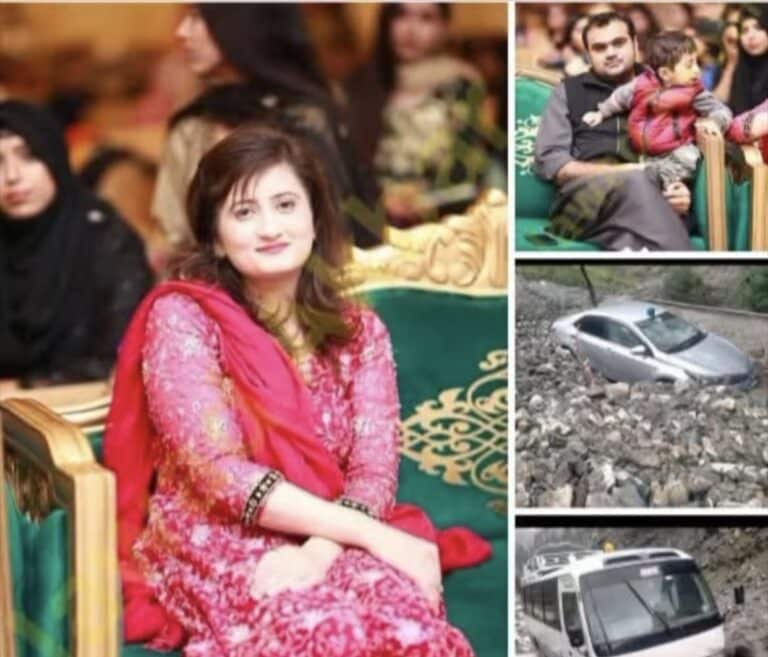
Tragic Flood in Babusar Top Claims Entire Family Including Prominent Doctors from South Punjab

Babusar Top, Gilgit-Baltistan – July 22, 2025
A devastating flash flood triggered by torrential rains near Babusar Top has swept away an entire family from South Punjab, Pakistan, leaving a trail of heartbreak and grief. The deceased include renowned physician and educator, Professor Dr. Mishal, her husband Dr. Saad, Saad’s younger brother Fahad Islam, and their young son, Hadi. All four tragically lost their lives in the incident, while other family members remain missing. Search and rescue operations are ongoing, authorities confirmed.

The family was reportedly on a visit to the scenic Babusar region when heavy rainfall caused severe flooding in the area. Rescue teams from Gilgit-Baltistan Disaster Management Authority (GBDMA) and local volunteers are currently engaged in recovery efforts under challenging weather conditions.

According to initial reports, the victims were prominent figures in South Punjab’s medical and academic community. Dr. Mishal and Dr. Saad were co-founders of a well-known hospital and college in Lodhran, providing healthcare and education to thousands in the region. Their unexpected deaths have sent shockwaves through the local community.

The family is also related to prominent Pakistani YouTuber and public health advocate Dr. Affan Qaiser, adding a national spotlight to the tragic incident.

Locals and national figures have taken to social media to express condolences and demand improved safety measures in high-altitude tourist areas during monsoon season.

“We pray for the departed souls and extend our deepest sympathies to the bereaved family,” said a statement from the Pakistan Medical Association. “The loss of such dedicated medical professionals is a national tragedy.”

Authorities have warned tourists to exercise extreme caution while visiting northern areas during the current weather spell, which has seen increased rainfall and a heightened risk of landslides and flash floods.

Gilgit-Baltistan, which falls under Pakistan-administered Kashmir, continues to experience frequent natural disasters during the monsoon season, raising concerns about preparedness, infrastructure, and public awareness.

May the departed rest in peace, and may the missing be found safely.