
Special Correspondent | Rawalakot (AJK), Pakistan-administered Kashmir — July 22, 2025: An ongoing strike by police constables across Kashmir has severely tested the state’s ability to maintain public order, as authorities deploy alternative personnel to keep basic services running. While the government claims partial success in breaking the strike in Bhimber, Mirpur, Kotli, and Muzaffarabad, the protest remains strongest in the Poonch division.
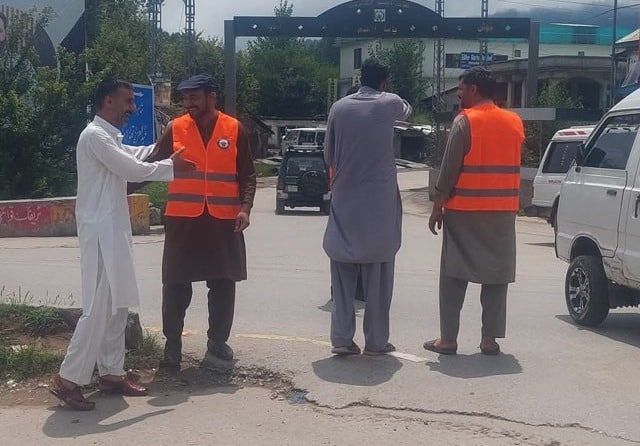
In Poonch, where the strike has paralyzed policing, the government has reassigned duties to civil defense volunteers and magistrates. According to posts from the AJK Public Relations Department, these personnel are now managing traffic flow and maintaining a semblance of normalcy on the streets.
Meanwhile, the Rawalakot Awami Action Committee has stepped in voluntarily to assist with traffic management, stationing volunteers at key junctions. The committee’s efforts and the state’s alternative arrangements have been widely publicized on social media — a move seen by critics as an attempt to downplay the impact of the strike.

Strikes, historically, aim to disrupt essential state functions, which in turn pressures authorities to meet the protesters’ demands. Whether it’s sanitation workers refusing to collect garbage, shopkeepers staging shutter-down protests, or transporters calling for wheel-jam strikes — the underlying tactic remains the same: expose the state’s inability to fulfill its obligations to citizens’ safety, dignity, mobility, and commerce.
When such disruptions occur, the state often responds by either conceding to demands, offering token negotiations, or deploying alternative mechanisms to undercut the strike. In this case, critics argue that mobilizing civil defense and volunteers as substitutes amounts to enabling the state to avoid addressing police grievances — and risks weakening the strikers’ position.
Observers note the irony in public reactions: leaders who publicly support the striking police are simultaneously volunteering to perform the very duties left undone by the strike, effectively helping the state undermine the protest. This duality, some argue, could psychologically wear down the striking officers and lead to the eventual failure of their movement.


Questions have also arisen about the consistency of this response. If the aim is simply to maintain public convenience, critics ask whether similar voluntary efforts will appear during upcoming general strikes — such as the planned September 29 lockdown — where shop closures and transport paralysis are expected to disrupt daily life even more profoundly.
For now, the state continues to rely on stopgap measures while maintaining its stance against the strikers. The coming days will determine whether these tactics succeed in ending the protest — or merely postpone a reckoning over the deep-rooted grievances of the police force.