Muzaffarabad | The Azadi Times | July 7, 2025] — An unprecedented political transformation is quietly reshaping Pakistan-administered Jammu & Kashmir (PAJK), where a grassroots-driven initiative aims to establish a truly representative, accountable, and transparent local government — free from decades of external interference and elite control.
This reformative movement, led by independent public policy researcher Tanveer Ahmed, seeks to fill the democratic vacuum left since 1947, when the former princely state of Jammu and Kashmir was divided between India and Pakistan — and has remained unsettled ever since.
A Four-Stage Path to Self-Governance
Ahmed and his team at the JKA Public Agency have proposed a comprehensive, citizen-centric governance framework built on four interlinked stages:
AJK Referendum 2023 Citizens aged 16 and above participated in a public consultation process to determine what form a truly independent, people’s government should take — one that is answerable only to the region’s residents.
Public Assembly AJK Electoral constituencies are being reorganized based on equal-population zones to ensure fair political representation — a step to dismantle decades of skewed influence by select elites.
Awaami Adaalat AJK Legal and administrative reform is underway to create institutions grounded in 21st-century values: transparency, accountability, civic participation, and meritocracy — with equal emphasis on rights and responsibilities.
Formation of a Genuine People’s Government (2025) Upon completion of the first three phases, a functioning, service-oriented government will be formally launched. This will not be a symbolic body — but one rooted in citizen mandates and equipped to deliver on governance.
“This is not merely about autonomy,” says Ahmed. “It’s about completing the journey from Dogra Raj to Awami Raj — from colonial structures to genuine people’s power.”
For over seven decades, the region has remained in constitutional limbo. Despite being administered by Pakistan, Pakistan-administered Jammu & Kashmir (PAJK) does not enjoy full political rights or a transparent, accountable government. Three previous declarations promising reform failed, largely due to the absence of an inclusive internal political process.
Ahmed’s roadmap, however, is backed by grassroots consultation and seeks to build internal legitimacy — rather than wait for regional or international validation.
Challenging Military and Bureaucratic Control
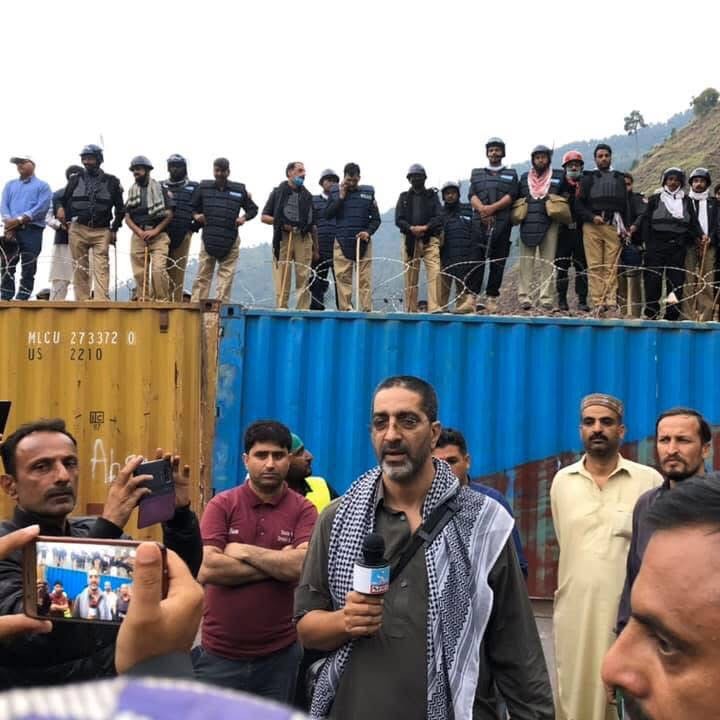
Ahmed has also directly challenged the continued presence of Pakistan’s military and intelligence institutions in the region, calling for full civilian control and the demilitarisation of civic life.
“Pakistan’s military must quietly withdraw from our civic space,” he said in May 2025, during an event marking the anniversary of the 2021 Rawalakot protests. “We want dignity, not dependency. We want justice, not orders from elsewhere.”
This statement followed months of civil unrest sparked by a controversial “Peaceful Assembly Ordinance” — later suspended by the region’s High Court after widespread protests led by lawyers, student unions, and the Joint Awami Action Committee (JAAC).
PeaceBondAJK2025: A Local Financial Revolution
Ahmed’s team has also proposed #PeaceBondAJK2025, an innovative economic model designed to fund governance and development through local investment and public ownership, instead of relying on foreign aid or federal subsidies.
Every citizen, rich or poor, would be a financial stakeholder in the new system.
Projected economic growth over the next 10 years: up to 10,000%.
Government budget could grow from under \$1 billion today to \$100 billion by 2035.
This vision, if implemented, would make the region one of the most economically empowered self-governing territories in South Asia.
International and Regional Repercussions
The initiative directly questions the legitimacy of decades-old, often secretive, India–Pakistan power arrangements over Jammu & Kashmir — and it challenges both sides’ longstanding narratives.
Instead of aligning with either capital, Ahmed’s approach is based on international norms of democratic self-determination, and has even received attention in academic and policy circles:
Rising Kashmir (2011): Ahmed introduced the idea of “Ownership-Building Measures” (OBMs), a step beyond standard confidence-building efforts.
British Parliament (May 2011): The late Professor Richard Bonney acknowledged these proposals during a Kashmir-focused debate.
Al Jazeera (2019): Asked Tanveer Ahmed to assess Kashmir’s post-Article 370 trajectory; his analysis aired in an extended segment (watch from 19:00 mark): YouTube Link
Growing Public and Expert Support
Since July 2024, over 56 independent advisors — ranging from lawyers to academics — have joined a consultative group overseeing the proposed reforms. And from March 2025 onwards, all political groups, trade unions, and action committees (including the JAAC) have been formally invited to submit their position statements in line with the people’s referendum.
“This is not the agenda of a single leader or party. This is a public process. Whoever claims to represent the people must answer to the people,” said one advisor involved in the consultative process.
More than fourteen centuries ago, in the arid plains of Karbala, a singular event unfolded that would forever alter the course of Islamic history. The martyrdom of Imam Hussain, the beloved grandson of Prophet Muhammad, and the subsequent observance of Ashura have become seminal moments of remembrance and resistance across the Muslim world. Today, as communities in Kashmir, Palestine, and beyond grapple with oppression and the struggle for justice, the story of Karbala resonates with unparalleled urgency. This detailed feature explores the historical background, the harrowing journey to and events at Karbala, and the timeless moral imperatives that continue to inspire empathy and collective action globally.
Historical Context: The Umayyad Caliphate, Yazid, and the Seeds of Dissent
The Shift from Early Islamic Egalitarianism
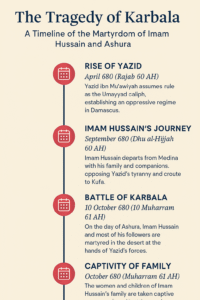
Infographic showing the timeline of the tragedy of Karbala, the martyrdom of Imam Hussain, the aftermath, the universal message of resistance to oppression, and how Ashura is observed globally and in Kashmir.
Following the death of Prophet Muhammad in 632 CE, leadership of the Muslim community passed through the era of the Rashidun Caliphs, who were elected based on merit, piety, and consultation (shura). This period was marked by relative egalitarianism and a sense of justice that reflected the nascent spirit of Islam. However, the political dynamics began to shift after the assassination of Ali ibn Abi Talib, the fourth caliph and cousin of the Prophet, in 661 CE. The subsequent establishment of the Umayyad dynasty by Muawiya ibn Abi Sufyan marked a definitive move towards centralized, hereditary rule, sharply contrasting with the earlier democratic ideals.
The Reign of Yazid and the Erosion of Moral Authority
After Muawiya’s death, his son Yazid assumed power in 680 CE under conditions that many contemporaries found deeply troubling. Yazid’s ascension signaled not only a continuation of dynastic rule but also a pervasive shift in the conduct of governance. His leadership was characterized by the imposition of policies that prioritized political expediency and consolidation of power over the moral and ethical precepts introduced by the Prophet Muhammad. It was within this charged atmosphere that Imam Hussain, revered for his commitment to justice and moral rectitude, refused to pledge allegiance to Yazid—a decision that ultimately set him on a path to martyrdom and enshrined his legacy as a champion of truth.
“Yazid’s rule, steeped in the trappings of autocracy, was seen by many as a grave betrayal of the Prophet’s ideals,” notes historian John Renard in his seminal work on early Islamic politics.
Imam Hussain’s Journey from Medina to Karbala
A Call to Resistance from Kufa
Imam Hussain’s journey represents a deliberate quest for justice rather than a pursuit of political power. Residing in the tranquil environs of Medina, Hussain received impassioned letters from the people of Kufa, who implored him to assume leadership against the despotic rule of Yazid. The citizens of Kufa, disenchanted with the arbitrary authority of the Umayyad regime, saw in Hussain a beacon of hope—a leader who could restore the principles of justice and righteousness that had defined early Islam.
The Departure: A Moral Stand Against Tyranny
In 680 CE, undeterred by the potential for bloodshed, Imam Hussain set forth from Medina. His decision to leave the safety of the Islamic capital was fueled by a powerful sense of duty rather than ambition. Hussain’s caravan, consisting of family members and a small group of staunch supporters, embarked on this perilous journey with the singular intention of upholding the sanctity of truth and justice. His departure was laden with symbolism: it was a renunciation of worldly power in favor of a moral high ground—a stance that would ultimately lead to one of the most tragic encounters in Islamic history.
The Inevitable Confrontation at Karbala
Arriving in the desert plains near Karbala, located on the banks of the Euphrates in present-day Iraq, Imam Hussain and his followers found themselves encircled by an imposing army under the command of Yazid’s governor. The support once promised by the people of Kufa had evaporated or been thwarted by fear and coercion, leaving Hussain’s modest band isolated in a hostile environment. The stage was set for an epic confrontation—a battle not just for survival, but for the soul of the Islamic community.
Key Events at the Battle of Karbala and the Martyrdom of Imam Hussain
The Pre-Battle Ordeal: Deprivation and Desperation
In the days leading up to the fateful confrontation, the encircling Umayyad forces imposed a ruthless blockade on Hussain’s camp, cutting off access to water from the Euphrates. This deliberate act of deprivation exacerbated the suffering of Hussain’s followers, particularly affecting women, children, and the elderly. The strategic denial of water symbolized not only a logistical warfare tactic but also a moral affront to the sanctity of human life.
The Night Before Ashura: Unity Amid Adversity
On the eve of Ashura, Imam Hussain demonstrated exemplary leadership by gathering his companions and offering them an opportunity to leave the camp under the cover of night, without the burden of loyalty should they choose to depart. Remarkably, not one of his followers abandoned him. This profound moment of solidarity and shared sacrifice set a powerful tone for the events that were to unfold—a testament to the unyielding commitment of those who believed in the sanctity of his cause.
The Day of Ashura: A Battle Etched in Blood
The confrontation reached its crescendo on the 10th of Muharram, the day now known as Ashura. Despite fighting valiantly, Hussain’s party, significantly outnumbered and ill-equipped, faced an overwhelming force. In the ensuing clash, one by one, the companions of Imam Hussain fell. Each death, marked by valor and sacrifice, further underscored the brutality of the battle.
Among the martyrs was Abbas ibn Ali, the epitome of loyalty and bravery, who endeavored to secure water for the thirsty children but succumbed to fatal injuries in the process. The tragic killing of the infant Ali Asghar, struck down by a spear even as his father pleaded for mercy, remains one of the most heartrending episodes of the battle and a powerful symbol of innocence lost amidst the maelstrom of conflict.
Imam Hussain himself sustained grievous injuries and, in a final act of defiance, was martyred in a brutal manner. His death, compounded by the mutilation of his body and the posthumous desecration of his head—sent as a trophy to Yazid in Damascus—served as a visceral reminder of the devastating cost of tyranny.
The Aftermath: Captivity, the Voice of Zainab bint Ali, and the Enduring Legacy
The Captivity of Women and Children
The carnage at Karbala did not mark the end of suffering for Hussain’s family. In the aftermath of the battle, the surviving women and children, including the noble figure of Zainab bint Ali, were subjected to abject humiliation. Captured and paraded through Kufa, they were ultimately sent to the court of Yazid in Damascus. This brutal spectacle was designed to inflict maximum psychological damage—to break the spirit of those who dared resist the tyrannical regime.
Zainab bint Ali: Eloquent Defender of Justice
Amid this dark chapter, Zainab bint Ali emerged as an unyielding beacon of courage and resilience. In the face of unspeakable injustice, she delivered impassioned speeches before Yazid’s court, condemning the atrocities committed at Karbala and asserting the moral high ground of her brother’s sacrifice. Her testimony, which vividly recounted the sufferings and the valiant resistance of those at Karbala, played a crucial role in preserving the memory and message of that fateful day. As noted by scholars at Al-Islam.org, Zainab’s speeches have come to symbolize the timeless struggle against oppression—a voice that transcends time and geography.
The Enduring Moral and Spiritual Legacy
The lessons of Karbala extend far beyond historical chronology. The martyrdom of Imam Hussain is revered as a model of ultimate sacrifice for truth and justice, a symbol of the struggle against tyranny that continues to inspire millions. In a world rife with injustice and conflict, the spiritual and moral imperatives exemplified by Karbala serve as a guiding light:
Integrity Over Power: Hussain’s moral stand teaches that adhering to ethical principles is paramount, even at the cost of immense personal sacrifice.
The Power of Collective Resistance: The unwavering loyalty and unity displayed by Hussain’s companions and the steadfastness of Zainab underscore the strength of communal solidarity in the face of overwhelming adversity.
Universal Lessons in Humanity: Beyond the realm of religious significance, Karbala’s legacy offers vital insights into the nature of resistance, the rights of the oppressed, and the enduring human pursuit of dignity and justice.
Global Observance of Ashura and Its Resonance in Kashmir
Ashura Around the World
The commemoration of Ashura encompasses a rich tapestry of rituals and traditions that vary widely across different cultures and regions:
Iraq: In Karbala, millions of pilgrims converge annually for Arbaeen, the 40th day after Ashura, marking one of the largest gatherings in the world. This pilgrimage is both a celebration of sacrifice and a reaffirmation of the values that Imam Hussain upheld.
Iran: Communities across Iran observe Ashura with elaborate processions, reenactments, and public displays of mourning that blend ritual, art, and political commentary.
South Asia: In countries such as India, Pakistan, and Bangladesh, Ashura is observed with a mixture of solemn processions, passion plays (ta’ziya), and public expressions of grief that emphasize community solidarity and resilience.
The West and Beyond: In Europe, North America, Africa, and other parts of the world, diaspora communities hold interfaith dialogues, educational seminars, and cultural events to highlight the moral and historical significance of Ashura.
Ashura in Kashmir
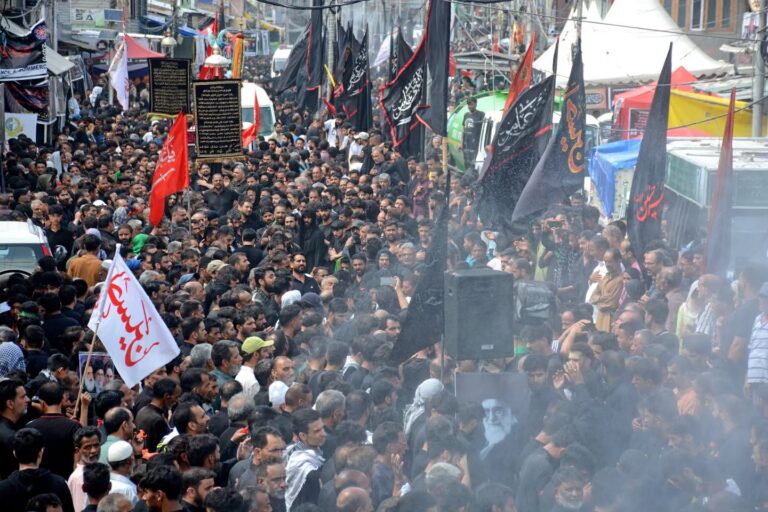
Shia Muslims gather during Ashura in Srinagar, Indian-administered Jammu and Kashmir — a region with significant Shia populations across Gilgit-Baltistan, Ladakh, and parts of Jammu & Kashmir.
In Kashmir, Ashura carries a profoundly layered meaning. Beyond its religious observance, it emerges as a symbol of collective resistance and solidarity in a region long marked by political strife and social upheaval. Despite periodic challenges and restrictions imposed by political circumstances, communities in Srinagar, Budgam, and other regions continue to observe Ashura with deep devotion. Processions, ritualistic recitations of elegies (marsiya), and community-driven initiatives underscore a shared belief in the values of justice and sacrifice.
For many Kashmiris, the commemorations are not only a remembrance of past suffering but also a call to action—a reminder that the spirit of Imam Hussain’s resistance against tyranny finds echoes in their own struggle for autonomy and dignity. As one local activist poignantly remarked, “In our land, every day is a test of our resolve; Ashura reminds us that standing up against oppression is not just a duty, but a sacred trust.”
The Universal Message of Karbala: Lessons for Today’s World
A Beacon of Resistance Against Oppression
The narrative of Karbala transcends its historical and geographical boundaries. Its themes—resistance, sacrifice, and the relentless pursuit of justice—resonate deeply with oppressed peoples across the globe. For those in regions such as Kashmir and Palestine, where communities continue to confront oppressive regimes and external interferences, the martyrdom of Imam Hussain offers a powerful paradigm of resistance. His unwavering commitment to truth, even in the face of insurmountable odds, reminds all that the price of dignity and justice is high, yet indispensable.
“Every grave in Karbala tells a story of resistance—a story that mirrors the struggles faced by oppressed nations and communities in our own time,” observes Middle Eastern scholar Dr. Farid Ahmed in his recent analysis of contemporary movements for justice.
Inspirational Parallels with Global Movements
Historical echoes of Karbala can be discerned in various movements around the world. Figures such as Mahatma Gandhi and Martin Luther King Jr. have, in different contexts, drawn inspiration from the principles embodied by Imam Hussain. Karbala’s legacy calls upon each individual to challenge systemic injustice—whether in the war-torn regions of Palestine or the conflict-ridden valleys of Kashmir.
In modern discourse, the phrase “Never bow to tyranny” not only encapsulates the spirit of Karbala but also serves as a rallying cry for millions who continue to seek fairness, accountability, and human dignity in an often oppressive world.
The Moral Imperative for Global Solidarity
At its core, the tragedy of Karbala is a call for moral clarity. It insists that humanity cannot remain silent in the face of injustice. The enduring lessons of Karbala compel us to build bridges of solidarity among oppressed peoples across diverse cultures and geographies. By embracing the values of empathy, courage, and unwavering resistance, communities can collectively challenge the forces of despotism and ensure that the light of justice prevails.
For Kashmir, a region that has repeatedly witnessed cycles of strife and suppression, the story of Karbala offers both a source of solace and a call to relentless resistance. It affirms that while tyranny may temporarily seize power, the spirit of truth and justice—embodied by figures like Imam Hussain—will ultimately triumph.
Karbala’s Enduring Relevance in a Divided World
The tragedy of Karbala, marked by the martyrdom of Imam Hussain and the sorrowful observance of Ashura, stands as a timeless testament to the human spirit’s capacity for resilience and moral fortitude. Its narrative, steeped in historical sacrifice and unwavering commitment to justice, serves as a guiding light for all who face oppression—whether it is on the battlefields of ancient Iraq, in the contested landscapes of Kashmir, or amidst the enduring struggles in Palestine.
In commemorating Ashura, we are invited to reflect on the profound lessons of Karbala: that the fight against tyranny is not just a historical episode, but a continuous, universal mandate. It calls for every individual to uphold justice, to resist oppression with dignity, and to show compassion towards all who suffer. As communities around the world rally for their rights and strive to build a more equitable future, the legacy of Imam Hussain remains as potent as ever—a clarion call to never surrender to injustice, no matter the odds.
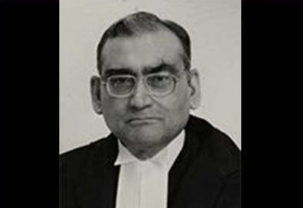
As the sacred month of Muharram marks its somber presence across the Islamic world, stories of interfaith respect and universal solidarity continue to emerge, none more poignant than the recent viral interview of Justice Markandey Katju, former Chief Justice of Delhi and senior judge of the Supreme Court of India. In a moving conversation with Pakistan’s 24 Digital, Justice Katju, a devout Hindu by birth, paid an emotional tribute to Hazrat Imam Hussain (A.S), underscoring the enduring legacy of Karbala as a beacon for all humanity.
A Month of Mourning and Reflection
“This month is a tough one; it is the month of the Prophet’s hardship. I’m wearing black clothes,” began Justice Katju, referencing the traditional symbol of mourning during Muharram. “Just like I respect the Hindu faith I was born into, I respect Islam the same way. Whenever I think about Hazrat Hussain, when I read about what happened in Karbala, tears come to my eyes thinking about how much they endured.”
His words echo the sentiment that the tragedy of Karbala transcends religious boundaries. Imam Hussain’s refusal to submit to tyranny, his sacrifice, and his unwavering stand for justice are universal lessons, resonating with people of all faiths and backgrounds.
Honoring Muharram: More Than Rituals
Justice Katju’s participation in Muharram processions and his choice to don the “kala joda” (black attire) during this month symbolize a deep empathy and solidarity with the Muslim community. “During Muharram, there’s a somber atmosphere. To support that, I chose to wear this black cloth today. I respect every religion. And in Islam, the way Hazrat Hussain showed immense bravery, sacrificed everything, and never bowed his head before the oppressor Yazid—I salute him for that.”
He further reflected on the timeless message of Karbala: “The right way is not to bow down in front of them but to fight bravely. That’s what today’s Iranians are showing, not Palestinians. And look, I don’t know how much you all know, but in Urdu poetry, a new style called Marsiya has emerged. The greatest poet of Marsiya was Mir Anees.”
Poetry and Principle: Wasim Barelvi’s Tribute
Bringing in the cultural richness of Urdu poetry, Justice Katju shared verses from the celebrated poet Wasim Barelvi, highlighting the spirit of resistance and the necessity to uphold principles in the face of adversity:
“When principles are challenged, it’s necessary to stand firm. If you’re alive, then you’ve got to show it. Pray that my courage stays strong, This one lamp can outshine many storms— Your arrogance, Pharaoh.”
Such poetry, Justice Katju noted, encapsulates the enduring power of standing up against oppression, a value championed by Imam Hussain and relevant for all times.
Historical Bonds: When Hindus Honored Muharram
Justice Katju recounted a powerful story from 19th-century Lucknow: “On a day when Muharram and Holi coincided, Hindu residents decided not to celebrate Holi out of respect for their Muslim brothers’ mourning. In response, the Nawab of Awadh encouraged the joint celebration of Holi, illustrating the deep mutual respect that once defined Hindu-Muslim relations in India.”
This episode, supported by historical records, serves as a reminder of the harmonious coexistence and intercommunal solidarity that has long been part of the subcontinent’s social fabric.
Unity Beyond Politics
Addressing the current climate of polarization, Justice Katju dismissed notions of inherent enmity between Hindus and Muslims: “Hindus and Muslims live together here in India with a lot of love and affection. All this talk about hatred is just surface-level stuff; it’s politics, done to get votes. The whole game is to spread hate so they can win votes. Otherwise, there’s no real enmity.”
He emphasized the importance of recognizing political manipulation and urged both communities to reclaim their shared heritage of mutual respect and compassion.
Karbala’s Message for Today’s Conflicts
Reflecting on recent conflicts and the suffering in regions like Gaza, Justice Katju drew parallels with the stand taken by Imam Hussain:
“Hazrat Hussain’s sacrifice is not just for Muslims, but for all humanity. The message of Karbala—never to bow your head to oppression—remains as vital today as ever. Whether in Palestine, Iran, or anywhere else, those who stand against tyranny are following in Imam Hussain’s footsteps.”
He criticized the role of global arms manufacturers in perpetuating conflicts between nations like India and Pakistan, stressing that both countries are victims rather than victors in such wars.
The Courage of Zainab: Karbala’s Unsung Hero
Justice Katju highlighted the extraordinary bravery of Hazrat Zainab, Imam Hussain’s sister, who, despite being shackled, delivered powerful speeches that exposed the atrocities of Karbala to the wider world. “If Zainab hadn’t spoken up, no one would have known what really happened. She was like a great correspondent, a journalist who told the world the truth.”
A Universal Message of Justice and Compassion
Justice Katju’s interview is a timely reminder that the values exemplified by Imam Hussain courage, integrity, and resistance to injustice—are not confined to any one faith or community. They belong to all humanity.
As Kashmir and the world reflect on the sacrifices of Karbala, may we be inspired to uphold justice, foster interfaith harmony, and stand united against all forms of oppression.
MUZAFFARABAD,Pakistan administered Kashmir – The recent order by the Senior Superintendent of Police (SSP) in Muzaffarabad to seize all non-custom-paid vehicles has ignited fierce resistance from the local traders’ association. Central President of the Traders Association, Sardar Iftikhar Firoz, has condemned the directive as both humiliating and exploitative. He warned that any attempt to confiscate such vehicles would trigger a “strong backlash.” He firmly declared: “No vehicle will be impounded.”
Firoz emphasised that these vehicles, legally imported from Pakistan into this landlocked, disputed region, have been operating openly for nearly 78 years—without regulation or enforcement—across regions such as Swat, former FATA, Balochistan, Chitral, and here in Kashmir. “Where have the laws been all these decades?” he asked, noting that the levied customs duties—paid upon import—do not benefit local public services but instead flow straight into Pakistan’s federal coffers.
“These heavy taxes,” he added, “are compulsory and imperialist; they must end.” He urged the Muzaffarabad administration to withdraw the crackdown and instead formalise policy: vehicles should be registered under the Excise Department, issued license plates, and taxed locally (e.g., via token tax), rather than seized through law enforcement “drama.” He argued this would generate revenue for region-specific welfare and dissuade “manufactured unrest.”
Firoz’s statement reflects broader frustration: “This disputed region has no share in the NFC Award,” he said, “so why should the federal government extract taxes?” He accused the authorities of intentionally instigating unrest, sabotaging local stability, and provoking anger among residents, even though everyone claims to support peace.
Legal, Political & Historical Context
Conflicted Territory and Customs Policy
Muzaffarabad’s label as a disputed territory under Pakistani administration complicates the legality of standard customs enforcement. For decades, vehicles that arrived informally via Pakistan-administered passes were permitted local use under tacit acceptance—particularly in rural and mountainous regions.
International Law & Self‑Determination
The dispute over Jammu & Kashmir is rooted in UN Security Council Resolutions, especially UNSC Resolution 47 (1948), which called for a free and impartial plebiscite to determine Kashmir’s future. The UN reaffirmed Kashmiris’ right to self-determination in subsequent resolutions and through international treaties—including the UN Charter and ICCPR. The ongoing discord over taxation and federal jurisdiction is tightly interwoven with these unresolved sovereignty issues.
Voices from the Ground
Traders argue the vehicle seizures are symptomatic of a larger pattern—where federal authorities impose policies without local input, earnings flow to Islamabad, and local administrations are bypassed. Public voices reflect resentment:
“They pay lakhs in customs duty—but where is the benefit? Not a single penny returns to people here.” “Why seize poor farmers’ pick-up trucks every few years? It’s a yearly ‘raid’.”
What Comes Next?
Local government response: Will Excise officials propose a registration/taxation scheme to replace enforcement crackdowns?
Regional economic impact: Will driver confidence recover, or further damage trade and mobility?
Legal-political pressure: Will traders take their plea to the Azad Kashmir Assembly or courts, raising questions about federal overreach in a disputed territory?
The UN Charter, Security Council resolutions, and general international law affirm Kashmiris’ right to self‑determination. Any governance measures—including trade and tax arrangements—should align with these principles, particularly in disputed areas.
Conclusion The non-custom-paid vehicle issue is more than a tax dispute—it exemplifies the unresolved status of Azad Kashmir and underscores why local voices reject external dictates. A sustainable resolution must centre on clear domestic regulations, revenue for local welfare, and respect for democratic rights and international mandates.
The Azadi Times continues to monitor developments in Muzaffarabad. In the meantime, we call for inclusive policymaking, local-first governance, and a pathway toward Kashmiri self-determination.
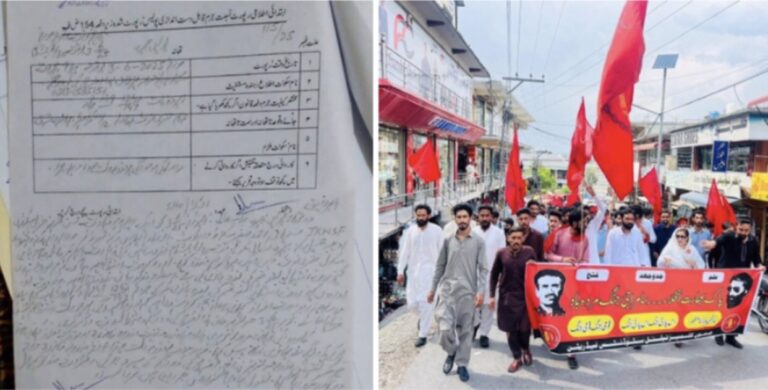
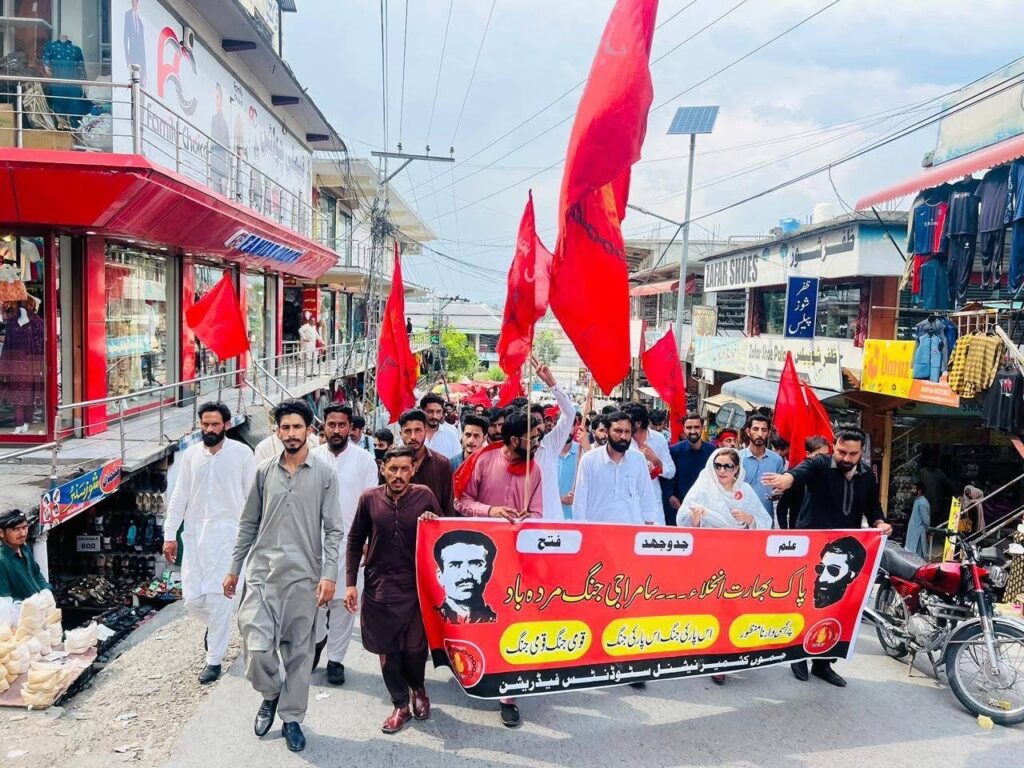
RAWALAKOT, Azad Jammu & Kashmir — A First Information Report (FIR) has surfaced following the June 3rd protest march organized by the Jammu Kashmir National Students Federation (JKNSF) at the Taitri Note Crossing Point near the Ceasefire line Line of Control (LoC). The FIR alleges anti-state activity and unlawful assembly against multiple senior JKNSF leaders.
Filed under Sections 124, 147, and 149 of the Pakistan Penal Code, the FIR names several prominent figures, including:
Mohsin Aziz, Central Secretary-General of JKNSF
Adeeba Jameel, Senior Vice President
Ansar Ilyas, Deputy Chief Organizer
Saddam Wani, Central Committee Member
Ahmed Sagheer, Chairman of the Postgraduate College Unit, Rawalakot
According to the FIR, the accused allegedly chanted slogans against Pakistani security forces and civil administration, and led an unsanctioned rally near the sensitive border region.
Federation Condemns FIR, Reaffirms Commitment to Peaceful Resistance
In a statement issued shortly after the FIR became public, the JKNSF leadership rejected the charges, calling them “baseless” and “politically motivated.” The federation reiterated its long-standing demand for the withdrawal of both Indian and Pakistani forces from Jammu and Kashmir, advocating for the region’s unity, sovereignty, and self-determination.
“We view this FIR as a direct attempt to silence democratic dissent and suppress student activism,” read the official JKNSF response. “Any attempt to arrest our leaders or activists will be met with a coordinated protest movement across the region.”
The JKNSF emphasized that their campaign is peaceful, rooted in the political ideology of an independent and undivided Jammu & Kashmir, free from external military occupation.
A Longstanding Anti-Occupation Stance
JKNSF activists hold a protest banner during the Rawalakot march calling for the withdrawal of Pakistani and Indian forces from Jammu & Kashmir. The banner reads: ‘Pak-Bharat Inkhala – Samraji Jang murdabad’ (Withdrawal of Pakistan and India – End Imperialist Occupation).
Founded on socialist and anti-imperialist principles, the JKNSF has historically taken a vocal stance against what it terms the “forced occupation” of the region by both India and Pakistan. The group maintains that only a demilitarized and autonomous Jammu and Kashmir can ensure peace and stability in South Asia.
Their latest march to the Taitri Note LoC point was aimed at highlighting this position, but its confrontation with security authorities escalated into legal action.
Human Rights Concerns and Freedom of Expression
The FIR has raised questions among human rights observers and civil society activists, who argue that criminalizing peaceful protest and political slogans violates constitutional guarantees of freedom of speech and assembly.
Legal experts note that Section 124 (sedition) and related charges have often been used to curb dissent in the region, both in Pakistan-administered and Indian-administered areas of Kashmir.
Political Reactions and Next Steps
While no arrests had been confirmed as of this report, JKNSF has vowed to resist any such attempts with region-wide mobilization. The group called on local and international rights organizations to monitor the situation and advocate for the right to peaceful assembly in contested and militarized zones.
The case is likely to deepen the ongoing debate around nationalism, student activism, and civil-military dynamics in Kashmir—a region already marked by geopolitical tension and decades-long conflict.
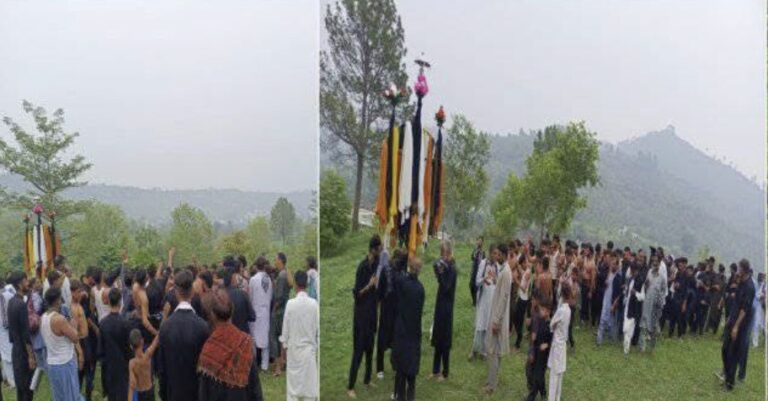
KOTLI SOHALAN, Azad Jammu & Kashmir (PaJK)— July 5, 2025: The central 9th Muharram procession in Tehsil Charhoi, District Kotli, was held with traditional reverence and discipline, drawing thousands of mourners from across the region. The procession began from the Central Imam Bargah Namb, Kotli Sohalan, the spiritual and organizational hub for Shia commemorations in the area.
Participants dressed in black gathered from villages, towns, and surrounding regions, engaging in noha khwani(lamentation recitations) and matam (ritual chest beating) to pay tribute to Imam Hussain (AS) and the martyrs of Karbala.
Tight Security and Community Coordination
Local law enforcement, led by the Charhoi Police Station, implemented a robust security plan to ensure the safety of all attendees. Personnel from additional security forces and members of local peace committees were deployed at key locations along the route.
No incidents of violence or disorder were reported, and the event proceeded peacefully, highlighting a model of inter-agency coordination and religious harmony.
Religious Gatherings and Sermons
Throughout the procession, several majalis (religious gatherings) were held where scholars and zakireen (orators) shed light on the sacrifices of Imam Hussain (AS) and his companions in the Battle of Karbala. The sermons emphasized timeless Islamic values of patience, justice, and resistance against oppression, contextualizing them within present-day societal challenges.
Community Services and Support Facilities
The route of the procession was lined with sabeels (free water stations), niyaz stalls (food distribution), and medical relief camps. These services were organized by local youth groups, community organizations, and charitable institutions.
Rescue 1122 teams and health department personnel were stationed along the route to respond to any emergencies, ensuring timely medical assistance and logistical support.
Preparations Underway for Ashura Procession
Preparations for the central 10th Muharram (Ashura) procession — the most significant day of mourning in the Islamic calendar — are in full swing. The upcoming procession will also depart from Imam Bargah Namb, Kotli Sohalan.
Municipal and district authorities have finalized plans for security deployment, traffic control, sanitation, water distribution, and crowd management to ensure the Ashura procession proceeds in an atmosphere of peace and religious solemnity.
Local administration, police forces, emergency services, and religious organizations remain on high alert to manage the large turnout expected on Ashura.
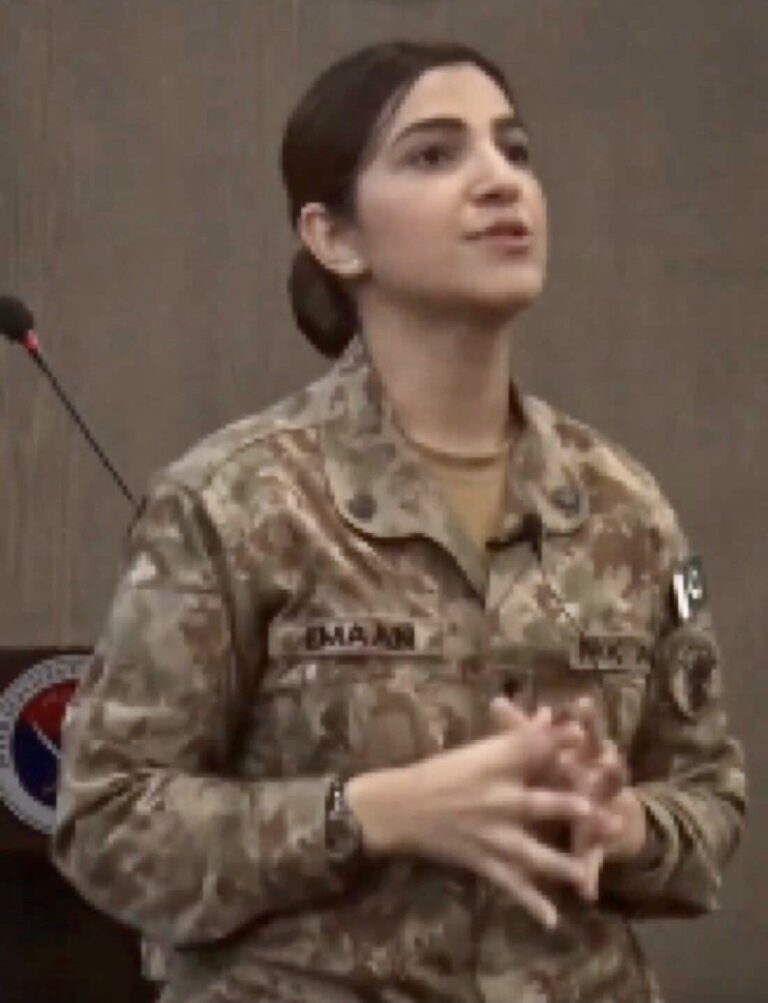
ISLAMABAD — A passionate speech by Captain Iman Durrani, a female officer of the Pakistan Army, has ignited a wave of reactions across social media platforms, particularly on X (formerly Twitter), where it quickly rose to become a top trending topic under the hashtag #PublicInterest.
The viral clip, captured during a recent address to students at an unnamed educational institution, shows Captain Durrani speaking emphatically about national duty, the role of the military, and public accountability. Her remarks have drawn both praise and criticism, highlighting the enduring complexities of civil-military perceptions in Pakistan.
“We Do It for the Public Interest”
In the widely circulated footage, Captain Durrani underscores the sacrifices and dedication of the armed forces in safeguarding national interests. “Whatever the army does, it does in the public interest,” she asserts, acknowledging that while the military may not be infallible, its actions are driven by a commitment to the country.
She also references internal accountability mechanisms within the army, noting the inclusion of critical assessments in military training materials. “At the Staff College, we are taught using a book that covers the 1965 and 1971 wars. That book doesn’t glorify the army—it emphasizes self-accountability,” she explained, reinforcing the institution’s internal culture of introspection.
A Call for Civic Responsibility
Captain Durrani’s address also touched on the broader question of civic responsibility. “People often ask what the country has done for them. I say, ask what you have done for your country,” she told the audience, echoing a sentiment reminiscent of civic philosophies worldwide.
“We are standing strong not just because of the army, but due to the collective efforts of all national institutions,” she added, attempting to frame the military’s role within a larger context of state functioning.
Social Media Reacts: Applause and Apprehension
The speech quickly gained momentum online, with many users hailing her words as a refreshing and motivational perspective on patriotism and service.
Defense analyst Dr. Shama Junejo supported Captain Durrani’s stance, writing, “My father used to say: never ask what the country did for you—tell your children what you did for your country. This young officer has spoken from the heart. To ignore her message just because she’s in uniform is unfair.”
Former Defence Minister Khawaja Asif also shared the video, commenting “Bravo 👏👏” on his official X account, further boosting the speech’s visibility.
However, not all reactions were favorable. Some users voiced skepticism, suggesting that the army must still do more to build trust with the public. “Why shouldn’t we ask what the country has done for us?” one user wrote. “We pay taxes, we obey laws—what are we getting in return?”
Others expressed concerns over perceived propaganda, with a few accusing the military of using emotional rhetoric to deflect from past political controversies and governance issues.
The Role of Women in the Armed Forces
Captain Durrani’s emergence as a viral figure also reignited discussions about the evolving role of women in Pakistan’s military. While the armed forces have long included women in medical and administrative roles, an increasing number are now serving in combat and strategic positions. Her public presence highlights this shift, and many applauded the visibility of a strong female voice in a traditionally male-dominated sphere.
A Broader Reflection
The mixed reactions to Captain Durrani’s speech reflect the broader societal divisions regarding the military’s role in Pakistan’s politics and governance. While the armed forces remain among the country’s most powerful institutions, public opinion about their involvement in civil matters continues to evolve.
The virality of the speech underscores the potency of digital platforms in shaping national discourse. Whether viewed as genuine inspiration or carefully constructed messaging, Captain Durrani’s words have succeeded in sparking a much-needed conversation on national identity, accountability, and the duties of both citizens and institutions.
Few relationships in life are as profound and tender as the one between a father and daughter. It’s a bond woven with love, trust, laughter, lessons, and—sometimes—heartache or healing. As society embraces new ways to celebrate family, tattoos have emerged as a deeply personal and lasting way to honor these cherished connections. If you’re searching for father daughter tattoo ideas that capture your unique story, you’re not alone.
According to Google Trends, searches for “father daughter tattoos” and “father daughter tattoo ideas” have doubled globally over the past five years. Social media is filled with touching stories and creative ink, from minimalist symbols to elaborate matching designs. Family tattoos—once niche—are now mainstream, with artists reporting a 30% increase in requests for parent-child designs since 2020. Whether you want something subtle or bold, permanent or temporary, this guide from The Azadi Times brings you inspiration, meaning, and practical advice for your next piece of art.
What Makes a Great Father-Daughter Tattoo?
Before you head to the tattoo studio, it’s important to consider what makes a tattoo not just good, but truly great for celebrating the father-daughter bond.
1. Meaningful Symbolism
The best father daughter tattoo ideas come from the heart. Think about shared experiences, phrases, places, or symbols that resonate with your relationship. A great tattoo should evoke memories and emotions every time you see it.
2. Timeless Design
Trends come and go, but the father-daughter connection lasts a lifetime. Choose designs that are classic or adaptable—something you’ll love at every stage of life.
3. Placement Options
Where you get your tattoo is just as important as what you choose. Some opt for visible spots like the forearm or wrist, while others prefer more private areas as a personal reminder.
4. Matching vs. Complementary Tattoos
Some families go for identical designs, while others pick two tattoos that connect (like a lock and key, or compass and anchor). Both approaches can be beautiful—choose what reflects your story.
Best Father Daughter Tattoo Ideas (With Meanings)
Ready for inspiration? Here are some of the most popular and meaningful father daughter tattoo ideas for 2025, with explanations:
1. Infinity Symbol with Initials
Meaning: Eternal love, unbreakable bond Why it works: Simple, minimalist, and customizable. Add each other’s initials or a tiny heart for a unique touch.
2. Holding Hands Silhouette
Meaning: Protection, guidance, childhood memories Why it works: A silhouette of a large and small hand clasped together symbolizes trust and lifelong support.
3. King and Princess Crown
Meaning: Dad as the king, daughter as his princess Why it works: Playful yet regal. Crowns can be elaborate or minimal for subtlety.
4. Coordinates of Birthplaces
Meaning: The place where your story began Why it works: Latitude and longitude tattoos are both secretive and meaningful—only you two know the story behind the numbers.
5. Quote Tattoos (“I’ll Always Be Your Little Girl”)
Meaning: Spoken love and reassurance Why it works: Choose a phrase you say to each other, or a line from a favorite book or song.
6. Roman Numerals of Birthdate
Meaning: Honoring a significant date Why it works: Roman numerals look elegant and can mark birthdays, adoption days, or special milestones.
7. Matching Heartbeat or Soundwave Tattoos
Meaning: Life, connection, shared moments Why it works: Some get the soundwave of each other’s voices saying “I love you,” or the pattern of a heartbeat from an EKG.
8. Lock & Key or Compass & Anchor
Meaning: Security, guidance, grounding Why it works: The lock/key or compass/anchor pairings are classic for “you complete me” symbolism. The compass points the way, the anchor keeps you grounded.
9. Tree and Sapling (Tree of Life)
Meaning: Growth, roots, generational bond Why it works: A large tree for dad and a sapling for daughter can be placed together or separately, representing family lineage and protection.
Unique Design Styles for Father Daughter Tattoos
Your tattoo should feel as unique as your relationship. Here are some trending and timeless styles for father daughter tattoo designs:
Minimalist / Fine Line
Clean, subtle lines
Ideal for small, discreet tattoos
Popular for initials, dates, or simple symbols
Watercolor Tattoos
Bright, splashy colors that mimic paint
Perfect for flowers, skies, or abstract shapes
Adds a dreamy, artistic flair
Black & Grey Realism
Highly detailed, photo-like portraits or objects
Good for hands, faces, or landscapes
Traditional / Neo-Traditional
Bold outlines, vibrant colors
Classic American or Japanese motifs (swallows, roses, script)
Tribal-Inspired Designs
Geometric shapes and patterns
Can incorporate cultural heritage or family history
Cultural / Regional Symbolism
Islamic calligraphy (e.g., “Rahmah” for mercy or “Barakah” for blessing)
Kashmiri motifs (paisleys, Chinar leaves, or regional landscapes)
Celtic knots, Maori koru, or African Adinkra symbols for those honoring specific backgrounds
Father-Daughter Tattoo Ideas by Relationship Type
Every father-daughter relationship is unique. Your tattoo can reflect your journey, challenges, or shared victories.
For Single Dads
Tattoos that symbolize dual roles (e.g., lion and cub, strong arms holding a child)
Quotes about resilience, e.g., “You are my why.”
For Adopted Daughters
Adoption date in Roman numerals
Puzzle pieces or “found you” coordinates
Long-Distance Father-Daughter
Matching compass tattoos (“Always find your way home”)
Airplane and dotted path
Interlocking maps or heart halves
Memorial Tattoo Ideas
Dad’s signature, handwriting, or favorite saying
Portrait or date with angel wings or a halo
A meaningful object (watch, guitar, favorite flower) in fine line or watercolor
Tattoos That Symbolize Healing or Reunion
Broken chains mended together
Phoenix rising (new beginnings)
Lotus flower (growth through adversity)
Placement Ideas for Father Daughter Tattoos
Placement can affect pain, visibility, and the intimacy of your tattoo. Consider these spots:
Forearm: Easy to display, good for larger designs or phrases
Shoulder: Classic for dads, can be matched with daughter’s upper arm or back
Wrist: Popular for minimalist or matching tattoos
Chest (Dad) & Ankle/Neck (Daughter): Symbolizes protection and closeness, even when apart
Matching Finger Tattoos: Ideal for small icons, initials, or dates
Behind the Ear / Collarbone: Subtle, elegant, and great for those who want a discreet reminder
Real-Life Tattoo Stories
Sometimes the most powerful inspiration comes from real people. Here are a few touching stories:
Instagram user @inkedwithlove: “My dad and I got matching heartbeat tattoos after he survived a heart attack. Every time I see mine, I remember how precious life is.”
Reddit user u/ForeverHerGirl: “Lost my father to cancer. I got his signature—‘Love, Dad’—on my wrist in his handwriting. It’s like he’s still holding my hand through life.”
Tattoo blog, The Inked Parent: “As a single dad, I wanted something special. My daughter picked out a lion and cub design. We both feel stronger together.”
Temporary vs. Permanent: For the Hesitant
Not everyone is ready for permanent ink. If you’re curious but not committed, try these options:
Semi-Permanent Tattoos
Last 1–2 weeks
Companies like Inkbox offer realistic designs that fade naturally
Henna Designs
Natural, plant-based dye
Popular in South Asia and the Middle East
Beautiful for fine line or floral designs
Tattoo Stickers & Minimalist Ink Trials
Custom sticker tattoos are available online—great for a test run
Some artists offer fine line “trial” tattoos with ultra-thin ink that fades in a few months
Tattoo Aftercare Tips
A tattoo is a lifelong investment in your skin and your story. Proper aftercare ensures your father daughter tattoos stay vibrant and healthy.
Follow Artist Instructions: Every artist has their protocol—listen to them first!
Keep it clean: Gently wash with fragrance-free soap and lukewarm water.
Avoid direct sunlight: Especially in the first two weeks—UV rays can fade ink fast.
No swimming or soaking: Pools and bathtubs can cause infections during healing.
Moisturize regularly: Use a tattoo-recommended ointment or fragrance-free lotion.
Don’t pick scabs: Let your skin heal naturally to prevent scarring and color loss.
FAQs: Father Daughter Tattoo Ideas
What’s the most popular father-daughter tattoo in 2025? Infinity symbols with initials, heartbeat lines, and minimalist holding hands silhouettes are trending worldwide.
Do matching tattoos have to be in the same style? No! Many choose complementary designs (e.g., lock & key, compass & anchor) in different styles or placements.
What’s the cost for a meaningful small tattoo? Prices vary by artist and location. Expect $50–$200 for a small, minimalist design. Highly detailed or colored tattoos may cost more.
Is it better to get one together or separately? It’s up to you. Many enjoy the bonding experience of getting inked together, but if schedules or locations differ, getting them separately is just as meaningful.
Conclusion
A tattoo is more than ink on skin—it’s a living symbol of love, loyalty, and the unbreakable bond between father and daughter. Whether you choose a tiny infinity symbol, a meaningful quote, or a piece of art that tells your unique story, the best father daughter tattoo ideas come from the heart.
Before you book your appointment, consult with a reputable artist, think carefully about your design and placement, and don’t be afraid to make it your own. After all, this tattoo is a lifelong reminder that—no matter where life takes you—you’re always part of each other’s story.
Ready to celebrate your bond? Explore these ideas, personalize them, and wear your love proudly for the world (or just for each other) to see.
The Azadi Times — Sharing stories that connect families, cultures, and hearts worldwide.
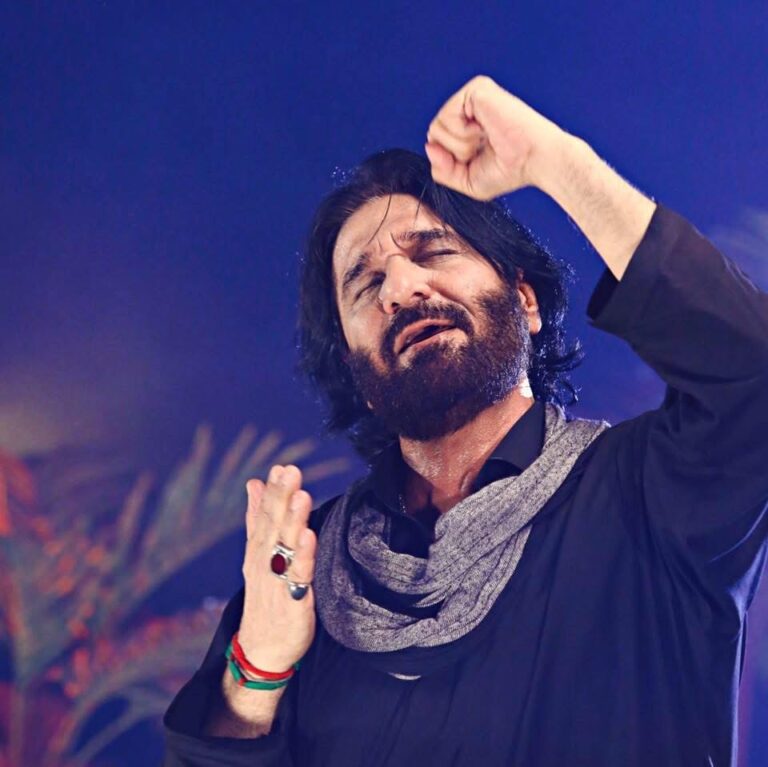
Karachi / London / Srinagar: As the crescent of Muharram 1447 H rises on the Islamic calendar, one voice once again unites Shia communities across continents: that of Syed Nadeem Raza Sarwar. Revered as one of Pakistan’s most iconic noha khuwans (elegiac reciters), Sarwar has released a new collection titled “Zamana Tumhara Ya Hussain,” igniting a fresh wave of devotion and artistic discussion in Shia circles worldwide.
The album, launched on June 29, 2025, is already resonating in majalis (religious gatherings), digital streams, and social media conversations. For millions preparing for Muharram’s solemn commemorations, Nadeem Sarwar’s voice remains a familiar and powerful companion.
Nadeem Sarwar New Nohas
Nadeem Sarwar’s latest release features four poignant nohay:
Zamana Tumhara Ya Hussain
Hassan Imam-e-Hassan
Akhri Sajda
Roz-e-Ashura
Available on platforms like AleMohamed.com, YouTube, and Dailymotion, these nohay are swiftly being integrated into digital and traditional majalis worldwide. Their release has reaffirmed Sarwar’s status not only as an artist but as a custodian of cultural memory and spiritual expression.
Syed Nadeem Raza Sarwar was born in Karachi, Pakistan, to Syed Asrar Hussain Rizvi and Syeda Nargis Khatoon. From a tender age of four, Sarwar was introduced to noha recitation, performing alongside his mother. Over the decades, he has grown into an internationally recognized voice in Islamic devotional arts.
Key highlights from Sarwar’s life and career:
Prolific output: Since the 1980s, he has released 28 volumes on cassette, CD, and digital formats, totaling over 179 kalaams in multiple languages—including Urdu, Sindhi, Punjabi, Persian, Arabic, English, French, Gujarati, and Pushto.
Educational background: Trained in mechanical engineering, design, and fine arts, Sarwar brings a meticulous aesthetic sensibility to his recitations and video productions.
Family legacy: He is married and has three children. His sons, Ali Shanawar and Ali Jee, have also become prominent noha reciters, continuing the family tradition.
International reach: Although born in Karachi, Sarwar is now based in Australia and regularly tours the UK, USA, Canada, Middle East, India, and Europe for live majalis performances.
Sarwar’s influence has expanded dramatically in the digital era. His work transcends geographic borders, thanks to robust online presence:
Streaming and downloads: Sarwar’s nohay attract significant viewership on YouTube, Dailymotion, and AleMohamed.com, where fans can stream or download audio and video.
Viral hashtags: Tags like #Noha2025, #SarwarInMuharram, and #ZamanaTumharaYaHussain trend across Facebook, Instagram, and WhatsApp, turning nohay into viral multimedia experiences.
Reddit discussions: Enthusiasts on platforms like Reddit often dissect Sarwar’s production quality and innovative video editing techniques, praising his capacity to blend visual drama with deep emotional delivery.
“Nadeem Sarwar dedicated his lifetime to serve the Ahlulbayt… Through his voice, the message of Karbala is conveyed.” — Reddit user (View discussion)
Tradition and Modern Aesthetics Intertwined
Nadeem Sarwar’s recitations are more than vocal performances—they are multimedia art forms. His style bridges classical tradition and contemporary presentation:
Poetic lineage: Sarwar’s work draws on literary giants like Rehan Azmi, Mir Anis, and Mirza Dabeer, grounding his nohay in centuries of poetic expression.
Modern production: His engineering and artistic background reflects in high-quality video shoots, innovative camera angles, and choreographed gestures, making each noha visually compelling.
Cultural diversity: Sarwar’s repertoire includes recitations in various regional and ethnic styles—Persian, Arabic, Quetta, Punjabi, Sindhi, Siraiki, Deccan, and the Khoja Ithna Ashari Saf—enhancing his appeal to diverse audiences worldwide.
This innovative fusion has both inspired younger generations and sparked debates among traditionalists who prefer purely classic formats.
Kashmir: A Resonant Audience for Sarwar’s Nohay
While Nadeem Sarwar’s influence is global, his new nohay hold special significance for Kashmir’s Shia communities, where Muharram rituals are deeply interwoven with cultural identity and social memory.
Despite periodic internet restrictions in Kashmir, Sarwar’s nohay are accessed via downloadable content, allowing local communities to incorporate his recitations into mobile-based majalis and home gatherings.
Themes of sacrifice, justice, and endurance in Sarwar’s work resonate with Kashmir’s own narratives of struggle and resilience, adding powerful layers of meaning during the mourning rituals.
Why “Zamana Tumhara Ya Hussain” Matters
Nadeem Sarwar’s “Zamana Tumhara Ya Hussain” is not merely an album—it’s a cultural event signaling the arrival of Muharram 1447 H. The blend of deep emotion, poetic heritage, and cinematic production has cemented Sarwar’s place as a leading figure in global noha culture.
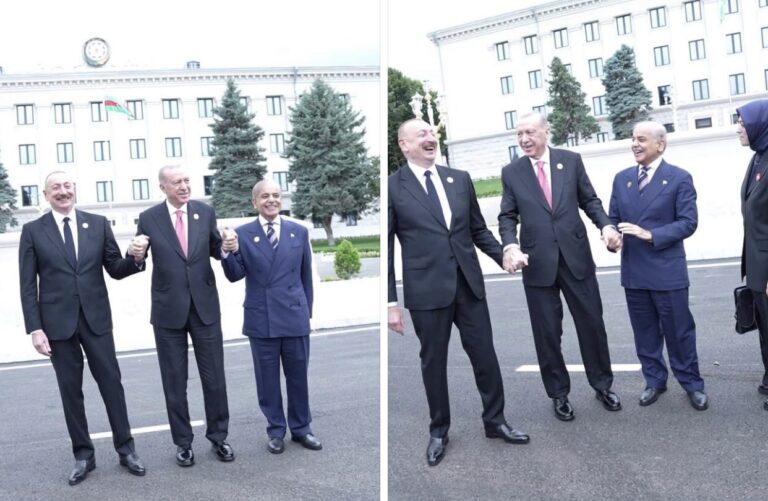
Khankendi, Azerbaijan – In a gesture laden with symbolism, the heads of state from Pakistan, Türkiye, and Azerbaijan were pictured holding hands following the conclusion of the 17th Economic Cooperation Organization (ECO) Summit in Khankendi, Azerbaijan—a city at the heart of the Nagorno-Karabakh conflict.
The image, now viral across social media platforms, captured Prime Minister Shehbaz Sharif, President Recep Tayyip Erdoğan, and President Ilham Aliyev standing together—visibly united in what officials are calling a moment of “strategic brotherhood.”
A Carefully Choreographed Show of Regional Solidarity
The summit, which brought together leaders from 10 ECO member states, focused on economic integration, sustainable development, and geopolitical coordination across South and Central Asia. But the visual impact of the three leaders walking hand-in-hand overshadowed formal agreements.
“It’s not just about trade—it’s about trust,” an Azerbaijani official told The Azadi Times, speaking on condition of anonymity.
While Türkiye and Azerbaijan have long enjoyed close military and diplomatic ties, Pakistan’s growing alignment with both nations—particularly on defense and climate issues—has introduced a new trilateral dynamic into an already shifting regional order.
This year’s venue, Khankendi, holds deep historical and political significance. Formerly known as Stepanakert, it was the de facto capital of the breakaway Nagorno-Karabakh Republic, which was dissolved following Azerbaijan’s 2023 military offensive.
Hosting an international summit in the city is widely interpreted as a diplomatic assertion by Baku, with support from Ankara and now—visibly—Islamabad.
“We are brothers in blood and belief,” President Erdoğan stated earlier during a joint press conference.
Pakistan’s Agenda: Climate, Trade, and Connectivity
PM Shehbaz Sharif used his address to spotlight Pakistan’s vulnerability to climate change, calling for:
A Low-Emission ECO Corridor
Regional investment in resilience infrastructure
Establishment of an ECO Youth Climate Fellowship
He also announced a \$2 billion bilateral investment framework with Azerbaijan focused on energy cooperation, port development, and defense industrial exchange.
“Climate shocks know no borders,” Sharif said. “Neither should our solutions.”
Türkiye’s Calculated Support for Muslim Unity
President Erdoğan reiterated Türkiye’s support for “just causes,” referencing Gaza, Kashmir, and Karabakh—territories tied to Muslim-majority populations facing political disputes. While avoiding direct confrontation with India, Ankara’s statements mirrored previous alignments with Islamabad over Kashmir.
What the Viral Image Means
The now-famous image of the three leaders, smiling and holding hands against the backdrop of Khankendi’s recently rebuilt streets, has triggered a wave of reaction online.
“This isn’t just about brotherhood—it’s a soft-power statement to the world,” said political analyst Dr. Lina Qureshi.
The summit concluded with joint declarations emphasizing:
Expansion of intra-regional trade
Formation of an ECO Green Finance Task Force
Increased digital infrastructure integration
Commitment to multilateral peace efforts
Looking Ahead
The 18th ECO Summit is expected to be held in Tehran in 2027.
Implementation of the Khankendi Investment Plan begins Q4 2025.
A joint trilateral development bank between Pakistan, Türkiye, and Azerbaijan is under review.
Analysis: A New Muslim Bloc in the Making?
While the summit’s official agenda was rooted in economics and climate resilience, the visual choreography and political language suggest something more:
“We are seeing the architecture of a new geopolitical triad,” says regional expert Dr. Faheem Mir. “It’s not military per se—but it’s moral, strategic, and increasingly economic.”
Still, critics warn that such alignments could risk further polarization in the region, especially if not balanced by active diplomacy with neighboring powers.
Reporting by The Azadi Times | Additional input from Khankendi, Islamabad, and Istanbul Bureaus