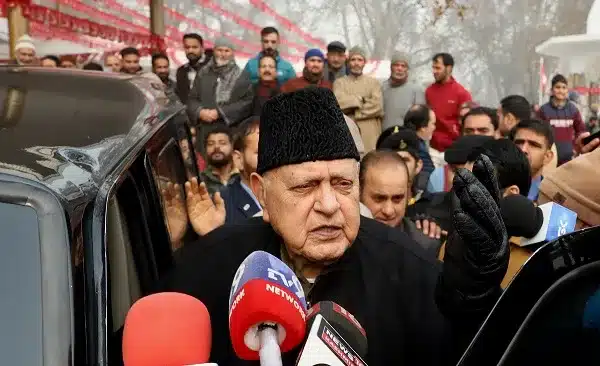
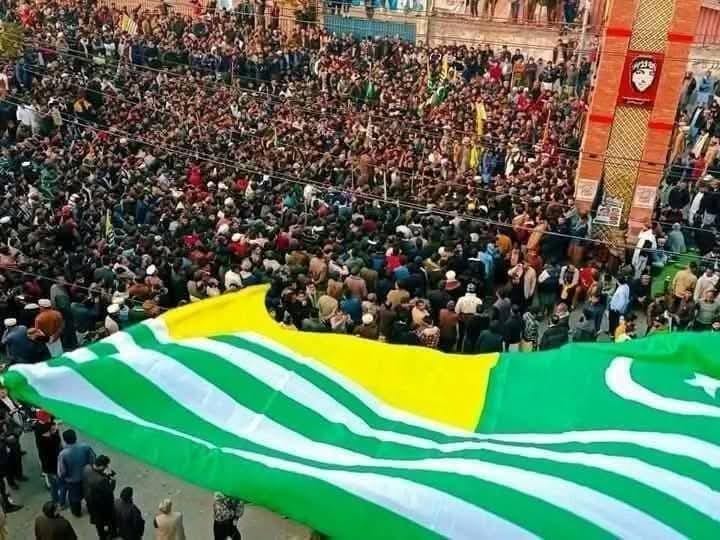
Srinagar, Indian-administered Kashmir — National Conference President and former Jammu and Kashmir Chief Minister Farooq Abdullah on Sunday expressed profound grief over the reported killing of Iran’s Supreme Leader, Ayatollah Ali Khamenei, describing the development as “deeply troubling” and potentially destabilizing for regional peace.
In a strongly worded statement issued by the Jammu & Kashmir National Conference, Abdullah termed the alleged joint U.S.–Israeli strike that reportedly led to Khamenei’s death as “regrettable and provocative,” warning that such actions risk escalating tensions across an already fragile geopolitical landscape.
‘Grave Blow to Regional Stability’
Abdullah characterized the incident as an “anguishing tragedy” with far-reaching implications beyond West Asia. He cautioned that actions of this magnitude not only erode global trust but also intensify pre-existing regional tensions.
“Developments of this nature deepen uncertainty and sorrow across communities and nations,” the statement quoted him as saying. He urged the international community to respond with wisdom, restraint, and a firm commitment to international law and justice.
Appeal for Calm and Respect for Public Sentiment
The veteran Kashmiri leader also appealed to the administration in Indian-administered Kashmir to manage the prevailing public sentiment with sensitivity. He emphasized that citizens expressing grief should be allowed to do so peacefully and without fear, provided that public order is maintained.
“All stakeholders must avoid provocation and work seriously toward restoring stability,” Abdullah said, stressing the importance of de-escalation at both the regional and global levels.
Iranian State Media Confirms Death
According to Iranian state media reports on Sunday morning, Ayatollah Khamenei was killed in what was described as a U.S.–Israeli strike. The reports also claimed that members of his family, including his son-in-law and daughter-in-law, were among those killed.
International observers note that the reported development could have significant diplomatic consequences, with governments across the region closely monitoring the evolving situation.
Further updates are expected as more verified information emerges.
Srinagar, Indian-administered Kashmir — Authorities have ordered the closure of all educational institutions across parts of Jammu and Kashmir for two days following widespread protests triggered by reports of the death of Iran’s Supreme Leader, Ayatollah Ali Khamenei.
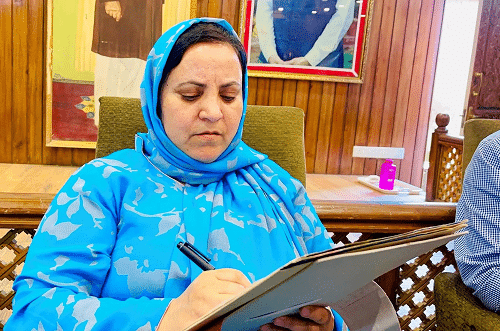
The decision was announced by Education Minister Sakina Itoo, who said the precautionary measure was taken to ensure the safety of students amid ongoing demonstrations in several districts of the Kashmir Valley.
“We have decided, as a precautionary step, to suspend classes in schools, colleges, and universities for two days,” the minister said in a statement, adding that the government is closely monitoring developments on the ground before making any further decisions regarding reopening.
Precautionary Shutdown Across Educational Institutions
According to officials, the temporary closure applies to government and private schools, colleges, and higher educational institutions in areas affected by protest activity. The administration described the move as preventive, aimed at avoiding disruption and ensuring student safety during a period of heightened public mobilization.
Protests erupted in Srinagar and other towns after unverified reports circulated claiming that Ayatollah Khamenei had been killed in a joint U.S.–Israeli operation. While no independent confirmation has been issued by Iranian state authorities, the reports sparked large gatherings and demonstrations across parts of the Valley.
Demonstrations Continue in Several Districts
Over the past 24 hours, protest marches have been reported in Srinagar and other districts of Indian-administered Kashmir, with demonstrators voicing anger over the reported development. Security deployments have been increased in sensitive areas, though officials maintain that the overall situation remains under observation.
Political analysts note that regional responses in Kashmir to developments in West Asia often carry strong emotional and symbolic dimensions, particularly when prominent religious or political figures are involved.
Government Monitoring Situation
The Education Minister stated that authorities are continuously assessing the security situation and will take a call on reopening institutions based on ground reports.
“We are reviewing the situation regularly. A decision regarding the resumption of classes will be taken after evaluating conditions,” she added.
The developments come amid growing international attention over the reports from Iran, with global diplomatic circles awaiting verified confirmation.
Further updates are expected as authorities reassess conditions in Indian-administered Kashmir.
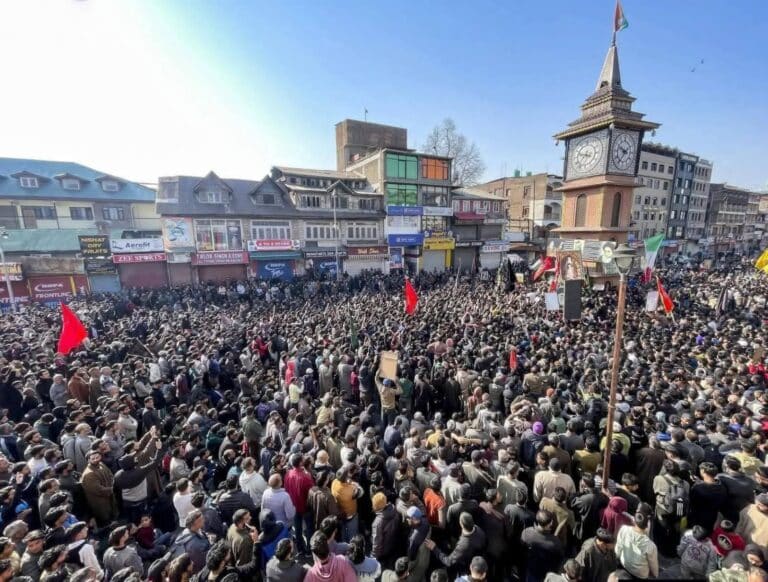
Srinagar, Indian-administered Kashmir — Unverified reports alleging the assassination of Iran’s Supreme Leader, Ayatollah Ali Khamenei, sparked widespread protests across the Kashmir Valley early Sunday, drawing thousands into the streets of Srinagar in one of the largest spontaneous mobilizations seen in recent months.
Shortly after dawn prayers, news of the reported killing began circulating through local neighborhoods via social media and messaging platforms. Within hours, groups of residents — including men, women, and youth — marched toward Lal Chowk, the symbolic political heart of Srinagar, where the historic clock tower has long stood as a backdrop to moments of regional unrest and political expression.
By mid-morning, thousands had gathered at the square, raising slogans against the United States and Israel while holding placards and portraits of the Iranian leader. Protesters described the reported assassination as a “grave attack on the Muslim world,” calling for international accountability and urging global powers to prevent further escalation in West Asia.
A Rapidly Expanding Mobilization
Eyewitnesses told The Azadi Times that processions began forming in multiple Srinagar localities shortly after news of the alleged assassination spread. Many participants walked long distances to reach Lal Chowk, chanting slogans along the way.
Demonstrators hold portraits of Iran’s Supreme Leader during protests in Srinagar over assassination reports.
Parallel demonstrations were also reported from several neighborhoods across Srinagar and from predominantly Shia-majority areas in other districts of Indian-administered Kashmir. Community leaders described the atmosphere as one of deep grief and anger, though organizers repeatedly appealed for calm and peaceful conduct.
“Our protest is a message to the world,” one demonstrator said. “We want justice, but through peaceful means.”
Security Tightened Across the City
In response to the sudden mobilization, local authorities deployed additional security personnel at key intersections and around sensitive installations in Srinagar. Barricades were placed along major approach roads leading to Lal Chowk to regulate movement and prevent overcrowding.
Officials stated that while the situation remained tense, it was largely under control at the time this report was filed. No major incidents of violence had been confirmed.
Regional and Geopolitical Sensitivities
Indian-administered Kashmir, a Muslim-majority region at the center of a long-running territorial dispute between India and Pakistan, has historically witnessed strong public reactions to geopolitical developments in the Middle East. Political observers note that transnational solidarity movements often resonate deeply in the Valley, particularly in moments involving prominent Islamic figures.
As of publication, there has been no official confirmation from Iranian state authorities regarding the reported assassination. International media outlets and diplomatic sources have urged caution, emphasizing the need for verified information amid rapidly evolving claims.
The situation remains fluid, with further updates expected as more credible details emerge.
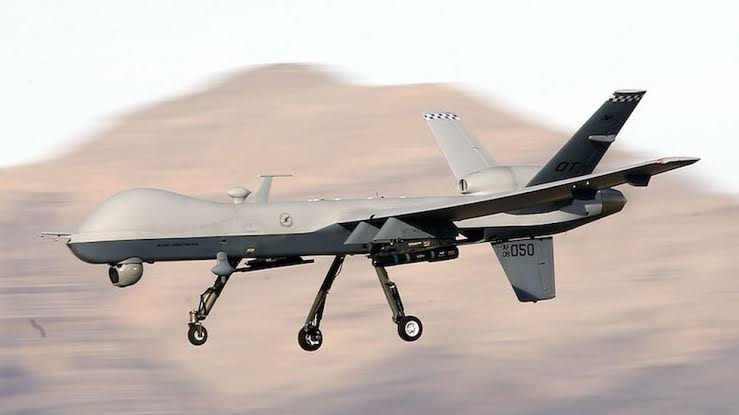
It began with a statement — brief, forceful, and heavy with implication. Late into the evening, Iran’s military announced that dozens of attack drones had been launched toward Israel. The claim, carried by Tasnim News Agency, described the operation as the first large-scale drone offensive carried out directly from Iranian territory against the Israeli state.
For years, the confrontation between Iran and Israel simmered in the shadows — covert operations, cyber warfare, precision airstrikes in distant territories, and warnings delivered through intermediaries. Tonight, according to Tehran’s own narrative, the shadow war may have stepped into the open.
From Shadow Conflict to Open Skies The Middle East has grown accustomed to tension between Tehran and Tel Aviv. Israeli airstrikes in Syria. Iranian-backed groups flexing their reach across Lebanon and Iraq. Cyberattacks blamed but rarely acknowledged.
But a direct drone launch from Iranian soil changes the geometry of confrontation. Military analysts describe such a move as more than symbolic. It is a statement of capability — and of intent. Unlike proxy operations, a direct launch carries fingerprints that are difficult to obscure. It signals ownership of the action and acceptance of the consequences that may follow.
Silence in the Skies — and on the Other Side As the news broke, Israeli authorities had yet to issue a detailed public response. In previous confrontations, Israel’s multilayered air defense systems have been activated swiftly against incoming aerial threats. Whether those systems were already tracking objects across regional airspace remains unclear. Airspace across parts of the region could become tense within hours, particularly along potential flight corridors stretching across neighboring territories. Regional governments will be watching closely, aware that escalation rarely stays contained.
The Risk of Retaliation If confirmed, this development places both nations at a critical juncture. Israel has historically responded forcefully to direct threats against its territory. Iran, for its part, has repeatedly warned that it would answer perceived aggression in kind. Each side frames its actions as defensive. Each sees itself as deterrent. But deterrence is a fragile equilibrium. A single miscalculation — a misidentified target, an interception failure, civilian casualties — could transform a controlled show of force into a broader military confrontation.
A Region Holding Its Breath Diplomatic channels between Tehran and Tel Aviv have long been frozen. Global powers, including the United States and European nations, are likely monitoring developments in real time. Any confirmed strike on Israeli territory would carry global implications — not only militarily, but economically and politically. Oil markets, regional security alliances, and ongoing conflicts in Gaza, Lebanon, and Syria all form part of the wider chessboard.
For now, much remains unverified beyond the Iranian military’s statement carried by Tasnim. The number of drones, their type, their trajectory, and their intended targets remain unclear.
But one fact stands out: if this launch is confirmed as described, it marks a historic moment in one of the Middle East’s most dangerous rivalries. A rivalry that may no longer be confined to the shadows.
This is a developing story. Updates will follow as further confirmation and official responses emerge.
It began with a statement — brief, forceful, and heavy with implication. Late into the evening, Iran’s military announced that dozens of attack drones had been launched toward Israel. The claim, carried by Tasnim News Agency, described the operation as the first large-scale drone offensive carried out directly from Iranian territory against the Israeli state.
For years, the confrontation between Iran and Israel simmered in the shadows — covert operations, cyber warfare, precision airstrikes in distant territories, and warnings delivered through intermediaries. Tonight, according to Tehran’s own narrative, the shadow war may have stepped into the open.
From Shadow Conflict to Open Skies The Middle East has grown accustomed to tension between Tehran and Tel Aviv. Israeli airstrikes in Syria. Iranian-backed groups flexing their reach across Lebanon and Iraq. Cyberattacks blamed but rarely acknowledged.
But a direct drone launch from Iranian soil changes the geometry of confrontation. Military analysts describe such a move as more than symbolic. It is a statement of capability — and of intent. Unlike proxy operations, a direct launch carries fingerprints that are difficult to obscure. It signals ownership of the action and acceptance of the consequences that may follow.
Silence in the Skies — and on the Other Side As the news broke, Israeli authorities had yet to issue a detailed public response. In previous confrontations, Israel’s multilayered air defense systems have been activated swiftly against incoming aerial threats. Whether those systems were already tracking objects across regional airspace remains unclear. Airspace across parts of the region could become tense within hours, particularly along potential flight corridors stretching across neighboring territories. Regional governments will be watching closely, aware that escalation rarely stays contained.
The Risk of Retaliation If confirmed, this development places both nations at a critical juncture. Israel has historically responded forcefully to direct threats against its territory. Iran, for its part, has repeatedly warned that it would answer perceived aggression in kind. Each side frames its actions as defensive. Each sees itself as deterrent. But deterrence is a fragile equilibrium. A single miscalculation — a misidentified target, an interception failure, civilian casualties — could transform a controlled show of force into a broader military confrontation.
A Region Holding Its Breath Diplomatic channels between Tehran and Tel Aviv have long been frozen. Global powers, including the United States and European nations, are likely monitoring developments in real time. Any confirmed strike on Israeli territory would carry global implications — not only militarily, but economically and politically. Oil markets, regional security alliances, and ongoing conflicts in Gaza, Lebanon, and Syria all form part of the wider chessboard.
For now, much remains unverified beyond the Iranian military’s statement carried by Tasnim. The number of drones, their type, their trajectory, and their intended targets remain unclear.
But one fact stands out: if this launch is confirmed as described, it marks a historic moment in one of the Middle East’s most dangerous rivalries. A rivalry that may no longer be confined to the shadows.
This is a developing story. Updates will follow as further confirmation and official responses emerge.
Before dawn broke over the Persian Gulf, the markets already knew something was wrong.
In Singapore, traders leaned closer to glowing screens. In London, analysts refreshed crude futures before their first coffee. In New York, phones vibrated on bedside tables with alerts that no investor likes to see before sunrise.
By mid-morning, the headline was everywhere: the United States had carried out military strikes against Iranian targets. At the center of the decision stood a familiar and polarizing figure — Donald Trump.
Within minutes, oil prices jumped. But this was never just about oil. The Night the Temperature Rose Officials described the operation as a targeted strike on Iranian military infrastructure — missile facilities, strategic sites, assets deemed threatening to regional stability. Washington framed it as a necessary act of deterrence. Tehran called it aggression.
The geography of the crisis is not new. The Gulf has long been a corridor of power projection, ideology, energy, and ambition. Yet every confrontation feels different when it unfolds in real time — when algorithms respond before diplomats do.
Military analysts began mapping scenarios. Would Iran retaliate directly? Through proxies? Through economic levers? Would escalation be controlled — or contagious?
History suggests that conflicts in this region rarely remain isolated events. Why This Moment Matters Tensions between Washington and Tehran have simmered for months. Nuclear oversight talks stalled. Sanctions pressure intensified. Military assets shifted quietly across strategic waters.
When confirmation of the strikes came, it signaled that diplomacy had, at least temporarily, given way to force. From the White House perspective, the objective was deterrence — a calculated message designed to redraw red lines. From Iran’s vantage point, the calculus is equally strategic: respond too weakly and lose leverage; respond too strongly and risk regional war. Between those two calculations lies global uncertainty. Oil: The First Casualty of Uncertainty Energy markets react faster than governments.
The Middle East supplies a significant portion of the world’s crude oil. Even the perception of disruption — especially near the Strait of Hormuz, through which a large share of global oil shipments pass — is enough to move billions of dollars within minutes.
Traders quickly priced in risk premiums. The logic is simple:
If shipping lanes are threatened, supply tightens. If supply tightens, prices rise. If prices rise, inflation follows. For energy-importing nations already navigating fragile recoveries, higher oil prices translate into: Increased transport costs Pressure on national currencies Strain on foreign reserves Higher food and commodity prices Markets are not reacting to what has happened. They are reacting to what might happen next.
The Iranian Question: Measured Retaliation or Strategic Escalation? Iran’s response will shape the next chapter.
Tehran has historically favored calibrated responses — actions that demonstrate strength without inviting overwhelming retaliation. But regional politics are layered. Allies, militias, shipping routes, cyber capabilities — each becomes a potential pressure point.
The decision-makers in Tehran understand the global stakes. So do policymakers in Washington.
The greatest risk in moments like this is not intent — it is miscalculation. A Region Holding Its Breath Across the Middle East, governments are watching carefully. Energy infrastructure, financial markets, and shipping networks are interconnected in ways that make localized conflict increasingly rare. Europe fears sustained energy volatility. Asian economies worry about supply disruptions. Emerging markets brace for currency instability.
Meanwhile, defense analysts quietly discuss scenarios once considered remote: Expanded air campaigns Maritime confrontations Cyber escalation Broader regional involvement Even if none of these materialize, the possibility alone reshapes strategic planning.
The Political Dimension For President Trump, the move reinforces a long-standing posture of assertive deterrence. Supporters may frame it as decisive leadership. Critics may warn of escalation. But beyond domestic politics lies a larger truth: global leadership carries global consequences.
Every military action in the Gulf echoes across continents — not only through headlines, but through fuel prices, stock exchanges, and diplomatic corridors. What This Means for South Asia and Emerging Economies
For countries like Pakistan and others dependent on imported energy, the implications are immediate and practical. Higher oil prices mean:
More expensive electricity generation Increased transportation costs Inflationary pressure on everyday goods Fiscal strain on governments managing tight budgets
The ripple effects move from oil tankers to grocery shelves faster than most realize. A World Watching the Next Move As night falls again over the Gulf, the world waits. Will this remain a limited strike — a sharp but contained signal? Or will it mark the beginning of a broader confrontation?
Geopolitics is often described as a chessboard. But unlike chess, the pieces in the Middle East are not static. They are economic systems, energy networks, and millions of ordinary lives connected to global supply chains.
When missiles fly, markets tremble. When oil shifts, economies strain. When superpowers act, history adjusts. This moment may pass quickly — or it may define the strategic landscape of 2026. For now, the Gulf remains tense, oil remains elevated, and the world remains alert.
Because in the modern era, no conflict is truly regional. And no shock stays local for long.
Muzaffarabad, Pakistan Administered kashmir: When you search “hotels in Muzaffarabad Azad Kashmir” from London, Dubai, or New York, you’re entering contested territory. Muzaffarabad isn’t just a mountain city—it’s the capital of Azad Jammu and Kashmir (AJK), a self-governing territory administered by Pakistan since 1947 but claimed in its entirety by neighboring India.
What this means for travelers: Muzaffarabad functions as a capital city in every practical sense, with its own elected government, Supreme Court, and tourism infrastructure. But you’ll find no international hotel chains beyond Pakistan’s domestic luxury brands. No Marriott. No Hilton. Instead, a growing ecosystem of local properties ranging from genuine 5-star resorts to family-run guesthouses that reveal the real Kashmir.
Dr. Asif Raza, a tourism researcher at the University of Azad Jammu and Kashmir, puts it directly: “International visitors often expect Srinagar-level infrastructure. Muzaffarabad is different—it’s more authentic, less polished, and requires different preparation.”
Here’s what actually exists in January 2026.
The Luxury Standard: Why Pearl Continental Dominates
Pearl Continental Hotel Muzaffarabad
PC Muzaffarabad exterior view – Photo credit: PC Muzaffarabad Google My Business profile
The location: Upper Chattar, perched on a hilltop overlooking the confluence of the Neelum and Jhelum rivers, with panoramic views of the Pir Chinasi mountain range.
The reality: This is currently the only genuine 5-star hotel in Muzaffarabad, and it knows it. Operated by Pakistan’s Hashoo Group (which runs PC properties across the country), this 100-room resort has been the default choice for diplomats, Pakistani politicians, and international journalists since its expansion in 2022.
What the Google Maps reviews reveal: A 4.3-star average from 847 reviews as of January 2026. Recent guests praise the “breathtaking mountain views” and “serene environment,” but consistent complaints emerge about “slow service at breakfast” and “drainage issues” in some bathrooms. The property maintains its luxury positioning through sheer location—there’s simply no competitor with comparable views or amenities.
The accommodation breakdown:
Standard Rooms (4 king, 5 twin): PKR 12,000–15,000/night ($42–52 USD). Garden or mountain views, basic luxury amenities.
Deluxe Rooms (30 king, 32 queen): PKR 18,000–25,000/night ($63–87 USD). Neelum River views, traditional Kashmiri design elements.
Deluxe Suites (2 units): PKR 45,000–60,000/night ($157–210 USD). Valley views, separate living areas, the property’s premium offering.
Facilities that matter: Three restaurants (including the rooftop Taair-e-Lahoot with valley views), a fitness center that’s actually maintained, a helipad for VIP arrivals, and the only reliable WiFi in the city. The “Chef Garden” supplies organic vegetables, and the property arranges guided tours to Pir Chinasi (2,900m elevation) and the Line of Control.
The booking strategy: Direct booking through pchotels.com often beats third-party rates. The property honors Genius discounts from Booking.com but requires email confirmation. During Pakistani public holidays (Eid, Independence Day August 14), rates increase 40% and minimum stays apply.
Coordinates: 34.3701° N, 73.4701° E (Verify: Google Maps “Pearl Continental Muzaffarabad”)
The Mid-Range Battle: Where Value Actually Exists
While best hotels in Muzaffarabad Azad Kashmir searches inevitably lead to Pearl Continental, the real story is in the PKR 3,000–8,000 ($10–28 USD) range. These properties offer 70% of the experience at 30% of the cost—if you know which ones to trust.
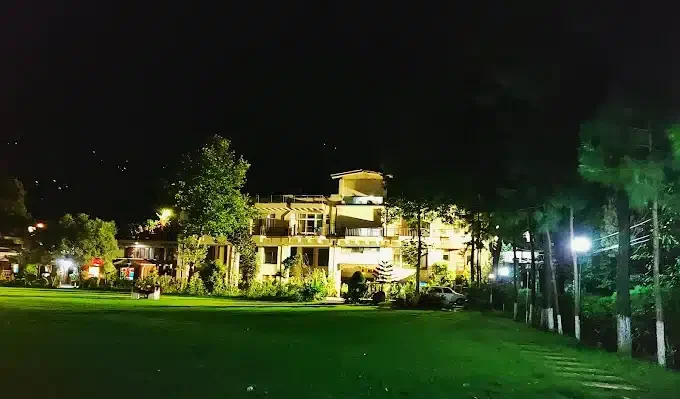
Neelum View Hotel
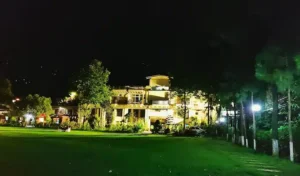
Neelum View Hotel exterior at night – Photo credit: Neelum View Hotel Google My Business profile
The positioning: Located on Neelum Road, approximately 1 minute’s walk from the Red Fort (Muzaffarabad Fort), this property trades on location over luxury.
What you get: 22 rooms with basic air conditioning, private bathrooms with inconsistent hot water, and balconies that actually deliver the promised “Neelum View.” The property caters to Pakistani families and domestic tourists, meaning you’ll get authentic Kashmiri cuisine (expect rogan josh and kahwa tea) rather than international menus.
The catch: No elevator, thin walls, and a mosque nearby that ensures early morning wake-up calls. Recent Google Maps reviews mention “helpful staff but aging facilities” and “excellent location for fort visits.”
Rates: PKR 4,000–6,500/night ($14–23 USD), negotiable for multi-night stays.
Best for: Travelers prioritizing historical site access over amenities.
Hotel La Orilla Muzaffarabad
The concept: A 3-star property facing the “beachfront”—actually the rocky banks of the Jhelum River—on Kohala-Muzaffarabad Road.
The reality: Opened in 2021, this represents the new wave of hotels in Muzaffarabad attempting genuine hospitality standards. A garden, shared lounge, and terrace provide public spaces rare in local properties. Rooms feature air conditioning and flat-screen TVs, though WiFi remains patchy.
Guest feedback: Booking.com reviews highlight “comfortable beds” and “peaceful location away from city center noise,” with criticisms focusing on “limited dining options” and “slow internet.”
Rates: PKR 5,500–8,000/night ($19–28 USD).
Srinagar Homes Muzaffarabad
The unique angle: Not a hotel but a registered bed-and-breakfast on Abbottabad Road, offering something increasingly rare—authentic Kashmiri family hospitality.
The experience: Six rooms in a converted family home, access to a shared kitchen, and home-cooked meals featuring local trout and seasonal vegetables. The host, Mr. Ahmed (referenced in multiple reviews), provides trekking advice and arranges transport.
The trade-off: Shared bathrooms in some units, no air conditioning (fans and mountain breezes suffice), and a 10-minute drive from the city center.
Rates: PKR 3,500–5,000/night ($12–17 USD), including breakfast.
Why it matters: For international visitors seeking cultural immersion over luxury, this represents the best hotel in Muzaffarabad experience—if you adjust expectations.
The Budget Reality: Under $15 USD Per Night
Here’s what most travel guides won’t tell you: Muzaffarabad hotels under PKR 4,000 ($14 USD) exist in abundance, but they’re not online. You cannot book them through Agoda or Expedia. They appear on Google Maps with phone numbers that may or may not work, and they operate on walk-in basis.
The verification method:
Search Google Maps for “hotel near me” upon arrival in Muzaffarabad.
Check recent photos uploaded by visitors (not the property) within the last 3 months.
Visit in person—most properties cluster around Court Road, Bank Square, and Naluchi Bridge.
Verified budget options (January 2026):
Kashmir Lodge Muzaffarabad: PKR 2,500–3,500/night ($9–12 USD). Basic mattresses, shared bathrooms in the older wing, private baths in the newer extension. Located near the University of Azad Jammu and Kashmir, attracting academic visitors.
Green View Guest House: PKR 2,000–3,000/night ($7–10 USD). Family-run, home-cooked meals available, unreliable electricity but generator backup 6 PM–11 PM.
Shalimar Hotel Muzaffarabad: PKR 1,800–2,800/night ($6–10 USD). Formerly a government rest house, converted to private operation. High ceilings, colonial architecture, threadbare furnishings.
The risk: These properties rarely meet international fire safety standards. Verify emergency exits exist before paying.
Location Strategy: Where to Stay Based on Your Itinerary
For History and Culture: Red Fort Vicinity
The 16th-century Red Fort (Chak Fort) dominates Muzaffarabad’s old city. Staying within 1 kilometer puts you walking distance to the fort, the local bazaar, and the Neelum River promenade.
Top pick: Neelum View Hotel (as above).
Alternative: Red Fort View Guest House, a 2023 conversion offering six rooms with actual fort views from upper floors. PKR 3,000–4,500/night ($10–16 USD). No online booking.
For Business and Government Meetings: Upper Chattar/Pearl Continental Area
If your visit involves meetings with AJK government officials or international organizations, stay near their concentration. The Assembly building, Secretariat, and Supreme Court cluster near the PC Hotel.
Top pick: Pearl Continental (obviously), but also consider Mir Continental Hotel at Bank Square Chattar. PKR 5,000–7,000/night ($17–24 USD), walking distance to government offices, basic business center facilities.
For Nature Access: Pir Chinasi Road
The road to Pir Chinasi (2,900m elevation, 30 kilometers from city center) offers properties with genuine mountain solitude.
Outdoor Adventures Resort Muzaffarabad: Facing the “beachfront” (riverbank) with private beach area and terrace. PKR 6,000–9,000/night ($21–31 USD). Mixed reviews—some guests report booking cancellations, others praise the “hot spring bath” (actually a heated plunge pool).
Eagle Nest Cottage Muzaffarabad by LMC: Higher elevation, 45 minutes from city center, requires 4WD access. PKR 4,000–6,000/night ($14–21 USD). Basic cottages, stunning sunrise views, no WiFi.
The Booking Intelligence Most Travelers Miss
The platform problem: Major booking sites show only 20% of available hotels in Muzaffarabad. The rest operate through WhatsApp and local travel agents.
The verification chain for international travelers:
Check Google Maps first: Search “hotels in Muzaffarabad,” filter by “Open now,” and examine photos uploaded by visitors (not the property) from the last 6 months.
Cross-reference with TripAdvisor: Look for properties with 10+ reviews from international travelers (not just domestic tourists).
Contact via WhatsApp: Every legitimate property provides a mobile number. Request current photos of the specific room category and confirm “load shedding” (power cut) schedules.
Use local operators: AJK Tours, Rozefs Tourism, and Bridge Residency maintain updated lists and provide accountability if bookings fail.
The payment reality: Credit cards work only at Pearl Continental and Hotel La Orilla. Everywhere else requires Pakistani rupees in cash. Bring small denominations—change is often unavailable.
August–October: Shoulder season, best combination of weather and value.
November–March: Many budget properties close; roads to Pir Chinasi occasionally snowbound.
Safety, Permits, and the International Visitor
The NOC requirement: Foreign nationals (except Pakistanis holding dual nationality) require a No Objection Certificate from Pakistan’s Ministry of Interior before entering AJK. This isn’t optional—checkpoints enforce it. Apply through your Pakistani embassy or a registered tour operator; processing takes 7–14 days.
The LOC reality: Muzaffarabad sits 5 kilometers from the Line of Control. Don’t attempt to approach the actual border—it’s heavily militarized. The best hotels in Muzaffarabad offer sufficient mountain views without the risk.
Registration: All hotels in Muzaffarabad must register foreign guests with local police within 24 hours. Reputable properties handle this; budget guesthouses may not, putting you at legal risk. Confirm registration will occur before paying.
Health preparation: No international-standard hospitals exist in Muzaffarabad. The nearest reliable medical care is in Islamabad (150 kilometers, 4 hours by road). Bring comprehensive travel insurance including emergency evacuation.
The Bottom Line: Authenticity Over Luxury
Muzaffarabad isn’t competing with Srinagar’s houseboats or Gulmarg’s ski resorts. It offers something different: a functioning Kashmiri city where you can observe daily life, access remote mountain valleys, and pay a fraction of Indian Kashmir’s tourist prices.
The best hotel in Muzaffarabad for you depends on tolerance for imperfection. Pearl Continental provides international standards but isolates you from the city. Budget guesthouses immerse you in local culture but require flexibility. The mid-range options—Neelum View, La Orilla—offer the practical compromise.
What remains constant: the view. Whether from a $200 suite or a $10 guesthouse, the mountains surrounding Muzaffarabad don’t discriminate. They dominate every window, every balcony, every morning. That’s why travelers keep searching “hotels in Muzaffarabad”—not for the amenities, but for the access.
All rates subject to seasonal fluctuation. Verify NOC requirements through official Pakistani channels before travel.
Why Neelum Valley Is Suddenly on Every Traveler’s Radar
Muzaffarabad, Pakistan Administered Kashmir: If you search “hotels in Neelum Valley Kashmir” at 3 AM from London or Dubai, you’re not alone. This 200-kilometer stretch of Azad Jammu and Kashmir has transformed from a conflict-zone footnote into South Asia’s most talked-about mountain destination. The reason? A rare combination of accessibility, affordability, and raw Himalayan beauty that places like Swat and Gilgit lost to overdevelopment.
But here’s the problem most travelers face: booking accommodation in Neelum Valley isn’t like reserving a Hilton. There’s no centralized booking system. Google Maps pins are often wrong. And that “luxury resort” you found on Instagram? It might be a concrete block with intermittent hot water.
This guide cuts through the noise. Based on ground reporting, verified Google Maps reviews, and direct coordination with local tourism operators, here’s what actually exists for every budget in Neelum Valley.
Understanding the Geography: Where to Actually Stay
Before clicking “book now” on random hotels in Neelum Valley Azad Kashmir, understand the valley’s layout. The Neelum River runs north-south, with accommodation clusters at specific points:
Keran (The Riverside Hub): The most developed tourist zone, directly across the LOC from Indian-controlled Kashmir. This is where you’ll find the highest concentration of hotels in Neelum Valley with actual amenities—think WiFi that works sometimes, and restaurants with printed menus.
Sharda (The Cultural Base): Home to the ancient Sharda University ruins, this town offers more atmospheric lodging. If you want wooden architecture and proximity to hiking trails, search specifically for hotel in Neelum Valley options here rather than Keran.
Kutton (The Quiet Alternative): 10 kilometers off the main road, this hamlet attracts travelers who’ve already seen Keran’s Instagram spots and want silence. Fewer Neelum Valley hotels here, but the ones that exist are family-run with home-cooked meals.
Arang Kel (The Trekker’s Destination): No road access—only a 3-hour hike or cable car. Accommodation is basic guesthouses, but the views justify the effort for serious trekkers.
The Reality Check: What “Star Ratings” Mean Here
When Pakistani tourism websites list a “3-star hotel in Neelum Valley,” adjust your expectations. The Pakistan Tourism Development Corporation doesn’t maintain rigorous star classification in AJK. That “3-star” label often means: private bathroom, hot water in mornings, and maybe a generator during power cuts.
What international travelers should know:
Luxury here = mid-range elsewhere. The Pearl Continental in Muzaffarabad (the valley’s entry point) is genuinely 4-star. Everything else is a gradient of “comfortable” to “adventurous.”
Power cuts are universal. Even the best hotels in Neelum Valley Keran rely on generators that typically run 7 PM to 11 PM. Charge devices accordingly.
WiFi is aspirational. Most properties advertise “free WiFi” based on a single router connected to erratic 4G. Download offline maps before arrival.
Top-Tier Options: When You Want the Best Available
Hotel Neelum Elites, Keran
Neelum Elites Hotel exterior view – Photo credit: Neelum Elites Hotel Google My Business profile
The claim to fame: Currently the highest-rated property when searching hotels in Neelum Valley on Google Maps, with a 4.8-star average from 138 reviews.
The reality: This isn’t international luxury, but it’s the local gold standard. Perched directly on the Neelum River with balconies overlooking the water—and, controversially, the Indian military positions on the opposite bank—Neelum Elites offers 24 rooms with attached bathrooms, room service until 10 PM, and a restaurant serving trout caught from the river below.
What the reviews say: Guests consistently praise the location and river views. Criticisms focus on price inflation during peak season (May-July) and occasional hot water shortages.
Rates: PKR 8,000–12,000 per night ($28–42 USD) depending on season and negotiation skills.
Location coordinates: 34.6553° N, 73.9124° E (Verify on Google Maps: Search “Hotel Neelum Elites Keran”)
Green Village Resort, Keran
Green Village Resort Keran exterior view. Photo credit: Green Village Resort Keran Google My Business profile
The concept: Traditional Kashmiri wooden architecture meets basic modern amenities. If you want Instagram-worthy hotels in Neelum Valley Azad Kashmir, this is the property that dominates #NeelumValley hashtags.
The experience: Individual cottages built from local timber, private balconies with river views, and an outdoor barbecue area where staff will grill trout you can watch being caught. The resort arranges trekking guides to nearby peaks.
The catch: No air conditioning (unnecessary at 1,500 meters elevation) and limited heating beyond electric blankets in winter. Bookings during Eid holidays require 3-month advance reservations.
Rates: PKR 6,500–9,000 per night ($23–32 USD).
Mid-Range Winners: Comfort Without the Premium
Sharda Lodge Neelum Valley
Why it matters: Located in the cultural heart of the valley, this property offers something Keran’s riverside hotels in Neelum Valley cannot—proximity to the 2,000-year-old Sharda University ruins and the Kishan Ganga River confluence.
The setup: 18 rooms across two buildings, the newer wing offering slightly better bathrooms. The lodge operates its own shuttle to the university ruins (15 minutes) and maintains relationships with local hiking guides.
Guest feedback: Google Maps reviews highlight the manager’s willingness to arrange custom itineraries and the quality of the Kashmiri breakfast (expect naan, eggs, and local cheese). Complaints mention thin walls and early morning mosque announcements.
Rates: PKR 4,000–6,000 per night ($14–21 USD).
Coordinates: 34.7976° N, 74.1857° E
Wadi Resort, Sharda
The positioning: Markets itself as the “adventure hub” of Sharda, offering equipment rental for fishing and trekking alongside accommodation.
What you get: Basic but clean rooms, a central courtyard with fire pits for evening gatherings, and staff who can arrange permits for restricted areas closer to the LOC. The resort’s restaurant is independently famous in the valley for its rogan josh.
The trade-off: It’s 2 kilometers from Sharda’s main bazaar, meaning you’re dependent on the resort for meals and transport. Fine for a 2-night stay, potentially isolating for longer.
Rates: PKR 3,500–5,500 per night ($12–19 USD).
Budget Reality: Under $15 USD Per Night
Here’s what most travel blogs won’t tell you: Neelum Valley hotels under PKR 2,500 ($9 USD) exist, and they’re not terrible. They’re just not online.
The booking method: You cannot reserve these through Booking.com or Agoda. Search hotel in Neelum Valley on Google Maps, call the numbers listed (usually WhatsApp-enabled), and negotiate. Or simply arrive and ask around—the valley’s small enough that locals know every available room.
What to expect:
Zoom Guest House, Sharda: PKR 2,000/night. Four rooms, shared bathroom, home-cooked meals available for extra charge. Run by a former trekking guide who provides better local advice than any concierge.
Mountain Inn, Kutton: PKR 1,500/night. Basic mattresses, stunning views, and the best access to Kutton’s waterfall trails. No hot water, but the nearby stream is glacially cold and clean.
Government Rest Houses: Scattered throughout the valley, these colonial-era buildings charge PKR 1,000–2,000 for rooms with high ceilings and erratic plumbing. Book through the AJK Tourism Department in Muzaffarabad, not online.
The Booking Strategy That Actually Works
For international travelers: Don’t rely on a single platform. Here’s the verification chain that prevents disappointment:
Google Maps first: Search hotels in Neelum Valley and verify the property exists at the pinned coordinates. Check photos uploaded by visitors (not the hotel) from the last 6 months.
WhatsApp confirmation: Every legitimate property has a mobile number. Message for current rates and room photos. If they won’t send photos, assume the worst.
Local tour operator backup: Companies like AJK Tours and Rozefs Tourism maintain updated lists of functional hotels in Neelum Valley Azad Kashmir. Their rates are sometimes higher than direct booking, but they provide accountability if things go wrong.
Cash is king: Credit card machines rarely work in the valley. Bring Pakistani rupees in small denominations. USD can be changed in Muzaffarabad before entering the valley, but not after.
Seasonal Pricing: When Rates Double Overnight
Peak season (May 15–July 15): All Neelum Valley hotels increase rates by 40–100%. Keran’s riverside properties fill completely. Book 30 days ahead minimum.
Shoulder season (April, September–October): Ideal combination of accessible roads, moderate prices, and clear mountain views. Some higher-altitude trekking routes may still have snow in early April.
Winter (November–March): Many properties close entirely. Those that remain open (mostly in Keran and Sharda) offer 50% discounts but provide limited heating. The road from Muzaffarabad occasionally closes due to snow.
Safety, Permits, and the LOC Reality
Every hotel in Neelum Valley requires guests to register with local police within 24 hours—properties usually handle this, but confirm. Foreign nationals need a No Objection Certificate (NOC) from the Ministry of Interior in Islamabad before entering AJK. This isn’t optional; checkpoints enforce it.
The Line of Control runs directly through the valley. Don’t attempt to approach the actual border fence—it’s mined and heavily militarized. The hotels in Neelum Valley Keran offer close enough views of the Indian side without the risk.
The Bottom Line: Managing Expectations
Neelum Valley isn’t the Swiss Alps, and its hotel infrastructure reflects that. What it offers instead is authenticity: waking to the sound of the Neelum River, eating trout caught hours earlier, and accessing Himalayan trails without the crowds of Nepal or Bhutan.
The best hotels in Neelum Valley Kashmir aren’t necessarily the most expensive—they’re the ones where the owner remembers your name, where the balcony view justifies the cold shower, and where the silence at night reminds you why you traveled this far.
Book smart. Verify everything. And bring a power bank.
Rates and availability subject to change. Verify current conditions through AJK Tourism Department before travel.
Every month, millions of couples google “how to get pregnant fast” at 2 AM, staring at negative pregnancy tests and wondering what they’re doing wrong. Here’s the truth: conception isn’t just about having unprotected sex. It’s about biology, timing, and understanding what your body is actually telling you.
Dr. Sarah Johnson, a reproductive endocrinologist at Johns Hopkins, puts it bluntly: “Most couples who struggle to conceive aren’t infertile—they’re just missing their actual fertile window by days, sometimes weeks.”
The science is clear. A healthy couple having regular unprotected intercourse has about a 25-30% chance of conception each cycle. That means even under perfect conditions, it takes most couples 3-6 months to conceive. But “perfect conditions” rarely happen naturally. This guide breaks down what actually moves the needle.
The 6-Day Window That Changes Everything
Here’s what your high school health class probably got wrong: pregnancy isn’t possible every day of the month. In reality, the egg survives only 12-24 hours after ovulation. But sperm? Those survivors can hang around for up to 5 days in fertile cervical mucus.
That creates a 6-day fertility window—5 days before ovulation plus the day of ovulation itself. Miss this window, and you’re literally waiting another month for another chance.
The catch? Most women don’t ovulate on day 14 like the textbooks claim. Cycles vary wildly. Some women ovulate on day 10; others on day 20. Tracking isn’t optional if you want speed.
How to Actually Know When You’re Ovulating (Without the Guesswork)
Method 1: Ovulation Predictor Kits (OPKs)
These urine strips detect the luteinizing hormone (LH) surge that happens 24-36 hours before ovulation. Think of it as your body’s “heads up” signal. When the test line gets as dark as the control line, you’re entering prime time.
Pro tip from fertility nurses: Start testing around day 10 of your cycle if you have regular periods. Test between 10 AM and 8 PM—LH surges often happen in the afternoon, not first thing in the morning.
Method 2: Basal Body Temperature (BBT)
Your resting temperature rises 0.5-1°F immediately after ovulation due to progesterone. The problem? By the time you see the spike, ovulation already happened. BBT is better for confirming patterns over months than for timing sex this cycle.
Method 3: Cervical Mucus Monitoring
This old-school method is surprisingly effective. As estrogen rises before ovulation, cervical mucus transforms from thick and sticky to clear, stretchy, and egg-white consistency—nature’s way of helping sperm swim upstream. When you see that texture, your body is literally preparing for conception.
The winning combination? Use OPKs for timing, mucus checks for daily awareness, and BBT for pattern confirmation. Apps like Clue or Glow can help, but don’t rely on app predictions alone—they’re often off by days.
The Sex Schedule That Actually Works
Once you know ovulation is coming, timing becomes everything. Research from the University of Utah found that couples who had sex every 1-2 days during the fertile window had pregnancy rates nearly identical to those having daily sex—but without the burnout.
The sweet spot: Start every-other-day sex when you first notice fertile mucus. When the OPK turns positive, switch to daily for the next 48 hours. This covers the full sperm survival window while keeping things sustainable.
Does position matter? Despite what internet forums claim, no scientific study has proven that missionary position or propping your hips increases conception odds. Sperm are chemically programmed to find the egg regardless of gravity. Focus on timing, not acrobatics.
The Male Factor: Why His Health Matters Just as Much
Here’s a statistic that surprises most couples: male factors contribute to infertility in about 40% of cases. Yet most “get pregnant fast” advice focuses entirely on women.
Sperm quality isn’t static. New sperm develop constantly, meaning lifestyle changes today impact fertility in about 2-3 months—the time it takes for new sperm to mature.
What actually damages sperm:
Heat exposure: Hot tubs, saunas, and even keeping phones in front pockets can raise scrotal temperature enough to reduce sperm production.
Smoking: Tobacco damages sperm DNA and reduces motility. The effect is dose-dependent—heavy smokers see the biggest drops.
Alcohol: More than 5 drinks per week correlates with lower testosterone and sperm counts.
Certain medications: Testosterone supplements, some antidepressants, and long-term steroid use can shut down sperm production entirely.
The fertility diet for men isn’t complicated: Antioxidant-rich foods (berries, nuts, leafy greens), zinc (oysters, pumpkin seeds), and omega-3s (fatty fish) show consistent benefits in clinical studies. The Mediterranean diet pattern specifically has been linked to better sperm parameters in multiple trials.
Lifestyle Tweaks That Move the Needle
Weight and Fertility: The Hormonal Connection
Body fat isn’t just storage—it’s an active endocrine organ. Too little body fat (BMI under 18.5) can shut down ovulation entirely as the body prioritizes survival over reproduction. Too much adipose tissue, especially abdominal fat, increases estrogen production and insulin resistance, both of which disrupt ovulation.
The research is striking: women with BMIs over 35 take twice as long to conceive on average compared to those in the normal range. But crash dieting isn’t the answer—rapid weight loss itself can trigger hormonal chaos. Aim for gradual, sustainable changes if weight is a factor.
Exercise: The Goldilocks Zone
Moderate exercise (30 minutes daily) improves fertility across the board. But extreme training? Marathon runners and competitive athletes often experience “exercise-induced amenorrhea”—their bodies interpret intense energy expenditure as famine conditions and stop ovulating.
If your periods are irregular and you train hard, cutting back for 3-6 months often restores normal cycles without any other intervention.
Stress: The Villain That’s Real But Overblown
“Just relax and it’ll happen” is perhaps the most hated phrase in fertility communities. It’s dismissive and often wrong. However, chronic stress does elevate cortisol, which can suppress reproductive hormones.
The mechanism isn’t “stress blocks pregnancy”—it’s that high cortisol disrupts the hypothalamic-pituitary-ovarian axis, potentially delaying ovulation or shortening luteal phases. Mindfulness practices, cognitive behavioral therapy, and adequate sleep (7-9 hours) genuinely help regulate this system, but they’re adjuncts to medical care, not replacements.
Supplements: What the Evidence Actually Shows
The supplement aisle is fertility marketing wild west. Here’s what research actually supports:
Folic acid (400-800 mcg daily): Non-negotiable. It prevents neural tube defects and supports early cell division. Start at least 1 month before conception.
Vitamin D: Deficiency is linked to ovulatory infertility. If your levels are low (under 30 ng/mL), supplementation improves cycle regularity. Get tested rather than guessing.
CoQ10 (100-200 mg): Emerging evidence suggests it may improve egg quality in women over 35, though data is still preliminary.
Prenatal vitamins: Think of them as insurance, not magic. They ensure you’re not deficient in anything critical during early development, often before you know you’re pregnant.
What to skip: Herbal “fertility blends” with unregulated ingredients, high-dose vitamin A (teratogenic in pregnancy), and “detox” teas that can trigger uterine contractions.
Always discuss supplements with your OB-GYN, especially if you have any medical conditions.
When to Stop Trying Alone and Call the Doctor
Here’s the timeline that matters: If you’re under 35, seek evaluation after 12 months of well-timed, unprotected intercourse without conception. Over 35? That window shrinks to 6 months because fertility declines more rapidly with age.
Earlier evaluation is warranted if:
Your cycles are irregular (shorter than 21 days or longer than 35)
You have known endometriosis, PCOS, or pelvic inflammatory disease history
You’ve had multiple miscarriages (2 or more)
Your partner has a history of testicular injury, surgery, or infection
Modern fertility medicine offers remarkable options, from ovulation-inducing medications like letrozole to intrauterine insemination (IUI) and IVF. The key is not waiting so long that age becomes the dominant factor.
Busting the Myths That Waste Your Time
Myth: “You need to orgasm to conceive.” Reality: Female orgasm may help sperm transport slightly, but conception absolutely occurs without it. Don’t make sex mechanical trying to force biology.
Myth: “Lie with your legs up for 20 minutes after sex.” Reality: Sperm reach the fallopian tubes within minutes, regardless of position. The rest drips out naturally—it’s seminal fluid, not lost sperm.
Myth: “Avoid lubricants entirely.” Reality: Some lubricants (KY Jelly, Astroglide) are spermicidal. But fertility-friendly options like Pre-Seed or Conceive Plus are formulated to be sperm-safe. Use them if needed.
Myth: “Every woman ovulates on day 14.” Reality: Only about 13% of women have a textbook 28-day cycle with day-14 ovulation. Rigid calendar tracking misses most actual fertile windows.
The Bottom Line: Patience Meets Preparation
Getting pregnant fast isn’t about luck—it’s about stacking probability in your favor. Track your cycle accurately. Time intercourse strategically. Optimize both partners’ health. And know when to escalate to medical support.
The couples who conceive fastest aren’t necessarily the most fertile; they’re often just the most informed. They understand that fertility is a team sport, that timing beats frequency, and that evidence always trumps internet folklore.
Your journey to parenthood starts with understanding your own body. The rest is putting that knowledge into practice—one cycle at a time.
Note: For personalized medical advice, consult a board-certified reproductive endocrinologist.
Sarsawa Kotli: The Jammu Kashmir Joint Awami Action Committee (JKJAAC) in Pakistan-administered Kashmir has announced plans for a large-scale protest on June 9, 2026, setting a firm deadline for the authorities to address longstanding public demands. The committee reiterated the need for implementation of previously promised reforms while presenting several new points requiring urgent government attention.
Following a consultative session in Kotli Sarsawah, JKJAAC released a statement late at night expressing deep concern over the recent suicide of student Fareeha Ibrahim at a university in Lahore. The statement condemned the incident and demanded a transparent and impartial investigation, urging authorities to make all findings public to restore accountability and trust.
Key New Demands by the Joint Awami Action Committee
Merit-Based Recruitment and Promotions: The committee emphasized that government appointments, particularly in the education sector, should be conducted exclusively through authorized bodies such as the National Testing Service (NTS) and Public Service Commission (PSC). It called for an end to ad-hoc hiring and full compliance with allocated quotas for promotions.
Opposition to Proposed Amendments to the Accountability Bureau Act: JKJAAC criticized recent legislative proposals, asserting that the changes risk entrenching corruption rather than curbing it.
Release of Detained Journalists and Transparency on Exit Control List (ECL): The committee demanded the immediate release of journalist Sohrab Barkat and called for public disclosure of individuals listed on the ECL to remove ambiguity and enhance public oversight.
Essential Commodities and Public Relief: Concerns were raised over the poor quality of flour distributed to citizens. The committee urged authorities to improve both the quantity and quality of essential goods to ensure meaningful relief for the population.
Healthcare Access and Policy Reforms: JKJAAC called on the government and the State Life Insurance Company to resolve outstanding issues with the Health Card scheme and stressed the importance of 24-hour access to medical facilities, expressing support for ongoing protests by health workers.
June 9 Protest: Implications and Context
JKJAAC confirmed that the upcoming demonstration will focus on the implementation of 38 specific demands, with logistical details expected to be announced after Eid. Leaders reiterated their willingness for constructive dialogue, but insisted that the government must demonstrate urgency and sincerity in responding to public demands.
The announcement echoes a violent JKJAAC protest in September of last year, which resulted in the deaths of 12 individuals, including security personnel. While federal authorities and the regional government claim compliance with past agreements, JKJAAC contends that implementation has been partial or inadequate.
Analysts warn that the government’s response—or lack thereof—could significantly affect public sentiment and stability in Pakistan-administered Kashmir, making the upcoming protest a key test of governance, transparency, and civic engagement in the region.