Tuesday, March 31, 2026
11.4 C
Srinagar
Home Blog Page 80

UN Silent as Kashmiris March Against ‘Genocide’—Authorities Impose Brutal Crackdown

    0

    Kotli, AJK, (Pakistan administered Kashmir) – The Jammu Kashmir Liberation Front (JKLF), led by the Toqeer Gilani faction, has announced a protest rally to submit a memorandum to United Nations Military Observers, condemning the alleged genocide of Kashmiris amid ongoing conflict in the region. The march, organized in collaboration with other pro-independence groups, is set to proceed toward Kotli the largest city and and distrcit headquater in Pakistan administered kashmir.

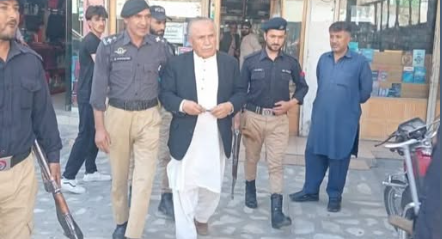
    However, local authorities have moved swiftly to suppress the demonstration. The Deputy Commissioner of Kotli imposed Section 144, banning public gatherings, while police and administrative officials have been put on high alert to prevent the protest.

    Background: Calls for International Intervention

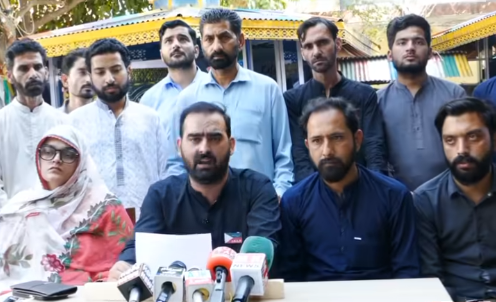
    The protest was announced two days ago during a press conference by Sardar Aman Kashmiri, a prominent organizer of the JKLF, alongside other Kashmiri leaders. They accused Indian forces of human rights violations in Indian-administered Kashmir and demanded urgent UN intervention.

    “The world cannot remain silent while Kashmiris face systematic violence,” Aman stated during the press briefing. “We will take our voices to the UN observers, no matter the obstacles.”

    Government Crackdown

    Authorities in Kotli have deployed additional security forces, citing concerns over potential unrest. Section 144, which prohibits assemblies of four or more people, has been enforced to block the rally.

    “This protest is a threat to public order,” a district administration official stated anonymously. “We will not allow any unauthorized gatherings.”

    Critics, however, argue that the ban is an attempt to stifle dissent. “The right to peaceful protest is fundamental,” said a human rights activist monitoring the situation. “Suppressing these voices only deepens the crisis.”

    Regional Implications

    The planned march highlights escalating tensions in the region, where Kashmiri groups continue to push for self-determination amid heightened militarization. The JKLF and allied organizations have long demanded an independent Kashmir, free from both Indian and Pakistani control.

    As security forces brace for clashes, international observers are closely watching whether the protest will proceed despite the crackdown—or if Kashmir’s struggle for recognition will face yet another setback.

    Updates to follow as the situation develops.

    (Published by The Azadi Times– Reporting from Kotli, AJK,  (Pakistan administered Kashmir)
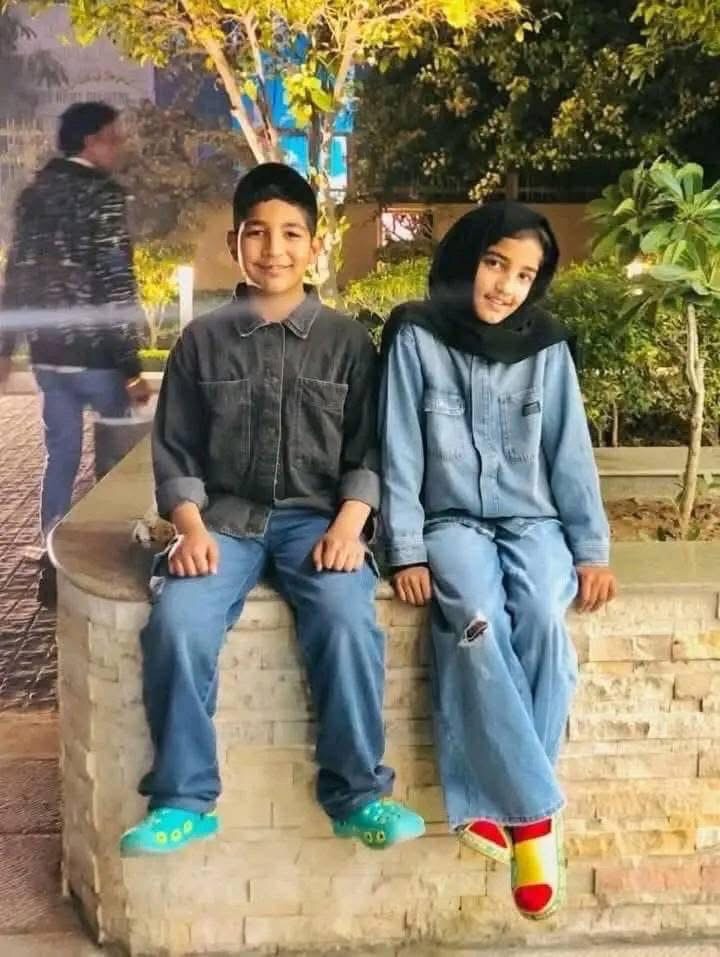
    Born Together, Died Together: Zain & Zoya Youngest Victims of LoC Crossfire

    Cross-border violence escalates as children become victims of ongoing conflict along LoC

    Srinagar, May 13 — The tragic story of 12-year-old twins Zoya and Zain has become a painful symbol of the human cost of continued hostilities along the Line of Control (LoC). The siblings, who shared an inseparable bond since birth, lost their lives on May 7 when artillery shells fired by Pakistani forces struck their home in Poonch district.

    Their mother, Arusa Khan, remains in shock, unable to process that her children will never return. Their father, Rameez Khan, a local schoolteacher, lies critically injured in hospital, unaware that his twins have been buried.

    A Childhood Cut Short

    The twins’ story highlights the devastating impact of cross-border violence on Kashmiri civilians. Zoya and Zain, who had just begun to dream of their futures, became casualties of escalating tensions following India’s Operation Sindoor—a military action that came in response to earlier violence in the region.

    Eyewitnesses report that multiple shells landed near civilian areas in Poonch, with at least 16 casualties reported, including women and children. Local residents describe scenes of chaos as families scrambled for safety amid the bombardment.

    A Grieving Community

    The deaths have sparked outrage across Kashmir, with many questioning why civilian populations continue to bear the brunt of the conflict.

    “These children had their whole lives ahead of them,” said a neighbor, who wished to remain anonymous. “When will the world take notice of our suffering?”

    Funeral prayers for Zoya and Zain were attended by hundreds, their small coffins a stark reminder of the fragility of life in the conflict zone.

    Calls for Accountability

    Human rights organizations have long documented civilian casualties on both sides of the LoC, urging India and Pakistan to respect international humanitarian law. However, with tensions remaining high, there are fears of further violence.

    “The targeting of civilian areas is a clear violation of human rights,” said a spokesperson for a Srinagar-based rights group. “The international community must intervene before more innocent lives are lost.”

    A Mother’s Unimaginable Loss

    As the twins’ mother struggles to come to terms with her loss, their father remains hospitalized in critical condition. The family, like many others in the region, had hoped for a peaceful life away from the frontlines—a hope now shattered.

    Their story serves as a grim reminder that behind the headlines of geopolitical tensions, it is ordinary Kashmiris who continue to pay the highest price.

    (Reporting from Srinagar; names of survivors have been changed for their safety.)

    District Police Anantnag Arrests Four Drug Peddlers, Seizes Heroin-like Substances

      0

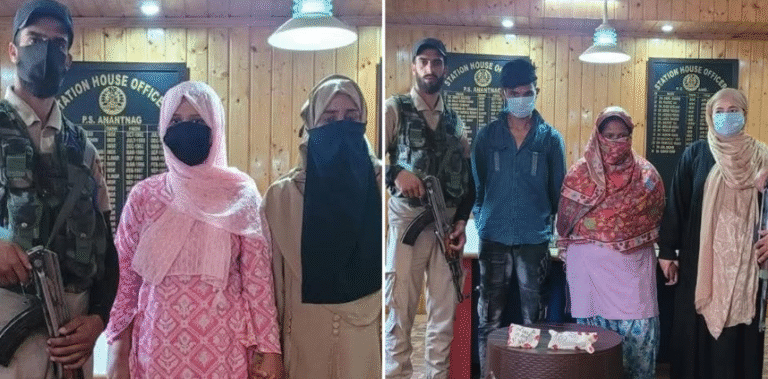
      Anantnag, Jammu & Kashmir: In a decisive move against the growing drug menace in the region, District Police Anantnag has successfully apprehended four drug peddlers in separate operations, seizing significant amounts of heroin-like substances from their possession.

      The crackdown was part of the police’s ongoing commitment to combating the illicit drug trade that continues to plague local communities.

      Lady Drug Peddler Arrested Near Bangidar Bridge

      The first major success occurred near the Bangidar Bridge, where a notorious female drug peddler, Khushbu Jan, daughter of Farooq Ahmad Sheikh, was arrested. Police seized 07 grams of heroin-like substance from her possession. Khushbu Jan, a resident of Bangidar, is now facing charges under Section 8/21 of the Narcotic Drugs and Psychotropic Substances (NDPS) Act. A case (FIR No. 100/2025) has been filed at the Police Station Anantnag, and investigations are ongoing.

      Two More Arrests in Separate Drug Seizures

      In another significant operation, two male drug peddlers were apprehended in possession of heroin-like substances. Nargis, wife of Mohammad Ali from Bawana JJ Colony, Delhi, was arrested with 03 grams of the substance, while Mohammad Irfan, a resident of Ghaziabad, Uttar Pradesh, was caught with 06 grams. Both individuals have been booked under the NDPS Act, and FIR No. 104/2025 has been registered at Police Station Anantnag. The investigation is continuing.

      Arrest in Dooru Shahabad

      In a third operation, Ishfaq Ahmad Hajam, son of Gul Mohammad Hajam, a resident of Saidwara in Dooru Shahabad, was arrested with 06 grams of heroin-like substance. The seizure was made by the Anantnag police as part of their larger campaign to dismantle drug trafficking networks. A case (FIR No. 105/2025) has been filed under the NDPS Act, and investigations are underway.

      Police Commitment to Zero-Tolerance Against Drugs

      District Police Anantnag has reaffirmed its zero-tolerance policy towards drug trafficking and drug abuse in the region. Authorities have urged the public to be vigilant and report any suspicious drug-related activities in their communities. The police are committed to ensuring a drug-free society, with efforts being made to apprehend drug traffickers and disrupt illicit networks.

      Read Also: Anantnag Student Sheyrub Parvaiz Secures 4th Rank in Commerce Stream Across Kashmir

      “We cannot fight this battle alone, and we urge the community to come forward with any information related to drug peddling,” a police spokesperson stated. “Together, we can create a safer, drug-free environment for our children and future generations.”

      As the investigation progresses, the police are expected to intensify their operations, targeting both street-level drug dealers and larger syndicates operating in the region.

      Public Awareness and Support

      With increasing concerns about the impact of drug abuse on public health and safety, the police have also called for greater public cooperation. Citizens are encouraged to report drug-related activities to local authorities to help combat the pervasive issue.

      Ongoing Investigation

      The investigation into the arrests is still ongoing, and the police have assured the public that they will continue to work tirelessly to eliminate the drug trade from the region. Authorities have also vowed to expand their outreach programs to raise awareness about the dangers of drug abuse and addiction.

      Gaasu Khimber: Kashmir’s Strawberry Village Thrives During Harvest Season

        0

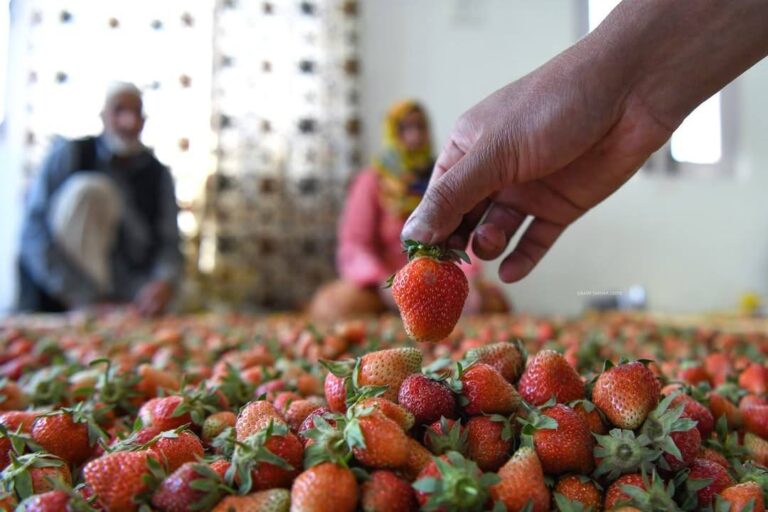
        Gaasu Khimber, Srinagar, Indian administered Kashmir: In the foothills outside Srinagar, the village of Gaasu Khimber is experiencing its peak strawberry harvest — a season that has become central to the livelihoods of nearly a thousand local farmers.

        Known for its fertile soil and cool climate, Gaasu Khimber has emerged as Kashmir’s leading strawberry-producing region, with daily yields of over 2,000 kilograms during harvest months.

        Read Also: Govt Empowering Agriculture in AJK- Livestock and Agriculture Departments Forge Strong Farmer Connections

        Farming in the area has traditionally centred around apple orchards, but over the last 15 years, strawberries have taken root as a valuable early-season crop. Supported by agricultural initiatives and local know-how, families here have turned the bright red fruit into a symbol of economic resilience.

        “Strawberries from Gaasu are larger, juicier, and sweeter than those from elsewhere in the valley,” says Ghulam Rasool, a veteran grower. “That’s why they fetch higher prices in the markets.”

        A Family Affair

        During the harvest season, men, women, and children work side by side, moving through strawberry fields with baskets in hand. The sight of rows of ripe strawberries and the buzz of morning harvests has become a daily rhythm in the village between May and June.

        While Tangmarg in north Kashmir and parts of south Kashmir also cultivate strawberries, farmers and vendors alike agree that Gaasu’s produce stands out in terms of quality and demand.

        “Gaasu strawberries are always the first to reach the market,” said a trader in Srinagar’s Fruit Mandi. “Buyers ask for them by name.”

        Numbers Tell the Story

        According to local estimates, Gaasu Khimber produces nearly 1,000 trays of strawberries per day, making it a major contributor to Kashmir’s horticultural economy in early summer. The crop is often sold fresh within hours of harvest — either directly in Srinagar or sent to nearby districts.

        The success of the strawberry industry has also sparked interest among younger farmers, some of whom are exploring packaging, cold storage, and branding opportunities for expansion.

        Agriculture and Identity

        While strawberries have added a new layer to Gaasu Khimber’s identity, the region remains known for its apple orchards, which sustain farmers through the autumn. Together, these crops form a vital source of income in an area where seasonal farming is a way of life.

        Local growers are now calling for better infrastructure, cold storage facilities, and access to markets, saying such support could help expand production and reduce post-harvest loss.

        “With government support, Gaasu can become the strawberry capital of Kashmir,” said one hopeful farmer.

        India Bans Sikh Pilgrims from Entering Pakistan on Maharaja Ranjit Singh’s Death Anniversary, Escalating Religious Tensions

          0

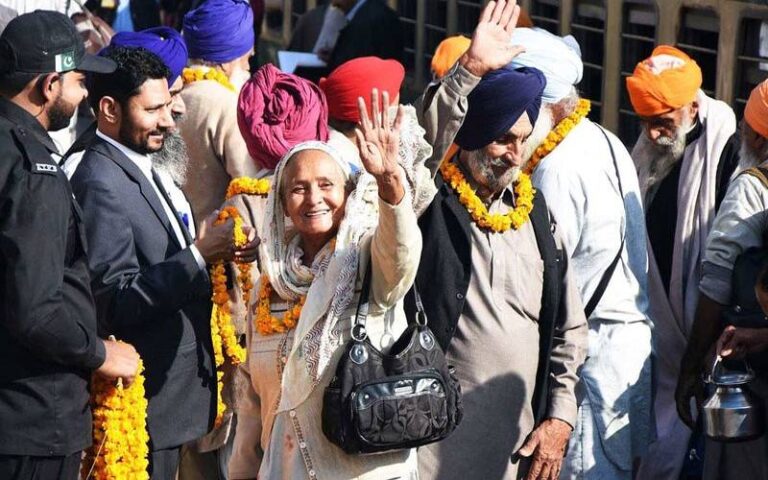
          New Delhi – In a move that has further strained religious freedom and interfaith harmony, India has once again barred Sikh pilgrims from traveling to Pakistan to observe the death anniversary of Maharaja Ranjit Singh. The decision has left nearly 500 Sikh devotees in limbo, casting uncertainty over their planned pilgrimage.

          According to security sources, India has imposed a complete ban on Sikh travelers entering Pakistan since May 7, 2025. The restrictions not only prevent pilgrims from attending Maharaja Ranjit Singh’s anniversary but also keep the Kartarpur Corridor closed—a move seen as a severe blow to Sikh religious sentiments.

          Deliberate Provocation Against Sikh Community?

          Sources reveal that the Modi government is deliberately inciting Sikh sentiments against Pakistan as part of a broader strategy. Reports indicate that during recent aggression, Indian forces targeted Sikh-dominated areas, attempted to destroy their places of worship, and even fired missiles near Amritsar to push an anti-Pakistan narrative.

          Additionally, India allegedly plotted a drone attack near Nankana Sahib, one of Sikhism’s holiest sites, intending to blame Pakistan. Such actions highlight New Delhi’s efforts to manipulate Sikh sentiments for political gains.

          Decades of Anti-Sikh Policies Under Modi

          Defense experts argue that India has exploited anti-Sikh sentiments for decades, and Modi’s divisive policies have made life increasingly difficult not only for Muslims but also for Sikhs. Under the 1950 agreement, India is obligated to allow Sikh pilgrims to visit Pakistan for four major religious events annually:

          1. Martyrdom Day of Guru Arjan Dev Ji

          2. Birth Anniversary of Guru Nanak Dev Ji

          3. Baisakhi (Khalsa Panth Foundation Day)

          4. Death Anniversary of Maharaja Ranjit Singh

          However, India’s repeated violations of this agreement expose its disregard for religious freedoms.

          Growing Sikh-Pakistan Ties a Thorn for Modi

          Analysts suggest that the growing affinity between Pakistan and the Sikh community, along with anti-India sentiments among Sikhs, has become a major concern for the Modi administration. By blocking pilgrimages and escalating tensions, India is not only violating religious rights but also destabilizing regional peace.

          International Community Urged to Intervene

          Human rights organizations and Sikh groups worldwide are calling for international intervention to pressure India into upholding religious freedoms. The continued closure of the Kartarpur Corridor and restrictions on pilgrimages are seen as direct attacks on Sikh heritage and interfaith harmony.

          As tensions rise, the Sikh community remains caught in the crossfire of India’s political maneuvers, further alienating a minority that has long faced discrimination.

          Pakistani TikTok Star Sajal Malik Denies Involvement in Viral Video, Labels It ‘Complete Fake’

          ISLAMABAD: Pakistani TikTok influencer Sajal Malik has publicly addressed the controversy surrounding an explicit video circulating online that allegedly features her. In a statement released on May 13, 2025, Malik categorically denied any involvement, labeling the video as a “complete fake” and expressing that the ordeal has left her “mentally haunted” and “falsely accused” .

          The video began circulating on April 22, 2025, quickly going viral across various social media platforms. While some individuals have questioned the video’s legitimacy, others have criticized Malik, leading to a polarized online discourse.

          In response to the incident, Malik has filed a formal complaint with Pakistan’s Federal Investigation Agency (FIA), seeking a thorough investigation into the source of the leak. She emphasized that the situation is not merely online trolling but amounts to character assassination.

          Malik, known for her engaging street interviews and social commentary on TikTok, where she has amassed over 176,000 followers, has faced a significant invasion of privacy due to this incident. Her silence prior to the statement had fueled speculation, but she has now made it clear that she is taking legal action to address the matter.

          Also Read Mexican Beauty Influencer Shot Dead During TikTok Livestream in Suspected Femicide

          This incident is part of a troubling trend involving Pakistani influencers facing similar breaches of privacy. Previous cases include Minahil Malik and Imsha Rehman, who also dealt with the circulation of alleged private videos. These events highlight the vulnerabilities faced by online personalities and the need for robust mechanisms to protect individuals from digital exploitation.

          As the investigation unfolds, Malik’s supporters have rallied behind her, demanding justice and calling out the culture of shaming women online. The incident underscores the importance of respecting privacy and the potential consequences of viral misinformation in the digital age.

          Kashmiri Leader Calls for Peaceful March to UN Office Amid Escalating Conflict in Region

          Kotli, Pakistan-administered Kashmir – As tensions continue to simmer along the Line of Control (LoC) following the recent military escalation between India and Pakistan, pro-independence Kashmiri leaders are urging a peaceful resolution to the long-standing Kashmir conflict. Sardar Aman Kashmiri, a prominent leader affiliated with the Jammu Kashmir Liberation Front (JKLF), has called for a mass protest march towards the United Nations (UNO) office in Kotli on May 15, 2025, to draw international attention to what he described as the “worst humanitarian crisis” unfolding in the region.

          Speaking at a press conference on Saturday, Sardar Aman condemned both India and Pakistan for perpetuating a violent status quo that continues to take a heavy toll on civilians across the divided territory of Jammu and Kashmir.

          “Kashmiris are being killed on both sides of the LoC, while government officials celebrate false victories,” he said. “We want peace, not war. The only viable solution is the complete withdrawal of Indian and Pakistani forces from Jammu and Kashmir. Without the participation of genuine Kashmiri leadership, any talks or negotiations are unacceptable to us.”

          The JKLF leader emphasized that Yasin Malik, the imprisoned Kashmiri leader, remains the only legitimate political figure who represents the will of the people. “Kashmiris do not accept any talks that exclude Yasin Malik or bypass their aspirations,” he added.

          In preparation for the May 15 demonstration, the JKLF held a detailed organizational meeting in Kotli on May 11, involving ideological and regional representatives to coordinate logistics and mobilize support.

          “The people of Jammu and Kashmir must prepare for this march with full strength,” read an official JKLF statement issued after the meeting. “We believe the root cause of the ongoing Indo-Pak conflict is the unresolved status of Jammu and Kashmir, and its resolution lies in politics, not in military confrontation.”

          This planned protest marks another chapter in the region’s decades-long struggle for self-determination. The JKLF, which advocates for an independent and united Kashmir, reiterated its stance that international bodies, including the United Nations, have a moral responsibility to intervene and facilitate a peaceful and just resolution.

          While the military standoff between India and Pakistan has momentarily eased following international diplomatic pressure, the human cost in Kashmir remains high. Local reports indicate dozens of civilian casualties, widespread destruction of property, and mass displacement in border areas over the past two weeks.

          The upcoming march in Kotli is expected to draw thousands of participants, signaling a growing frustration among Kashmiris who feel marginalized in political processes dominated by Islamabad and New Delhi.

          Sardar Aman concluded his statement with a call for international solidarity:

          “The world must realize that peace in South Asia is impossible without justice in Kashmir. Our march to the UN office is a cry for peace, dignity, and the right to decide our own future.”

          No Matter Who Wins the War, Kashmiris Always Lose

          By Haris Qadeer: Following a recent militant attack on tourists in the scenic region of Pahalgam in Indian-administered Jammu and Kashmir, the escalating tensions and near-war situation between India and Pakistan seem to have subsided—at least temporarily—after an intervention by the U.S. President. Both sides are now celebrating supposed military victories, with mainstream media fanning the flames of war hysteria. Much of the coverage focuses on military capabilities and strategic gains, while the real human cost is largely ignored, especially that borne by the people of Jammu and Kashmir.

          The region that suffered the most during this flare-up, as always, is Jammu and Kashmir. While mainstream media fixates on developments across the international border, the people living along the Line of Control (LoC)—the 740-kilometer-long de facto border dividing Kashmir between India and Pakistan—endured four days of unimaginable terror and destruction. Defense analysts might label the recent escalation as a mere “skirmish” or “tension,” but for those living in these areas, it was nothing short of hell.

          According to official figures, between May 6 and the night of May 10, intense cross-border shelling across Pakistan-administered Jammu and Kashmir killed 32 people, including 10 women and 5 children. Among the 126 injured were 40 women and 22 children. The shelling also destroyed 528 homes and 26 shops, killed 45 livestock, and forced 1,262 families to temporarily flee their homes.

          On the Indian-administered side, the government has yet to release official casualty numbers. However, unofficial figures suggest that at least 26 people were killed and dozens injured in four days of cross-border firing. Massive destruction has been reported in northern districts such as Poonch, Mendhar, Samba, Rajouri, Baramulla, Kupwara, and Uri. In Poonch city alone, heavy shelling forced 90% of the population to evacuate. Hundreds of homes and businesses were reduced to rubble.

          This isn’t the first time that war has been imposed on those living along the LoC. Since 1947, these areas have experienced such assaults as a recurring nightmare. India and Pakistan have fought three full-scale wars and one limited war, in addition to numerous military standoffs. And every time tensions rise, it is the people of Kashmir—living on both sides of the LoC—who suffer the most. While global powers occasionally intervene to deescalate tensions, offering fleeting periods of peace, these intervals are temporary and fragile.

          Kashmir has been kept as a festering wound by both India and Pakistan—used to justify the very partition of the subcontinent. Whenever questions are raised about the legitimacy of that partition, or whenever political pressure builds to address poverty, economic woes, or governance failures in either country, the Kashmir issue is deliberately inflamed to distract and divert. Often, election victories and political gains are secured at the cost of Kashmiri blood.

          The 20 million people of Jammu and Kashmir have never been allowed a voice on any forum. The conflict is at times presented as a bilateral issue, at other times as an international dispute, but in both cases, the actual people of Kashmir are excluded from the conversation. No one has ever asked what they truly want.

          In every war, it is Kashmiri blood that is shed. Even periods of so-called peace are built on Kashmiri suffering. In every confrontation, the ruling elites and military establishments of India and Pakistan claim victory, while defeat is the perpetual fate of the people of Jammu and Kashmir.

          Kashmir: Widespread Crackdown in Srinagar, Homes Raided in Search Operations

          Srinagar: A significant escalation in the ongoing security operations in Srinagar and its surrounding areas has been reported, with the scope of the crackdown being extended. In the latest development, the residence of Zahoor Ahmad Bhat, the brother of martyred Kashmiri separatist leader Maqbool Bhat, was raided by the authorities. Zahoor Ahmad Bhat, who has been imprisoned for several years, was once again targeted in this recent security operation.

          The raid, which was carried out by the authorities, involved the searching of multiple homes in Srinagar, including those of prominent individuals linked to political activism. Among those whose homes were raided are:

          • Noor Muhammad Sheikh, son of the late Ghulam Muhammad, resident of Khan Mazar

          • Wasim Tariq Muttah, son of Tariq Ahmad, resident of Rampora Klyama

          • Mohammad Owais Hamid, daughter Anjum Younis

          • Bilal Ahmad Lone, son of Abdul Rahman Lone, resident of Saidpora Eidgah

          • Faizab Shaukat Dewani, son of Shaukat Ahmad, resident of Pathar Masjid

          • Bilal Lone, also known as Chounin, son of Abdul Rahman Lone, resident of Saidpora Eidgah

          • Manzoor Tolla, son of Asadullah Tolla, Khanqah Soukhta

          • Mohammad Ayoub Dar, son of Ghulam Mohammad Dar, resident of Rie Tang Khanyar

          • Mushtaq Ahmad Bichon, son of Mohiuddin Bichon, resident of Kathi Darwaza Rinewari

          • Zahoor Ahmad Bhat, son of Ghulam Qadir Bhat, resident of Terhigam, Kupwara, currently residing in Devi Angan

          • Firdous Ahmad Dar, son of Mohammad Dar, resident of Ibrahim Colony

          These operations have drawn sharp criticism from political leaders and human rights organizations, with growing concerns about the heavy-handed approach adopted by authorities. Amnesty International and other human rights defenders have been urged to take immediate note of the situation and intervene.

          The intensification of raids on activists, political figures, and residents continues to fuel tensions in Kashmir. These actions reflect ongoing political repression, with critics accusing the authorities of suppressing dissenting voices in the region. The crackdown has raised questions about the broader human rights situation in Kashmir and the stifling of political and civil freedoms.

          Read Also: Protests Erupt in Srinagar Over JKBOSE Result Discrepancies

          As this situation continues to unfold, there is an increasing demand for international attention and intervention to address the growing concerns over civil liberties and human rights in Kashmir. The international community, including organizations like Amnesty International, is being urged to take a more active role in defending the rights of those targeted in such raids.

          This crackdown further exemplifies the delicate political situation in the region, with the crackdown intensifying fears of continued oppression and control by the authorities. The coming days will reveal the true impact of these operations on the political landscape in Srinagar and Kashmir at large.

          Gilgit-Baltistan Police Arrest Awami Action Committee Gilgit Baltistan Leaders; Civil Society Condemns “Political Tactics”

          Gilgit, Gilgit-Baltistan, (Pakistan-Administered Kashmir): Gilgit police on May 14, 2025 arrested Advocate Ehsan Ali, Chairman of the Awami Action Committee Gilgit Baltistan (AACGB), and Engineer Mahboob Wali, the committee’s Vice Chairman, sparking widespread condemnation from local political and civil society groups. The arrests, reportedly made from Gilgit’s Madina Market, have intensified concerns over escalating tensions in the politically sensitive region.

          Details of the Arrests

          According to eyewitnesses and local sources, law enforcement detained the AAC leaders without prior notice. No formal charges or reasons for the arrests have been disclosed, fueling speculation about the motives behind the move. The AAC, a prominent civil rights group, has long advocated for Gilgit-Baltistan’s constitutional rights, regional autonomy, and resolution of the area’s disputed status under international law.

          Outcry and Condemnation

          The AAC and allied organizations denounced the arrests as “state coercion” aimed at silencing dissent. In a joint statement, the group said: “We vehemently condemn these authoritarian tactics. The government must release our leaders unconditionally and cease actions that risk destabilizing the region.”

          Read Also: Jammu Kashmir Joint Awami Action Committee Strongly Condemns Pahalgam Incident

          Advocate Mir Hassan Niazi, a senior lawyer and Chairman of the Harmosh Youth Development Organization, warned that such measures would only strengthen public resolve. “Ehsan Advocate is a respected, principled leader. Arrests and repression will fuel unity, not fear, among the people,” he stated.

          Raja Shakar, President of the AAC Youth Wing in Diamer, issued a stern response: “Ehsan Advocate represents the aspirations of Gilgit-Baltistan’s oppressed people. Targeting peaceful voices jeopardizes regional stability. If he is not released immediately, Diamer will react fiercely.”

          Political Sensitivity of Gilgit-Baltistan

          The arrests come amid heightened scrutiny of Gilgit-Baltistan’s contested status. The region, governed by Pakistan but claimed by India as part of Jammu and Kashmir, remains a geopolitical flashpoint. Local activists argue that its unresolved constitutional status exacerbates political and economic marginalization.

          Civil society leaders urged authorities to “act responsibly,” emphasizing that “the disputed nature of this region demands caution. Provocative actions could spiral into unrest.”

          Calls for Restraint

          Human rights advocates and legal experts have demanded transparency, urging authorities to either present formal charges or release the detainees. International observers have long criticized Pakistan’s handling of dissent in Gilgit-Baltistan, citing restrictions on free speech and assembly.

          Next Steps

          The AAC has announced plans for protests and legal challenges if its leaders are not released. Meanwhile, the Gilgit-Baltistan administration has yet to issue an official statement.

          As tensions simmer, the situation underscores the fragile balance between governance and dissent in a region where geopolitical stakes and local demands for rights continue to collide.