
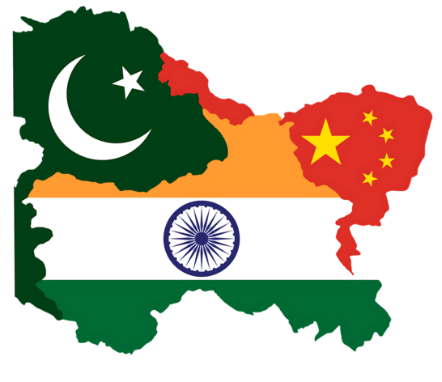

By Haris Qadeer: Following a recent militant attack on tourists in the scenic region of Pahalgam in Indian-administered Jammu and Kashmir, the escalating tensions and near-war situation between India and Pakistan seem to have subsided—at least temporarily—after an intervention by the U.S. President. Both sides are now celebrating supposed military victories, with mainstream media fanning the flames of war hysteria. Much of the coverage focuses on military capabilities and strategic gains, while the real human cost is largely ignored, especially that borne by the people of Jammu and Kashmir.
The region that suffered the most during this flare-up, as always, is Jammu and Kashmir. While mainstream media fixates on developments across the international border, the people living along the Line of Control (LoC)—the 740-kilometer-long de facto border dividing Kashmir between India and Pakistan—endured four days of unimaginable terror and destruction. Defense analysts might label the recent escalation as a mere “skirmish” or “tension,” but for those living in these areas, it was nothing short of hell.
According to official figures, between May 6 and the night of May 10, intense cross-border shelling across Pakistan-administered Jammu and Kashmir killed 32 people, including 10 women and 5 children. Among the 126 injured were 40 women and 22 children. The shelling also destroyed 528 homes and 26 shops, killed 45 livestock, and forced 1,262 families to temporarily flee their homes.
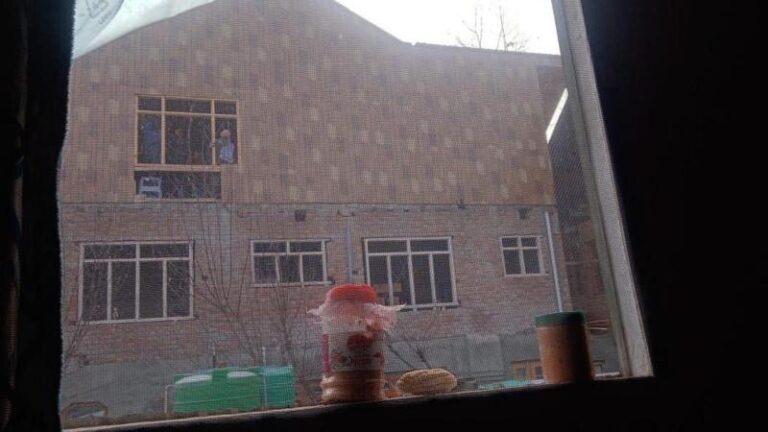
On the Indian-administered side, the government has yet to release official casualty numbers. However, unofficial figures suggest that at least 26 people were killed and dozens injured in four days of cross-border firing. Massive destruction has been reported in northern districts such as Poonch, Mendhar, Samba, Rajouri, Baramulla, Kupwara, and Uri. In Poonch city alone, heavy shelling forced 90% of the population to evacuate. Hundreds of homes and businesses were reduced to rubble.
This isn’t the first time that war has been imposed on those living along the LoC. Since 1947, these areas have experienced such assaults as a recurring nightmare. India and Pakistan have fought three full-scale wars and one limited war, in addition to numerous military standoffs. And every time tensions rise, it is the people of Kashmir—living on both sides of the LoC—who suffer the most. While global powers occasionally intervene to deescalate tensions, offering fleeting periods of peace, these intervals are temporary and fragile.
Kashmir has been kept as a festering wound by both India and Pakistan—used to justify the very partition of the subcontinent. Whenever questions are raised about the legitimacy of that partition, or whenever political pressure builds to address poverty, economic woes, or governance failures in either country, the Kashmir issue is deliberately inflamed to distract and divert. Often, election victories and political gains are secured at the cost of Kashmiri blood.
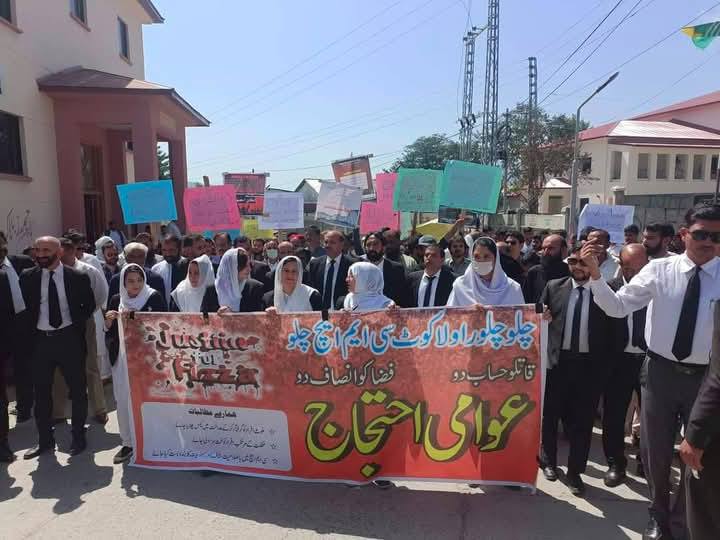

The 20 million people of Jammu and Kashmir have never been allowed a voice on any forum. The conflict is at times presented as a bilateral issue, at other times as an international dispute, but in both cases, the actual people of Kashmir are excluded from the conversation. No one has ever asked what they truly want.
In every war, it is Kashmiri blood that is shed. Even periods of so-called peace are built on Kashmiri suffering. In every confrontation, the ruling elites and military establishments of India and Pakistan claim victory, while defeat is the perpetual fate of the people of Jammu and Kashmir.