Wednesday, April 1, 2026
12.8 C
Srinagar
Home Blog Page 93

Muzaffarabad Introduces Digital Driving License Verification System

0

Muzaffarabad, Azad Jammu & Kashmir (PaJK): The process of verifying driving licenses in Muzaffarabad has been significantly streamlined with the launch of the Driving License Information Management System (DLIMS). Developed in collaboration with the Punjab Information Technology Board (PITB) and the AJK Police Department, the system promises to offer a more efficient, transparent, and secure method for verifying driving credentials across the region.

What is DLIMS?

The Driving License Information Management System (DLIMS) is an online platform designed to modernize the way driving licenses are issued, renewed, and verified in Azad Jammu & Kashmir (AJK). Launched in November 2024, DLIMS enables users to verify their driving license status, apply for renewals, and even replace lost licenses all without having to visit a government office.

Also Read: How to Get Your Azad Kashmir Driving License Latest Update

By leveraging the power of technology, DLIMS not only enhances the security of the system but also provides a hassle-free experience for users.

Verifying Your Driving License in Muzaffarabad

For Muzaffarabad residents, verifying a driving license is now just a few clicks away. Here’s how you can do it:

1. Visit the Official DLIMS Portal

Start by navigating to the official DLIMS website dedicated to Muzaffarabad: https://dlims-muzaffarabad.pk/

2. Access the Verification Panel

Once on the homepage, locate the “Track Your License Status” or “Driving License Verification” section. This will direct you to the verification page.

3. Enter Your CNIC

You’ll need to input your Computerized National Identity Card (CNIC) number—ensure that the number is entered without dashes for accurate results.

4. Submit and Review

After entering your details, click the “Verify” button. Within seconds, you will receive a detailed report that includes:

  • The license holder’s name
  • License number
  • Issuance and expiry dates
  • License type (e.g., LTV, HTV)
  • Current status (valid, expired, suspended)

This digital system allows for real-time updates, eliminating the need for manual checks at local government offices.

Why DLIMS Matters

The implementation of DLIMS in Muzaffarabad is a significant step toward digitalizing public services and improving administrative efficiency. Here are a few reasons why it is important:

Convenience

DLIMS enables users to verify their driving license status from anywhere, at any time. The online platform offers a significant advantage for those who might find it difficult to visit the local licensing office in person.

Real-Time Information

Unlike traditional methods that often require waiting for processing, DLIMS provides real-time data, allowing users to access up-to-date information about their licenses immediately.

Enhanced Security

With the centralization of license records, the risk of fraudulent documents is reduced. The DLIMS system ensures that all license verifications are done against a secure, government-maintained database, offering a higher level of trustworthiness.

User-Friendly Interface

The platform is designed with simplicity in mind, making it accessible even for individuals with limited technical knowledge.

Additional Features of DLIMS

Beyond verification, DLIMS offers a range of services that further enhance its utility:

Online Learner’s License Application: Aspiring drivers can now apply for a learner’s license from the comfort of their homes.

License Renewal & Replacement: Users can submit applications for license renewals and replacements online, even while abroad, without the need to physically visit government offices.

Digital Payments: The platform supports e-payments, making it easy to pay fees for various services such as license issuance and renewal.

Application Status Tracking: Individuals can track the status of their license applications or renewals, ensuring greater transparency and better user experience.

The Future of Licensing in AJK

DLIMS marks a major shift in how driving licenses are handled in Muzaffarabad and AJK. As the region continues to digitize public services, platforms like DLIMS are expected to play a crucial role in modernizing administrative processes, ensuring that public services are more accessible, efficient, and secure.

For Muzaffarabad residents, this digital system provides a more streamlined, transparent, and secure way of managing their driving credentials. As DLIMS continues to evolve, its benefits are expected to expand, making it a critical tool for the region’s future.

The introduction of the Driving License Information Management System (DLIMS) in Muzaffarabad is a positive development that enhances the convenience, security, and efficiency of the driving license verification process. By allowing residents to access their driving license details online, the system eliminates the need for time-consuming visits to government offices, saving both time and resources.


Political Council of MWM Raises Alarm Over Exploitation, Misgovernance in Gilgit-Baltistan

0

Gilgit, Gilgit-Baltistan (Pakistan administered Kashmir): In a significant political gathering, the Majlis Wahdat-e-Muslimeen (MWM) Gilgit-Baltistan held its Political Council meeting in Gilgit under the leadership of Sheikh Ahmad Ali Noori, Secretary Political Affairs and member of the GB Council. The meeting was attended by key figures including provincial leader Ghulam Abbas, former legislator Haji Rizwan, Arif Hussain Qanbari, Mutahar Abbas, and the Opposition Leader of the Gilgit-Baltistan Assembly, Kazim Maisam.

The council held detailed discussions on the worsening political climate, fragile law and order situation, and mounting public grievances in Gilgit-Baltistan — a region that remains at the heart of the unresolved Jammu & Kashmir dispute. Major concerns included prolonged and unaddressed power outages, suspended development projects, the ongoing lawyers’ protest, mistreatment of local traders at the Sost border, and systematic deprivation of local communities from their natural resources.

Leaders voiced strong opposition to what they described as “anti-people decisions” regarding Gilgit-Baltistan’s mineral wealth. “The people of this region have the foremost right over its natural resources,” the council declared. It was pointed out that for the past year, ordinary citizens have been obstructed from mining through bureaucratic tactics, and now the central government’s push to bring in foreign investors is being met with fierce resistance.

The MWM warned that recent amendments to the Mining and Concession Rules were made without public consultation or Assembly debate. “No one besides a few government officials and the Governor is even aware of the new changes,” the council revealed. “Passing such policy-level decisions behind closed doors is unacceptable and illegitimate.”

The council also criticized the so-called green tourism policy, stating that it is being imposed against the will of the local population and risks triggering a widespread public backlash. In addition, the MWM voiced strong support for the Diamer dam affectees, urging the federal government and WAPDA to immediately meet their demands. The leaders squarely blamed WAPDA’s negligence for escalating tensions and forcing the people to resort to prolonged sit-ins.

Addressing the plight of local traders, the council demanded a business-friendly environment at the Sost border and warned against creating hurdles during the ongoing trade season. The MWM leadership also denounced the current state of governance in Gilgit-Baltistan, attributing administrative failures and biased policies to what they called the aftermath of a regime change agenda.

Citing the sensitivity of the region, the council called for a serious review of internal security mechanisms. In a decisive move, the meeting resolved to launch a joint movement in collaboration with all regional parties, rights-based organizations, action committees, and trade unions to protect Gilgit-Baltistan’s resources and resist external exploitation.

Two Months of Sit-In in Diamer: No Progress on 31-Point Charter of Demands

0

This Content Is Only For Subscribers

Please subscribe to unlock this content.

Kashmir Premier League: A Historic Milestone for Young Cricketers in Gilgit-Baltistan

0

Gilgit, (PaJK): A new chapter is being written in the history of cricket in Gilgit-Baltistan, as the Kashmir Premier League (KSL) has announced a golden opportunity for local young cricketers to play alongside international cricket legends. This announcement has ignited a wave of excitement among the region’s youth.

According to Masood Ahmed Khan, the Chairman of the Kashmir Premier League, six talented players from Gilgit-Baltistan will be selected to join the league. To achieve this, special talent-hunting trials will be held in collaboration with the “Markhor Super League,” through which the best players will be identified and introduced to the national level.

International Cricket Stars Visiting Gilgit-Baltistan

In another significant development, major international cricket figures such as Shahid Afridi, Wasim Akram, and other cricket legends are scheduled to visit Gilgit-Baltistan. These stars will not only meet with local players but also oversee the trials, which are set to take place tomorrow at Gilgit’s City Park. This will be an invaluable opportunity for the young cricketers to interact with the legends and gain insights into the game at the highest level.

Government Support for the Initiative

The Government of Gilgit-Baltistan has shown full support for this initiative. Government spokesperson Faizullah Faraq expressed gratitude in a press conference to both the Kashmir Premier League team and the visiting legends. He stated, “This is a moment that will turn the dreams of our youth into reality. We are grateful to the Kashmir Premier League and Markhor Super League for addressing 75 years of sports deprivation. The government will provide all necessary facilities to ensure the success of this historic opportunity.”

He further mentioned that the Government of Gilgit-Baltistan will collaborate with all players and organizers to ensure that the youth of the region are given a chance to showcase their talent on both national and international platforms.

A New Dawn for Cricket in Gilgit-Baltistan

This development marks a major milestone not only for the growth of cricket in the region but also for enhancing the positive image of Gilgit-Baltistan on the international stage. The joint efforts of the Kashmir Premier League and the Markhor Super League are a historic foundation for the passionate cricketers of Gilgit-Baltistan, a moment that the region’s people will never forget.

China Hosts Investment Conference Targeting Gilgit-Baltistan: A Push for Economic Influence in Disputed Territory

0

Skardu, (PaJK): In a move that raises critical questions about sovereignty and self-determination, a three-day investment conference was recently organized in China under the “Border Trade Zone China” initiative, with participation from business representatives of Gilgit-Baltistan, a region internationally recognized as part of the disputed territory of Jammu & Kashmir.

Delegations from all district chambers of commerce in Gilgit-Baltistan took part, including high-level officials from the region’s business community and provincial ministers. The event, held under the banner of economic cooperation, facilitated direct engagement between Chinese investors and local business leaders. According to reports, several billion-rupee agreements were signed, setting the stage for Chinese investment in a range of sectors within GB.

The conference also emphasized China’s intention to provide tax exemptions for import-export activities conducted by communities residing along the border, part of a broader strategy to expand Chinese economic influence through the “Border Trade Zone Company.” Chinese authorities pledged to provide accommodation and commercial space for GB traders in Tashkurgan, signaling a long-term plan for deepening bilateral economic ties.

While economic development is welcome in any region suffering from neglect, the context of this initiative cannot be ignored. Gilgit-Baltistan, like the rest of Jammu & Kashmir, remains a territory under dispute as per multiple United Nations Security Council resolutions. Any foreign investment or bilateral agreement involving GB — without the consent and participation of the people of Jammu & Kashmir — risks further entrenching foreign control and undermining the region’s right to self-determination.

Leaders from the Skardu Chamber of Commerce, including President Ashraf Hussain and businessman Abbas Numberdar, expressed hope that the partnership will bring economic growth to the region. However, grassroots voices and international observers alike have consistently raised concerns about external investments being used as tools of political influence in territories where the local population has no say in governance or international agreements.

It was also announced that four annual meetings between Chinese investors and GB chambers will be held — two in China and two within Gilgit-Baltistan — with the next summit scheduled in Hunza. These developments, while framed as economic cooperation, come amid increasing militarization and political marginalization in the region.

As an independent platform committed to the just and democratic resolution of the Kashmir dispute, we remind the international community that Gilgit-Baltistan is not a bargaining chip nor a frontier for proxy economic expansion. The region’s people must be the primary decision-makers in determining their political and economic future free from coercion, occupation, or economic manipulation.

Pakistan-administered Kashmir High Court Adjourns Hearing on PM Anwar-ul-Haq’s Legitimacy Until May 5

    0

    Muzaffarabad: The High Court of Pakistan-administered Kashmir has postponed until May 5 the hearing of a constitutional writ petition challenging the election of Prime Minister Chaudhry Anwar-ul-Haq.

    A divisional bench of the High Court, comprising Justice Syed Shahid Bahar and Justice Sardar Muhammad Ijaz Khan, heard the preliminary arguments in the case titled Raja Muhammad Farooq Haider Khan vs. Chaudhry Anwar-ul-Haq and others. The petition was filed by former Prime Minister Raja Farooq Haider Khan, contesting the legality of Chaudhry Anwar-ul-Haq’s appointment as Prime Minister.

    Representing the petitioner, advocates Sardar Javed Naz and Raja Ayaz Fareed began presenting arguments. However, during the proceedings, the bench remarked that the court would listen to both the petitioner and the Advocate General but emphasized the need for clarity on a key legal point: whether the electoral process can be challenged after the votes have been cast.

    The court announced that on May 5, it would deliberate on the admissibility of the constitutional petition—whether or not it meets the criteria for further proceedings.

    This hearing had originally been scheduled for April 7, but was postponed due to the retirement of Justice Mian Muhammad Arif, who was leading the previous bench. The petitioner’s legal team then requested the formation of a new bench, which was approved by the Chief Justice. The new bench was subsequently constituted, consisting of Justices Shahid Bahar and Muhammad Ijaz Khan.

    On April 16, the court issued notices to all parties to appear. Representing Prime Minister Anwar-ul-Haq, Advocate Sheikh Atiq ur Rehman submitted a power of attorney and requested additional time to file a formal response. The court granted one day for reply and scheduled the next hearing for April 17 (Thursday).

    The case has drawn widespread attention within political and legal circles in the region, as it challenges the legitimacy of the current government in Pakistan-administered Kashmir and could have broader implications for the region’s constitutional framework.

    Kashmir to Install Chairlifts at Key Tourist Destinations Under New Tourism Master Plan

    Muzaffarabad, (PAJK): In a significant move aimed at enhancing sustainable tourism, the Government of Pakistan-administered Kashmir has announced the installation of chairlifts at four major scenic destinations: Ratti Gali, Baboon Valley, Arang Kel, and Taobat, all located in the picturesque Neelum Valley.

    Director General of the Azad Jammu and Kashmir (AJK) Tourism Department, Chaudhry Meherban, stated that a comprehensive Tourism Master Plan is in its final stages, focusing on structured development to boost the tourism sector while preserving natural beauty.

    Speaking during a recent three-day visit to Neelum Valley, DG Meherban emphasized that heavy-duty chairlifts will be installed in key locations to provide safe and scenic access to elevated tourist spots. He also highlighted the need for planned construction similar to popular tourist models in Gilgit-Baltistan and Naran-Kaghan to enhance visitor experience without compromising the landscape.

    “Currently, unregulated and scattered hut-style constructions are harming the natural aesthetics of these areas. We aim to reverse this trend through proper planning and infrastructure,” Meherban told media representatives in Taobat.

    Accompanied by Assistant Director of Tourism Khawaja Mushtaq Ganaie and Tourism Officer Chaudhry Lal Hussain, the DG inspected tourism guest houses in Keran, Upper Neelum, Sharda, Kel, and the Grace Valley.

    He reiterated that the government’s goal is to create job opportunities at the local level by promoting tourism as a viable economic sector. “Through this Master Plan, we are not just building infrastructure we are laying the foundation for a self-sustaining tourism economy in the region,” he said.

    The department also urged private investors and hospitality providers to shift focus towards medium to large-scale accommodations, suggesting the construction of units with 50, 60, or even 100+ rooms, as opposed to the current trend of small scattered huts.

    According to DG Meherban, the Master Plan will soon be approved, after which formal implementation will begin, transforming Neelum Valley into a more accessible and organized tourist destination.

    The initiative marks a strategic step by Pakistan-administered Kashmir’s authorities to position the region as a competitive eco-tourism hub, while preserving its breathtaking natural heritage.

    Farewell After Four Decades: Afghan Refugees Depart Kashmir Amid Tears and Tributes

    0

    Muzaffarabad, (PaJK): As Pakistan intensifies its campaign to repatriate undocumented Afghan nationals, a wave of silent goodbyes is unfolding in Pakistan-administered Kashmir, (Azad Jammu and Kashmir) (AJK), where thousands of Afghan refugees have been living for decades. Now, as they are being asked to leave, heart-wrenching stories of separation, shared history, and solidarity are surfacing on social media.

    Among those bidding farewell was Aamir Khan, an Afghan national who lived most of his life in AJK. In a deeply emotional Facebook post, Khan wrote:

    “After forty years, we too have packed our bags for the journey home — Afghanistan. Our bond with Kashmiris has been one of shared pain, slavery, and suppression. Our childhoods were intertwined. But today, these artificial lines and imposed identities have separated us. We will meet again — in another world, in a classless human society. With a heavy heart, farewell friends, brothers, and companions. Remember us in your prayers.”

    The post resonated widely, being shared by many Kashmiri users who expressed solidarity and compassion for the departing refugees. It painted a poignant picture of the human cost behind political decisions and the decades of co-existence that have now been disrupted.

    According to local reports, hundreds of Afghan families in districts like Muzaffarabad, Kotli, and Rawalakot are returning to Afghanistan as part of the nationwide expulsion policy. Some of these families had spent over 40 years in AJK, integrating deeply into the local fabric through work, education, and community life.

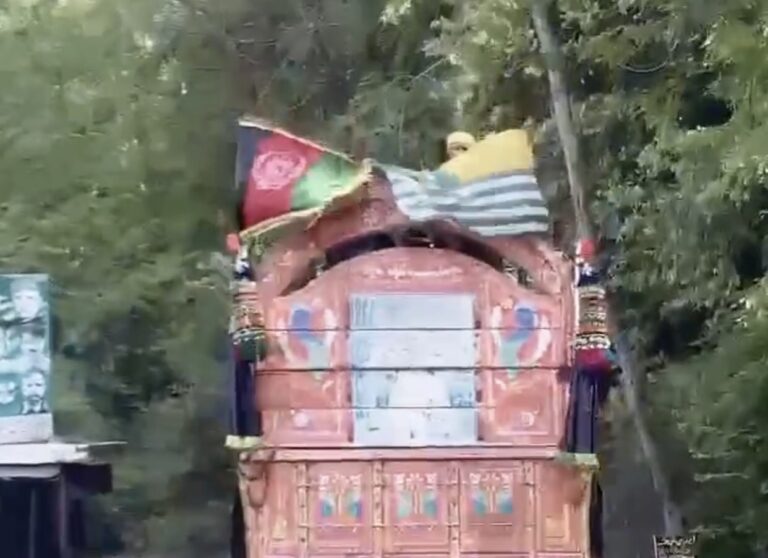
    Social media has become a mirror of these emotions. Images of the Afghan and Kashmiri flags being shared together have gone viral, symbolizing unity beyond borders and state identities. While the mainstream narrative remains focused on legality and repatriation, the grassroots response from the Kashmiri population has been largely empathetic and humane.

    In Afghanistan, temporary camps have been set up in border provinces such as Nangarhar to receive returnees. Authorities there claim to be offering basic facilities, though many families fear uncertainty, lack of livelihood, and security challenges in their ancestral land.

    The departure of Afghan refugees from AJK has sparked important conversations around identity, belonging, and the meaning of home. For many, it’s not just a physical journey — but the emotional closing of a chapter that spanned generations.

    Terror Threat Escalates in Kashmir as TTP Network Exposed: Interior Minister Warns of “Major Infiltration”

    0

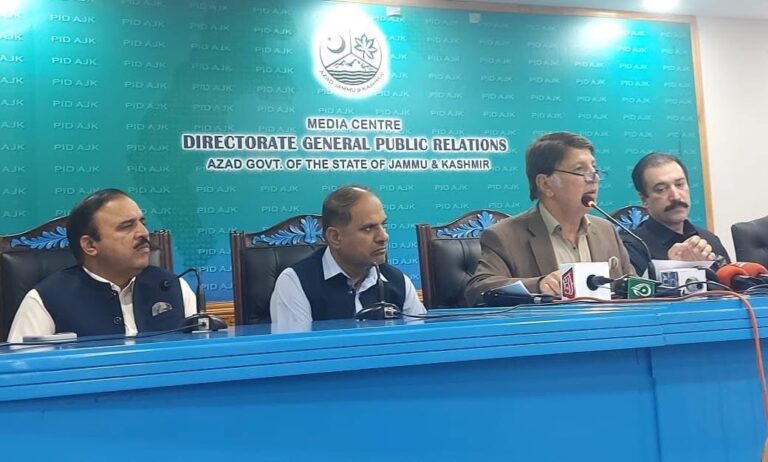
    Muzaffarabad, Azad Kashmir (Pakistan-administered Kashmir): Azad Kashmir’s senior-most Minister and Interior Minister Colonel (R) Waqar Noor has sounded the alarm over growing security threats in the region following the discovery of a major militant network allegedly linked to the banned Tehrik-e-Taliban Pakistan (TTP). The warning came during a press briefing held after an in-camera cabinet meeting in Muzaffarabad, the capital of Pakistan administrated Kashmir where the Inspector General of Police Rana Abdul Jabbar briefed ministers on the evolving threat landscape.

    Speaking to journalists alongside key cabinet members, including Ministers Ch. Muhammad Rasheed, Faisal Mumtaz Rathore, Akbar Ibrahim Choudhary, and Information Secretary Sardar Adnan Khurshid, Interior Minister Waqar Noor revealed that multiple militants had been apprehended across various locations in Azad Kashmir, and that two suicide bombers had already entered the region.

    “Azad Kashmir is under serious threat. A significant TTP network was recently dismantled, one that aimed to destabilize the peace of the region,” stated Noor.

    The Minister further disclosed that TTP has reportedly appointed its own “Governor” and regional leadership for Azad Kashmir, indicating a disturbing attempt by the group to establish a shadow administrative structure within Pakistan-administered territory.

    Weapons License Ban Lifted Amid Security Concerns

    In light of the heightened threat, the Azad Kashmir Cabinet has lifted a longstanding ban on issuing prohibited bore arms licenses. Government officials, legislators, senior officers, and other high-profile individuals who face credible threats may now apply for such licenses. Notably, ordinary citizens who can prove a risk to their lives may also be eligible.

    “Our priority is the protection of life and property,” said Interior Minister Noor. “Any citizen who faces a real threat will be allowed to arm themselves for self-defense.”

    He added that he had personally acquired licenses for two Kalashnikovs from the Ministry of Interior and would obtain more if necessary.

    Militant Network Planning Large-Scale Attacks

    Details emerging from the briefing suggest that a person apprehended with weapons near the Azad Pattan Bridge was part of a larger cell. According to intelligence, four additional individuals had entered the region separately with plans to regroup and carry out attacks.

    “Had our agencies not intercepted them, the outcome could have been catastrophic,” Noor stated.

    Officials confirmed that the network had been under surveillance, and law enforcement conducted targeted operations leading to arrests that likely prevented imminent acts of terrorism.

    Call for Unity and Vigilance

    The cabinet urged the public to understand the gravity of the situation and remain alert. “These threats go far beyond grievances over electricity or food subsidies,” said Minister Faisal Mumtaz Rathore, adding that “elements exploiting public unrest are being funded by foreign enemies, similar to patterns seen in Balochistan and Khyber Pakhtunkhwa.”

    The ministers expressed concern over rising rhetoric involving terms like “non-state actors” and “non-state institutions.” Interior Minister Noor criticized the misuse of such terms:

    “My son is a Major in the Pakistan Army. He holds a State Subject Certificate of Jammu and Kashmir. Is he a non-state actor?”

    Noor highlighted the presence of over 25 Brigadiers, six Major Generals, and two Lieutenant Generals of Kashmiri origin serving in the Pakistan Armed Forces, emphasizing their role in defending the region.

    Opposing “Fitna al-Khawarij”

    Interior Minister Noor repeatedly referred to the infiltrators as part of “Fitna al-Khawarij,” a religious term often used to denote extreme militant offshoots. He urged citizens to work with authorities, share suspicious activities, and avoid falling for disinformation campaigns.

    “All institutions must be united on one page. We’re asking the Awami Action Committee and the people to grasp the seriousness of this moment,” he said.

    A Region on Edge

    As Azad Kashmir faces unprecedented security challenges, the cabinet’s decision to relax gun license restrictions marks a significant policy shift. The TTP’s strategic interest in this sensitive region already marred by political tensions and public unrest adds another layer of complexity to the geopolitical dynamics of Kashmir.

    While authorities claim that proactive steps have averted potential disaster, the presence of suicide bombers and a structured militant network point to a deeply concerning future. For now, the message from the state is clear: vigilance, unity, and preparedness are not optional—they are essential.

    Palm Sunday Celebrated in Kashmir with Active Participation of Muslim Leadership

    0

    Muzaffarabad, (PaJK): In the capital of Pakistan-administered Azad Jammu & Kashmir, Muzaffarabad, the Christian community celebrated their global religious festival, Palm Sunday, with devotion and reverence. A special prayer service and celebration were held at the local church in Muzaffarabad, attended by a large number of Christian families, children, and elders.

    Prominently, Muslim leadership from Muzaffarabad actively participated in the event. They visited the church to extend their warm greetings to the Christian community on their holy festival, delivering a powerful message of interfaith harmony, love, and brotherhood.

    The event was attended by notable figures, including Mayor of Muzaffarabad Municipal Corporation Syed Sikandar Nisar Gilani, former Chairman of the Development Authority and Chairman of Muzaffarabad City Development Foundation Zahid Amin Advocate, Secretary of Allotment Development Authority Muhammad Saleem Awan, DFA President Mehtab Mir, Councillor Umair Kayani, Chairperson of Workers Union Azad Kashmir Elder Riyasat Masih, Sonia Riyasat, Riaz Masih, and other political and social personalities.

    Christian community leaders expressed their pride in the participation of Muslim guests, emphasizing that Muzaffarabad offers equal religious freedoms to all communities, fostering a society bound by brotherhood and mutual respect.

    During the event, speeches were delivered by prominent leaders such as former Chairman Zahid Amin and Mayor Syed Sikandar Nisar Gilani. They reassured the Christian community and all minorities of their complete freedom in Azad Jammu & Kashmir to practice their faith, worship, and contribute positively to society, just like other citizens.

    The speeches also highlighted the invaluable contribution of sanitation workers in Muzaffarabad. Zahid Amin praised their efforts, stating, “Sanitation workers wake up before dawn to clean the entire city. You are our pride. Addressing your issues is the responsibility of the state, and we are committed to fulfilling this responsibility.” He also appreciated the provision of land for the construction of a church, acknowledging it as a commendable step toward ensuring religious freedom.

    Elder Riyasat Masih also expressed gratitude to the government of Azad Kashmir, particularly the former Chairman Zahid Amin, the Station Commander of the Pakistan Army, and other officials, for their efforts in fulfilling the Christian community’s longstanding demand for a place of worship. He emphasized that “We are all citizens of the same state, and we must stand by each other during festivals and moments of joy. Interfaith harmony is the path to progress and peace.”

    The event concluded with special prayers for religious tolerance, peace, and unity in the region.