No state backing. No paywalls. Just truth. Support Kashmir's independent voice. Join 2,400+ patrons who fund independent voices.
Zero Paywalls
Reader Funded
Award Winning
Secure Payment
Encrypted
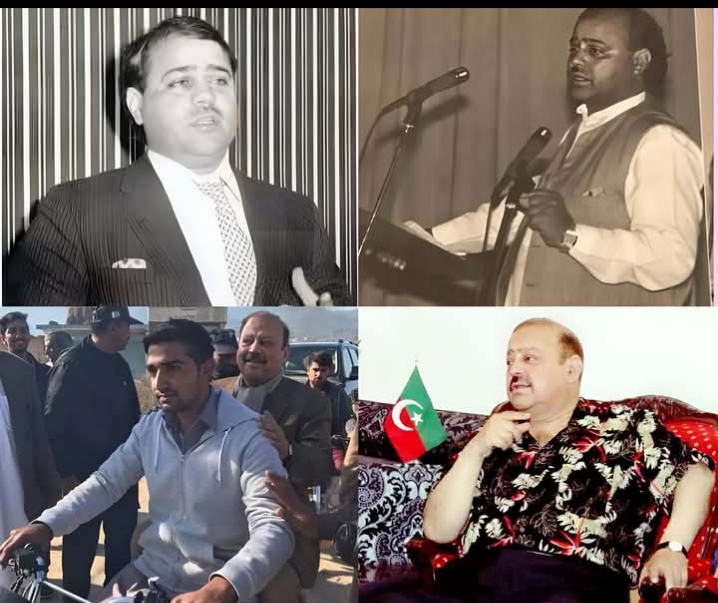
The passing of former President of Azad Jammu and Kashmir, Chaudhry Sultan Mahmood Chaudhry, has triggered more than condolences. It has reopened a conversation many in Kashmir have avoided for decades—a conversation about political loyalty, ideological commitment, and what Kashmir has tangibly gained from either.
His funeral prayers were offered in Islamabad, where he spent much of his political life and where he passed away. His body was later taken to Mirpur, in Pakistan-administered Kashmir, for burial. On the surface, this followed established protocol. Yet what followed online was anything but routine.
Across social media platforms, Kashmiris were not merely mourning. They were questioning.
No state backing. No paywalls. Just truth. Support Kashmir's independent voice. Join 2,400+ patrons who fund independent voices.
The most striking element was not where the funeral took place, but who was not there. No visible presence of senior Pakistani political leadership. No formal state-level tribute. No symbolic recognition matching a man who had devoted his entire political career to advocating Kashmir’s accession to Pakistan.
This absence has turned a personal loss into a political moment.
A Life Defined by a Single Narrative
Chaudhry Sultan Mahmood represented a generation of Kashmiri leadership shaped by post-1947 realities—leaders for whom alignment with Pakistan was not merely a policy position but an ideological certainty. Throughout his life, he consistently promoted the belief that Kashmir’s destiny lay with Pakistan, repeating it in speeches, statements, and political strategy.
He lived in Pakistan, worked within Pakistan’s political framework, and died there.
For supporters, this consistency reflects integrity. For critics, it raises a difficult question: Does ideological loyalty guarantee political relevance—or only proximity?
The Silence That Spoke Loudly
Funerals often reveal unspoken hierarchies. In this case, the quiet surrounding the funeral of a senior pro-Pakistan Kashmiri leader has unsettled many observers.
The absence of high-ranking Pakistani officials has been interpreted by some as a reflection of a deeper reality: that Kashmiri leaders who invest their entire political capital in external alignment may find themselves symbolically important, but institutionally marginal.
This perception—fair or unfair—has gained traction because it resonates with lived experience.
After more than seven decades, Kashmir remains divided. Pakistan-administered Kashmir continues to face political limitations, economic dependency, and restricted autonomy. Meanwhile, Kashmiris themselves remain largely absent from decisive international forums where their future is discussed.
A Generational Shift in Thinking
What makes this moment significant is not criticism of one individual, but the shift in Kashmiri political consciousness it reveals.
Younger Kashmiris are increasingly unwilling to accept inherited political assumptions without evidence of outcomes. They are asking:
These questions are not anti-Pakistan, nor are they pro-India. They are pro-accountability.
Beyond Slogans, Toward Substance
Chaudhry Sultan Mahmood’s death should not be used to pass judgment on his intentions or personal sacrifices. He operated within the constraints of his era. But history does not freeze at intention—it moves forward through consequence.
The debate unfolding today reflects a broader realization: symbolic politics cannot substitute for political empowerment.
Kashmir’s future cannot rest indefinitely on repetition of slogans crafted decades ago. It demands a rethinking centered on Kashmiri voice, rights, representation, and decision-making power—regardless of geopolitical alignments.
A Moment of Reflection, Not Rejection
This is not a rejection of the past, but a reckoning with it.
When a leader’s funeral sparks more political introspection than official recognition, it reveals a growing disconnect between Kashmiri aspirations and the frameworks meant to represent them.
For The Azadi Times, this moment matters because it marks a turning point: Kashmiris are no longer only asking where do we belong?
They are asking who speaks for us—and to what effect?
That question, once asked openly, cannot be buried.
Trending Topics


The Azadi Times is an independent digital news platform based in Muzaffarabad, Kashmir, dedicated to credible journalism, in-depth reporting, and global analysis. We cover Kashmir, South Asia, and international affairs with a commitment to truth, editorial integrity, and public accountability.
Get important news delivered directly to your inbox and stay connected!
© 2026 The Azadi Times. All Rights Reserved.