

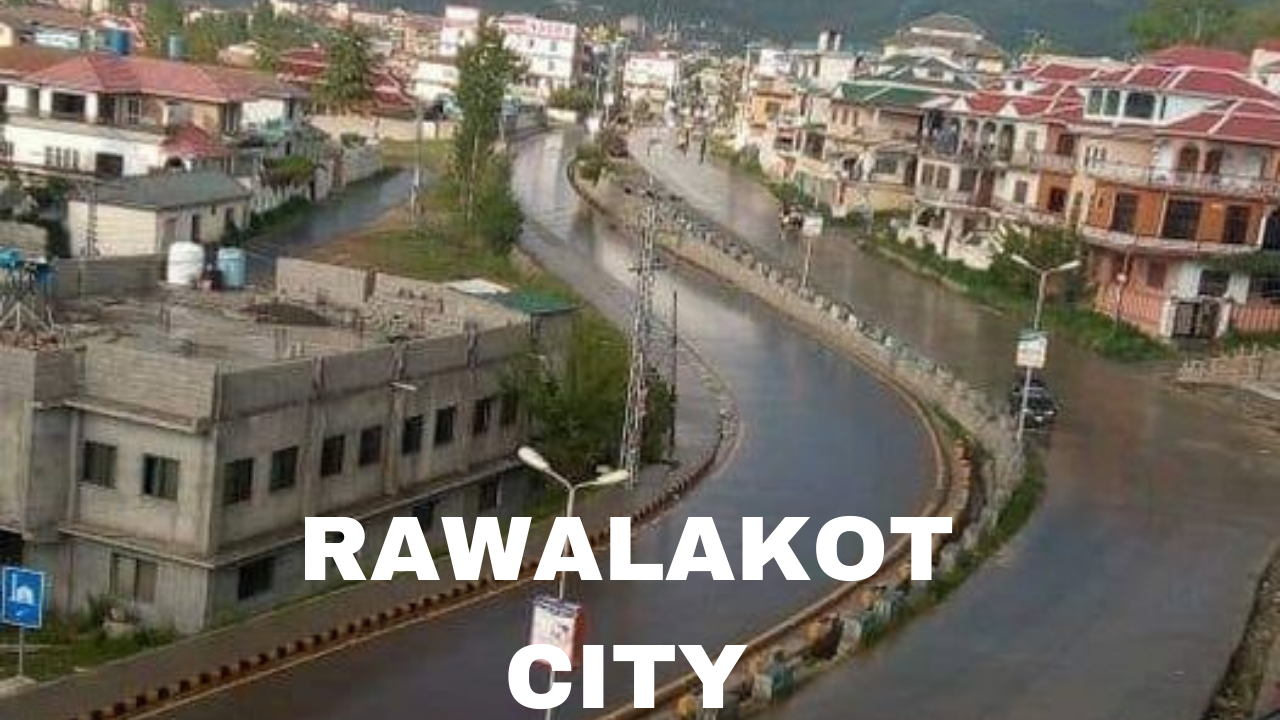
 |
| (Photo by: Atif Maqbool) |
(Note: If anyone has better information, they can share it.)
Rawalakot is a city in Pakistan-Occupied Jammu and Kashmir it is the third-largest city of Azad Jammu and Kashmir with a population of 5.1 lakh people.
At the beginning of the fifteenth century, Sardar Mako Khan was a pioneer of uprisings in the region and a spirit of resistance movements against foreign invaders. The most famous of Makwal’s descendants was his grandson Rawal Khan. He built a fort or hut called Rawalkot in the fourth decade of the fifteenth century.
Or roll room … Kothas also speak house in hill language. Kot is a Hindi word meaning fort or siege. The place became known as Rawalkot and then Rawalkot as compared to Rawal Khan. Rahimullah Yousafzai’s grandfather Moazzam Shafi also writes on page 433 of his book (The Role of NWFP in the History of Pakistan) that Faisal Khan, grandson of Rawal Fateh Khan, whose descendants caused the khanki dispute from Rawalpindi to Azad Kashmir in 1467.
He migrated from Peshawar to Peshawar and one of his descendants, Nawab Saeed Khan Mauli, gained control of Peshawar, Kohat and other Pashtun areas. The migration of Nawab Saeed Mauli from Rawalakot to Peshawar shows that Pashto was the mother tongue of the Sadhans till 1467. Some people say that there used to be a court here in the area of Rawalkot which was called Rahwala Kot. That is, the court of the way. This is just speculation.


Because there was no court in Dheer Kot, Kala Kot, Chaman Kot, Bala Kot but the names here are attributed to the local forts. Therefore, it is conceivable that Rawalkot became famous by the name of Rawal Khan. Saeed Mauli Khan, a famous Nawab of Peshawar, was also a descendant of Mako Khan. Nawab Sahib’s mausoleum is at Dabgri Gate, Peshawar, outside Mission Hospital.
One of his sons, Sardar Mughal Khan, was martyred at Kohat while fighting against the Sikhs. His tomb is located outside the Kohat fort which is still known as Shaheed Baba. If anyone has more authentic historical facts in this regard, please be guided.