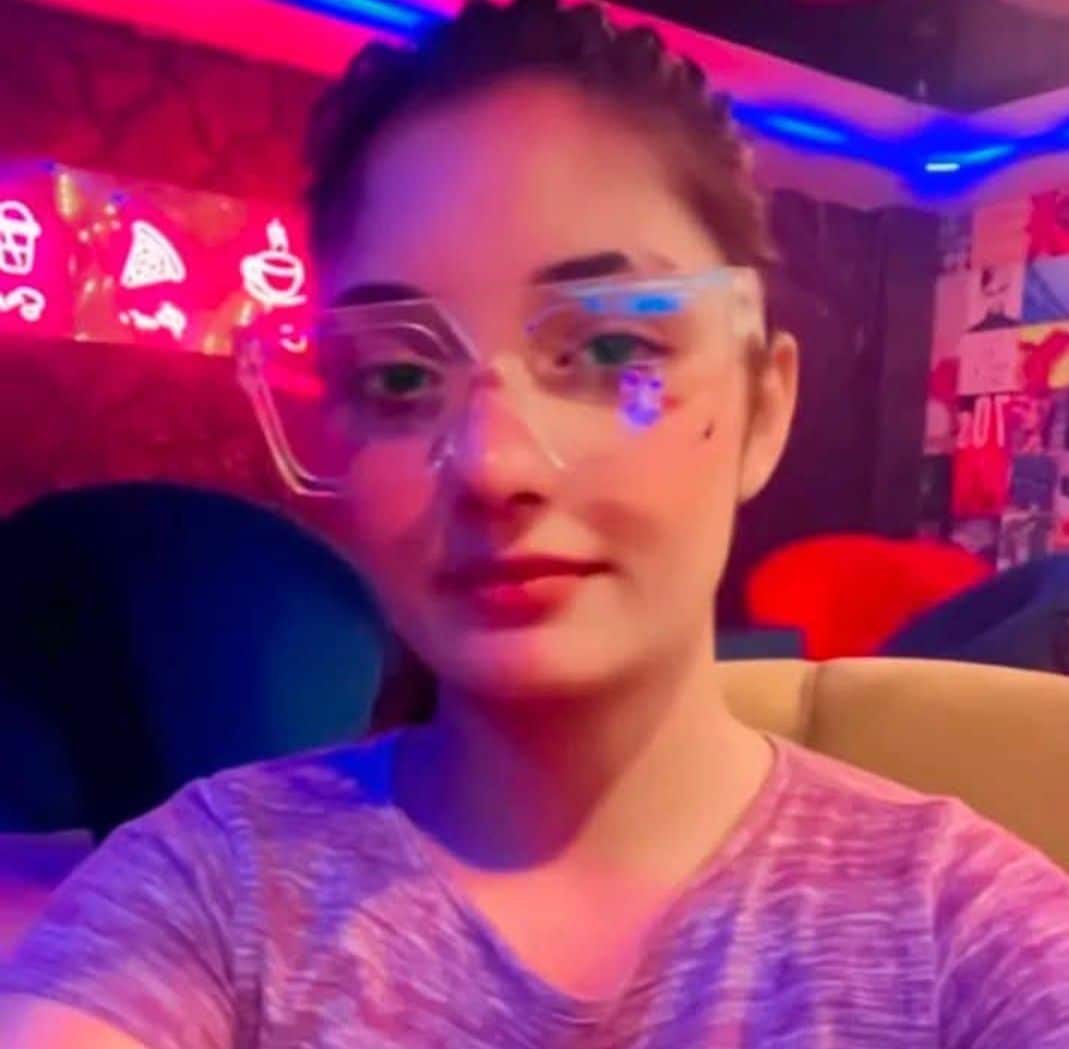

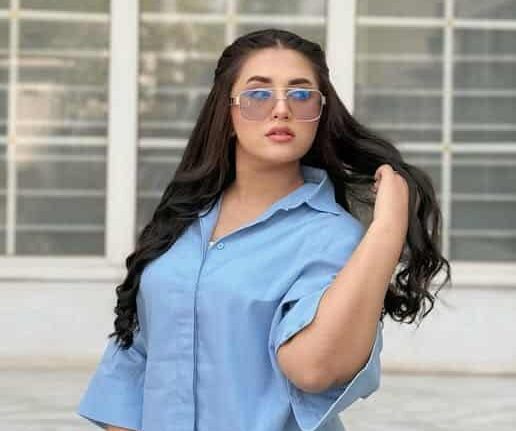

In the vibrant yet volatile world of social media, where a festive post can spark joy or ignite outrage, the name Minahil Malik has once again dominated headlines in Pakistan and beyond. As Eid al-Fitr celebrations unfolded in early April 2025, marking the end of Ramadan with family gatherings and shared sweets, a purported “new viral video” allegedly featuring the 23-year-old TikTok star surfaced online, thrusting her back into a nightmare she thought she’d escaped. Labeled by searchers as the “Minahil Malik new viral video on Eid” or “Minahil Malik new viral video original,” the clip quickly debunked as a deepfake has amassed millions of views across dubious platforms, reigniting debates on digital privacy, gender-based cyber violence, and the cultural double standards that plague female creators in conservative societies.
This isn’t Minahil’s first brush with infamy; her October 2024 scandal set a grim precedent. Now, in September 2025, with the dust still settling from Eid’s aftermath, her story serves as a poignant cautionary tale. Drawing from statements by Minahil herself, investigations by Dawn and Geo News, and reports from the Digital Rights Foundation (DRF), this article unpacks the latest controversy without sensationalism. We prioritize verified facts and survivor perspectives, refusing to link to or endorse any alleged content—searches for “Minahil Malik new viral video original link” often lead to exploitative traps. Instead, we highlight resources for those impacted, emphasizing that true virality should celebrate, not devastate.
Who Is Minahil Malik? A TikTok Trailblazer Navigating Fame and Fragility
Minahil Malik, born in 2002 in Lahore, Pakistan, represents the empowering face of a generation redefining self-expression through short-form video. She joined TikTok in 2020 amid the platform’s explosive growth in South Asia, initially sharing lip-syncs to Bollywood hits and Punjabi folk songs. Her breakthrough came with dance challenges infused with cultural flair think henna-adorned hands twirling to Atif Aslam tracks—blending tradition with modernity in a way that resonated deeply with young Pakistani women.
The Azadi Times
No state grants. No corporate lobby. Just ground‑truth reporting from Kashmir & beyond
You make this possible.
By 2024, Minahil had cultivated a devoted following: over 700,000 on TikTok (before temporary deactivations) and 500,000 on Instagram. Her content evolved to include makeup tutorials, modest fashion hauls, and motivational snippets on mental health, often captioned with empowering Urdu phrases like “Apni jagah banao, duniya badal degi” (Carve your space; the world will change). Off-screen, she’s a media studies student at the University of the Punjab, balancing gigs as a brand ambassador for local labels like Sapphire and Khaadi. In a pre-scandal interview with Images Magazine, she reflected: “Social media isn’t just likes—it’s a mirror for who we can become. But it reflects the ugly too.”
Her appeal lies in authenticity: unfiltered glimpses of Lahore’s bustling streets, family iftars, and quiet victories over societal norms that often sideline women’s voices. Yet, in Pakistan—where a 2024 DRF survey found 65% of female users face online harassment—this visibility made her a target, foreshadowing the storms ahead.
The Eid 2025 Viral Video: From Festive Cheer to Fabricated Fury
Eid al-Fitr 2025 dawned on April 1, a day of moon-sightings, new clothes, and communal prayers across Pakistan. Minahil, like many influencers, shared wholesome content: an Instagram Reel of her in a pastel shalwar kameez, distributing sheer khurma to neighborhood kids, captioned “Eid Mubarak—may joy eclipse every shadow.” It was a moment of light amid her ongoing recovery from prior traumas.

But by April 3, the narrative twisted. A 2-minute-47-second clip emerged on Telegram groups and X (formerly Twitter), timestamped vaguely to “Eid night,” depicting a woman resembling Minahil in a private, intimate setting. Dubbed the “Minahil Malik new viral video on Eid,” it spread via WhatsApp forwards and spam links on Dailymotion and Bitchute, with titles like “Minahil Malik latest viral video Eid 2025” racking up 8 million views in 48 hours. Hashtags such as #MinahilMalikEidLeak and #NewViralMinahil trended regionally, spiking Google searches by 150% in Punjab and Khyber Pakhtunkhwa.
The video’s timing amplified its malice: During Eid, when families bond over forgiveness and renewal, this intrusion felt like a deliberate desecration. Platforms’ algorithms—X’s especially—propelled it, recommending to non-followers under “trending in Pakistan.” Dubious sites masqueraded shares as “Eid specials,” blending exploitation with holiday bait.
Minahil’s response was swift and raw. On April 5, via a voice note on her reactivated Instagram Stories (now @minahilmalik_official), she declared: “This is not me—it’s another deepfake, timed to ruin our Eid. My family is heartbroken; please, report and respect.” Echoing her 2024 denial, she revealed the emotional whiplash: “I thought I was healing. Now, trolls message my mother, saying we’ve shamed our faith.” Geo News forensics corroborated her claim, spotting AI artifacts like mismatched lighting and audio desyncs, likely generated via tools like FaceSwap.
This “new” scandal mirrors the old: In October 2024, a similar MMS-style leak forced her offline for months, costing sponsorships and triggering therapy. The Eid iteration, per DRF, involved coordinated bot farms, with X posts from August 2025 (e.g., anonymous accounts sharing teaser clips) suggesting premeditation. By mid-April, views surpassed 20 million, infiltrating Indian and UAE feeds, where cultural crossovers fueled Islamophobic commentary.
The Devastating Impact: Emotional Scars, Family Strain, and a Chilling Effect on Creators
For Minahil, the “viral” label is laced with loss. In a May 2025 DRF webinar, she shared how the Eid video shattered her tentative comeback: “Eid was about light after Ramadan’s darkness. This video plunged us back in.” She deferred exams, citing panic attacks in public—classmates’ stares evoking 2024’s isolation. Her Lahore family, conservative yet supportive, weathered village gossip; an aunt confided to Dawn: “We celebrate her talent, but society celebrates her fall.”
The psychological toll is stark: A 2025 UN Women report on South Asian cyber abuse links such leaks to 80% higher depression rates among victims. Minahil credits therapy via DRF’s Bolo app for coping, but admits: “Every notification feels like a threat.” Financially, brands paused deals—her ambassador role with a beauty line evaporated overnight—halving her estimated $200,000 annual earnings.
Broader ripples hit Pakistan’s creator ecosystem. Female TikTokers like Aina Asif and Imsha Rehman (who faced parallel deepfakes) reported self-censorship, with 40% reducing posts post-Eid, per a Jazz-commissioned study. Conservative outlets like PTV framed it as “moral erosion,” blaming “Western apps,” while supporters launched #ProtectMinahil, amassing 50,000 signatures for better FIA enforcement.
Legally, Minahil refiled under PECA 2016, naming Telegram admins as co-perpetrators. By July 2025, FIA arrested a 28-year-old from Rawalpindi for distribution, but experts like Nighat Dad of DRF decry gaps: “We prosecute sharers, not AI creators. Eid’s timing shows malice—holidays heighten vulnerability.”
Systemic Shadows: Deepfakes, Platform Failures, and the Urgent Call for Reform
Minahil’s ordeal exposes Pakistan’s digital fault lines. With 90 million social users—TikTok alone boasting 60 million—the nation ranks high in global deepfake incidents, per Sensity AI’s 2025 index, where 92% target women. Tools like Stable Diffusion, freely available, democratize harm, often wielded by jilted suitors or rivals, as in Minahil’s case.
Platforms lag: TikTok’s detection flags only 60% of NCII (non-consensual intimate imagery), per internal audits; X’s “freedom of speech” ethos delays takedowns to 72 hours. Spam ecosystems—Dailymotion uploads, Tidal playlists disguised as “Eid mixes”—monetize misery via ads, evading PTA filters.
This Eid scandal fits a pattern: 2025 saw 25+ leaks during festivals, from Basant to Independence Day, exploiting communal highs. Globally, it parallels Taylor Swift’s deepfake saga, spurring U.S. laws—blueprints for Pakistan’s stalled Digital Pakistan Bill. Activists demand: AI watermarking mandates, school cyber-literacy, and a NCII victim fund.
Economically, the cost is steep: A World Bank estimate pegs South Asian digital violence at $20 billion yearly in lost productivity, stifling Pakistan’s $150 million creator economy.
Minahil Malik’s “new viral video” isn’t a spectacle—it’s a symptom of unchecked digital toxicity. In Eid’s spirit of renewal, her plea echoes: Pause before sharing; protect before it breaks. As Pakistan’s influencers like her push boundaries, society must build bridges, not barriers. True celebration? Lifting voices, not leaking them.