
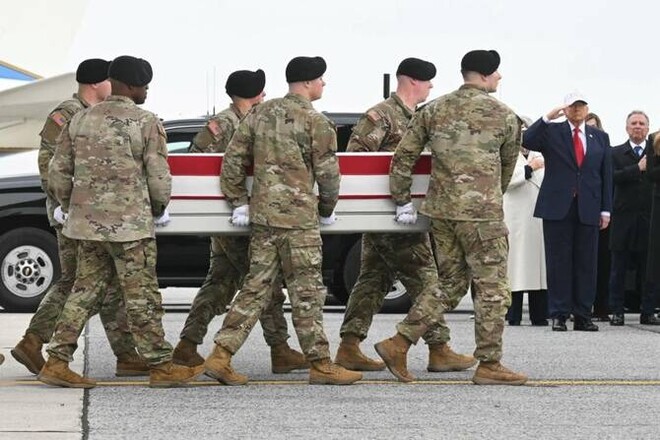

The Pentagon has published its first official tally for Operation Epic Fury, revealing that 365 U.S. troops have been wounded and 13 killed since the war against Iran began on February 28. Casualty data was formally entered into the Defense Casualty Analysis System, establishing a transparent public record for the campaign.
Among the wounded, the U.S. Army accounts for the largest share, with 247 soldiers, followed by 63 Navy sailors, 19 Marines, and 36 Air Force airmen. Of the 13 fatalities, seven were classified as hostile deaths, including six Army reservists killed in a drone strike at Kuwait’s Shuaiba Port. The remaining six airmen died in a KC-135 tanker crash over Iraq, classified as non-hostile. The Air Force has recorded six deaths, the Army seven.
Air Losses Mount Over Iran
On Friday, Iranian air defenses downed two U.S. warplanes: an F-15E Strike Eagle was shot down over Iran, and an A-10 Warthog was hit and crashed near Kuwait. Two pilots were rescued, but a third crew member remains missing, with Iranian forces conducting search operations. Rescue efforts came under fire; two Black Hawk helicopters involved in the search were hit but returned safely, though crew injuries remain unclear.

The downings raise the total number of manned U.S. aircraft lost in the conflict to at least seven. Previous losses include three F-15s mistakenly shot down by Kuwaiti air defenses on March 2, a KC-135 tanker crash on March 12, an E-3 Sentry AWACS destroyed on the ground at Prince Sultan Air Base, and an F-35 forced to make an emergency landing after being hit by Iranian fire.
Iran has formally rejected a U.S. proposal for a 48-hour ceasefire, which was delivered through a third country. Tehran reportedly views the terms as unacceptable. Backchannel talks mediated by Pakistan have reached a dead end, and Iran is unwilling to meet U.S. officials in Islamabad.
President Donald Trump responded by issuing a 48-hour ultimatum on his Truth Social platform: “Time is running out — 48 hours before all Hell will reign down on them”. He also stated that given more time, the U.S. could “easily OPEN THE HORMUZ STRAIT, TAKE THE OIL, & MAKE A FORTUNE”.



Iran’s military command has warned of “more devastating than before” retaliation if its infrastructure is targeted, with strikes potentially hitting not only U.S. and Israeli assets but also key holdings of Gulf allies. Spokesperson Ebrahim Zolfaghari warned that any execution of Trump’s threats would be met with “overwhelming force”. Iran has also threatened to strike infrastructure in countries hosting U.S. bases unless they compel American withdrawal.
The conflict has already spilled across the region. Tehran has launched drone and missile strikes against Israel, Jordan, Iraq, and Gulf nations. The UAE has endured nearly 500 Iranian missiles and over 2,000 attack drones. A March 27 strike on Prince Sultan Air Base in Saudi Arabia injured at least 12 U.S. troops, two seriously, and destroyed an E-3 Sentry AWACS on the ground. Minor debris from Iranian air defense operations also struck buildings in Dubai, though no injuries were reported.
The war has strained U.S.-Gulf relations, with Arab states increasingly alarmed that Washington may leave them exposed to a belligerent Iran. According to a Carnegie Endowment analysis, the conflict has forged collective Gulf anger directed at both Iran and the United States, with Gulf states now facing a difficult choice. Trump has suggested regional nations should “take the lead” in securing the Strait of Hormuz — a tacit admission that Tehran could retain control of the strategic waterway after the war.

As the conflict enters its 37th day, both sides remain entrenched, with no immediate end in sight.