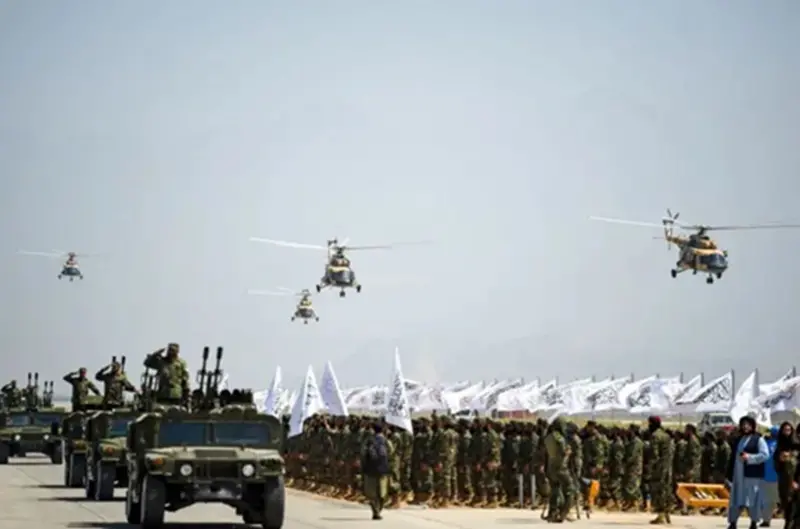

Fighter jets roar across the frontier as drones circle overhead — a fragile region slips deeper into uncertainty.
Claims and counterclaims collide, while the truth remains shrouded in the fog of conflict.
The thunder of artillery drowns out the quiet language of diplomacy.
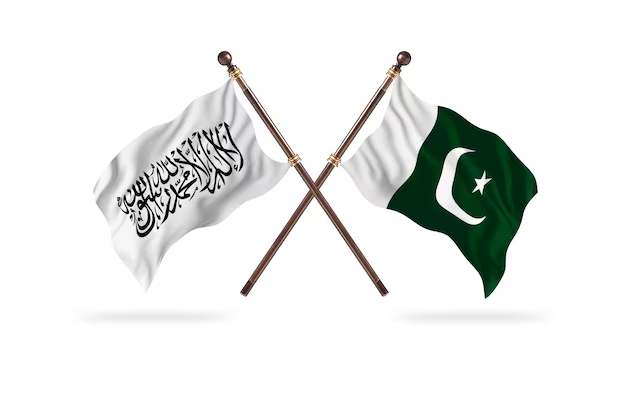
Islamabad and Kabul stand face to face — trust eroding with every exchange.
Casualty figures rise as competing narratives battle for dominance.
A volatile border risks igniting wider regional instability.
More CoverageBehind the military escalation lies a deeper crisis of mistrust, militancy, and unresolved history.


Islamabad/Kabul — Tensions between Pakistan and Afghanistan have sharply escalated into one of the most serious cross-border confrontations in recent years, marked by airstrikes, artillery exchanges, drone incidents, and competing claims of heavy military and civilian casualties. The latest round of hostilities began late on February 26 and has since intensified, raising fears of a broader regional destabilization.
While both sides have issued detailed statements outlining their positions and military actions, many of the claims remain independently unverified.
How the Latest Fighting Began
According to Pakistan’s Ministry of Foreign Affairs, the escalation followed what it described as cross-border militant attacks originating from Afghan territory. Islamabad maintains that its armed forces carried out “measured and targeted operations” in response, asserting that these actions were consistent with international law and the United Nations Charter.
The Azadi Times
No state grants. No corporate lobby. Just ground‑truth reporting from Kashmir & beyond
You make this possible.
Afghanistan’s Taliban-led government, however, has rejected Pakistan’s narrative. Taliban spokesperson Zabihullah Mujahid confirmed that Pakistani airstrikes struck locations in Kabul, Paktika, and Kandahar provinces, while insisting that Afghan forces responded in self-defense against what they termed “unprovoked aggression.”
The exchange rapidly evolved into sustained border clashes across multiple sectors along the contested frontier.
Airstrikes, Drone Incidents, and Casualty Claims
Pakistan’s military spokesperson, Lt. Gen. Ahmed Sharif Chaudhry, stated in a press briefing that 12 Pakistani soldiers were killed and 27 injured in the clashes. He further claimed that Pakistani retaliatory operations resulted in the deaths of 274 Afghan personnel and the destruction of dozens of border posts and military installations.
Afghan authorities strongly dispute those figures. Taliban officials have instead claimed significant Pakistani military losses, alleging that dozens of Pakistani soldiers were killed in cross-border engagements and that multiple Pakistani outposts were destroyed.
Separately, Afghan officials alleged that Pakistan conducted airstrikes in civilian-populated areas, with state media reporting casualties that included women and children. These claims have not been independently verified.
In a parallel development, Afghan authorities claimed responsibility for aerial or drone-based strikes targeting Pakistani cities, including Islamabad, Nowshera, and Abbottabad. Pakistan denied any successful strikes on major urban centers, stating that several small drones were intercepted by anti-drone systems, resulting in minimal or no significant damage.
Independent verification of casualty numbers and operational details from either side remains limited, underscoring the fog of war and the parallel information battle unfolding alongside the military confrontation.
Political Leadership and Military Posture
Pakistan’s Prime Minister Shehbaz Sharif visited the General Headquarters (GHQ) in Rawalpindi to receive a detailed security briefing from military leadership. The Prime Minister reiterated a “zero tolerance” stance toward cross-border militancy and affirmed Pakistan’s right to defend its sovereignty.
Islamabad has consistently argued that Tehreek-e-Taliban Pakistan (TTP), an armed group banned in Pakistan, operates from Afghan territory. Pakistani officials have long accused the Afghan Taliban of failing to dismantle or restrain these networks.
The Taliban government denies providing sanctuary to TTP and insists that Afghan soil will not be used against any other country. In a press conference in Kabul, Zabihullah Mujahid stated that Afghanistan seeks peaceful relations with its neighbors and remains open to dialogue.
However, both sides have simultaneously issued warnings of decisive responses if further escalation occurs.
International Reaction and Diplomatic Outreach
The confrontation has drawn regional and international concern. China expressed “deep concern” over the escalation and urged both parties to exercise restraint and resolve disputes through dialogue. Beijing has historically maintained channels with both Islamabad and Kabul and has offered to play a constructive mediating role.
Malaysia’s Prime Minister Anwar Ibrahim described the conflict during the holy month of Ramadan as “deeply distressing,” calling for an immediate cessation of hostilities and emphasizing the need to respect both Pakistan’s security concerns and Afghanistan’s sovereignty.
Pakistan’s Foreign Minister Ishaq Dar reportedly held consultations with counterparts in Turkey and Saudi Arabia, highlighting the seriousness of the situation and reaffirming Pakistan’s position that its actions were defensive.
Diplomatic observers suggest that quiet backchannel communications may already be underway to prevent further escalation.
The Historical Context: Durand Line and Militancy
The Pakistan–Afghanistan border, known as the Durand Line, stretches approximately 2,600 kilometers and has long been a source of dispute. While Pakistan recognizes it as an international border, successive Afghan governments have contested its legitimacy.
Since the Taliban’s return to power in Kabul in 2021 following the U.S. withdrawal, Islamabad initially hoped for improved security cooperation. However, Pakistani authorities argue that militant violence inside Pakistan has increased, with attacks allegedly traced back to Afghan territory.
Analysts note that the current confrontation is rooted not only in immediate tactical incidents but also in deeper structural tensions: unresolved border demarcation, militant safe havens, regional rivalries, and mutual distrust.
Military Imbalance and Strategic Risks
Pakistan’s armed forces rank among the largest and most technologically advanced in the region, with conventional capabilities that significantly outmatch the Taliban’s forces. However, security experts caution that Afghanistan’s Taliban fighters possess extensive experience in asymmetric and guerrilla warfare.
While neither side appears to be seeking full-scale conventional war, even limited sustained clashes could destabilize border regions, disrupt trade routes, and inflame militant networks.
The risk of miscalculation remains high, particularly amid competing narratives and rapid military responses.
Information Warfare and Competing Narratives
The current crisis has also unfolded across digital platforms, with both sides issuing real-time updates and casualty figures. Many of these claims cannot be independently confirmed.
Observers describe the situation as a dual-front conflict: one fought with artillery and drones along the border, and another waged through strategic messaging aimed at domestic and international audiences.
Such information asymmetry complicates efforts by independent media and international organizations to assess the full humanitarian and military impact.
What Comes Next?
As of now, sporadic cross-border firing continues in certain sectors, although some areas have reported relative calm following intense overnight exchanges.
The trajectory of the conflict will likely depend on:
Whether further cross-border militant attacks occur
The scale of additional retaliatory operations
The effectiveness of diplomatic mediation
The willingness of both leaderships to prioritize de-escalation
Regional stakeholders and global actors have emphasized that prolonged hostilities would undermine stability not only in Pakistan and Afghanistan but across South and Central Asia.
For now, the situation remains volatile. With both sides asserting defensive legitimacy and warning of firm responses, the coming days will be critical in determining whether this confrontation subsides through diplomacy or deepens into a prolonged cross-border crisis.