

Key Highlights
- Jammu and Kashmir is home to some of the most revered temples in the Indian subcontinent.
- These temples represent centuries of spiritual history, linking diverse religious traditions and showcasing the region’s cultural richness.
- The temples’ historical significance is interwoven with the region’s political complexities and conflicts.
The region of Jammu and Kashmir, split between Indian-administered Jammu and Kashmir and Pakistan-administered Azad Kashmir, is one of the most historically significant areas in South Asia. Beyond its breathtaking landscapes, the region holds a deeply rooted spiritual legacy. Amidst the ongoing political turmoil, Jammu and Kashmir’s temples stand as silent witnesses to centuries of history, offering a profound connection to the past.
Temples in Jammu and Kashmir are not just places of worship; they represent centuries of religious coexistence, architectural grandeur, and cultural amalgamation. From Hindu to Buddhist to Sikh traditions, these sacred sites symbolize the rich religious pluralism that has historically defined the region, despite the modern-day challenges it faces.
List of Major Temples in Jammu & Kashmir including AJK & GB
| Temple Name | Region | Location | Deity/Tradition | Significance |
|---|---|---|---|---|
| Vaishno Devi Temple | Jammu | Katra, Reasi | Vaishno Devi (Shakti) | One of Kashmir’s most revered pilgrimage destinations |
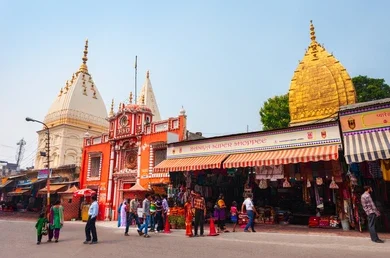
| Raghunath Temple | Jammu | Jammu City | Lord Rama | Largest temple complex in North Kashmi, historic Dogra site |
| Ranbireshwar Temple | Jammu | Jammu City | Lord Shiva | Built by Dogra king Ranbir Singh, houses 12 crystal Shivlings |
| Bahu Fort Temple | Jammu | Bahu Fort, Jammu | Goddess Kali | Popularly known as Bawe Wali Mata Temple |
| Sudh Mahadev Temple | Jammu | Near Patnitop | Lord Shiva | Believed to be over 5,000 years old |
| Peer Kho Temple | Jammu | Jammu | Lord Shiva | Ancient cave temple located near River Tawi |
| Amarnath Cave Temple | Kashmir Valley | Pahalgam, Anantnag | Lord Shiva | Sacred Himalayan cave shrine with natural ice Shivling |
| Shankaracharya Temple | Kashmir Valley | Srinagar | Lord Shiva | Situated atop Zabarwan Hills, historic and panoramic |
| Sharika Devi Temple | Kashmir Valley | Hari Parbat, Srinagar | Goddess Sharika | Main temple for Kashmiri Pandits |
| Kheer Bhawani Temple | Kashmir Valley | Tulmulla, Ganderbal | Goddess Ragnya Devi | Known for sacred spring that changes color |
| Bhaderkali Temple | Jammu | Bhaderwah | Goddess Kali | Ancient temple in the Chenab Valley |
| Shiv Temple Banjosa | Azad Jammu and Kashmir | Banjosa, Rawalakot | Lord Shiva | A Hindu temple still visited by locals and diaspora |
| Haveli Mandir (Ruins) | Azad Jammu and Kashmir | Haveli District | Historical | Pre-partition heritage site, partially damaged post-1947 |
| Ram Kund Temple | Azad Jammu and Kashmir | Near Nikyal, Kotli | Lord Rama & Sita | Ancient spring and shrine, religious and archaeological site |
| Krishna Temple (Ruins) | Azad Jammu and Kashmir | Muzaffarabad (Old City) | Lord Krishna | Historic temple site from Dogra era |
| Shiv Temple | Gilgit-Baltistan | Chilas | Lord Shiva | One of the few remaining Hindu sites in Gilgit region |
| Kali Mata Temple | Gilgit-Baltistan | Skardu | Goddess Kali | Historical temple used during pre-partition times |
| Ganesh Temple (Ruins) | Gilgit-Baltistan | Bunji | Lord Ganesha | Believed to date back centuries, now in ruins |
| Thiksey Monastery | Ladakh | Leh District | Mahayana Buddhism | Buddhist temple complex, included for cultural and religious diversity |
| Shiva Temple Leh | Ladakh | Leh | Lord Shiva | Modern temple visited by Hindu soldiers and travelers |
| Mahadev Temple | Ladakh | Drass, Kargil | Lord Shiva | Located near war memorial; active during Shivratri |
Temples in Pakistan administered Azad Kashmir and Gilgit-Baltistan are fewer in number today due to demographic changes post-1947, but their historical and cultural significance remains intact.
These sites are important not only for Hindus but also for heritage conservation, archaeology, and interfaith harmony.
Some are now ruins but can be restored or preserved with local and international support.
Historical Significance of Temples in Jammu and Kashmir
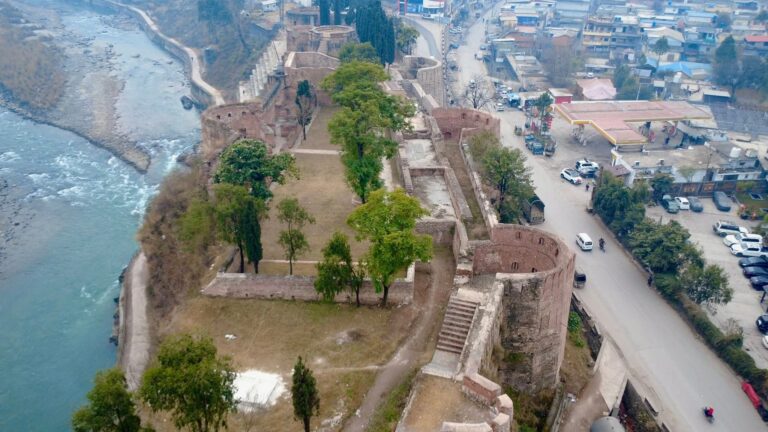
Jammu and Kashmir’s temples are of enormous historical and cultural value. The temples here have survived multiple invasions, political changes, and periods of instability, standing as emblems of resistance and resilience. Their presence on both sides of the Line of Control (LoC) underscores the importance of this region in the spiritual landscape of South Asia.

The Ancient History of Jammu’s Temples
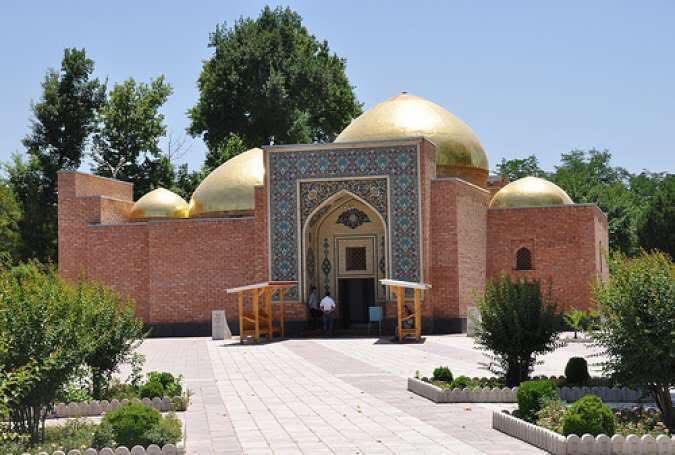
The history of Jammu’s temples dates back to ancient times, well before the rise of Islam in the region. The Mata Vaishno Devi temple, located in the Trikuta Mountains, is one of the holiest Hindu shrines. Believed to have been established around 7000 BCE, the Vaishno Devi temple continues to be an enduring symbol of faith and resilience, attracting millions of pilgrims annually from across the world.
Read Also: The Connection Between Navratri Festival and Sharda
Similarly, the Ranbireshwar Temple, built by Maharaja Ranbir Singh in 1883, is another prominent religious site that showcases the spiritual legacy of the region. Shiva worship is predominant in Jammu, with temples dedicated to the deity scattered across the region, many of them steeped in centuries-old traditions and rituals.


Temples in Kashmir Valley: A Cultural Crossroad
The Kashmir Valley, historically a melting pot of cultures, was home to a significant number of temples before the mass exodus of Kashmiri Pandits in the 1990s. Shankaracharya Temple, perched on a hill overlooking Srinagar, remains one of the most iconic temples in Kashmir. It is dedicated to Lord Shiva and offers a panoramic view of the valley. The temple’s construction dates back to the 9th century CE and is a key example of Kashmiri Pandit culture.
Other notable temples in the valley include:
- Kheer Bhawani Temple: This temple in Tulmulla, Ganderbal, is dedicated to Goddess Raghunath. The temple is revered for its sacred spring, which changes colors, symbolizing different seasons and moods.
- Martand Sun Temple: An ancient Hindu temple near Anantnag, built by the Kashmiri king Lalitaditya in the 8th century. This temple, though now in ruins, remains an architectural marvel, symbolizing the golden era of Hindu rule in Kashmir. It is believed to have been dedicated to the sun god, Surya.
- Shahi Hamdan Shrine: Though it is more Islamic, the Shahi Hamdan shrine in Srinagar has a unique cultural significance. It highlights the region’s rich blend of religious traditions, where Sufi practices and Hindu beliefs have coexisted peacefully for centuries.
Religious and Cultural Coexistence: The Story of Temples and People
The temples of Jammu and Kashmir were more than just places of worship. They played a significant role in the cultural and communal life of the region, bringing together people from different backgrounds. Historically, Hindus, Muslims, and Buddhists shared not just food and trade, but also spiritual practices.
For example, in Kashmir, the Shankaracharya Temple was often the center of inter-religious dialogue. This legacy of religious cohabitation was also evident in the Kheer Bhawani Mela, a festival that brought together Hindus and Muslims to celebrate shared cultural traditions.
However, the 1990s marked a tragic chapter in the history of Jammu and Kashmir. The Kashmiri Pandit exodus during the Kashmir conflict resulted in the abandonment of many temples, especially in the Kashmir Valley. This exodus drastically reduced the Hindu population in the valley, and as a result, the temples were often left unattended and vandalized. Many temples were abandoned or damaged during the period of intense conflict, leading to the loss of religious heritage and cultural identity for many Kashmiris.
Temples Under Indian and Pakistani Control: A Symbol of Divided Legacy
The region of Jammu and Kashmir is divided between Indian-administered Jammu and Kashmir and Pakistan-administered Azad Kashmir, with the ceasefire line Line of Control (LoC) separating the two. This division has not only influenced the region’s political landscape but also its spiritual topography.
Jammu and Kashmir (Indian-administered)
On the Indian-administered side, Jammu and Kashmir has continued to hold on to its spiritual traditions. The Mata Vaishno Devi Temple, the Ranbireshwar Temple, and the Shankaracharya Temple continue to thrive as centers of worship. Additionally, the Amarnath Cave in Pahalgam is another prominent shrine that attracts millions of devotees every year, underscoring the region’s status as a spiritual haven.
Azad Kashmir (Pakistan-administered)
On the Pakistan-administered side, the Sharda Peeth is one of the most important religious sites for Hindus. Once a prominent center of learning and pilgrimage, Sharda Peeth in the Neelum Valley is now a ruined temple, yet it still holds deep religious significance. The temple has historical links to Hinduism, particularly during the reign of Hindu Shahi rulers, and is closely associated with the Kashmiri Pandit community.
Despite political divides, these temples remain symbols of religious heritage, representing the spiritual unity of the region’s diverse communities. The temples are, in a sense, the sacred bookmarks of a land that has been rich in history, culture, and religion.
Preserving the Sacred: Efforts to Revive the Temples
In the wake of the conflict and mass displacement, there have been various initiatives to restore and preserve the temples in both Jammu and Kashmir. The Indian government has supported the renovation of the Vaishno Devi Temple, and efforts are underway to rebuild and restore temples in the Kashmir Valley. Similarly, in Azad Kashmir, there are small grassroots efforts to preserve and protect ancient temples like Sharda Peeth, even though they are largely neglected by the international community.
Efforts to rebuild temples go hand-in-hand with the recovery of cultural identity for the displaced Pandit community. As more attention is brought to these temples, there is hope for the region’s religious and cultural diversity to be revived, even amid the ongoing political struggles.
Temples as Guardians of Kashmir’s Legacy
The temples of Jammu and Kashmir are more than just places of worship; they are living testaments to the region’s spiritual, cultural, and historical richness. Despite decades of political strife and upheaval, these sacred sites continue to symbolize the resilience of the Kashmiri people, whose religious diversity and tolerance have long been a cornerstone of the region’s identity.
From the Mata Vaishno Devi temple in the Jammu region to the historic Sharda Peeth in Azad Kashmir, these temples remain central to the lives of many Kashmiris. As the region continues to navigate the complexities of political control and conflict, the temples stand firm as symbols of shared heritage transcending borders, sectarian divides, and the trials of history.
As the winds of change sweep through this contested land, the hope remains that the temples will continue to shine as beacons of peace, heritage, and spiritual unity, reminding the world of the rich cultural mosaic that is Jammu and Kashmir.