
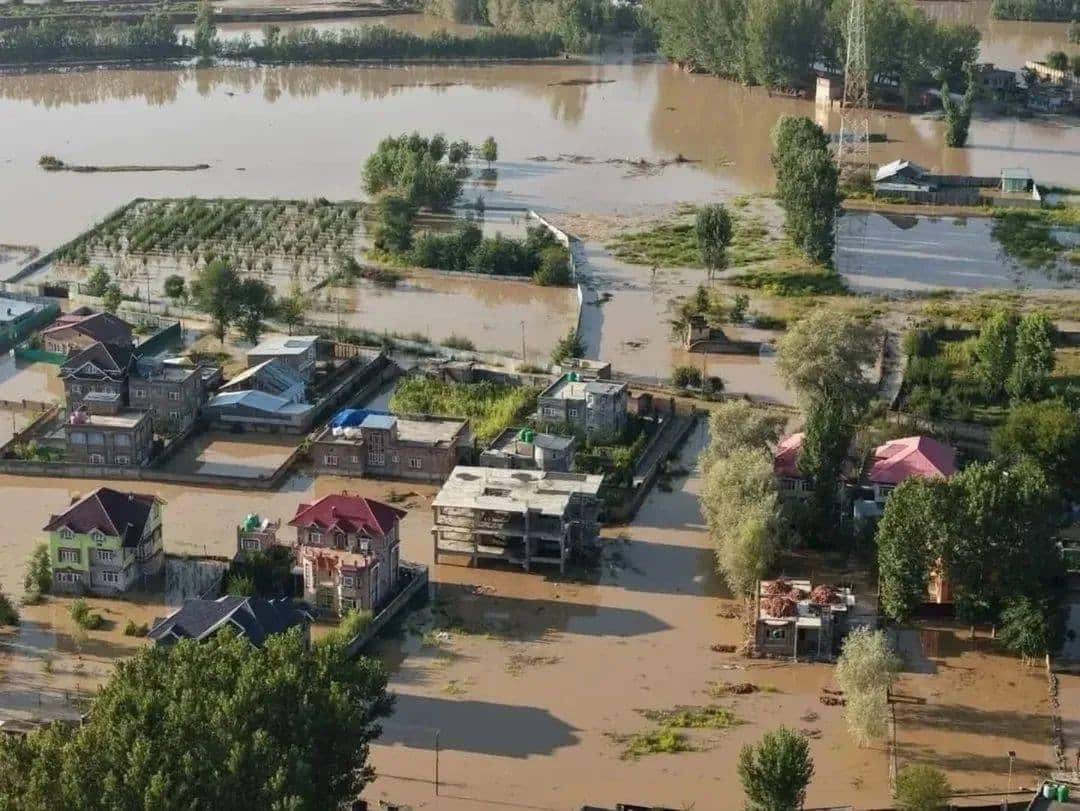

Kashmir, September 2025 — The summer of 2025 will be remembered as one of the harshest seasons in the Himalayan region of Jammu & Kashmir, Ladakh, and Gilgit-Baltistan. A series of devastating cloudbursts and flash floods swept through mountain towns, valleys, and high-altitude villages, leaving behind a trail of destruction, grief, and unanswered questions.
Unlike routine monsoon downpours, cloudbursts strike suddenly: torrents of water unleashed within minutes, tearing through riversides, dislodging slopes, and swallowing entire settlements. In 2025, this rare but recurring natural disaster claimed hundreds of lives across the divided territory of Kashmir, transcending political boundaries and underscoring the shared vulnerability of its people.
Chasoti, Kishtwar: A Tragedy of Unimaginable Scale

On 14 August 2025, a cloudburst in Chasoti village of Kishtwar district triggered one of the deadliest disasters the region has seen in recent decades. At least 67 people were confirmed dead, with over 300 injured and nearly 200 reported missing.
The torrents struck during a religious gathering, when more than a thousand people were present near the riverbanks. Within minutes, water mixed with boulders and debris flattened temporary shelters, swept vehicles, and destroyed bridges. Rescue efforts were hampered by blocked roads and recurring landslides. Survivors described the roar of the flood as “the sound of mountains collapsing.”
Dharali and Uttarakhand Connection



Just days earlier, on 5 August, another catastrophic event unfolded in Dharali, near the Uttarakhand–Kashmir borderlands. Initially reported as a cloudburst, later assessments suggested a glacial lake outburst flood (GLOF) — a phenomenon where melting glaciers burst their natural dams.
Although official rainfall data recorded barely 5 mm, the destructive surge wiped out homes, farmland, and infrastructure. For many observers, Dharali and Chasoti disasters together raised alarm bells about the interplay of climate change, glacial retreat, and extreme weather reshaping the Himalayas.
Jammu: A City Under Water

In late August, Jammu city recorded 190 mm of rain in a single day, marking its second-highest August rainfall in a century. Streets turned into rivers, shops and homes were submerged, and power outages gripped the city for days. Though not technically a cloudburst, the rainfall’s sheer intensity mirrored the sudden shock and disruption typical of these events.
Local communities lamented the absence of adequate urban drainage and disaster preparedness. “We live with mountains above us and rivers below us,” said a shopkeeper in old Jammu. “When the skies open like this, there is no escape.”
Across the Divide: Shared Losses
While most international headlines focused on Indian-administered districts, cloudburst-linked flooding also rattled Pakistan-administered Kashmir (PaK) and Gilgit-Baltistan (GB).
In Neelum Valley, swollen streams destroyed bridges and isolated entire villages. Fortunately, casualties were limited, but families lost croplands and livestock — their only means of survival.
In Hunza and Skardu (Gilgit-Baltistan), late July cloudbursts triggered landslides, cutting off the Karakoram Highway for several days. Local NGOs reported dozens of homes damaged and several people injured.
In Rawalakot (PaK), sudden flash floods swept away small markets near riverbanks. Volunteers, rather than formal agencies, led most rescue efforts.
These incidents, while smaller in scale compared to Kishtwar, highlighted the regional nature of the crisis: fragile ecosystems, rapid urbanization, and lack of disaster infrastructure magnify the impact of extreme rainfall events across the entire Himalayan arc.
Counting the Cost
By September 2025, combined reports estimate that over 700 people have died across northern India and Pakistan due to monsoon-related cloudbursts, floods, and landslides. Within the broader Himalayan belt of Kashmir, Ladakh, and Gilgit-Baltistan, dozens of villages were either destroyed or severely affected.
The toll is not only measured in lives lost:
Families displaced: Thousands forced into temporary shelters.
Economic damage: Bridges, hydropower stations, and road networks worth millions collapsed.
Cultural loss: Historic shrines, markets, and community spaces washed away.
Psychological scars: Survivors left with trauma, uncertain about rebuilding in zones repeatedly declared “disaster-prone.”
Climate Change in the Himalayas
Scientists have long warned that the Himalayas — sometimes called the “Third Pole” — are warming faster than the global average. The region’s glaciers are retreating at alarming rates, destabilizing slopes and feeding the risk of cloudbursts, GLOFs, and flash floods.
What makes 2025 different is not just the scale of devastation, but the pattern of unpredictability. Cloudbursts struck where rainfall data showed only modest showers, suggesting hidden factors: glacial lakes, unstable moraines, and altered monsoon currents.
“Climate change doesn’t respect boundaries,” said one hydrologist based in Srinagar. “The mountains don’t know whether they are in India, Pakistan, or Ladakh. They just break when stressed.
The Humanitarian Gap
Perhaps the starkest lesson of 2025 has been the absence of coordinated response. Political borders fragmented relief efforts. Communities on both sides of the Line of Control relied heavily on local volunteers, religious groups, and small NGOs, while state agencies struggled with logistics or bureaucracy.
For ordinary Kashmiris, the tragedy is twofold: the loss inflicted by nature, and the indifference shaped by politics.
Looking Ahead
The cloudbursts of 2025 are a grim reminder that the Himalayas — breathtaking yet fragile — are entering a new era of climate instability. For the people of Kashmir, Ladakh, and Gilgit-Baltistan, survival depends on more than rebuilding bridges and homes. It demands a regional approach to climate resilience, early warning systems, and sustainable planning that transcends the rigid borders drawn by history.