
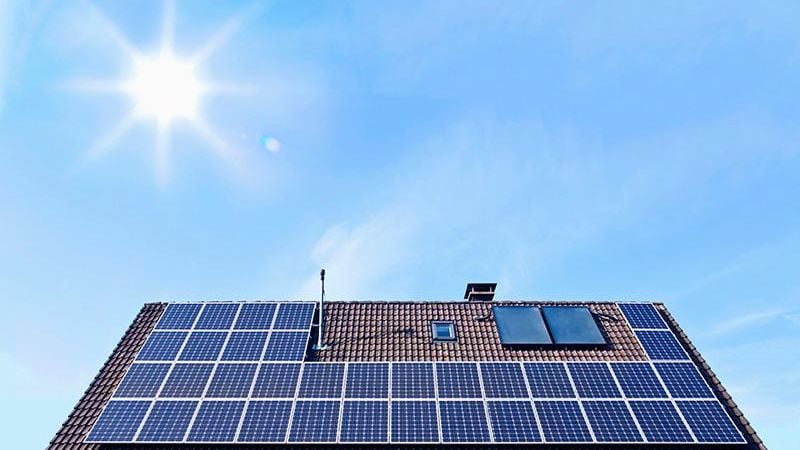

Srinagar, Indian-administered Kashmir — The Jammu & Kashmir government has informed the assembly that significant progress has been made in expanding renewable energy infrastructure across the territory. Under the Independent Power Producer (IPP) mode, seven small hydro projects with a total capacity of 35.25 megawatts (MW) have been launched, while rooftop solar panels with a combined capacity of 76.17 MW have been installed on 7,425 government buildings.
The announcements were made during discussions on budget grants, highlighting Kashmir’s push toward sustainable energy and self-reliance.
Small Hydro Projects Boost Local Employment
The Jammu & Kashmir Energy Development Agency (JAKEDA) confirmed that the seven operational hydro projects under IPP mode have a combined capacity of 35.25 MW. Two additional projects, totaling 4.65 MW, are expected to become operational in the current fiscal year.

A total of 60 project sites with an estimated capacity of 129.80 MW are at various stages of implementation in remote areas. Detailed Project Reports (DPRs) for 61 hydro projects ranging from 2–10 MW, totaling 340 MW, have been finalized, and these will be developed in phases under the IPP mode.
During construction, a large number of skilled and unskilled workers are employed. Upon commissioning, each project generates 15–20 direct jobs, including civil, electrical, and mechanical engineers, technical experts, support staff, and labor, while also creating indirect employment in surrounding areas.
Rooftop Solar Expansion Across Government Buildings
Under the rooftop solar initiative, JAKEDA has solarized 7,425 government buildings, providing 76.17 MW of installed capacity. Installation work is ongoing in approximately 1,200 additional buildings. The campaign, implemented under CAPEX and RESCO models, aims to reduce conventional electricity consumption and increase energy self-reliance in public infrastructure.

In the domestic and institutional sectors, 34 MW of rooftop solar capacity has been installed under the Ministry of New and Renewable Energy’s early schemes.
PM Surya Griha Scheme Benefits Thousands of Households
Under the Indian PM Surya Griha Yojana, data as of 19 February 2026 shows that 23,598 households in Kashmir have installed rooftop solar systems with a total capacity of 84.41 MW. Direct Benefit Transfer (DBT) subsidies worth ₹172 crore have been provided to beneficiaries.
The scheme offers up to ₹85,800 central financial assistance for a 3 kW rooftop system, in addition to ₹3,000 per kW subsidy for capacities up to 3 kW. A target coverage of 83,500 residential users has been set under the initiative.


Solar-Powered Agricultural Pumps for Farmers
Under Pradhan Mantri Kisan Urja Suraksha evam Utthan Mahabhiyan (PM-KUSUM) Component B, JAKEDA approved 5,000 solar agricultural pumps for farmers in Kashmir. Of the 4,891 applications received, 4,104 pumps have been installed across districts, providing 50% central and 30% territorial subsidy support.
The government emphasized that these initiatives reflect a significant expansion of renewable energy infrastructure, contributing to environmental sustainability, local employment, and energy independence in Kashmir. With continued deployment of hydro and solar projects, the territory is positioning itself as a leader in renewable energy development in the region.