While India invests ₹1,677 crore to modernize Srinagar International Airport, Kashmiri voices emphasize that infrastructure cannot replace the fundamental right to freedom and political autonomy.
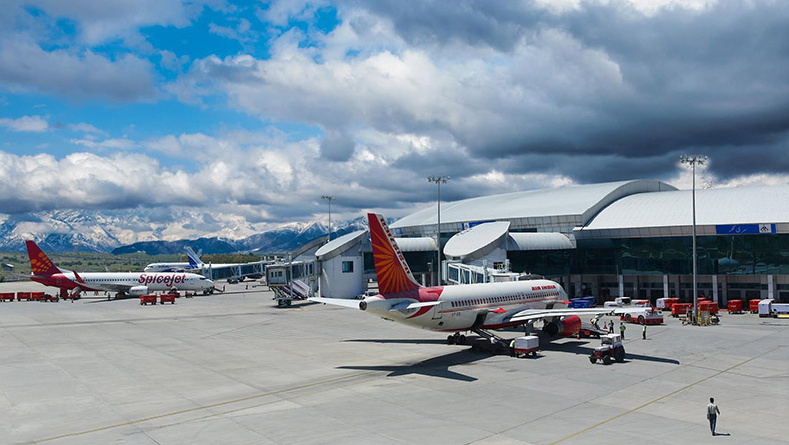
Srinagar, February 25, 2026 – The Cabinet Committee on Economic Affairs, led by Indian Prime Minister Narendra Modi, has approved the development of a civil enclave at Srinagar International Airport, with an estimated cost of ₹1,677 crore. The project is part of India’s infrastructure expansion plans in the region, aimed at modernizing the airport and enhancing connectivity.
The civil enclave project includes new barracks for security personnel and a state-of-the-art terminal, spread over 73.18 acres, designed to accommodate 2,900 passengers at peak hours and an annual capacity of 10 million travelers. The terminal will include 71,500 square meters of modern facilities, including 15 aircraft parking bays and a multi-level parking facility for 1,000 vehicles.

Architecturally, the terminal combines modern design with local cultural elements, incorporating traditional Kashmiri woodwork, intricate carvings, and locally inspired motifs, alongside spacious lounges, advanced security systems, and streamlined passenger processing areas. Sustainability features include modern water systems, maximum natural light utilization, and eco-friendly local materials, with an aim for a 5-star GRIHA rating.
“While infrastructure is being developed, the aspirations of the Kashmiri people for self-determination and political rights remain unfulfilled,” said a local observer.
The project is expected to improve access to Dal Lake, Shankaracharya Temple, and Mughal Gardens, boosting tourism and economic activity. Officials highlight the airport as a symbol of improved connectivity, modern passenger facilities, and world-class infrastructure.

A Kashmiri community leader noted, “Modern terminals and civil enclaves cannot replace the fundamental right of Kashmiris to decide their own future.”
Despite the significant investments by the Indian administration, the project underscores the ongoing tensions between development initiatives and Kashmiri demands for autonomy and political rights. For many in the valley, while international-standard facilities are welcome, the core aspiration remains the right to self-determination and recognition of Kashmiri identity.
This civil enclave represents a dual reality: modernization and economic connectivity on one hand, and the continuing struggle of the Kashmiri people for recognition and freedom on the other. Travelers arriving in Srinagar will witness both the technological advancement in aviation and the complex socio-political landscape that shapes Kashmir today.