
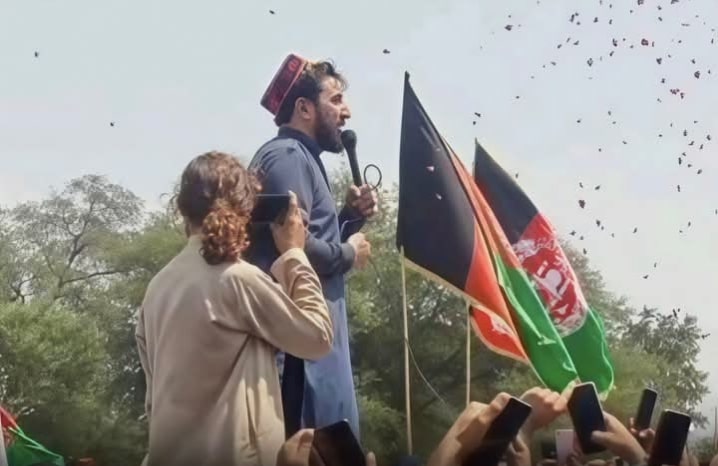

As traditional figures and Afghan political circles remain silent, PTM leader Manzoor Pashteen continues organizing gatherings from the Amu River to the Indus River and protesting the expulsion of Afghan refugees from European nations.
Gatherings under the banner of "From the Amu River to the Indus River, One Nation and One Geography" are being organized under the leadership of Manzoor Pashteen, alongside ongoing demonstrations against the deportation of Afghan refugees from European countries.
These efforts led by Pashteen represent a serious national struggle rather than a routine political development.
A notable aspect of the situation is that the primary responsibility for these matters historically fell upon those who spent years using Afghanistan and the Afghan nation as core themes for their politics. Many of those figures are now silent, while Pashteen has taken up the responsibility.
In the past, Pashteen carried the weight of responsibilities traditionally left to Pashtunkhwa's conventional elders. Today, a large segment of Afghanistan's own political circles has distanced itself from the arena. Consequently, the national duty once claimed by others is being carried forward by Pashteen.
Critics who direct biased and unjustified criticism at the simple-living activist overlook the scale of the burden he carries.
Those who once championed the slogan of unity from the Amu to the Abasin have largely stepped away from the cause. In contrast, Pashteen has assumed the responsibility amidst difficult circumstances while balancing other obligations.
As security tensions persist across Pashtunkhwa, Pashteen maintains a focus on the conditions of Afghan citizens from Kabul to Herat and Badakhshan. His stance links the developments in Pashtunkhwa and Afghanistan rather than separating them.
Reflecting on this interconnected view, Pashteen has previously emphasized that local issues in Waziristan, Peshawar, and Quetta cannot be separated from conditions in Kandahar, Herat, Khost, and Badakhshan.


The involvement in the plight of Afghan refugees highlights a broader commitment to regional unity. While some individuals work as humanitarian and civil rights advocates with material and moral backing, Pashteen and the Pashtun Tahafuz Movement face ongoing challenges, opposition, and physical hardship without similar backing.