
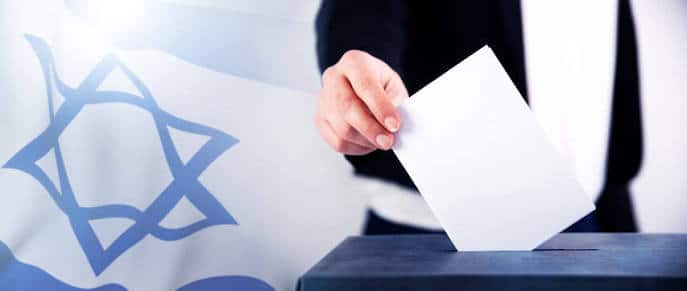

Polls show tight race between incumbent Prime Minister Benjamin Netanyahu and centrist challenger Gadi Eisenkot, with coalition math pointing toward prolonged political deadlock.
JERUSALEM — Israelis cast ballots in the country’s first general election since the October 7, 2023, Hamas attack, with turnout surging past levels not seen in decades. By early afternoon, election officials reported that nearly 45 percent of eligible voters had participated, reflecting intense political polarization.
The election centers on a high-stakes contest between long-serving Prime Minister Benjamin Netanyahu and centrist challenger Gadi Eisenkot, a former military chief of staff.
Under Israel’s parliamentary system, voters choose parties rather than a prime minister directly. With no single party securing an outright majority in the 120-seat Knesset, the outcome will depend on post-election coalition negotiations requiring at least 61 seats to form a government.
Netanyahu, leading the right-wing Likud party, has framed the election around national security and his alliance with U.S. leadership. Critics, however, have targeted his administration over the security lapses surrounding the October 7 attack, ongoing corruption trials, and the protracted conflict in Gaza.
Eisenkot, who established the centrist Yashar party after resigning from Netanyahu’s wartime cabinet, has positioned himself as a moderate alternative on domestic matters while maintaining a hard line on security. Final pre-election surveys indicated a tight race between the two major factions, with neither block projected to reach the threshold required for a governing majority on its own.

Arab-majority parties, projected to win roughly 14 to 16 seats, represent potential kingmakers. However, both major Jewish-led blocs have previously distanced themselves from formal alliances with Arab parties over political and ideological conditions, complicating coalition prospects.
Following the close of voting, final results are expected to take days as election authorities process hundreds of thousands of special ballots from soldiers, diplomats, and hospital patients. President Isaac Herzog will then task the party leader deemed most capable of assembling a 61-seat coalition with forming a government.
Observers note that regardless of the election’s outcome, the structural realities governing the region’s conflicts and the humanitarian situation for Palestinians remain deeply entrenched.