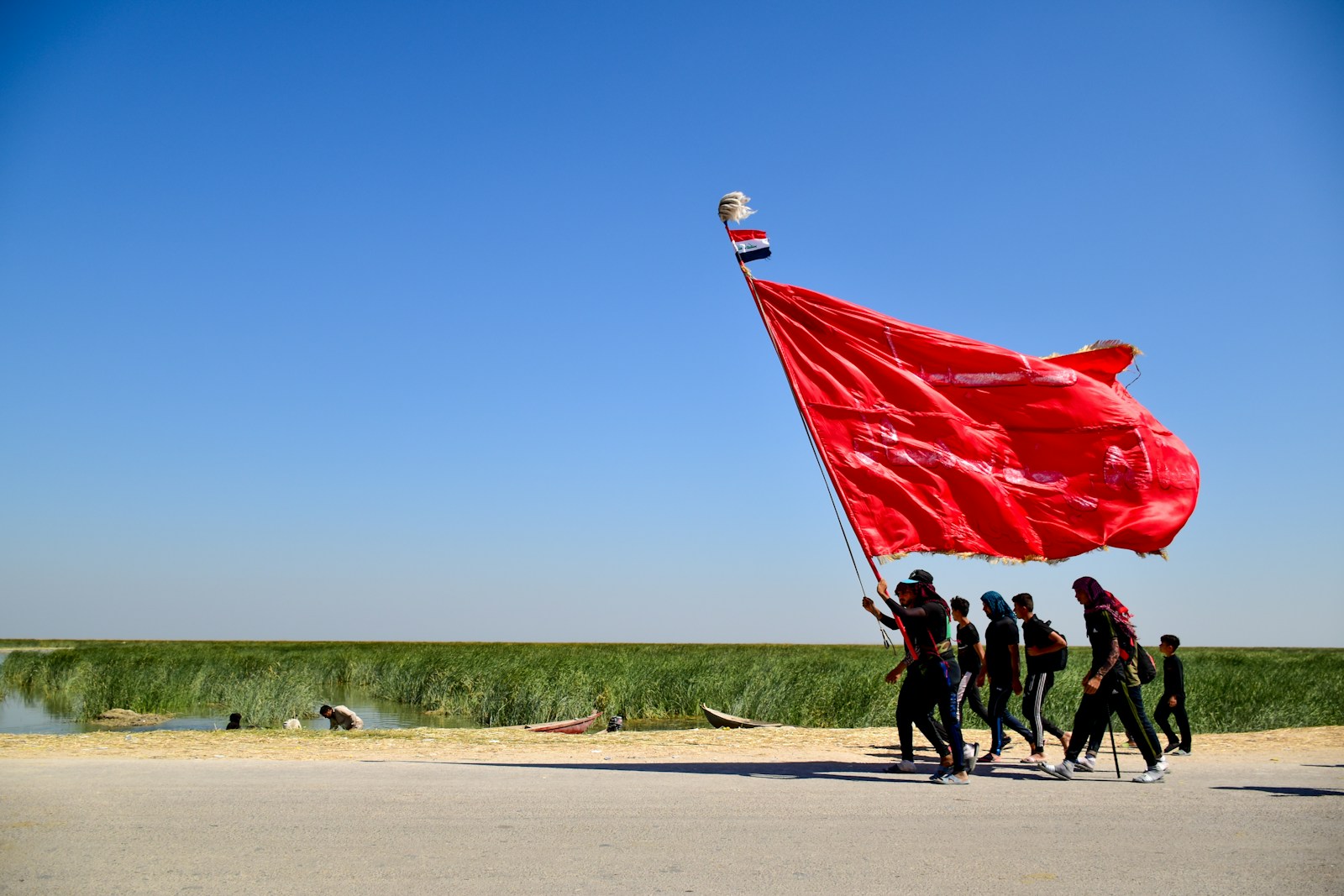

In the rich tapestry of Islamic history and tradition, specific days hold profound significance, marked by commemorations, rituals, and reflection. One such date is 22 Rajab, a day observed by many Muslims around the world, with cultural and religious significance. On this day, different traditions and events are celebrated, with a focus on the life and contributions of Imam Jafar Sadiq (A.S), as well as certain rituals like the Konday ki Niyaz.
But what exactly is 22 Rajab? Why do Muslims observe this day, and how does it vary across different cultures and regions? This article will delve into the history, significance, and practices surrounding 22 Rajab, offering a balanced exploration of its place in Islamic tradition.
22 Rajab holds a special place in the hearts of Muslims, especially within the Shia community, as it marks several key events in Islamic history. The day commemorates important figures, particularly Imam Jafar Sadiq, and is intertwined with unique cultural practices such as the Konday ki Niyaz. But the significance of 22 Rajab goes beyond just one event; it is a time for reflection, spiritual growth, and a reaffirmation of faith.
The Azadi Times
No state grants. No corporate lobby. Just ground‑truth reporting from Kashmir & beyond
You make this possible.
In this article, we will explore the historical background of 22 Rajab, the key figure of Imam Jafar Sadiq, and the different ways this day is observed across the Muslim world.
Historical Background: What Happened on 22 Rajab?
Imam Jafar Sadiq: His Contributions and Legacy
The 22nd day of Rajab is deeply associated with the life of Imam Jafar Sadiq (A.S), the sixth Shia Imam. Imam Jafar Sadiq is revered for his spiritual wisdom, profound knowledge, and contributions to Islamic jurisprudence and science. He is credited with laying the foundation for various fields, including chemistry and philosophy, and he became the symbol of intellectual and theological brilliance in the early Islamic world.
Imam Jafar Sadiq was born in 702 CE in Medina, and during his lifetime, he was known not only for his deep piety but also for his academic prowess. He is credited with introducing advanced scientific methods, particularly in the realm of chemistry, and is often regarded as one of the most influential figures in Islamic scholarship. Imam Jafar Sadiq’s teachings influenced the development of both Shia and Sunni schools of thought.



The Martyrdom of Imam Jafar Sadiq
For Shia Muslims, 22 Rajab also commemorates the martyrdom of Imam Jafar Sadiq. His death, though shrouded in historical uncertainty, is widely believed to have occurred on this day, making it an occasion for mourning and reflection among Shia communities.
While there are debates among historians about the exact date of his martyrdom, the day is observed in honor of his extraordinary contributions to the Islamic world, and it is seen as an opportunity to honor his life and legacy.
What is Konday ki Niyaz? Rituals and Traditions
In addition to commemorating the life of Imam Jafar Sadiq, 22 Rajab is also a time for Niyaz or charity. One of the most well-known forms of charity practiced on this day is Konday ki Niyaz, a tradition followed by many Shia Muslims, especially in South Asia.

Konday ki Niyaz Explained
Konday ki Niyaz refers to the practice of offering food, particularly a special dish known as konda (often a form of sweet or rice dish), in honor of the Imam. The ritual is performed by families or communities, where the food is offered as an act of devotion, seeking blessings, and commemorating the martyrdom of the Imam.
The practice of Niyaz can vary significantly across regions. In some places, it involves large communal gatherings, where food is distributed among the poor, while in others, it is a family-centered event. The dish is usually prepared with special ingredients, and the distribution of food is often followed by prayers for the deceased, including supplications for peace and blessings for Imam Jafar Sadiq.
Regional Variations in Rituals
The manner in which Konday ki Niyaz is performed can differ between regions, with South Asian countries like Pakistan, India, and Bangladesh observing this practice most fervently. While the food is commonly shared among family members and the needy, some variations involve gatherings in mosques or the homes of community leaders.
For Shia Muslims, especially those with roots in the Indian subcontinent, 22 Rajab becomes a day for reaffirming faith through acts of charity and devotion. Communities come together to remember the sacrifices of the Imams, with Konday ki Niyaz serving as a central act of reverence.
When is 22 Rajab? Understanding the Islamic Calendar
Like all Islamic months, the exact date of 22 Rajab varies each year because the Islamic calendar is based on the lunar cycle. Unlike the Gregorian calendar, which is fixed, the Islamic calendar shifts by about 10 to 12 days each year.
When is 22 Rajab This Year?
To determine when 22 Rajab falls, it is important to consult the lunar calendar. For instance, if today’s Islamic date is 1 Rajab, 22 Rajab will fall 21 days later. Because of this shifting calendar, 22 Rajab does not fall on the same date in the Gregorian calendar every year.
To find the exact date for any given year, Muslims often rely on local moon sightings or Islamic calendar apps. It is common for scholars and community leaders to announce the arrival of 22 Rajab after confirming the moon sighting.
How 22 Rajab is Observed Around the World
Observances in the Middle East
In countries such as Iran, Iraq, and Lebanon, where Shia Islam has a significant following, 22 Rajab is marked by both spiritual reflection and religious observance. In some parts of the Middle East, 22 Rajab is a day for communal prayers, processions, and lectures that discuss the life and teachings of Imam Jafar Sadiq.
The day is also marked by charitable acts, where individuals and mosques often organize events to feed the poor and distribute charity, in line with the spirit of giving associated with Niyaz.
Observances in South Asia
In Pakistan and India, 22 Rajab holds a central place in religious life for Shia Muslims. Large congregations gather at mosques and Hussainiyas (Shia community centers), where prayers are offered for Imam Jafar Sadiq, and Konday ki Niyaz is prepared and distributed. In cities like Karachi, Hyderabad, and Lucknow, you may see large processions that honor the day through recitations of elegies and sermons focusing on the contributions of the Imam.
For Shia families in these regions, 22 Rajab is also a time to visit the graves of loved ones and offer prayers for them, further highlighting the importance of both familial and spiritual connections in commemorating the Imam.
The Role of Media and Digital Platforms
With the increasing role of social media and digital platforms, observances of 22 Rajab are no longer confined to physical spaces. Many Shia scholars and community leaders now live-stream their sermons or post reflections on Imam Jafar Sadiq’s legacy on platforms such as YouTube, Facebook, and Instagram. This helps broaden the reach of these religious observances, allowing Muslims from different parts of the world to participate in the commemoration.
Controversies and Misconceptions Surrounding 22 Rajab
As with many religious observances, 22 Rajab has been a subject of debate and misunderstanding in certain communities. Some individuals question the historicity of the events associated with 22 Rajab, particularly the exact timing of Imam Jafar Sadiq’s death.
Is 22 Rajab an Official Islamic Celebration?
Though 22 Rajab is observed by many Shia Muslims, some Sunni scholars do not recognize it as an official or universally accepted event in Islamic history. This difference in perspective can lead to debates over the nature of the commemoration and its place within the broader Islamic tradition.
However, it is important to note that the celebration of 22 Rajab is a matter of personal and community choice, and it serves as an expression of devotion and respect for a key figure in Islamic history.
The Importance of Respecting Diverse Traditions
In the Islamic world, diversity of thought, practice, and tradition is a cornerstone of religious and cultural life. Whether it is the 22 Rajab date or any other religious observance, it is crucial to understand and respect the significance of these traditions to different communities. The Shia-Sunni divide, for example, often manifests in how religious events are commemorated, but this should be viewed as a sign of the rich variety within the broader Islamic tradition rather than a point of division.
Understanding diverse traditions fosters mutual respect and creates a more inclusive environment where every community can celebrate its spiritual heritage.
Conclusion: The Enduring Legacy of 22 Rajab
Whether you stand before a clay pot in Karachi, watch a livestream in London, or simply note the date on your calendar, 22 Rajab is more than a lunar footnote. It is a window onto the intertwined histories of Imam Jafar Sadiq, early Islamic politics and contemporary ritual creativity. Understanding its multiple meanings does not require endorsing all of them; it demands the courtesy of listening before labelling. In that spirit, the faithful will continue to ask “22 Rajab kab hai?”—and the answer will always be a date, a debate and a dinner invitation rolled into one.