No state backing. No paywalls. Just truth. Support Kashmir's independent voice. Join 2,400+ patrons who fund independent voices.
Zero Paywalls
Reader Funded
Award Winning
Secure Payment
Encrypted
By Medical History Correspondent
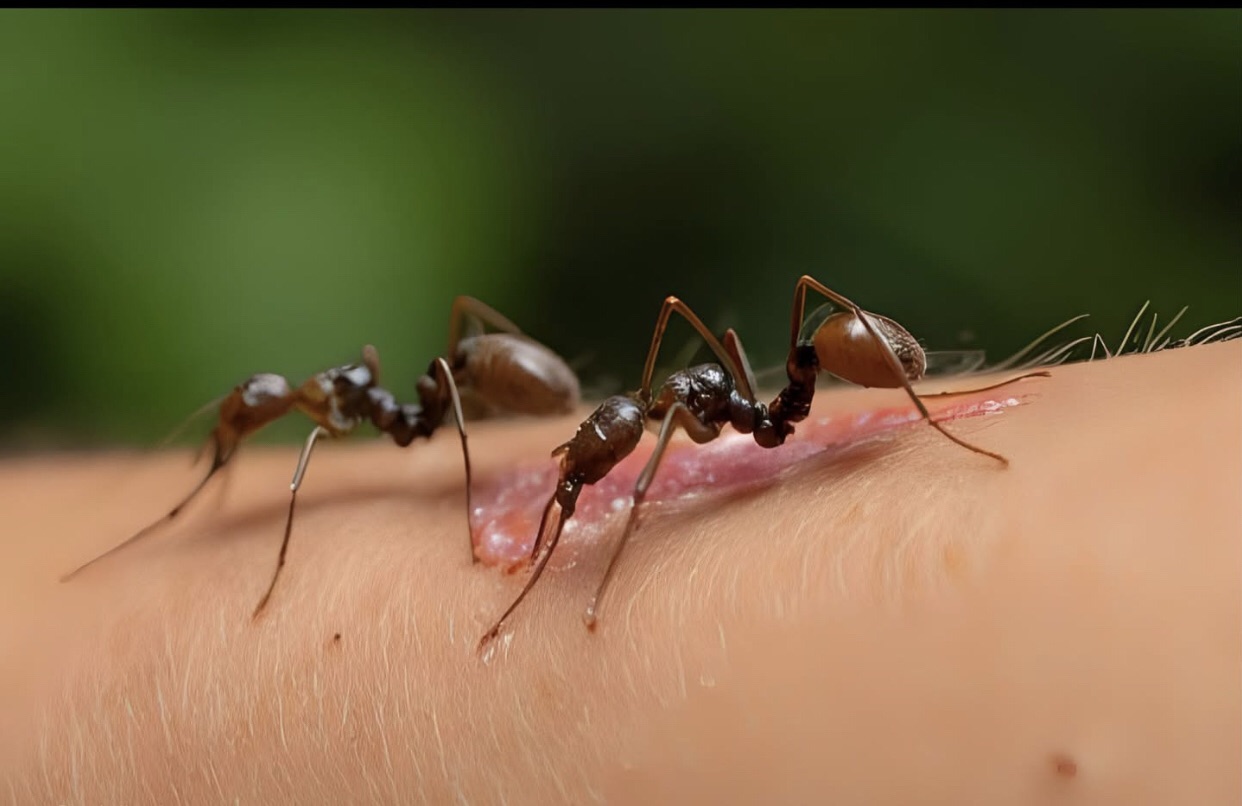
HISTORICAL DISCOVERY – Centuries before modern sutures existed, indigenous healers in tribal regions developed a remarkable wound-closing technique using nature’s own surgical tools—soldier ants. This forgotten practice, now being revisited by medical historians, demonstrates extraordinary ingenuity in early medicine.
The precise method involved:
Selecting large-jawed soldier ants (typically Dorylus or Eciton species)
Positioning the insect’s mandibles across wound edges
Triggering the ant’s natural bite reflex to clamp skin together
Twisting off the body while leaving the locked jaws in place
No state backing. No paywalls. Just truth. Support Kashmir's independent voice. Join 2,400+ patrons who fund independent voices.
Each ant could hold 3-5mm of tissue, with multiple specimens spaced along serious wounds. The mandibles’ natural curvature created ideal clamping pressure for healing.
Modern analysis reveals why this worked:
“This was essentially the first absorbable suture,” notes Dr. Helena Murchison, a biomedical anthropologist studying traditional African and South American medical practices. “The precision of selecting the right ant species shows deep observational science.”
Historical records show this technique was used by:
Maasai warriors in East Africa
Amazonian healers in Peru and Brazil
Hill tribes of Northeast India
Some remote communities reportedly still use emergency ant sutures when modern medical care is inaccessible.
Contemporary medicine has developed surprising echoes of this ancient method:
“We’re now scientifically validating what indigenous practitioners knew empirically,” says Dr. Raj Patel, a wound care specialist researching historical techniques.
This rediscovery highlights:
Importance of documenting indigenous medicine before knowledge is lost
Potential for nature-inspired biomedical innovations
Need for respectful collaboration with traditional healers
For more fascinating intersections of history and medicine, follow The Azadi Times Hidden Histories series.
Trending Topics


The Azadi Times is an independent digital news platform based in Muzaffarabad, Kashmir, dedicated to credible journalism, in-depth reporting, and global analysis. We cover Kashmir, South Asia, and international affairs with a commitment to truth, editorial integrity, and public accountability.
Get important news delivered directly to your inbox and stay connected!
© 2026 The Azadi Times. All Rights Reserved.