No state backing. No paywalls. Just truth. Support Kashmir's independent voice. Join 2,400+ patrons who fund independent voices.
Zero Paywalls
Reader Funded
Award Winning
Secure Payment
Encrypted
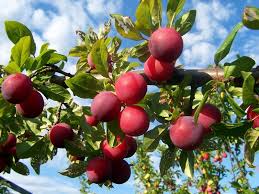
The Azadi Times | Srinagar, Indian administered Kashmir: In Kashmir’s verdant valleys, the plum harvest is in full swing — but what should have been a season of joy and profit has turned into a story of frustration for local farmers. While this year’s crop is abundant, growers say a sharp fall in market prices has left them struggling to cover even their basic costs.
According to farmers in Budgam, Ganderbal, and other parts of the valley, plum prices in local markets have dropped by 20–30% compared to last year. Many growers now fear losses despite the good harvest, especially those whose entire livelihoods depend on horticulture.
“Right now, a crate of plums fetches just 100–150 rupees,” said Riyaz Ahmad, a farmer in Budgam, speaking to The Azadi Times.
“But the packing, labor, transportation, and other costs per crate come to 30–50 rupees. There’s hardly any profit left.”
Plums are delicate fruits that must reach wholesale markets in Delhi, Chandigarh, and other cities within three days of picking — or risk spoiling entirely. Any delay, even a single day, can turn the harvest into a complete loss.
No state backing. No paywalls. Just truth. Support Kashmir's independent voice. Join 2,400+ patrons who fund independent voices.
“We have to rush the plums to market before they rot,” Riyaz said. “But without fast transport, we lose money and all our effort goes to waste.”
Farmers have urged authorities to extend fast rail services — such as the Vande Bharat Express, which has previously been used to transport cherries quickly — to plums as well.
“When cherries were sent on the Vande Bharat train, farmers earned good profits. We need the same for plums so the fruit stays fresh and reaches markets on time,” said Fayaz Ahmad, a fruit trader.
Growers and experts alike are calling for a dedicated export policy for plums, along with better coordination between the horticulture department and agricultural marketing agencies. Such measures, they argue, would help ensure that seasonal fruits like plums, peaches, pears, and apples reach markets in good condition — improving farmer incomes and boosting the regional economy.
Agricultural experts say that improving rail, road, and air links for perishable fruits could transform the valley’s horticulture sector. “If fast and efficient transport is provided, not only will farmers earn better, but the economy of the entire region could benefit,” one expert told The Azadi Times.
While the harvest this year has been plentiful — government figures show plums are grown on about 1,500 hectares in Kashmir, producing roughly 8,000 tonnes annually — poor prices and logistical challenges are turning what could have been a prosperous season into a disappointment for many.
Budgam remains the largest plum-producing district in the valley, followed by Ganderbal. Their moderate climate and fertile soils make them ideal for growing various plum varieties.
But unless authorities act swiftly to support timely transportation and fair pricing, farmers warn that plum cultivation — once a symbol of Kashmir’s horticultural wealth — could become another casualty of neglect.
Trending Topics


The Azadi Times is an independent digital news platform based in Muzaffarabad, Kashmir, dedicated to credible journalism, in-depth reporting, and global analysis. We cover Kashmir, South Asia, and international affairs with a commitment to truth, editorial integrity, and public accountability.
Get important news delivered directly to your inbox and stay connected!
© 2026 The Azadi Times. All Rights Reserved.