
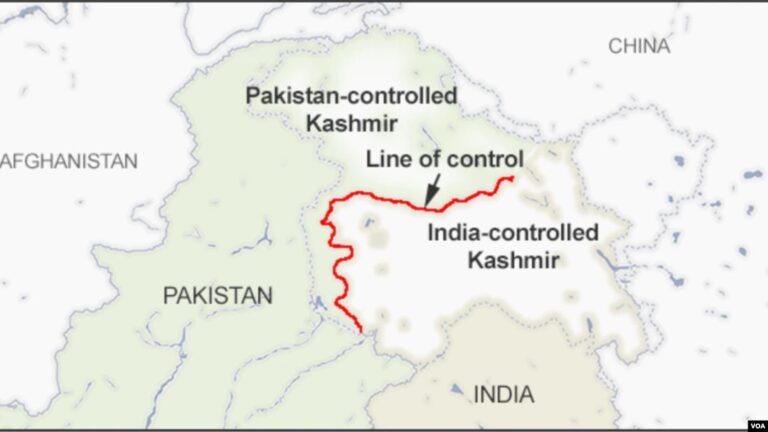
Neelum Valley — nestled along the Ceasefire Line (LoC) in the northernmost reaches of Pakistan-administered Jammu and Kashmir is often celebrated in glossy brochures for its towering mountains, pristine rivers, and serene landscapes. But beneath the veneer of natural beauty and touristic charm lies a political undercurrent that has begun to shift dramatically in recent months.
In a region where political narratives have long been shaped and limited by state-centric agendas from both Islamabad and New Delhi, the emergence of an assertive, grassroots political conversation in Neelum is significant and potentially transformative. At the center of this emerging dynamic is the Jammu & Kashmir Joint Awami Action Committee (JKJAAC), a powerful socio-political movement that, though unlikely to contest the upcoming 2024 elections directly, is redefining the political discourse in one of Kashmir’s most remote districts.
A New Dawn in Neelum’s Politics?
For decades, Neelum Valley’s political story has been muted compared to other parts of Pakistan-administered Kashmir. The valley’s rugged terrain, sparse population, and proximity to the highly militarized LoC have left it relatively isolated from the region’s central political theater in Muzaffarabad.

Historically, local politics in Neelum revolved around a handful of entrenched political families aligned with Pakistan’s mainstream parties Pakistan People’s Party (PPP), and Pakistan Muslim League-Nawaz (PML-N) who delivered predictable results within the confines of state-defined narratives.
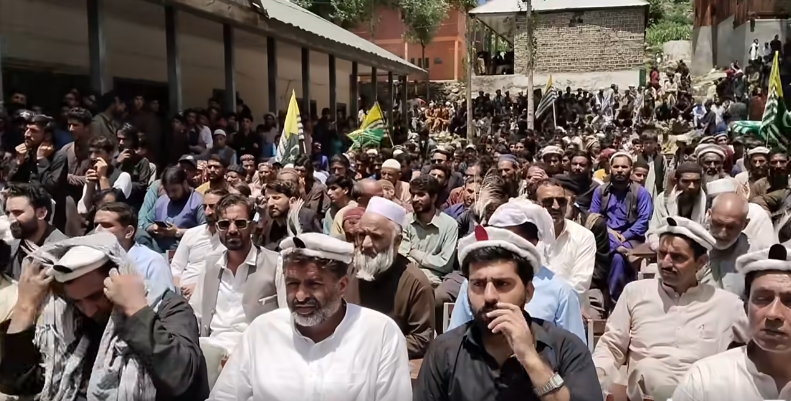
But the recent flurry of conferences, seminars, and rallies organized by JKJAAC across Neelum’s towns and villages suggests that the status quo may be changing.
“For the first time in my life, I’ve seen people here openly discussing issues like self-determination, development on our own terms, and accountability beyond party politics,” says Tariq, a schoolteacher from Sharda.
More Coverage“People used to think politics is only for Muzaffarabad and Islamabad to decide,” adds Fozia, a shopkeeper in Athmuqam. “But these events have shown that our voices matter too — and that we don’t have to just vote for the same few faces again and again.”


Who Is the Jammu & Kashmir Joint Awami Action Committee?
The JKJAAC is neither a traditional political party nor a mere civil society collective. Over the years, it has established itself as one of the most powerful advocacy groups in Pakistan-administered Kashmir. Its roots lie in mobilizing public support for economic justice, water and power rights, and — more controversially — the right to self-determination outside both Indian and Pakistani frameworks.
In May 2024, JKJAAC organized massive protests in Muzaffarabad and Rawalakot over high electricity tariffs and resource exploitation, attracting tens of thousands of supporters. Despite occasional crackdowns and arrests, it has grown into a broad-based movement respected and feared across the political spectrum.
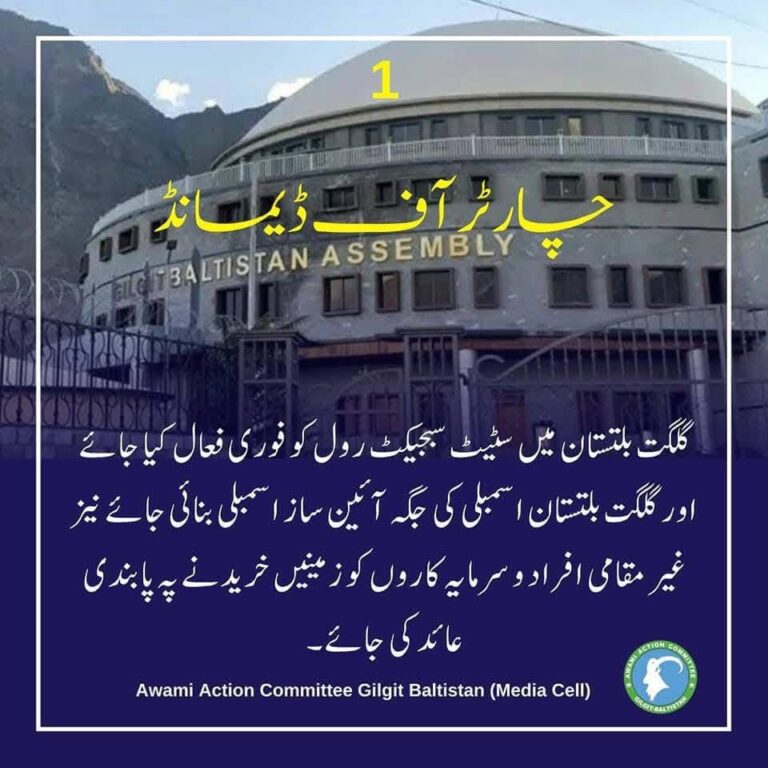

However, despite its growing grassroots popularity, JKJAAC insiders have signaled that they will not field candidates in the 2024 legislative assembly elections, choosing instead to focus on “awakening political consciousness” and pressuring elected officials through public mobilization.
“Our mission is to create awareness, not to sit in the assembly just to rubber-stamp someone else’s agenda,” a senior JKJAAC organizer told The Azadi Times on condition of anonymity. “We know the limitations of that house — it doesn’t represent real sovereignty.”
Neelum Valley: Political Map
Neelum Valley elects two members to the 53-seat legislative assembly of Pakistan-administered Jammu and Kashmir, representing LA-26 Neelum-I and LA-27 Neelum-II.
According to the Election Commission’s data, the valley has approximately 80,000 registered voters, spread across towns like Athmuqam, Sharda, Kel, and Dudhnial.
In the 2021 elections, both seats were won by candidates from Pakistan Tehreek-e-Insaf (PTI), capitalizing on the party’s then-national popularity. Before that, the seats alternated between the Muslim Conference and PPP.
But voter turnout has traditionally been low, with many residents expressing skepticism about the assembly’s ability to deliver meaningful change — especially given the constitutional restrictions of Pakistan-administered Kashmir’s political setup under the Azad Jammu & Kashmir Interim Constitution Act, 1974, which limits local autonomy.
Why Does JKJAAC Matter in Neelum Now?
JKJAAC’s decision to hold events in Neelum Valley — a district often left out of the political conversation — has already stirred both excitement and apprehension.
On one hand, the group has tapped into widespread frustrations over inadequate infrastructure, chronic unemployment, and the militarization of the region. On the other, some observers worry about potential backlash from state authorities wary of any discourse outside officially sanctioned narratives.
“We don’t know if this movement will really improve our lives, but at least it has forced the politicians to visit us more often and make promises,” says Muhammad Ashraf, a farmer in Kel.
Interestingly, even though JKJAAC’s leaders insist they will not contest the elections, their presence has already influenced the strategies of mainstream parties. Candidates from PTI and PML-N have intensified their campaigns in Neelum, promising road improvements, tourism projects, and even special economic zones — pledges that have often failed to materialize in the past.
Beyond the State Narrative
In much of Kashmir — whether on the Indian or Pakistani-administered side — tourism campaigns and political narratives often present a carefully curated image of peace, progress, and control. The “valley of saints,” the “paradise on earth,” and other clichés obscure the lived realities of many Kashmiris.
For tourists, Neelum is sold as a remote but idyllic destination, yet few are told about the frequent skirmishes along the LoC, the poverty in its villages, or the decades-long neglect by successive governments.
“We want visitors to come here — but to see the real Neelum, not just what the state wants them to see,” says Sajjad, a local activist.
“Our valleys are more beautiful than the brochures show, but our problems are also deeper than anyone admits.”
What Lies Ahead?
As the 2024 elections approach, Neelum Valley seems poised to play a more significant role in the broader politics of Pakistan-administered Kashmir.
Even without contesting seats, JKJAAC’s activism is likely to influence voter expectations and raise the cost of empty promises from candidates.
Observers also note that Neelum’s newfound political energy could inspire similar awakenings in other marginalized districts like Leepa and Haveli.
However, challenges remain:
— The constitutional limitations of the legislative assembly.
— The pervasive influence of Islamabad over local politics.
— The risk of suppression if the movement’s rhetoric crosses perceived “red lines.”
For now, Neelum’s residents are cautiously optimistic. Whether this marks the beginning of a long-term transformation or just a fleeting moment of dissent remains to be seen.
Current Political System in Neelum at a Glance:
| Feature | Details |
|---|---|
| Assembly Seats | 2 |
| Registered Voters | ~80,000 |
| Main Parties | PTI, PML-N, PPP, Muslim Conference |
| Voter Turnout (2021) | ~55% |
| Constitution Governing the Region | AJK Interim Constitution Act, 1974 |
| Autonomy Level | Limited |
The Bigger Picture
For decades, Neelum Valley’s story has been written by others — by Islamabad, by Muzaffarabad, and even by New Delhi. What the JKJAAC’s intervention signals is that the people of Neelum are beginning to reclaim that narrative.
“For too long, we’ve been told what to think and who to vote for,” says Nighat, a university student from Athmuqam. “Now at least we’re asking questions.”
The road ahead is uncertain, but one thing is clear: the politics of Neelum Valley is no longer dormant. The mountains may be timeless, but the people who live among them are finding their voice.