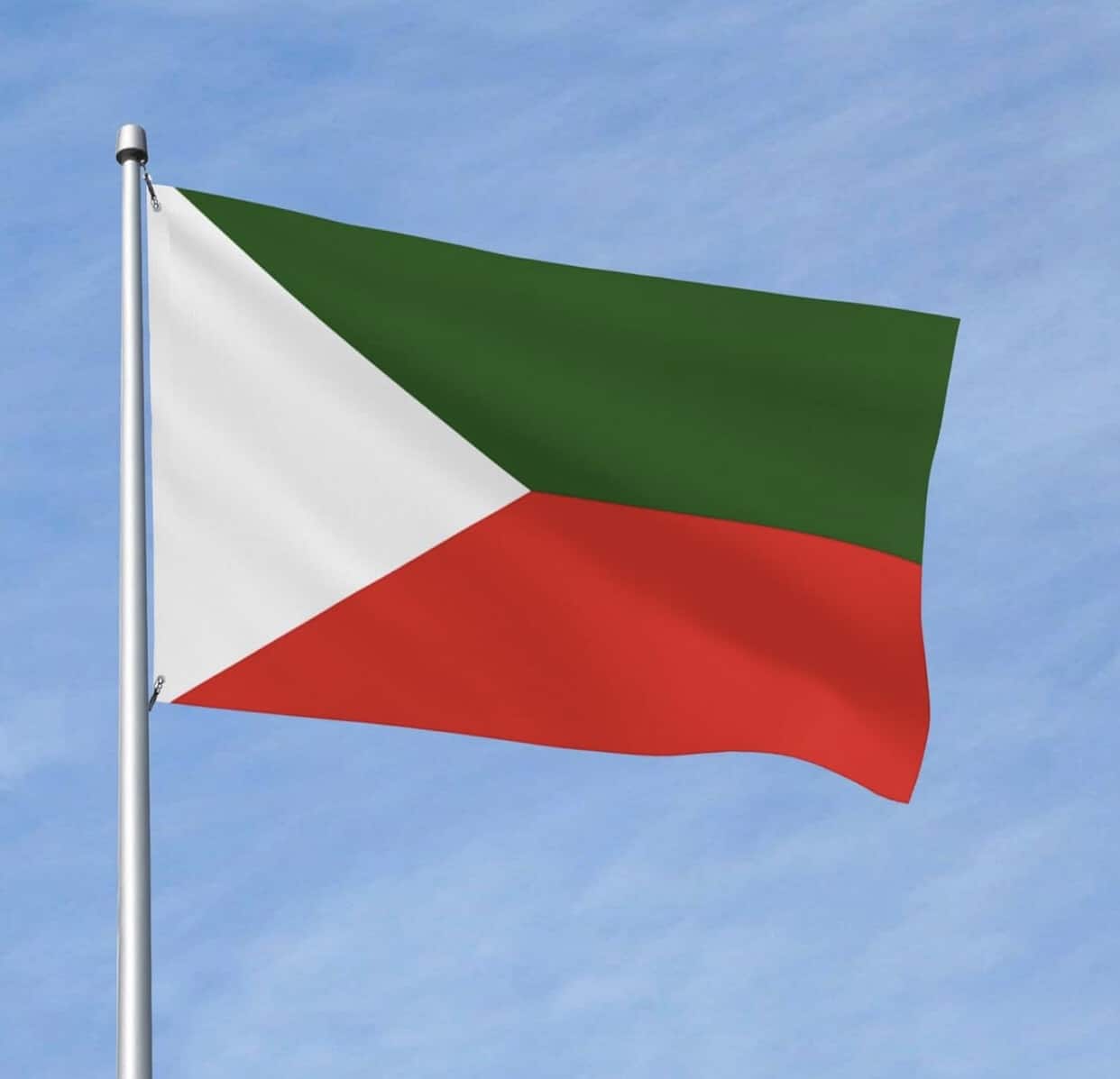
The flag of the Jammu Kashmir Liberation Front (JKLF) is a powerful symbol that encapsulates the organization’s ideology and philosophy through its three distinct colors.
Each color holds significant meaning and represents various aspects of the region and its people.
- Green: The green color primarily symbolizes the lush greenery of the state. Additionally, it represents the identity of the majority population, which is 78% Muslim. This color is a tribute to the natural beauty of the region and the cultural and religious identity of its inhabitants.
- Red: Red stands for both revolution and sacrifice. In terms of revolution, it signifies the JKLF’s commitment to revolutionary ideals and programs. Regarding sacrifice, it reflects the organization’s belief that freedom cannot be achieved without significant sacrifices, including the ultimate sacrifice of life. This color embodies the spirit of struggle and the willingness to shed blood for the cause of liberation.
- White: White represents peace and the minority communities, which make up 22% of the population. It signifies the JKLF’s dedication to a peaceful struggle and the recognition of the religious minorities’ identity within the state. This color underscores the organization’s commitment to peaceful coexistence and respect for all communities.
Together, these colors illustrate the JKLF’s vision for a free and harmonious Jammu and Kashmir, where the natural beauty, cultural identity, revolutionary spirit, and peaceful coexistence are all honored and preserved.