
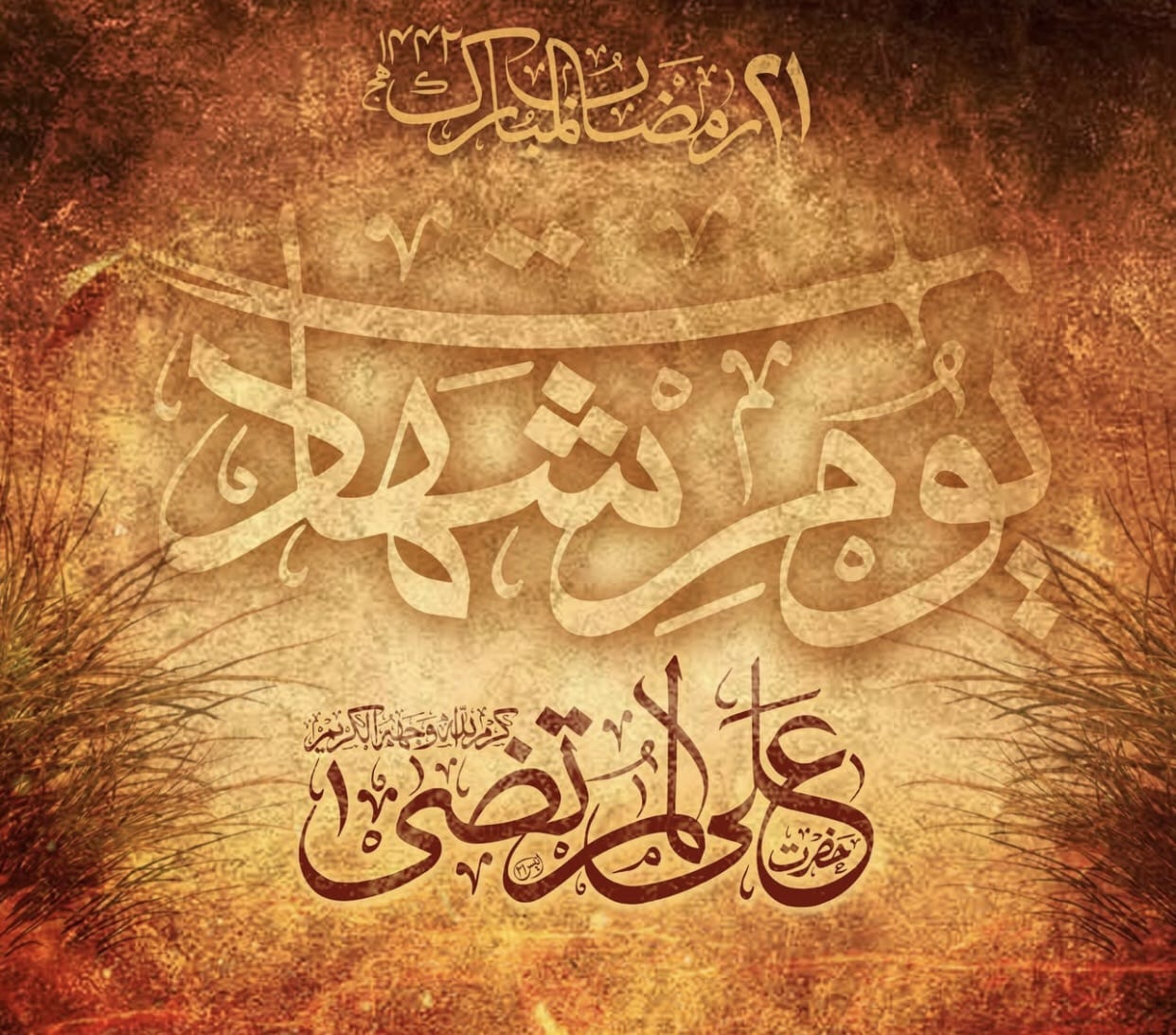

21st Ramadan: A Day of Reflection on the Martyrdom of Hazrat Ali (A.S)
As the Islamic world observes the 21st day of Ramadan, a day marked by the martyrdom of Hazrat Ali ibn Abi Talib (A.S), the cousin and son-in-law of Prophet Muhammad (PBUH), Muslims around the globe reflect on his life, teachings, and enduring legacy. Known for his unparalleled courage, wisdom, and unwavering commitment to justice, Hazrat Ali remains a towering figure in Islamic history, inspiring generations with his exemplary character.
On this solemn occasion, the poetic tribute of Allama Iqbal, one of the most celebrated philosophers and poets of the Muslim world, offers a profound reflection on the spiritual and moral lessons embodied by Hazrat Ali. In his famous Rubai (quatrain), Iqbal invokes a prayer to the Almighty, seeking divine blessings for humanity:

“Dilon ko markaz-e-mehr-o-wafa kar, Hareem-e-kubra se aashna kar. Jise nan-e-jaween bakhshi hai tu ne, Use baazu-e-Haider bhi ata kar.”
(“Make hearts the center of love and loyalty, Acquaint them with the sanctity of the Divine. To those You have granted the bread of barley, Also bestow the strength of Haider’s arm.”)
In these verses, Iqbal eloquently captures the essence of Hazrat Ali’s legacy. He prays for hearts to be filled with love and loyalty, virtues that Hazrat Ali exemplified throughout his life. The reference to “bread of barley” symbolizes the simplicity and humility of those who struggle with limited means, while the “strength of Haider’s arm” alludes to the courage and resilience of Hazrat Ali, who was famously known as Haider (the Lion) for his bravery.

Iqbal’s poetry serves as a reminder that material sustenance alone is insufficient; true empowerment comes from spiritual and moral strength. Hazrat Ali, embodied this balance, combining physical courage with deep spiritual insight and an unwavering commitment to justice. His life offers timeless lessons for individuals and societies striving to uphold principles of equity, compassion, and faith.
Hazrat Ali’s martyrdom on the 21st of Ramadan, 40 AH (661 CE), is a poignant moment in Islamic history. He was struck by a poisoned sword while leading prayers in the mosque of Kufa, an act that underscored his dedication to his faith and his people even in the face of danger. His passing marked the end of an era but left behind a legacy that continues to inspire millions.
Allama Iqbal, a staunch admirer of Hazrat Ali, frequently referenced his virtues in his works. Iqbal saw Hazrat Ali as a symbol of selflessness, courage, and spiritual enlightenment qualities he believed were essential for the revival of the Muslim world. Through his poetry, Iqbal sought to reignite the spirit of Khudi (selfhood) and resilience, drawing inspiration from figures like Hazrat Ali.

As Muslims commemorate the martyrdom of Hazrat Ali this Ramadan, Iqbal’s verses remind us of the enduring relevance of his teachings. In a world grappling with inequality, injustice, and moral decay, the example of Hazrat Ali offers a beacon of hope and guidance. His life reminds us that true strength lies not in material wealth but in faith, courage, and an unwavering commitment to justice.
On this day of reflection, let us draw inspiration from Hazrat Ali’s legacy and strive to embody the values he championed. As Iqbal prayed, may our hearts be filled with love and loyalty, and may we be granted the strength to face life’s challenges with the courage of Haider.
This article is a tribute to Hazrat Ali and Allama Iqbal’s timeless message, written for an international audience to reflect on the spiritual and moral lessons of this significant day in Islamic history.