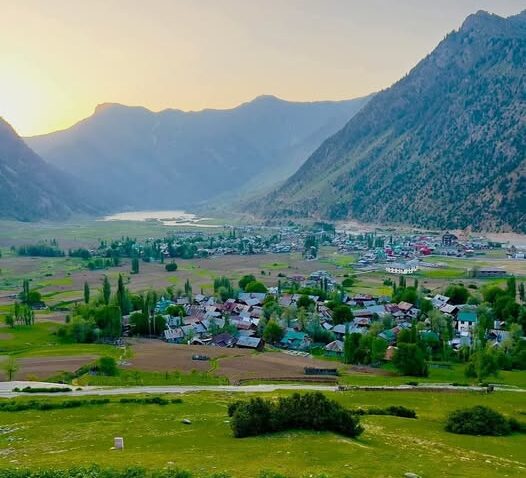

NEELUM VALLEY – Before the sun touches the snow peaks, a slow procession begins. Children, their breath misting in the chill, lead goats up narrow trails. Women, with plastic jerricans balanced on their heads, descend towards the sound of a mountain stream. This is not a scene from a bygone era; this is morning in the border villages of Kashmir, where the rhythms of survival are dictated by terrain, tradition, and a tense, unseen line.
Across the formidable ridges that divide the Himalayan and Karakoram ranges, millions live in the shadow of one of the world’s most heavily militarized borders. While geopolitical tensions over Kashmir dominate international headlines, the daily reality for those in Indian-administered Jammu & Kashmir and Ladakh, and in Pakistan-administered Azad Jammu & Kashmir (AJK) and Gilgit-Baltistan, is a more elemental one: a relentless pursuit of water, fodder, and safety.
This is a story of resilience, told not in political slogans, but in the calloused hands of a shepherd, the weary eyes of a mother scanning the sky, and the communal bonds that are the true infrastructure of survival.
The Azadi Times
No state grants. No corporate lobby. Just ground‑truth reporting from Kashmir & beyond
You make this possible.
The Geography of a Divided Life
The region is a cartographic puzzle. The Line of Control (LoC), a de facto border, snakes through mountains and valleys, separating families and dictating destinies. On both sides, the landscape is breathtakingly beautiful and brutally demanding.
In the village of Dudhnial, in AJK’s Neelum Valley, the Pakistani and Indian posts are visible on opposing ridges. The sound of artillery, locals say, is as predictable as the afternoon rain in monsoon season. Yet, life persists.
“We are not living in a conflict zone; we are living with it,” explains Bilal Ahmed, a schoolteacher in his forties. “Our children learn to read the sounds of the mountains—the difference between a rockslide and shelling. Their geography lessons are not just in books; they are written on this land.”



The Daily Grind: Water, Wood, and Fodder
The economy here is one of sheer subsistence. The Urdu words mal dangar (livestock) and juglo (water source) are not vocabulary; they are the pillars of existence.
A Day in the Life:
Pre-Dawn: Children like 12-year-old Amina set out with their families’ goats. The journey to high-altitude pastures, or bahaks, can take hours. The grass they graze on today will be the milk and meat that sustains the family through the winter.
Morning: The task of fetching water falls largely to women and girls. A single trip to a spring or stream can be a two-hour round journey over precarious paths. Water is not for profligate use; it is for drinking, cooking, and the most essential cleaning.
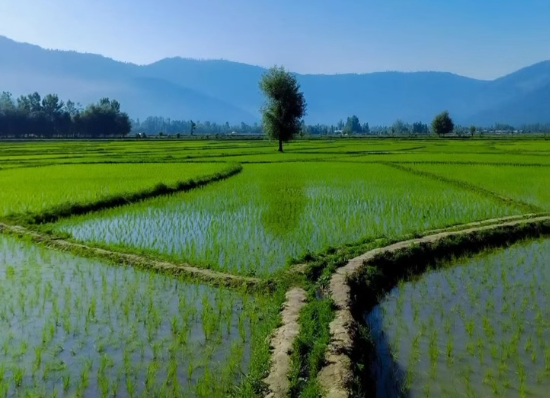
Afternoon: Men and women work in terraced fields, harvesting wheat or maize. Every stalk of grass is valuable; it will be dried and stored as winter fodder, known as kuth. This process, repeated for generations, is a race against the shortening days of autumn.
Evening: The sound of a mortar shell cuts through the valley. The routine, so carefully maintained, shatters. Families, trained by grim experience, gather their most vital documents and a few days’ food and move to designated bunkers—often the reinforced basement of a school or mosque.
Portraits of Resilience
Hassan, The Shepherd (Neelum Valley, AJK)
Hassan’s face is a map of his life, etched by sun and wind. His world is defined by the needs of his sixty goats. “These animals are our bank account,” he says, watching them navigate a steep incline. “If we hear shelling while they are grazing, we have a terrible choice: risk our lives to bring them back, or risk our livelihood by leaving them.” The community has developed a system: they take turns as lookouts, using whistles and hand signals to warn each other. It is a fragile safety net, woven from trust and necessity.
Shafiq, The Apple Farmer (Hunza, Gilgit-Baltistan)
Further north, in the majestic valleys of Gilgit-Baltistan, the challenges are different but just as stark. Shafiq tends to apple orchards that have been in his family for generations. His survival depends on the delicate balance of glacial meltwater.
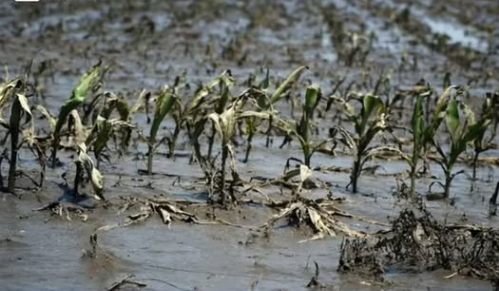
“The glaciers are our lifeline, but they are becoming unpredictable,” he explains, pointing towards the distant, ice-capped peaks. “Some years, the water comes too fast and floods our fields. Other years, there is not enough. We have built channels for generations, but now we don’t know what to expect.” Climate change is not an abstract concept here; it is a tangible threat to a centuries-old way of life.
Amina, The Mother (Kupwara District, Indian-administered Kashmir)
On the other side of the LoC, in a village in Kupwara, Amina prepares her children for the possibility of disruption. A small bag, packed with essentials, sits by the door.
“They know the drill,” she says softly. “When the shelling starts, we don’t cry. We just go. My eldest son knows to help his grandmother. My daughter knows to grab the bag.” The psychological toll is a silent member of the household. “They have nightmares,” she admits. “Sometimes, a truck backfiring in the market will make them freeze. But what can we do? This is their normal.”
The Invisible Infrastructure: Community
In the absence of robust state support in many of these remote areas, the most critical infrastructure is social. The system of haq (right) and madad (help) governs daily life. Neighbors share water from a common spring; families pool resources to rebuild a home damaged by shelling or a landslide; the community ensures that the elderly and vulnerable are cared for during evacuations.
This mutual aid is the bedrock of survival. It is a resilience that is deeply practical, born not from ideology, but from the shared understanding that no one can endure these mountains alone.
Beyond the Headlines
The narrative of Kashmir is often reduced to a territorial dispute, a binary of India versus Pakistan. But for the shepherds, farmers, and schoolchildren living along the LoC, the primary conflict is against the elements, against isolation, and for the preservation of dignity in the face of immense pressure.
Their stories—of carrying water, moving livestock, and drying fodder—are not as dramatic as the sound of artillery, but they are far more enduring. They speak to a universal human truth: the relentless, often quiet, determination to secure a future for the next generation, even when the ground beneath one’s feet is anything but stable.
In the silence between the headlines, if you listen closely, you can hear it—the sound of resilience, echoing through the valleys of Kashmir.