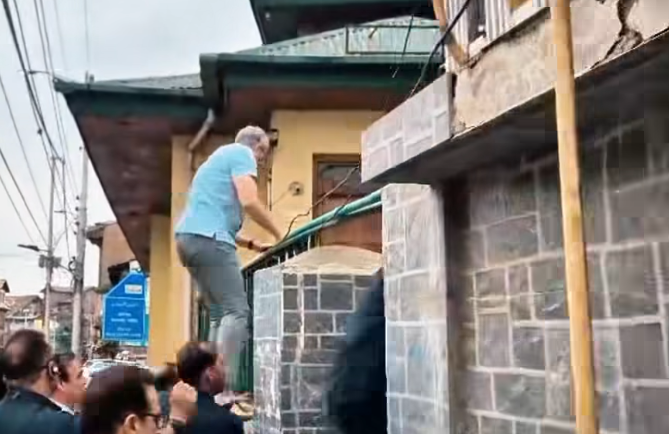

Srinagar, Indian administered Kashmir — The Azadi Times Desk: On the eve of Martyrs’ Day, an unusual scene unfolded in Srinagar as former Jammu & Kashmir Chief Minister Omar Abdullah claimed he was barred from visiting the iconic Martyrs’ Graveyard in Srinagar on July 13. He later shared that he had to scale a wall the next day to pay his respects — an act that sparked heated debates across Kashmir’s political and social landscape.
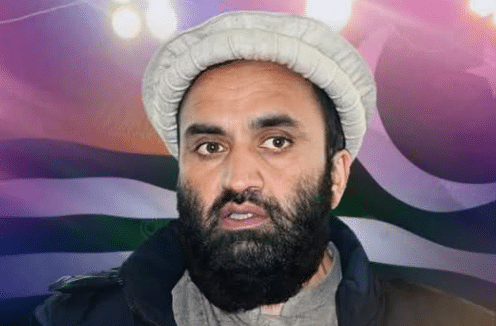
The incident drew sharp remarks from Hurriyat Conference chairman Mirwaiz Umar Farooq, who took to social media to say that “power teaches little, but powerlessness teaches more,” implying that Omar Abdullah had now experienced what ordinary Kashmiris endure daily under restrictions and surveillance.
“Taste of the bitter medicine”
Posting on X (formerly Twitter), Mirwaiz said:
The Azadi Times
No state grants. No corporate lobby. Just ground‑truth reporting from Kashmir & beyond
You make this possible.
“Today the CM sahab tasted the bitter medicine of authoritarian high-handedness and subsequent helplessness that common Kashmiris face every day in different forms, as all agency and space is denied to them.”
He further expressed hope that the experience would motivate Omar Abdullah to prioritize the dignity and fundamental rights of the people of Jammu & Kashmir and to work sincerely towards their restoration.
The incident
According to Omar Abdullah, security forces stopped him on July 13 as he attempted to visit the Martyrs’ Graveyard to offer prayers and pay homage to the Kashmiri martyrs of 1931 — an annual event historically observed in the region. A video shared on social media showed him recounting how he was blocked and how, eventually, he climbed over a wall the next day to enter the cemetery.
“Climbing over a wall to reach the graveyard shouldn’t be necessary for anyone, least of all for an elected leader,” he said in his statement.
Social media reactions: divided opinions
The incident triggered a flood of reactions online. Many ordinary Kashmiris expressed solidarity with Omar Abdullah, calling the restrictions unjustified even against a former elected chief minister. However, a significant section of the public also criticized him, accusing him of “complicity” in perpetuating the very system of control that now obstructs him.
Posts under hashtags like #MartyrsDay, #OmarAbdullah, and #RightToSelfDetermination trended locally as users debated whether Omar’s actions and words aligned with the aspirations of the Kashmiri people.
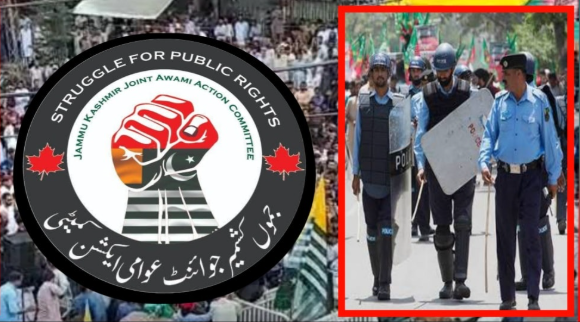
One commenter wrote:
“When he was in power, walls were built around us. Now he climbs the same walls. Karma?”
While another countered:
“At least he tried to pay respect to the martyrs. That’s more than many others do.”
A broader question of rights
The restrictions faced by Omar Abdullah highlight a deeper issue: the shrinking space for public expression, dissent, and historical remembrance in Jammu & Kashmir. Since the abrogation of Article 370 in August 2019, several traditional commemorations and political activities have been curtailed under tightened security measures.
Even on Martyrs’ Day — which commemorates the killing of 22 Kashmiris by Dogra forces in 1931, an event that catalyzed the region’s struggle for self-determination — public gatherings have been largely muted or heavily restricted in recent years.
For many Kashmiris, the image of a former chief minister climbing over a wall to reach a graveyard serves as a metaphor for the frustration and helplessness felt widely across the region.
What’s next?
Mirwaiz Umar Farooq concluded his statement with a call for introspection among leaders: to put aside political rivalry and focus on restoring the dignity, rights, and aspirations of the Kashmiri people.
Whether this incident marks a turning point in Omar Abdullah’s political stance remains to be seen. But for now, it has reignited the conversation about the Kashmiri people’s right to remember their history and demand their dignity — free from external narratives and constraints.