

Muzaffarabad, Pakistan administered Kashmir — On August 13, more than 200 young people and students in Pakistan-administered Jammu and Kashmir (PAJK) were charged under allegations of raising slogans against Pakistan’s accession, desecrating the Pakistani flag, and committing “terrorism.” Over 35 have been arrested, with some placed on 90-day remand. In response, protest demonstrations have been called for this Saturday, where activists say they will announce their next course of action.
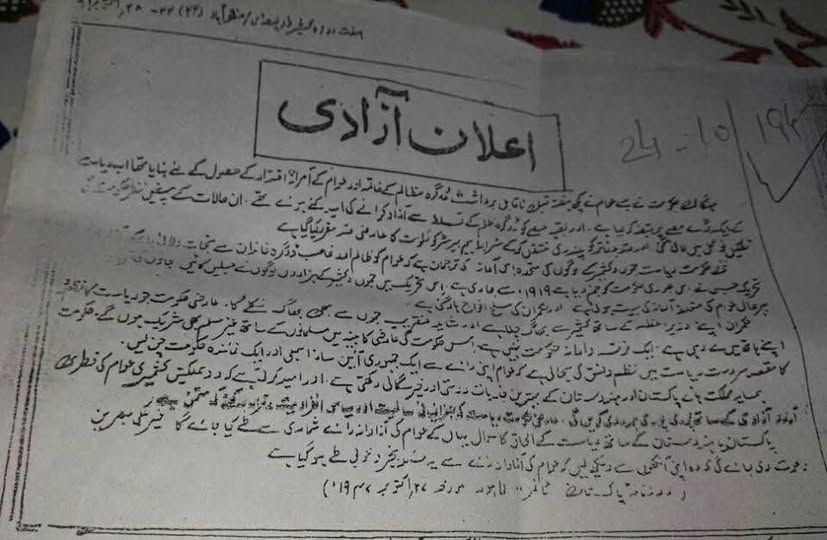
This development has reignited debate around the foundational document of the AJK government, the Declaration of Independence (1947). Many question whether the recent cases, arrests, and charges of treason are compatible with the spirit of that founding document — or whether, in fact, they represent its complete betrayal.
The founding declaration, drafted at the time of liberation from the Dogra regime, defined the new government as a temporary authority — tasked only with maintaining law and order until the people of Jammu and Kashmir could freely elect a democratic and representative constitutional assembly. It also envisioned a secular government inclusive of all communities, explicitly emphasizing Kashmir’s distinct political identity and territorial integrity, separate from both India and Pakistan.
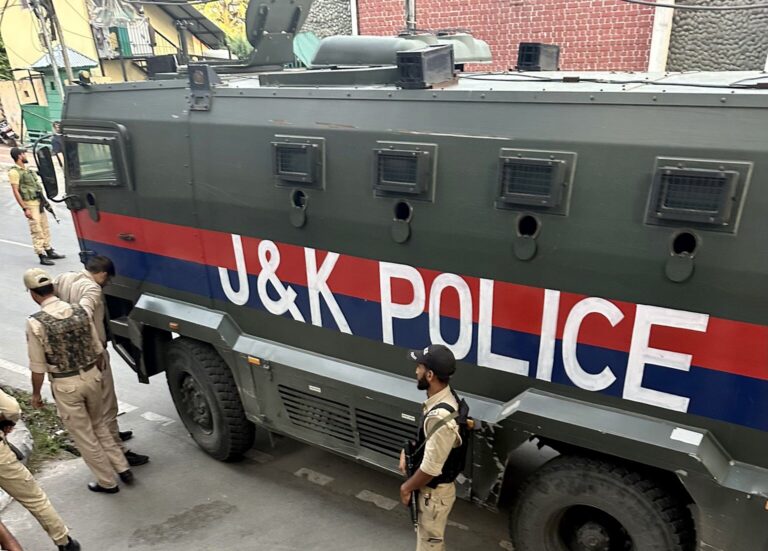
Crucially, the document stipulated that any decision regarding accession to India or Pakistan could only be taken through a free and impartial plebiscite, monitored by international observers. Until then, the government’s role was to safeguard self-rule, ensure sovereignty, and prepare the ground for an elected body chosen by the people themselves.
By contrast, today’s political reality in PAJK is starkly different. Following the Karachi Agreement, Islamabad assumed control of key areas including Gilgit-Baltistan, finances, resources, refugee rehabilitation, and oversight of the freedom movement. Later, the 1974 Interim Constitution (Act 74) further institutionalized Pakistan’s dominance: any political activity challenging Pakistan’s accession, questioning its integrity, or advocating for independence was criminalized. Under this act, even candidates for the lowest public office — from peons to prime ministers — are required to sign a declaration of faith in Pakistan’s accession.
This legal framework has effectively outlawed the very principles enshrined in the 1947 Declaration. Talking about independence, autonomy, or self-determination is criminalized, while political parties, associations, and civil groups cannot legally exist if they refuse to endorse accession to Pakistan.

The recent arrests of students and activists in Muzaffarabad are seen by critics as a continuation of this colonial-style arrangement, where the sacrifices of Kashmiris are overshadowed by policies imposed in the name of Pakistan’s national interest. Dissenters argue that treating slogans — whether pro-accession or anti-accession — as treason undermines not just democratic rights but the very foundation upon which the provisional government was created.
The question many now ask is simple: Why has the original spirit of the Declaration of Independence been sidelined for over seven decades? The answer, historians argue, lies in the Pakistani state’s early intervention in 1947, when tribal militias shifted the seat of government to Muzaffarabad under Islamabad’s control. Since then, constitutional documents, from the Karachi Agreement to Act 74, have turned AJK into a de facto dependency rather than the independent, representative government envisioned in 1947.
The way forward, critics contend, still lies in returning to the principles of the founding document: establishing a genuine constituent assembly, enabling free choice through democratic means, ending the rule of colonial-style officers, and allowing the people of Jammu and Kashmir to determine both their internal governance and external relations.


Anything less, they argue, is not only a violation of democratic rights but also a betrayal of the sacrifices made in 1947 for freedom and dignity.