No state backing. No paywalls. Just truth. Support Kashmir's independent voice. Join 2,400+ patrons who fund independent voices.
Zero Paywalls
Reader Funded
Award Winning
Secure Payment
Encrypted
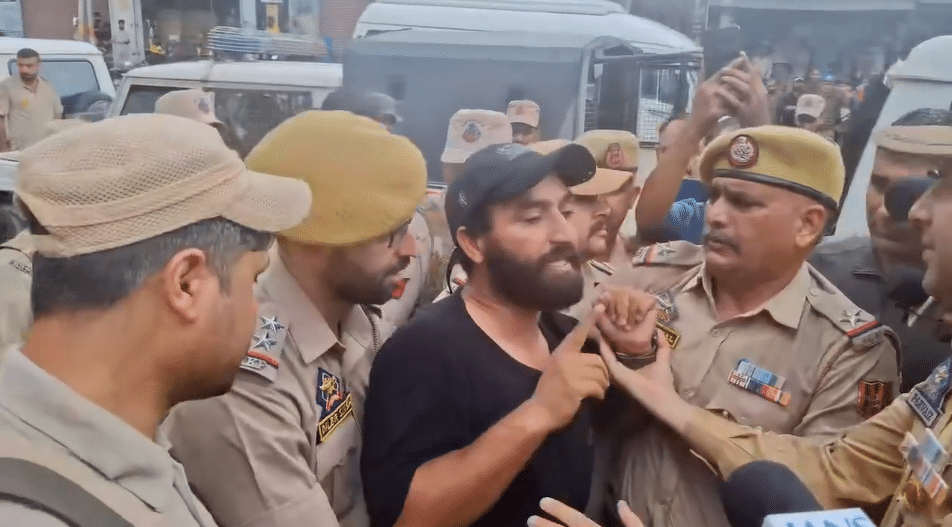
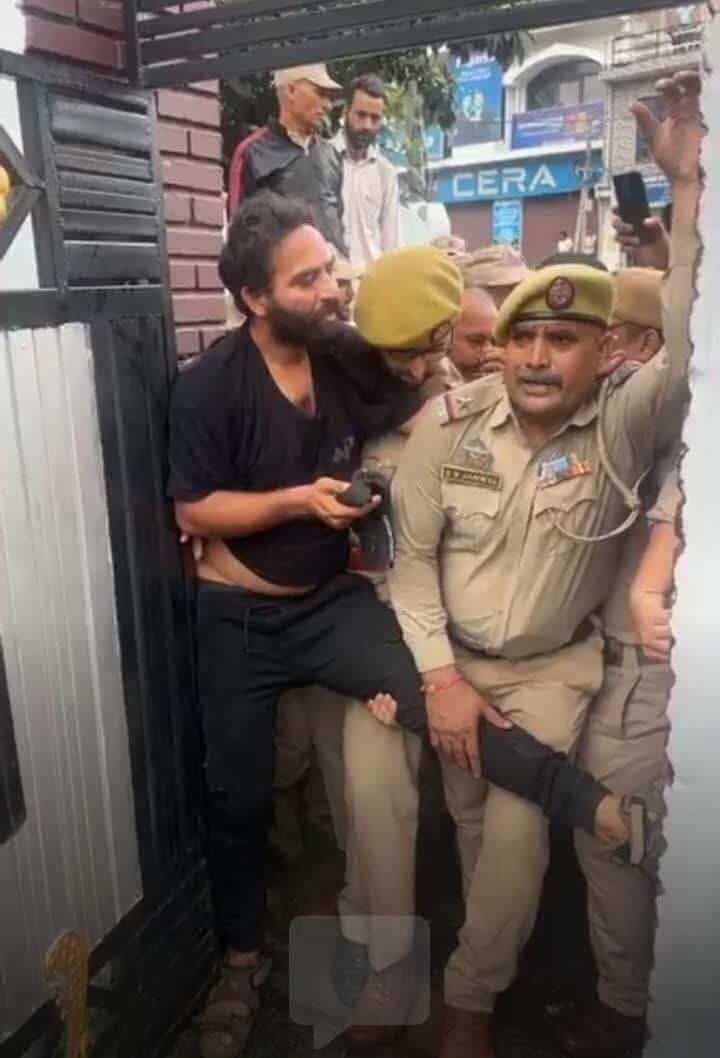
Srinagar, Jammu & Kashmir — The arrest of Aam Aadmi Party (AAP) legislator Mehraj Malik under the controversial Public Safety Act (PSA) has ignited fierce debate across Jammu and Kashmir’s political spectrum, raising questions about democracy, dissent, and representation in the region.
Malik, who represents the Doda-52 constituency, was detained after authorities claimed his activities posed a “serious threat to public order and peace.” According to official communication from Doda District Magistrate Harvinder Singh to the Speaker of the Jammu and Kashmir Legislative Assembly, Malik was booked under the Jammu and Kashmir Public Safety Act, 1978, after a “thorough review of materials, reports, and circumstances.”
No state backing. No paywalls. Just truth. Support Kashmir's independent voice. Join 2,400+ patrons who fund independent voices.
This marks the first time since 2019 that a sitting legislator has been placed under PSA detention — a move widely described by political parties and observers as a watershed moment in the territory’s fraught political landscape.
The arrest has been strongly criticized by a cross-section of Kashmiri political leaders.
PDP senior leader and Pulwama MLA Waheed-ur-Rehman Parra denounced the move, calling it “blatant authoritarianism.”
“To detain an elected representative merely for raising public grievances is open tyranny,” Parra said. “Black laws like PSA are being weaponized to silence political voices and crush dissent. This is not the way to resolve differences in a democracy.”
Peoples Conference Chairman and Handwara MLA Sajad Gani Lone echoed similar concerns, arguing that the arrest undermines the very purpose of elections.
“If an elected representative cannot express the concerns and emotions of his people, then what is the point of holding elections at all?” Lone asked. “This is yet another blow to the democratic structure of Jammu and Kashmir.”
From Srinagar, Dargah Hazratbal MLA Salman Sagar noted that Malik’s detention was unprecedented in the post-2019 political scenario.
“This is the first time since 2019 that any legislator has been booked under PSA,” Sagar wrote on X (formerly Twitter). “It sets a dangerous precedent and has triggered a new debate in J&K politics.”
CPI(M) veteran and Kulgam MLA Mohammad Yousuf Tarigami also condemned the government’s decision.
“It is deeply unfortunate and absolutely unjustified to impose such a draconian law on an elected representative,” Tarigami said. “This harsh and unwarranted step must be revoked immediately.”
Officials defending the move maintain that Malik’s “actions were detrimental to maintaining public order.” Government sources argue the arrest was necessary to preserve peace and prevent unrest in Doda district.
“The decision was taken in the interest of maintaining law and order,” one official said, insisting that Malik’s activities had “become a serious threat to peace.”
Malik’s arrest has not only polarized political parties in Jammu and Kashmir but has also sparked heated discussions on social media, including across Pakistan-administered Kashmir (PaK).
Supporters have launched online campaigns calling for Malik’s immediate release, portraying him as a symbol of resistance against political suppression. However, others in PaK have criticized him, alleging complicity with the Indian state — reflecting the complex and fractured nature of Kashmiri political identity and allegiances.
The detention of a sitting legislator under the PSA — long criticized by human rights organizations for enabling arbitrary detentions — highlights the growing tensions between governance and dissent in Jammu and Kashmir.
For many political observers, Malik’s arrest represents more than just an isolated incident. It touches on deeper questions: What space, if any, remains for elected representatives to voice grievances in Kashmir’s altered political framework? And how will such moves impact the already fragile relationship between the people and democratic institutions?
As calls grow for Malik’s release, the episode is likely to remain a flashpoint in Kashmir’s politics — symbolizing both the limits of political expression and the uncertainty of representative democracy in the region.
Trending Topics


The Azadi Times is an independent digital news platform based in Muzaffarabad, Kashmir, dedicated to credible journalism, in-depth reporting, and global analysis. We cover Kashmir, South Asia, and international affairs with a commitment to truth, editorial integrity, and public accountability.
Get important news delivered directly to your inbox and stay connected!
© 2026 The Azadi Times. All Rights Reserved.