No state backing. No paywalls. Just truth. Support Kashmir's independent voice. Join 2,400+ patrons who fund independent voices.
Zero Paywalls
Reader Funded
Award Winning
Secure Payment
Encrypted
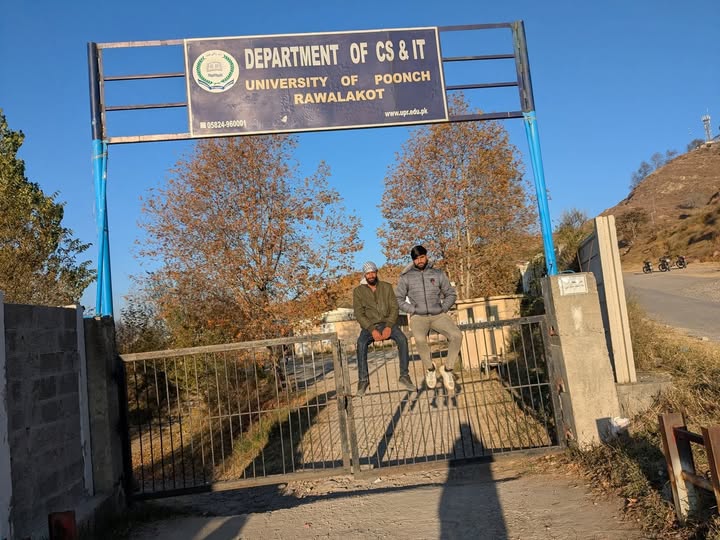
Students at the University of Poonch staged a protest on Monday by locking the main gates of the university. They demanded the rollback of recent fee hikes, the suspension of the Deputy Director of Student Affairs (DDSA), provision of improved transport facilities, and the establishment of anti-harassment committees to ensure student representation.
The university administration held negotiations with the students and immediately issued an order to suspend the DDSA. Additionally, a circular was released promising prompt action on improving transport facilities and other pending demands. However, the demand for a reduction in fees was not accepted.
Expressing distrust in the negotiations, students announced they would continue their protest, locking all main gates of the university campuses from Tuesday and staging sit-in demonstrations. Consequently, the university administration announced the suspension of classes on Tuesday and Wednesday, while ensuring that examinations and research work continue as scheduled.
No state backing. No paywalls. Just truth. Support Kashmir's independent voice. Join 2,400+ patrons who fund independent voices.
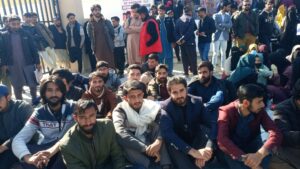
The students insist that the recent fee hike be reversed immediately. The administration, however, stated that fee decisions are made at the government level, and the university has no authority to modify them. Students requested a written confirmation stating that the university is not responsible for the fee increase, but the administration reportedly refused to provide this documentation.
It is important to note that universities in Pakistani-administered Jammu and Kashmir do not have the authority to set fees, nor is there any formal mechanism for this. Fee structures are determined within the university syndicate and senate. Nevertheless, universities often increase fees to manage financial shortfalls, align enrollments across departments, and achieve other institutional objectives.
Universities in the region are facing severe financial challenges. After the transfer of higher education responsibilities to provincial authorities, the federal government of Pakistan reduced Higher Education Commission (HEC) funding. This led to cuts of up to 60% in the funding allocated to universities in Pakistani-administered Jammu and Kashmir.
To cover these deficits, universities requested additional government funding last year. While funds were released to some universities, the University of Poonch reportedly did not receive its allocation, leaving it in a critical financial situation. Although the government continues to establish new universities, HEC budget cuts have forced institutions to rely heavily on student fees to meet operational costs.
This approach has led to declining enrollment in many departments, with only a few programs seeing healthy student intake. Social sciences and literature departments, in particular, are witnessing near-zero enrollments, which could strain faculties in the future.
Experts suggest that instead of placing the financial burden on students and parents, universities should be made financially self-sufficient by connecting academic programs with markets, industry, and agriculture. For instance, the University of Poonch, known primarily for its agricultural programs, could focus on agriculture, horticulture, and livestock, collaborating with government departments to integrate faculty expertise with production. This would meet local market demands, create new jobs, and move the university toward financial sustainability. IT programs can be similarly developed to generate skilled graduates aligned with market needs.
However, achieving this requires not only improving the quality of education but also comprehensive government-level planning.
Trending Topics


The Azadi Times is an independent digital news platform based in Muzaffarabad, Kashmir, dedicated to credible journalism, in-depth reporting, and global analysis. We cover Kashmir, South Asia, and international affairs with a commitment to truth, editorial integrity, and public accountability.
Get important news delivered directly to your inbox and stay connected!
© 2026 The Azadi Times. All Rights Reserved.