Friday, April 3, 2026
16.2 C
Srinagar
Home Blog Page 100

Nationalist Kashmiri Leader Arrested in Mirpur Over Controversial Video

0

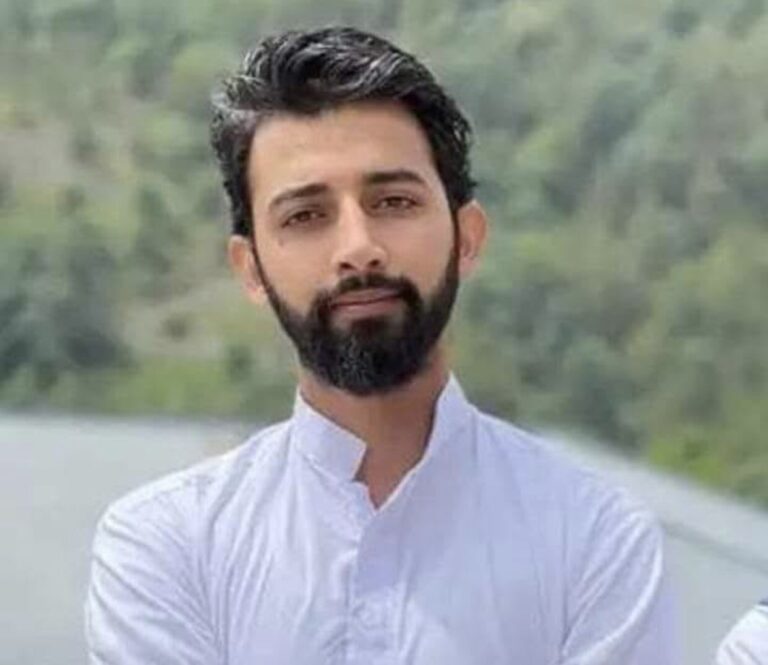
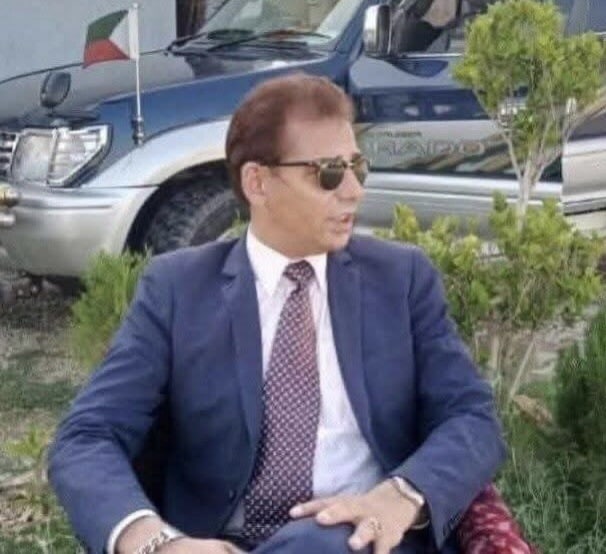
Mirpur, Jammu Kashmir (PaK): Prominent nationalist leader Saddaqat Mughal Kashmiri was arrested by Mirpur police late Tuesday night, sparking outrage among activists who allege the detention is politically motivated. While authorities claim the arrest was made in connection with cases filed a month ago in Kel and Athmuqam, Mughal’s supporters insist he was targeted for exposing alleged military negligence in a recent avalanche tragedy.

Controversial Video and Police Claims

According to the police spokesperson, Mughal faces charges for “inciting the public against state institutions” through a social media video. The video allegedly linked the deaths of three Neelum Valley youths to the military, claiming they were transporting army rations when caught in an avalanche.

Police maintain that the youths had gone to check on their dhaare (seasonal mountain shelters) and deny any connection to military supply work. However, local journalists confirm that many youths in the region do earn income by transporting goods for Pakistani security forces though it remains unverified whether the victims were engaged in such work at the time.

Timing of Arrest Raises Questions

Mughal had been residing in Neelum for the past month without incident, yet was only arrested upon arriving in Mirpur, second largest city of Pakistan administrated Kashmir. Critics question why, if cases were already filed, he was not apprehended earlier. Police defended the delay, citing their “Record Management System,” which they claim tracks suspects across locations though they did not explain why it took weeks to locate him.

Suppression of Dissent or Lawful Action?

Human rights advocates argue Mughal’s arrest reflects a broader crackdown on dissent in Azad Kashmir. While authorities dismiss his claims as “misleading,” local activists insist his video merely amplified long-standing grievances about military influence in civilian affairs.

Mughal had earlier alleged pressure from officials to delete the video. Subsequently, another social media account circulated footage purportedly showing recovered army ration packets at the avalanche site further fueling controversy.

Calls for Release

Pro-independence groups demand Mughal’s immediate release, framing the charges as an attack on free speech. “This isn’t about law it’s about silencing critics,” said a colleague. Meanwhile, police confirm Mughal will be transferred to Neelum for further legal proceedings.

As tensions rise, the case underscores the delicate balance between security narratives and civilian dissent in the region.

By Haris Qadeer
Kashmir Dispatch | Independent Journalism for a Jammu Kashmir
JKNSF Holds Conference on “People’s Rights Movement and Future Strategy” In Kotli

0

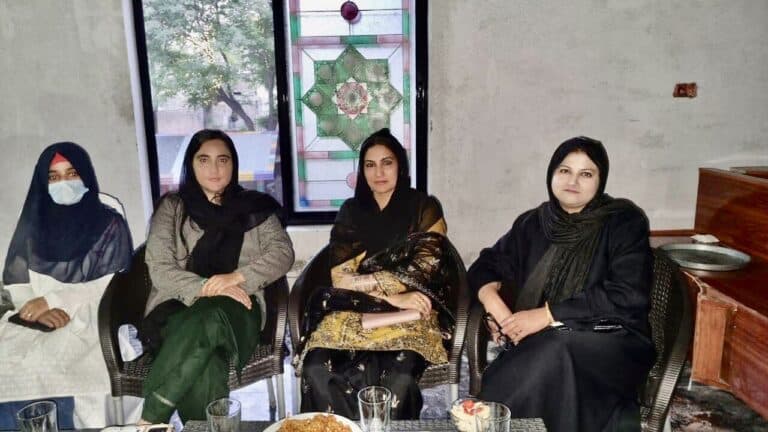
Kotli: A conference titled “People’s Rights Movement and Future Strategy” was organized by the Jammu Kashmir National Students Federation (JKNSF) in Kotli. The event saw the participation of leaders from various nationalist parties, organizations, and the People’s Action Committee Kotli.

Prominent attendees included Comrade Khaliq Beg, member of the JKNSF Central Committee; Abid Raja, Zonal General Secretary of the Jammu Kashmir Liberation Front (JKLF); Dr. Liaqat Naqshbandi, member of the JKLF Central Committee; former Deputy Mayor Lootan; freedom activist Asif Masood Chaudhry; District Chairman JKLF Ayaz Karim; spokesperson of the Central Traders Association Anwar Beg; and Sardar Niaz Khan, Central President of the National Students Federation (NSF).

The participants discussed the future course of action for the ongoing movement for people’s rights. The stage secretary duties were performed by Comrade Mubashar Razaq.

In her concluding remarks, Comrade Afra Shabbir Chaudhry, Senior Vice President of JKNSF, summarized the discussions and expressed gratitude to the participants. She reiterated the federation’s unconditional support for all movements aimed at public welfare and emphasized unity as the key to achieving people’s victory.

The conference highlighted the importance of a united front in addressing the challenges faced by the people of Jammu and Kashmir and charting a path forward for their rights and aspirations.

The Truth Behind the Treaty of Amritsar and Its Misrepresentation

0

The Treaty of Amritsar, signed on March 16, 1846, is often misrepresented in the discourse surrounding the history of Jammu and Kashmir. A closer look at the historical facts reveals a more nuanced reality, one that has been distorted over the years for political narratives.

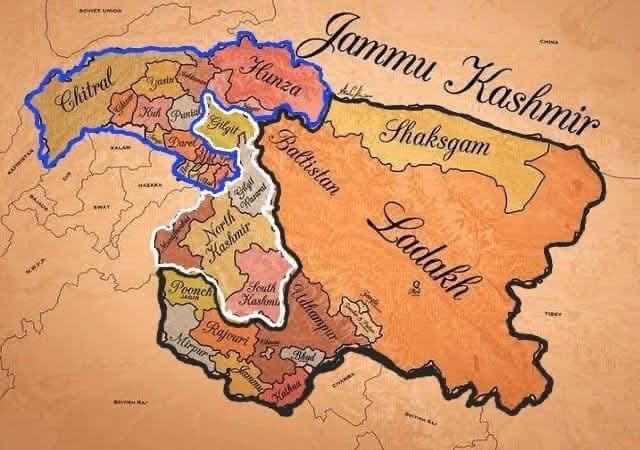
The map in the black circle represents the territories before March 16, 1846, which included Baltistan, Ladakh, Jammu, Rajouri, Bhimber, Mirpur, Kotli, and Poonch. These areas were already under the rule of Gulab Singh, the Dogra ruler, and had no connection to the Treaty of Amritsar.

The blue circle highlights regions such as Hunza, Nagar, Punial, Ishkoman, Gupis, Yasin, Darail, Tangir, and Chilas. These areas were forcibly occupied by Dogra forces after 1860, with only the Raja of Punial willingly joining the Dogra state. The rest were annexed through military force. These territories, too, have no link to the Treaty of Amritsar.

The white circle represents the territories that became part of the Jammu and Kashmir state through the Treaty of Amritsar. These included the Kashmir Valley, Muzaffarabad, Astore, and the Gilgit district. These areas were under Sikh control before the treaty. Gulab Singh acquired them by paying war indemnities to the Sikhs, as stipulated in the treaty. Notably, rebellions in Gilgit and Astore in 1852 were crushed by Dogra forces, who reasserted control by 1860.

The question arises: What does the Treaty of Amritsar have to do with the people of Bhimber, Mirpur, Kotli, Poonch, Jammu, Punial, Yasin, Diamer, Hunza, Nagar, Baltistan, and Ladakh? Their ancestors were already living under Gulab Singh’s rule before the treaty. For 77 years, a false narrative has been propagated that “we Kashmiris were sold by the Dogras.” The truth is that Gulab Singh also liberated Kashmiris from the oppression of the Sikhs and the British.

It is essential to remember the truth and not become ungrateful. The essence of Islam lies in truthfulness, and it is our duty to uphold it. The distorted narrative surrounding the Treaty of Amritsar must be corrected to reflect historical realities accurately.

By Iftikhar Rajput, Poonch, Pakistan-Administered Kashmir

Rawalakot Police Operation in Dheerkot Meets Armed Resistance

0

Rawalakot, Azad Kashmir (PaK): Rawalakot police reportedly surrounded a house in the Pangaan Mukhiala area of Dheerkot, leading to a two-hour-long exchange of gunfire. The police eventually retreated without making any arrests. The incident occurred late on Friday, March 21.

According to local sources, the police, led by the Senior Superintendent of Police (SSP) of Poonch, cordoned off the house of Raja Ayaz. The police claimed that wanted suspects Raja Zarnosh Naseem, Alfaat, and Usama were hiding there. However, the police faced armed resistance, and after a prolonged exchange of fire, they were forced to withdraw without success.

Local residents reported that the Rawalakot police conducted the operation without coordinating with the Dheerkot or Bagh police or the local police station. The community strongly protested, citing the absence of the wanted suspects at Raja Ayaz’s house, and demanded action against the police officials responsible for the operation.

A local resident claimed that some officers involved in the raid were speaking in the Rawalakoti language and some in Punjabi. The resident also alleged that the police officers had come with the intention of staging an encounter rather than making arrests.

It is worth noting that on the same Friday, the Superintendent of Police (SP) of Sudhanoti held a press conference claiming the arrest of an alleged terrorist and the escape of three others. Police sources had claimed that the fugitives were spotted within a few kilometers of Azad Pattan earlier that day. However, later that night, the police conducted a raid in Mukhiala, Dheerkot.

The police have yet to release an official statement regarding the incident. However, a police officer confirmed that the operation took place on the night of March 21 but no arrests were made.

This incident marks a dangerous escalation, with outcomes that appear far from positive. Meanwhile, significant information is emerging regarding the arrested suspect, Saaqib Ghani. Further details are expected to be shared soon.

Haris Qadeer is a renowned journalist based in Pakistan-administered Kashmir.

Baloch Activist Mahrang Baloch Arrested Amid Protests in Quetta

0

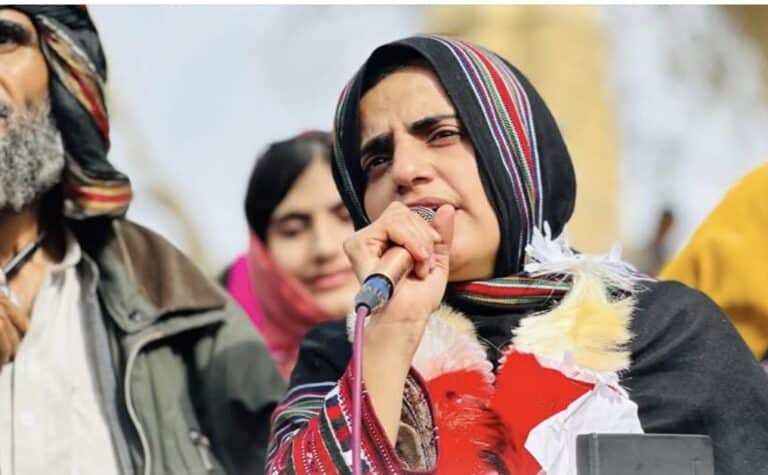
Muzaffarabad, (PaK): Tensions escalated in Balochistan on March 22, 2025 as police reportedly arrested Mahrang Baloch, the head of the Baloch Yakjehti (solidarity) Committee (BYC), during a crackdown on a protest sit-in in Quetta. The demonstration, organized by the BYC, was demanding justice for missing persons and an end to enforced disappearances in the region.

According to the BYC, police forcibly dispersed the sit-in at Quetta’s Sariab Road, confiscated protest materials, and detained Mahrang Baloch. However, local authorities have yet to confirm her arrest, leaving the situation shrouded in uncertainty.

The crackdown comes amid heightened tensions in Quetta, where mobile phone and internet services have been suspended to prevent further unrest. The BYC had called for a province-wide shutter-down strike and wheel-jam protest, which saw significant participation in Baloch-majority districts such as Mastung, Kalat, Khuzdar, and Hub. In Quetta, businesses remained partially closed in Sariab Road and surrounding areas, while other parts of the city observed a complete shutdown.

A Call for Justice
The BYC’s protests are part of a long-standing movement against enforced disappearances and extrajudicial killings in Balochistan, a region plagued by decades of conflict and human rights abuses. Mahrang Baloch, a prominent voice in the movement, has been at the forefront of organizing demonstrations and raising awareness about the plight of missing persons.

Her reported arrest has sparked outrage among activists and local communities, who view it as an attempt to silence dissent. “The state’s response to peaceful protests is always repression,” said a BYC spokesperson. “Mahrang’s arrest is a clear message that they do not want us to speak out.”

Internet Shutdown and Communication Blackout
In a move criticized by human rights organizations, authorities suspended mobile phone and internet services across Quetta, effectively cutting off communication and limiting the flow of information. Such measures are not uncommon in Balochistan, where protests and unrest are often met with communication blackouts.

The suspension of services has drawn condemnation from international rights groups, who argue that it violates freedom of expression and assembly. “Shutting down the internet is a tactic to suppress dissent and hide human rights violations,” said a spokesperson for Amnesty International.

Broader Context
Balochistan, Pakistan’s largest but least developed province, has been a hotspot for separatist movements and state-led counterinsurgency operations. The region’s residents have long accused the government of marginalization and human rights abuses, including enforced disappearances and extrajudicial killings.

The BYC’s protests and Mah Rang Baloch’s activism highlight the ongoing struggle for justice and accountability in the region. Her arrest, if confirmed, could further inflame tensions and draw international attention to the plight of Baloch activists.

As the situation unfolds, human rights organizations and international observers are calling for transparency and restraint from Pakistani authorities. The world watches as Balochistan’s activists continue their fight for justice in the face of mounting challenges.

Bodies of Two Kashmiri Youth Recovered Near LoC, Returned to Families in Uri

0


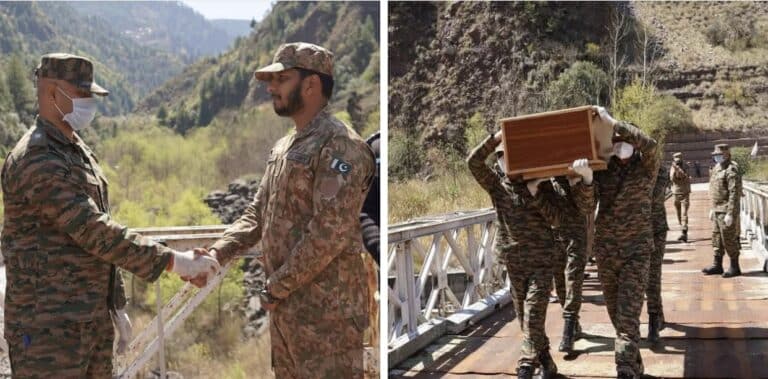
Srinagar (IaK): Authorities in Pakistan-administered Kashmir (PaK) returned the bodies of two Kashmiri youth to their families in Uri on Saturday via the Kaman Post bridge. The deceased, identified as 17-year-old Yasir Hussain Shah and 19-year-old Asiya Bano, had tragically drowned in the Jhelum River 18 days earlier.

Yasir, a resident of Busgran, Uri, and Asiya, from Kundi Barjala, Uri, were reported missing after they reportedly jumped into the river in late February. Local officials stated that Yasir’s body was first spotted near the Kaman Post area along the de facto border on March 20. However, strong currents swept it into PaK-administered territory, delaying recovery efforts. Asiya’s body had drifted across earlier and was retrieved near Chattar on March 19.

“Rescue teams faced immense challenges due to the river’s flow,” said a local official, emphasizing the natural obstacles rather than political boundaries. After days of coordination between communities on both sides, Yasir’s remains were finally recovered near Chinari on Thursday.

The return of the bodies underscores the shared humanitarian concerns transcending the fraught Line of Control (LoC). For families in Uri, the Jhelum River a lifeline for many—has also become a site of recurring tragedy, with strong currents often complicating search efforts.

A Community in Mourning
The deaths have cast a pall over Uri, where residents lament the lack of infrastructure to prevent such incidents. “These children were our future. The river takes so much from us, yet there are no safety measures,” said a grieving relative of Asiya.

While the incident highlights the fragility of life in conflict-affected regions, it also reflects rare moments of cooperation. Locals praised the efforts of rescue teams and authorities on both sides for ensuring the dignified return of the deceased.

Broader Context
For decades, communities along the LoC have navigated both natural and geopolitical risks. The Jhelum’s currents, coupled with the absence of cross-border disaster management frameworks, often leave families vulnerable. Advocacy groups continue to call for joint mechanisms to address such crises, emphasizing Kashmiris’ shared humanity over divisive politics.

As Yasir and Asiya were laid to rest, their families urged authorities to prioritize preventive measures. “We pray no other parent endures this pain,” said Yasir’s father, Mooz Ali Shah.

This tragedy reiterates the urgent need for empathy and collaboration in a region scarred by conflict, where even rivers bear witness to unresolved struggles.

YouTuber Apoorva Mukhija Sparks Controversy Again After Heated Exchange at Sabrina Carpenter’s Paris Concert

0

Paris, France: Popular Indian YouTuber Apoorva Mukhija has once again found herself at the center of controversy after a viral video from Sabrina Carpenter’s concert in Paris showed her in a heated altercation with security and fellow concertgoers. The incident, which has sparked widespread criticism on social media, adds to Mukhija’s growing list of public controversies.

The video, originally posted on TikTok and later shared widely on X (formerly Twitter), captures Mukhija using her phone’s flash excessively while recording the concert. Her actions reportedly disturbed other attendees, prompting security to intervene. In the clip, Mukhija can be seen refusing to comply with security’s instructions to return to her seat, appearing visibly irritated.

The video’s caption, written in French, translates to: “POV: We were at the concert, and she was filming her own music video. The security guard asked her to sit down, but she didn’t care. Big flash in the face.”

During the altercation, Mukhija is heard saying in Hindi, “Main thappad mar doongi usko” (I will slap them). According to reports, she also allegedly yelled at fellow concertgoers when asked to lower her voice and stop using her phone’s flash. Some attendees claimed that Mukhija nearly hit someone before security stepped in to de-escalate the situation.

Netizens React to the Viral Clip
The video quickly went viral, drawing sharp criticism from social media users. Many called out Mukhija for her “embarrassing” behavior, with one user commenting, “International beizzati (humiliation).” Another user wrote, “She is a nuisance girl, not a sensation. What she spoke in a public show indicates her dirty mind and character. Shame on her and her supporters.”

The incident has reignited discussions about Mukhija’s public conduct, with many questioning her professionalism and respect for others in shared spaces.

History of Controversy
This is not the first time Apoorva Mukhija has been embroiled in controversy. Just weeks ago, she faced backlash for her involvement in the India’s Got Talent controversy, where she, along with fellow YouTubers Samay Raina, Ranveer Allahbadia, and Ashish Chanchlani, was criticized for using abusive language on the show.

The incident led to widespread outrage, with multiple FIRs filed against the panellists after Allahbadia’s obscene remark went viral. Mukhija’s participation in the controversy further tarnished her public image, and this latest incident at Sabrina Carpenter’s concert has only added fuel to the fire.

A Pattern of Controversial Behavior?
Mukhija’s repeated involvement in public altercations and controversies has raised questions about her conduct as a public figure. While she has a significant following on social media, her recent actions have drawn criticism from both fans and detractors alike.

As the video continues to circulate online, many are calling for Mukhija to issue a public apology and reflect on her behavior. The incident also highlights the challenges of maintaining professionalism in public spaces, especially for influencers who are constantly under scrutiny.

For now, the controversy serves as a reminder of the fine line between personal expression and public decorum, particularly in high-profile settings like international concerts.

This is a developing story. Stay tuned for updates.

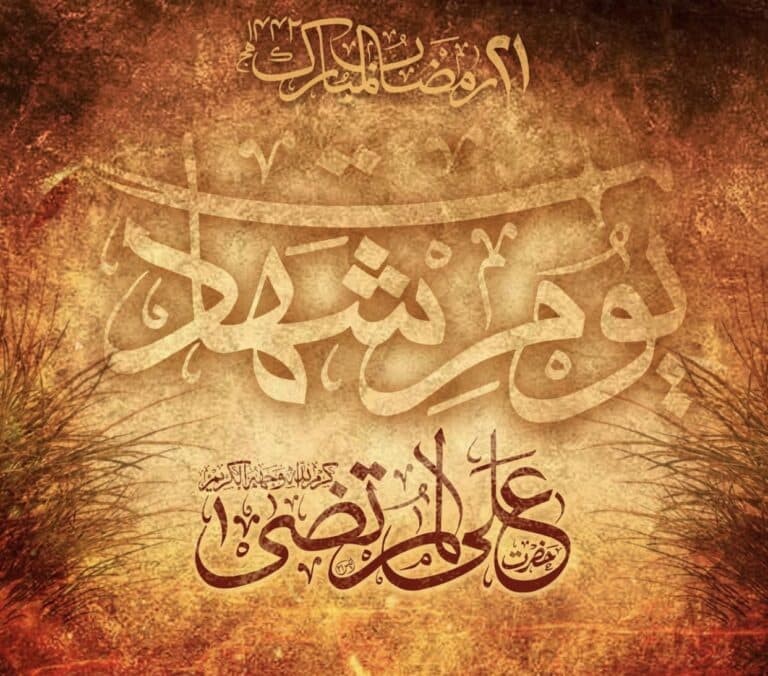
21 Ramadan: Youm-e-Shahadat Hazrat Ali (A.S.)

Wohi Ali (A.S.) jo Babae Hussain (A.S.) the,
Wohi Ali (A.S.) jo Jaan-e-Hasan (A.S.) the,
Wohi Ali (A.S.) jo Fatima (A.S.) ke taaj the,
Wohi Ali (A.S.) jo ilm ki laaj the,
Wohi Ali (A.S.) jo sidq ki pehli gawahi the,
Wohi Ali (A.S.) jo Nabi (S.A.W.) ke bhai the,

Wohi jo Karbala par sabir the,
Wohi jo tashnagi par shakir the,
Wohi jo… jinko dekh dushman larazte the,
Wohi jinki Zulfiqar se kuffar darte the,

Wohi jinke liye Nabi (S.A.W.) ne kaha:
“Ali (A.S.) mujh se hain aur main Ali (A.S.) se hoon.”
Kabhi kaha:
“Main ilm ka shehar hoon aur Ali (A.S.) uska darwaza hai.”
Kabhi faislon ki nobat aaye to yeh farmaya:
“Ali (A.S.), tum sab mein behtareen faisla karne wale ho.”

Ali (A.S.) ka jo Nabi (S.A.W.) se talluq hai,
Jo rooh ko jism se ya sar ko badan se hota hai.
Wohi woh jinko hai izzaz-e-wafa hasil,
Jinke liye Nabi (S.A.W.) ne farmaya:
“Jis ka main mola (madadgar, sarparast) hoon, uska Ali (A.S.) bhi mola hai.”

Wohi jinko bauqat-e-namaz shahadat ka izzaz hua hasil,
Wohi jinhone qaatil ke liye bhi,
Muhabbat mein rehm ka hukam kiya raaij.
Wohi jo sabr-o-wafa, isaar ka paikar the,

Aaj unki shahadat par arwaah par aqeedat hain.
Mere Allah, tu un se raazi aur bhi ho ja,
Humein toh woh shujaat, woh muhabbat,
Ishq-e-Islam ki beqarari de,
Humein unke naqsh-e-pa par taufeeq-e-janbazi de.

By: Naveeda Benish

______________🖤

The Legacy of Hazrat Ali (A.S.) and Iqbal’s Tribute

21st Ramadan: A Day of Reflection on the Martyrdom of Hazrat Ali (A.S)

As the Islamic world observes the 21st day of Ramadan, a day marked by the martyrdom of Hazrat Ali ibn Abi Talib (A.S), the cousin and son-in-law of Prophet Muhammad (PBUH), Muslims around the globe reflect on his life, teachings, and enduring legacy. Known for his unparalleled courage, wisdom, and unwavering commitment to justice, Hazrat Ali remains a towering figure in Islamic history, inspiring generations with his exemplary character.

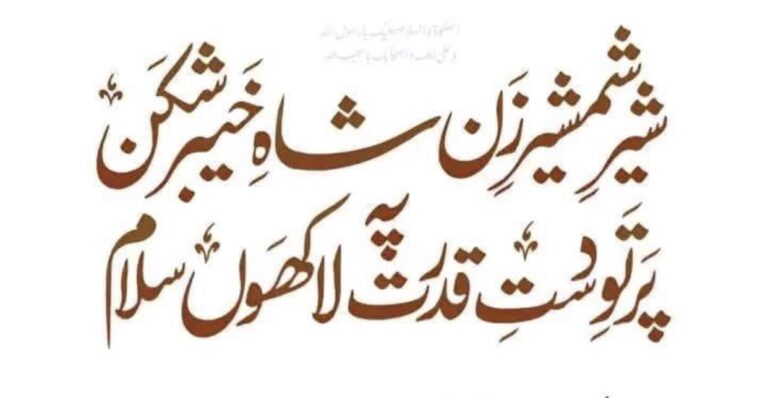
On this solemn occasion, the poetic tribute of Allama Iqbal, one of the most celebrated philosophers and poets of the Muslim world, offers a profound reflection on the spiritual and moral lessons embodied by Hazrat Ali. In his famous Rubai (quatrain), Iqbal invokes a prayer to the Almighty, seeking divine blessings for humanity:

“Dilon ko markaz-e-mehr-o-wafa kar, Hareem-e-kubra se aashna kar. Jise nan-e-jaween bakhshi hai tu ne, Use baazu-e-Haider bhi ata kar.”

(“Make hearts the center of love and loyalty, Acquaint them with the sanctity of the Divine. To those You have granted the bread of barley, Also bestow the strength of Haider’s arm.”)

In these verses, Iqbal eloquently captures the essence of Hazrat Ali’s legacy. He prays for hearts to be filled with love and loyalty, virtues that Hazrat Ali exemplified throughout his life. The reference to “bread of barley” symbolizes the simplicity and humility of those who struggle with limited means, while the “strength of Haider’s arm” alludes to the courage and resilience of Hazrat Ali, who was famously known as Haider (the Lion) for his bravery.

Iqbal’s poetry serves as a reminder that material sustenance alone is insufficient; true empowerment comes from spiritual and moral strength. Hazrat Ali, embodied this balance, combining physical courage with deep spiritual insight and an unwavering commitment to justice. His life offers timeless lessons for individuals and societies striving to uphold principles of equity, compassion, and faith.

Hazrat Ali’s martyrdom on the 21st of Ramadan, 40 AH (661 CE), is a poignant moment in Islamic history. He was struck by a poisoned sword while leading prayers in the mosque of Kufa, an act that underscored his dedication to his faith and his people even in the face of danger. His passing marked the end of an era but left behind a legacy that continues to inspire millions.

Allama Iqbal, a staunch admirer of Hazrat Ali, frequently referenced his virtues in his works. Iqbal saw Hazrat Ali as a symbol of selflessness, courage, and spiritual enlightenment qualities he believed were essential for the revival of the Muslim world. Through his poetry, Iqbal sought to reignite the spirit of Khudi (selfhood) and resilience, drawing inspiration from figures like Hazrat Ali.

As Muslims commemorate the martyrdom of Hazrat Ali this Ramadan, Iqbal’s verses remind us of the enduring relevance of his teachings. In a world grappling with inequality, injustice, and moral decay, the example of Hazrat Ali offers a beacon of hope and guidance. His life reminds us that true strength lies not in material wealth but in faith, courage, and an unwavering commitment to justice.

On this day of reflection, let us draw inspiration from Hazrat Ali’s legacy and strive to embody the values he championed. As Iqbal prayed, may our hearts be filled with love and loyalty, and may we be granted the strength to face life’s challenges with the courage of Haider.

This article is a tribute to Hazrat Ali and Allama Iqbal’s timeless message, written for an international audience to reflect on the spiritual and moral lessons of this significant day in Islamic history.

Starlink Clears Regulatory Hurdles in Pakistan, Poised to Launch Satellite Internet Services

0

Islamabad, Pakistan: In a significant step toward enhancing digital connectivity, Pakistan has granted a No Objection Certificate (NOC) to Starlink, the satellite internet service operated by Elon Musk’s SpaceX.

The approval, issued by the Pakistan Space Activities Regulatory Board, marks a major milestone in the country’s efforts to bridge the digital divide, particularly in remote and underserved regions such as Pakistan-administered Kashmir and Gilgit-Baltistan.

According to official sources, Starlink has successfully fulfilled all regulatory requirements, including clearance from the Ministry of Interior. The Pakistan Telecommunication Authority (PTA) is now expected to issue the final license within the next two weeks, allowing the company to commence operations in the country.

Starlink has already completed three of the four registration stages, having secured approvals from the Securities and Exchange Commission of Pakistan (SECP) and the Pakistan Space Activities Regulatory Board. The final step involves formal registration with the PTA.

The introduction of Starlink’s satellite internet services is expected to revolutionize connectivity in Pakistan, particularly in areas where traditional internet infrastructure has been inadequate or nonexistent.

Regions like Pakistan-administered Kashmir and Gilgit-Baltistan, which have long struggled with poor internet access due to their challenging terrain, stand to benefit significantly.

Starlink’s low-Earth orbit satellite technology promises to deliver high-speed internet to even the most remote locations, enabling access to education, healthcare, e-commerce, and other critical services.

A spokesperson for the PTA confirmed that the authority is currently reviewing Starlink’s technical and business plans to ensure compliance with local regulations. The PTA has also assured that Starlink’s services will not interfere with existing telecommunications networks in the country.

The move is part of Pakistan’s broader strategy to accelerate its digital transformation and improve internet penetration, which currently lags behind in rural and mountainous areas. By leveraging satellite internet technology, Pakistan aims to connect millions of unserved and underserved citizens, fostering economic growth and social development.

Starlink’s entry into the Pakistani market is also being closely watched by other nations facing similar connectivity challenges. If successful, the initiative could serve as a model for deploying satellite internet in geographically difficult regions worldwide.

For the residents of Pakistan-administered Kashmir and Gilgit-Baltistan, Starlink’s arrival represents a long-awaited opportunity to overcome the limitations of traditional internet infrastructure.

Local communities have expressed optimism about the potential benefits, including improved access to online education, telemedicine, and global markets.

As Pakistan prepares to welcome Starlink, the development underscores the growing importance of satellite internet in addressing global connectivity gaps.

With the final regulatory hurdles nearing completion, Starlink is expected to begin operations in Pakistan in the coming weeks, bringing high-speed internet to some of the country’s most isolated regions.

This is a developing story, and further updates will follow as Starlink moves closer to launching its services in Pakistan.