Friday, April 3, 2026
16.2 C
Srinagar
Home Blog Page 101

Body of Kashmiri Youth Recovered in Chinati After Jhelum River Ordeal

0

Chinari, Pakistan administrated Jammu & Kashmir: The body recovered from the Jhelum River in Chinari has been identified as that of a 22-year-old youth from Indian administered Kashmir, police confirmed on Friday.

According to Inspector Raja Yasir Ali Khan, Station House Officer (SHO) of Chinari Police Station, the deceased has been identified as Yasir Hussain, a resident of Uri (Bisgran) in Indian administered Kashmir. The body was found floating in the Jhelum River near Chinari after being carried downstream from the Indian-administered side of Kashmir.

Police sources stated that if the family of the deceased from Indian administered Kashmir contacts the authorities for the handover of the body, all necessary arrangements will be made to repatriate the remains via the Chakothi border crossing.

This development comes amid reports from Jammu and Kashmir News Service that two individuals a young man and a woman had jumped into the Jhelum River in Uri 15 days ago in an apparent suicide attempt. Despite a five-day search operation conducted by the J&K Police, their bodies were not recovered at the time. However, the bodies were recently spotted floating in the river near Uri. Due to the strong current, they were carried downstream and eventually reached Chinari on the Azad Kashmir (Pakistan administrated Kashmir) side of the Line of Control (LoC).

The tragic incident has left the local community in mourning. Authorities are coordinating with relevant parties to ensure the dignified return of the deceased to their families.

The people of Kashmir continue to face immense challenges, and this incident serves as a somber reminder of the ongoing struggles in the region. May the departed soul find eternal peace in Jannat-ul-Firdous, and may the grieving families be granted strength and patience during this difficult time. Ameen.

This is a developing story. Further updates will be provided as more information becomes available.

From Wedding Bells to Battlefield: Kashmiri Officer Martyred in Balochistan

0

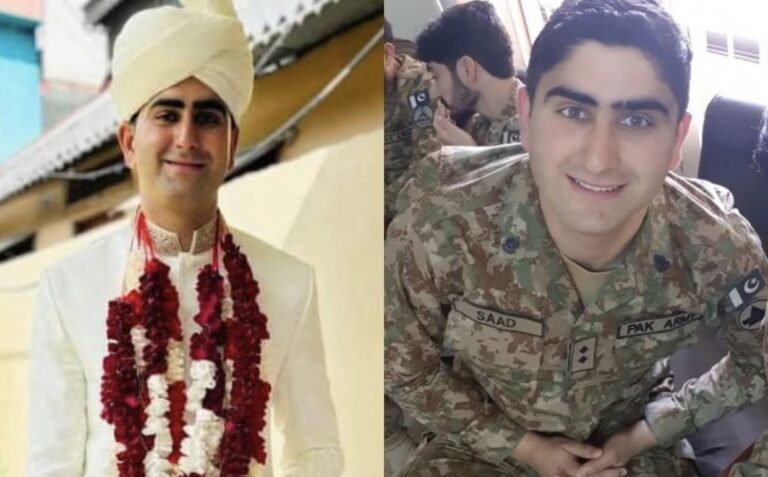
Bagh, Pakistan administrated Kashmir: Major Saad bin Zubair, a young and dedicated officer of the Pakistan Army, was martyred during an encounter with terrorists belonging to the Baloch Liberation Army (BLA) in Balochistan. Major Saad, who hailed from Bagh in Azad Kashmir.

Major Saad bin Zubair was the grandson of a former Deputy Inspector General (DIG) of Bagh, Azad Kashmir, and belonged to a family with a strong legacy of service to the nation. He had recently married in July 2024, making his untimely demise even more heart-wrenching for his family, friends, and colleagues.

The news of his martyrdom has sent shockwaves across Pakistan, particularly in Azad Kashmir, Gilgit-Baltistan, and even in Indian-administered Kashmir, where people have expressed their grief and solidarity with the bereaved family. Social media platforms have been flooded with tributes, with many users mourning the loss of yet another young life in the fight against terrorism.

One social media user poignantly wrote, “Today, another young man has been martyred in someone else’s war. He was a major in the Pakistan Army, and his sacrifice will not be forgotten.” This sentiment reflects the collective sorrow and frustration felt by many who see the ongoing sacrifices of young soldiers as a heavy burden borne by the nation.

Major Saad’s martyrdom highlights the continued challenges faced by Pakistan in its fight against terrorism, particularly in regions like Balochistan, where militant groups remain active. His death is a stark reminder of the sacrifices made by the Kashmiri soldiers to maintain peace and security in the Pakistan.

As the Kashmiri nation mourns the loss of a brave son of Azad Kashmir, tributes continue to pour in from all corners of Kashmir and beyond. Major Saad bin Zubair’s legacy of courage and dedication will undoubtedly inspire future generations.

The funeral prayers for Major Saad are expected to be held in his hometown of Bagh, Azad Kashmir, where he will be laid to rest with full military honors. The Pakistan Army has vowed to continue its mission to eradicate terrorism and ensure that the sacrifices of officers like Major Saad are not in vain.

The Quest for Radiant Skin: Finding the Best Hand and Feet Whitening Cream

0

As the market for the best hand and feet whitening cream continues to grow, consumers are flooded with options promising to brighten and even out skin tone. In a world where skincare is often equated with self-care, the demand for solutions to hyperpigmentation, dark spots, and uneven skin tone has surged particularly for areas like the hands and feet, which endure daily wear and tear. But as the market floods with products claiming miraculous results, consumers are left grappling with questions: Do these creams work? Are they safe? And what separates science-backed solutions from mere marketing hype?

This deep dive into hand and feet whitening creams explores the science of skin brightening, the ingredients that deliver real results, and the ethical considerations surrounding skin-lightening products. Drawing on insights from dermatologists, cosmetic chemists, and cultural experts, we unravel the complexities of this booming industry and empower readers to make informed choices.

The Science Behind Skin Discoloration: Why Hands and Feet Darken

The skin on our hands and feet is uniquely vulnerable to darkening. Unlike the face, which benefits from daily moisturizing and targeted treatments, extremities are often neglected despite constant exposure to environmental stressors. Ultraviolet (UV) radiation is a primary culprit, triggering melanocytes—the cells responsible for producing melanin—to overproduce pigment as a defense mechanism. Over time, this leads to sunspots and a leathery texture.

But UV rays aren’t the only offenders. Mechanical friction—from ill-fitting shoes, manual labor, or even yoga poses can thicken the skin and darken areas like knuckles, heels, and elbows. Hormonal changes, such as those during pregnancy or menopause, may also cause melasma, a condition marked by patchy pigmentation. Add to this the natural aging process, which slows cell turnover and allows dead, discolored cells to accumulate, and it’s clear why hands and feet often show the first signs of skin fatigue.

Skin-lightening is not a new phenomenon. For centuries, cultures across Asia, Africa, and the Middle East have prized fairer skin as a symbol of beauty, status, or purity, driving the use of traditional remedies like turmeric, saffron, and rice water. Today, this cultural preference has merged with modern cosmetic science, creating a global industry projected to reach $677.19bn by 2025, according to market research firm Global Industry Analysts.

However, the conversation around whitening creams is fraught with controversy. Critics argue that these products perpetuate harmful beauty standards and racial biases, while advocates emphasize their role in treating medical conditions like post-inflammatory hyperpigmentation or vitiligo. For many consumers, the goal isn’t to alter their natural skin tone but to address uneven pigmentation caused by external factors. “The key is to differentiate between lightening and brightening,” explains Dr. Anika Patel, a Mumbai-based dermatologist. “Brightening focuses on restoring skin’s natural radiance by exfoliating dead cells and inhibiting excess melanin not changing one’s inherent complexion.”

The Key Ingredients in the Best Hand and Feet Whitening Cream

The efficacy of a whitening cream hinges on its active ingredients. While dozens of compounds claim to reduce pigmentation, only a handful are backed by rigorous science:

  • Kojic Acid: Derived from fungi, this natural ingredient inhibits tyrosinase, the enzyme responsible for melanin production. Studies show it’s effective for treating age spots and sun damage, though it can cause irritation in sensitive skin.
  • Vitamin C (Ascorbic Acid): A potent antioxidant, vitamin C not only brightens skin by blocking melanin synthesis but also boosts collagen production, improving texture and elasticity. Look for stabilized forms like sodium ascorbyl phosphate for better absorption.
  • Niacinamide (Vitamin B3): This multitasking ingredient reduces pigmentation, minimizes pores, and strengthens the skin barrier. It’s gentle enough for daily use and suitable for all skin types.
  • Alpha-Arbutin: A safer alternative to hydroquinone (a controversial depigmenting agent linked to toxicity), alpha-arbutin breaks down melanin clusters without irritating the skin.
  • Licorice Root Extract: Rich in glabridin, this natural extract suppresses UV-induced pigmentation and soothes inflammation, making it ideal for sensitive areas like the hands.

Beware of products containing mercurysteroids, or hydroquinone above 2%—these are banned or restricted in many countries due to risks like ochronosis (blue-black discoloration) and organ damage.

Top 5 Best Hand and Feet Whitening Creams: Customer Reviews and Ratings

If you’re on the hunt for the best hand and feet whitening cream, it’s important to look for products that have been tried and tested by real users. Here, we’ve curated a list of the top 5 whitening creams that not only promise results but also receive rave reviews from customers. These creams are known for their ability to brighten skin, even out pigmentation, and provide long-lasting effects, while keeping your skin healthy and safe.

List of Best Hand and Feet Whitening Cream

No.ProductBest ForKey IngredientsCustomer RatingCustomer Review
1CeraVe Renewing SA CreamRough, dry skin with uneven toneSalicylic Acid, Niacinamide, Ceramides4.5/5 (1,000+ reviews)“This cream has worked wonders for my dry, rough feet! After just a week of use, my feet felt smoother, and the discoloration was noticeably lighter.”
2Kiehl’s Clearly Corrective Dark Spot SolutionDark spots and hyperpigmentationActivated Vitamin C, White Birch Extract, Peony Extract4.7/5 (800+ reviews)“I’ve used several whitening products, but this one really works! The dark spots on my hands faded significantly, and my skin looks more radiant and even.”
3The Ordinary Alpha Arbutin 2% + HASensitive skin, budget-friendlyAlpha Arbutin, Hyaluronic Acid4.6/5 (1,200+ reviews)“I’ve been using The Ordinary Alpha Arbutin for a month, and my feet have never looked better. The skin is lighter, and it feels much smoother. Definitely a great product for the price!”
4Nivea Extra Whitening Cell Repair & UV ProtectEveryday brightening, sun protectionLicorice Extract, Vitamin C, SPF 334.4/5 (900+ reviews)“This cream not only brightens my hands but also protects them from the sun. It’s lightweight, absorbs quickly, and leaves my skin soft and nourished.”
5Neutrogena Rapid Tone Repair Dark Spot CorrectorTargeting dark spots, anti-agingRetinol, Vitamin C, Hyaluronic Acid4.6/5 (1,300+ reviews)“This product is amazing! My dark spots have lightened considerably in just a couple of weeks, and my skin feels smoother and more even.”

The Ethical Dilemma: Balancing Beauty and Health

The dark side of the skin-lightening industry cannot be ignored. In regions like South Asia and West Africa, unregulated creams laced with mercury or clobetasol (a potent steroid) are hawked in markets, promising rapid results but causing horrific side effects—thinning skin, acne, and even adrenal insufficiency. The World Health Organization estimates that 40% of women in China, Malaysia, and the Philippines regularly use skin-lightening products, often unaware of the risks.

This has spurred a push for stricter regulations and safer alternatives. Brands like Kiehl’sThe Ordinary, and CeraVe now offer “brightening” serums free from harmful additives, while indie labels like Beauty of Joseon (South Korea) and Kama Ayurveda (India) harness traditional ingredients like mulberry extract and saffron. “Education is crucial,” says Lagos-based dermatologist Dr. Funmi Adebayo. “Consumers need to understand that healthy skin is beautiful skin, regardless of its shade.”

A Holistic Approach: Beyond Creams

While topical treatments play a role, lasting results require a holistic skincare regimen. Dermatologists emphasize:

  • Sun Protection: Broad-spectrum SPF 50+ is non-negotiable for hands and feet. UV exposure can undo months of brightening efforts.
  • Gentle Exfoliation: Chemical exfoliants like lactic acid or urea slough off dead cells without abrasion, revealing fresher skin underneath.
  • Hydration: Dryness accentuates discoloration. Opt for creams with ceramides or shea butter to lock in moisture.
  • Diet and Lifestyle: Antioxidant-rich foods (berries, leafy greens) and quitting smoking can enhance skin’s natural glow.

For stubborn pigmentation, in-office treatments like chemical peels, laser therapy, or microdermabrasion may be necessary.

How to Choose the Best Hand and Feet Whitening Cream for Your Skin Type

The “best” whitening cream is one that aligns with your skin type, concerns, and ethical values. Clinically proven options include:

  • CeraVe Renewing SA Cream: Combines salicylic acid and niacinamide to exfoliate and brighten rough skin.
  • Kiehls Clearly Corrective Dark Spot Solution: Powered by activated vitamin C and white birch extract.
  • The Inkey List Alpha Arbutin Serum: A budget-friendly option targeting uneven tone.

Always patch-test new products and consult a dermatologist for persistent pigmentation.

The Safety of Whitening Creams: What You Need to Know

As the skincare industry evolves, so does the dialogue around beauty standards. Brands like Fenty Skin and Unsun Cosmetics—founded by women of color—are championing inclusivity, offering products designed for all skin tones without promoting lightening. Meanwhile, social media movements like #MelaninPopping and #DarkSkinPositivity are reshaping perceptions of beauty.

The journey to radiant hands and feet need not come at the cost of health or self-esteem. By prioritizing safe, science-backed solutions and embracing skin’s natural narrative, consumers can achieve a healthy glow that transcends trends—and reflects the true essence of self-care.

Final Thoughts
When choosing the best hand and feet whitening cream, always look for safe, effective ingredients that provide real results. Whitening creams, when used responsibly, can address legitimate skincare concerns. However, their role should be to enhance not erasethe skin’s story. In a world increasingly focused on authenticity, the future of beauty lies not in uniformity, but in celebrating the unique textures and tones that make us human.

Frequently Asked Questions (FAQs)

1. What is the difference between skin lightening and skin brightening?

Answer:
Skin lightening reduces melanin for a lighter complexion, while brightening evens out skin tone and enhances radiance without changing your natural color.

2. Are hand and feet whitening creams safe to use?

Answer:
Yes, if used properly and with safe ingredients. Avoid products with harmful substances like mercury or high steroids.

3. How long will it take to see results from whitening creams?

Answer:
Results typically appear within 2-4 weeks, but more significant improvements may take 6-8 weeks with consistent use.

4. Can whitening creams be used on all skin types?

Answer:
Yes, but choose products suited for your skin type, and always patch-test first to avoid irritation.

5. Is it necessary to use sunscreen with whitening creams?

Answer:
Yes, sunscreen is crucial to protect your skin and maintain results, as whitening creams can increase sensitivity to UV rays.


The Timeless Charm of Urdu Literature: 10 Best Urdu Novels You Must Read

0

Urdu, a language celebrated for its poetic elegance and cultural resonance, has gifted the world a literary legacy that transcends borders. For readers seeking to uncover the soul of South Asia or simply immerse themselves in masterful storytelling, the world of Urdu novels offers an enriching experience like no other. From tales of love and loss to the profound exploration of identity, revolution, and human resilience, these novels present an intimate look into the heart of the subcontinent.

If you’re looking to understand the complexities of South Asian history, its vibrant cultures, or simply want to indulge in beautiful prose, exploring iconic Urdu novels is an invaluable journey. This article takes you through 10 timeless Urdu novels that have left an indelible mark on the literary world, shaping generations of readers. If you are lover of literature or someone new to Urdu fiction, this collection of novels is an invitation to step into a world where emotions run deep, and every story tells a powerful tale of human experience.

Top 10 Urdu Novels at a Glance

Novel TitleAuthorPublication YearKey ThemesSignificance & Legacy
Mirat-ul-UroosNazir Ahmed Dehlvi1869Women’s education, social reformFirst Urdu novel; pioneered didactic fiction advocating for women’s empowerment.
Umrao Jaan AdaMirza Hadi Ruswa1899Courtesan culture, societal hypocrisyIconic portrayal of 19th-century Lucknow; adapted into films, plays, and operas globally.
Aag Ka DaryaQurratulain Hyder1959Partition, identity, time travelLandmark epic compared to García Márquez; redefined post-colonial Urdu literature.
Raja GidhBano Qudsia1981Morality, existentialism, forbidden desireCult classic exploring human psychology through Sufi symbolism.
BastiIntizar Hussain1979Partition trauma, memory, displacementMasterpiece blending Sufi mysticism with modern diaspora narratives.
Manto Ke AfsaneSaadat Hasan Manto1940s-1950sPartition violence, human darknessControversial, bold short stories; global influence on postcolonial literature.
Khuda Ki BastiShaukat Siddiqui1957Urban poverty, corruptionDickensian critique of Karachi’s underclass; remains relevant to modern inequality.
Peer-e-KamilUmera Ahmed2004Spirituality, sectarianism, redemptionBestselling modern novel bridging faith and youth identity; translated worldwide.
Alipur Ka AiliMumtaz Mufti1971Autobiography, satire, self-discoveryHumorous yet poignant memoir challenging societal norms.
Ghulam BaghMirza Athar Baig2007Surrealism, existential absurdityExperimental novel likened to Kafka and Borges; redefined contemporary Urdu fiction.

The Birth of a Literary Tradition: Mirat-ul-Uroos and the Dawn of Urdu Fiction

The story of Urdu novels begins in 1869 with Mirat-ul-Uroos (The Bride’s Mirror) by Nazir Ahmed Dehlvi, a pioneering work often hailed as the first Urdu novel. Written as a didactic tale for women, it challenged societal norms by advocating for female education and critiquing regressive marital practices. Through the contrasting lives of two sisters—Akbari, the spoiled bride, and Asghari, the enlightened heroine—Dehlvi laid the groundwork for Urdu fiction’s enduring focus on social reform. Though rooted in its time, the novel’s themes of empowerment and resilience remain strikingly relevant, offering a blueprint for future writers to blend storytelling with activism.

Umrao Jaan Ada: A Courtesan’s Lament and the Soul of Lucknow

No discussion of Urdu literature is complete without Mirza Hadi Ruswa’s Umrao Jaan Ada (1899), a hauntingly beautiful account of a poetess-courtesan in 19th-century Lucknow. Blurring the lines between fiction and biography, Ruswa’s protagonist recounts her rise from a kidnapped child to a celebrated tawaif (courtesan), navigating a world of artistry, exploitation, and fleeting love. The novel’s lyrical ghazals and vivid portrayal of Nawabi culture immortalize Lucknow’s golden era, while Umrao’s introspective voice—a blend of pride and melancholy—resonates as a timeless critique of societal hypocrisy. Today, the novel stands as a cultural touchstone, adapted into films, plays, and even an opera, cementing its place in global literary consciousness.

Qurratulain Hyder’s Aag Ka Darya: A Cosmic Saga of Love and Displacement

If one novel encapsulates the trauma of Partition and the search for identity, it is Qurratulain Hyder’s Aag Ka Darya (River of Fire). Published in 1959, this genre-defying epic spans 2,500 years, tracing the lives of four souls reincarnated across epochs—from ancient India to post-colonial Pakistan. Hyder’s lush prose and non-linear narrative weave history, philosophy, and myth into a meditation on cultural memory and belonging. The novel’s portrayal of Partition’s devastation—”a river of fire that consumed everything”—is both a lament and a call for unity, making it a cornerstone of modern South Asian literature. Hyder’s work has drawn comparisons to Gabriel García Márquez, earning her accolades as one of Urdu’s most visionary writers.

Bano Qudsia’s Raja Gidh: A Metaphysical Quest into the Human Psyche

In Raja Gidh (The King Vulture), Bano Qudsia crafts a haunting allegory of desire and morality. Set in Lahore’s intellectual circles, the novel follows Seema, a university student entangled in a love triangle that spirals into existential chaos. Qudsia’s use of symbolism—the vulture representing corrupted souls feeding on “forbidden flesh”—elevates the narrative into a philosophical exploration of greed and spiritual decay. Published in 1981, the novel sparked debates for its daring themes and surreal style, solidifying Qudsia’s reputation as a fearless voice in Urdu literature. Its lingering question—“Can the soul survive without ethics?”—continues to haunt readers worldwide.

Intizar Hussain’s Basti: Memory and Migration in a Broken Homeland

The 1947 Partition of India left scars that Urdu literature has relentlessly examined, and Intizar Hussain’s Basti (1979) stands as one of its most poignant reflections. Through Zakir, a man displaced from India to Pakistan, Hussain juxtaposes the tranquility of pre-Partition life with the disorientation of exile. Flashbacks of Zakir’s childhood in the fictional town of Rupnagar collide with the turmoil of 1971 Bangladesh Liberation War, creating a fragmented narrative that mirrors his fractured identity. Hussain’s prose, steeped in Sufi mysticism and folklore, transforms personal grief into a universal tale of rootlessness—a theme echoing global diasporas from Palestine to Syria.

Saadat Hasan Manto: The Unflinching Chronicler of Human Darkness

While Saadat Hasan Manto is renowned for his short stories, his collected works—Manto Ke Afsane—are essential to understanding Urdu’s literary audacity. Manto’s stories, such as Thanda Gosht (Cold Flesh) and Khol Do (Open It), lay bare the horrors of Partition with brutal honesty, confronting taboos around sexuality, violence, and moral decay. His characters—prostitutes, criminals, and refugees—are painted with empathy, challenging readers to see humanity in society’s margins. Banned and prosecuted in his lifetime, Manto’s legacy now shines as a beacon of artistic courage, inspiring writers from Salman Rushdie to Arundhati Roy.

Shaukat Siddiqui’s Khuda Ki Basti: A Raw Portrait of Urban Desperation

In Khuda Ki Basti (God’s Own Land), Shaukat Siddiqui pulls back the curtain on post-independence Karachi’s underbelly. The novel follows Noori, a young man ensnared in poverty, crime, and corruption, as he battles to protect his sister from exploitation. Siddiqui’s unvarnished depiction of systemic inequality—exploitative landlords, apathetic bureaucrats, and a crumbling justice system—reads like a precursor to modern critiques of neoliberalism. First serialized in 1957, the novel’s gritty realism and social urgency earned it comparisons to Dickens, while its call for empathy remains a rallying cry in today’s age of disparity.

Umera Ahmed’s Peer-e-Kamil: Spirituality in a Skeptical Age

Umera Ahmed’s Peer-e-Kamil (The Perfect Mentor, 2004) revolutionized Urdu fiction by bridging spiritual themes with contemporary angst. The story of Imama, a Ahmadi Muslim woman fleeing persecution, and Salar, a cynical genius seeking redemption, tackles faith, sectarianism, and existential doubt. Ahmed’s nuanced portrayal of Islam’s mystical Sufi traditions—rare in popular Urdu fiction—struck a chord with youth grappling with identity in a globalized world. Translated into multiple languages, the novel’s success underscores Urdu literature’s evolving relevance in addressing modern spiritual crises.

Mumtaz Mufti’s Alipur Ka Aili: A Whimsical Memoir of Self-Discovery

Mumtaz Mufti’s Alipur Ka Aili (1971) defies categorization, blending autobiography, satire, and social commentary. The novel chronicles Mufti’s journey from a bureaucrat in British India to a disillusioned writer in Pakistan, peppered with witty anecdotes about his eccentric family and literary peers. His self-deprecating humor and candid reflections on love, failure, and artistic integrity make the novel a relatable ode to human imperfection. Mufti’s legacy as a rebel—he once burned his government job’s files in protest—echoes through every page, reminding readers that literature can be both a mirror and a rebellion.

Mirza Athar Baig’s Ghulam Bagh: A Surrealist Masterpiece for the Modern Age

For those seeking avant-garde fiction, Mirza Athar Baig’s Ghulam Bagh (The Garden of Slaves, 2007) is a revelation. Set in a dystopian Lahore, the novel revolves around a professor’s obsession with a mysterious manuscript that blurs reality and hallucination. Baig’s labyrinthine narrative—filled with Kafkaesque bureaucracy, metaphysical debates, and allegorical decay—critiques modernity’s dehumanizing forces. Dubbed “Urdu’s answer to Borges,” Baig challenges readers to confront existential absurdity, proving that Urdu fiction remains as innovative as ever.

Urdu Novels and the Global Literary Landscape

From Dehlvi’s social realism to Baig’s surrealism, these novels showcase Urdu literature’s remarkable range and adaptability. They have influenced not only South Asian writing but also global narratives on migration, identity, and resistance. Writers like Mohsin Hamid and Kamila Shamsie draw from this heritage, while translators like Daisy Rockwell and Khalid Hasan have brought these works to new audiences.

Why Urdu Literature Deserves a Global Stage
Urdu novels are not relics of the past but living, breathing entities that speak to contemporary global crises xenophobia, inequality, environmental collapse, and the search for meaning. For readers weary of homogenized narratives, these works offer a kaleidoscope of voices, styles, and perspectives.

They challenge us to look beyond borders, to find universality in the particular, and to recognize that the most compelling stories often emerge from the margins. Dive into these 10 iconic Urdu novels, and discover why this rich literary tradition continues to captivate hearts across the world.

SSP Riaz Haider Bukhari Orders Major Police Reshuffle in Capital

0

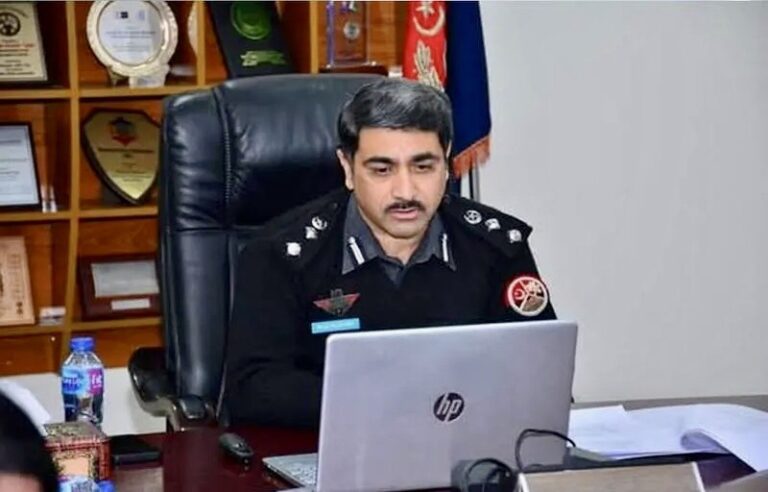
Muzaffarabad, Pakistan administrated Jammu and Kashmir: In a sweeping administrative overhaul, Senior Superintendent of Police (SSP) Muzaffarabad the capital of Pakistan administrated Kashmir Riaz Haider Bukhari has ordered the transfers of 12 senior police officers, including Station House Officers (SHOs), signaling a major shake-up within the region’s law enforcement hierarchy. The move, announced on Friday, has sparked discussions about potential restructuring aimed at improving operational efficiency.

Key Transfers and Postings

According to official notifications issued by the SSP’s office, prominent officers affected by the reshuffle include:

  • Raja Suhail Khan, SHO City Police Station, transferred and replaced by Inspector Ansar Sajjad, who was previously posted at Garhi Dupatta Police Station.
  • Raja Zahid Omar, SHO Civil Secretariat Police Station, reassigned as SHO Garhi Dupatta.
  • Liaquat Hameed, Sub-Inspector (SI) SHO Gohri Police Station, moved to Garhi Dupatta as Additional SHO.
  • Mohsin Ali Awan, SI SHO Chhattar Class Police Station, posted as SHO Khori Police Station.
  • Adeel Akhtar, SI City Police Station, reassigned as SHO Chhattar.

Other notable changes include the transfer of Shaukat Jameel from Muzaffarabad Police Lines to Chhattar Class Police Station and the reassignment of Shafqat Hussain Naqvi, ASI Chowki Officer Abrar Kot, to Phatak Nasirabad.

Restructuring Across Stations

The reshuffle spans multiple police stations and units, with officers rotated across key posts in Muzaffarabad’s City, Civil Secretariat, Jalalabad, and suburban areas. For instance:

  • Shahid-ur-Rehman, SI In-Charge Bat Jalalabad, shifted to Civil Secretariat.
  • Raja Basharat Hussain, SI Civil Secretariat, moved to Bat Jalalabad.
  • Ali Asghar, SI Muzaffarabad Police, posted at City Police Station.

Authorities confirmed that a second phase of transfers targeting Assistant Sub-Inspectors (ASIs) is under preparation, though no timeline has been disclosed.

Context and Reactions

While the SSP’s office has not publicly clarified the reasons behind the abrupt reshuffle, sources within the department suggest it aligns with broader efforts to address administrative challenges, optimize resource allocation, or respond to performance reviews. Such large-scale transfers are uncommon in AJK’s police framework and have drawn mixed reactions.

Critics argue that frequent postings disrupt institutional continuity, while supporters claim fresh appointments can reinvigorate accountability. “Rotation of officers can prevent complacency, but stability is equally vital for community policing,” remarked a retired AJK police official, speaking anonymously.

The reshuffle comes amid heightened public scrutiny of law enforcement in AJK, where security dynamics remain complex due to the region’s geopolitical sensitivities. Observers note that SSP Bukhari, known for his proactive stance, may be positioning the force to tackle emerging challenges, from urban crime to cross-border security concerns.

Azad Kashmir Launches First Electric Cart ServiceKashmir

0

Mirpur, Pakistan administrated Jammu and Kashmir: In a landmark move toward environmental sustainability, Azad Kashmir’s bustling city of Mirpur has launched its first electric cart service, marking the region’s inaugural step into eco-friendly public transportation. The stop-to-stop service, designed to curb carbon emissions and reduce reliance on fossil fuels, promises affordability and convenience for residents amid rising global fuel prices and climate concerns.

A Climate-Conscious Initiative

The electric carts, equipped with solar panels and battery-powered engines, began operating on Monday, offering fixed-route connectivity across key areas of Mirpur. Priced at just PKR 30 for shorter routes (e.g., Kaliyar to Chowk Shaheedan) and PKR 60 for longer stretches (e.g., Kaliyar to Thoothal), the service is significantly cheaper than traditional public transport. Each cart can travel 100–130 kilometers on a single charge, with solar panels providing supplementary power during sunny weather. During overcast conditions, the vehicles automatically switch to battery reserves, ensuring uninterrupted service.

Public Reaction: “A Lifeline for Workers and Commuters”

Residents praised the initiative as both economical and environmentally transformative. “This feels almost free compared to other options. For daily wage workers like us, PKR 30 is a huge relief,” said Mohammad Arif, a laborer who commutes daily between Kaliyar and Chowk Shaheedan. Other commuters highlighted the dual benefits of reduced travel costs and cleaner air. “It’s not just affordable—it’s a breath of fresh air for our city,” remarked college student Ayesha Khan.

Local authorities emphasized the project’s alignment with global climate goals. “Transitioning to electric mobility is critical for regions like ours, which face acute air quality challenges,” said environmental officer Farhan Ahmed. “Solar integration makes this a model for rural and urban areas alike.”

Broader Implications for South Asia

The launch comes as South Asia grapples with climate vulnerabilities, from melting glaciers to extreme weather. Initiatives like Mirpur’s electric carts are seen as vital to achieving this target, particularly in regions where fossil fuel-dependent vehicles dominate.

While electric vehicle (EV) adoption remains slow across Pakistan due to high costs and infrastructure gaps, Mirpur’s project—a collaboration between local entrepreneurs and the AJK Transport Department—offers a scalable blueprint. “If successful, this could inspire similar services in Muzaffarabad, Kotli, and beyond,” said Transport Minister.

Challenges and Future Prospects

Despite enthusiasm, challenges persist. Limited charging stations and reliance on solar energy during monsoon seasons may test the service’s reliability. However, innovators are optimistic. Engineer Saad Malik, part of the cart’s design team, noted, “We’re exploring partnerships to expand charging infrastructure and battery-swapping stations.”

Citizens have urged the government to replicate the model. “Why stop here? Every city needs this,” said shopkeeper Rahimullah Khan, echoing a widely held sentiment.

A Step Toward Greener Horizons

Mirpur’s electric carts symbolize more than just a transportation upgrade—they represent a growing public demand for climate resilience in marginalized regions. As global leaders push for greener economies, Azad Kashmir’s small but significant leap highlights the power of localized solutions in the fight against climate change.

The Azadi Times is an independent news platform covering socio-economic, political, and environmental developments in Kashmir and world.

UKPNP Leader Tania Khan Survives Shooting Attack in Rawalpindi

0

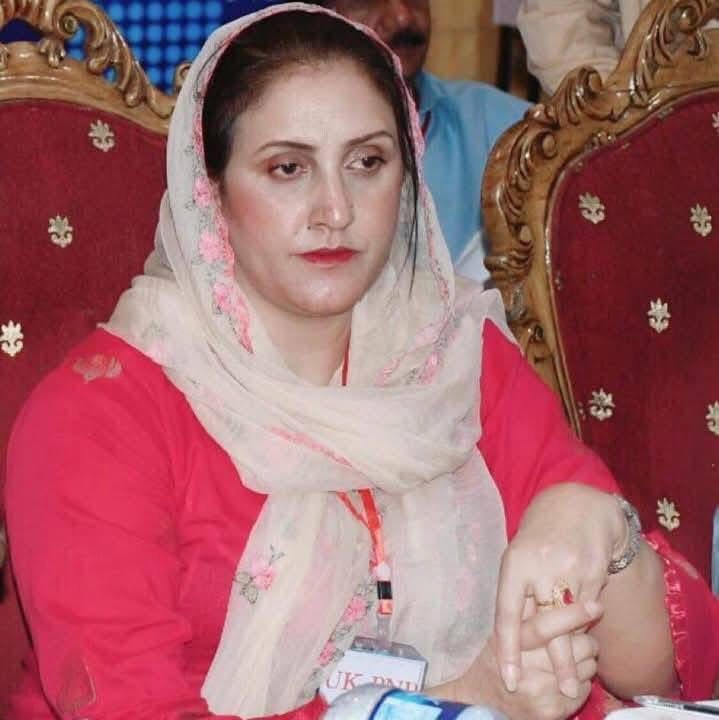
Muzaffarabad, Pakistan administrated Kashmir: Tania Khan, a prominent leader of the United Kashmir People’s National Party (UKPNP), narrowly escaped harm after unidentified assailants opened fire on her parked vehicle in Rawalpindi on Monday. The attack, captured on CCTV footage, occurred near her residence in the New Town area while she was briefly inside a local bakery in Rawalpindi, Pakistan.

Key Details of the Incident

According to Khan’s police complaint, the attackers targeted her car in a parking area, shattering the front windshield with gunfire. She emphasized that she had exited the vehicle moments before the shooting, averting potential injury. CCTV footage reviewed by authorities confirmed the attack, though the perpetrators remain at large.

Khan, a vocal advocate for Kashmiri rights, revealed this was not the first time she had been targeted. In her statement, she cited two prior incidents where her car tires were slashed under suspicious circumstances. “This is a clear attempt to intimidate me and silence my work,” she said, urging Pakistani authorities to guarantee her safety and investigate the attacks.

Political and Human Rights Reactions

The Human Rights Council of Azad Jammu and Kashmir (AJK) condemned the attack, calling it a “brazen act of violence” against a political activist. The group demanded immediate action from Punjab’s provincial government and federal law enforcement agencies to apprehend the culprits and ensure Khan’s protection.

“Such attacks undermine democratic freedoms and the right to dissent,” the council stated, stressing the need for Pakistan to safeguard political and social activists, particularly those from marginalized communities like Kashmiris.

Broader Context

The UKPNP, a political party advocating for the rights of Kashmiris across divided territories, has frequently highlighted threats against its members. Pakistan-administered Kashmir remains a sensitive region, with activists often caught in the crossfire of geopolitical tensions between Pakistan and India.

This incident has reignited concerns about the safety of political dissidents and minority voices in Pakistan, where violence against activists and journalists has drawn international criticism. Human rights organizations have repeatedly urged the government to address impunity for such attacks.

Calls for Accountability

Tania Khan’s case underscores broader challenges faced by Kashmiri leaders operating in Pakistan. While no group has claimed responsibility for the shooting, critics allege a pattern of harassment against those advocating for Kashmiri self-determination or criticizing state policies.

Authorities in Rawalpindi have launched an investigation, but activists demand transparency and swift justice. “If the government fails to act, it sends a dangerous message that violence against dissenters is tolerated,” said a spokesperson for the UKPNP.

International Implications

The attack is likely to draw attention from global human rights watchdogs, particularly amid ongoing scrutiny of Pakistan’s treatment of political minorities. For Kashmir-focused groups, the incident highlights the precarious position of leaders navigating complex geopolitical narratives while advocating for their communities.

The Azadi Times is an independent news platform covering socio-political developments in Kashmir and related regional issues.

J&K Celebrate Birth Anniversary of Imam Hasan ibn Ali

0

SRINAGAR: Muslim communities across Jammu and Kashmir, Ladakh, Gilgit-Baltistan, and parts of Pakistan commemorated the birth anniversary of Imam Hasan ibn Ali (AS), the eldest son of Hazrat Ali (AS) and grandson of Prophet Muhammad (PBUH). This year’s observance saw heightened enthusiasm, with devotees organizing religious gatherings, cultural events, and a flood of social media tributes transcending geopolitical divides.

Imam Hasan (AS), revered for his wisdom and role in Islamic history, holds a special place in Shia tradition. His birth anniversary, marked annually according to the Islamic lunar calendar, brought together followers in Indian-administered Jammu and Kashmir, Ladakh, Pakistani-administered Kashmir, and Gilgit-Baltistan. Despite the region’s political complexities, the day underscored a collective cultural and spiritual identity among Shia communities.

In Gilgit and Srinagar, processions illuminated with green flags and banners quoting Imam Hasan’s teachings wound through streets, while mosques and Imambargahs hosted majlis (religious assemblies) emphasizing peace and justice. Similar scenes unfolded in Kargil and Muzaffarabad, where scholars highlighted Imam Hasan’s legacy of reconciliation.

Social Media

This year, digital engagement added a new dimension to the celebrations. Hashtags like #ImamHasan and #KashmirUnity trended on Twitter, Facebook, and Instagram, with users sharing artwork, historical excerpts, and videos of devotional hymns (nohas). A post by Gilgit-based activist Fatima Zaidi, showcasing intergenerational participation in a local procession, went viral, amassing thousands of likes.

“Social media lets us connect with fellow believers across borders. Today, we’re not divided by boundaries but united by Imam Hasan’s message,” said Arif Hussain, a Srinagar-based student who shared a photo essay on Imam Hasan’s life.

Voices from the Community

Religious leaders emphasized the day’s contemporary relevance. Maulana Syed Ahmed Alvi of Jammu noted, “Imam Hasan’s teachings on patience and dialogue are a beacon for today’s turbulent world.” In Gilgit, scholar Dr. Sabiha Katoch added, “This anniversary reminds us that our faith transcends politics.”

Historical Context and Modern Resonance

Imam Hasan (AS), born in 625 CE, is celebrated for his commitment to preventing bloodshed during early Islamic conflicts. His emphasis on peace resonates deeply in Kashmir, where communities have endured decades of strife. This year’s events also included interfaith dialogues in Ladakh, promoting harmony between Shia Muslims and Buddhist residents.

Faith Beyond Frontiers

As night fell, illuminated shrines and candlelit vigils marked the anniversary’s close. For the Shia communities of Kashmir and beyond, the day was not just a religious observance but a testament to enduring unity in a fractured region. “Our love for the Ahl al-Bayt [Prophet’s family] binds us together, no matter where we live,” said Lahore-based poet Zehra Naqvi, capturing the spirit of a celebration that bridged borders, both physical and digital.

— Reported for The Azadi Times News Network

Jammu and Kashmir Celebrates Foundation Day

0

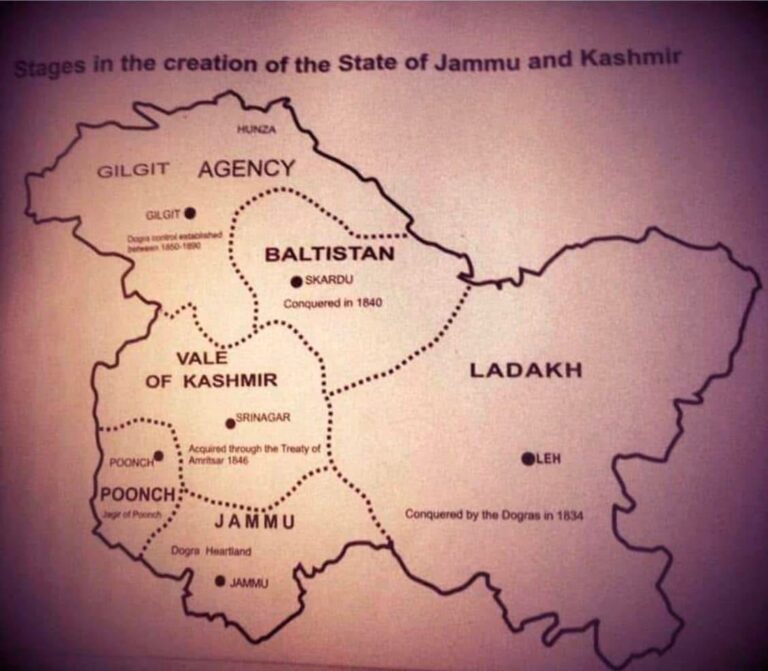
March 16, 2024: Today marks the commemoration of Jammu Kashmir Foundation Day, recalling the historic establishment of the princely state of Jammu and Kashmir on March 16, 1846. The day holds profound significance for residents of the region, as well as the global Kashmiri diaspora, who reflect on its complex history, cultural heritage, and ongoing political discourse.

Historical Context

On this day in 1846, the Treaty of Amritsar was signed between the British East India Company and Maharaja Gulab Singh of Jammu, formalizing the transfer of Kashmir Valley and surrounding territories to the Dogra dynasty for 7.5 million Nanakshahee rupees. This treaty laid the foundation for the princely state of Jammu and Kashmir, a geopolitical entity that would shape the region’s identity for centuries. While some view the day as a marker of administrative unity, others associate it with the colonial-era power dynamics that continue to influence Kashmir’s contested status.

Celebrations and Contested Narratives

Across Jammu and Kashmir, residents marked the day with mixed emotions. Many took to social media platforms like Facebook and Twitter to share nostalgic posts, historical photos, and messages celebrating the region’s cultural legacy. Local events, including seminars, cultural exhibitions, and traditional music performances, highlighted Kashmir’s rich heritage.

However, the occasion also reignited debates about identity and self-determination, with some groups framing it as a reminder of historical grievances and unresolved political aspirations.

In Srinagar and Jammu, government-led functions emphasized the region’s integration with India, while civil society organizations hosted discussions on Kashmir’s historical autonomy. Meanwhile, the Kashmiri diaspora in countries like the UK, US, and Canada organized virtual gatherings, underscoring the global connection to this pivotal date.

Voices from the Ground

“Today is a day to remember our shared history, but also to reflect on the struggles that persist. For some, it’s a celebration; for others, a call to reclaim agency,” said Ayesha Khan, a Srinagar-based academic. On social media, user @Arifurfi shared archival images of 19th-century Kashmir with the caption: “1846 – A turning point that still defines us.”

Political Dimensions

The commemoration comes amid heightened sensitivities following the Indian government’s 2019 decision to revoke Jammu and Kashmir’s special constitutional status and bifurcate the state into two union territories.

Proponents of the move argue it integrates the region more closely with India, while critics label it an erosion of Kashmiri identity. International observers, including human rights groups, continue to monitor developments in the region, urging dialogue to address longstanding disputes.

Global Kashmiri Response

For the international Kashmiri community, Foundation Day serves as a moment to reaffirm cultural pride and advocate for peaceful resolutions. “Our history is not just about borders—it’s about people, art, and resilience,” remarked London-based activist Zubair Mir.

As Jammu and Kashmir observes Foundation Day, the occasion underscores the interplay of history, identity, and politics. While celebrations highlight unity and cultural vibrancy, they also reveal the layered narratives of a region seeking to reconcile its past with aspirations for the future. For now, the day remains a poignant reminder of Kashmir’s enduring quest for peace, dignity, and self-expression.

Police Brutality in Mirpur: Tailors Protesting Price Hikes Subjected to Violent Crackdown

    0

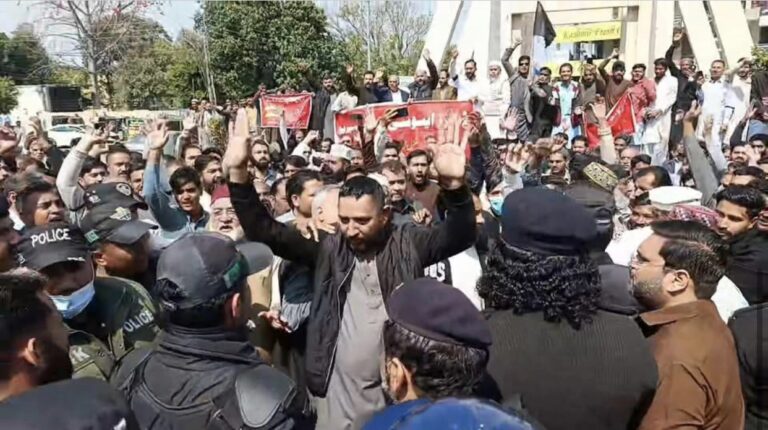
    Mirpur, Azad Kashmir: Azad Kashmir police brutally assaulted dozens of young civilians, including protesters, traders, and journalists, during a protest against rising tailoring costs in Mirpur. The incident, which took place at Chowk Shaheedan, the central place of the Mirpur city has sparked widespread outrage and calls for accountability.

    The protest, organized by local tailors demanding fair pricing for sewing services, turned chaotic when police resorted to baton charges, kicks, and punches to disperse the crowd. Eyewitnesses reported that the police showed no restraint, targeting even elderly citizens and unarmed protesters. A video circulating on social media shows a defenseless protester being violently beaten by police officers instead of being lawfully arrested.

    The violence did not spare traders’ representatives and journalists covering the event, raising concerns about press freedom and the safety of civilians in the region. The incident has drawn sharp criticism from human rights activists and local leaders, who have condemned the administration’s heavy-handed approach.

    In response to the crackdown, the Awami Action Committee Mirpur has issued a stern ultimatum to the local administration. The committee has demanded the immediate release of all detained protesters and the filing of First Information Reports (FIRs) against the officers responsible for the violence. They have set a 4 PM deadline, warning that if their demands are not met, a massive protest will be held at Chowk Shaheedan.

    The situation in Mirpur remains tense as residents await the administration’s response. The use of excessive force against peaceful protesters has reignited debates about governance and human rights in Azad Kashmir, with many calling for an independent investigation into the incident.