Tuesday, March 31, 2026
14.8 C
Srinagar
Home Blog Page 115

Mirpur Scandal: 7 Companies Import Over Rs. 100 Billion Worth of Oil Under Tax Exemptions, Causing Billions in Loss to National Treasury

    0

    Mirpur: According to official documents from the Azad Jammu and Kashmir (AJK) government, seven oil and ghee manufacturing companies based in Mirpur, a southern district of AJK, allegedly imported crude oil worth approximately Rs. 110 billion under tax exemption schemes. However, a significant portion of this oil never reached AJK and was instead illegally sold in Pakistan’s open markets, causing massive losses to the national treasury.

    Details of the Scandal

    The documents reveal that one company imported crude oil worth over Rs. 27 billion between 2022 and 2023, while another imported edible oil worth more than Rs. 20 billion during 2021-2022. A third company imported crude edible oil worth Rs. 20 billion, and a fourth imported crude oil worth over Rs. 3 billion in 2021-2022 and Rs. 7 billion in 2022-2023. Another company imported oil worth over Rs. 4 billion, while a sixth imported edible oil worth more than Rs. 11 billion between 2017 and 2022. Records for a seventh company were unavailable.

    Most of these companies were registered in AJK between 2014 and 2018, with the majority established in or after 2018.

    Tax Exemptions and Legal Loopholes

    Under Section D-65 of the Income Tax Ordinance 2001, manufacturing companies in AJK were eligible for a 100% income tax credit for the first five years of operation. This provision was abolished by the AJK government in 2021 but reinstated by the federal government for companies established before June 30, 2022.

    Additionally, a 1995 AJK government notification allows manufacturing companies registered in AJK to claim an 18% sales tax exemption for the first five years. However, this exemption applies only if the crude oil is processed and packaged in AJK before being sold in the market.

    Allegations of Misuse

    Official documents suggest that most of these companies lack the required production capacity, and there is no record of large-scale oil and ghee transportation at excise checkpoints. Some companies reportedly registered as manufacturers solely to exploit tax exemptions, while their actual operations were minimal or nonexistent in AJK.

    Instead of processing the oil in AJK, these companies allegedly sold the bulk of the imported crude oil in open markets across Pakistan, bypassing tax obligations. Documents also indicate that some companies misrepresented themselves as manufacturers to avoid higher taxes applicable to commercial importers.

    Investigations and Legal Challenges

    To address the issue, the AJK government formed a fact-finding committee on January 15, 2024, chaired by Commissioner Inland Revenue North Zone Ishtiaq Ahmed. The committee was tasked with investigating 17 key points, including verifying the companies’ manufacturing status, obtaining import details from Pakistan Customs, and inspecting production facilities.

    However, before the committee could begin its work, one of the companies obtained a stay order from the High Court, effectively halting the investigation. Analysts suggest that the stay order may be a strategic move to delay or prevent the fact-finding process.

    Economic Impact

    The tax exemption scheme was designed to promote investment and create employment opportunities in AJK. However, officials and analysts argue that most companies registered in AJK only to exploit tax benefits without contributing to the local economy. As a result, neither investment nor employment opportunities materialized, while Pakistan and AJK suffered significant tax revenue losses.

    This scandal highlights systemic flaws in tax exemption policies and their exploitation by businesses. The AJK government’s failure to enforce regulations has allowed companies to misuse tax benefits, causing billions in losses to the national treasury. The ongoing legal battle and stalled investigation further complicate efforts to hold those responsible accountable.

    Protests Erupt in Leepa Valley Against Prolonged Load-Shedding

    0

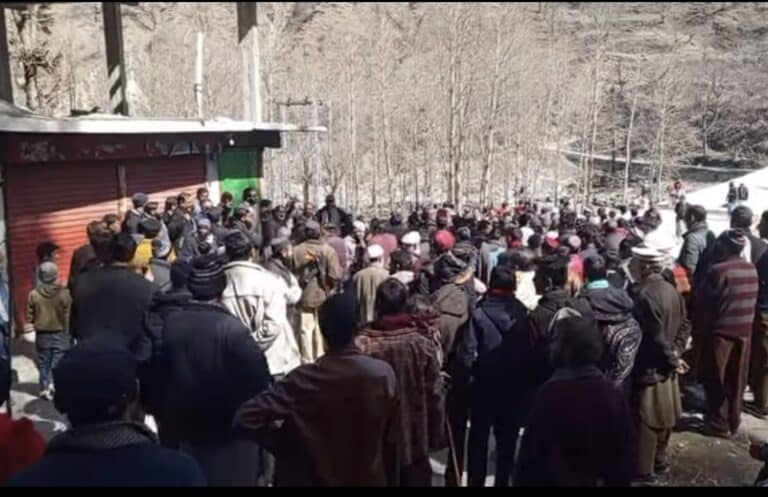
    Leepa Valley (Special Correspondent): Residents of Union Council Bunha Moola in Leepa Valley took to the streets in protest against prolonged electricity load-shedding. The protestors demanded uninterrupted power supply and an end to unscheduled power outages, which have severely disrupted daily life in the region.

    The protest comes as load-shedding durations have increased significantly, leaving residents frustrated and struggling to cope with the lack of electricity. Demonstrators called on the authorities to ensure a consistent and reliable power supply, emphasizing the hardships caused by frequent and unannounced power cuts.

    In response to the public outcry, elected local representatives visited the Kapa Bunha Moola Power House. They held meetings with the Deputy Director of the Power Distribution Office (PDO) and the Resident Engineer to discuss the ongoing issues. During the talks, the representatives highlighted the public’s grievances and explored potential measures to improve the electricity supply.

    Following the discussions, the local representatives and PDO officials assured Kashmir Digital that immediate steps would be taken to address the complaints. They promised practical measures to improve the power situation and restore normalcy in the region.

    The protests underscore the growing frustration among residents over the persistent electricity crisis, which has impacted households, businesses, and daily activities. The authorities’ commitment to resolving the issue will be closely monitored by the community, which is eager to see tangible improvements.

    Dry but Freezing Weather Persists in Azad Kashmir

    0

    Muzaffarabad, February 25, 2025 – After days of continuous rain and snowfall, the weather in Azad Kashmir has turned dry but remains bitterly cold. While snowfall has ceased in higher mountainous regions, a sharp drop in temperatures has been recorded due to icy winds.

    According to the Meteorological Department, the temperature in Muzaffarabad is expected to hover around 10°C during the day and drop to 4°C at night. The Leepa Valley recorded the coldest temperatures, with daytime temperatures at 3°C and nighttime temperatures plunging to -3°C. Pir Chinasi is also experiencing freezing conditions, with daytime temperatures at 1°C and nighttime temperatures dropping to -4°C.

    In Neelum Valley, cold winds are blowing after recent snowfall, with temperatures expected to remain at 4°C during the day and -2°C at night. In Bagh, daytime temperatures are forecasted at 9°C, dropping to 2°C at night. Rawalakot is also experiencing intense cold, with daytime temperatures at 8°C and nighttime temperatures at 3°C.

    Following the snowfall, several tourist routes remain closed, and authorities are working to clear them. Roads leading to Pir Chinasi, Leepa Valley, Neelum Valley, and Makra Peak are still affected by landslides and snow accumulation. Tourists have been advised to avoid unnecessary travel and check road conditions before embarking on any journeys.

    Power outages and network disruptions have been reported in several areas after the rain and snowfall. Officials stated that restoration work is underway in Hattian Bala, Neelum Valley, Kotli, and other affected regions, with full recovery expected soon.

    The Meteorological Department predicts that the weather in most parts of Azad Kashmir will remain dry but intensely cold over the next 24 hours. No further rain or snowfall is expected, but the freezing conditions are likely to persist.

    Gilgit Faces Severe Power Crisis: Only 1.5 Hours of Electricity Daily, New Load-Shedding Schedule Announced

    0

    Gilgit, February 25, 2025 – The city of Gilgit is grappling with an unprecedented power crisis as load-shedding has exceeded 20 hours a day. The Water and Power Department has issued a new load management program, revealing that residents will receive only 1.5 hours of electricity during the day and 2 hours at night.

    According to the newly released schedule, over a three-day cycle, residents will receive a total of 4.25 hours of electricity in the first two days and 3.5 hours on the third day. The department also warned that the schedule could be further affected by technical faults or overloading, which may add an additional 20 minutes to the power outages.

    The extended load-shedding has left the city in distress, with businesses, students, and daily life severely impacted. Markets have become deserted, and small-scale industries have shut down, leading to a rise in unemployment. Students are struggling to complete their homework, let alone focus on their studies, while shopkeepers face skyrocketing expenses due to reliance on generators to keep their businesses running.

    The power crisis has exacerbated the challenges faced by residents already burdened by inflation and economic instability. Government promises of improved infrastructure and reliable electricity have proven hollow, leaving the public frustrated and disillusioned.

    As the city plunges into darkness for most of the day, residents are calling for immediate action from the authorities to address the crisis. The prolonged power outages have not only disrupted daily life but also threatened the livelihoods of thousands, pushing the community to the brink of despair.

    Stay tuned for updates on this developing situation.

    Negotiations Fail, Long March Announced: Diamer Bhasha Dam Affected Communities Demand Justice

    0

    Chilas, February 25, 2025 – Talks between the government and representatives of the Diamer Bhasha Dam affected communities ended without resolution on Sunday, prompting the affected communities to announce a long march towards Chilas. The decision came after a high-level meeting between Federal Minister for Kashmir and Gilgit-Baltistan Affairs, Amir Muqam, and the protest committee failed to reach an agreement.

    Federal Minister Amir Muqam arrived in Chilas on Sunday to negotiate with the affected communities, accompanied by federal secretaries and WAPDA officials. He was warmly welcomed by Provincial Minister for Agriculture Engineer Muhammad Anwar and Gilgit-Baltistan Assembly member Iqbal Naseer, who presented him with traditional gifts. The negotiations, held at the Chilas University Campus, were attended by Gilgit-Baltistan Chief Minister Haji Gulbar Khan, provincial ministers, and administrative officials.

    During the talks, the affected communities presented a list of 31 demands, which they claim have widespread public support. However, Federal Minister Amir Muqam stated that while the demands were legitimate, he did not have the authority to address them unilaterally. He urged the protesters to form a small committee and temporarily end their sit-in, promising further discussions to resolve their grievances.

    Amir Muqam emphasized the government’s commitment to the development of Gilgit-Baltistan, highlighting a 30% increase in allocated funds compared to the previous year. He also mentioned Prime Minister Shehbaz Sharif’s announcement of Danish Schools, set to be inaugurated after Eid.

    However, the affected communities rejected the minister’s assurances. Maulana Hazratullah, the chief patron of the Dam Affected Committee, read out the 31 demands and expressed disappointment over the government’s refusal to accept even a single demand. “The people stand firmly behind these 31 points, and we demand a written agreement and implementation. But unfortunately, the government is not ready to accept any of our demands,” he said.

    Frustrated by the lack of progress, protesters began chanting slogans against WAPDA and the government, forcing the federal minister to leave the venue without having lunch. Following his departure, thousands of protesters marched from the university campus to the sit-in site, where a large rally was held. The crowd chanted slogans against the federal minister, the provincial government, the Deputy Commissioner of Diamer, and the Commissioner of Diamer.

    Addressing the rally, Maulana Hazratullah, Maulana Abdul Malik, Maulana Aftab, Maulana Najeeb, and other leaders called on the people of Baltistan, Gilgit, and Nagar to join the long march towards Chilas. They urged residents of all valleys in Diamer to pack their belongings and head to Chilas, declaring the start of a decisive phase in their struggle.

    “These people do not listen to reason. Now, we will take our rights by force. When all of Gilgit-Baltistan gathers in Chilas, their hearts will tremble. They will have no choice but to give us what we deserve,” Maulana Hazratullah declared.

    The protestors have vowed to continue their sit-in and escalate their movement until their demands are met. The call for a long march has galvanized support across the region, with thousands expected to join the movement in the coming days.

    The Diamer Bhasha Dam, a mega-development project, has displaced thousands of families, leading to widespread discontent over inadequate compensation and resettlement. The affected communities are demanding fair compensation, land ownership rights, and improved infrastructure, among other grievances.

    As tensions rise, the government faces mounting pressure to address the concerns of the affected communities and prevent further escalation of the crisis.

    Stay tuned for updates on this developing story.

    Why the Fear of the Kashmir Flag? Attempt to Suppress Kashmiri Fans’ Emotions at Rawalpindi Stadium

      0

      Rawalakot: Yesterday day during a champions trophy cricket match at Rawalpindi Stadium, Kashmiri fans were prevented from expressing their emotions. The Kashmir flag, a symbol of the rights, identity, and struggle of the Kashmiri people, was banned from being waved. This move is being seen as yet another attempt to suppress the emotions and aspirations for freedom of the Kashmiri people.

      Throughout history, attempts to suppress the love, emotions, and desire for freedom of the Kashmiri people through force have consistently failed. The incident at Rawalpindi Stadium today reflects the hollow claims of keeping sports separate from politics. If waving a flag becomes a crime, then the claims of freedom and democracy lose their meaning.

      This attitude is nothing but a failed attempt to silence the voices of Kashmiris. However, it must be remembered that emotions cannot be imprisoned within walls. The love and attachment in the hearts of the Kashmiri people cannot be erased by any force.

      Instead of promoting hatred, we must foster love. Instead of suppressing, we must have the courage to listen.

      RightsMovementAJK #AzadKashmir #SaveKashmir #Kashmir #Pakistan #JammuKashmir #Kashmiriyat #UnitedNationsHumanRights #AJKRightsMovement #HumanRights #Awareness #India #IndVsPak #AJK #Rawalpindi #ChampionsTrophy2025 #RaiseYourVoice #KashmirSolidarity #FreedomForKashmir

      Earthquake of 4.3 Magnitude Jolts Muzaffarabad and Surrounding Areas in Azad Kashmir

      0

      Tremors Felt Across Muzaffarabad, Hattian, Chikar, and Other Regions; No Immediate Reports of Casualties or Damage


      Muzaffarabad, February 24, 2025:Residents of Muzaffarabad and several other areas in Azad Kashmir experienced tremors on Monday as a 4.3 magnitude earthquake struck the region. The quake, which originated at a depth of 12 kilometers, sent shockwaves through towns and villages, including Hattian, Chikar, Chakothi, Gojra Bandi, Chikkar, Khilana, and Dhirkot.

      According to the Seismic Monitoring Center, the epicenter of the earthquake was located 16 kilometers northeast of Kohala. Despite the intensity of the tremors, there have been no immediate reports of casualties or significant property damage.

      Tremors Felt Across Multiple Regions

      The earthquake, which occurred in the early hours of the day, was felt strongly in Muzaffarabad, the capital of Azad Kashmir, and its surrounding areas. Residents in Hattian, Chikar, Chakothi, and other nearby towns reported feeling the ground shake, prompting many to rush out of their homes in panic.

      “It was a sudden jolt, and everything started shaking. We immediately ran outside,” said Farooq Ahmed, a resident of Muzaffarabad. “Thankfully, everything seems fine now, but it was a scary experience.”

      Authorities on Alert

      Local authorities and disaster management teams have been put on high alert to monitor the situation and respond to any emergencies. So far, no damage to infrastructure or loss of life has been reported. However, officials are conducting surveys in the affected areas to assess the impact of the quake.

      “We are closely monitoring the situation and have teams on the ground to ensure the safety of residents,” said a spokesperson for the Azad Kashmir Disaster Management Authority. “We urge people to remain calm and report any damages or emergencies to the authorities immediately.”

      A Region Prone to Earthquakes

      Azad Kashmir, located in a seismically active zone, has a history of devastating earthquakes. The 2005 Kashmir earthquake, which measured 7.6 on the Richter scale, claimed thousands of lives and caused widespread destruction in the region. Since then, authorities have emphasized the importance of preparedness and resilient infrastructure to mitigate the impact of future quakes.

      Residents Urged to Stay Vigilant

      While Monday’s earthquake did not result in significant damage, experts warn that aftershocks could follow. Residents are advised to stay vigilant and follow safety protocols in the event of further tremors.

      “Earthquakes are unpredictable, and it’s crucial for people to be prepared,” said Dr. Asma Khan, a seismologist. “Having an emergency kit, knowing evacuation routes, and staying informed can make a significant difference during such events.”

      As the region recovers from the tremors, the incident serves as a reminder of the importance of disaster preparedness in earthquake-prone areas like Azad Kashmir. Authorities continue to monitor the situation, while residents remain hopeful that the region will remain safe from further seismic activity.

      For now, the people of Muzaffarabad and surrounding areas are breathing a sigh of relief, grateful that this earthquake passed without causing harm.

      This is a developing story. Updates will be provided as more information becomes available.

      Kashmiris Rally Behind Australia in India-Pakistan T20 Clash: A Defiant Assertion of Identity

      0

      Muzaffarabad: In a striking departure from decades of tradition, Kashmiris across social media platforms are vocally supporting the Australian cricket team in the highly anticipated India-Pakistan T20 World Cup match being played in the United Arab Emirates. This unexpected shift in allegiance, replacing historical support for Pakistan, underscores a growing assertion of Kashmiri identity and resistance to geopolitical narratives imposed by both India and Pakistan.

      Historical Context: From “Kashmir Banega Pakistan” to “Free Kashmir”

      For decades, cricket matches between India and Pakistan served as a proxy battleground for Kashmiris, with most rallying behind Pakistan. The slogan “Kashmir Banega Pakistan” (Kashmir will become Pakistan) echoed in stadiums and streets, reflecting cultural and religious affinities. However, the rise of indigenous movements for self-determination, particularly after the 2019 revocation of Jammu and Kashmir’s semi-autonomous status by India, has reshaped public sentiment.

      The legacy of Yasin Malik, the incarcerated chief of the Jammu Kashmir Liberation Front (JKLF), who advocates for an independent Kashmir “free from Indian and Pakistani occupation,” has galvanized a new generation. Young Kashmiris now increasingly reject binary loyalties, instead embracing a distinct Kashmiri identity.

      Social Media Sparks a New Narrative

      The trend gained momentum when Israr Ahmad, a prominent social media voice from Azad Kashmir, urged Kashmiris to support Australia, citing the presence of Kashmiri-origin players in the Australian squad. His post, shared widely across platforms, declared: “Our loyalty lies with those who respect our struggle. Today, we stand with Australia.”

      Hashtags like #KashmirisWithAustralia and #WeAreNotYourProxy have trended locally, with users sharing memes, videos, and posters of Australian players. “Cricket isn’t just a game here it’s politics. By supporting Australia, we’re rejecting both India’s oppression and Pakistan’s exploitation of our cause,” wrote one user from Srinagar.

      Geopolitical Implications

      Analysts view this shift as symbolic of broader aspirations. “Kashmiris are no longer willing to be pawns in the India-Pakistan rivalry,” said Ali Rehman, a political commentator based in Muzaffarabad. “This isn’t about cricket; it’s about asserting agency in a conflict where our voices are routinely sidelined.”

      The move has drawn mixed reactions. Pakistani media outlets have downplayed the trend, while Indian commentators have seized on it to critique Pakistan’s “failing narrative” in Kashmir. Meanwhile, Australian cricket fans remain largely unaware of their unexpected support base in the Himalayas.

      A Generation Redefining Identity

      For younger Kashmiris, the stance reflects a break from the past. “Our parents supported Pakistan out of habit, but we’ve seen how both nations use our suffering for their agendas. We’re Kashmiris first,” said Aisha Bhat, a 24-year-old student from Pulwama.

      The trend also highlights the diaspora’s influence. Kashmiri expatriates in Europe and North America have amplified the campaign, framing it as part of a global call for self-determination.

      The Bigger Picture

      As the T20 World Cup unfolds, the Dubai match has inadvertently become a metaphor for Kashmir’s resistance. While cricket diplomacy often thawed India-Pakistan tensions in the past, Kashmiris are rewriting the script using the sport to challenge geopolitical binaries and demand recognition.

      “This isn’t a rejection of cricket’s spirit,” tweeted activist Idris Wani. “It’s a rejection of being erased. Today, the world will see Kashmir exists beyond India and Pakistan.”

      About Us
      The Azadi Times is an independent news platform committed to amplifying underrepresented voices in Jammu and Kashmir. We report without allegiance to state or corporate interests.

      Hamas Releases 6 Israeli Hostages Under Ceasefire; Shocking Gesture of Kissing Fighters’ Foreheads Goes Viral

      0


      Hamas released six Israeli hostages today as part of a ceasefire agreement, handing them over to the Red Cross. The release, however, was marked by an unexpected moment that has since gone viral globally.

      The Viral Gesture

      According to international media reports, one of the freed Israeli hostages was seen kissing the foreheads of Hamas fighters standing nearby. The hostages also waved and thanked their captors as they walked free. Notably, all released hostages appeared to be in good physical health.

      Claims of Humane Treatment by Hamas

      The Israeli hostages later stated that they were provided with adequate food, medicine, and medical care during their captivity. Their gesture of gratitude, including the viral forehead kiss, has been interpreted by some as a reflection of Hamas’s “humane compassion” and “dignified treatment” toward them.

      Stark Contrast: Palestinian Prisoners’ Condition

      In contrast, Palestinian prisoners released by Israel under the same ceasefire deal were reported to be in dire condition. Witnesses and rights groups allege that these detainees faced severe third-degree torture in Israeli jails, with many surviving on minimal rations of bread and water. Visuals showed the Palestinian prisoners appearing emaciated and traumatized.

      Context of the Ceasefire

      The prisoner exchange comes amid ongoing tensions between Israel and Gaza, with the ceasefire brokered to de-escalate recent violence. While Hamas has framed the hostages’ release as a gesture of goodwill, Israeli authorities have yet to officially comment on the viral video or the claims of humane treatment.

      Modi Government Seizes 668 Islamic Books in Kashmir, Sparking Outcry Over “Attack on Intellectual Freedom”

      0

      Srinagar, Indian-Administered Kashmir: In a move critics are calling an escalation of its crackdown on dissent, the Indian government led by Prime Minister Narendra Modi has confiscated 668 Islamic books from bookstores across Jammu Kashmir, reigniting debates over freedom of expression and minority rights in the restive region.

      The Raids and Rationale
      Officials from Jammu and Kashmir’s police force conducted raids on multiple bookshops this week, seizing publications linked to Maktaba Islami Publishers, a Delhi-based publishing house associated with Jamaat-e-Islami Hind (JIH), an Islamic organization banned by the Modi government in 2019. Authorities claimed the books were “unauthorized” and tied to a “banned outfit,” though JIH leaders insist the publications were legally printed and distributed.

      “These books are educational and ideological, covering Islamic theology, history, and social issues. They were approved for sale nationwide, including in Kashmir,” said a JIH spokesperson. “This seizure is not about law—it’s about erasing our intellectual legacy.”

      Condemnation from Civil and Religious Leaders
      The action has drawn fierce backlash from Kashmiri leaders and civil society. Mirwaiz Umar Farooq, a prominent religious leader and chairperson of the Hurriyat Conference, condemned the raids as “absurd and undemocratic,” accusing the government of “strangling the right to think, read, and grow.”

      “Targeting books is a direct assault on the conscience of a society. It exposes the hypocrisy of a regime that claims to champion democracy while criminalizing knowledge,” Mirwaiz stated.

      Jamaat-e-Islami Hind, which has long denied allegations of extremism, argued the crackdown aligns with the BJP-led government’s broader agenda to marginalize Muslim voices. “First, they banned our organization. Now, they’re burning our books. This is fascism disguised as policy,” a senior JIH member told Kashmir Voice.

      Legal and Ethical Concerns
      Legal experts have questioned the seizures’ constitutionality, noting that India’s Supreme Court has historically upheld the freedom of speech as a fundamental right. “Unless the books explicitly incite violence, their ban violates constitutional principles,” said Aparna Gupta, a Delhi-based human rights lawyer. “This sets a dangerous precedent for censorship.”

      The move follows a pattern of restrictive measures in Kashmir since the abrogation of Article 370 in 2019, which stripped the region of its semi-autonomous status. Over 1,000 political detainees, internet shutdowns, and stringent media controls have drawn international condemnation, with critics accusing New Delhi of “colonizing Kashmir’s mind and land.”

      Global Reactions and Implications
      Human rights organizations, including Amnesty International and the UN Special Rapporteur on Freedom of Expression, have raised alarms over India’s shrinking democratic space. “Suppressing literature under vague pretexts is textbook authoritarianism,” said a Geneva-based advocacy group.

      The BJP has defended the seizures, claiming they prevent “radicalization.” However, Kashmiri scholars argue the policy reflects anti-Muslim bias. “They want to erase our identity—first our autonomy, now our books,” said academic Dr. Sameer Hussain. “This isn’t about security; it’s about silencing us.”

      A Call to Action
      As tensions simmer, civil society groups are urging global stakeholders to pressure India to uphold intellectual freedoms. “The world cannot stay silent while Kashmir’s libraries turn into graveyards of thought,” said activist Zainab Akhtar.

      The confiscation of Islamic books marks a new front in Kashmir’s struggle for cultural and political survival. With dissent increasingly criminalized, the region’s Muslims face a stark choice: conform or resist. For now, the pages of history and those of the seized books hang in the balance.

      About The Azadi Times

      The Azadi Times is an independent news platform committed to amplifying voices from Kashmir and holding power to account.