Friday, March 20, 2026
10.9 C
Srinagar
Home Blog Page 207

Palandri Police Files FIR Against Elected Councilor for Alleged Interference in Government Affairs

0

Palandri Azad Kashmir: Palandri police have initiated legal action against Zaheer Jawad, a councilor elected from Sadhnuti district, following accusations of interfering in government affairs, obstructing public roads, and issuing threats.

The motion to register the FIR was raised by the Food Department, citing incidents involving the councilor. According to reports, Jawad, accompanied by a group of individuals, approached Goura Mill several days ago, demanding one hundred maunds of flour per person. None of the individuals were registered dealers with the Food Department. When refused the requested flour, they allegedly resorted to making threats.

A subsequent incident occurred two days later, where they returned with a different group of people. They reportedly blocked the road leading to the mill, forcibly closed the mill gates, threw stones, and obstructed the delivery of flour to other districts.

In response to these incidents, the police have filed an FIR and launched an investigation. However, no arrests have been made at this stage. This FIR marks the first legal action taken against councilors who were elected two months ago for their alleged interference in official matters.

The Palandri police are working diligently to address the situation and ensure that justice is served in accordance with the law. Further updates on the investigation are anticipated in the coming days.

Circadian Rhythm Fasting: A Path to Health and Balance

0

If you’re feeling overwhelmed, exhausted, and unable to focus, you’re not alone. In the last two decades, our lifestyles have undergone significant changes. The constant exposure to external stimuli and technology has altered the way we eat, think, and sleep, potentially leading to various imbalances in our bodies.

The human body operates on a specific circadian rhythm, governing vital processes such as eating, sleeping, digestion, hormone secretion, and stress levels. Therefore, it’s crucial to align our bodies with these natural rhythms. Fasting is a powerful method to realign ourselves. It’s recognized as a significant process for eliminating metabolic toxins, cleansing the digestive system, and maintaining overall health.

Circadian Rhythms vs. Intermittent Fasting

Intermittent fasting involves refraining from food for several hours each day on certain days of the week. In contrast, circadian rhythm fasting follows a meal schedule that synchronizes with your body’s internal clock. This approach emphasizes eating meals at specific times rather than fasting for extended periods. With circadian rhythm fasting, you consume food only within a set time frame, such as between 8 a.m. and 7 p.m.

Unlike intermittent fasting, circadian rhythm fasting focuses on when you eat rather than the number of calories consumed. It encourages eating within a defined window, making it unnecessary to go an entire day without food.

Synchronizing with Circadian Rhythms

Before starting circadian rhythm fasting, it’s essential to consult your physician to avoid complications from underlying health issues. Upon receiving medical clearance, here are some key points to remember:

  • Eat between 8 a.m. and 7 p.m. to align with the circadian rhythm.
  • While there are no strict rules about food choices, prioritize fresh vegetables, fruits, whole grains, or millet, and reduce sugar intake. Avoid sugary drinks and alcoholic beverages, sticking to water.
  • Increase fiber intake in your meals.
  • Get 20 minutes of sunlight in the morning.
  • Incorporate exercise into your daily routine.
  • Limit TV, mobile phone usage, and exposure to blue light after 8 p.m.
  • Aim to sleep early and turn off all bright lights an hour before bedtime.
  • Ensure you get at least seven hours of quality sleep each night.

Benefits of Circadian Rhythm Fasting

Research indicates that circadian rhythm fasting offers numerous benefits, including weight loss, reduced body fat, lower blood pressure, decreased LDL (bad cholesterol), increased HDL (good cholesterol), lowered fasting insulin and glucose levels, and reduced insulin resistance. This type of time-restricted eating may help prevent or manage conditions such as diabetes, high blood pressure, and high cholesterol.

Weight loss is a particularly significant advantage, as many individuals struggle to achieve or maintain weight loss through lifestyle changes alone. Early studies suggest that adhering to circadian rhythms may also aid in cancer prevention, inflammation reduction, and the prevention of neurodegenerative diseases.

Not Suitable for Everyone

While most individuals adapt well to circadian rhythm fasting, it may not be suitable for everyone. Older individuals or those who are underweight may experience adverse effects if they don’t eat appropriately within the restricted meal times, leading to reduced caloric intake. People with a history of disordered eating should approach fasting with caution.

In conclusion, while circadian rhythm fasting offers promising health benefits, it’s essential to approach it mindfully and consider individual health needs and circumstances. By aligning our eating patterns with our natural biological rhythms, we can optimize our health and well-being in the long run.

Rawalakot District Bar Association Elections: Nomination Papers Submitted

0

Rawalakot (Azadi Times): February 7, 2023 Candidates have submitted their nomination papers for the upcoming District Bar Association Rawalkot elections. The nomination papers are set to be scrutinized today.

According to a press release issued by the Chairman of the Election Board, Sardar Ghalib Haleem Advocate, several candidates have submitted their papers for various positions. Sardar Khalid Mahmood Advocate and Sardar Saeed Shafi Advocate have submitted their papers for the post of President. For the position of Vice President, Syed Soheb Hussain Shah Advocate and Sardar Riaz Ahmed Advocate have submitted their papers.

In the race for General Secretary, the candidates include Sardar Bilal Shakeel Advocate, Zulfikar Hussain Advocate, and Shamila Afsar Advocate. Sardar Atib Irshad Advocate and Muhammad Sher Khan Advocate have submitted their nominations for the post of Joint Secretary. However, no candidate has submitted nomination papers for the members of Majlis-e-Amaila.

The District Bar Association elections are scheduled to be held on February 13. After the examination of the papers today, the decision of approval or rejection will be made on February 8. Any appeals against the decision can be made to the Chairman Executive Committee Bar Council, with decisions on appeals to be announced on February 9. The last date for the withdrawal of nomination papers is February 10. The final list of candidates will also be displayed on February 10, with polling set to take place on February 13.

Campaigning for the District Bar Association elections is in full swing. A three-member Election Board has been appointed to conduct the elections. The chairman of the Election Board is Sardar Ghalib Haleem Advocate, with members including Sardar Muhammad Rashid Khan Advocate and Sardar Saeed Ahmed Advocate.

The security fee for candidates participating in the elections is 10,000 rupees for the post of president, with a practice period of 10 years. For the vice president, the fee is 8,000 rupees, also with a practice period of 10 years. Similarly, the fee for the general secretary is 8,000 rupees, with a practice period of 10 years. The term for these positions is seven years. The fee for the joint secretary is six thousand rupees, with a practice period of three years.

Azadi Times: Election Results for Specific Seats in the Second Phase of Local Government Elections in Rawalakot

0

Rawalakot: In the second phase of local government elections, results for specific seats have been announced. The inconclusive results have declared winners for various positions.

In District Council Poonch, the PML-N candidate Muhammad Parvez Khan secured victory for the farmer’s seat among the nine specific seats. Meanwhile, for the four youth seats, Owais Liaquat (JKPP), Danish Azad (PPP), Rizwan Mustafa (PTI), and Muhammad Ghaffar Khan (N-League) emerged as the winners.

In addition, Rosh Yaqoob (N-League), Safia Latif (PPP), and Kanwal Rahim Khan (PTI) clinched victory for other specific seats.

For the Rawalkot Municipal Corporation, Rizwan Khadim won three out of three youth seats, representing the Jammu Kashmir People’s Party (JKPP), while Muhammad Mahfouz (PTI) and Ehsan Ijaz (Muslim League-N) secured one seat each.

Among the three women’s seats, Uzmi Maqsood (PTI), Isha (Pakistan People’s Party), and Nazia Jannat (Jammu Kashmir People’s Party) secured one seat each.

Notably, in the Kasan seat, JKPP candidate Sabir Sadiq and PML-N candidate Khalid Bashir tied with 10 votes. Sabir Sadiq is set to be declared the winner. Furthermore, one youth seat was decided by a toss.

These results mark significant victories for various candidates, reflecting the diversity and representation within the local government elections.

Bank of Azad Jammu and Kashmir Records Highest Remittances Crossing 6 Billion Mark

0

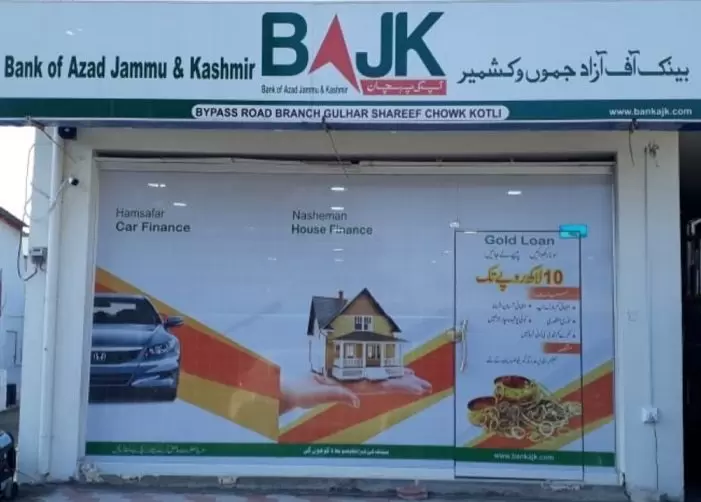
Muzaffarabad: Bank of Azad Jammu and Kashmir (AJK) has achieved a significant milestone as its remittances, also known as home remittances, have surpassed the highest level of 6 billion rupees. This remarkable achievement is attributed to the strong confidence of Kashmiri immigrants and the effective strategies implemented by the institution.

Following the recent agreement with Western Union, in addition to existing agreements with Haria (RIA) and Money Gram (Money Gram), remittances have been on the rise. In 2019, remittances stood at 80 crore rupees. However, the bank has witnessed a substantial increase in remittances, which have now reached a record level of 4.6 billion rupees.

During a review meeting chaired by Mr. Khawar Saeed, President and Chief Executive Officer of the bank, it was highlighted that remittances have seen a significant surge of approximately 4 billion rupees since 2019. This surge in remittances marks the highest increase ever since the establishment of the bank, reflecting the strong trust of overseas expatriate customers in the institution.

Mr. Khawar Saeed also noted that the bank is not only achieving milestones in remittances but is also making strides in accomplishing other business objectives while expanding its network. Under the guidance of the state’s financial institution and the independent government, particularly the chairman of the board of directors, the Bank of Azad Jammu and Kashmir has made remarkable progress.

This achievement signifies a testament to the dedication and effective management of the Bank of Azad Jammu and Kashmir in serving the financial needs of the people and facilitating economic growth in the region.

AJK Supreme Court Grants Conditional Permission to Youth-Specific Seat Candidates

0

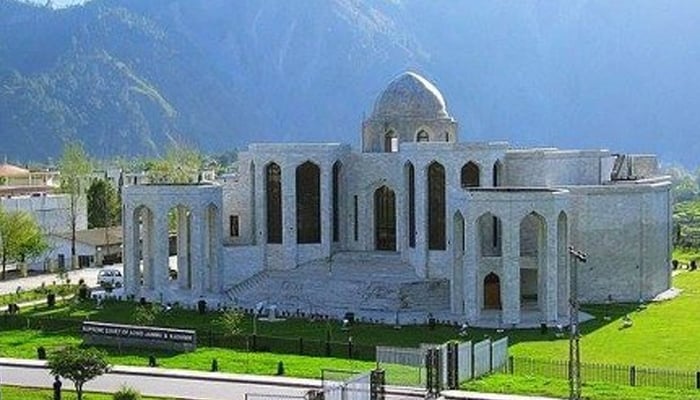
Muzaffarabad: The Azad Jammu and Kashmir Supreme Court has granted conditional permission to two candidates contesting for youth-specific seats in the second phase of local government elections. These candidates were initially barred by the High Court from participating in the election on the basis of their age.

The decision came following a writ petition filed in the Azad Kashmir High Court by Bilal Nawaz against the candidacy of Rizwan Khadim and Mohammad Mahfouz. The petition argued that the Azad Kashmir government had set the age limit for youth at forty years, which is contrary to the constitution. The petition contended that the age limit for youth should be thirty-five years.

Mohammad Mahfouz was nominated by the PTI, while Rizwan Khadim was nominated by the Jammu and Kashmir People’s Party for specific seats of the Municipal Corporation Rawalkot.

Subsequently, an appeal was made in the Supreme Court. The Supreme Court, after due consideration, allowed these candidates conditional permission to contest in the upcoming election.

This decision by the Azad Jammu and Kashmir Supreme Court marks an important development in ensuring fair representation and adherence to constitutional principles in the electoral process.

Understanding Irritability: Causes, Symptoms, and Treatment

0

Most people experience occasional bouts of irritability, often coupled with feelings of anger and anxiety. However, when this condition becomes chronic and severe, it might indicate an underlying medical issue, such as anxiety or depression. Here’s what you need to know about this condition:

What is Irritability?

Irritability is a mental state characterized by a combination of feelings including irritability, anxiety, and anger. Individuals with this condition tend to be impatient and short-tempered, often reacting quickly with frustration to even minor issues. Abby Wilson, a licensed clinical social worker in Houston, suggests, “While anxiety is a natural human emotion, if experienced excessively, it’s likely a medical problem that needs treatment.” Persistent and disruptive episodes of moodiness or irritability can be signs of mental health disorders such as anxiety or depression. It can also be associated with physical problems like brain injury or sudden drug withdrawal.

Signs of Irritability

Irritability can manifest in various symptoms including restlessness, difficulty focusing attention, mood swings, particularly irritability and anxiety, aggressiveness, physical symptoms such as rapid heart rate, tension, and restlessness.

Causes of Irritability

There isn’t a single cause for this condition. According to Debra Stultz, MD, a psychiatrist in Barboursville, West Virginia, “The causes can be multifactorial, acute, or chronic.” Occasional irritability can stem from various common minor issues such as repetitive motions, financial problems, or work deadlines. Chronic irritability may also be caused by psychological and physical factors.

Psychological Causes

Irritability is a common feature in several mental disorders. Persistent mood irritability is frequently observed in individuals diagnosed with anxiety and depression. Some genetic research suggests that irritability may be an inherited trait for some individuals. Psychological causes of irritability may include depression, anxiety, bipolar disorder, attention deficit hyperactivity disorder (ADHD), and sleep disorders such as insomnia, sleep apnea, or sudden onset of severe sleepiness. It may also include post-traumatic stress disorder (PTSD) and dementia.

Physical Triggers

Physical discomfort, pain, or stress can also trigger irritability, says Dr. Sultinoff. “Physical restlessness is usually chronic, which, over time, affects the ability to handle the emotional and physical pain associated with feeling restless.” Causes of this condition may include chronic pain, various medications such as steroids, stimulants, antidepressants, and some antihypertensives. Other causes may involve pre-menstrual syndrome, brain injury, underactive or overactive thyroid, drug withdrawal, or low blood sugar.

Causes of Irritability in Children

Children showing signs of aggression are usually referred for mental health evaluations. Although moodiness is a normal response to stress, chronic and severe irritability may indicate a larger problem such as depression, anxiety, autism, bipolar disorder, ADHD, or oppositional defiant disorder (ODD). Children with ODD often display a condition in which they refuse to listen and obey anyone, seeing their peers, parents, and teachers as competitors. Some studies suggest that irritability in children may lead to anxiety, depression, or bipolar disorder later in life.

Diagnosis of Irritability

While irritability is not considered a mental disorder and cannot be formally diagnosed, individuals experiencing these symptoms should seek help. “People experiencing irritability can benefit from mental health care services to manage these feelings,” says Wilson. Therapy can help individuals understand the underlying causes of irritability and may involve learning new coping mechanisms to better understand and manage emotions.

Treatment

A mental health practitioner will assess factors contributing to a person’s irritability. While there is no single treatment for irritability, approaches such as Parent Management Training (PMT), Cognitive Behavioral Therapy (CBT), and Dialectical Behavioral Therapy (DBT) have shown improvement in children.

Precautions

Though there’s no official cure for irritable mood symptoms, managing the condition involves several precautions:

  • Avoid caffeine, smoking, and alcohol
  • Ensure at least seven hours of uninterrupted sleep each night
  • Identify and avoid triggers of irritability
  • Identify activities that bring peace of mind, such as worship, exercise, reading, or listening to music
  • Practice mindfulness

When to Consult a Doctor?

If you frequently experience severe irritability, or if these feelings significantly impact your daily life, it’s advisable to seek help from a medical professional.

This understanding of irritability can help individuals recognize its signs, seek appropriate treatment, and take necessary precautions to manage this condition effectively.


AJK Inspector General Inaugurates Police Service Center in Hattian Bala

    0

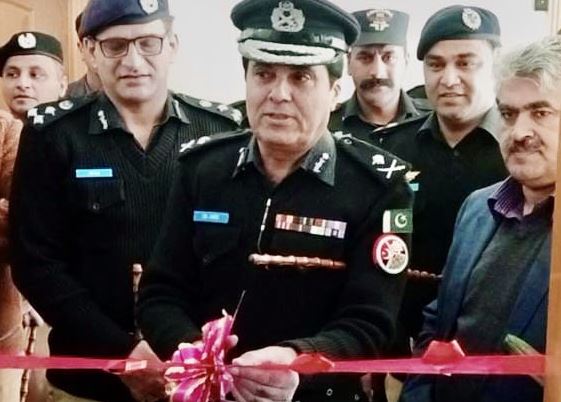
    Hattian Bala: Inspector General of Azad Kashmir Police, Dr. Ameer Ahmad Sheikh, inaugurated the Police Service Center at the SP Office in Hattian Bala. The event was attended by various dignitaries, including Commissioner Muzaffarabad Masood ul Rehman, DIG Masood Kashfi, AIGP Crime Riaz Haider Bukhari, AIG P Security Kamran Ali, Deputy Commissioner Jhelum Valley Syed Fida Kazmi, SP Jhelum Valley Khurram Iqbal, SP Rangers Abdul Rasheed Mughal, along with other police officers, newly elected councillors, officials of the Association of Traders, journalists, and other political and social leaders.

    Addressing the opening ceremony and speaking to journalists, Inspector General of Police Azad Kashmir, Dr. Ameer Ahmed Sheikh, emphasized a zero-tolerance policy towards any police officer found supporting drug dealers, stating that they will face severe consequences, including the death penalty. He assured that all police stations are under close scrutiny, and the public has been provided with contact numbers for complaints against any police officer or employee. Additionally, he announced the launch of a weekly session, starting from Hattian Bala, where people can voice their concerns directly.

    Responding to a query by the District Press Club Hattian Bala Secretary General Mubarak Hussain Awan, the IG Azad Kashmir announced a two-month ban on issuing challans for rickshaws and motorcycles in the Jhelum Valley district. He stressed that traffic rules should be enforced with compassion, and drug dealers should be closely monitored. He urged the public to report any suspicious activities and assured swift action against drug dealers. He encouraged reporting of any misconduct by policemen and introduced an online complaint system for ease.

    Moreover, the IG Azad Kashmir instructed the immediate removal of all encroachments from markets to ensure smooth traffic flow. He emphasized the need for close monitoring of schools, colleges, and universities, stating that drug dealers often target young children. He urged the public to help identify such individuals through WhatsApp. Furthermore, he announced rewards for officials based on public feedback and revealed plans to activate peace committees district-wide, under the supervision of the Deputy Commissioner and SP, with a one-week deadline for submission of a report.

    In a significant announcement, the IG Azad Kashmir disclosed plans to establish separate police station-style offices at the district level. The ceremony concluded with prayers offered for the martyrs of Peshawar and Police Havildar Rashid Hussain, who lost his life due to stone-pelting in Niali.

    The launch of the Police Service Center marks a significant step towards enhancing law enforcement and ensuring public safety in the region.

    Ceremony for Kashmiri Women Entrepreneurs Held at Faz Tower Islamabad

    0

    The Poonch Chamber of Commerce and Industry organized a distinguished ceremony to honor and recognize Kashmiri women from various professional fields, including business, at Faz Tower, Islamabad. The event was presided over by the President of the Poonch Chamber of Commerce and Industry, Chairman Faz State, Imran Aziz.

    In a significant development during the meeting, Ms. Dua Zubair was unanimously appointed as the Coordinator of the Poonch Chamber of Commerce and Industry. The appointment was met with widespread approval and enthusiasm from attendees.

    Chairman Imran Aziz, while addressing the gathering, outlined the primary goals and objectives of the Poonch Chamber of Commerce and Industry. He emphasized the Chamber’s commitment to fostering mutual business cooperation and promoting organizational growth. Aziz expressed his gratitude to the participating women, acknowledging their contributions and the vital role they play in various sectors

    The ceremony witnessed the attendance of several prominent social workers and businesswomen, including Ms. Khadija Zareen, Ms. Nabila Irshad, Ms. Rabia Razzaq, Mehran Naqvi, Atiqa Abdul Ghafoor, Hanansar, Farah Zulfikar, Uzma Khan, Fatima Anwar, Samina Irshad, Khula Khan, Shaheen Kausar Dar, and Maria Naqvi. Their presence underscored the event’s significance and the growing influence of women in the region’s economic landscape.

    The event concluded with a renewed commitment to strengthening the Poonch Chamber of Commerce and Industry and advancing mutual business endeavors through collaboration and support. The enthusiasm and dedication of the participants highlight the promising future of women-led initiatives in the region.

    The Daily Miracle of Sunrise: A Journey from the Sun to Earth

    0

    Every morning from my house, I witness a surprising but beautiful scientific process. As the Earth rotates on its axis, it brings this region into the light of the sun, filling it with electromagnetic energy. This light, which begins its journey from the electrons of countless atoms on the sun’s surface, is a result of the powerful and energy-generating process of fusion.

    In the sun, hydrogen atoms fuse to form helium, releasing energy. Electrons absorb this energy and enter an excited state. When they return to their predetermined energy orbits around their respective nuclei, the sun’s energy is released.

    When this light reaches the leaves of trees, it is absorbed by specific proteins in mesophyll cells. These proteins, functioning like tiny machines known as photosystems, break down water molecules, releasing electrons. The energy from these electrons is then used to combine carbon dioxide molecules to form simple carbohydrates such as glucose. This process stores the sun’s electromagnetic energy in chemical form, fueling the growth and development of all living things in the environment.

    These organisms include animals such as snails, turtles, snakes, and birds like woodpeckers and eagles, as well as numerous insects. Observing this natural phenomenon in depth with scientific knowledge enhances the appreciation of it.

    A telescope in Hawaii, operational since August last year, has released images of the sun. This telescope, the world’s most powerful solar telescope, can observe the sun at extreme depths. One image shows the chromosphere, the sun’s atmosphere, covering an area of 51,000 miles. Sethuraman Panchanathan, director of the National Science Foundation, says the telescope will help us learn much about our star.

    Former NASA astronaut Scott Kelly confirmed that the sun’s color is actually white, not yellow. According to Kelly, the sun appears yellow due to the scattering of blue light in Earth’s atmosphere. Outside the atmosphere, the sun appears white. NASA explains that the atmosphere scatters more blue light than red, making the sun appear yellow to the human eye.

    X-rays and gamma rays are filtered before reaching Earth. As sunlight passes through the atmosphere, more blue light is emitted, and red light reaches our eyes, making the sun and sky appear red at sunset. The sun also rotates on its axis from west to east, completing one cycle in about 27 days. This rotation was discovered by observing sunspots, which change positions constantly.

    Blue Sapphire (Kashmiri Neelam) A Profound Exploration of History, Characteristics, and Significance

    The sun’s rotation varies: the polar regions take over 30 days to complete a cycle, while the equatorial regions take about 25 days. The sun tilts at 7.25 degrees relative to Earth’s orbit. There is even a sun, W0855, about 7 light years away, with a surface temperature of minus 13 degrees Celsius, known as the Cool Sun.

    NASA astronomer David Carbino stated that there is a planet, GJ 1214B, entirely made of water, located 40 light years away. This ocean planet has no rocks or land and is four times larger than Earth.

    Our solar system was formed about 4.571 billion years ago, with Earth forming 4.54 billion years ago. An asteroid shower occurred 3.9 billion years ago, bringing water to Earth. Scientists believe that water came from comets in the Kuiper Belt, which collided with Earth, initiating a cycle of cooling and water formation.

    Earth appears as a beautiful blue marble from space, with white clouds and blue oceans. This water cycle has continued for billions of years, raising questions about the origin of water on Earth. Water is essential for life, and its presence on other planets may indicate the possibility of life.

    Astronomers have found a rocky, Earth-like planet, K2-18b, 110 light years away. This planet, which orbits its star similarly to Earth, has water vapor in its atmosphere, suggesting the possibility of life.

    In billions of years, the universe will meet its end, becoming infinitely vast and cold, and all intelligent beings will perish.