Sunday, March 22, 2026
6.9 C
Srinagar
Home Blog Page 23

October 1947: The Month That Divided Kashmir — Unraveling the Conflict, the Voices, and the Unfinished Freedom

0

SRINAGAR — In Kashmir, October is not merely a month of changing seasons. It is a season of memory, a time when the chill in the air carries the echoes of history. The crimson of the chinar leaves is mirrored in the collective remembrance of bloodshed, and the anniversaries that mark the calendar are not celebrations but sombre reflections on a promise broken and a future deferred. At the heart of this historical gravity lie three consecutive dates in 1947—the 22nd, 24th, and 27th of October—a brutal and decisive trilogy that catapulted the princely state of Jammu and Kashmir into a conflict that remains, seven decades later, the world’s most persistent nuclear flashpoint.

This is not just a story of borders and accessions. It is the story of a people whose right to choose their own political destiny was violently disrupted, first by a tribal invasion, then by a local assertion of sovereignty, and finally, by the landing of foreign troops. The events of those six days forged the modern political reality of a divided land, setting the stage for decades of diplomacy, conflict, and unyielding resistance. For The Azadi Times, examining this period is essential to understanding why the cry for self-determination in Kashmir is not a relic of the past, but a living, breathing demand for justice.

The Prelude to Conflict

In 1947, as British India was divided into the new dominions of India and Pakistan, princely states were given the right to accede to either dominion or remain independent. Jammu and Kashmir, ruled by Maharaja Hari Singh, found itself in a unique position.

A Hindu ruler governing a Muslim-majority state, Hari Singh, hesitated to join either side. His ambitions for independence clashed with mounting pressure from both Delhi and Karachi, and his indecision would soon turn catastrophic.

Kashmir’s economy was closely tied to what had become Pakistan — its rivers flowed westward, its roads and trade routes led toward Rawalpindi. Yet, politically, Hari Singh sought to preserve his autonomy. For the people of the valley, however, another desire simmered — the aspiration for Azadi, freedom from autocracy, and the right to determine their own political future.

By October, discontent had already spread across western Jammu regions like Poonch, where ex-soldiers of World War II rebelled against the Maharaja’s taxation and repression. Their uprising created a spark that would ignite the larger conflict.

22 October 1947 – The Tribal Invasion

On 22 October 1947, thousands of Pashtun tribesmen from the North-West Frontier Province (now Khyber Pakhtunkhwa) crossed into Kashmir, reportedly supported by elements within the newly formed Pakistan military.

The tribal fighters, known locally as lashkars, were motivated by multiple factors — some by religious sentiment, others by the promise of loot, and still others by the belief that they were liberating fellow Muslims from the rule of a Hindu Maharaja.

Their entry marked the first armed incursion into the princely state, setting off a chain of events that would internationalize the Kashmir dispute.

The tribesmen advanced rapidly, capturing Muzaffarabad and Domel, and moving toward Baramulla, a town just 50 kilometers from Srinagar. But what might have been seen by some as a liberation movement soon turned chaotic — reports of looting, burning, and civilian atrocities in Baramulla alienated local Kashmiris and provided Delhi with the justification it needed.

“The tribesmen entered with slogans of liberation, but soon their actions created panic,” said a Kashmiri historian from the University of Azad Jammu and Kashmir. “Their entry became the pretext for Indian intervention, something that would haunt Kashmir’s future.”

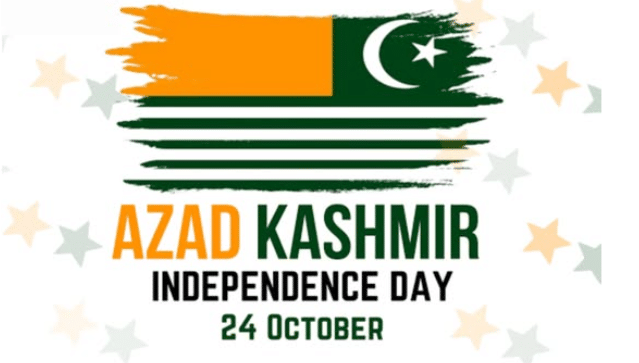
24 October 1947 – The Declaration of Azad Kashmir
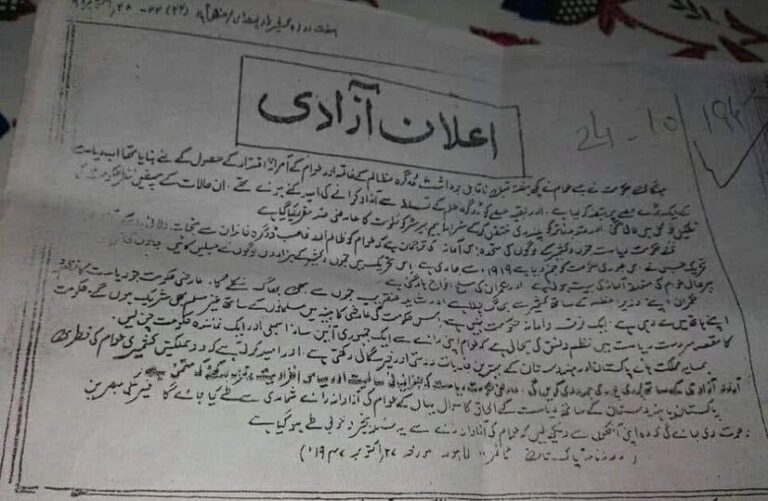
Declaration of Independence of Azad Jammu and Kashmir, October 24, 1947

Amid the chaos of invasion and rebellion, a group of Kashmiri political leaders gathered in Rawalpindi and declared the establishment of the Azad Government of the State of Jammu and Kashmir on 24 October 1947.

This government claimed to represent the will of the people who had risen against the Maharaja’s rule. Sardar Muhammad Ibrahim Khan, a prominent lawyer and political figure, became the first President of Azad Jammu and Kashmir (AJK).

The declaration was both a symbolic act of defiance and a practical step toward organizing the resistance. “It was not merely about territory,” writes political analyst Dr. Naeem Ch. “It was about the assertion of the Kashmiri people’s right to govern themselves, free from autocratic rule.”

While critics in India viewed it as a Pakistan-backed setup, many in Kashmir considered it a legitimate government born of the people’s uprising. The Azad Kashmir government continues to exist today, though its autonomy remains limited within Pakistan-administered territories.

In the days following the declaration, local militias aligned with the new government joined forces to fight against the Maharaja’s troops — and the approaching Indian army.

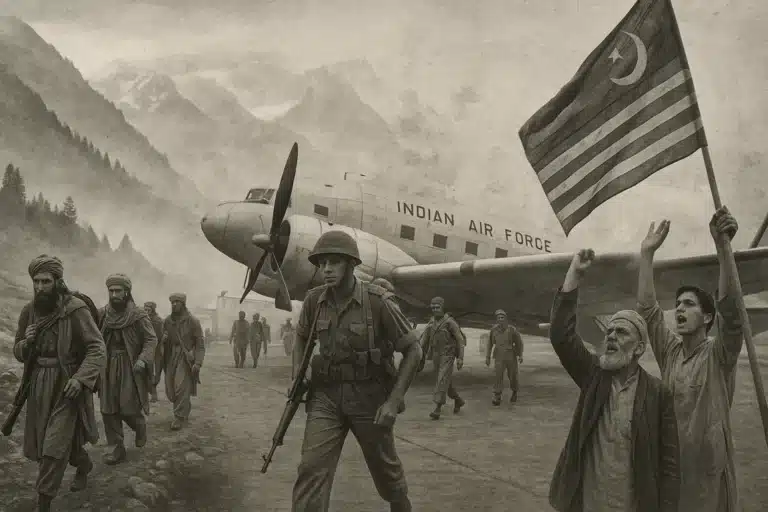
27 October 1947 – When Troops Landed in Srinagar

As the tribal forces neared Srinagar, Maharaja Hari Singh, facing imminent collapse, turned to India for military assistance.

On 26 October, he signed the controversial Instrument of Accession, ceding authority over defense, external affairs, and communications to India. The next day, 27 October 1947, Indian troops were airlifted to Srinagar Airport in what became the official beginning of India’s military presence in Jammu and Kashmir.

New Delhi described the move as a legitimate response to the Maharaja’s request for help, but for many Kashmiris — and for Pakistan — it marked the start of occupation.

“From that moment, the conflict was no longer internal,” notes international journalist Altaf Ahmad. “It became a territorial dispute between two new nations — but for the Kashmiris, it was a question of their very identity and freedom.”

The arrival of Indian troops transformed the political landscape. Fighting intensified, spreading across the mountains and valleys, until a UN-mediated ceasefire came into effect in January 1949. The line that divided the combatants became the Line of Control (LoC) — and the valley of Kashmir, once united, was split between two administrations.

UN Steps In

The war between India and Pakistan raged until a UN-brokered ceasefire took effect on 1 January 1949, establishing the Line of Control that divides the region to this day. Critically, the United Nations Security Council intervened, passing a series of resolutions, most notably Resolution 47 of 1948.

The core of these resolutions was a three-step process: Pakistan was to withdraw its forces and nationals from the territory, India was to progressively reduce its troops to a minimum, and then, a free and impartial plebiscite would be held under UN auspices to allow the people of Jammu and Kashmir to decide their future: accession to India or Pakistan.

This promise of a plebiscite became the cornerstone of the Kashmiri demand for self-determination. It was an international legal commitment that acknowledged the disputed nature of the state’s accession and placed the will of its people at the centre of any final settlement.

“The UN resolutions are not just pieces of paper for us,” says Nahida Nasreen, a human rights activist in Srinagar. “They are a testament to the fact that the world once recognized our right to choose. The failure to implement them is the original sin of this conflict.”

That failure was absolute. The conditions for the plebiscite were never met. India and Pakistan could not agree on the demilitarization process, and over time, India’s position hardened, eventually declaring the accession unconditional and the entire state of Jammu and Kashmir an integral part of the Union.

Voices of Resistance

For Kashmiris, these October dates are not just history — they are living memory.

In Azad Jammu and Kashmir, 24 October is celebrated as Independence Day, marking the establishment of the Azad government. Across the Line of Control, 27 October is observed as a Black Day, symbolizing the beginning of military occupation.

Meanwhile, 22 October is remembered as the day when the tragedy began — when outside forces entered a land already struggling for freedom.

Journalist Sana Shafi, based in Muzaffarabad, explains:

“Each of these days tells a story of betrayal and resilience. The tribal invasion, the Azad declaration, and the troop landing — they are not isolated events. Together, they define the Kashmir narrative, the struggle for self-determination that continues even today.”

Young Kashmiris on both sides of the divide see these anniversaries not merely as political milestones but as markers of an unfinished journey. In recent years, social media campaigns and community events have reignited discussions about the historical truths of 1947, challenging official narratives from both India and Pakistan.

“The world often views Kashmir through the lens of territorial rivalry,” says Prof. Basharat Ali, a historian from Muzaffarabad. “But for us, it’s about our identity — a people divided by borders, yet united by pain and hope.”

A Conflict Unresolved

More than seven decades later, the events of October 1947 continue to cast a long shadow.

Kashmir remains one of the most militarized regions on earth. The Line of Control still divides families, and each generation grows up with the echoes of history written into their lives.

While global politics have shifted — from the Cold War to the War on Terror — the essence of the Kashmir dispute has remained the same: a struggle for the right to decide one’s own destiny.

The United Nations, despite repeated reaffirmations of its resolutions, has largely remained silent in the face of political realities. The plebiscite, once promised, has turned into a distant dream.

Yet, the Kashmiri spirit endures. From the mountains of Neelum to the streets of Srinagar, the call for Azadi continues to resonate — not as a slogan of division, but as a demand for dignity and choice.

As October returns each year, Kashmiris reflect not just on the invasions and declarations of the past, but on the enduring question that the world has yet to answer:

Can a people divided by history ever be united by justice?

The Unyielding Echo of History

As Kashmiris on both sides of the Line of Control and in the global diaspora mark these October anniversaries, they are not merely recalling history. They are engaging in an act of political defiance and cultural memory. The trilogy of 22, 24, and 27 October 1947 is the foundational trauma and the foundational resistance of the Kashmiri nation.

It is a story of how a people’s future was bargained away in a week of chaos and realpolitik. But it is also the story of a resilience that has refused to be extinguished by decades of conflict. The chinar leaves will continue to turn crimson each October, a silent, powerful reminder of a promise written in blood and a right that, despite everything, remains undimmed. The question asked in the autumn of 1947—What do the people of Kashmir want?—remains, tragically and urgently, the question of today.

As one Kashmiri poet wrote:

“We were not asked when they drew the lines,
We were not called when they signed the accords,
But the mountains still echo our names —
For we are Kashmir, and our story is not yet told.”

Winter Warmth on a Budget: The 5 Best Energy-Saving Room Heaters of 2025-2026

0

As winter tightens its grip across the Northern Hemisphere, from the valleys of South Asia to the urban centers of Europe and North America, the annual challenge returns: how to stay warm without incurring exorbitant energy bills. With rising global electricity costs and a heightened focus on sustainability, the choice of a room heater has become a critical decision for households worldwide.

This season, the trend is unequivocally shifting towards intelligent, energy-efficient room heaters that deliver maximum warmth for a minimum power draw. Gone are the days of simple, power-guzzling coils. Today’s best heaters are engineered for precision, safety, and cost-effectiveness.

If you’re searching for a “low electricity consumption heater” or the “best energy-saving room heater” for your home or office, this definitive guide explores the top five models that blend innovative technology with reliable performance.

1. De’Longhi Dragon 4 Oil-Filled Radiator – The Set-and-Forget Warmer

A titan in the heating industry, De’Longhi’s Dragon 4 exemplifies reliable, steady warmth. Unlike fan-forced heaters, this oil-filled radiator uses thermal inertia to heat a special diathermic oil, which then radiates heat consistently into the room.

Its key advantage is that the retained heat continues to warm the space even after the unit cycles off, leading to significant electricity savings. It’s silent, doesn’t dry out the air, and is ideal for heating medium to large rooms over extended periods, such as bedrooms and living areas.

Why It’s Energy-Efficient:
The sealed oil reservoir acts as a heat battery, reducing frequent on-off cycling and maintaining a stable temperature with less electricity.

2. Philips Halogen QuickHeat 800W – Instant Sunshine

For those who need immediate, focused warmth, the Philips Halogen QuickHeater is a standout. Using advanced halogen tubes, it produces near-instantaneous radiant heat, similar to the sun’s warmth. This makes it perfect for personal use in home offices, small bedrooms, or for taking the chill out of a bathroom quickly.

Its low 800W power setting provides substantial heat for its energy draw, and features like automatic oscillation and tip-over protection add to its safety and convenience.

Why It’s Energy-Efficient:
Halogen technology converts almost all consumed electricity directly into radiant heat with minimal loss, offering immediate comfort at a lower wattage than traditional fan heaters.

3. Honeywell EnergySmart HCE200W – The Intelligent Digital Heater

Honeywell is synonymous with trust in climate control, and its EnergySmart series lives up to the reputation. The HCE200W model is a feature-packed ceramic heater designed for the modern, eco-conscious consumer.

It boasts a digital thermostat for precise temperature control, an eco mode that optimizes power usage, and multiple heat and fan settings. Its sleek design houses advanced safety features, including overheat protection and a cool-touch exterior.

Why It’s Energy-Efficient:
The digital thermostat and eco mode prevent energy waste by automatically adjusting power output to maintain the desired temperature, avoiding constant, full-power operation.

4. Kenwood KH-280 Ceramic Tower Heater – Powerful & Precise

Kenwood’s KH-280 utilizes efficient ceramic heating technology, which heats up rapidly and provides a strong, consistent flow of warm air. Ceramic elements are known for their durability and safety. This tower heater is particularly effective for medium-sized rooms and often includes features like a remote control, a programmable timer, and oscillation for wide-area coverage.

Its slim profile makes it a space-saving option that fits discreetly into any room layout.

Why It’s Energy-Efficient:
The ceramic core heats up almost instantly, reducing the time needed to reach operating temperature, and the built-in thermostat ensures it only uses power when necessary.

5. Dyson Pure Hot+Cool HP07 – The All-in-One Purifier Heater

For those seeking a premium, multi-functional appliance, the Dyson Pure Hot+Cool is in a league of its own. It’s not just a heater; it’s a high-performance air purifier and a fan all in one. Using Dyson’s signature Air Multiplier technology, it projects heated, purified air evenly throughout the entire room, avoiding the hot-and-cold spots common with conventional heaters.

While it commands a higher initial investment, its energy-efficient operation, coupled with HEPA-grade air purification, makes it a year-round appliance for health-conscious households.

Why It’s Energy-Efficient:
Its intelligent climate control continuously monitors the room temperature and adjusts the heat output to use only the required energy. The focused airflow also distributes heat more effectively, warming the room faster and more uniformly.

Why Energy Efficiency is Non-Negotiable in 2025

The global energy landscape has made efficiency a paramount concern. Choosing an energy-saving heater is a direct action consumers can take to:

  • Reduce Household Expenses: Lower electricity consumption translates directly to lower utility bills.

  • Minimize Environmental Impact: Using less power reduces your carbon footprint, contributing to global sustainability efforts.

  • Decrease Grid Strain: During winter peaks, efficient appliances collectively ease the burden on national power grids, helping prevent blackouts.

Your Heater Buying Guide: Key Considerations

Before making a purchase, ask yourself these questions:

  1. What is the room size? Oil-filled radiators are best for large, closed rooms. Halogen and small ceramic heaters suffice for personal spaces.

  2. What are the safety features? Look for automatic shut-off for tip-over and overheat protection—a critical feature for homes with children or pets.

  3. Is there a thermostat? A thermostat is the single most important feature for energy savings, as it regulates temperature automatically.

  4. What is the noise level? If you need a heater for a bedroom, opt for silent models like oil-filled radiators or radiant panels over fan-based heaters.

  5. What is your budget? Balance initial cost with long-term running expenses. A slightly more expensive, efficient model can save you money over several seasons.

The Final Verdict

Staying warm this winter does not require a choice between comfort and cost. The market offers a range of sophisticated energy-saving room heaters to suit every need and budget. Whether you opt for the sustained warmth of a De’Longhi oil radiator, the instant heat of a Philips halogen heater, or the smart, clean air from a Dyson, you can effectively combat the cold while keeping your energy consumption—and your bills—firmly under control.

Invest in smart warmth. Your wallet and the planet will thank you.

Kashmir’s Forgotten Declaration: When Azad Jammu and Kashmir Declared Independence in 1947

0

More than seven decades later, the words of a document once celebrated across the valleys of Jammu and Kashmir now seem to unsettle the very rulers who claim its legacy.
In Pakistan-administered Jammu and Kashmir, the 24 October 1947 Declaration of Independence — once seen as a symbol of freedom from Dogra rule — has become a subject of unease.

Today, any mention of that declaration sends half a dozen ministers rushing to the Directorate of Information, nervously holding press conferences to clarify what it “really means.”

The Declaration of Independence (24 October 1947)

“The emergency government, formed by the people only a few weeks ago to end the unbearable Dogra tyranny and to secure power for the people, has now taken control over a major part of the state and hopes to liberate the remaining areas from Dogra domination.

In these circumstances, the government has been reorganized and offices moved to Pallandri. Mr. Barrister Ibrahim has been appointed as the interim president.

The new government represents the authentic voice of the people of Jammu and Kashmir, striving to free them from the oppressive and usurping Dogra dynasty.

The freedom movement, which gave birth to this provisional government, has been ongoing since 1919. Thousands of Kashmiris have endured imprisonment and sacrificed their lives in this struggle. Ultimately, the genuine voice of the people has prevailed, and the armed forces of the ruler have been defeated.

The ruler, along with his prime minister, has fled from Kashmir and may soon have to leave Jammu as well. The interim government now assumes control of the administration of the state. This government is not communal in character.

Its temporary cabinet will include non-Muslim members as well. The immediate objective is to restore order so that the people may freely elect a democratic constituent assembly and a representative government.

The government maintains sentiments of friendship and goodwill towards neighboring countries, Pakistan and India. It hopes that both nations will fully sympathize with the Kashmiri people’s natural desire for freedom.

The interim government is determined to preserve the geographical integrity and political individuality of the state.

The question of accession to either Pakistan or India shall be decided by the free will of the people through an impartial plebiscite, with international observers invited to witness that the issue is settled in accordance with the people’s choice.”

(Published in The Pakistan Times, Lahore — 25 October 1947)

The Betrayal of an Ideal

The very government born from this declaration — which once symbolized liberation from colonial dominance — was later transformed into an administrative tool serving that same dominance.
Those who now demand rights from this 24 October government seem deeply disturbed by its original text.

This contradiction exposes a long history of opportunism and distortion: while the rhetoric of “self-rule” is loudly proclaimed, any effort to define what that actually means in practice is deliberately avoided.

On one hand, the leadership uses “public sentiment” as a shield to conceal its submission to state pressure and political expediency. On the other, it becomes complicit — even subconsciously — in restricting genuine grassroots movements that seek to restore true people’s governance.

In the Pakistan-administered region of Jammu and Kashmir, the restoration of the right to self-governance can only be achieved by reviving the democratic, secular, and constituent spirit of the 24 October 1947 Declaration.
Similarly, in Gilgit-Baltistan, the path to legitimate self-rule lies in demanding the right to form a democratic, secular, and representative government — as envisioned in that same spirit.

Both governments, while maintaining ties with Pakistan based on public will, can move toward a lasting solution to the Kashmir dispute — one grounded in the rights of all the peoples of the former princely state of Jammu and Kashmir.
Through local resource development and participatory governance, they can lay the foundation for healthy, progressive societies rooted in justice and self-determination.

— Courtesy: Haris Qadeer (translated and adapted for The Azadi Times)

October 24, 1947: The Forgotten Day That Divided Kashmir

0

Every year on October 24, official buildings across Pakistan-administered Kashmir hoist flags, hold seminars, and issue government statements marking what is known as “Kashmir’s Independence Day.”

Yet beyond those offices, most ordinary Kashmiris go about their daily lives often uncertain about what truly happened on this day in 1947, and whether “Azad” (free) Kashmir is genuinely free.

Seventy-eight years later, the events of October 24, 1947, remain central to the story of a land divided by borders, politics, and promises—its destiny rewritten through hurried decisions, tribal uprisings, and unfinished pledges of self-determination.

Before partition, Jammu and Kashmir was a princely state under Maharaja Hari Singh, a Dogra ruler presiding over a Muslim-majority population. Under the terms of the Indian Independence Act of 1947, princely states were given the choice to join India or Pakistan, or to remain independent.

Hari Singh initially chose independence, signing Standstill Agreements with both newly born dominions to maintain postal, transport, and trade links while he decided the state’s future. Pakistan accepted the agreement immediately, but India requested further discussion, leaving the status of Kashmir in a delicate balance.

By late October 1947, that balance collapsed. Armed tribal fighters from Pakistan’s North-West Frontier Province (now Khyber Pakhtunkhwa) entered Kashmir, calling their movement a “liberation campaign” to free fellow Muslims from Dogra rule.

As the tribesmen advanced toward Srinagar, chaos spread across the Valley. Facing a collapsing administration, the Maharaja appealed to India for military support. In return, New Delhi demanded he sign the Instrument of Accession, formally aligning Jammu and Kashmir with India. He signed on October 26, 1947—a decision that sparked the first war between India and Pakistan.

At the time, Gilgit-Baltistan was also part of the princely state. In early November 1947, local Gilgit Scouts revolted against the Maharaja’s forces and declared allegiance to Pakistan. While the region is today administered separately, it remains part of the disputed territory of Jammu and Kashmir under United Nations resolutions, linking its fate to the same unfinished question born out of that turbulent October.

October 24, 1947 — The Proclamation of “Azad Kashmir”

Two days before the Maharaja’s accession to India, leaders from western parts of the state — particularly from Muzaffarabad, Rawalakot, and Mirpur — declared the formation of a “Provisional Government of Azad Jammu and Kashmir.”

The declaration, known historically as the Proclamation of Freedom (Elan-e-Azadi), was made on October 24, 1947, in what is now the Muzaffarabad district.

The founders, including Sardar Muhammad Ibrahim Khan (later known as the first President of Azad Kashmir), claimed to represent the will of the people who had risen against the Dogra regime. Their statement announced the establishment of a temporary government that would continue “the struggle for the complete liberation of the State of Jammu and Kashmir.”

In essence, October 24 marks the day when Azad Jammu and Kashmir (AJK) declared itself a separate administrative entity — not as a sovereign nation, but as a self-governing region aligned with Pakistan in its quest to free all of Kashmir.

The Partition of Kashmir — Three Administrations, One Disputed Land

Today, the historic princely state of Jammu and Kashmir is divided into three main parts, each administered by a different country:

  1. Pakistan-administered territories:
    • Azad Jammu and Kashmir (AJK) — roughly 13,000 square kilometers with Muzaffarabad as its capital.
    • Gilgit-Baltistan (GB) — around 72,000 square kilometers, bordering China’s Xinjiang region.
  2. Indian-administered Jammu and Kashmir and Ladakh:
    • Comprising about 101,000 square kilometers, this area includes the Kashmir Valley, Jammu, and Ladakh.
  3. China-controlled territories:
    • Aksai Chin, seized during the 1962 Sino-Indian War, and Shaksgam Valley, ceded by Pakistan to China in 1963.

Thus, the original princely state — once unified under the Dogra dynasty — remains divided among Pakistan, India, and China. Each holds its own narrative and political terminology to describe their respective zones.

Is Azad Kashmir Truly “Azad”?

The word “Azad” means “free,” but the political reality of Pakistan-administered Kashmir has long been debated.
Azad Jammu and Kashmir has its own President, Prime Minister, legislative assembly, and flag, but its powers are largely limited.

Under the Azad Jammu and Kashmir Interim Constitution of 1974, the region’s governance is closely linked to Islamabad. Article 31 of that constitution explicitly states that the Government of AJK must align with Pakistan’s Ministry of Kashmir Affairs, especially on matters related to defense, security, foreign affairs, and currency.

Critics — both inside and outside the region — argue that this system offers only “symbolic autonomy.”
Supporters, however, contend that the arrangement provides stability and representation while maintaining Pakistan’s position that Kashmir’s final status must be decided through a United Nations-supervised plebiscite.

The UN Resolution and the “Unfinished Promise”

Following the first war between India and Pakistan (1947–48), the United Nations intervened. The UN Security Council Resolution 47, passed on April 21, 1948, called for:

  1. A ceasefire between Indian and Pakistani forces,
  2. Withdrawal of troops from the region, and
  3. A free and impartial plebiscite allowing Kashmiris to decide their future.

The ceasefire took effect on January 1, 1949, creating what is now known as the Line of Control (LoC) the de facto border dividing Indian-administered and Pakistan-administered parts of Kashmir.

However, the promised plebiscite has never been held. Both countries blame each other for failing to create the conditions necessary for such a vote.

Changing Realities: From “Azad” to “Administered”

Over the decades, Pakistan’s official terminology for the region evolved from “Azad Kashmir” to “Pakistan-administered Jammu and Kashmir” in international contexts — a phrase also used by the United Nations, BBC, and Al Jazeera to maintain neutrality.

This linguistic shift reflects a broader debate: is AJK a self-governing liberated zone, or a semi-autonomous administrative territory under Pakistan’s federal structure?

Many scholars argue that the governance model of AJK allows limited local participation but leaves critical decisions to Pakistan’s central government. The AJK assembly, for instance, cannot legislate on matters of defense, foreign affairs, or currency — all handled directly by Islamabad.

At the same time, AJK has its own judicial system, civil service, and electoral process — distinguishing it from the status of a province.

Public Awareness and Commemoration

Despite its political importance, October 24 rarely generates the kind of public enthusiasm seen on national days in other regions.
In Muzaffarabad and other cities, the government organizes official ceremonies — flag hoisting, speeches, and cultural performances — but many ordinary citizens remain unaware of what the date signifies.

In cafes, drawing rooms, and online discussions, one often hears the same question:
“What actually happened on October 24?”

This disconnect between state-sponsored commemoration and public awareness reveals a broader identity struggle within Pakistan-administered Kashmir — between historical memory and political present, between symbolic freedom and practical constraints.

Kashmir Today: A Region Split Three Ways

The conflict’s territorial divisions remain stark:

RegionAdministered byArea (approx.)CapitalStatus
Azad Jammu and KashmirPakistan13,000 km²MuzaffarabadSelf-governing territory under Pakistan’s Ministry of Kashmir Affairs
Gilgit-BaltistanPakistan72,000 km²GilgitDe facto province; separate governance order
Jammu & Kashmir + LadakhIndia101,000 km²Srinagar / LehUnion Territories under Indian Constitution (since Aug 2019)
Aksai Chin / ShaksgamChina~38,000 km²N/AUnder Chinese control (disputed)

Voices of the Present: Between Aspiration and Reality

In conversations across Muzaffarabad, Rawalakot, and Kotli, people express a range of opinions about “Azadi.”
For some, October 24 symbolizes a proud moment when their ancestors stood up against Dogra rule and declared independence before India’s occupation.
For others, it represents an unfinished revolution — one that brought only partial self-rule under Pakistan’s shadow.

“We commemorate our Independence Day every year, but our destiny is still tied to decisions made in Islamabad and Delhi,” says a university lecturer in Muzaffarabad.
“Until Kashmiris on both sides of the LoC can decide their future freely, our independence remains incomplete.”

India’s Perspective

India maintains that the entire territory of the former princely state of Jammu and Kashmir legally acceded to India through the Maharaja’s signature on the Instrument of Accession in 1947.
From Delhi’s standpoint, Pakistan’s control over AJK and Gilgit-Baltistan is “illegal occupation.”

Following India’s revocation of Article 370 in August 2019 — which removed the semi-autonomous status of Jammu and Kashmir — New Delhi has integrated its portion directly under central rule, claiming it as an internal matter.

This move, however, reignited tensions across the Line of Control and drew criticism from international human rights organizations.

Pakistan’s Position

Pakistan continues to describe Azad Jammu and Kashmir as a “self-governing state under the control of its own people” and emphasizes its commitment to the UN-mandated plebiscite.
Islamabad argues that its role is administrative rather than annexational — a caretaker arrangement until the final settlement of the Kashmir dispute.

Nevertheless, constitutional and budgetary control remains heavily centralized. Pakistan’s Ministry of Kashmir Affairs directly oversees AJK’s major development programs, media policies, and foreign engagement.

China’s Role

China controls the Aksai Chin plateau — a region India claims as part of Ladakh — and has significant strategic and economic interests in Gilgit-Baltistan, especially through the China-Pakistan Economic Corridor (CPEC).
Beijing’s presence adds another layer of complexity to the dispute, transforming what began as a local territorial conflict into a multi-state geopolitical puzzle.

The Continuing Debate

Seventy-eight years after the declaration of October 24, the questions that defined Azad Kashmir’s creation still persist:

  • Is Azad Kashmir free in name or in essence?
  • Has the region achieved the “complete liberation” envisioned by its founders?
  • And what does freedom mean in a land where sovereignty remains contested?

For many Kashmiris, these are not just political queries — they are questions of identity, dignity, and future.

October 24, 1947 was the day a group of Kashmiri leaders stood up and claimed agency over their destiny, forming what they called a provisional government of the liberated territory.
It marked the first organized political act of resistance from within the state itself — an attempt to assert the will of Kashmiris at a time when global powers and new nations were redrawing borders.

Today, as the people of Azad Jammu and Kashmir quietly mark another year of that declaration, the spirit of that day survives — not in parades or official speeches, but in the enduring hope for a peaceful, united, and self-determined Kashmir.

Major Honour for Kashmir: SSP Khawar Ali Shoukat Wins International Police Award

0

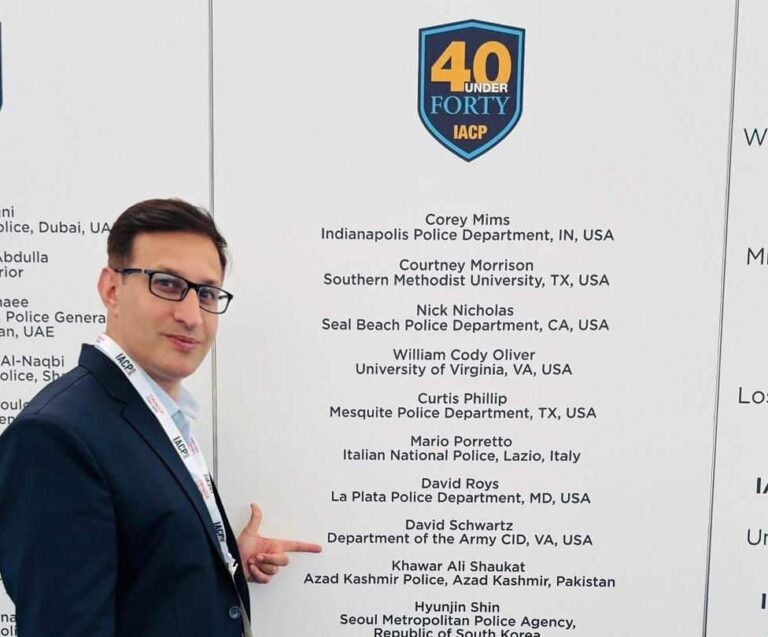
Muzaffarabad, October 22, 2025: Senior Superintendent of Police (SSP) Poonch, Khawar Ali Shoukat, from Pakistan-administered Kashmir, has been awarded the prestigious International Police Award at the annual International Association of Chiefs of Police (IACP) conference held in Colorado, United States.

SSP Shoukat is among the youngest senior police officers in South Asia to receive this honour, which recognizes outstanding law enforcement professionals from around 40 countries each year.

Hailing from Kotli district, Khawar Ali Shoukat has been widely acknowledged for his administrative leadership, integrity, and community-focused policing. Throughout his career, he has been credited with strengthening rule of law, improving public safety, and introducing reforms to enhance police accountability and efficiency across the region.

According to the IACP, the award was presented in recognition of his “exceptional service in upholding justice and contributing to crime prevention at the regional level.”

Shoukat’s achievement has been celebrated across Pakistan-administered Kashmir, where he is regarded as a brave and reform-driven officer. His recognition on the global stage has been described as a proud moment not only for the local police department but also for the people of the region.

Coming from a distinguished family in Kotli, SSP Khawar Ali Shoukat is the grandson of former Municipal Chairman Haji Rehmat Khan, and son of veteran journalist Shoukat Ali Naz. His brothers, Waqar Ali Shoukat and Jabar Ali Shoukat, also serve in public and professional roles within the community.

The International Police Award 2025 marks an important milestone for law enforcement in Pakistan-administered Kashmir, highlighting a growing recognition of professional policing standards in the region.

Strong Earthquake Tremors Shake Jammu and Kashmir, Residents Rush Out in Fear

0

MUZAFFARABAD — Strong tremors were felt across various parts of Jammu and Kashmir late Tuesday night, triggering panic among residents who rushed out of their homes in fear.

According to local reports, tremors were experienced in Muzaffarabad, Neelum Valley, Leepa Valley, Bagh, Rawalakot, Kotli, Bhimber, Mirpur, and several surrounding mountainous areas. The earthquake struck suddenly, shaking buildings and causing people to recite prayers as they ran for safety.

Although the intensity of the quake has not yet been officially confirmed by geological authorities, early reports suggest it was powerful enough to be felt across much of the region.

No immediate reports of damage or casualties have been received so far, but residents remain on alert as aftershocks are feared.

British Media Outlet Announces Paid Internship Program for University of Azad Jammu and Kashmir Students

0

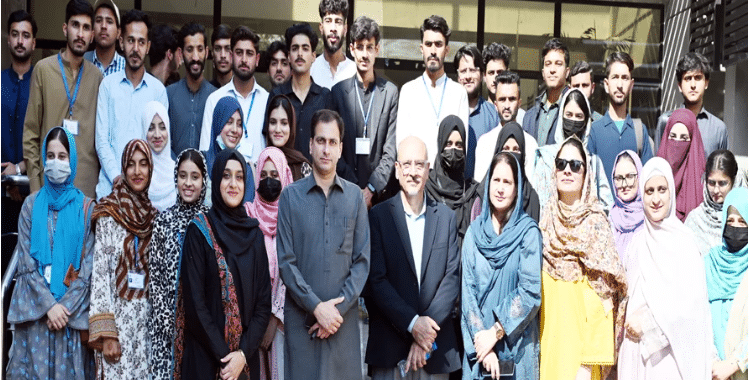
Muzaffarabad (The Azadi Times): A new chapter in media education and international collaboration has begun as Independent Urdu — the Urdu-language branch of the renowned British media organization The Independent — announced a partnership with the Department of Media and Communication Studies at the University of Azad Jammu and Kashmir (UAJK) in Pakistani-administered Kashmir to provide paid internship opportunities for its students.

Under this agreement, Independent Urdu will offer a six-week paid internship program for media graduates of the university. The initiative aims to provide aspiring journalists and media professionals with practical newsroom experience and an opportunity to learn modern reporting, production, and ethical journalism practices under professional supervision.

The announcement was made during a one-day workshop titled “Media Ethics” held on Tuesday at the Department of Media and Communication Studies, UAJK, in collaboration with Independent Urdu.

The workshop was attended by Haroon-ur-Rasheed, Senior Manager at Independent Urdu; Dr. Palwasha Khan Marwat, Project Consultant; and Fahad Mazhar, a senior video journalist associated with the organization. The session focused on promoting ethical journalism, verifying facts before reporting, and maintaining professional integrity in media practices.

“Adherence to Journalistic Ethics is Essential,” says Haroon-ur-Rasheed

Addressing the students, Haroon-ur-Rasheed emphasized that the need to uphold journalistic values is greater today than ever before.

“In an era of misinformation and digital noise, the implementation of journalistic ethics is crucial. Every journalist must verify the authenticity of a story from every possible angle before publishing it,” he said.
“Our reporting should never spread chaos or division within society. It is our moral and professional duty to ensure that journalism remains a source of truth and social responsibility.”

He further urged students to internalize the principles of fair reporting, objectivity, and accuracy — qualities that define credible journalism.

Independent Urdu Offers Practical Exposure to Media Students

Speaking at the event, Dr. Palwasha Khan Marwat, Project Consultant at Independent Urdu, said that the collaboration would open new doors for students of Azad Kashmir to engage with real-world journalism.

“We are offering a six-week paid internship program in which students will work in a different department each week,” she explained.
“This hands-on approach will enable them to gain experience in multiple aspects of journalism — from reporting and editing to digital media production — equipping them with the skills needed to thrive in a competitive media landscape.”

Dr. Marwat further stated that such initiatives not only strengthen academic learning but also help restore public confidence in the media by promoting ethical practices.

“The preservation of media values is our collective responsibility. Only through ethical journalism can we rebuild public trust and contribute to national development,” she added.

University Officials Praise Initiative, Call It a Milestone for Media Education

Coordinator of the Department of Media and Communication Studies, Dr. Shahida Khaleeq, expressed her gratitude to the Independent Urdu team for visiting the university and sharing their expertise with the students.

“This workshop has provided our students with valuable insights into practical journalism. They have learned about the real-world challenges journalists face and the standards they must uphold,” she said.
“Through this partnership, our students will now have access to professional internships with a major international media organization, giving them a rare opportunity to learn from experienced journalists.”

Dr. Khaleeq added that such collaborative training programs play a vital role in preparing young journalists for their professional careers and fostering a culture of ethical reporting.

University Extends Gratitude and Souvenirs Presented

At the closing session of the workshop, Dr. Nadeem Haider Bukhari, Dean of the Faculty of Social Sciences, presented souvenirs to the Independent Urdu delegation on behalf of the University of Azad Jammu and Kashmir as a gesture of appreciation.

In return, Haroon-ur-Rasheed also presented souvenirs to Dr. Shahida Khaleeq and other faculty members of the Department of Media and Communication Studies in recognition of their contribution to the successful organization of the event.

Earlier in the day, Haroon-ur-Rasheed met with Dr. Nasir Jamal Khattak, Vice Chancellor of the University of Azad Jammu and Kashmir, to discuss matters of mutual interest and explore future opportunities for collaboration between Independent Urdu and the university’s media department.

Both sides expressed a shared commitment to promoting media education, professional development, and ethical journalism among students in the region.

The partnership between Independent Urdu and the University of Azad Jammu and Kashmir marks a significant step toward bridging the gap between academic media studies and professional journalism. It not only empowers young journalists from Azad Kashmir with real-world experience but also sets a new precedent for international collaboration in the field of media education.

Through such initiatives, the future generation of journalists in the region will gain the skills, discipline, and ethical foundation required to contribute meaningfully to Pakistan’s and Kashmir’s growing media landscape.

Foods That Can Trigger Kidney Stones, Experts Warn

0

Kidney stones are hard mineral deposits that form when the urine contains high levels of salts and minerals, causing them to crystallize. These stones can vary in size — from tiny grains to large masses — but when they pass through the urinary tract, they can cause severe pain.

According to health experts, dehydration, certain medical conditions, and poor dietary habits are among the leading causes of kidney stones. Some foods increase levels of oxalate, calcium, uric acid, or sodium in urine — the very compounds that contribute to stone formation.

A recent report by NDTV Health highlights several foods that people prone to kidney stones should consume in moderation.

Spinach

While rich in nutrients, spinach contains high levels of oxalates, which can bind with calcium to form calcium oxalate stones — the most common type of kidney stone.

Beetroot

Similar to spinach, beetroot is also high in oxalates, and excessive intake can raise the risk of stone formation.

Nuts and Seeds

Although almonds, cashews, and peanuts are considered healthy snacks, they are rich in oxalates and can contribute to kidney stone risk if consumed in large amounts.

Chocolate

Cocoa and dark chocolate contain oxalates as well, making them potentially harmful for people with a history of kidney stones.

Tea

Black tea, in particular, is high in oxalates. Drinking it in large quantities may increase the likelihood of stone formation.

Red Meat

Red meat contains purines, which can raise uric acid levels in the body and lead to uric acid stones.

Salty and Processed Foods

High-sodium foods, including packaged snacks and fast food, increase calcium excretion in urine, which can promote the development of calcium stones.

Sugary Drinks and Vitamin Supplements

Soft drinks and sweetened beverages that contain phosphoric acid and sugar can accelerate the formation of kidney stones. Excessive intake of Vitamin C can also be converted into oxalate inside the body, further elevating risk.

Health specialists recommend increasing water intake, reducing salt and red meat consumption, and maintaining a balance between calcium and oxalate-rich foods. With these adjustments, the painful and recurring problem of kidney stones can often be prevented.

Daily Habits That Silently Damage the Brain, Experts Warn

0

Our brain works tirelessly every day — managing memory, focus, emotions, and decision-making. Yet experts say that many people unknowingly adopt lifestyle habits that gradually harm the brain’s overall health and function.

According to a report by The Hindustan Times, renowned neurosurgeon Dr. Richard Wiena, who has over 25 years of experience in neurosurgery, has identified four common habits that can slowly damage the brain.

Lack of Sleep

Dr. Wiena explains that consistent lack of sleep weakens the brain’s ability to repair itself. Without proper rest, toxins accumulate and the brain struggles to store memories, resulting in poor focus and fatigue.

Skipping Exercise

Regular exercise is not just for physical fitness — it significantly boosts blood flow to the brain, enhancing memory and clarity. According to Dr. Wiena, staying active supports mental agility and long-term brain function.

Chronic Stress

Prolonged stress raises levels of the hormone cortisol, which can damage brain cells over time. The expert recommends mindfulness, meditation, and short mental breaks to reduce stress and protect brain health.

Processed Food Consumption

Diets high in sugar and refined carbohydrates can cause inflammation in the brain and accelerate cognitive decline. Dr. Wiena suggests a balanced diet rich in natural and whole foods to maintain brain vitality.

“Small lifestyle changes can make a big difference — better sleep, physical activity, stress management, and a healthy diet can keep your brain sharp and resilient,” Dr. Wiena added.

Bollywood Set for a Blockbuster Year in 2025 as Major Films Line Up for Release

MUMBAI — The year 2025 is shaping up to be one of the most exciting in recent times for Bollywood, with a lineup of high-profile films ready to hit theatres in the coming months. From big-budget sequels to experimental genres and star-studded casts, Indian cinema appears poised for a year full of cinematic energy and box-office drama.

The entertainment news outlet Koimoi has compiled a list of some of the most anticipated Bollywood releases of 2025 — films that have already generated significant buzz among fans and critics alike.

‘De De Pyaar De 2’ — The Sequel to a Modern Hit

One of the most awaited titles of the year is “De De Pyaar De 2”, the sequel to the 2019 romantic comedy that was both a commercial and critical success. Directed by Anshul Sharma, the film stars Ajay Devgn, R. Madhavan, and Rakul Preet Singh in leading roles.

Produced under the banners of T-Series Films and Luv Films, the movie has been shot across India and London and promises to deliver the same humor, emotional depth, and generational romance that made the first installment popular. It is scheduled for release on November 14, 2025.

‘Thamma’ — A Horror-Comedy with a Romantic Twist

Adding to Bollywood’s growing fascination with genre-bending cinema, “Thamma” blends horror, comedy, and romance in a single narrative. Directed by Aditya Sarpotdar, the film features an ensemble cast including Ayushmann Khurrana, Rashmika Mandanna, Nawazuddin Siddiqui, and Paresh Rawal.

“Thamma” is the fifth film in the Maddock Horror-Comedy Universe, a franchise known for hits like Stree and Bhediya. The film will be released on October 21, coinciding with the Diwali festival, which traditionally draws massive cinema audiences across India.

‘Dho Randhar’ — A High-Octane Spy Thriller

For action lovers, “Dho Randhar” is among the year’s biggest spectacles. Written and directed by Aditya Dhar, the film is a high-octane spy thriller with an impressive multi-star cast including Ranveer Singh, Sanjay Dutt, R. Madhavan, Arjun Rampal, Akshaye Khanna, Sara Arjun, and Rakesh Bedi.

Expected to be a visually grand and story-driven thriller, Dho Randhar is set to release on December 5, 2025, and is already being hailed as one of the most ambitious action films of the year.

‘Tere Ishq Mein’ — A Tale of Love and Emotion

The romantic drama “Tere Ishq Mein” pairs Kriti Sanon and Dhanush for the first time on the big screen, creating significant anticipation among audiences.

While the film’s title resembles the 2023 supernatural fantasy TV series Tere Ishq Mein Ghayal, the movie presents an entirely original storyline with no narrative connection to the show. Combining emotional storytelling with melodious music, Tere Ishq Mein is expected to appeal strongly to romance enthusiasts.

‘Ek Deewane Ki Deewanigi’ — A Classic Love Story for the New Era

Directed by Milap Zaveri, “Ek Deewane Ki Deewanigi” promises to bring back the charm of classic Bollywood romance with a contemporary touch. The film stars Harshvardhan Rane and Sonam Bajwa in lead roles and is produced under the Desi Movies Factory banner.

The movie is scheduled for release on October 21, also aligning with the Diwali holiday season. With its emotional depth and passionate storytelling, the film aims to capture the essence of timeless love stories that once defined Indian cinema.

A Cinematic Year of Diversity and Revival

Industry analysts believe that 2025 could mark a turning point for Bollywood after several years of uneven box-office performance and the growing competition from South Indian cinema and OTT platforms.

With a diverse lineup — ranging from romantic dramas and thrillers to genre hybrids and big-budget sequels — Bollywood appears ready to reclaim its dominance in the South Asian entertainment market.

As streaming platforms and international collaborations continue to reshape the industry, the upcoming films of 2025 reflect both the evolution and resilience of Indian cinema, promising audiences a year filled with stories that entertain, inspire, and ignite nostalgia.