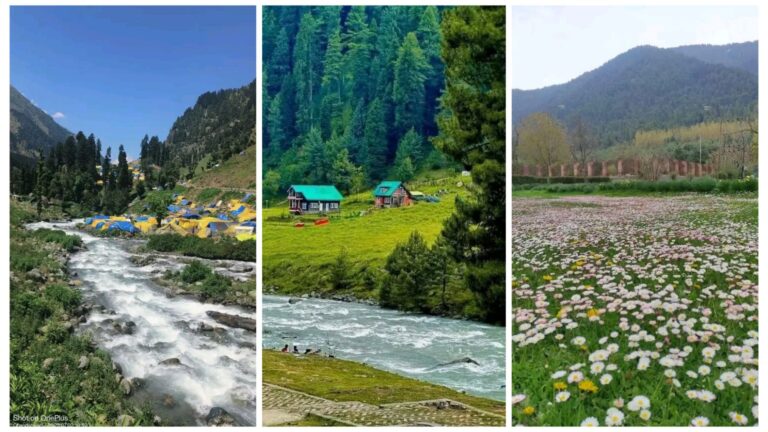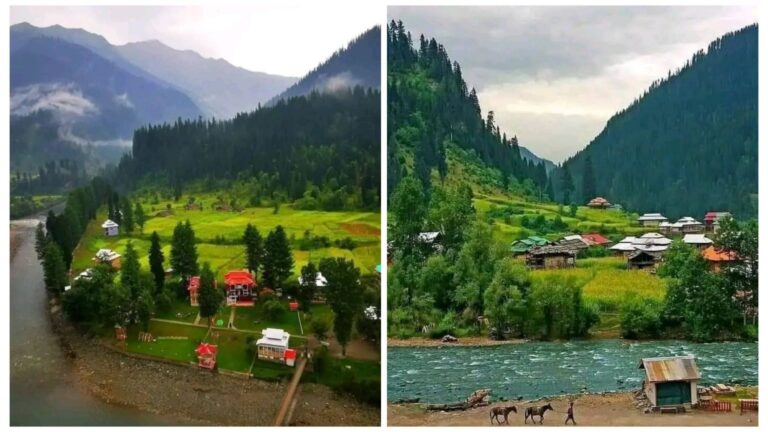
There are cities built by men, and there are cities that feel as though they were assembled, piece by piece, by something far greater than human ambition. Srinagar belongs to the second kind.
Nestled in the heart of the Kashmir Valley at an elevation of 1,600 metres above sea level, draped across both banks of the ancient Jhelum River, Srinagar is not simply the capital city of Kashmir. It is the living, breathing proof that some places exist not merely in geography but in the imagination of every person who has ever yearned for beauty.
For centuries, poets called it Jannat-ul-Arz — Paradise on Earth. Mughal emperors abandoned their thrones in Delhi and Agra just to spend summers here. Mystics walked barefoot to its shores looking for God and returned saying they had found Him in the reflection of the mountains on the Dal Lake. And today, millions of travellers from across the world arrive at its doorstep, cameras ready, hearts unprepared — because no photograph has ever truly done Srinagar justice, and no traveller has ever truly been ready for it.
This is that city. This is Srinagar.
What Does the Name “Srinagar” Mean?
Before entering the city itself, it is worth pausing at its name — because names in Kashmir are never accidental.
“Srinagar” is a Sanskrit compound: Sri, meaning wealth, beauty, and divine grace, and Nagar, meaning city or settlement. Together, the name translates as “The City of Wealth and Beauty” — or more poetically, “The Abode of Grace.”
It is one of the rare cases in history where a city has grown into its own name. Srinagar has been, across millennia, exactly what its name promised: a place of extraordinary natural wealth, breathtaking beauty, and an almost inexplicable grace that clings to its air, its water, its people.
There is also an older tradition that links the city’s founding to the great Mauryan emperor Ashoka, who is believed to have established a settlement here around 250 BCE — a city he called Srinagari. Whether legend or history, the continuity is remarkable: a city carrying the same essential name and the same essential spirit across more than two thousand years.
A History Written in Stone, Water and Fire
Srinagar is one of the oldest continuously inhabited cities in South Asia. Its history does not unfold in simple chapters — it spirals, intersects, contradicts and enriches itself across thousands of years of civilisation.
The Ancient Foundation
The earliest credible historical reference to Srinagar comes from Rajatarangini — the River of Kings — written in the 12th century by the Kashmiri historian Kalhana. This remarkable text, considered one of the first genuine historical chronicles in South Asian literature, traces the lineage of Kashmiri rulers back into antiquity and speaks of settlements on the banks of the Jhelum that would eventually grow into the city we know today.
During the reign of Ashoka’s son Jaloka, Buddhism flourished in Kashmir with an intensity that left deep marks on the region’s spiritual character. Monasteries, stupas and philosophical schools transformed Kashmir — and its capital — into a global centre of Buddhist learning. Travellers from Central Asia, China and Tibet made their way here to study and returned carrying ideas that would reshape entire civilisations.
The Coming of Islam and the Sultanate Era
The 14th century brought transformational change. In 1339, Shah Mir — a nobleman believed to have migrated from Swat — established the first Muslim sultanate in Kashmir, founding a dynasty that would rule for over two centuries. This was not conquest in the conventional sense; it was a gradual, deeply layered cultural transformation shaped as much by Sufi missionaries as by political power.
It was during this period that Srinagar began to acquire the spiritual and architectural character for which it is known today. The great Sufi saint Shah Hamadan — Mir Sayyid Ali Hamadani — arrived in Kashmir in the 14th century from Persia, bringing with him craftsmen, scholars and a tradition of Islamic architecture that fused Persian elegance with Kashmiri woodworking genius. The Khanqah-e-Moalla, built in his honour on the banks of the Jhelum, stands to this day as one of the most beautiful wooden mosques in all of Asia.
The Mughal Interlude — Srinagar’s Golden Age
If there is a period in Srinagar’s history that the city still wears most visibly, it is the Mughal era.
In 1586, Emperor Akbar brought Kashmir into the Mughal Empire — but it was his son Jahangir who fell truly, helplessly in love with Srinagar. Jahangir made the city his summer court, his sanctuary, his obsession. He visited twelve times during his reign and wrote of Kashmir in his memoir, the Tuzuk-e-Jahangiri, with a tenderness that emperors rarely extend to anything outside of power:
“If there is a paradise on earth, it is this, it is this, it is this.”
These are among the most quoted words in all of Kashmir’s history — and they were written about Srinagar specifically, about its lakes and mountains and the quality of its evening light. Jahangir commissioned the Shalimar Bagh in 1619 for his empress Nur Jahan. His son Shah Jahan — the same man who built the Taj Mahal — added Nishat Bagh to Srinagar’s crown. Together, these gardens remain among the greatest achievements of Mughal civilisation anywhere in the world.
The Later Centuries
After the Mughal decline came the Sikh period, when Maharaja Ranjit Singh incorporated Kashmir into the Sikh Empire in 1819. In 1846, following the First Anglo-Sikh War, the British transferred control of Kashmir — including Srinagar — to the Dogra Maharaja Gulab Singh through the Treaty of Amritsar in exchange for 7.5 million Nanakshahi rupees, a transaction that remains one of the most contested transfers of land in South Asian history and whose consequences reverberate to this very day.
The late 19th and early 20th centuries brought roads, a British Residency, a municipality, and the beginnings of modern tourism — particularly on and around Dal Lake, where the iconic houseboat culture was born when British residents, prohibited from owning land in Kashmir, chose instead to build their homes on water.
Dal Lake — The Mirror That Defines Srinagar
No understanding of Srinagar is complete — or even possible — without Dal Lake. The two are inseparable. The city exists in relationship to the lake the way a face exists in relationship to its reflection: each gives the other meaning.
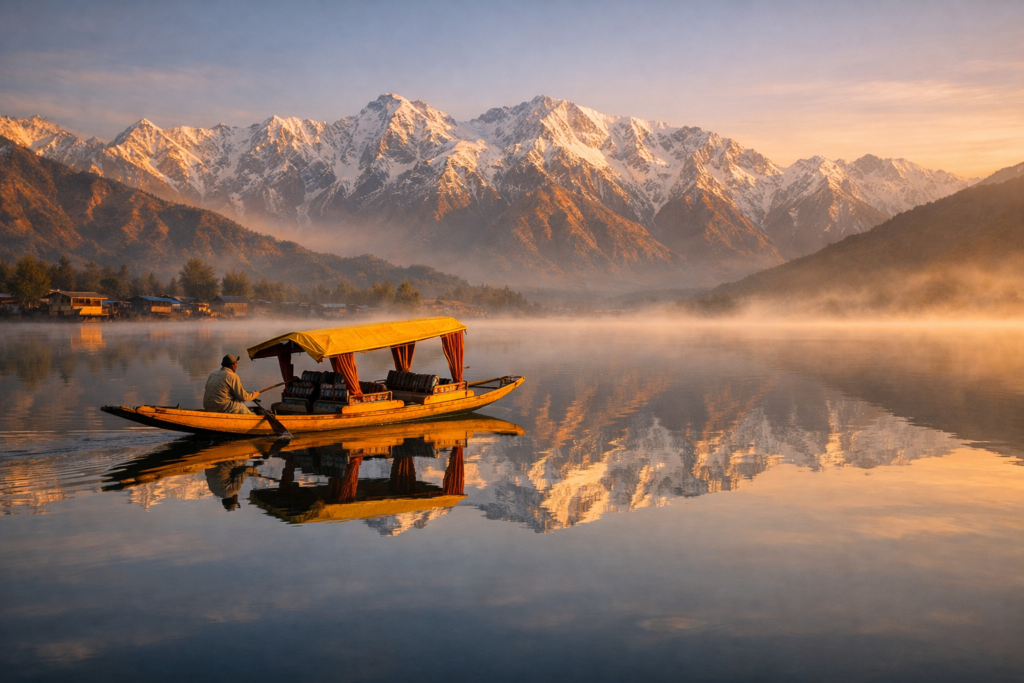
Stretching across approximately 18 square kilometres in the northeast of the city, Dal Lake is not simply a body of water. It is an ecosystem, a neighbourhood, a marketplace, a tradition and — on the right morning, when the mist sits low and the mountains cut clean lines against the sky — something that feels uncomfortably close to a religious experience.
The Floating World
What makes Dal Lake unlike almost any other lake on earth is that a significant portion of its surface is inhabited. Roughly 50,000 people live on and around the lake itself — in houseboats, on floating islands called rads (locally spelled raddh), and in small wooden communities that have occupied the same patches of water for generations.
The rads are perhaps the lake’s most astonishing feature: floating gardens constructed from decomposed vegetation and mud, anchored loosely to the lakebed, on which entire fields of vegetables — lotus roots called nadru, tomatoes, cucumbers, melons — are cultivated. Every morning, farmers paddle their shikaras through the early mist to the floating vegetable market at the heart of the lake, where produce is bought and sold directly from boat to boat without ever touching land. It is a market system that has been operating, largely unchanged, for centuries.
The Shikara — Poetry on Water
The shikara is to Srinagar what the gondola is to Venice — but older, more varied in its purpose, and, many would argue, more beautiful. These slender wooden boats, propelled by heart-shaped paddles, serve as taxis, cargo vessels, flower stalls, mobile tea shops and romantic sunset vessels all at once. The sound of a shikara paddle cutting through still water at dawn — that soft, rhythmic plash — is the signature sound of Srinagar, the note the city plays to introduce itself each morning.
The Houseboats — A Colonial Legacy Reborn
The Cedar-wood houseboats of Dal Lake are among the most distinctive accommodations on earth. Built in colonial times when British officials could not own land in Kashmir, these floating homes — some dating back over a century — are now among the most sought-after lodgings for travellers visiting Srinagar.
They range from simple and affordable to elaborately carved, carpeted and furnished with genuine antiques. To sleep on Dal Lake, to wake up with the mountains reflected in the water outside your window, is an experience that has no equivalent anywhere.
The Mughal Gardens — Civilisation Made Green
Srinagar contains what is arguably the finest collection of Mughal gardens outside of the original Mughal heartland — and many would argue they surpass anything surviving in Delhi or Agra for their setting alone.
Shalimar Bagh — The Garden of Love
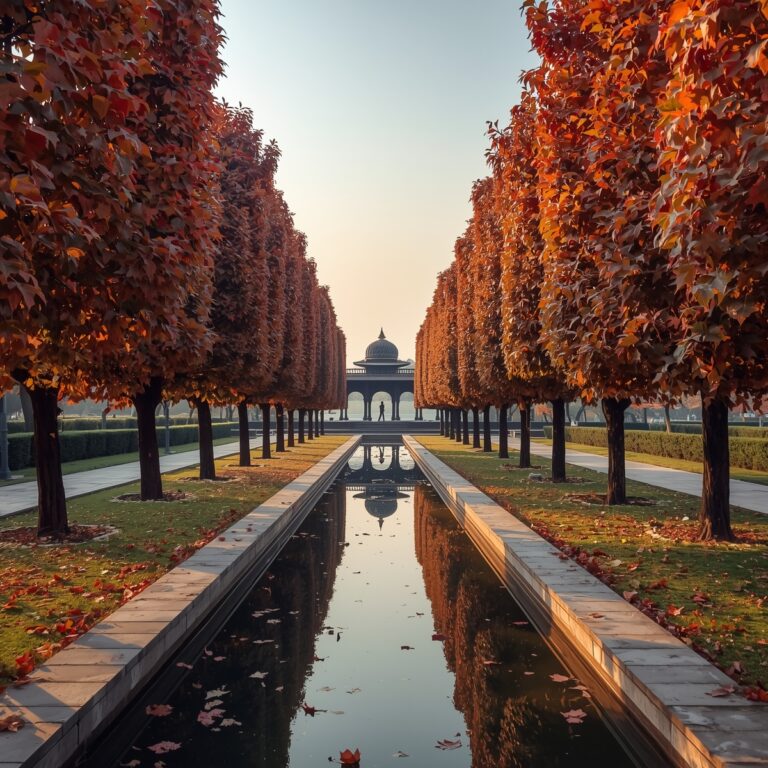
Built in 1619 by Emperor Jahangir for his empress Nur Jahan, Shalimar Bagh — whose name means “Abode of Love” — is the crown jewel of Srinagar’s gardens. Laid out across three terraced levels descending toward Dal Lake, the garden is a masterpiece of Mughal landscape design: geometrically precise yet graceful, formal yet alive. Hundreds of ancient Chinar trees — the great Oriental plane trees whose leaves turn a spectacular crimson and gold in autumn — line its channels, and black marble pavilions, built for royal leisure, anchor each terrace.
In autumn, when the Chinar leaves fall like burning embers across the water channels, Shalimar Bagh becomes almost unbearably beautiful — the kind of beautiful that makes people stop walking and simply stand.
Nishat Bagh — The Garden of Joy
Larger than Shalimar and arguably more dramatically situated, Nishat Bagh — “Garden of Joy” — was built in 1633 during the reign of Shah Jahan by his brother-in-law Asif Khan. Climbing twelve terraces up the slope of the Zabarwan Mountains directly behind Srinagar, it commands a panoramic view of Dal Lake that has been described by travellers across four centuries in superlatives that have not yet worn out.
The view from Nishat Bagh’s upper terraces — Dal Lake below, Srinagar spread across its banks, the Pir Panjal Range closing the southern horizon — is one of the great views of Asia.
Chashma Shahi — The Royal Spring
Smaller and more intimate than the other gardens, Chashma Shahi — “The Royal Spring” — was built in 1632 around a natural freshwater spring whose water is considered by Kashmiris to have medicinal properties. Its three modest terraces are jewel-like in their precision, and the spring itself — cold, clear, and tasting of the mountain — has been drawing visitors for nearly four centuries.
Asia’s Largest Tulip Garden
Added to Srinagar’s floral crown in the modern era, the Indira Gandhi Memorial Tulip Garden holds the distinction of being the largest tulip garden in Asia. Every spring, as the snow retreats and the valley warms, more than 1.5 million tulips across 68 varieties explode into colour against the backdrop of the Zabarwan hills and Dal Lake. The garden opens for roughly three weeks each April — and in those three weeks, Srinagar turns into a place that is almost photographically unfair to the rest of the world.
The Culture — Kashmir’s Living Inheritance
Srinagar is where Kashmiri culture concentrates itself. The city has been shaped by so many different civilisations — Buddhist, Hindu, Sufi Islamic, Persian, Mughal, Sikh, Dogra — that its culture is not the product of any one of these alone but of their extraordinary, centuries-long conversation.
The Kashmiri Language
Kashmiri — called Koshur by its speakers — is one of the oldest and most linguistically distinctive languages of the subcontinent. Classified as a Dardic language, it carries within it layers of Sanskrit, Persian, Arabic and Tibetan, and its literature contains some of the most moving mystical poetry ever written in any language.
The 14th-century poet-mystic Lal Ded — Lalleshwari — wrote verses in Kashmiri called vaakhs (sayings) that remain astonishing in their directness and depth. She was followed by Sheikh Nooruddin Noorani, known as Nund Rishi, whose poetry defined Kashmiri Sufi Islam. And then came Habba Khatoon — the Nightingale of Kashmir — whose love songs, written in the 16th century, are still sung by Kashmiri women today.
To hear a Kashmiri song in Srinagar — in a houseboat at dusk, in a tea house in the old city, drifting across the lake — is to hear a language that sounds like it was specifically invented to describe the place in which it was born.
The Pheran and the Kangri
Culture lives in small things. In Srinagar, it lives in the pheran — the long, loose woollen robe worn by both men and women through the winter months — and in the kangri, the small clay firepot filled with glowing embers that Kashmiris carry beneath their pherans to stay warm. The kangri is not merely a heating device; it is a social object, a conversation starter, an heirloom in some families, a way of life. To hold a kangri, to feel its warmth radiating through a pheran while snowflakes fall on the old city of Srinagar — this is what Kashmiri winter feels like from the inside.
Wazwan — The Feast That Is Also a Philosophy
If Srinagar’s gardens represent what Kashmiris did with beauty, Wazwan represents what they did with hospitality.
Wazwan is not simply a meal. It is a ceremony, a declaration, a tradition so deeply embedded in Kashmiri culture that no major celebration — wedding, religious festival, homecoming — is considered complete without it. A traditional Wazwan can consist of thirty-six or more courses, served over hours, all of them meat-based, cooked overnight by specialist chefs called wazas who have trained for years in techniques passed down through generations.
Guests eat from a large shared platter called a traem, seated in groups of four — an arrangement that makes the meal as much about community as about food.
The dishes of a Srinagar Wazwan represent centuries of culinary refinement:
Rogan Josh — perhaps the most internationally known Kashmiri dish, braised lamb cooked slowly in a sauce coloured brilliant crimson by Kashmiri chillies (not for heat but for colour) and scented with whole spices. The name means “Red Juice” and the dish delivers exactly that.
Gushtaba — large, hand-pounded meatballs poached in a yoghurt-based gravy perfumed with cardamom and fennel. This is traditionally the final savoury course of a Wazwan, a signal that the feast is drawing to its close.
Yakhni — lamb braised in a delicate, creamy yoghurt sauce fragrant with fennel and ginger, its subtlety a deliberate contrast to the boldness of Rogan Josh.
Rista — saffron-coloured meatballs in a deep red, aromatic sauce, distinct from other preparations by its distinctive texture and colour.
Nadru Yakhni — lotus root cooked in yoghurt and spices. The lotus root (nadru), harvested from the beds of Dal Lake, is one of Srinagar’s most characteristic ingredients: starchy, textured, absorbing the flavours it is cooked in with extraordinary eagerness.
And to drink: Kahwa — saffron-infused green tea with cinnamon, cardamom and crushed almonds — warming, aromatic, and so specific to Kashmir that drinking it anywhere else always tastes slightly apologetic. And Sheer Chai — pink salt tea, made through an unusual brewing process that turns the liquid a pastel rose, served with a crust of cream. It is an acquired taste for outsiders and a comfort like no other for Kashmiris.
The Handicrafts — Where Art Becomes Industry and Industry Becomes Art
Srinagar is one of the great handicraft capitals of the world, and it has been for centuries. The artisans of this city have produced objects of such refinement that they found their way into the treasuries of Mughal emperors, European royalty and the world’s finest museums.
Pashmina — The World’s Most Celebrated Fibre
Genuine Pashmina is harvested from the undercoat of the Changthangi goat — a high-altitude animal adapted to the extreme cold of the Himalayan plateau. The fibres are extraordinarily fine: a single Pashmina hair is one-sixth the diameter of a human hair. Weaving them into a shawl requires months of labour by highly skilled artisans, and the result is a fabric of unparalleled softness, lightness and warmth.
The word “cashmere” — now a generic term used globally — derives directly from Kashmir, a reminder that the world’s luxury textile vocabulary was partly written in Srinagar. Authentic Kashmiri Pashmina carries a Geographical Indication (GI) tag, meaning the name is protected by law and can only be applied to goods produced in Kashmir.
Kashmiri Carpets — Floors as Canvas
Hand-knotted Kashmiri carpets are among the most technically demanding and aesthetically sophisticated floor coverings produced anywhere on earth. A single carpet of moderate size may require two or more years of uninterrupted work by multiple weavers, tying hundreds of knots per square inch in wool or silk dyed with natural pigments. The designs — intricate medallions, flowering vines, hunting scenes, geometric abstractions — draw on Persian, Central Asian and indigenous Kashmiri traditions simultaneously.
These carpets have covered the floors of Mughal courts and Victorian drawing rooms alike, and they continue to be among Kashmir’s most significant exports.
Walnut Wood Carving
The walnut (doon) trees of Kashmir produce one of the finest hardwoods in the world — a timber with a natural lustre and grain that responds to carving with extraordinary precision. Srinagar’s craftsmen have been working with walnut wood for centuries, producing furniture, decorative boxes, architectural panels and frames of astonishing intricacy. The finest examples feature three-dimensional floral reliefs so detailed that individual stamens of carved flowers seem to catch the light differently depending on the hour.
Papier-Mâché
Less well known internationally but equally remarkable is Srinagar’s papier-mâché tradition — kar-i-kalamdani — in which multiple layers of paper pulp are shaped into boxes, bowls, vases and ornaments, then hand-painted in extraordinarily fine detail with natural pigments. The craft was introduced to Kashmir by Shah Hamadan from Persia in the 14th century and has been refining itself ever since.
The Sacred City — Mosques, Shrines and Temples
Srinagar is a city of faith — not the aggressive, contested faith of political argument, but the quiet, ancient, deeply personal faith of people who have been praying in the same places for centuries.
Hazratbal Shrine — Kashmir’s Most Sacred Site
On the western shore of Dal Lake stands Hazratbal — “The Place of Dignity” — a gleaming white mosque and shrine that is the most revered Islamic site in Kashmir. Within its sanctum is preserved what is believed to be a strand of hair from the Prophet Muhammad (peace be upon him) — the Moi-e-Muqqadas, brought to Kashmir in the 17th century.
Hazratbal is Kashmir’s most important gathering place. On religious occasions — particularly Eid and the anniversary of the Prophet’s birth — hundreds of thousands of people converge on the shrine from across the valley. The sight of the white-domed mosque reflected in Dal Lake on a clear morning is one of Srinagar’s defining images: a picture of a city at peace with itself.
Jama Masjid — A Thousand Years of Congregational Prayer
In the heart of the old city, surrounded by the narrow lanes of Nowhatta, stands the Jama Masjid — the Great Congregational Mosque of Srinagar. Originally built in 1402 during the reign of Sultan Sikandar, it has been destroyed by fire and rebuilt multiple times, each reconstruction faithful to the original design: a vast courtyard surrounded by a wooden arcade supported by 378 deodar cedar columns, each carved from a single tree.
The Jama Masjid represents the culmination of Kashmiri Islamic architecture — a style that incorporates pointed Indo-Saracenic arches, pagoda-like spires and the warm, organic quality of wood into a form unlike any other mosque architecture in the world.
Shankaracharya Temple — The Ancient Eye of the City
On the summit of Shankaracharya Hill, rising 300 metres above the city and dominating the Srinagar skyline, stands a small Shiva temple whose origins are as ancient as the city itself. The octagonal stone structure is believed by some historians to date to the 5th century, with the site itself — a promontory commanding views of the entire valley — having been sacred since at least the Mauryan period.
The temple is named after the great Advaita philosopher Adi Shankaracharya, who is said to have meditated here in the 8th century CE. The climb to its summit rewards the visitor with a view across all of Srinagar, the full expanse of Dal Lake, and the encircling mountains that make this valley feel, from above, like a world complete in itself.
Khanqah-e-Moalla — The Sufi Heart of Srinagar
On the right bank of the Jhelum, in the oldest part of the city, stands the Khanqah-e-Moalla — the great Sufi shrine and gathering place built in honour of Shah Hamadan. Constructed entirely of wood in the Kashmiri architectural tradition — with its distinctive multi-tiered pyramidal roof and intricate carved interiors — it is considered one of the finest examples of wooden Islamic architecture in the world.
For Kashmiris, it is far more than a historical monument. It is a living spiritual centre, a place of prayer and remembrance, and a physical embodiment of the Sufi tradition that has shaped Kashmiri Islam into the distinctive, inclusive, mystically inclined form it takes today.
The Economy — Saffron, Apples and a City in Motion
Srinagar’s economy is built on several pillars that are as ancient as the city itself and as urgent as its present circumstances.
Tourism is the city’s largest industry and its most visible. In 2024, the Kashmir Valley received more than 2.6 million visitors — including over 35,000 international tourists — a figure that reflects not just Kashmir’s growing global profile but the specific magnetism of Srinagar as a destination. The city appeared in Google’s top ten most-searched travel destinations in 2024, ranking alongside Bali, Malaysia and Azerbaijan.
Kashmiri Saffron — grown primarily in the Pampore plateau a short distance from Srinagar — is among the finest and most valuable saffron on earth. Kashmiri saffron holds a Geographical Indication tag and commands premium prices on international markets. A single kilogram of this saffron requires the hand-harvesting of roughly 150,000 flowers, each picked in the early morning hours over a brief three-week flowering season every October.
Handicrafts — carpets, Pashmina, woodwork, Papier-mâché — contribute significantly to the economy and to Kashmir’s export earnings. Srinagar’s Lal Chowk and the old bazaars of Maharaj Gunj are the commercial heart of this trade.
Horticulture — Kashmir produces some of the finest apples, walnuts, almonds, cherries and pears in all of South Asia. The orchards that ring Srinagar, especially in spring when they bloom simultaneously, are themselves a spectacle worth travelling for.
A Travel Guide to Srinagar — Practical Notes
Best Time to Visit: Srinagar rewards visitors in every season, but the undisputed highlights are:
- March to May: The valley comes alive — tulips, almonds, cherry blossoms, and the famous Badam Wari almond garden in full bloom.
- June to August: Pleasantly mild when most of South Asia bakes — an ideal summer retreat.
- September to October: The Chinar trees turn. This is perhaps the most visually spectacular season, when the whole city seems to be on fire in the best possible way.
- December to February: Snow transforms Srinagar into a different kind of beautiful — quieter, more contemplative, extraordinary.
Getting There: Srinagar International Airport is well connected. Road access through the Jawahar Tunnel connects the city to Jammu to the south; the Zoji La pass links it to Leh and Ladakh to the east.
Where to Stay: A houseboat on Dal Lake is not merely a recommendation — for anyone visiting Srinagar for the first time, it is close to an obligation. Beyond the lake, the city offers a full range of hotels from budget to luxury, including several heritage properties in the old city.
What to Buy: Authentic Pashmina (insist on a GI-certified piece), hand-knotted silk carpets, walnut wood crafts, saffron, and dried Kashmiri fruits and nuts.
The Long View — Srinagar and the Question of Kashmir
The Azadi Times does not shy away from context.
Srinagar exists within a political reality that has no simple resolution and no single narrative that everyone agrees upon. The city and the broader territory of Kashmir are the subject of one of the world’s most long-standing and unresolved international disputes. The portion of Kashmir in which Srinagar sits has been under Indian administration since 1947 — referred to in international diplomatic and journalistic terminology as Indian-administered Kashmir — while a portion to the west is under Pakistani administration, and a portion to the north under Chinese control.
We report on Srinagar — its culture, its history, its people, its extraordinary natural and architectural heritage — as an independent international news outlet. We do not represent any government, any national narrative, or any political programme. Our position is, and will remain, that the story of Srinagar is first and foremost the story of its people — the Kashmiris who have built this city, sustained it, loved it, wept for it and remained stubbornly, beautifully attached to it across every generation.
The political future of Kashmir is a matter for Kashmiris. The beauty of Srinagar is a matter of record.
Conclusion — Some Cities You Visit. Srinagar Visits You.
There is a particular quality to the memory of Srinagar that travellers often describe in almost identical terms, regardless of when they visited or how long they stayed. It is the quality of a place that follows you home.
You will find yourself, weeks or months after leaving, suddenly recalling the exact colour of Dal Lake at seven in the morning — that pewter-and-rose light that belongs to no painter’s palette and no description yet written. You will remember the sound of the call to prayer echoing across the water, the smell of Kahwa in a houseboat kitchen, the weight of a walnut-carved box in your hands at a bazaar in the old city, the way the Chinar trees in Nishat Bagh stood in the October afternoon as if they had been placed there by someone who understood theatre.
Srinagar is the kind of place that makes you a better observer of every other place you visit afterwards. It recalibrates the eye. It sets a standard.
The Mughals knew this. The Sufi poets knew this. Every traveller who has crossed the Banihal Pass and descended into the Kashmir Valley and arrived on the shores of Dal Lake has known this.
Some cities you visit. Srinagar visits you — and it does not leave.
Published by The Azadi Times · Independent International News from Kashmir
We report without fear, without favour, and without affiliation to any state.