Tuesday, March 24, 2026
18.5 C
Srinagar
Home Blog Page 31

Who is the Best Human in the World? | Duniya ka Sabse Achcha Insan Kaun Hai

0

The question is as timeless as it is profound: “Duniya ka sabse achcha insan kaun hai?” (Who is the best human in the world?). It is a query that transcends borders and faiths, touching upon our universal search for moral exemplars—figures who embody the highest ideals of character, compassion, and leadership.

While answers may vary across cultures, for over 1.8 billion Muslims, the response is both a matter of deep faith and historical conviction: Prophet Muhammad (peace be upon him). But to understand why he holds this position is to move beyond theological doctrine and into a examination of character, impact, and a legacy that continues to shape global civilization.

The Islamic Foundation: 

In Islam, the criterion for greatness is not power, wealth, or conquest, but piety and character (Taqwa and Akhlaq). The Qur’an establishes this principle, stating that the most noble among people are “the most righteous” (Qur’an 49:13).

It is against this benchmark that Prophet Muhammad’s status is measured. He is described in the Qur’an as “Rahmatul-lil-Alameen”“a mercy to all the worlds” (Qur’an 21:107). This title is not limited to a specific nation or tribe but encompasses humanity, jinn, and all creation. His life mission was one of universal compassion: to guide people out of darkness and into light, from ignorance (Jahiliyyah) to enlightenment.

This perspective is cemented in the Hadith literature. The Prophet himself said, “I have been sent to perfect good character.” (Al-Muwatta). Another narration states, “The best among you are those who have the best manners and character.” (Sahih al-Bukhari). His own life is presented as the ultimate practical application of these teachings, making him the archetype of the “best human.”

A Life Under the Microscope:

What constituted this exemplary character? Historical records, both Muslim and non-Muslim, paint a picture of a man whose moral framework was revolutionary for 7th-century Arabia and remains stunningly relevant today.

  1. Uncompromising Justice: In an era of deep tribal prejudice, he established a constitutional state in Medina based on the rule of law. His famous declaration, “Even if my daughter Fatima were to steal, I would have her hand cut off,” underscores his absolute commitment to equality before the law. He dismantled the hierarchies of race and tribe, proclaiming, “No Arab is superior to a non-Arab, and no white person is superior to a black person except by piety and good action.”

  2. Radical Mercy and Forgiveness: His biography is replete with acts of profound forgiveness. Upon conquering Mecca, the city that had persecuted him and his followers for 13 years, he stood before his former tormentors and asked, “What do you think I will do with you?” Expecting vengeance, they were silent. He replied, “There is no blame upon you today. May God forgive you; He is the Most Merciful of the merciful.” He then granted a general amnesty to all.

  3. Empowerment of the Vulnerable: He enacted revolutionary rights for women, granting them the right to inherit, own property, and seek divorce—rights unrecognized in many contemporary societies. He championed the cause of the poor, making charity (Zakat) a central pillar of Islam and stating, “He is not a believer who eats his fill while his neighbor beside him is hungry.”

  4. Authentic Humility: Despite being a head of state, military leader, and spiritual guide, he lived a life of striking simplicity. He mended his own clothes, milked his goats, and was often found in the company of the poor and destitute. He declared, “Indeed, God has revealed to me that you must be humble.”

The Global Verdict: Recognition Beyond the Islamic World

The reverence for Prophet Muhammad is not confined to Islamic tradition. Prominent non-Muslim historians and thinkers have consistently ranked him among the most influential and admirable figures in human history.

  • Michael H. Hart, in his book The 100: A Ranking of the Most Influential Persons in History, placed Prophet Muhammad at number one. Hart argued, “He was the only man in history who was supremely successful on both the religious and secular levels.”

  • Lamartine, the French historian and statesman, wrote: “If greatness of purpose, smallness of means, and astounding results are the three criteria of human genius, who would dare to compare any great man in modern history with Muhammad?”

  • George Bernard Shaw, the Nobel Prize-winning playwright, noted, “He must be called the Saviour of Humanity. I believe that if a man like him were to assume the dictatorship of the modern world, he would succeed in solving its problems in a way that would bring it the much-needed peace and happiness.”

This external recognition underscores a crucial point: his influence extends far beyond the spiritual realm into the domains of law, society, politics, and ethics, shaping world history irrevocably.

Modern Relevance: A Blueprint for a Fractured World

In a 21st-century world grappling with deep social divisions, inequality, ethical crises in leadership, and environmental challenges, the example of Prophet Muhammad offers a timeless blueprint.

  • In Leadership: His model of servant leadership—where the leader is the first to serve and the last to claim privilege—stands in stark contrast to modern autocracy and self-enrichment.

  • In Social Justice: His unwavering stand against racism, tribalism, and classism provides a powerful framework for contemporary social justice movements.

  • In Environmentalism: He was a pioneer of environmental ethics, declaring the entire earth a “mosque” (a sacred space), forbidding wanton destruction, and encouraging the planting of trees as an act of ongoing charity.

  • In Interfaith Dialogue: The Constitution of Medina established a pluralistic society, recognizing Jews and other groups as one community with Muslims. His interactions with Christian delegations were marked by profound respect and generosity.

The Answer with a Challenge

So, “Duniya ka sabse achcha insan kaun hai?” For Muslims, the answer is definitive. But the legacy of Prophet Muhammad is not merely about historical veneration; it is a living challenge.

It challenges believers and non-believers alike to measure their actions against a standard of radical empathy, unwavering justice, and transformative humility. The question of who is the “best” human ultimately points us toward the values we collectively choose to elevate. In the person of Muhammad, Islam presents a compelling case that the best human is one who serves as a mercy—not just to their own, but to all of creation. His life remains an open invitation to embody that same mercy in our own time.


Dunya in Islam: Beyond the Worldly Life – Meaning, Purpose, and Modern Relevance

0

In an age of hyper-consumerism, relentless pursuit of status, and digital saturation, a centuries-old Islamic concept offers a strikingly resonant framework for introspection: the concept of Dunya. For Muslims and non-Muslims alike, understanding what Dunya represents provides not just theological insight, but a profound lens through which to examine our priorities, values, and the very nature of a life well-lived.

This exploration moves beyond a simple definition to unpack the nuanced Islamic perspective on the material world—its uses, its perils, and its ultimate purpose in the human journey.

The Arabic word Dunya (الدُّنْيَا) is linguistically derived from the root *d-n-w*, which carries meanings of “closeness,” “lowness,” and “inferiority.” This etymology is deeply instructive. It signifies the life that is nearest to us, the immediate, tangible reality we experience. However, its “lowness” is not a moral judgment on creation itself, which Islam views as inherently good, but on its relative value when weighed against the eternal, transcendent life of the hereafter (Akhirah).

Thus, Dunya in Islam refers to the temporal, material dimension of existence—a phase of life defined by its impermanence. It encompasses everything from wealth, possessions, and social status to desires, ambitions, and the physical realm itself.

The Theological Framework: Dunya vs. Akhirah in Qur’an and Hadith

Islamic scripture consistently presents Dunya and Akhirah in a dialectical relationship, urging believers to understand the former in the context of the latter.

In the Qur’an:
The Qur’an offers a clear-eyed perspective on the nature of worldly life. In Surah Al-Hadid (57:20), Allah provides a powerful metaphor:

“Know that the life of this world is but play, amusement, diversion, embellishment, and boasting among yourselves, and rivalry in wealth and children. It is like a rain whose vegetation pleases the tillers; then it withers, and you see it turn yellow; then it becomes straw. But in the Hereafter there is severe punishment and forgiveness from Allah and His pleasure. And the life of this world is not but a delusory enjoyment.”

This verse does not deny the beauty or pleasure of Dunya but frames it as a temporary and ultimately fleeting phenomenon, much like crops that flourish after rain only to fade away. The ultimate success lies in seeking what is permanent: divine pleasure and forgiveness.

In the Prophetic Tradition (Hadith):
The Prophet Muhammad (peace be upon him) used vivid imagery to contextualize the value of Dunya.

  • A Traveller’s Rest: He said, “Be in this world as if you were a stranger or a traveler along a path.” (Sahih al-Bukhari). A traveler does not settle permanently; they take what is necessary for their journey and keep their eyes fixed on the final destination.

  • A Prison for the Believer: In a famous narration, he stated, “The Dunya is a prison for the believer and a paradise for the disbeliever.” (Sahih Muslim). For the believer, the comforts of this world are limited and temporary compared to the eternal bliss of Paradise that awaits. For those who disbelieve, this world is the pinnacle of their enjoyment.

The Balanced Path: Rejecting Asceticism and Materialism

A common misconception is that Islam preaches a complete renunciation of the world. This is inaccurate. Islamic theology advocates for a purposeful and balanced engagement with Dunya.

The Qur’an explicitly condemns monasticism that was not prescribed by God (Surah Al-Hadid 57:27). Instead, Muslims are encouraged to:

  • Enjoy the Permissible (Halal): “O mankind, eat from whatever is on earth [that is] lawful and good…” (Qur’an 2:168). The blessings of Dunya—good food, family, beauty, and lawful wealth—are to be enjoyed with gratitude.

  • View Wealth as a Trust (Amanah): Material possessions are not inherently evil; they are a test and a responsibility. The question is not if one has wealth, but how it is acquired and spent. Is it earned ethically? Is it used to support one’s family, help the needy, and contribute to society?

  • Integrate Worldly Actions with Spiritual Intentions: The pursuit of a livelihood, caring for one’s family, and even enjoying a moment of rest can become acts of worship if done with the right intention—to fulfill God’s commandments and maintain oneself to do good.

The ideal Muslim is not a hermit but a responsible steward, someone who walks firmly on the earth, engages with it fully, yet whose heart is not attached to it to the detriment of their spiritual health.

Contemporary Lessons from the Concept of Dunya

In our modern context, the Islamic perspective on Dunya is profoundly relevant. It serves as an antidote to:

  1. The Anxiety of Consumerism: In a world shouting “Buy more! Achieve more! Own more!”, the concept of Dunya whispers: “It is all temporary. Find contentment not in possession, but in gratitude and purpose.”

  2. The Burnout Culture: The relentless grind for professional and social status is reframed. Our work is important, but it is a means to a higher end—sustaining ourselves and doing good—not the ultimate goal of existence.

  3. Digital Distraction: The curated highlights of “influencer” lives on social media represent a hyper-real, seductive version of Dunya. Recognizing this as a “delusory enjoyment” can liberate one from the cycles of comparison and envy.

  4. Environmental Consciousness: Viewing the world’s resources as a trust (amanah) fosters a sense of responsibility. We are not owners to exploit, but custodians tasked with preserving and protecting the planet for future generations.

Conclusion: Dunya as a Field for Harvest

So, what is Dunya in Islam? It is not a curse to be endured nor a prize to be won. It is best understood as a testing ground and a field of cultivation.

It is the place where our choices, actions, and intentions are sown. Every interaction, every transaction, every moment of patience, and every act of compassion is a seed planted. The harvest of these seeds will be reaped in the Akhirah, the life that is truly everlasting and real.

Understanding Dunya in this way does not lead to passivity; it leads to purposeful action. It invites a life lived with mindfulness, gratitude, and ethical integrity, where the temporary comforts of the world are enjoyed without ever allowing them to obscure the path to eternal peace.

When Was the First Women’s ODI World Cup? The Historic 1973 Tournament That Changed Cricket

0

It is a question that reveals a fascinating and often overlooked chapter in sporting history: “Pehla women’s ODI World Cup kab khela gaya tha?” (When was the first women’s ODI World Cup played?).

The answer is 1973.

But this simple date belies a revolutionary truth. The first-ever Cricket World Cup to be played in the One Day International (ODI) format was not the men’s tournament of 1975, but the women’s championship two years prior. In a stunning precedent, a group of pioneering women cricketers took to the global stage and forever altered the landscape of the sport, crafting a legacy of resilience that continues to inspire today.

This is the story of that groundbreaking 1973 World Cup.

The Birth of a Global Tournament: Context and Ambition

In the early 1970s, women’s cricket was largely amateur, operating with minimal funding and public recognition. The idea of a world cup was audacious. The driving force behind it was Rachael Heyhoe Flint, the charismatic and determined captain of England. Alongside businessman and cricket enthusiast Sir Jack Hayward, who provided the crucial financial backing of £40,000, Heyhoe Flint turned a visionary idea into a tangible reality.

The tournament was officially named the Prudential World Cup, after its sponsor, and was hosted in England across June and July of 1973. Its very existence was a statement: women’s cricket deserved a world platform.

The Contenders: A Truly International Field

Seven teams participated in this inaugural event, a mix of national sides and composite teams, reflecting the developing state of the global game:

  1. England

  2. Australia

  3. New Zealand

  4. Trinidad and Tobago

  5. Jamaica

  6. Young England (An England ‘A’ team)

  7. International XI (A composite team of players from other nations)

The format was a round-robin league, where each team played the others once. The top two teams would then contest the final.

The Final: England Triumphs at Edgbaston

After 22 matches, the tournament reached its climax at Edgbaston in Birmingham. England, led by Heyhoe Flint, faced off against the formidable Australia, captained by Margaret Jennings.

In a tense and low-scoring affair, England batted first and posted a modest 134 for 3 in their 60 overs (a testament to the era’s longer format). Australia, in response, was stifled by a disciplined English bowling attack and fell short, scoring 124 for 9 in their allotted overs.

England won by 9 runs, etching their names into history as the first-ever World Cup champions. Enid Bakewell was the star of the final, scoring an unbeaten 118 and taking two crucial wickets.

A Landmark Achievement: Two Years Ahead of the Men

This victory was monumental, but the tournament’s greatest legacy is its place in cricket history.

FeatureWomen’s World CupMen’s World Cup
First Edition19731975
First HostEnglandEngland
First ChampionEnglandWest Indies
Format PioneerFirst-ever ODI World CupFollowed the women’s format

This timeline is not a trivial fact; it is a central part of the narrative. It underscores that women cricketers were not just participants but were pioneers of the ODI World Cup format itself. They proved the model’s viability and global appeal on the world stage first.

The Evolution: From 1973 to the Modern Era

The 1973 tournament laid the foundation for what is now a premier ICC event. The journey, however, was long:

  • 1978 (India): The first World Cup hosted outside England.

  • 2005 (South Africa): The first World Cup final to be televised globally by ESPN, a major turning point for visibility.

  • 2017 (England): A watershed moment. The final at Lord’s against India was a sell-out, watched by millions worldwide, and marked a new era of professional recognition and commercial investment.

  • 2022 (New Zealand): Australia continued its dynasty, winning its seventh title, showcasing the incredible depth and skill of the modern game.

Expert Commentary: The Lasting Impact

“The 1973 World Cup was an act of sheer willpower,” says Dr. Rafaelle Nicholson, a leading historian on women’s cricket. “It wasn’t handed to the women by a rich governing body. They had to find a sponsor, organize the teams, and prove there was an audience. Their success did more than just crown a champion; it forced the cricketing establishment to take notice. It was the catalyst that eventually led to the ICC taking over the administration of the women’s game, which was the crucial step towards professionalism.”

Conclusion: A Legacy Forged in 1973

So, when the query “pehla women’s ODI World Cup kab khela gaya tha” is searched, the answer is more than a date. 1973 represents a landmark of sporting equality, entrepreneurial spirit, and cricketing excellence.

The pioneers of that first tournament played not just for a trophy, but for the future. They played for the young girls in Mumbai, Sydney, and London who today can dream of a career in cricket, of playing in packed stadiums and for a global audience of millions. The roar of the crowd at the 2025 Women’s World Cup final will, in many ways, be a long-delayed echo of the applause that first rang out at Edgbaston in 1973—a testament to the courage of those who dared to go first.

Best Perfume for Men 2025: Timeless Fragrances That Define Style and Confidence

0

In the bustling souks of Marrakech, a merchant offers a sliver of aged oud wood to a curious visitor. In a minimalist boutique in Tokyo, a young professional tests a drop of artisanal sandalwood on his wrist. In a boardroom in London, a subtle trail of bergamot and amber announces a presence before a word is spoken. Fragrance is the world’s most intimate, yet universally understood, language. It is an invisible passport, a sensory business card, and a deeply personal signature.

The global fragrance industry, valued at over $40 billion, is more than a market; it is a reflection of evolving masculinity, cultural exchange, and technological innovation. The quest for the best perfume for men in 2025 is no longer a simple matter of picking a popular designer name. It is a nuanced journey into sustainability, regional artistry, and the very definition of modern identity. This comprehensive guide navigates the complex and alluring world of men’s fragrance, offering a curated list of the finest scents and the cultural currents that define them.

Why Scent is the Ultimate Global Language

For centuries, fragrance has been integral to ritual and status. Today, it is a cornerstone of global style. For the modern man, a perfume is not a mask but an enhancement—a tool for conveying confidence, sophistication, and individuality.

“The shift we’re seeing is monumental,” says Dr. Elena Rossi, a cultural anthropologist and author of Scents of Society. “The traditional boundaries of masculine scent—woody, fresh, aquatic—are dissolving. Men are now more adventurous, embracing notes of oud, incense, and leather that were once considered niche or region-specific. This isn’t just a trend; it’s a cultural fusion. The Western ideal of the fresh, clean man is now in dialogue with the Eastern ideal of the deep, resonant man. The global citizen wears a bit of both.”

This dialogue is powered by travel, digital connectivity, and a generation of consumers who value story and provenance as much as the scent itself. A perfume from a Parisian heritage house carries the weight of history, while an oil from an Omani perfumer speaks of ancient trade routes. Both are equally coveted in the global marketplace.

The Global Industry: Key Trends Shaping Men’s Fragrance in 2025

1. The Green Revolution: Sustainability and Ethics
The conscious consumer is now the dominant force. The demand for transparency has moved from the food industry to the fragrance world. Men are increasingly seeking out perfumes that are:

  • Clean and Natural: Free from harmful synthetics, using ethically sourced, high-quality ingredients.

  • Cruelty-Free: No animal testing, a standard now expected by younger demographics.

  • Refillable and Sustainable: Luxury is no longer just about the bottle but its lifecycle. Brands like Le Labo and Byredo pioneered refill stations, and major houses like Guerlain and Dior are following suit with sophisticated, sustainable refill systems that reduce waste by up to 80%.

2. The Eastern Influence: Oud’s Global Conquest
No trend has been more impactful than the rise of Middle Eastern perfumery. Oud (or agarwood), once a secret of the Arab world, has become a cornerstone of global luxury. Its rich, complex, and smoky character offers a powerful alternative to traditional Western notes.
“The Western nose has been educated to appreciate oud,” notes Karim Merchant, CEO of a luxury retail group in Dubai. “It is no longer an exotic novelty; it is a mainstream symbol of opulence and depth. European houses now create their own oud interpretations, but the most discerning buyers seek out the authentic, intense blends from houses in the UAE, Oman, and Saudi Arabia.”

3. The Rise of Niche and Artisanal Houses
Moving away from mass-market, crowd-pleasing scents, a significant segment of consumers is driving the growth of niche perfumery. These houses, like Francis KurkdjianCreed, and Xerjoff, prioritize:

  • Artistic Expression: Perfumes are conceived as works of art, often by master “noses” with complete creative freedom.

  • High Concentration: Extrait de Parfum and Eau de Parfum concentrations are favored for their longevity and complexity.

  • Exclusive Distribution: Limited availability enhances desirability, creating a sense of belonging to an informed, exclusive club.

The Definitive List: Top 10 Best Perfumes for Men in 2025

This list is curated based on global sales data, critical acclaim from perfumers, and enduring cross-cultural appeal. It represents a balance of iconic staples and contemporary masterpieces.

1. Dior Sauvage Elixir (France)

Dior Sauvage Elixir (France)
  • The Signature: More than a fragrance, Sauvage is a global phenomenon. The Elixir concentration takes the original’s wild appeal and transforms it into a potent, masterful statement.

  • The Scent: A dramatic opening of spicy Sichuan pepper and Calabrian bergamot gives way to a heart of lavender absolute, resting on a profound base of sandalwood and patchouli.

  • Global Appeal: Its unparalleled versatility makes it a favorite from the nightlife of Seoul to the corporate hubs of New York. It is the quintessential scent of modern, assertive masculinity.

2. Creed Aventus (United Kingdom)

Creed Aventus (United Kingdom)
  • The Signature: The legendary fragrance inspired by the reign of Emperor Napoleon. Aventus is less a perfume and more a status symbol in a bottle, synonymous with success and ambition.

  • The Scent: A revolutionary burst of juicy blackcurrant and Italian bergamot evolves into a heart of smoky birch tar and jasmine, finishing with a base of musk and oakmoss.

  • Global Appeal: Its cult-like following is global and unwavering. It is the unofficial scent of boardrooms, tech conferences, and luxury events worldwide.

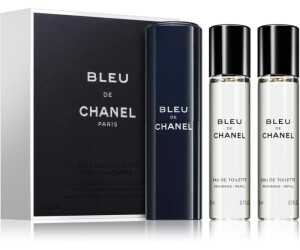
3. Bleu de Chanel (France)

 Bleu de Chanel (France)
Bleu de Chanel (France)
  • The Signature: The epitome of timeless elegance. Where Sauvage is assertive, Bleu de Chanel is effortlessly cool and sophisticated.

  • The Scent: A bright, citrusy opening of grapefruit and mint leads to a heart of earthy ginger and spicy pink pepper, all anchored by a warm, woody base of cedar and sandalwood.

  • Global Appeal: Universally flattering and perfectly balanced, it is a benchmark for a signature scent. It’s as appropriate for a wedding in Mumbai as it is for a casual lunch in Rome.

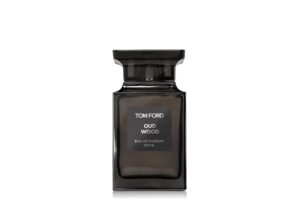
4. Tom Ford Oud Wood (United States)

Tom Ford Oud Wood (United States)
  • The Signature: Tom Ford took the mystique of Eastern oud and tailored it into a sleek, Western tuxedo. It is dark, luxurious, and irresistibly sexy.

  • The Scent: The rare and precious oud wood is softened with notes of cardamom, rosewood, and tonka bean, creating a scent that is both smoky and sweet, intense yet wearable.

  • Global Appeal: It broke barriers, making oud accessible and desirable to a global audience. It remains the gold standard for evening wear and special occasions.

5. Amouage Interlude Man (Oman)

  • The Signature: For the man who needs no introduction. Amouage represents the pinnacle of Omani luxury, blending the finest raw materials into opulent, unforgettable compositions.

  • The Scent: A powerful, incense-heavy opening of oregano and amber gives way to a heart of leather and oud, settling into a base of smoky birch and cistus. It is a complex, journey of a fragrance.

  • Global Appeal: This is a statement piece. Worn by connoisseurs in the Middle East, Europe, and Asia who appreciate uncompromising quality and artistic boldness.

6. Giorgio Armani Acqua di Giò Profondo (Italy)

  • The Signature: The scent of the Mediterranean sea bottled. It is fresh, deep, and infinitely sophisticated, capturing the spirit of the Italian coast.

  • The Scent: A vibrant blend of mineral-rich marine notes and green bergamot is deepened with a hint of cypress and sage, resting on a base of patchouli and musk.

  • Global Appeal: A superstar in warm climates and summer seasons. Its aquatic freshness is universally loved, making it a top seller across Southern Europe, the Americas, and Asia.

7. Le Labo Santal 33 (United States)

  • The Signature: The scent that defined a generation of minimalist aesthetics. More than a perfume, it’s a cultural identifier for the urban, creative class.

  • The Scent: A distinctive blend of cardamom, iris, and ambrox is centered around a addictive, creamy sandalwood note. It smells like well-worn leather books and desert air.

  • Global Appeal: Instantly recognizable in the creative districts of Berlin, Brooklyn, and Melbourne. It speaks to a modern, understated, and individualistic luxury.

8. Maison Francis Kurkdjian Baccarat Rouge 540 (France)

  • The Signature: A modern masterpiece that transcends gender. Its scent trail is legendary, leaving an intoxicating aura of warmth and luxury that is impossible to ignore.

  • The Scent: A fusion of saffron and jasmine is elevated by a woody accord of cedar and ambergris, creating a unique sensation of burnt sugar and metallic floral.

  • Global Appeal: A viral sensation that maintains its elite status. It is a favorite in the world of high fashion and luxury, a universal symbol of contemporary taste.

9. Rasasi Shuhrah Pour Homme (UAE)

  • The Signature: Proof that exceptional quality need not come with an exorbitant price tag. Rasasi is a powerhouse from Dubai, offering authentic Middle Eastern compositions with global appeal.

  • The Scent: A bold, spicy opening of saffron and pepper beautifully contrasts with the deep, animalic notes of oud and musk. It is intense, long-lasting, and profoundly masculine.

  • Global Appeal: It has become a gateway for global consumers exploring Middle Eastern fragrances. It offers incredible value and authenticity, making it a hidden gem worldwide.

10. Hugo Boss Bottled Intense (Germany)

  • The Signature: Reliable, sophisticated, and always appropriate. The Bottled line is a workhorse of the fragrance world, and the Intense version adds a deeper, more sensual dimension.

  • The Scent: The classic apple and cinnamon accord is deepened with notes of lavender and vanilla, all supported by a solid base of sandalwood and vetiver.

  • Global Appeal: Its strength is its versatility and accessibility. It is a bestseller for everyday wear, a trusted choice for men who value consistent, high-quality performance.

The Expert’s Guide: How to Choose Your Signature Scent

Choosing a fragrance is a personal pilgrimage. Here’s how to navigate it.

1. Understand the Pyramid: Perfumes unfold in three layers.

  • Top Notes: Your first impression. Often citrus (bergamot, lemon) or fresh (herbs, green notes) but evaporate quickly (15-30 mins).

  • Middle (Heart) Notes: The core character of the fragrance. This emerges as the top notes fade and can include spices, florals, or aquatic notes. It lasts for several hours.

  • Base Notes: The foundation. These are the deep, rich notes like oud, sandalwood, amber, and musk that linger the longest, often for 24 hours or more.

2. Consider Your Climate and Culture: Your environment plays a crucial role.

  • Hot/Humid Climates (Southeast Asia, Middle East, Mediterranean): Lighter, fresher scents with citrus, aquatic, or green notes are often preferred. Strong, spicy orientals can be overwhelming but are deeply traditional in Middle Eastern culture, often worn for evening events.

  • Colder Climates (Northern Europe, North America): Rich, warm scents with notes of vanilla, amber, leather, and oud come into their own, projecting better in cool, dry air.

3. Test on Your Skin – The Only Way to Know: Paper test strips are a starting point, but your skin’s unique chemistry will alter the fragrance.

  • How to Test: Spray on your wrist or inner elbow. Let it dry and wait at least 30 minutes for the middle and base notes to emerge. Avoid rubbing your wrists, as this crushes the top notes and alters the scent’s development.

  • Wear It Out: Test a maximum of two or three scents at a time. Wear them for a full day to see how they evolve and how long they last on you.

The Future of Scent: Personalization, Digitalization, and Fluidity

The next frontier of fragrance is hyper-personalization. Start-ups are emerging with at-home kits to analyze your skin’s pH and microbiome to create a bespoke scent profile. Augmented Reality (AR) apps allow you to “try on” fragrances virtually before purchasing online.

Most importantly, the future is fluid. The rigid distinctions between men’s and women’s perfumes are becoming obsolete. The most exciting and best-selling fragrances of 2025, like Baccarat Rouge 540, are proudly marketed as unisex. The modern man’s fragrance wardrobe is eclectic, featuring fresh aquatics, rich orientals, and everything in between, chosen not for a gender label but for how it makes him feel.

Conclusion: The World in a Bottle

The search for the best perfume for men is a journey without a final destination. It is an ongoing exploration of self, influenced by the borders we cross and the cultures we experience. The top perfumes of 2025 tell a story of a world in conversation: Parisian chic dialogues with Omani opulence; American innovation blends with Emirati tradition.

In the end, the best fragrance is not the one that tops a list, but the one that becomes a part of your story. It is the invisible yet unforgettable mark you leave on the world—a scent that speaks of home, of adventure, and of a confident, global identity.

Picture Story: Kashmiri Lawyers Back JKJAAC’s September 29 Indefinite Lockdown Call

0
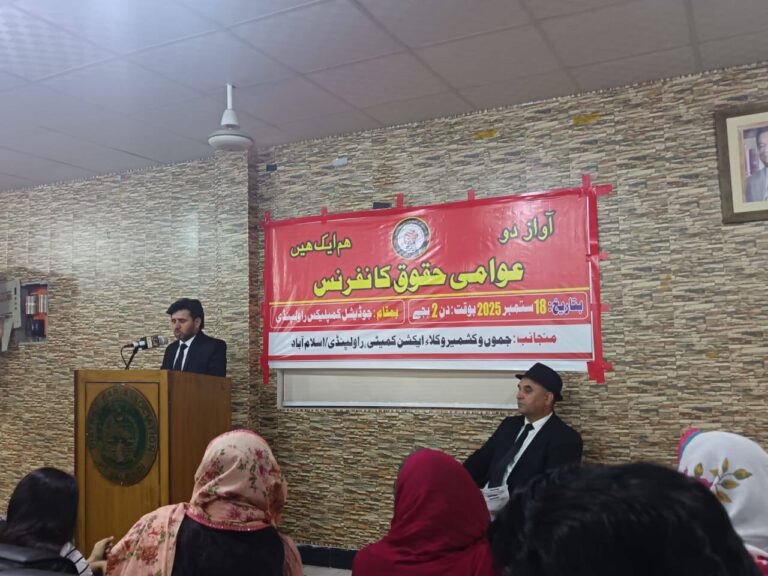
Awami Huqooq Conference in Rawalpindi

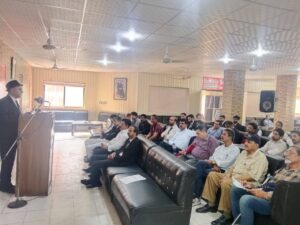
Prominent Kashmiri lawyers gathered in Rawalpindi to host an Awami Huqooq (People’s Rights) Conference, highlighting growing concerns over Kashmir’s political and economic future.

Support for JKJAAC’s Lockdown Call

Speakers at the conference announced full support for the Jammu Kashmir Joint Awami Action Committee’s call for an indefinite lockdown starting on 29 September.

United Stand for People’s Rights

Lawyers and civil society representatives pledged solidarity with the movement, stressing that the struggle is tied to safeguarding the rights of the Kashmiri people. The resolution passed in Rawalpindi reflects wider support for the JKJAAC’s protest strategy, echoing voices from across Azad Jammu & Kashmir and beyond.

Picture Story: 61 Days of Protest: Sost Border Closure Strands Passengers and Halts Trade

    0
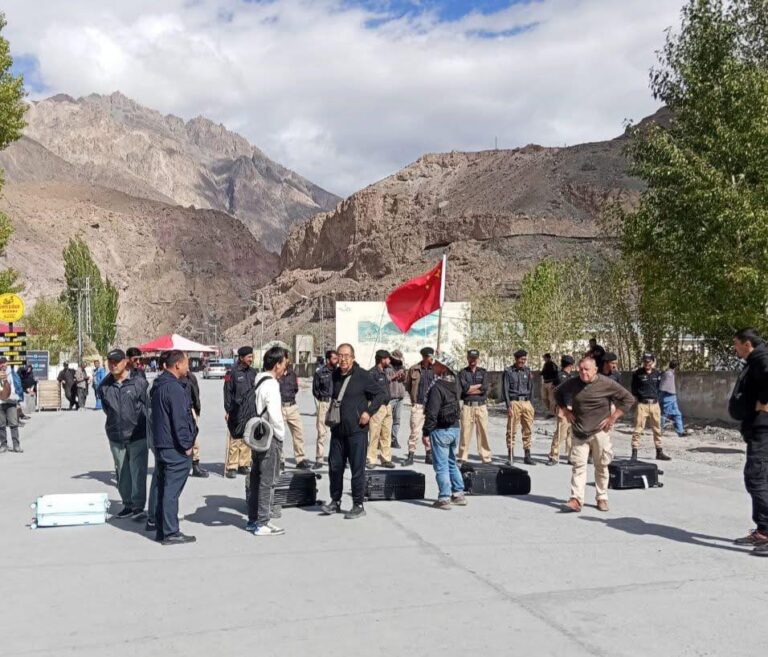
    On the 61st day of protests at the Sost border in Gilgit-Baltistan, traders continue their sit-in, shutting down immigration services. The closure has left Chinese passengers stuck at the frontier, as cross-border trade and travel remain paralyzed in the disputed region.
    On the 61st day of protests at the Sost border in Gilgit-Baltistan, traders continue their sit-in, shutting down immigration services. The closure has left Chinese passengers stuck at the frontier, as cross-border trade and travel remain paralyzed in the disputed region.

    The protest at the Sost border in Gilgit-Baltistan has entered its 61st day, leaving cross-border trade and travel in complete paralysis. Local traders, angered over what they call unfair restrictions, have staged a continuous sit-in, forcing immigration services to shut down.

    The closure has stranded dozens of Chinese passengers who remain stuck at the crossing, while the suspension of movement has also blocked a key trade route used by Pakistan to import and export goods with China.

    With no breakthrough in sight, the crisis is not only disrupting the livelihoods of traders in Gilgit-Baltistan but also straining Pakistan’s wider economic ties through this vital corridor.

    Azad jammu Kashmir Police Procure Riot Gear as September 29 Shutdown Looms

    0

    MUZAFFARABAD – Authorities in Azad Jammu and Kashmir (AJK) have approved the purchase of anti-riot equipment worth more than PKR 500 million for the region’s police force, just days before a planned shutdown protest called by the Jammu Kashmir Joint Awami Action Committee (JKJAAC) on 29 September.

    The procurement, confirmed through an official notification issued by the Finance Department, will provide police with helmets, protective jackets, shields and related equipment. Officials say the funding has been allocated under the 2025–26 budget to support newly recruited police officers.

    In a parallel measure, the government also approved a uniform allowance for more than 8,600 officers across the region. Each officer is set to receive PKR 6,935.61, bringing the total allocation to nearly PKR 60 million.

    Heightened Security Climate

    The announcement comes against the backdrop of rising tensions, as the JKJAAC has urged a region-wide shutdown on 29 September. The committee, comprising political and civil society representatives, has been vocal about rising electricity tariffs and other public grievances.

    Traders, transporters and community groups are expected to join the call, raising the likelihood of large-scale demonstrations. Analysts suggest the procurement of riot-control kits signals that authorities are bracing for potential unrest.

    Official Assurances

    President of AJK emphasized that all expenditures would remain subject to audit and be carried out strictly in accordance with financial regulations.

    Government officials insist the move is routine and intended to modernize the police force. But critics argue the timing sends a different signal, reflecting an administration more focused on controlling dissent than addressing the underlying causes of discontent.

    September’s planned shutdown follows months of growing public mobilization across Azad Jammu and Kashmir. The JKJAAC, which has become a focal point for protest activity, has framed its campaign as a movement for fairness, accountability, and relief from economic pressures.

    Observers say the coming days will test both the government’s crisis management approach and the resilience of the protest movement.

    Sost Sit-in: Gilgit-Baltistan Traders Reject Pakistani Media’s “Propaganda Campaign”

    0

    MUZAFFARABAD / SOST – For more than two months, traders in Sust, the gateway to the China border in Gilgit-Baltistan, have remained on the streets in a peaceful sit-in against what they describe as “illegal and unconstitutional taxation.”

    The protest, organized by the Pak-China Traders Ittehad Action Committee, has gained momentum across the region, resonating with the wider population of Gilgit-Baltistan who see the slogan “No Taxation Without Representation” as part of their broader political struggle.

    Media’s Coverage Sparks Anger

    Until now, Pakistan’s mainstream media had largely ignored the 60-day-long sit-in. This week, however, national television channels covered the protest—portraying the demonstrators as “troublemakers.”

    That coverage has provoked outrage across Gilgit-Baltistan. Civil society groups, political leaders, and youth organizations called it an attempt to discredit a peaceful movement for rights.

    “This sit-in represents the entire people of Gilgit-Baltistan. Calling peaceful protestors ‘troublemakers’ is an insult to the dignity of our 2.2 million people,” said Sheikh Ahmed Ali Noori, a member of the Gilgit-Baltistan Council.

    The Nagar Youth Organization also rejected the portrayal, with its president, Advocate Rizwan, stressing:

    “Smear campaigns against peaceful movements will not silence genuine voices. The people of Gilgit-Baltistan will continue their democratic struggle.”

    Political and Legal Repercussions

    Leaders of the Pakistan Peoples Party in Gilgit-Baltistan also expressed concern. Zulfiqar Ali Murad argued that just as the demands of the traders were nearing resolution, the timing of the media campaign suggested a deliberate attempt to undermine the sit-in.

    The Traders Ittehad announced plans to file a defamation case against national media outlets, accusing them of “insulting the democratic struggle of Gilgit-Baltistan’s people.”

    A Deeper Issue

    Behind the sit-in lies a broader constitutional question. Gilgit-Baltistan remains a disputed region, historically linked to the wider Kashmir conflict, with its people demanding political representation and constitutional rights. The traders’ sit-in, while economic in nature, has become symbolic of this unresolved status.

    Observers warn that mishandling the issue risks fueling alienation and giving space to nationalist or separatist currents.

    “If authorities continue using delaying tactics instead of addressing constitutional demands, it will only deepen the sense of exclusion among Gilgit-Baltistan’s youth,” said one activist.

    The Sust sit-in is no longer just a protest about taxation. It has become a mirror of Gilgit-Baltistan’s long-standing struggle for recognition, representation, and rights. By dismissing peaceful protestors as “troublemakers,” Pakistan’s national media may have inadvertently amplified the very voices it sought to silence.

    Two Gunmen Behind Firing Outside Disha Patani’s Home Killed in Ghaziabad Encounter

    0

    In a dramatic police encounter in Ghaziabad, Uttar Pradesh, two suspects accused of opening fire outside Bollywood actress Disha Patani’s family home have been shot dead.

    According to officials, Delhi Police and Uttar Pradesh’s Special Task Force (STF) jointly cornered the suspects, identified as Ravindra alias Kallu and Arun. A gun battle ensued, leaving both men critically injured. They later succumbed to their injuries. Police recovered modern automatic weapons from the site, which have been sent for forensic testing.

    Investigations revealed that both men were associated with the notorious Bishnoi gang, previously linked to threats against Bollywood superstar Salman Khan.

    The incident dates back to September 12, when two motorcycle-borne assailants opened fire outside Disha Patani’s ancestral home in Bareilly’s Civil Lines area at around 3:45 a.m. The attack was later claimed by Indian gangsters Goldy Brar and Rohit Godara, who issued threats against Patani’s sister Khushboo, accusing her of using derogatory remarks against their so-called “spiritual leaders.”

    Following the attack, heavy security was deployed around Patani’s residence, and a large-scale manhunt was launched. Police have vowed to bring all those involved to justice, while the actress’s family continues to remain under tight security.

    JKJAAC Leader Rejects Alleged Indian Cipher Leak as ‘Scripted Drama’ Ahead of September 29 Shutdown

    0

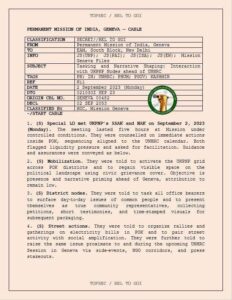
    MUZAFFARABAD (PaK): A day after an alleged “Indian cipher” surfaced in Islamabad and stirred political debate in Azad Jammu and Kashmir (AJK), Jammu Kashmir Joint Awami Action Committee (JKJAAC) core member and prominent trader leader Shaukat Nawaz Mir dismissed the document as part of a “scripted drama” designed to undermine the growing protest movement.

    Speaking during a discussion on the social media page Tajran Da Veer, Mir expressed astonishment that a document supposedly involving two nuclear powers could be leaked — yet only a handful of media outlets reported on it. “It is shocking that when a dangerous cipher of this nature leaks, only three media houses break the story. This is nothing more than the latest episode of a drama produced by Chaudhry Anwar-ul-Haq,” he remarked.

    ‘AI-generated drama’

    Mir alleged that the so-called cipher was artificially manufactured, comparing it to previously circulated “fake AI-generated videos and audios.”

    “First, we saw fabricated videos made with AI, then audios, and now an AI-generated cipher has been launched in the market,” he said.

    He further noted that Chaudhry Anwar-ul-Haq had appeared in a private media interview the night before the leak, and within 24 hours, the cipher was reported by just three channels.

    “Normally, when two nuclear states are mentioned in such sensitive material, Pakistan’s Foreign Office and Interior Ministry immediately become active. PTV and every major channel would run it as breaking news. But here, the cipher conveniently landed in the hands of Kashmiri politicians — and even the document itself contains glaring mistakes that any ordinary person can identify,” Mir argued.

    Background of the cipher controversy

    Alleged Indian cipher document leaked in September 2025, showing date discrepancy where “Monday” was written, though The Azadi Times verified that day was actually Tuesday.
    Alleged Indian cipher document leaked in September 2025, showing date discrepancy where “Monday” was written, though The Azadi Times verified that day was actually Tuesday.


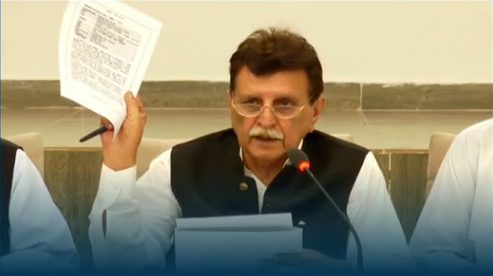
    The alleged document first came into public view on September 16, when former AJK Prime Minister Raja Farooq Haider Khan displayed it during an all-parties conference of Kashmiri political leaders in Islamabad. Several participants labeled the cipher a conspiracy against Pakistan and Azad Kashmir, warning that such tactics were aimed at derailing the popular protest movement.

    Adding to the debate, Syed Zeeshan Haider, a PTI leader from Jhelum Valley AJK, took to social media questioning the credibility of the so-called Indian letter. “If this Indian letter is truly genuine, then it is an open conspiracy against Pakistan. In that case, the Foreign Office should summon the Indian ambassador, lodge a formal protest, and record a demarche—that is the standard diplomatic practice. Otherwise, it seems the cipher was nothing more than a gimmick to fool the people. #InnocentQuestion” he wrote, suggesting that without diplomatic action, the controversy looked more like political theatre than a real national security threat.

    Public distrust and rising anger

    According to Shaukat Nawaz Mir, the people of Azad Kashmir have already “seen through the propaganda” and rejected attempts to discredit the JAAC. “The faces of these politicians are now exposed before the public,” he said.

    Mir reaffirmed that the protest campaign would continue as planned:

    “InshaAllah, on September 29, there will be a complete wheel-jam and shutter-down strike across the state.”

    Significance ahead of September 29

    The Joint Awami Action Committee has already announced a statewide lockdown on September 29, pressing its charter of demands against rising electricity tariffs, heavy taxation, and governance issues in AJK. With political parties divided — some labeling the protest an “Indian conspiracy,” while others like PTI AJK openly siding with the committee — the controversy surrounding the alleged cipher has further polarized the political landscape.

    For many observers, the debate reflects a deeper struggle between the AJK government and grassroots movements demanding accountability and relief. As September 29 approaches, tensions are set to escalate, with both the state and federal authorities under pressure to respond.