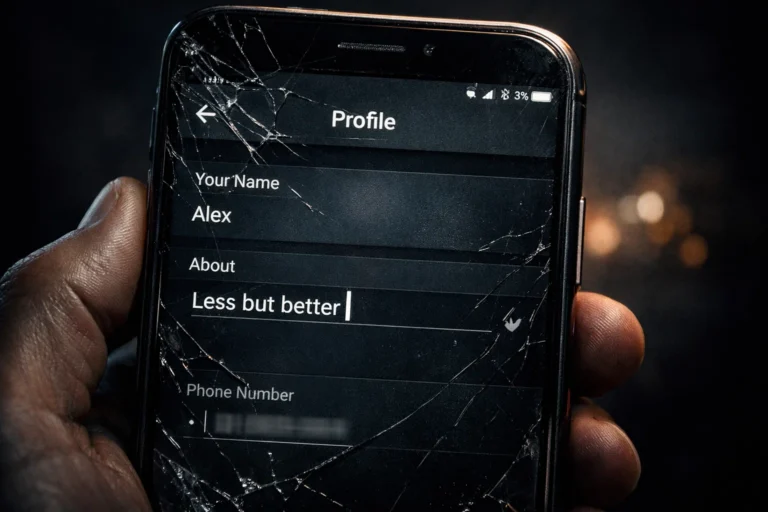
Why Your WhatsApp Bio is Your Digital Identity: Let’s be completely honest. In the fast-paced digital landscape of 2026, your WhatsApp profile is often the very first impression you make. Whether it’s a new colleague from work, an old friend from school trying to reconnect, a potential business client, or even a romantic interest sliding into your DMs, that tiny box of text—your ‘About’ section—speaks volumes before you even type a single “Hello.”
Yet, surprisingly, millions of users worldwide still stick with the default message: “Hey there! I am using WhatsApp.” While it’s safe and neutral, it’s also incredibly boring, forgettable, and fails to capture your unique personality. In 2026, where personal branding and digital expression matter more than ever, your WhatsApp bio quote is essentially your digital handshake. It should reflect your current mood, your sense of humor, your professional ambition, your aesthetic taste, or your philosophical outlook on life.
Whether you are searching for something hilariously funny to make people smile, a deep and meaningful quote to showcase your thoughtful side, a stylish one-liner in English or Hindi, or an attitude-filled status that exudes confidence, we have curated the ultimate, most comprehensive list of WhatsApp About lines for every personality type imaginable.
This guide contains over 300 carefully selected WhatsApp status ideas, organized into easy-to-navigate categories. Let’s transform your profile from mundane to memorable.
Why Your WhatsApp Bio Matters More Than Ever in 2026
Before we dive into our extensive collection, let’s understand why regularly updating your WhatsApp status is a small but powerful habit that can impact your digital presence:
1. The Power of First Impressions
When someone saves your number or clicks on your profile, your WhatsApp bio is the first piece of text they encounter. A witty, interesting, or thoughtful line can immediately spark curiosity and set a positive tone for future conversations.
2. Silent Communication of Availability
Your bio acts as a silent communicator. It subtly tells your contacts whether you’re currently open to chatting, deeply focused on work, going through a personal transformation, or simply not in the mood for small talk.
3. Personal Branding for Professionals
For entrepreneurs, freelancers, and corporate professionals, a clean, clever, or industry-relevant bio can serve as an excellent conversation starter and reinforce your personal brand.
4. Emotional Expression
Sometimes, we don’t have the words to express how we feel to everyone individually. A well-chosen bio can convey happiness, heartbreak, ambition, or introspection to your entire contact list simultaneously.
5. Cultural and Linguistic Connection
Using lines in Hindi, Urdu, or regional languages can help you connect better with specific audiences and showcase your cultural roots.
Category 1: Short, Stylish & Aesthetic WhatsApp Bios
Sometimes, less is truly more. These minimalist one-liners are clean, modern, visually appealing, and perfect for those who appreciate understated elegance. They look fantastic under your profile name and leave a lasting impact.
Less but better.
Currently: In my soft girl era.
Simplicity is the ultimate sophistication.
Just a vibe.
Living my life, not explaining it.
On my way to becoming a better me.
Chaos coordinator.
Chasing sunsets and good vibes.
Introvert by nature, but I open up quickly.
Silent observer.
Less perfection, more authenticity.
Collecting moments, not things.
Stay soft, it looks beautiful on you.
Elegance is refusal.
Lost in the right direction.
Creating my own sunshine.
Good vibes only.
Salty but sweet.
Wild heart, gypsy soul.
Keepin’ it real since [Your Birth Year].
Category 2: Funny & Witty WhatsApp Status Ideas
Humor is universally attractive and the quickest way to someone’s heart. Make your contacts chuckle the moment they open your chat window with these hilarious WhatsApp about lines.
I’m not lazy, I’m on energy-saving mode.
I put the “pro” in procrastination.
Adulting: The art of pretending to have it all together.
Sorry for what I said when I was hungry.
I’m not arguing, I’m just explaining why I’m right.
Currently avoiding responsibilities.
Running on coffee and chaos.
Professional overthinker.
I need six months of vacation, twice a year.
My life is a series of parentheses. (If you know, you know.)
I followed my heart, and it led me to the fridge.
I’m on a seafood diet. I see food, and I eat it.
My bed is a magical place where I suddenly remember everything I forgot to do.
Life is short. Smile while you still have teeth.
I’m not weird, I’m limited edition.
Trying to be a rainbow in someone’s cloud, but I’m more of a lightning storm.
My wallet is like an onion. Opening it makes me cry.
I don’t need a hairstylist, my pillow gives me a new hairstyle every morning.
Common sense is like deodorant. The people who need it most never use it.
I’m not clumsy. The floor just hates me, the tables and chairs are bullies, and the walls get in my way.
Category 3: Attitude & Confidence Bios for WhatsApp
For when you want to show the world that you mean business, that you’re unshakeable, and that you possess unwavering self-confidence. These attitude status lines command respect.
I’m not bossy, I’m the boss.
Hustle until your haters ask if you’re hiring.
On a whole different level.
Speak your mind, even if your voice shakes.
I don’t repeat myself. I said what I said.
Main character energy.
In a world full of trends, I want to remain a classic.
My DNA is built for success.
Don’t study me, you won’t graduate.
I’m the storm.
Born to stand out, not to fit in.
Legends don’t die, I am a living example.
My attitude is based on how you treat me.
Queens don’t compete with hoes.
I don’t have an attitude problem. You have a perception problem.
I’m not heartless, I’ve just learned to use my heart less.
Be yourself; everyone else is already taken.
I am who I am. Your approval isn’t needed.
They told me I couldn’t, so I did.
Sunshine mixed with a little hurricane.
Category 4: Love, Romance & Relationship Status Lines
Whether you’re madly in love, happily single, or navigating the complex world of modern dating, these romantic WhatsApp bios capture every shade of love.
“You smiled, and you talked, and I felt the world grow quiet.”
Taken, but not tamed.
“We accept the love we think we deserve.”
Waiting for the right signals.
Single, but my standards aren’t.
“The heart wants what it wants.”
Love is a serious mental disease. – Plato
In a relationship with my goals.
If you’re happy, I’m happy.
My heart is and always will be yours.
Together is a wonderful place to be.
You are my today and all of my tomorrows.
Every love story is beautiful, but ours is my favorite.
Home is wherever I’m with you.
I still fall for you every day.
You’re my favorite notification.
Love is friendship set on fire.
Currently accepting applications for a partner in crime.
My heart says yes, but my anxiety says “what if?”
Self-love is the best love.
Category 5: Sad, Emotional & Heartbreak Bios
Heartbreak is a universal experience. These emotional WhatsApp status lines offer solace, express pain, and show that it’s okay not to be okay sometimes.
“Sometimes, you have to accept that some people are part of your history, but not your destiny.”
Sad, but glowing.
“It’s okay to be at peace with how things turned out.”
Healing in progress.
Some scars are too deep to heal.
Silent tears hold the loudest pain.
I miss the old us.
Broken crayons still color.
The worst kind of sad is not being able to explain why.
Numb to the pain now.
Lost in my own thoughts.
Smiling on the outside, breaking on the inside.
Some chapters end so better ones can begin.
Grief is just love with no place to go.
It’s hard to forget someone who gave you so much to remember.
Moving on doesn’t mean you forget, it means you choose happiness over hurt.
The sun will rise and we will try again.
This too shall pass.
Finding peace in the pieces.
Learning to let go.
Category 6: Motivational & Success-Oriented WhatsApp Bios
Perfect for professionals, students, entrepreneurs, and anyone on their grind. These inspirational WhatsApp about lines will keep you and your contacts motivated.
Building an empire, one day at a time.
Vision over visibility.
Discipline over motivation.
Future millionaire.
Don’t stop until you’re proud.
Creating the life I don’t need a vacation from.
The comeback is always stronger than the setback.
Work hard in silence, let success make the noise.
Focused and determined.
1% better every day.
Dream big. Work hard. Make it happen.
Success is the best revenge.
Invest in yourself. It pays the best interest.
Your only limit is you.
Stay hungry, stay foolish. – Steve Jobs
The harder you work, the luckier you get.
Success doesn’t come to you, you go to it.
Be the CEO your parents wanted you to marry.
Grind in your 20s. Build in your 30s. Chill in your 40s.
Small steps every day.
Category 7: Cool Bios in Hindi & Roman English (Hinglish)
For those who love to express themselves in desi style. These Hindi WhatsApp status lines and Hinglish bio quotes add a unique cultural flavor to your profile.
“Apna time aayega.” (My time will come.)
“Zindagi na milegi dobara.” (You only live once.)
“Muskurahaton mein chhupa dard.” (The pain hidden behind the smiles.)
“Basanti, nach nahi rahi hai tu… khatarnaak lag rahi hai.” (A classic cool dialogue.)
“Bade log, badi baatein.” (Big people, big talks.)
“Dar ke aage jeet hai.” (Victory lies beyond fear.)
“Main hun na.” (I am here.)
“Filhaal… besabar hain.” (Currently… impatient.)
“Jo ho gaya, so ho gaya.” (What happened, happened.)
“Thoda sa pagal, thoda sa mast.” (A little crazy, a little chill.)
“Zindagi ek safar hai suhana…”
“Kuchh paane ke liye kuchh khona padta hai.”
“Dil toh bachcha hai ji…”
“Haq se single.”
“Sakht launda/laundi.”
“Chaar bottle vodka, kaam mera rojka.”
“Jiyo toh aise jiyo jaise kal ho na ho.”
“Kuch kuch hota hai, tum nahi samjhoge.”
“Picture abhi baaki hai mere dost.”
“Swagat nahi karoge hamara?”
Category 8: Professional & Business WhatsApp Bios
Ideal for entrepreneurs, freelancers, and corporate workers who use WhatsApp Business or professional accounts.
Connecting ideas, creating solutions.
Turning coffee into contracts.
Building brands that matter.
Your success is my business.
Let’s talk business. 📩
CEO of my own destiny.
Helping businesses grow since [Year].
Digital marketing expert | Coffee lover | Dog parent
Available for freelance projects.
Let’s build something great together.
Professional problem solver.
Results-driven strategist.
Innovation distinguishes between a leader and a follower.
Business hours: 24/7 (because passion doesn’t sleep)
Collaboration over competition.
Making ideas happen.
Your vision, my execution.
Consultant by day, dreamer by night.
Excellence is not an act, but a habit.
Let’s network.
Category 9: Travel & Adventure WhatsApp Status Lines
For the wanderers, explorers, and those bitten by the travel bug.
Not all who wander are lost.
Collecting stamps on my passport and memories in my heart.
Wanderlust and city dust.
Born to travel, forced to work.
Catch flights, not feelings.
Adventure awaits.
The world is a book, and those who do not travel read only one page.
Take only pictures, leave only footprints.
Passport ready, heart steady.
Exploring the world one city at a time.
Mountain lover, ocean dreamer.
Jet lag is my favorite accessory.
Work hard, travel harder.
I haven’t been everywhere, but it’s on my list.
Life begins at the end of your comfort zone.
Let’s go somewhere the sun kisses the ocean.
Travel is the only thing you buy that makes you richer.
Lost and found in [Current Location].
Seeking adventures and new perspectives.
Home is where the WiFi connects automatically… but I prefer hotels.
Category 10: Gaming & Tech Enthusiast Bios
Perfect for gamers, coders, and technology lovers.
Lag is my biggest enemy.
Eating, sleeping, gaming, repeating.
In a relationship with my console.
Error 404: Social life not found.
Keep calm and game on.
GG WP.
Living in a simulation.
Ctrl+Alt+Del my problems away.
There is no place like 127.0.0.1
I don’t always test my code, but when I do, I do it in production.
It’s not a bug, it’s a feature.
Talk is cheap. Show me the code.
Loading… please wait.
AFK (Away From Keyboard)
Do not disturb: Gaming in progress.
My other computer is your computer.
Will work for bandwidth.
Leveling up in life.
High score chaser.
Reality is just a crappy game.
Category 11: Spiritual & Mindfulness WhatsApp Bios
For those on a journey of inner peace, mindfulness, and spiritual growth.
Be here now.
Inhale the future, exhale the past.
Peace begins with a smile.
Namaste in bed.
Good vibes and tan lines.
The present moment is all you ever have.
Let go and let God.
Finding peace in the chaos.
Meditate, don’t hate.
Soul over ego.
Trust the timing of your life.
Everything happens for a reason.
Gratitude turns what we have into enough.
Breathe in peace, breathe out love.
Seeking truth, finding myself.
Awake, aware, alive.
Inner peace is the new success.
Faith over fear.
Walking the path of light.
Om Shanti.
Category 12: Foodie & Lifestyle Bios
For culinary enthusiasts and those who live to eat.
Will work for food.
In a committed relationship with pizza.
Count memories, not calories.
First we eat, then we do everything else.
Calories don’t count on weekends.
Food is my love language.
Eating my way through life.
Chef’s kiss.
Brunch is always a good idea.
Spicy food, spicier life.
Sugar, spice, and everything nice.
Life is uncertain. Eat dessert first.
Good food, good mood.
My favorite exercise is a cross between a lunge and a crunch… I call it lunch.
Foodie by birth, chef by choice.
Chai over coffee, always.
Exploring the world one bite at a time.
Home is where the food is.
Currently accepting dinner invitations.
Feed me and tell me I’m pretty.
How to Choose the Perfect WhatsApp About Line: A Comprehensive Guide
With over 300 options available, selecting the right one can feel overwhelming. Here’s a detailed framework to help you decide:
1. Know Your Audience
Consider who primarily views your profile. If your WhatsApp is filled with family members and professional contacts, a funny or positive bio is safer. If it’s mostly close friends, you can be more edgy, personal, or use inside jokes.
2. Match Your Current Mood
Authenticity resonates. Don’t force a happy quote if you’re going through a difficult time. It’s perfectly fine to use a healing or introspective bio. Your contacts will appreciate the honesty.
3. Update Regularly
Your bio shouldn’t be static. Change it with the seasons, after major life achievements, during holidays, or based on your current obsession (a new book, movie, or hobby). Regular updates show you’re active and engaged.
4. Use Formatting and Symbols
Don’t be afraid to add simple emojis, bullet points (•), or line breaks to make your bio visually cleaner and more organized. However, avoid over-cluttering.
5. Language Matters
Choose a language that feels most natural to you. If you think in Hindi, use Hindi. If you’re bilingual, mix it up. The goal is comfort and authenticity.
6. Length Consideration
WhatsApp truncates long bios after a certain character count. Keep it concise enough that the core message is visible without clicking “Read more.”
Conclusion: Your Story, Told in a Single Line
Your WhatsApp ‘About’ line is far more than just a few words of text; it’s a trailer for your life, a snapshot of your current state of mind, and the first chapter people read before they get to know the real you. In the crowded digital space of 2026, standing out requires authenticity, creativity, and a willingness to express yourself.
So, ditch that default message. Browse through our extensive collection of funny, stylish, attitude-filled, emotional, and motivational WhatsApp status ideas. Pick a line that truly resonates with your soul, update your profile, and let your WhatsApp bio do the talking.
Which one was your favorite? Let us know in the comments below, and don’t forget to share this article with friends who desperately need a bio upgrade!
Frequently Asked Questions (FAQ)
Q: How often should I change my WhatsApp bio? A: There’s no set rule, but updating it monthly or whenever you experience a significant mood shift or life event keeps your profile fresh and authentic.
Q: Can I use these lines for other social media platforms? A: Absolutely! These bio ideas work perfectly for Instagram, Facebook, Twitter/X, LinkedIn, and even dating apps like Tinder or Bumble.
Q: What is the character limit for WhatsApp About? A: WhatsApp allows up to 139 characters for the About section, so choose lines that fit within this limit or truncate gracefully.
Q: Are these quotes copyright-free? A: Most short phrases and common quotes fall under fair use, but if you’re using them for commercial purposes, verify the source.