Wednesday, March 25, 2026
10.5 C
Srinagar
Home Blog Page 36

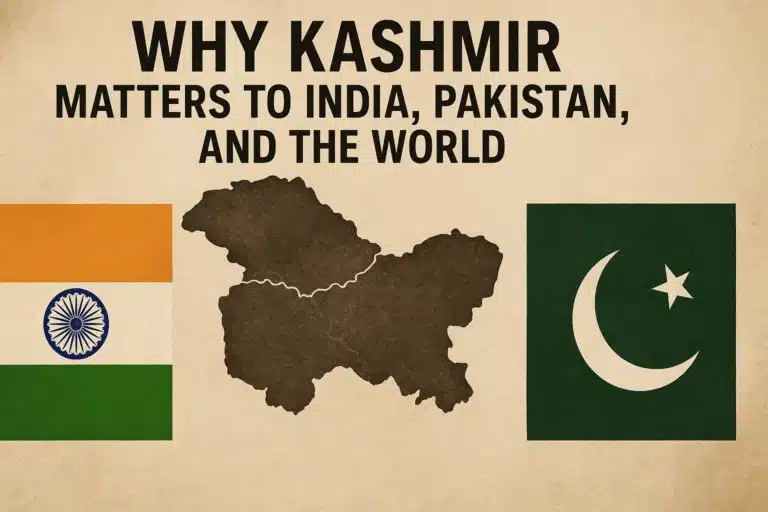
Why Kashmir Matters to India, Pakistan, and the World: A Struggle Beyond Borders

0

Muzaffarabad, September 2025 — The Kashmir conflict stands as one of the world’s longest-running and most dangerous territorial disputes. Tucked within the majestic Himalayas, the region is not only home to breathtaking landscapes but also a deeply contested political identity. For India and Pakistan, Kashmir represents far more than land: it is a question of ideology, national pride, survival, and justice. Yet for millions of Kashmiris, it remains primarily a question of dignity and the right to self-determination.

This article explores why Kashmir is so important to both India and Pakistan, how the dispute has evolved, and why the voices of Kashmiris themselves must be central to any resolution.

Historical Roots: Partition and the Unfinished Question

The story begins in 1947, when British India was partitioned into India and Pakistan. At that time, princely states were given the option to join either country or remain independent. The ruler of Jammu and Kashmir, Maharaja Hari Singh, initially sought independence but eventually signed the Instrument of Accession to India under duress, after tribal militias from Pakistan entered Kashmir.

Read Also: Kashmir Conflict & Human Rights

Pakistan immediately rejected this accession, arguing that as a Muslim-majority state, Kashmir naturally belonged with it. The first war between India and Pakistan broke out in 1947–48. The United Nations intervened and passed resolutions calling for a ceasefire, withdrawal of troops, and a plebiscite allowing Kashmiris to decide their future. That plebiscite, however, has never been held.

The partition’s unfinished business continues to define South Asia’s geopolitics. For India, Kashmir’s accession validated its secular identity. For Pakistan, Kashmir became a symbol of betrayal and injustice.

India’s Perspective: Territorial Integrity and Secular Identity

For India, Jammu and Kashmir is more than just a piece of disputed land — it is deeply tied to its national identity and territorial integrity. New Delhi repeatedly asserts that Kashmir is an “integral part” of the Indian union, a claim rooted in multiple layers of political, strategic, and ideological reasoning. One of the most prominent arguments centers on India’s secular nationalism. Despite Kashmir’s Muslim-majority population, Indian leaders have long projected the region’s accession as evidence of the country’s pluralist ethos, demonstrating that India can accommodate diverse religious and cultural communities under one national framework. Losing Kashmir, many argue, would undermine this secular foundation and weaken the narrative of a unified India.

Strategically, Kashmir holds immense importance because of its geography. The region borders both Pakistan and China, India’s two principal rivals, making it a critical buffer zone. Control of Kashmir provides India with leverage in its wider security calculations and regional power dynamics. Moreover, given the history of insurgency and militancy in the valley, India maintains one of the world’s largest troop deployments in the region. Officials in New Delhi argue that this heavy militarization is necessary to preserve stability and counter terrorism, despite criticism from international human rights organizations.

Read Also: Jammu and Kashmir: Complete Geopolitical and Historical Profile

Domestic politics also shape India’s approach to Kashmir. For many political parties, especially Hindu nationalist groups, the valley represents a symbol of sovereignty and strength. The 2019 decision to revoke Article 370 — which stripped Jammu and Kashmir of its semi-autonomous status — was celebrated across much of India as a “final integration” of the state. For Prime Minister Narendra Modi’s government, this move was not only a political victory but also a demonstration of India’s uncompromising stance on national unity. In essence, for New Delhi, giving up Kashmir would not simply mean territorial loss; it would represent a defeat of its secular and nationalist narrative, something successive governments have refused to accept.

Pakistan’s Perspective: Justice, Religion, and Water

For Pakistan, Kashmir has remained at the heart of its national identity since the country’s creation in 1947. Islamabad views the region as the “unfinished business of partition,” a belief rooted in historical, cultural, and religious considerations. With over 70 percent of Kashmir’s population being Muslim, Pakistan argues that the state should have naturally acceded to it at the time of partition. Successive Pakistani leaders have framed Kashmir not only as a territorial dispute but as a matter of justice and moral obligation, claiming solidarity with the Kashmiri people in their demand for self-determination.

Beyond religious and cultural affinity, Kashmir is also of critical strategic importance to Pakistan due to its water resources. The valley is home to the headwaters of the Indus River system, which sustains Pakistan’s agriculture and provides water for millions. Although the Indus Waters Treaty of 1960 created a framework for sharing water resources between India and Pakistan, fears of India manipulating flows remain an ever-present concern in Islamabad’s strategic calculations. For Pakistan, losing influence over Kashmir could jeopardize its long-term water security, adding another layer of urgency to the dispute.

Politically, Pakistan frequently highlights United Nations resolutions that guarantee Kashmiris the right to determine their political future through a plebiscite. At international forums, Islamabad positions itself as the defender of these commitments, often contrasting its stance with India’s rejection of outside mediation. Critics, however, argue that Pakistan’s position has not always been consistent, with its policies sometimes shaped more by strategic interests than by the pure principle of self-determination. Still, for Pakistan, Kashmir is far more than a territorial claim; it is tied to ideology, survival, and identity. From school textbooks to political speeches, Kashmir is embedded in the national consciousness as a cause that defines Pakistan’s existence and its vision of justice in South Asia.

Kashmir’s Significance Beyond Borders

While India and Pakistan continue to lock horns over sovereignty, the significance of Kashmir extends far beyond the territorial rivalry of these two South Asian neighbors. The region’s importance is deeply rooted in its natural wealth, strategic geography, and cultural legacy, making it a focal point of global attention.

Kashmir is blessed with abundant natural resources, particularly its rivers and glaciers, which serve as lifelines for South Asia’s water security. The Indus River system, originating in this region, sustains millions of people across Pakistan and northern India. As climate change accelerates the melting of Himalayan glaciers, the importance of Kashmir’s water resources is becoming even more pressing, with both countries acutely aware that control over these sources equates to long-term survival.

Equally important is Kashmir’s geopolitical location. Nestled between South Asia, Central Asia, and China, the region sits at the crossroads of major civilizational and trade routes. This geography makes it a natural strategic corridor and, at the same time, a potential flashpoint. For global powers, Kashmir is not just a bilateral dispute between India and Pakistan; it represents a delicate balance in a region where two nuclear-armed neighbors remain locked in decades of hostility.

Beyond politics and strategy, Kashmir is also a cultural treasure. For centuries, it has been a cradle of Sufi traditions, artistic syncretism, and intellectual exchange. The valley has produced poets, saints, and thinkers whose legacies highlight Kashmir as a unique meeting point of Hindu, Buddhist, and Islamic influences. This cultural richness, however, has often been overshadowed by the ceaseless conflict.

Kashmiris’ Perspective: A Struggle for Self-Determination

Amidst the grand narratives of India’s nationalism and Pakistan’s ideology, the voices of Kashmiris themselves often remain marginalized. For many in the valley and across the divided territories, the conflict is less about national prestige and more about the fundamental right to self-determination.

Kashmiri nationalist groups, such as the Joint Awami Action Committee (JAAC) and other organizations, consistently emphasize that both India and Pakistan have reduced the Kashmir issue to a territorial dispute. By doing so, they argue, the two states have sidelined the role of the United Nations and ignored the principles of international law that call for the right of Kashmiris to decide their own political future.

“India and Pakistan have reduced our struggle into a territorial contest,” one Kashmiri activist told The Azadi Times. “For us, it is not about being Indian or Pakistani. It is about being Kashmiri and deciding our destiny ourselves.” This sentiment is not isolated—it resonates across villages, towns, and cities of Jammu & Kashmir, where the cry for Azadi (freedom) often transcends the binary choice of joining either India or Pakistan.

For ordinary Kashmiris, the struggle is deeply personal. It encompasses their identity, dignity, and the right to live without fear. Many in the valley feel trapped between two competing nationalisms, forced into a dispute they did not create but continue to endure. Their demand remains simple yet profound: the ability to shape their own future without external imposition.

Wars, Militarization, and Human Cost

Since the partition of the subcontinent in 1947, Kashmir has been the epicenter of hostility between India and Pakistan, resulting in three major wars—1947–48, 1965, and 1999 (the Kargil conflict). Each confrontation has left scars, not only on the political landscape but also on the lives of millions caught in the crossfire.

Today, Kashmir is one of the most heavily militarized zones in the world. With hundreds of thousands of troops deployed on both sides of the Line of Control (LoC), daily life in the region is overshadowed by checkpoints, surveillance, and an ever-present military presence. India alone maintains a staggering deployment of security forces, arguing that it is essential to curb militancy and safeguard national security.

The human cost of this prolonged conflict is devastating. Thousands of civilians have lost their lives, while countless others continue to live under the shadow of violence. Entire generations have grown up amid conflict, curfews, and restrictions on basic freedoms. Frequent communication blackouts and internet shutdowns further disrupt education, healthcare, and livelihoods, leaving Kashmiris feeling increasingly isolated from the outside world.

International human rights organizations such as Amnesty International and Human Rights Watch have repeatedly documented abuses in the region, ranging from extrajudicial killings and enforced disappearances to restrictions on freedom of speech and assembly. For Kashmiris, the militarization itself serves as a stark reminder of their lack of agency. Many argue that the very presence of massive armies on their soil is evidence that their voices are being silenced in the name of security.

International Reactions: Silence and Selectivity

Despite Kashmir’s undeniable global significance, the conflict rarely occupies center stage in international diplomacy. Major powers, including the United States and European Union member states, often issue carefully worded statements expressing “concern” about the situation, but these remarks rarely translate into meaningful action or sustained diplomatic pressure. For many observers, this pattern reveals a deep contradiction: while these nations promote human rights globally, their economic and strategic partnerships—particularly with India—often overshadow the plight of Kashmiris.

India’s growing role as a key player in global markets and geopolitics has further contributed to this silence. New Delhi’s economic clout, especially in technology and defense, gives it leverage that discourages Western capitals from taking strong positions. For Washington, maintaining close ties with India as a counterweight to China in the Indo-Pacific often takes precedence over raising uncomfortable questions about human rights in Kashmir.

China, meanwhile, adopts a cautious yet strategic approach. While it continues to back Pakistan diplomatically on the Kashmir issue, Beijing’s primary concern lies in protecting its own economic and territorial interests. With the China-Pakistan Economic Corridor (CPEC) running through Gilgit-Baltistan and broader Belt and Road Initiative (BRI) projects in the region, Beijing avoids moves that could destabilize its investments. Its stance, therefore, is less about moral support for Kashmiris and more about safeguarding its long-term regional ambitions.

The Organization of Islamic Cooperation (OIC) has consistently passed resolutions supporting the Kashmiri people’s right to self-determination. Yet these resolutions are largely symbolic, lacking enforcement mechanisms or collective diplomatic weight. Many Muslim-majority states, while voicing solidarity, prioritize trade and defense relations with India, further diluting the impact of the OIC’s statements. For Kashmiris, this selective advocacy only reinforces the perception of abandonment by the wider international community.

Why Kashmir Matters to the World

Kashmir is far more than a territorial dispute confined to South Asia—it carries global implications. At the forefront is the risk of nuclear escalation. India and Pakistan, both nuclear-armed, have fought wars over the region and continue to engage in frequent military skirmishes along the Line of Control. Any miscalculation could spiral into a larger conflict with catastrophic consequences, not just for the subcontinent but for global security.

Human rights concerns further elevate the issue to an international dimension. Reports of curfews, crackdowns, arbitrary detentions, and communication blackouts raise serious questions about adherence to international humanitarian law. The treatment of civilians in Kashmir often serves as a litmus test for the credibility of global institutions that claim to uphold human rights.

Kashmir also influences regional stability. The prolonged conflict has fueled extremism, mistrust, and hostility across South Asia. It remains a major obstacle to initiatives such as regional trade, cultural exchange, and cooperation within platforms like SAARC. A peaceful resolution would not only benefit Kashmiris but also unlock opportunities for economic integration and political stability across the broader region.

For the international community, then, Kashmir is not just a dispute between India and Pakistan. It is a challenge tied to nuclear security, human rights, and regional peace—issues that have direct consequences for global order.

The Road Ahead: Self-Determination or Stalemate?

The Kashmir conflict endures because of deeply conflicting narratives. For India, it is about sovereignty and national unity; for Pakistan, it is about justice and fulfilling the unfinished agenda of partition; and for Kashmiris, it is about freedom, dignity, and the right to self-determination. These competing visions have created a deadlock that has proven resistant to both war and diplomacy.

The absence of genuine dialogue and the erosion of mutual trust only deepen this stalemate. Since the revocation of Article 370 in 2019, the political landscape has shifted further, leaving little room for traditional negotiation frameworks. Yet experts and activists continue to stress that no durable peace is possible without centering Kashmiris themselves in the conversation. To ignore their voices is not only to sidestep UN resolutions but also to undermine the legitimacy of any potential settlement.

As one Kashmiri scholar poignantly told The Azadi Times:
“Kashmir is important to India and Pakistan for their national pride. But for us, it is important because it is our home, our heritage, and our future. Unless the world hears our voice, the conflict will never end.”

This statement captures the essence of the Kashmir conflict: a human struggle overshadowed by geopolitics. Whether the road ahead leads toward self-determination or continued stalemate depends not only on New Delhi and Islamabad but also on whether the international community is willing to move beyond silence and symbolism to meaningful engagement.

Kashmir is important to India as a symbol of secular unity, territorial integrity, and strategic defense. It is important to Pakistan as the unfinished business of partition, a matter of justice, and the guarantor of its water security. But most importantly, Kashmir is important to Kashmiris as their homeland and as the heart of their demand for self-determination.

Until the international community acknowledges this central truth, the conflict will remain unresolved. For India and Pakistan, Kashmir is a test of nationalism. For Kashmiris, it is a test of survival.
SCO Summit 2025 in Tianjin: Key Outcomes, China’s Role, and Future of Eurasian Geopolitics

0

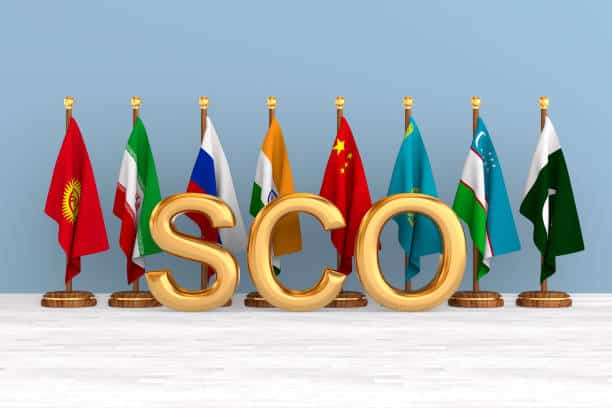
Tianjin, China – September 2025 – The 2025 Shanghai Cooperation Organisation (SCO) Summit convened in Tianjin, China, gathering heads of state and government from the organization’s ten member states, including China, Russia, India, Pakistan, and the Central Asian republics. As one of the most anticipated diplomatic events in Eurasia, the summit focused on regional security, economic cooperation, and broader geopolitical stability, while also addressing emerging technological, energy, and security challenges.

The SCO, established in 2001, has evolved from a regional security organization into a multifaceted intergovernmental body addressing political, economic, and security cooperation. The 2025 summit in Tianjin, hosted by Chinese President Xi Jinping, marked a significant moment for the bloc, demonstrating China’s growing influence in Eurasian diplomacy and global governance.

Understanding the SCO and Its Significance

The Shanghai Cooperation Organisation is composed of China, Russia, India, Pakistan, Kazakhstan, Kyrgyzstan, Tajikistan, and Uzbekistan, with Iran joining as a full member in recent years. SCO observer states and dialogue partners, including Afghanistan, Mongolia, and Belarus, regularly attend summits and consultations, highlighting the bloc’s increasing regional and international relevance.

Read Also: Indian Police Investigate Khalistani Flag Threat at Upcoming G20 Summit in Delhi

The organization was originally founded to address mutual security concerns, particularly terrorism, separatism, and extremism, in the wake of post-Cold War instability in Central Asia. Over the years, its agenda expanded to include economic cooperation, trade facilitation, cultural exchanges, and technology partnerships. The SCO summit serves as the highest decision-making forum, where leaders set strategic priorities, launch regional initiatives, and coordinate policies on matters affecting member states.

SCO’s relevance in global geopolitics has grown in recent years, particularly as major powers such as China and Russia seek alternatives to Western-led multilateral forums. The organization’s strategic importance lies in its ability to serve as a platform for dialogue among major Eurasian powers while addressing regional security and economic development.

Attendance and Key Participants

The 2025 Tianjin Summit brought together top leadership from SCO member states.

  • China: President Xi Jinping hosted the summit, emphasizing China’s role as a regional power and promoting the vision of a multipolar global order. Xi outlined several strategic initiatives, including technological collaboration and financial support for SCO member nations.

  • Russia: President Vladimir Putin attended, signaling Moscow’s continued influence in Eurasian security matters and supporting multilateral cooperation in the region.

  • India: Prime Minister Narendra Modi represented New Delhi, focusing on economic cooperation and regional stability. India’s participation underscored its ongoing engagement in SCO frameworks despite bilateral tensions with Pakistan.

  • Pakistan: Prime Minister Shehbaz Sharif attended, raising the Kashmir issue within the context of self-determination, a point that drew international attention.

Other member states sent senior leadership, ministers, and delegates to participate in sessions on trade, infrastructure development, counterterrorism, and technological collaboration. Observer and dialogue partner nations also contributed, reflecting the summit’s role as a key diplomatic platform for Eurasia and beyond.

Key Strategic Initiatives Announced

One of the summit’s most notable aspects was China’s series of strategic initiatives aimed at enhancing regional cooperation and asserting its influence.

  • SCO Artificial Intelligence Cooperation Centre: China announced the establishment of an AI centre to facilitate technological research, shared resources, and collaborative projects among SCO member states. This initiative reflects Beijing’s ambition to leverage AI for regional economic development and governance.

  • Financial Support: China pledged $280 million in free aid and $1.4 billion in loans through the SCO banking consortium to member nations, signaling a commitment to fostering economic growth and regional integration.

  • Infrastructure and Energy Collaboration: The summit highlighted infrastructure connectivity projects, energy partnerships, and trade facilitation mechanisms designed to strengthen intra-regional commerce and strategic interdependence.

These initiatives emphasize the summit’s focus on economic integration, technological collaboration, and regional stability, making it a critical platform for China’s geopolitical strategy.

Geopolitical Messaging and Global Context

President Xi Jinping used the summit as a platform to communicate broader geopolitical messaging. Emphasizing a multipolar world order, he criticized what he called “bullying countries,” widely interpreted as a subtle reference to U.S. foreign policy. Xi’s statements highlight China’s ongoing efforts to assert global leadership while promoting Eurasian cooperation through the SCO framework.

For Russia, the summit reinforced its continued relevance in regional security and energy politics. Russia’s participation also underscored the bloc’s ability to balance influence among its major members. India’s engagement reflected a careful strategy to remain an active participant despite bilateral challenges, including ongoing tensions with Pakistan.

Kashmir Issue in SCO Context

Although the SCO primarily focuses on regional cooperation and security, the Kashmir issue surfaced during the 2025 summit. Pakistan’s Prime Minister Shehbaz Sharif raised the matter in terms of the region’s right to self-determination, bringing international attention to the decades-old conflict.

This intervention, however, drew criticism from Kashmiri political organizations. By framing the issue as a bilateral matter with India, Pakistan’s approach contradicts longstanding United Nations resolutions advocating for Kashmiri self-determination. The Jammu Kashmir Joint Awami Action Committee (JAAC) described Pakistan’s move as a betrayal of Kashmiri aspirations, warning that it undermines the struggle for freedom. Similarly, the United Kashmir Peoples National Party (UKPNP) called Pakistan’s approach “non-serious” and argued that it diminishes Kashmir’s international profile.

“Pakistan’s attempt to make Kashmir a bilateral issue with India ignores the will of the Kashmiri people and damages the legitimacy of their struggle for self-determination,” said a spokesperson for JAAC.

While Kashmir attracted attention, the summit largely remained focused on broader SCO objectives, including economic development, counterterrorism, and regional stability. Analysts noted that SCO’s lack of a formal dispute-resolution mechanism limits its capacity to mediate conflicts like Kashmir, though the platform enables dialogue and international visibility for the issue.


SCO and Regional Security

Security cooperation remains at the heart of the SCO’s mandate, and the 2025 summit highlighted this focus through multiple initiatives. Member states exchanged intelligence and coordinated efforts to combat extremism and cross-border terrorism, reinforcing a collective approach to regional security. In addition, the summit encouraged joint military exercises and defense collaboration, aiming to enhance preparedness and interoperability among member nations. Recognizing the growing threat of cyberattacks, SCO members also discussed strategies to protect critical infrastructure, safeguard data, and secure technology networks. These measures collectively reflect the organization’s commitment to stability, ensuring that economic initiatives and strategic projects are supported by a robust security framework.

Economic and Trade Dimensions

Economic integration was a central agenda at the summit, with leaders emphasizing the importance of regional connectivity and cooperation. Policies to reduce trade barriers, harmonize regulations, and facilitate commerce were discussed, aiming to strengthen economic ties between member states. Energy partnerships, including initiatives in oil, gas, and renewable energy, were explored to ensure sustainable and secure energy supplies across the region. Infrastructure development was another key priority, with plans for rail networks, transport corridors, and cross-border projects designed to promote intra-regional commerce and development. China’s financial commitments, combined with technological initiatives, underscore the SCO’s evolving role as a platform for economic collaboration that extends well beyond traditional security concerns.

Member States’ Perspectives

Each member state approached the 2025 SCO Summit with its own set of priorities, reflecting the diverse political and economic landscape of the organization. China, as the host nation, sought to consolidate its influence across Eurasia by projecting itself as both a technological innovator and an economic leader. Its proposals for artificial intelligence collaboration, financial assistance, and infrastructure investments highlighted Beijing’s vision of the SCO as a platform for advancing multipolar global governance under Chinese leadership.

Russia, meanwhile, concentrated on matters of security and strategic balance. For Moscow, the SCO remains a valuable forum to counter Western pressure and maintain its geopolitical presence in Central Asia and South Asia. Russian President Vladimir Putin underscored the importance of joint military coordination and energy partnerships, reflecting Russia’s role as both a security guarantor and a major energy supplier in the region.

India entered the summit with a careful balancing act. While New Delhi reaffirmed its commitment to regional cooperation, its participation was shaped by bilateral sensitivities, particularly its tense relationship with Pakistan. India’s focus on connectivity and trade was designed to strengthen its role within the organization, while avoiding entanglement in disputes that could overshadow the SCO’s broader agenda.

Pakistan, on the other hand, used the summit as an opportunity to raise the issue of Kashmir, framing it in the context of self-determination. While Islamabad’s intervention attracted international attention, critics within Kashmir argued that Pakistan’s approach—treating the matter as a bilateral dispute with India—contradicts the spirit of United Nations resolutions. Beyond Kashmir, Pakistan also expressed interest in infrastructure and trade initiatives, signaling its desire to benefit from SCO-led economic integration.

The Central Asian nations, including Kazakhstan, Kyrgyzstan, Tajikistan, and Uzbekistan, emphasized the need for development projects, infrastructure investments, and stronger trade links. For these smaller members, the SCO provides a critical platform to engage with larger powers while advancing their own national development goals. Observer and dialogue partner states echoed this interest, expressing readiness to take part in economic and regional collaboration initiatives. Their participation underscored the growing appeal of the SCO as a forum not just for major powers but also for nations seeking alternatives to Western-led financial and political institutions.

Media and International Reactions

The 2025 SCO Summit drew extensive media coverage, with global outlets closely analyzing both the symbolic and practical outcomes of the gathering. International reporting highlighted China’s growing influence in Eurasian geopolitics, noting that Beijing’s financial commitments and leadership in technological cooperation cement its position as the driving force behind the SCO. Analysts described China’s role as an attempt to position itself as the architect of a new multipolar order, challenging Western dominance in multilateral diplomacy.

Coverage also emphasized the SCO’s role in shaping regional security and economic policies, pointing to agreements on counterterrorism, infrastructure development, and energy partnerships as key outcomes. The summit was framed as evidence that Eurasian states are increasingly turning towards one another for cooperation, rather than relying solely on Western-led platforms.

However, Pakistan’s decision to raise the Kashmir issue as a matter of self-determination did not go unnoticed. While Islamabad succeeded in bringing attention to Kashmir on the international stage, many Kashmiri nationalist groups criticized the move, arguing that Pakistan’s narrative reduces the conflict to a bilateral dispute with India. This contradiction sparked debate in the media, with some outlets questioning the credibility of Pakistan’s position.

International analysts were divided in their assessments. Some argued that the SCO’s growing prominence demonstrates its value as an alternative multilateral forum, offering a space for dialogue and development outside Western influence. Others, however, cautioned that unresolved conflicts like Kashmir reveal the structural limitations of the SCO, which lacks mechanisms for formal dispute resolution. Critics warned that without addressing such fundamental challenges, the organization risks being seen as a platform for economic deals rather than a true peace-building institution.

The 2025 SCO Summit in Tianjin served as a reminder of how far the organization has come since its inception nearly a quarter of a century ago. What began as a regional security grouping has now evolved into a multidimensional platform that seeks to balance security imperatives with economic integration, technological cooperation, and political dialogue. China’s leadership, underscored by its financial pledges and technological initiatives, demonstrated that Beijing now views the SCO not just as a diplomatic stage but as a cornerstone of its Eurasian strategy.

Yet, the summit also revealed the organization’s limitations. While discussions around counterterrorism, cybersecurity, and trade integration showcased the SCO’s growing capabilities, the brief mention of Kashmir highlighted the challenges of managing unresolved disputes within such a diverse bloc. For many observers, the inability of the SCO to meaningfully engage with or mediate on such conflicts underlines its structural weakness: it is a forum for dialogue and cooperation, but not a mechanism for dispute resolution. This tension between ambition and constraint will likely continue to define the SCO’s trajectory.

Looking ahead, the organization’s success will depend on its capacity to translate lofty commitments into tangible outcomes. Whether through joint infrastructure projects, coordinated security measures, or technological partnerships, the SCO must prove that it can deliver benefits for both major powers and smaller member states alike. Its future relevance will also hinge on its ability to adapt to emerging global challenges—climate change, artificial intelligence, and shifting trade patterns—that go beyond traditional security concerns.

For Eurasia, the stakes are high. The SCO now represents a collective weight that spans more than half of humanity and some of the fastest-growing economies in the world. If the bloc can continue to strengthen cooperation without being paralyzed by bilateral disputes, it has the potential to shape the geopolitics of the region for decades to come. The Tianjin summit reaffirmed this possibility, signaling that the SCO is no longer a marginal security club but an increasingly dynamic forum influencing the political and economic future of Eurasia.

Imtiaz Aslam rejects funding allegations against JKJAAC, announces legal action

0

Kotli — Imtiaz Aslam Chaudhry, core member of the Jammu Kashmir Joint Awami Action Committee (JKJAAC), has strongly rejected recent allegations of foreign funding made by Pakistan People’s Party (PPP) leaders, calling them “baseless and defamatory.”

Speaking to local media, Aslam said the accusations, particularly from senior PPP leader Chaudhry Muhammad Yasin, were intended to discredit the people’s movement. “These are false and malicious claims. If Chaudhry Yasin fails to provide evidence, we are ready to face him in court,” he declared, confirming that legal experts had already been consulted for a defamation lawsuit.

Aslam stressed that the recent reduction in flour and electricity prices was the direct outcome of the Committee’s peaceful struggle. “Our movement has always followed constitutional and democratic means through peaceful protests and negotiations. We are not against any political party; we are fighting for the fundamental rights of the people,” he said.

He criticized PPP leadership for indulging in “baseless propaganda” instead of addressing the real issues faced by the public. According to him, the people of Jammu and Kashmir are now politically aware and will not be misled by false narratives.

Appreciating political workers and citizens who condemned Yasin’s statement and expressed solidarity with the JKJAAC, Aslam warned the ruling elite to “change their course” or face the strength of public awareness.

He further appealed to the people across the region to fully prepare for the indefinite lockdown on September 29, called by the Committee as part of its ongoing campaign against 78 years of exploitation.

Gilgit-Baltistan Leader Ibrahim Nagri Backs September 29 Shutdown in Solidarity with JKJAAC

0

Muzaffarabad, September 7, 2025 — The Azadi Times: Ibrahim Nagri, a prominent youth leader from Gilgit-Baltistan and Chairman of the People’s Rights Movement GB, has publicly endorsed the September 29 shutdown call announced by the Jammu Kashmir Joint Awami Action Committee (JKJAAC).

In a statement shared on his official Facebook account, Nagri declared full support for the 38-point charter of demands presented by the JKJAAC. He affirmed solidarity with the movement across Pakistan-administered Jammu and Kashmir, stressing the shared identity of the region.

“I am supporting the September 29 call. If needed, we will step into the field. The state of Jammu and Kashmir is our part and will remain so,” Ibrahim Nagri wrote on social media.

Widespread Campaign in Pakistan-administered Kashmir

The JKJAAC, an umbrella body of traders, civil society groups, and rights activists, has called for a complete lockdown on September 29 to press its demands. The 38-point charter includes appeals for economic justice, constitutional rights, affordable electricity, and greater political autonomy.

The call has triggered debates and drawn reactions across the territories of Jammu and Kashmir, including Gilgit-Baltistan. Ibrahim Nagri’s endorsement is being seen as a significant development, reflecting growing solidarity between activists in GB and political movements in Pakistan-administered Kashmir.

Nagri is often described by supporters as one of the most vocal young leaders advocating for rights and representation in Gilgit-Baltistan. His statement reinforces the growing sentiment that issues faced by GB cannot be seen in isolation from those in other parts of the divided state of Jammu and Kashmir.

Political observers note that his support could encourage further mobilization of youth groups in GB, particularly at a time when discontent over governance, electricity shortages, and resource management has been escalating.

Background

The JKJAAC has in recent months organized mass protests, sit-ins, and rallies across Pakistan-administered Kashmir, demanding the government in Islamabad address longstanding grievances. The September 29 shutdown is expected to be one of the most significant tests of the Committee’s ability to mobilize public support across the region.

With figures like Ibrahim Nagri pledging active backing, activists believe the campaign may gain wider traction beyond Azad Jammu and Kashmir, reaching Gilgit-Baltistan and potentially reshaping regional political dynamics.

Jammu Kashmir Cloudburst 2025: Deadly Floods, Rising Toll, and Climate Warnings Across the Himalayas

0

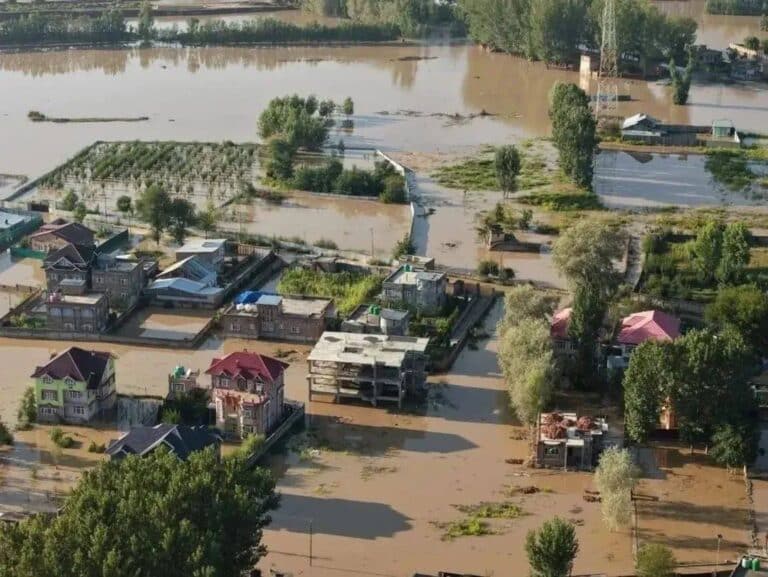
Kashmir, September 2025 — The summer of 2025 will be remembered as one of the harshest seasons in the Himalayan region of Jammu & Kashmir, Ladakh, and Gilgit-Baltistan. A series of devastating cloudbursts and flash floods swept through mountain towns, valleys, and high-altitude villages, leaving behind a trail of destruction, grief, and unanswered questions.

Unlike routine monsoon downpours, cloudbursts strike suddenly: torrents of water unleashed within minutes, tearing through riversides, dislodging slopes, and swallowing entire settlements. In 2025, this rare but recurring natural disaster claimed hundreds of lives across the divided territory of Kashmir, transcending political boundaries and underscoring the shared vulnerability of its people.

Chasoti, Kishtwar: A Tragedy of Unimaginable Scale

On 14 August 2025, a cloudburst in Chasoti village of Kishtwar district triggered one of the deadliest disasters the region has seen in recent decades. At least 67 people were confirmed dead, with over 300 injured and nearly 200 reported missing.

The torrents struck during a religious gathering, when more than a thousand people were present near the riverbanks. Within minutes, water mixed with boulders and debris flattened temporary shelters, swept vehicles, and destroyed bridges. Rescue efforts were hampered by blocked roads and recurring landslides. Survivors described the roar of the flood as “the sound of mountains collapsing.”

Dharali and Uttarakhand Connection

Just days earlier, on 5 August, another catastrophic event unfolded in Dharali, near the Uttarakhand–Kashmir borderlands. Initially reported as a cloudburst, later assessments suggested a glacial lake outburst flood (GLOF) — a phenomenon where melting glaciers burst their natural dams.

Although official rainfall data recorded barely 5 mm, the destructive surge wiped out homes, farmland, and infrastructure. For many observers, Dharali and Chasoti disasters together raised alarm bells about the interplay of climate change, glacial retreat, and extreme weather reshaping the Himalayas.

Jammu: A City Under Water

In late August, Jammu city recorded 190 mm of rain in a single day, marking its second-highest August rainfall in a century. Streets turned into rivers, shops and homes were submerged, and power outages gripped the city for days. Though not technically a cloudburst, the rainfall’s sheer intensity mirrored the sudden shock and disruption typical of these events.

Local communities lamented the absence of adequate urban drainage and disaster preparedness. “We live with mountains above us and rivers below us,” said a shopkeeper in old Jammu. “When the skies open like this, there is no escape.”

Across the Divide: Shared Losses

While most international headlines focused on Indian-administered districts, cloudburst-linked flooding also rattled Pakistan-administered Kashmir (PaK) and Gilgit-Baltistan (GB).

In Neelum Valley, swollen streams destroyed bridges and isolated entire villages. Fortunately, casualties were limited, but families lost croplands and livestock — their only means of survival.

In Hunza and Skardu (Gilgit-Baltistan), late July cloudbursts triggered landslides, cutting off the Karakoram Highway for several days. Local NGOs reported dozens of homes damaged and several people injured.

In Rawalakot (PaK), sudden flash floods swept away small markets near riverbanks. Volunteers, rather than formal agencies, led most rescue efforts.

These incidents, while smaller in scale compared to Kishtwar, highlighted the regional nature of the crisis: fragile ecosystems, rapid urbanization, and lack of disaster infrastructure magnify the impact of extreme rainfall events across the entire Himalayan arc.

Counting the Cost

By September 2025, combined reports estimate that over 700 people have died across northern India and Pakistan due to monsoon-related cloudbursts, floods, and landslides. Within the broader Himalayan belt of Kashmir, Ladakh, and Gilgit-Baltistan, dozens of villages were either destroyed or severely affected.

The toll is not only measured in lives lost:

Families displaced: Thousands forced into temporary shelters.

Economic damage: Bridges, hydropower stations, and road networks worth millions collapsed.

Cultural loss: Historic shrines, markets, and community spaces washed away.

Psychological scars: Survivors left with trauma, uncertain about rebuilding in zones repeatedly declared “disaster-prone.”

Climate Change in the Himalayas

Scientists have long warned that the Himalayas — sometimes called the “Third Pole” — are warming faster than the global average. The region’s glaciers are retreating at alarming rates, destabilizing slopes and feeding the risk of cloudbursts, GLOFs, and flash floods.

What makes 2025 different is not just the scale of devastation, but the pattern of unpredictability. Cloudbursts struck where rainfall data showed only modest showers, suggesting hidden factors: glacial lakes, unstable moraines, and altered monsoon currents.

“Climate change doesn’t respect boundaries,” said one hydrologist based in Srinagar. “The mountains don’t know whether they are in India, Pakistan, or Ladakh. They just break when stressed.

The Humanitarian Gap

Perhaps the starkest lesson of 2025 has been the absence of coordinated response. Political borders fragmented relief efforts. Communities on both sides of the Line of Control relied heavily on local volunteers, religious groups, and small NGOs, while state agencies struggled with logistics or bureaucracy.

For ordinary Kashmiris, the tragedy is twofold: the loss inflicted by nature, and the indifference shaped by politics.

Looking Ahead

The cloudbursts of 2025 are a grim reminder that the Himalayas — breathtaking yet fragile — are entering a new era of climate instability. For the people of Kashmir, Ladakh, and Gilgit-Baltistan, survival depends on more than rebuilding bridges and homes. It demands a regional approach to climate resilience, early warning systems, and sustainable planning that transcends the rigid borders drawn by history.

Eid Milad-un-Nabi (SAW) Celebrated with Spiritual Fervor Across Jammu, Kashmir, and Ladakh

0

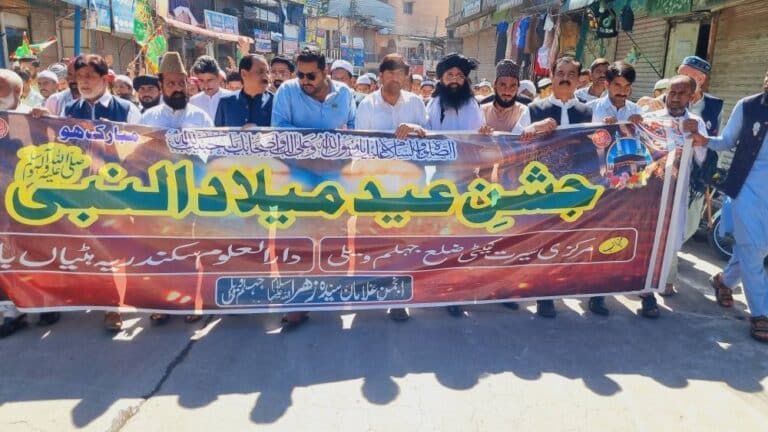
The Azadi Times | News Desk – The birth anniversary of Prophet Muhammad (SAW), Eid Milad-un-Nabi, was observed on Saturday across Jammu, Kashmir, and Ladakh with immense religious zeal, spiritual devotion, and profound reverence. From Srinagar to Kargil, mosques, shrines, imambaras, and khanqahs were illuminated, while processions and gatherings echoed with naats, salutations, and chants of faith.

The most prominent congregation took place at the revered Hazratbal Shrine on the banks of Dal Lake in Srinagar, where devotees thronged in the thousands to witness the display of the holy relic (Moi-e-Muqaddas) of Prophet Muhammad (SAW).

Night-long prayers, recitations of Durood-o-Salam, and sermons were held despite the autumn chill. At dawn, as the relic was displayed, faces of the faithful lit up with joy and tears, creating an atmosphere of deep emotional and spiritual intensity.

Valley-Wide Processions and Devotional Gatherings

Across the Kashmir Valley, grand processions marched through towns and villages, with participants chanting “Labbaik Ya Rasool Allah” and “Ya Nabi Salam Alaika.” Children carried green flags and buntings, while elders joined with prayer beads in hand.

Community kitchens provided tea, warm milk, and meals along procession routes. Shopkeepers set up water stalls and food distributions as acts of devotion. Sermons by scholars highlighted the Prophet’s life as a guiding light for humanity, emphasizing unity, compassion, and service to mankind.

Unity Across Sects and Regions

The commemorations reflected a spirit of unity that transcended sectarian lines. In Pampore, the Auqaf Islamia Trust and Shah Hamdan Memorial Trust led a large procession that concluded at the Khanqah Aaliya. In Srinagar’s Kalashpora, the Jamiat Hamdania organized processions, while Anjuman Shari Shian led a major Shia-Sunni gathering from Mir Shamsuddin Araqi Khanqah to Imam Bara Gulshan Bagh.

Such joint observances sent a strong message of brotherhood, with clerics urging communities to rise above division and embody the Prophet’s teachings of tolerance and harmony.

Jammu and Pir Panjal Participation

The fervor was not limited to the Valley. In Doda, Kishtwar, Rajouri, and Poonch, Muslims organized processions, decorated homes with lights, and held devotional gatherings. In the Pir Panjal towns of Mendhar and Surankote, thousands joined processions, while women offered sweets and drinks to participants along the routes.

Celebrations Amid Ladakh’s Mountains

In the high-altitude regions of Leh, Kargil, and Drass, Eid Milad-un-Nabi was celebrated with equal enthusiasm. In Kargil, night-long prayers and gatherings were held in imambaras, while in Leh, the Sunni community organized processions despite the cold. Against snow-covered mountains, the collective chants of Salawat created a scene of remarkable spiritual unity.

Cities Adorned in Lights and Colors

Almost every town and city across Jammu and Kashmir was adorned with green flags, fairy lights, and colorful decorations. In Srinagar, streets and bazaars glowed with illuminated banners and flags, creating a festive atmosphere that lasted late into the night.

Authorities made special arrangements at Hazratbal, ensuring uninterrupted electricity, water, sanitation, and emergency medical facilities. Community groups and government bodies, including J&K Bank and State Road Transport Corporation, contributed with free food, transportation, and support for devotees.

A Day of Joy and Reflection

For many, Eid Milad-un-Nabi was not just a celebration but a renewal of faith and spirit. “This is the happiest day for us,” said a devotee at Hazratbal. “It is the day when humanity was blessed with the Prophet who brought light to the world.”

Clerics across gatherings emphasized that the Prophet’s teachings remain a beacon for humanity, calling on the Muslim community to replace division with love, and injustice with compassion.

AJK 2021 Elections: Refugee Seats Spark Debate on Representation and Voter Equity

0

The Azadi Times | News Desk – The 2021 general elections in Azad Jammu and Kashmir (AJK) have reignited debate over the 12 legislative seats reserved for Kashmiri refugees settled across Pakistan. These constituencies, carved out for displaced families from Jammu and the Kashmir Valley, collectively produced winning candidates with significantly fewer votes than most directly elected representatives within AJK itself.

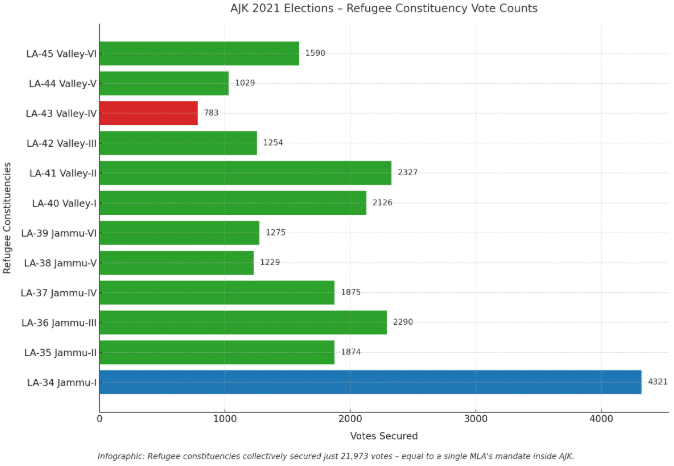
According to official results, the combined vote tally of all 12 successful refugee-seat candidates stood at just 21,973, a figure that barely matches the average number of votes secured by a single MLA from constituencies inside Azad Kashmir. Critics argue this numerical disparity undermines the principle of equal representation and raises serious questions about the electoral structure that governs the region.

Constituency-Wise Results

Jammu Refugee Constituencies (LA-34 to LA-39):

  • LA-34 Jammu-I: Riaz Ahmed (PTI) – 4,321 votes

  • LA-35 Jammu-II: Maqbool Ahmed (PTI) – 1,874 votes

  • LA-36 Jammu-III: Hafiz Hameed Raza (PTI) – 2,290 votes

  • LA-37 Jammu-IV: Muhammad Akmal Sargala (PTI) – 1,875 votes

  • LA-38 Jammu-V: Akbar Ibrahim (PTI) – 1,229 votes

  • LA-39 Jammu-VI: Raja Muhammad Siddiq (PML-N) – 1,275 votes

Kashmir Valley Refugee Constituencies (LA-40 to LA-45):

  • LA-40 Valley-I: Aamir Altaf (PTI) – 2,126 votes

  • LA-41 Valley-II: Ghulam Mohi-ud-Din Diwan (PTI) – 2,327 votes

  • LA-42 Valley-III: Muhammad Asim Sharif (PTI) – 1,254 votes

  • LA-43 Valley-IV: Javed Butt (PTI) – 783 votes

  • LA-44 Valley-V: Muhammad Iqbal (PTI) – 1,029 votes

  • LA-45 Valley-VI: Abdul Majid Khan (PTI) – 1,590 votes

A Question of Representation

The stark imbalance becomes clear when compared to ward-level politics within AJK. Many local ward councillors secure more votes than the refugee-seat MLAs, yet their positions carry far less legislative authority and privilege.

Observers point out that despite the low voter base, refugee-seat MLAs enjoy the same status, salaries, and privileges as their colleagues representing larger constituencies. In addition, the costs of their travel and accommodation during legislative sessions—since many live outside Azad Kashmir—are covered by public funds, adding financial strain to an already limited budget.

“Why should representatives elected by less than 2,000 voters hold the same power as those supported by tens of thousands?” one political analyst told The Azadi Times. “This is not just a numbers game, it is a matter of democratic fairness.”

Political and Social Implications

The refugee seats were originally created to ensure displaced Kashmiri families—residing in Punjab, Sindh, and other parts of Pakistan—remained politically connected to AJK. Yet, as electoral cycles pass, many argue that the system now serves as a tool of political patronage rather than genuine representation.

Civil society voices and rights groups within AJK are increasingly calling for electoral reforms, suggesting either a recalibration of these constituencies to reflect population realities or their integration into broader provincial and national frameworks.

The Bigger Picture

The 2021 AJK elections, held on 25 July 2021, saw Pakistan Tehreek-e-Insaf (PTI) secure a sweeping majority with 32 out of 53 seats. Voter turnout stood at over 61%, with nearly 3.2 million registered voters. While the victory consolidated PTI’s grip on power in the region, the controversy surrounding refugee seats has continued to overshadow discussions on governance and development.

For many Kashmiris, the question is simple: should the political weight of a refugee MLA, elected with fewer than 2,000 votes in some cases, equal that of a representative carrying the mandate of 20,000–30,000 voters?

Until this question is addressed, critics warn, the democratic credibility of AJK’s electoral system will remain under scrutiny.

Kashmiri-Origin Shabana Mahmood Becomes UK Home Secretary – From Birmingham to Westminster

0

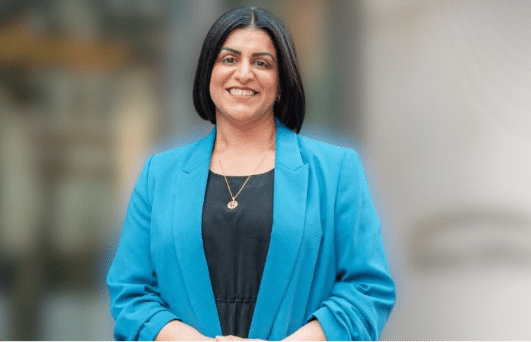
The Azadi Times Desk – Britain has entered a new political chapter as Shabana Mahmood, a prominent Labour Party politician of Kashmiri heritage, has been appointed the country’s Home Secretary. Today, she stands as one of the most influential Muslim women in British politics. Her journey reflects a story of migration, perseverance, and determination.

Family Background

Shabana Mahmood’s roots trace back to Mirpur district in Pakistan-administered Jammu and Kashmir. Her parents originally hailed from Old Mirpur, later settling in Mangla Colony. In search of better opportunities, they migrated from Azad Kashmir to the United Kingdom, where they began building a new life for their family. Their migration set the foundation for the remarkable journey of their daughter.

Early Life and Education

Born and raised in Birmingham, England, Mahmood grew up within the city’s vibrant Pakistani and Kashmiri community. She completed her schooling locally before pursuing higher education in law. Her legal studies provided her with the tools and discipline that would later define her professional and political career.

Political Career

Mahmood’s political journey began through involvement in local social and political activities in Birmingham. Her early engagement in public service and community representation quickly established her as a rising voice within the Labour Party.

She was eventually elected to the British Parliament, where she earned recognition for her firm positions on social justice, community welfare, and national policy issues. Over the years, Mahmood has become a central figure within Labour’s leadership, respected not only for her legal expertise but also for her ability to connect with diverse communities across the UK.

A Landmark Position

Today, as Britain’s new Home Secretary, Shabana Mahmood holds one of the most powerful offices in the UK government. Her appointment represents a historic milestone, underscoring how the Pakistani and Kashmiri diaspora has contributed significantly to British society — not only socially and economically, but now also at the very heart of national politics.

An Inspiration for the Next Generation

Mahmood’s rise to high office serves as a beacon of hope for the younger generation. Her journey shows that through education, resilience, and commitment to public service, it is possible to break barriers and reach the highest levels of leadership.

Her story is not only about personal success; it is also about the broader legacy of migrant families who arrived in Britain with dreams of a better life. Shabana Mahmood stands as a living example of those dreams fulfilled.

Jammu Kashmir Joint Awami Action Committee Announces Indefinite Statewide Shutdown from September 29

0

JKJAAC Declares Statewide Lockdown from 29 September as Protests Intensify Grassroots Mobilisation Underway as 38-Point Charter of Demands Goes Public

MUZAFFARABAD / RAWALAKOT, 29 August 2025 — The Jammu Kashmir Joint Awami Action Committee (JAAC) has called for an indefinite state-wide shutdown across Azad Jammu and Kashmir (AJK) beginning 29 September, amid growing public frustration over the government’s failure to honour past agreements.

The decision comes alongside the release of JAAC’s comprehensive 38-point Charter of Demands, which includes calls for the abolition of reserved legislative seats for Kashmiri migrants in Pakistan, reduced vehicle taxes, improved telecommunication services, and a regional referendum on refugee representation.

Sardar Umar Nazir Kashmiri, a prominent member of JAAC’s Core Committee, outlined a four-phase operational strategy already in motion—from ward-level coordination to union council deployments—aimed at ensuring complete public participation in the shutdown.

“We are activating every union council, tehsil, and ward,” Kashmiri told The Azadi Times. “From Rawalakot to the smallest village, our volunteers are mobilising communities. This is not just a protest—it is a movement for accountability.”

Background and Escalation
The current wave of discontent traces back to May 2024, when JAAC-led protests forced the government to commit to subsidies on flour and electricity, and to roll back privileges enjoyed by the political elite. Although some financial commitments were made in subsequent budgets, implementation has been partial, eroding public trust.

JAAC representatives say repeated violations of written agreements—signed in December 2023, February 2024, May 2024, and December 2024—have left them with no option but to intensify their movement.

The 38-Point Charter
Key demands include:

  • Scrapping 12 assembly seats reserved for Kashmiri migrants outside AJK

  • Reversing recent hikes in vehicle taxes and fees

  • Expanding mobile network and internet services in remote areas

  • Addressing alleged irregularities in university appointments

  • Introducing a health card scheme on the model of Pakistan’s Sehat Card

  • Ensuring recovery of citizens allegedly abducted by armed groups

  • Holding a public referendum on refugee representation in the AJK Assembly

Four-Pronged Mobilisation Strategy
Sardar Umar Nazir Kashmiri detailed the following operational plans:

  1. Public Awareness Campaigns: Rallies and meetings at union council levels to educate people about the charter and shutdown.

  2. Ward-Level Coordination Committees: Hyper-local teams to manage communication and logistics.

  3. Union Council Deployment: Volunteer teams and resource centres established for protest coordination.

  4. Open Sharing of Plans: Transparent dissemination of readiness activities through posters, social media, and community networks.

Ground Response
From Mirpur to Muzaffarabad, billboards, digital flyers, and community meetings signal growing public support. Transport associations in Mirpur are already pledging support for the strike, while nightly gatherings in Kotli are drawing large crowds.

Government Silence
The AJK government has yet to issue an official response. However, with previous court rulings protecting the right to protest, and JAAC’s disciplined organisational base, officials face limited options to curb the movement without political engagement.

What’s at Stake
The shutdown represents more than a protest—it is a barometer of deeper structural grievances linked to representation, service delivery, and governance. With a month until the planned action, all eyes are on whether the government will negotiate or confront.

The Azadi Times will continue to cover developments across all districts of AJK.

Kashmiri Doctor Off-Loaded Again Despite Court Orders, Alleges Illegal Detention

0

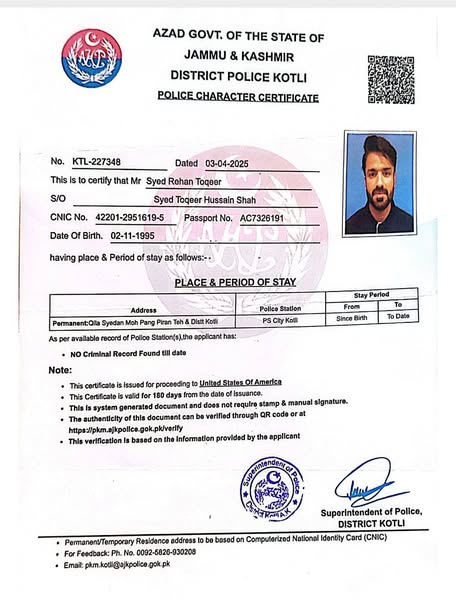
Mirpur, Pakistan administered Kashmir – In a case highlighting apparent contradictions between judicial orders and state agency watchlists, Dr. Rehan Tauqir was once again prevented from traveling abroad from Lahore’s Allama Iqbal International Airport last night.

This incident occurred despite him possessing a clear permission for one-time travel from the Islamabad High Court (IHC), a no-objection certificate (NOC) from a Kotli court, and after having submitted surety bonds as mandated.

According to Dr. Tauqir, he was off-loaded by officials of the Federal Investigation Agency (FIA). He alleges he was then taken into custody and held in what he describes as “illegal detention” throughout the night before being released the following morning.

This is the second time this year the doctor has been stopped from traveling. He was first off-loaded from Islamabad Airport in the first week of June. Following a lengthy legal process, the IHC finally granted him conditional permission for a one-time travel abroad. The permission was contingent upon him obtaining an NOC from the local court in Kotli and submitting surety bonds of Rs. 100,000 in the high court.

Dr. Tauqir fulfilled both conditions. After his bail was approved in Kotli, he secured the necessary no-objection certificate. He also submitted the required surety bonds in the Islamabad High Court.

However, when he attempted to travel from Lahore, FIA officials off-loaded him, stating that his name was still active on the Exit Control List (ECL) or the no-fly list.

“Despite contacting a senior officer in the Kotli police, FIA officials on ground declared my documents to be fake and did not allow me to travel,” Dr. Tauqir stated.

The repeated incidents have resulted in significant financial loss for the individual, with two US-bound airline tickets being wasted so far, amounting to hundreds of thousands of rupees.

The case raises serious questions about the coordination between the judiciary, which grants relief, and the executive agencies responsible for implementing court orders and maintaining watchlists. Legal experts suggest such episodes undermine the authority of the courts and create a climate of legal uncertainty for citizens.

When contacted, FIA officials typically state they are bound to act according to the official database, which may not be updated instantly upon a court’s instruction. This gap between a court’s decision and its implementation by other state organs lies at the heart of the incident.

Dr. Tauqir’s legal team has stated they will pursue the matter further in court to seek clarity and prevent such occurrences in the future.