Wednesday, March 25, 2026
11.4 C
Srinagar
Home Blog Page 39

What is Academic Performance Indicator? A Global Explainer

In almost every corner of the world, the debate about the quality of education is never far from the headlines. Parents want to know how well their children are learning, governments want evidence that billions of dollars in funding are paying off, and universities are under pressure to prove their global competitiveness. Amid this constant scrutiny, one term has steadily gained prominence: the academic performance indicator, or API.

But what is an academic performance indicator, and why does it matter? At its simplest, it is a measure — a way of translating learning and teaching into numbers that can be compared, ranked, and acted upon. In practice, however, APIs have become a powerful, and sometimes controversial, force in shaping modern education.

Defining the Indicator

The phrase academic performance indicator refers to any measurable factor that reflects how well a student, teacher, or institution is performing. For a schoolchild, it might be as straightforward as a test score or attendance record. For a university professor, it could mean research publications, teaching evaluations, or contributions to the academic community. And for entire education systems, APIs might involve large‑scale surveys, graduation rates, or even global rankings.

The purpose is clear: to create benchmarks that offer an objective view of academic success. In an era where data drives policy decisions, APIs have become the yardstick by which progress, or failure, is measured.

Why APIs Matter

For students, academic performance indicators can be life‑changing. Grades, exam results, and other metrics influence whether a student gains entry into a prestigious university, wins a scholarship, or struggles to keep up. APIs provide feedback, not just to the individual learner but also to parents and teachers trying to identify strengths and weaknesses.

For teachers, APIs often determine professional advancement. In many countries, educators are evaluated not only on classroom performance but also on measurable outcomes such as student pass rates or research productivity. A strong set of indicators can open doors to promotions; weak scores may stall a career.

At the institutional and governmental level, APIs take on an even greater significance. They are used to monitor the quality of education across regions, compare schools and universities, and decide where funding should be directed. For policymakers, APIs offer an evidence‑based foundation for reform, helping identify which systems are working and which are failing their students.

Different Ways of Measuring

Although the concept is universal, the forms APIs take are strikingly diverse. In schools, the most familiar measures are test scores, grade point averages, and attendance rates. Some systems also track student engagement, looking at participation in extracurricular activities or classroom involvement.

In higher education, the picture becomes more complex. Universities frequently rely on research output, publications, and citations as indicators of academic quality. Graduation rates, employability of graduates, and even international student recruitment also come into play.

On a larger scale, governments and international organisations use APIs to compare entire systems. This might include equity indicators — measuring how well disadvantaged groups perform compared to their peers — or international assessments such as the Programme for International Student Assessment (PISA), which ranks 15‑year‑olds from dozens of countries in reading, mathematics, and science.

How Are APIs Calculated?

The process of turning raw data into performance indicators usually follows a familiar path. First comes collection: exam results, attendance records, research outputs, or survey responses. These are then standardised, ensuring that a student in one district can be fairly compared with a student in another.

Next, weights are applied. For example, a school’s overall performance index might be based 70 per cent on test scores and 30 per cent on attendance. Finally, the results are compiled into reports, rankings, or scores that can be published and scrutinised.

The exact formula varies widely. In the United States, California’s now‑retired Academic Performance Index relied heavily on student test results in subjects like English and mathematics. In India, faculty are often evaluated through a points‑based API system that takes into account teaching hours, research publications, and professional development. In Australia, parents can visit the My School website to compare performance data across institutions, from literacy levels to funding sources.

Real‑World Examples

The United States provides one of the best‑known examples of APIs in action. For years, California’s Academic Performance Index offered a single number intended to summarise a school’s effectiveness. Although it was eventually scrapped amid criticism, it highlighted how such metrics can dominate debates about education quality.

In Australia, school performance metrics are made transparent through national testing and the My School portal, which allows parents to compare how their child’s school performs against others with similar demographics.

At the university level, global rankings such as the QS World University Rankings or Times Higher Education Index rely heavily on APIs like research output, faculty‑student ratios, and international collaboration. For institutions, climbing these rankings can attract more students and funding — proof of how powerful performance indicators have become.


Criticisms and Controversies

Despite their widespread use, APIs are far from perfect. Critics argue that an over‑reliance on exams reduces education to rote learning, rewarding memorisation over creativity or critical thinking. Others point out that wealthier schools often produce higher scores, perpetuating inequality rather than addressing it.

Teachers, too, often feel the strain. High‑stakes testing can lead to teaching “to the test,” narrowing curricula and increasing stress for both educators and students. In some cases, pressure to deliver results has even led to cheating scandals.

Moreover, many argue that APIs fail to capture the full scope of education. Skills like collaboration, problem‑solving, and emotional intelligence are difficult to quantify but increasingly valued in the modern workplace.

A Global Picture

Around the world, countries are experimenting with different approaches to performance indicators. The United Kingdom relies heavily on GCSE results and Ofsted inspections to monitor schools. Finland, in contrast, is celebrated for its more holistic approach, minimising standardised tests and emphasising equity and teacher autonomy.

Developing countries, meanwhile, are increasingly adopting APIs as part of efforts to secure international aid and funding, presenting performance data to demonstrate accountability. In East Asia, systems in countries such as Singapore and South Korea emphasise rigorous testing, often producing world‑leading scores but also sparking debates about student well‑being.

The global trend is clear: education systems are moving toward evidence‑based assessments, but the way those assessments are designed reflects cultural, political, and economic priorities.

Balancing Metrics with Meaning

So, what is academic performance indicator in the end? It is both a tool and a test — a way of quantifying learning outcomes that can guide improvement, but also a reminder of the limitations of numbers in capturing the richness of education.

Used wisely, APIs can highlight inequities, identify struggling schools, and encourage higher standards. Misused, they risk turning education into a numbers game, where creativity, curiosity, and human development are sidelined.

As education systems worldwide continue to evolve, the challenge will be to strike the right balance: ensuring that indicators inform, rather than dictate, the future of learning.
What Is a County Integrated Development Plan (CIDP)? An Explainer

In decentralized governments worldwide, local development planning is crucial for equitable growth. One such framework is the County Integrated Development Plan (CIDP)—a strategic blueprint guiding a region’s socio-economic progress. But what is a County Integrated Development Plan, and why does it matter?

Common in countries like Kenya, CIDPs align local priorities with national goals, ensuring efficient resource allocation and citizen participation. This article explores the importance of County Integrated Development Plans, how they function, real-world applications, and key challenges.

What Is a County Integrated Development Plan?

County Integrated Development Plan (CIDP) is a medium-term (typically 5-year) strategy outlining a county’s development priorities, projects, and budget allocations. It integrates sectoral plans—health, education, infrastructure into a unified roadmap to avoid duplication and maximize impact.

Key features of a CIDP include:

  • Participatory approach: Involves citizens, experts, and the government.

  • Alignment with national goals: Links to broader visions like Kenya’s Vision 2030.

  • Budget-linked: Directs county spending toward priority projects.

Why CIDPs Matter for Governance and Development

The importance of County Integrated Development Plans (CIDPs) goes beyond paperwork — they provide a structured framework that strengthens governance, enhances service delivery, and ensures development is inclusive.

1. Enhance Local Governance

CIDPs promote transparency and accountability in how counties allocate budgets and manage public resources. By setting clear priorities, they reduce the risk of corruption and misuse of funds.
They also shift decision‑making away from a purely top‑down approach by giving communities an active role in shaping development priorities. This citizen engagement builds trust and makes local governments more responsive.

2. Drive Inclusive Growth

A well‑designed CIDP ensures that no one is left behind. Marginalized groups — including women, young people, and persons with disabilities (PWDs) — are directly involved in the planning process.
This inclusivity helps counties identify and prioritize pressing community needs, such as access to clean water, rural roads, health centers, and schools. In doing so, CIDPs promote equitable growth across regions.

3. Strengthen National Development

CIDPs also play a crucial role in linking county priorities with national and global goals, such as the Sustainable Development Goals (SDGs).
By aligning county budgets and projects with national policies, CIDPs prevent duplication of efforts and reduce the mismanagement of devolved funds. This ensures that local progress contributes meaningfully to broader national development.

How a CIDP Works: Step‑by‑Step Process

Understanding how CIDPs work involves looking at their full lifecycle — from initial data gathering to final evaluation.

1. Situational Assessment & Data Collection

Counties begin by analyzing demographics, infrastructure gaps, and key economic indicators.
Example: In Kenya’s Laikipia County, authorities used GIS mapping to identify underserved communities, allowing them to plan projects where they were needed most.

2. Public Participation

Through town hall meetings, community surveys, and stakeholder forums, citizens are invited to voice their priorities. This stage ensures that the CIDP reflects real, ground‑level needs rather than purely political agendas.

3. Drafting the CIDP

County experts consolidate the data and community input into a structured plan that includes:

  • Strategic objectives (e.g., raising literacy rates or expanding healthcare access).

  • Key projects (such as building new schools, upgrading hospitals, or expanding road networks).

  • Budget estimates and timelines to guide implementation.

4. Approval & Implementation

Once drafted, the CIDP is debated and adopted by the county assembly. After approval, county departments take responsibility for executing the projects, while auditors and oversight bodies ensure accountability.

5. Monitoring & Evaluation

CIDPs are not static documents. Counties produce regular progress reports to track whether projects are meeting their objectives.
Where targets fall short, adjustments are made through mid‑term reviews to keep development efforts on track.

 Real-World Examples of CIDPs in Action

While the concept of County Integrated Development Plans is strongly associated with Kenya, similar models have been adopted in other parts of the world to promote participatory and accountable governance.

1. Kenya’s Devolved System

Since the adoption of the 2010 Constitution, Kenya’s 47 counties are legally required to develop and implement five‑year CIDPs.

  • Example: In Makueni County, the CIDP placed strong emphasis on expanding access to clean water, helping communities cope with recurring droughts. This shift not only improved resilience but also demonstrated how citizen‑driven priorities can translate into life‑changing infrastructure.

2. Uganda’s Local Development Plans

In Uganda, districts operate under a similar system of five‑year integrated development plans. These frameworks have supported rural electrification, agricultural extension services, and road rehabilitation — showing that local planning tools can drive nationwide progress when well implemented.

3. Philippines’ Bottom‑Up Budgeting

The Philippines pioneered a “bottom‑up budgeting” system that mirrors the principles of CIDPs. Municipal governments actively integrate citizen feedback into budget allocation, ensuring that projects reflect the needs of local communities. From school renovations to livelihood programs, this model has improved trust in local institutions.

Key Challenges Facing CIDPs

Despite their importance, CIDPs face persistent hurdles that often limit their impact.

1. Funding Gaps

Many counties struggle with limited revenue collection and delayed disbursements from central governments. As a result, ambitious projects remain underfunded or postponed indefinitely.

2. Political Interference

CIDPs are designed to reflect citizen priorities, but in practice, political leaders may redirect resources toward pet projects that serve short‑term electoral interests rather than long‑term community needs.

3. Weak Monitoring and Accountability

Without strong auditing mechanisms, many projects stall mid‑implementation or suffer from cost overruns. Weak oversight makes it difficult for citizens to hold leaders accountable for missed targets.

4. Capacity Shortages

Effective CIDPs require skilled planners, data analysts, and sectoral experts. In some counties, however, a shortage of technical expertise undermines the quality of planning, leading to vague strategies and unrealistic targets.

County Integrated Development Plans may be best known in Kenya, but the principle of participatory local planning is a global phenomenon. Across continents, governments have experimented with models that bring citizens closer to decision‑making.

  • Brazil’s Participatory Budgeting: Citizens directly decide how portions of municipal budgets are spent, creating a culture of accountability and ownership.

  • India’s Panchayat System: Village councils prepare localized plans that reflect the unique needs of rural communities, from irrigation projects to basic health services.

When local planning succeeds, it delivers benefits that extend far beyond individual counties or districts:

  • Reducing regional inequalities by ensuring resources reach underserved areas.

  • Strengthening democracy through civic engagement and trust in institutions.

  • Boosting national economies by unlocking grassroots development potential that fuels overall GDP growth.

Conclusion: The Future of CIDPs

Understanding what is a County Integrated Development Plan (CIDP) reveals why it is considered a cornerstone of effective devolution. Despite persistent challenges such as funding gaps, political interference, and limited technical expertise, CIDPs remain critical for aligning county development priorities with the real needs of citizens.

For governments, the path forward lies in improving transparency, strengthening monitoring systems, and building capacity at the local level. For citizens, active participation is key — ensuring that their voices continue to shape the direction of development.

As more countries embrace decentralization, CIDPs and similar models provide a blueprint for equitable, inclusive, and sustainable growth — demonstrating how local action can drive national progress.

“Let Us Go to China” Chinese Nationals Protest as Gilgit Traders Shut Down Pakistan–China Border

Sost, Hunza (Gilgit-Baltistan) — July 2025:
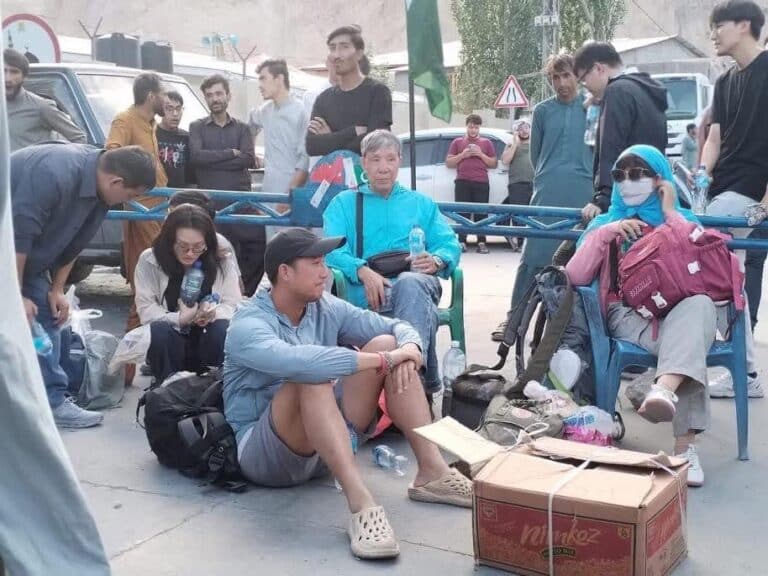
A deepening crisis is unfolding at the strategic Pakistan–China border in Sost, where a traders’ protest has now triggered an unexpected backlash this time from Chinese nationals themselves. Stuck at the closed immigration gate, dozens of Chinese citizens are now chanting: “Let us go to China”, voicing frustration over being stranded for days amid an escalating sit-in led by local Gilgit-Baltistan traders.

Border Closed, Trade Paralyzed, and Tensions Rising

The protest, now entering its eighth day, is being led by the local trading community against what they call “unjust and unconstitutional” taxes — specifically income tax and a controversial “slash tax” imposed by the Federal Board of Revenue (FBR) and Pakistan Customs.

“Gilgit-Baltistan has no clear constitutional status within Pakistan,” said one protester. “So how can federal taxes be applied here as if we’re a regular province?”

In protest, traders have shut down the immigration gate at Sost — the key border point for China-Pakistan trade — halting all movement across the Khunjerab Pass. As a result, multiple Chinese citizens and cargo vehicles are now stuck on both sides, with no timeline for reopening.

Chinese Nationals Stage Rare Protest

Amid growing uncertainty, several Chinese citizens have staged their own protest at the border, demanding immediate permission to return home.

“We are Chinese nationals. We should not be caught up in another country’s internal political and economic crisis,” said one visibly distressed traveler.

The rare demonstration by Chinese citizens has added a new layer of tension to the already volatile situation, raising concerns in diplomatic circles. Sources suggest that Chinese authorities have quietly reached out to Islamabad seeking clarity.

The Sost Dry Port and Karakoram Highway — both part of the China–Pakistan Economic Corridor (CPEC) — are vital links in China’s Belt and Road Initiative (BRI). The suspension of trade and movement not only threatens billions in cross-border commerce but also undermines trust in the stability of Pakistan’s northern routes.

With trade typically peaking from April to November via the Khunjerab Pass, the current shutdown is more than a logistical issue — it is a strategic flashpoint.

This is not the first time protests have erupted in Gilgit-Baltistan over federal taxes. But this time, the issue has become deeply symbolic. Many locals argue that the region’s unresolved constitutional status means it is legally and morally wrong to impose federal taxes without representation or autonomy.

The protest has found quiet support among pro-Kashmiri political voices. Recently, Abid Gilgiti, a member of the Awami Action Committee Gilgit-Baltistan, was invited to Muzaffarabad by the Jammu Kashmir Joint Awami Action Committee, where discussions on shared self-determination struggles were held.

Police Officers Protest in Gilgit Over Delay in Allowance

Gilgit, Pakistan-administered Kashmir Gilgit-Baltistan — July 28, 2025
Police personnel in Gilgit, the administrative center of Pakistan-administered Gilgit-Baltistan, staged a protest on Monday over delays in the issuance of a government notification related to their daily allowances (DA), despite the regional assembly’s formal budget approval.

The protest, held in front of the Chief Minister’s Secretariat, saw dozens of officers expressing frustration over what they described as the government’s inaction. They demanded immediate issuance of the notification and implementation of the promised increase of PKR 840 in their daily allowance.

https://www.facebook.com/share/r/162hKMcmwE/?mibextid=wwXIfr

Officers stated that while the Gilgit-Baltistan Assembly had approved the budget including the enhanced allowances the relevant administrative notification had yet to be released, causing significant financial strain for many police families.

Protesters warned of escalating demonstrations if their demands were not met and emphasized that the delay was not just bureaucratic but was affecting livelihoods. “This is not just about allowances — it’s about dignity, fairness, and survival,” said one protester.

Adding to the growing tension, police personnel from other districts of Gilgit-Baltistan reportedly began traveling toward Gilgit in solidarity with the protest.

Regional Parallels: Echoes of Azad Kashmir

This protest comes days after a similar demonstration by police in Pakistan-administered Azad Jammu and Kashmir, where security personnel also voiced demands for better pay and conditions. The timing and shared grievances have drawn attention to a broader pattern of public sector discontent across Pakistan-administered parts of the divided region of Jammu and Kashmir.

Observers note that while these territories are administered separately by Pakistan, the near-simultaneous uprisings highlight the socio-economic pressures faced by public servants on both sides of the Line of Control (LoC), as well as the shared aspirations for justice and dignity among the people of the historically unified region.

Despite the peaceful nature of the protest, the situation remains tense in Gilgit, with demonstrators vowing to continue until their demands are met. So far, there has been no official response from the regional government.

Underage Marriage Scandal in Gilgit-Baltistan: Poonch Resident Arrested for Marrying Minor Girl

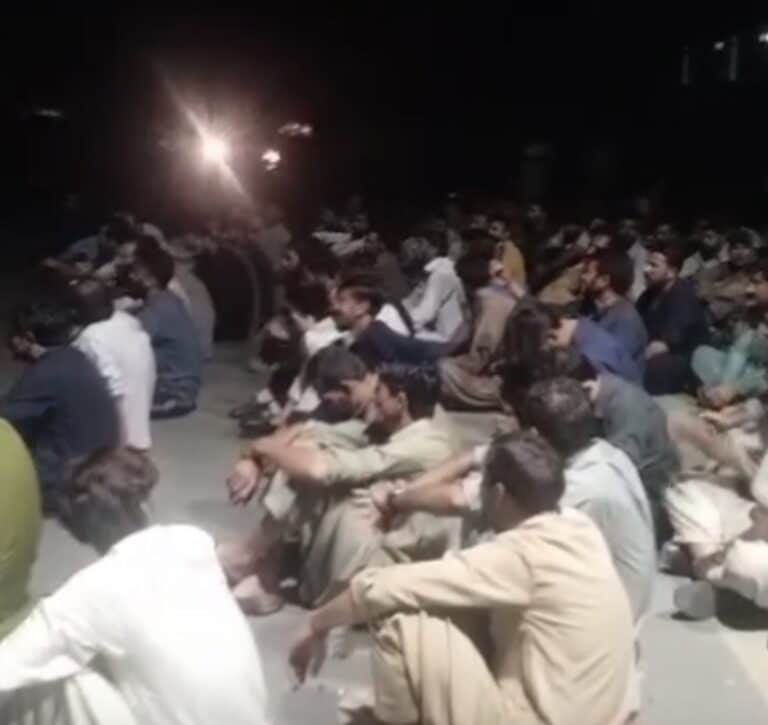
Astore, Gilgit-Baltistan — A disturbing case of underage marriage and potential human trafficking has surfaced in Pakistan’s northern Gilgit-Baltistan region, where several underage girls have reportedly been married off to much older men. In a recent case, a man from the Thorar area of Rawalakot, Poonch — identified as Masoor, aged over 50 — has been arrested for marrying a minor girl from Astore district.

According to police sources, Musawar was taken into custody along with the girl’s father, brother, and the matchmaker after authorities discovered during a CNIC registration attempt that the bride was underage.

Musawar, who reportedly married the girl a month ago, admitted during a local media interview that he had spent more than 500,000 PKR on the marriage, including bride expenses and travel costs.

“If I had known she was a minor, I would never have married her. I’m ready to divorce her now,” he stated during his interview from the police station.

The girl’s father denied any involvement, while her brother, who allegedly accepted the payment, downplayed the issue by saying:

“I don’t see anything wrong in it — I have young children too.”

A Pattern of Abuse and Exploitation

The matchmaker claimed that the girl had previously been married to a drug addict in Chilas and was divorced after paying him ($1769) PKR 150,000. She stated that PKR 100,000 was given to the girl’s brother and that the match was arranged with full family consent.

Deputy Speaker of the Gilgit-Baltistan Assembly, Sadia Danish, condemned the practice of marrying off underage girls as a form of human trafficking, calling it a “moral, legal, and humanitarian crime.”

“This is a stain on our society, on parental responsibility, and on basic human dignity,” she said.
“When brothers — meant to protect their sisters — begin selling them for a few rupees, it is a moment of national shame. Such heartless and soulless individuals deserve no leniency.”

Sadia Danish also expressed deep concern over the increasing number of reports involving minor girls being trafficked from Astore to Punjab and Azad Kashmir under the guise of marriage.

According to unofficial sources, 70 to 80 such marriages have been reported, where elderly men were wed to teenage girls, many of which ended in immediate separation or have subjected the girls to ongoing abuse and violence.

In one shocking incident, a 13-year-old girl was allegedly sold twice under the pretense of marriage.

Mixed Reactions from the Community

While authorities and human rights advocates have strongly condemned the practice, some locals in Thorar, Rawalakot, have come forward in support of Masoor, describing him as a “simple and hardworking man” who faced financial hardship throughout his life.

Fatima Akhter, a local social worker, stated:

“Masoor has seen extreme poverty. He spent his life supporting his family and arranging his siblings’ weddings. He couldn’t marry at the socially expected age. He didn’t buy a bride; the money he paid went toward clothing and jewellery, as is customary.”

She added that Masoor was led to believe the girl was divorced and of legal age, and that he had even personally taken her to Gilgit for official ID documentation.

Human rights groups have repeatedly called for stronger enforcement of child protection laws, particularly in remote regions like Gilgit-Baltistan and Azad Kashmir, where poverty and lack of education often enable such exploitative practices.

While the government has passed laws setting the minimum age of marriage, enforcement remains weak — especially in cross-regional cases involving vulnerable families.

Pakistan Bans Road Travel for Pilgrims to Iran and Iraq Ahead of Arbaeen, Sparking Widespread Disappointment

The Azadi Times Web Desk | July 28, 2025: Muzaffarabad / Skardu – In a controversial move, the Government of Pakistan has banned road travel for Pakistani pilgrims to Iran and Iraq ahead of the annual Arbaeen pilgrimage, a decision that has sparked frustration and heartbreak among thousands of Shia pilgrims across the country, including those from Pakistan-administered Kashmir and Gilgit-Baltistan.

Pakistani Interior Minister Mohsin Naqvi confirmed the ban on social media platform X (formerly Twitter), citing national security concerns and public safety as key reasons behind the decision. The announcement came after consultations with the Ministry of Foreign Affairs, the Balochistan government, and national security agencies.

“This step has been taken purely in the interest of public safety and national security,” Naqvi posted.

However, the timing and suddenness of the announcement have triggered strong backlash, especially from pilgrims who had spent months preparing for the overland journey to the holy shrines in Karbala and Najaf.

“Our Bags Were Packed. Now Our Dreams Are Crushed.”

Ali Raza, a pilgrim from Sargodha, told The Azadi Times he had been saving for over a year to fulfill his dream of visiting the shrine of Imam Hussain during Arbaeen. He had packed his bags and was scheduled to leave in just two days.

“Now I’ll have to arrange at least an additional 300,000 rupees if I want to travel by air. Why wasn’t this decision announced earlier? Why couldn’t the government provide security instead of crushing our hopes?” he asked, visibly disheartened.

The alternative traveling by air is out of reach for many lower- and middle-income pilgrims. Overland travel via Balochistan was considered not only more economical but also spiritually fulfilling for thousands who preferred to walk in solidarity with fellow Shia Muslims from around the world.

Outcry from Kashmir and Gilgit-Baltistan

The backlash is particularly strong in Pakistan-administered Kashmir and Gilgit-Baltistan, where hundreds of caravans were already in final stages of preparation.

In Muzaffarabad, a group of young pilgrims gathered outside the press club to protest the government’s decision.

“We were ready to leave in two days,” said Muhammad Taqi, a pilgrim from Neelum Valley. “We come from remote areas, and flying isn’t an option for us. The government should have made alternative arrangements, not imposed a blanket ban.”

In Skardu, a volunteer organizing committee that had helped coordinate over 500 pilgrims across Baltistan expressed disappointment in a video statement:

“This ban has created uncertainty and deep grief. The route via Taftan is not new—it has been used for decades. Why can’t proper security measures be ensured instead of denying access to thousands of peaceful pilgrims?”

Security vs Religious Freedom

The Interior Ministry has defended the decision as a preventive measure amid intelligence reports about possible threats along the route through Balochistan. However, critics argue that the move reflects a failure in governance rather than a viable security strategy.

“It is the government’s responsibility to protect its citizens, not restrict their religious freedom,” said political analyst Dr. Nusrat Hussain. “This decision may deepen the trust deficit between the state and Shia communities, especially in sensitive regions like Gilgit-Baltistan and Azad Kashmir.”

Arbaeen and Its Significance

Arbaeen, observed 40 days after Ashura, marks the martyrdom of Imam Hussain, the grandson of Prophet Muhammad. Millions of pilgrims from across the world travel to Iraq each year to take part in the largest peaceful gathering on earth.

For Pakistani Shias, especially those from underserved regions, the overland pilgrimage is not just a religious obligation—it’s a lifelong spiritual dream. This year’s restrictions are expected to affect more than 50,000 would-be pilgrims nationwide.

Veteran Kashmiri Comedian Bashir Kotur Dies at 65

Budgam, Indian-administered Kashmir — July 28, 2025: Bashir Ahmad Bhat, a beloved figure in Kashmir’s cultural scene and famously known by his stage name Bashir Kotur, passed away on Monday at his home in Hanjigund, Chadoora, in the central Budgam district. He was 65.

Family sources confirmed that Kotur had been suffering from multiple health complications. He was admitted to the Intensive Care Unit (ICU) in critical condition several days ago and discharged on Saturday. However, his condition worsened again, and he passed away at home on Monday afternoon.

For decades, Bashir Kotur captivated audiences with his sharp wit and powerful stage presence. Known across the region for his contributions to folk theatre and traditional Kashmiri comedy, he played a key role in preserving and popularizing local performance arts during times of significant social and political upheaval.

His performances, often laced with satire and cultural commentary, brought both laughter and reflection to countless audiences across the Valley. He was regarded not just as a comedian, but as a storyteller deeply rooted in the lived experiences of Kashmiri society.

News of his passing has sparked widespread mourning across Kashmir. Tributes from fellow artists, fans, and community leaders have flooded social media, describing his death as the end of an era in Kashmiri performance art.

His funeral prayer is expected to be held later this evening in his native village, where friends, admirers, and fellow performers are expected to gather to pay their final respects.

‘He Was Not a Criminal’: Gujjar Youth Shot Dead by Police in Jammu, Family Demands Justice

0

Jammu | Indian administered Jammu Kashmir: A young tribal man from the Gujjar community was shot dead by police in Jammu on Thursday, sparking outrage and protests over what activists and family members are calling a “cold-blooded killing” and “yet another case of targeted violence” against tribal populations in the region.

The deceased, identified as Mohammad Parvez, 21, a resident of Nikki Tawi, was allegedly shot by plainclothes police personnel near the Surre Chak area under the jurisdiction of Satwari Police Station on 24 July. He was declared dead upon arrival at Government Medical College (GMC), Jammu.

“This is the fifth incident this year in which a member of the Gujjar community has died under suspicious circumstances involving security forces,” said a tribal activist speaking to The Azadi Times. “The pattern cannot be ignored.”

Family Says He Was Innocent

Parvez had recently gotten married. According to his family, he had left home around 3–4 PM with his brother-in-law to buy medicine when they were stopped by a group of unidentified men in civilian clothes. Initially assuming them to be members of cow vigilante groups, the two tried to flee. Parvez was shot in the process, while his brother-in-law managed to escape.

“They killed him and then said he was a drug smuggler,” said Mohammad Farooq, Parvez’s elder brother. “If even one of us has an FIR against our name, let the police shoot us all.”

Police sources claimed that a special anti-drug unit was conducting a raid when it came under “heavy stone pelting” and responded with gunfire, in which Parvez was hit. However, no injuries were reported among the police, and no formal charges had ever been filed against the deceased.

Massive protests erupted outside GMC Jammu as Parvez’s family refused to accept the body. Videos showed grieving relatives wailing outside the mortuary amid heavy police presence. Hundreds gathered in solidarity at the family’s home.

“My brother was a daily wage labourer. He wasn’t a criminal. He was married just two months ago. What was his fault?” his sister cried before local reporters.

Talib Hussain, a prominent tribal rights activist, condemned the killing and demanded a judicial inquiry. “This was a fake encounter. He had no criminal record. If the police suspected him, they should have arrested him — not killed him,” he said.

Hussain further alleged political pressure behind the incident, stating that senior officials may be operating under directives to target Gujjar youth in the name of drug or cattle smuggling.

Political Reactions

Mehraj Malik, Doda MLA from the Aam Aadmi Party, called it a “fake encounter”, questioning whether Jammu and Kashmir had turned into a region where “police play judge, jury, and executioner.”

Former J&K Chief Ministers Omar Abdullah and Mehbooba Mufti also expressed concern. While Abdullah warned that such incidents had previously “cost Jammu and Kashmir dearly,” Mufti said this type of policing would only breed more instability. “Labeling someone a drug dealer without trial sets a dangerous precedent,” she said.

A Disturbing Pattern

Parvez’s death is not an isolated case. In April, a Gujjar man was allegedly killed in custody in Bandipora after being detained as an “OGW” (Over Ground Worker). In March, three Gujjar youths were found dead in South Kashmir’s Kulgam district under mysterious circumstances. In February, another Gujjar youth from Kathua died by suicide following alleged police torture — the probe into that incident remains unresolved.

“How many more Gujjar youth must die before someone is held accountable?” asked Hussain. “We’ve stayed silent for too long — this ends now.”

As of Friday evening, the family of Mohammad Parvez continues to demand an independent judicial probe, refusing to bury their son until accountability is ensured.

The Azadi Times has reached out to Jammu Police and senior administration officials for comment. This report will be updated upon receiving a response.

“Dragged, Beaten, and Silenced”: Tribal Communities in Indian-administered Kashmir Accuse Army of Brutality and Land Grabbing

Srinagar, Dhokmanpura, Indian-administered Kashmir: In a harrowing account emerging from the high-altitude summer pastures known locally as Dhoks in Indian-administered Kashmir, dozens of tribal herders have alleged systematic harassment, assault, and forced evictions at the hands of the Indian Army. The accusations were brought to light by social activist Talib Hussain, who spoke exclusively to The Azadi Times on behalf of the affected Gujjar-Bakarwal community in the Dhokmanpura region.

“We built the outposts, now we’re being driven out”

According to Hussain, more than 40 to 45 residents, including elders and youth from the summer grazing areas of Dhokmanpura, Seri Bal, Oxar, and Dhokman, were forcibly summoned around noon on 26 July to a newly constructed military outpost. Ironically, the residents claim they had themselves transported the materials and assisted in building this very post, acting under military orders.

Instead of receiving compensation or gratitude, they allege that soldiers, led by a man identifying himself as “Major Feroz,” brutally assaulted them for hours.

“They called the villagers, made them sit, and beat them with rods and sticks from 12 PM to 4 PM,” said Hussain. “The beatings were so vicious that one young man, Mohammad Azam, lost consciousness. The officer allegedly ordered his men to ‘throw him into the kaar’ — a local term used by Gujjar tribes for rocky ravines in the Himalayas.”

Azam was later rescued by other villagers and survived the ordeal, but at least 11 people sustained serious injuries, including multiple fractures and head wounds. The Azadi Times has reviewed video evidence and testimonies corroborating the injuries.

“Clear these pastures – the Army will stay here now”

The motive, villagers allege, is part of a broader campaign to evict tribal herders from their ancestral summer pastures. They claim the Army repeatedly pressured them to vacate the Dhoks, suggesting that the military — or corporations — plans to take control of these strategic lands in the Himalayas.

“This is not just an abuse of power — it is a silent land grab,” Hussain told us. “They want to push out the Gujjars and give our meadows to private corporations under the guise of national security.”

According to the activist, residents were earlier given assurances by a top police official (DIG), who promised that there would be no further harassment. A contact number for his PA (PA to DIG) was also provided — C7006614964 — but villagers claim that the situation has only worsened since.

Names of the Injured

Below is a partial list of individuals reportedly injured during the assault:

  1. Shaukat Ali, son of Mohammad Yousaf (Mughla Kala Ghoth)

  2. Ghulam Qadir, son of Mohammad Qasim Khatana

  3. Mohammad Azam, son of Mohammad Iqbal Koli

  4. Faiz, son of Masih Koli

  5. Liaqat Ali, son of Mohammad Riaz

  6. Ahmed, son of Abdul Rasheed

  7. Shabir Ahmed, son of Makhia (Khatana caste)

  8. Mohammad Hanif, son of Mohammad Iqbal Awan

  9. Mohammad Mukhtar, son of Abdul Latif Awan

  10. Mohammad Younis, resident of Mughla Kala Ghoth

Several of these men are unable to walk due to severe beatings. Videos shared with The Azadi Times show broken limbs, bruised backs, and accounts of being dragged by mules overnight to the Harwan Police Station, fearing retaliation or being shot if seen in daylight.

A Broader Pattern of Militarisation?

The incident has raised urgent questions about the militarisation of tribal lands, especially in ecologically sensitive areas traditionally inhabited by Gujjar and Bakarwal pastoral communities during summer.

“We buried one of our elders just two days ago, and now we’re being told our land isn’t ours,” said one of the residents. “They are trying to erase our identity and claim our mountains.”

Hussain also referenced an earlier report involving alleged custodial abuse of a 14-year-old boy named Shabir inside the Satwari Police Station, suggesting that such cases are becoming part of a systemic trend of repression under the guise of security and development.

Hussain has appealed to the Lieutenant Governor (LG) of Jammu & Kashmir, senior Army officials, and India’s Chief Minister to immediately investigate the incident, remove the Army outpost from the Dhokmanpura region, and ensure accountability for what he described as “a grave violation of human and tribal rights.”

“I am not against the Army,” said Hussain. “But when officers like this Major think they can act like corporate agents and crush poor herders under boots, then someone must stand up. This is about our existence.”

The Azadi Times reached out to the Indian Army’s local PRO office for comment. At the time of publishing, no official statement had been issued.

The Azadi Times continues to monitor this developing story. For updates, follow us at azaditimes.com.

How to Say Happy Birthday Dad: The Most Loving Wishes for Every Daughter & Son

In every corner of the world, but especially across the culturally rich landscapes of Kashmir, Pakistan, India, Sri Lanka, Nepal, and Malaysia, a father is far more than just a parent — he is a protector, a silent supporter, a source of strength, and often, a quiet warrior for his family’s future. From the bustling markets of Muzaffarabad to the vibrant streets of Delhi, the role of a father is revered, not through grand gestures, but through the everyday sacrifices he makes.

As the world modernizes and digital messages replace handwritten letters, expressing gratitude through heartfelt birthday wishes for a father has become both simpler and more essential. In this era of fleeting attention, a well-chosen birthday message isn’t just a formality — it’s a tribute, a pause in time that reminds us of love, roots, and unspoken bonds.

This feature from The Azadi Times explores the evolving ways we celebrate our fathers. From spiritual prayers to warm messages from daughters and sons, we bring you a collection of deeply meaningful birthday wishes, shaped by tradition, emotion, and cultural nuance. Whether you’re in Lahore or Colombo, Kathmandu or Kuala Lumpur or anywhere our diaspora resides let this guide help you find the perfect words to honour the man who helped shape your world.

The Emotional Impact of a Father’s Role

Fathers have long been viewed as pillars of strength and protectors within families. From providing for their children to offering moral guidance, their influence shapes generations. But beyond these roles, fathers are also emotional anchors in the lives of their children.

In many South Asian families, fathers are traditionally seen as the authoritative figures, guiding their children through academic, social, and personal development. However, as cultures evolve, so too does the perception of a father’s role. Fathers today are not only seen as providers and protectors but also as emotional mentors and loving caregivers.

When birthdays come around, the occasion provides an opportunity to reflect on all the sacrifices and quiet gestures of love that fathers often make. A simple “happy birthday” can capture a world of gratitude, but crafting a personal message makes it all the more impactful.

Real-Life Example: A Father’s Day Tribute from a Daughter

Take, for example, the heartfelt words shared by Rina, a 28-year-old from Delhi, on her father’s 55th birthday:

“Dad, you’ve been my constant support, guiding me through every decision, and yet you’ve never asked for anything in return. Today, I wish for you all the happiness in the world. Happy birthday, Papa. I love you more than words can ever express.”

For Rina, this message is not just about celebrating her father’s birthday — it’s about honoring a relationship built on love, trust, and a lifetime of memories.

Cultural Variations in Birthday Wishes for Fathers

In South Asia, birthdays are celebrated with a blend of traditional customs and modern influences. In many Indian and Pakistani families, there is a strong spiritual component, especially as fathers reach significant milestones such as turning 60. Birthday celebrations are not just about parties and presents, but also about honoring the father’s life, achievements, and spiritual journey.

India: A Family-Centered Celebration

In India, birthdays are often marked by family gatherings where rituals such as the “Aarti” (a traditional Hindu prayer ritual) are performed, and blessings are sought from elders. For example, a son might offer a heartfelt birthday wish like:

“Papa, may your life always be filled with blessings. You’ve taught me so much, and I pray that you continue to lead our family with love and wisdom. Happy birthday, and may God’s grace always be with you.”

This combination of words and spiritual practices forms the backbone of birthday celebrations for fathers in India. The focus is not just on the festive aspect but also on seeking divine blessings for the father’s health and happiness.

Pakistan: Respect and Reverence

In Pakistan, birthday wishes for fathers often carry an air of deep respect and reverence. Fathers are viewed as figures who guide families with wisdom, and their birthdays are seen as an occasion to express gratitude. A typical birthday wish might include:

“Happy birthday, Baba! You have always been the one who stood by me through thick and thin. Your wisdom and love have shaped my life, and I’m forever grateful to you. May Allah grant you long life and happiness.”

Sri Lanka: A Spiritual Touch

In Sri Lanka, where Buddhism plays a major role in daily life, birthday wishes often include spiritual blessings. Messages tend to focus on peace, prosperity, and longevity. A common message might be:

“Wishing you a very happy birthday, Appa. May Buddha’s blessings always bring peace and joy to your life. I am so grateful for your guidance and love.”

This reflection of spiritual reverence reflects how birthdays, particularly for fathers, are celebrated with a blend of familial and religious significance.

Nepal: A Blend of Tradition and Modernity

Nepal, much like India, celebrates birthdays with a blend of modern and traditional influences. Many families, especially in urban areas, are increasingly embracing global birthday trends such as cakes and presents, but the core sentiment remains deeply traditional. A heartfelt birthday message might read:

“Baba, your love and sacrifices have shaped the person I am today. May your birthday be filled with all the love and joy you’ve given me all my life. Happy birthday from your loving daughter.”

Kashmir: A Region of Rich Cultural Significance

In Kashmir, the way fathers are celebrated on their birthdays carries a deep connection to family, honor, and tradition. Kashmiris, often steeped in a history of struggle and resilience, find moments like a father’s birthday to be a celebration of not just personal milestones, but of familial strength and cultural pride. In many Kashmiri Muslim households, fathers are often celebrated with heartfelt prayers for longevity and divine blessings. A birthday wish for a Kashmiri father might sound like:

“On your special day, I pray to Allah to bless you with health and happiness. Your resilience and strength have shaped me in ways words cannot describe. Happy birthday, Baba. May your heart always find peace.”

In Kashmir, family is often considered the ultimate source of support, and birthdays become opportunities to pay homage to this sacred bond.

Sample Heartfelt Messages for Different Occasions

Crafting the perfect birthday message for your father can be challenging, especially when you want to balance emotion and reverence. Below are some sample messages that cater to different relationships and milestones.

Birthday Wishes for Father from Daughter

For a daughter, the relationship with her father is often one of unconditional love and emotional depth. Whether you’re a young daughter or an adult, expressing gratitude can be incredibly meaningful:

“Happy birthday, Dad! Every day I am thankful for the lessons you’ve taught me, the love you’ve given me, and the example you’ve set for me. You will always be my hero, and I’m so proud to be your daughter.”

Birthday Wishes for Father-in-Law

When celebrating the birthday of a father-in-law, the tone often leans toward respect and warm admiration. Here’s a suggestion for such an occasion:

“Wishing you the happiest of birthdays, Dad. Your wisdom and kindness have made me feel like a true part of the family from the moment I met you. May this year bring you all the joy you deserve.”

60th Birthday Prayer for Dad

Turning 60 is a significant milestone in any father’s life, and for many, it is a time of reflection, gratitude, and spiritual connection. In South Asian cultures, it’s common to offer prayers on such occasions:

“Happy 60th birthday, Dad. May God bless you with many more years of health, peace, and happiness. Thank you for your never-ending love and support. I pray that your wisdom continues to guide us, and that your days ahead are filled with the blessings of good health and joy.”

Birthday Wishes to Father Figure

For those who may not have a biological father in their lives but have been blessed with a father figure, the birthday message often centers around gratitude for the role they’ve played:

“Happy birthday to the man who stepped in and gave me love when I needed it most. You’ve been a guide, a friend, and a protector. I’m so grateful for you and your presence in my life.”

The Evolving Language of Birthday Wishes in the Digital Age

With the rise of social media and instant messaging, the way we send birthday wishes has transformed. No longer do we rely solely on handwritten cards or face-to-face greetings. Platforms like WhatsApp, Facebook, and Instagram have introduced new ways to express our feelings, and this has influenced the language of birthday wishes for father.

Social media allows for more creativity, from posting photo montages of father-daughter memories to sending short video clips with messages of love. Emojis and GIFs have become staples of birthday greetings, but many still prefer to include a personal touch with their words. Here’s a modern example:

“Happy birthday, Dad! 🎂🎉 I am so grateful for all the love and wisdom you’ve shared with me. You are truly the best, and I hope your day is as amazing as you are! ❤️”

Despite the shift towards digital communication, the emotional resonance behind birthday wishes remains unchanged. People still crave authentic expressions of love and appreciation, even if they’re shared via a smartphone screen.

Prayers and Spiritual Messages for Father’s Birthdays (Especially the 60th Birthday)

As fathers age, their birthdays often carry more spiritual significance. In many South Asian communities, reaching the age of 60 is a landmark occasion, often seen as a time to reflect on one’s life and express gratitude for all that has been achieved.

Here are some spiritual birthday wishes to share with your father, especially when celebrating his 60th birthday:

“May Lord Krishna bless you with a long life filled with peace, wisdom, and divine joy. Your presence has always brought stability and love to our lives. On your 60th birthday, we honor not just your age but the lifetime of values and grace you’ve shared with us.”

Spiritual birthday messages carry emotional depth, often invoking divine blessings from across different religious beliefs. Whether rooted in Hinduism, Islam, Christianity, or Buddhism, these prayers add a sacred dimension to an already meaningful day.

Here are a few spiritually inclined birthday wishes you can personalize and use:

  • Islamic Birthday Prayer
    “Ya Allah, bless my father with a healthy, prosperous life ahead. Reward him for his patience, sacrifice, and love. May he continue to guide us with faith and humility. Ameen.”

  • Christian Birthday Blessing
    “Heavenly Father, on this day, I thank You for blessing me with a dad who walks in love and faith. May his days be filled with grace, and may he continue to be a light to our family.”

  • Buddhist-Inspired Message
    “May you be blessed with continued mindfulness, peace, and happiness. Your strength and compassion inspire us every day. Happy 60th birthday, Dad.”

These messages go beyond the traditional “happy birthday” and become lasting memories — often printed, saved, or shared again in the years to come.

Closing Thoughts: Honoring Fathers Through Words

In every corner of the world — from the colorful streets of Delhi to the peaceful valleys of Kashmir — a father’s birthday is a moment to pause, reflect, and show gratitude. Whether through a simple message, a heartfelt letter, or a whispered prayer, birthday wishes for fathers remind us of the enduring power of love, guidance, and quiet strength.

As cultures evolve and technology reshapes how we connect, one thing remains constant: a father’s love is timeless, and celebrating it with sincere words can create memories that last a lifetime.

So the next time your father’s birthday comes around, don’t settle for a generic greeting. Dig deep, reflect on what he’s meant to you, and write something that touches the soul — something that honors the man who helped shape your world.